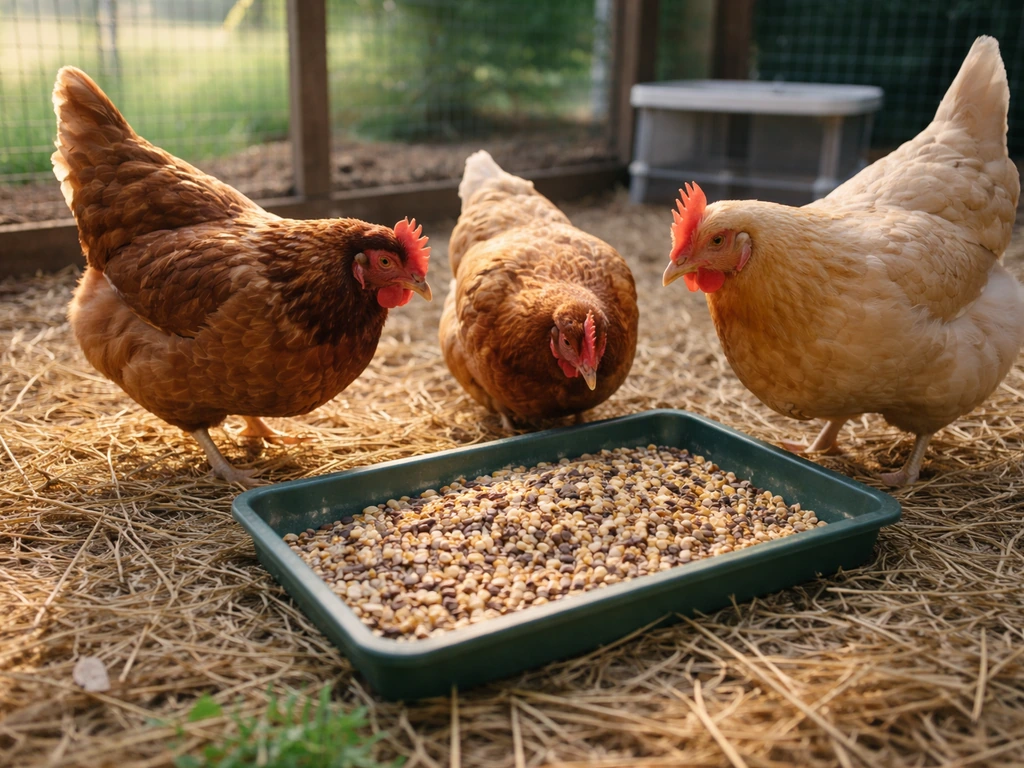
Yes, Pennington bird seed is generally good quality for backyard birding, but the honest answer is more nuanced than a simple thumbs up or down. If you are wondering is bird seed good for deer, the answer depends on the ingredients and how the deer will use it around your yard. If you are wondering is bird seed good for deer, the answer depends on the ingredients and how the deer will use it around your yard, and you should also consider whether is bird seed good for chickens for similar ingredient-safety reasons. Pennington makes several different blends, and the quality of any one bag depends on which product you bought, how fresh it is, and whether it has been stored correctly. A well-chosen Pennington blend, bought fresh and stored right, will attract real birds and hold up well. That is why choosing a fresh, well-formulated blend and storing it correctly matters for the birds you want to attract. A bag that sat in a warm warehouse, got damp, or contains a lot of filler seed is a different story. To make sure the seed is actually bird seed good for birds, focus on freshness, quality ingredients, and proper storage so it does not turn moldy or attract pests. Here is how to judge the bag in front of you.
Is Pennington Bird Seed Good? Honest Checklist and Tips
What 'good' bird seed actually means
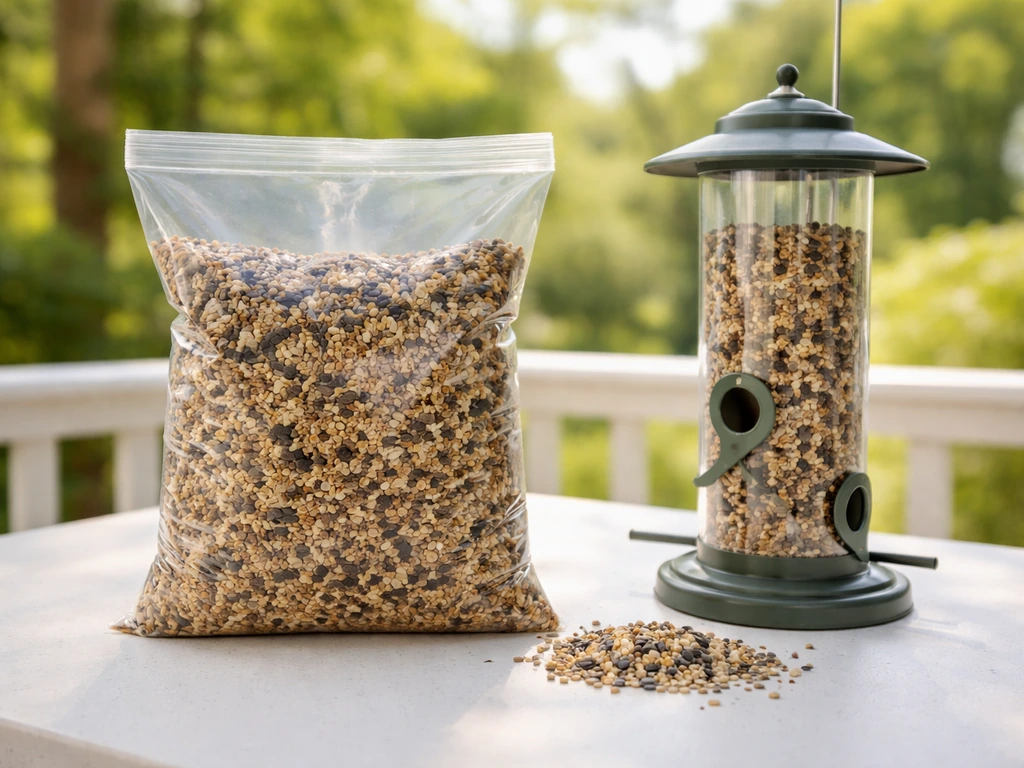
When birders ask whether a brand is 'good,' they usually mean one of three things: does it attract the species I want, is the nutrition real, and will birds actually eat it without waste? Those are the right questions. A blend is only as good as its ingredient list, its ratio of shell to meat, and how many filler seeds it contains. Filler seeds are things like milo, red millet, and oat groats that most songbirds kick out of the feeder onto the ground. You pay for them, the birds ignore them, and they rot under your feeder. Good seed is high in black oil sunflower, nyjer (thistle), safflower, peanuts, or sunflower chips, depending on your target birds. The best test is to read the ingredient label in order. Whatever appears first makes up the largest share by weight.
One persistent myth is that mixed seed is inherently inferior to single-species seed. That is not quite right. A well-designed mix pulls in a broader range of species than straight sunflower alone. The problem is poorly designed mixes that lead with cheap filler. Pennington's better blends lead with sunflower or peanut-based ingredients, which puts them in a legitimate category. Another myth: bigger bags are safer because they turn over faster at the store. In reality, a large bag sitting in a hot garden center has been slowly degrading the whole time. Bag size does not equal freshness.
What Pennington typically contains and which birds it suits
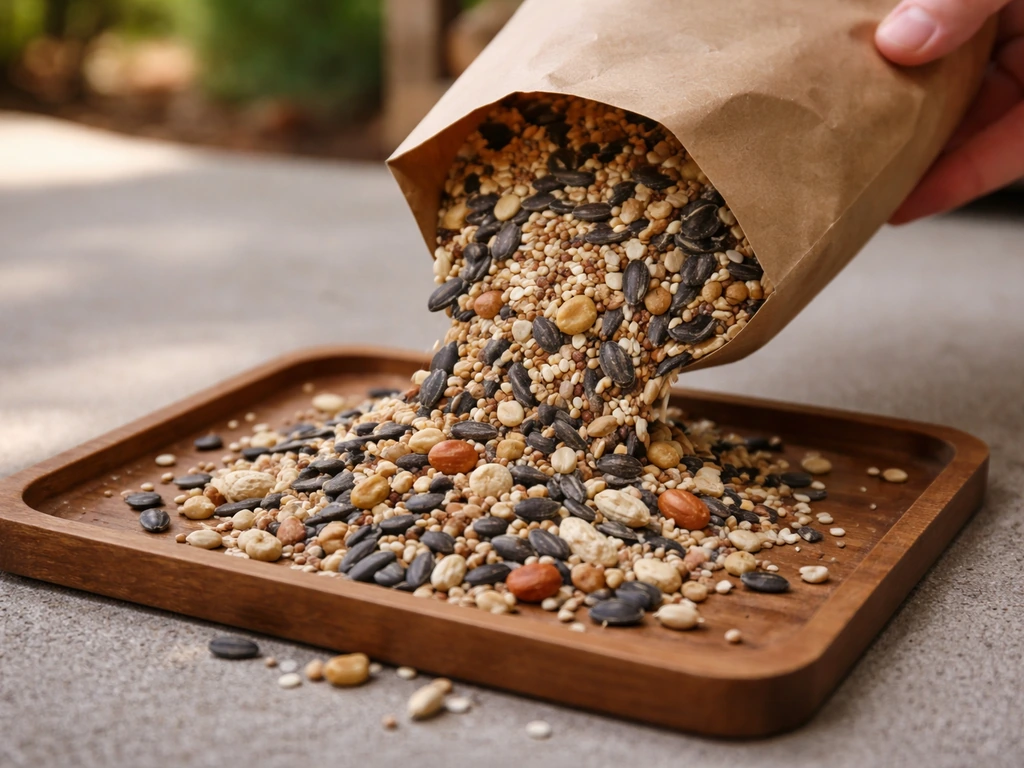
Pennington does not sell a single universal formula. Their lineup is designed around target species, and the blend you pick should match the birds you are trying to attract. Most Pennington bags are also coated with their Bird-Kote system, which is a vitamin and mineral supplement meant to balance nutrients in the seed. Pennington’s Select Wild Finch Blend is described as being enriched with a Bird-Kote coating Bird-Kote system. It does not replace quality ingredients, but it is a legitimate addition, not a gimmick.
| Pennington Product | Key Ingredients | Best For |
|---|---|---|
| Select Wild Finch Blend | Nyjer, fine sunflower chips, small millet (Bird-Kote coated) | Goldfinches, house finches, pine siskins |
| Cardinal & Songbird Suet Nugget Blend | Black oil sunflower, peanut suet nuggets, raisins | Cardinals, chickadees, nuthatches, woodpeckers |
| Ultra Feeding Frenzy | Black oil sunflower, peanuts, safflower, sunflower chips, dried cherries, raisins, peanut suet nuggets | Wide mix: songbirds, woodpeckers, jays, thrushes |
| Classic Mixed Blends | Millet, milo, sunflower (ratio varies by product) | Sparrows, doves, juncos (ground feeders) |
If you are feeding finches, the Select Wild Finch Blend is the right call. If cardinals and chickadees are your main target, the Cardinal & Songbird or Ultra Feeding Frenzy blends deliver the high-energy fats those birds need, especially in winter and during spring when adults are feeding chicks. The classic mixed bags work fine for ground-feeding sparrows and doves but will disappoint if you are hoping for cardinals or woodpeckers. Match the product to the birds, not just the price tag.
How to check freshness before you fill the feeder
A bag can look fine on the outside and be compromised inside. Before you pour anything into a feeder, do a quick freshness check. This takes two minutes and can prevent a mold or pest problem at the feeder.
- Smell it first: fresh seed smells nutty or neutral. A musty, sour, or rancid smell means moisture got in and microbial activity has started. Do not use it.
- Look for clumping: dry seed flows freely. If seeds are stuck together or feel damp and waxy, moisture has been present.
- Check for insects or larvae: tiny moths, weevils, webbing threads, or small white larvae in the seed are a sign of infestation.
- Look for sprouted seeds: sprouts inside a sealed bag mean moisture entered at some point, either before sealing or through a compromised bag.
- Check for rodent droppings or gnaw holes in the bag: both are disqualifying.
- Look at the 'best by' date: Pennington relies on moisture control and sealed storage more than best-by dates alone, but a bag that is more than a year past its date is high risk regardless of appearance.
Corn and peanuts are the highest-risk ingredients in any blend. Pennington specifically flags these two as vulnerable to bacteria and fungus contamination when moisture gets in. If your blend contains peanuts or cracked corn (many do), apply extra scrutiny to the smell and texture check.
Storing Pennington seed to prevent mold and pests
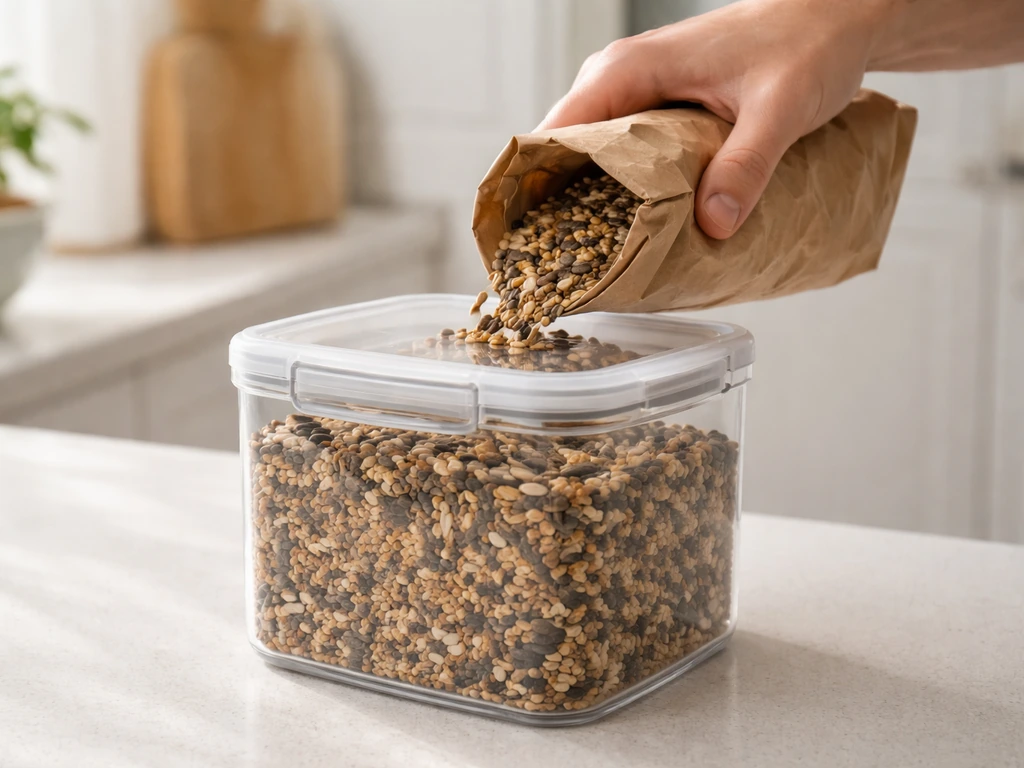
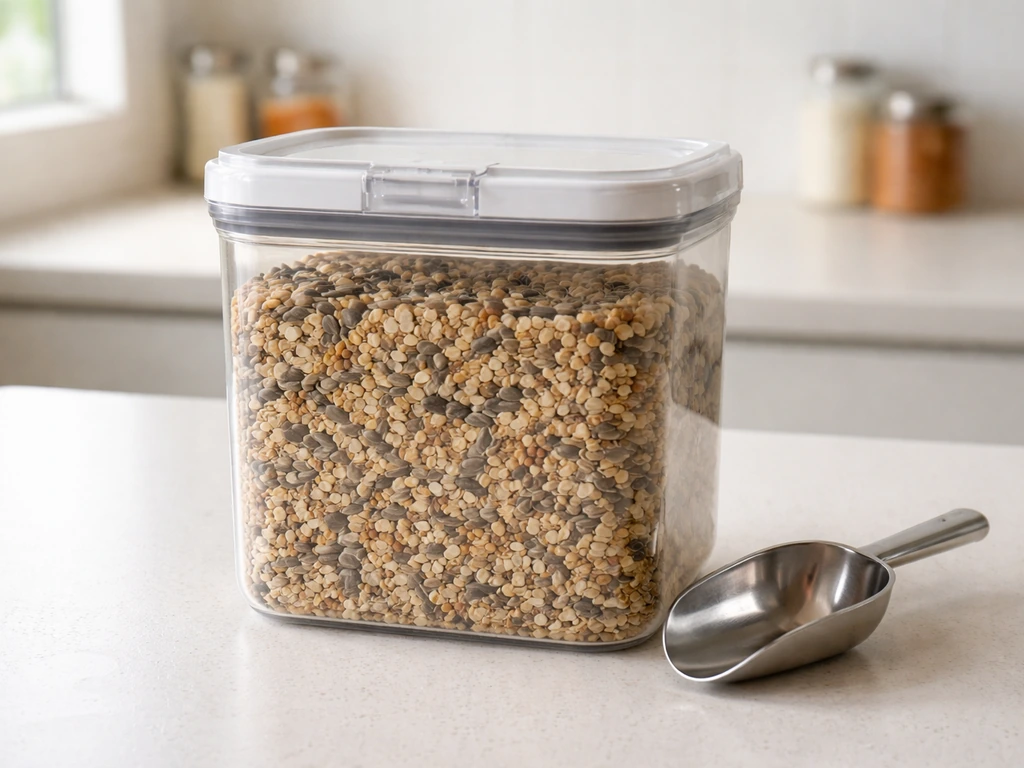
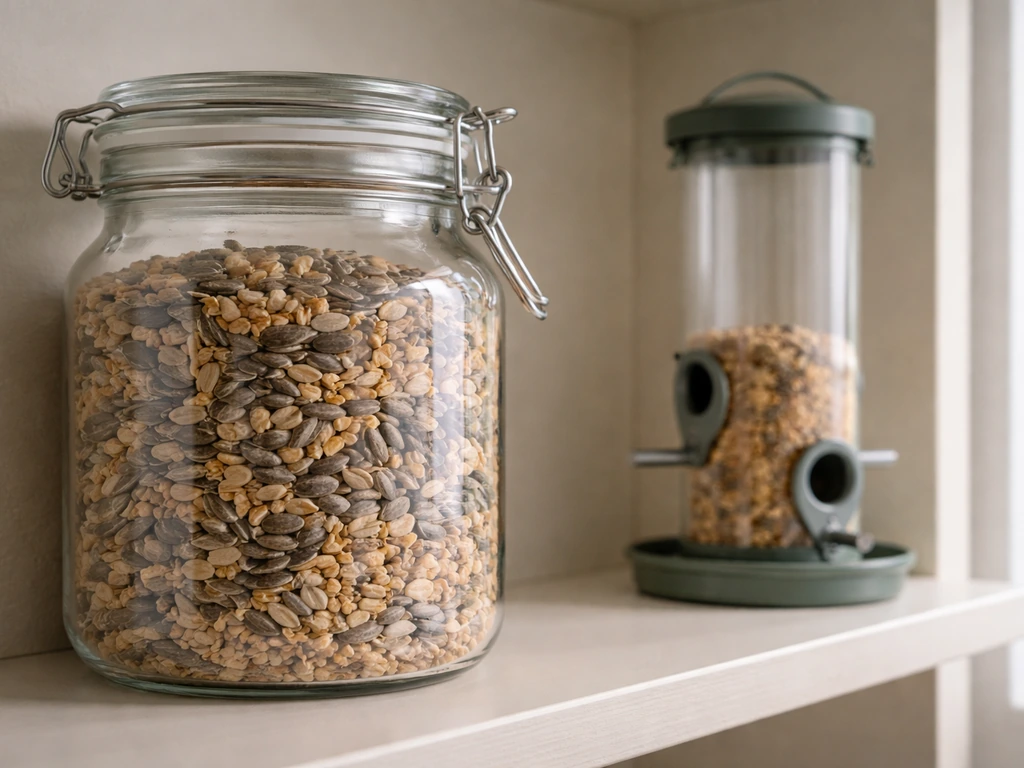
The original bag is not a storage container. Once opened, seed in a paper or thin plastic bag will absorb humidity, attract insects, and invite rodents. Transfer it to an airtight, rigid container, ideally metal or heavy-duty plastic with a tight-sealing lid. A metal trash can with a locking lid works well for larger quantities. Store it somewhere cool, dry, and away from direct sunlight: a garage or shed is fine if it does not get extremely hot or damp. Avoid basements in humid climates, because the humidity will work its way into even a 'sealed' container over time.
- Ideal storage temperature: below 70°F (21°C) where possible
- Always reseal the container after each use
- Do not pour new seed on top of old seed: empty and clean the container between refills
- Buy quantities you will use within four to six weeks during warm months, or within two to three months in cool, dry conditions
- If you notice small gray moths flying near your storage area, seal all seed immediately in airtight containers and set out moth traps
Buying a huge bag because it is cheaper per pound can cost you more if half of it spoils before you use it. In humid summer conditions, smaller, more frequent purchases are smarter than bulk buying.
Dealing with wet seed, mold, sprouting, and insects
Wet or damp seed
If seed in your feeder or storage container got wet, do not try to dry it and reuse it. Once seed has been wet, mold can establish quickly, and mycotoxins from mold on peanuts and corn are toxic to birds. Discard it, clean the feeder thoroughly, and start with fresh dry seed. This is non-negotiable.
Sprouted seed
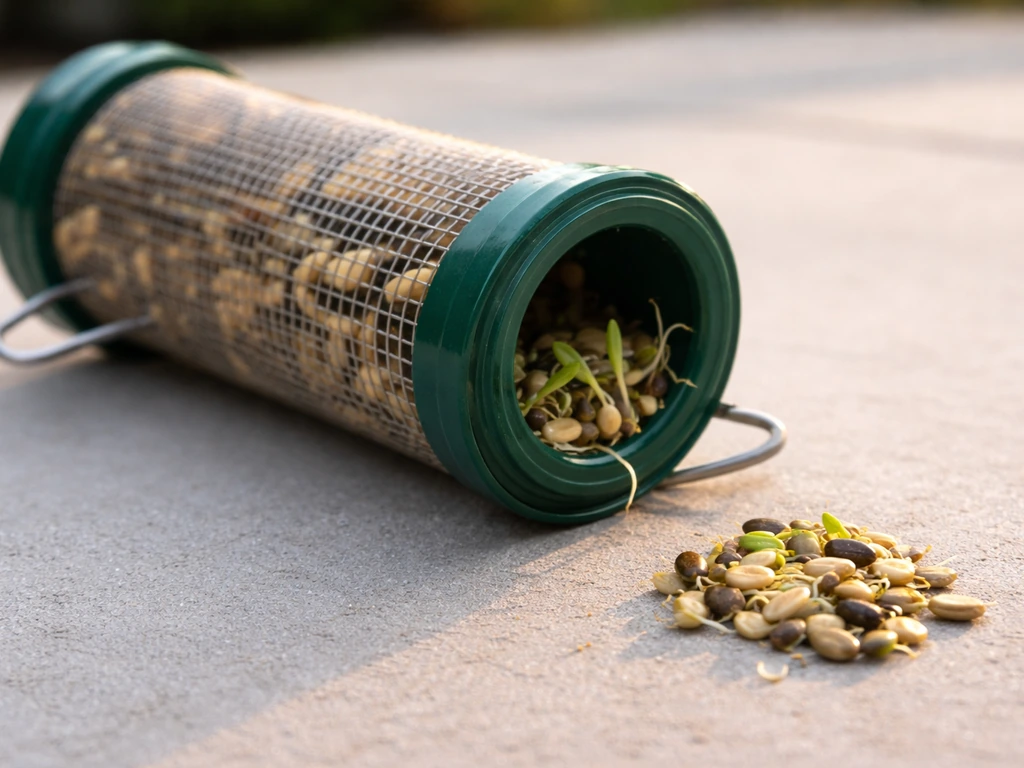
A few sprouted seeds in a feeder are not a crisis on their own, but they signal that moisture is present, which invites mold. Remove the sprouted material, clean the feeder, and figure out where the moisture is coming from. A feeder with poor drainage, a dome that is too small, or a location exposed to rain will keep sprouting. Move the feeder or add a weather baffle.
Mold
Moldy seed in a feeder is a direct health hazard for birds. Rake up and bag any moldy seed and shell debris under the feeder, then deep-clean the feeder before refilling. Do not put moldy seed in a compost pile where wildlife can access it.
Insects and mites
Grain moths, weevils, and mites can establish in seed that was not stored properly or that spent too long in a warm environment. If you find insects in stored seed, discard the bag, clean the storage container with soapy water, and dry it completely before refilling. For a feeder with mite activity, clean and disinfect the feeder as described in the section below. If mites have spread beyond the feeder to nearby surfaces or into your home, more targeted environmental cleaning will be needed.
Feeder setup, cleaning, and hygiene
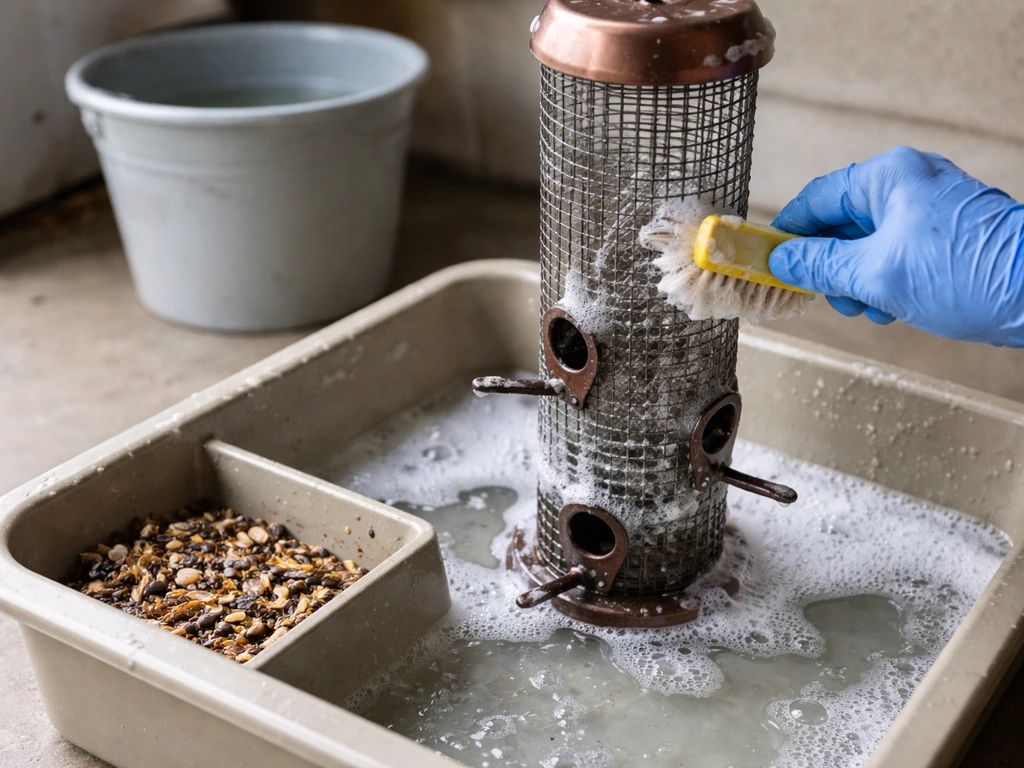
Even the best Pennington seed will cause problems in a dirty or poorly placed feeder. Even the best Pennington seed will cause problems in a dirty or poorly placed feeder, so if you are seeing Pennington bird seed problems, start by tightening up storage and feeder hygiene. Feeder hygiene is not optional: it directly affects bird health and how attractive your setup is to the species you want.
Cleaning schedule
Clean feeders at least once every two weeks during active use, and more frequently in summer or humid conditions. Audubon recommends stepping up cleaning frequency when humidity is high, because mold can form in feeders within days in warm, wet weather. Audubon, citing the National Wildlife Health Center, recommends cleaning bird baths and feeders with a “nine parts water to one part bleach” solution and doubling cleaning frequency if you suspect disease presence Audubon recommends stepping up cleaning frequency when humidity is high. A thorough spring and fall deep-clean is the baseline minimum even if you clean regularly throughout the season.
How to clean a feeder
- Empty all old seed and shake out debris.
- Scrub feeder parts with warm, soapy water to remove seed residue and droppings.
- Disinfect with a dilute bleach solution: 2 ounces of bleach per 1 gallon of water (or 1 part bleach to 9 parts water for a stronger scrub). Soak feeder parts for about 10 minutes.
- Rinse thoroughly with clean water to remove all bleach residue.
- Allow to air-dry completely before refilling. Refilling a damp feeder accelerates mold growth.
Feeder placement and cleanup
Place feeders where you can clean them easily and where spilled seed is manageable. Keep feeders at least 10 feet from dense brush to reduce rodent access, and use a tray or ground cloth under the feeder to make shell and debris cleanup faster. Rake up old seed, shells, and any dropped material at least once a week. Decomposing seed under a feeder is a magnet for rodents, and moldy ground debris can reinfect your feeder even after a thorough cleaning.
For feeder selection: tube feeders with metal ports suit the finch and songbird blends well. Platform or tray feeders work better for the Cardinal & Songbird or Ultra Feeding Frenzy blends, which include larger ingredients like suet nuggets and dried fruit. Use a feeder with drainage holes so rain does not pool in the seed tray.
Quick decision checklist: keep this bag or toss it?
Run through this list before you fill the feeder. If you answer 'yes' to any of the red-flag questions, do not use the seed.
| Check | Good to Go | Do Not Use |
|---|---|---|
| Smell | Neutral or nutty | Musty, sour, or rancid |
| Texture | Dry, flows freely | Clumped, damp, or waxy |
| Insects/larvae | None visible | Moths, weevils, webbing, or larvae present |
| Sprouting | None inside bag | Sprouts visible inside sealed bag |
| Rodent signs | No droppings or gnaw holes | Any droppings or damage to bag |
| Best-by date | Within date, or recently past with good storage | More than 12 months past date |
| Peanuts/corn check | Smell and look normal | Any discoloration or off smell on these specifically |
| Storage history | Sealed, cool, dry location | Stored in heat, humidity, or open bag |
If your bag passes all checks, it is worth using. Choose the Pennington blend that matches your target species (finch blend for finches, Cardinal & Songbird or Ultra Feeding Frenzy for a broader songbird and woodpecker mix, classic blend for ground feeders), transfer it to an airtight container, and clean your feeder before refilling.
If it fails any of the red-flag checks, discard it, clean your storage container, and replace with a fresh bag. For future purchases, consider buying smaller bags more frequently rather than large bags that sit in warm retail conditions. If you keep running into issues with a specific Pennington product, such as seed that sprouts quickly or consistently attracts pests, it is worth exploring whether specific blend design or ingredients are contributing to those problems. On the flip side, the species-specific benefits and safety of any bird seed, including Pennington, also depend on which birds you are feeding and how they interact with particular ingredients, which is worth thinking through separately for your backyard setup. Wild bird seed can also be risky for pigeons if it is high in certain fillers or if it is not kept fresh and clean, so choose ingredients carefully birds and how they interact with particular ingredients.
FAQ
Is Pennington bird seed good for all backyard birds?
It usually depends on the specific Pennington blend and what birds you want, but the quick rule is this: if the bag leads with sunflower, peanut, or other high-value ingredients and has minimal filler, it tends to perform well. If the first ingredients are mostly common fillers, expect more waste on the ground and fewer visits from the finches or cardinals you are targeting.
Which Pennington blend should I choose if I want to attract cardinals or woodpeckers?
Pennington can be good, but the “mix” only helps if it is designed for the birds you have. If you mainly see ground-feeding species (sparrows, doves), a classic mix often works, but if you want cardinals or woodpeckers, you will typically get better results by choosing a cardinal or high-energy style blend instead of relying on a generic mixed bag.
How can I tell if my Pennington bag went bad after purchase?
If you do not know the quality of the batch you bought, the most reliable checks are smell and texture after opening. Watch for musty odors, clumping, or any sign of moisture, especially if the blend includes peanuts or cracked corn. Also inspect for webbing, tiny insects, or dark residue that suggests pests rather than normal seed dust.
Does Bird-Kote make Pennington seed automatically higher quality?
Yes, but it is not as simple as “more expensive equals better.” Coated options like Bird-Kote are supplemental, they do not fix low-quality ingredient ratios. If the ingredient list still starts with filler seeds, the birds may waste them even with coating.
Is it smarter to buy smaller Pennington bags instead of bulk?
Buy smaller amounts when you are in a hot or humid climate, and open only what you can use within a short window. Large bags can degrade in a warm, high-humidity storage environment, so “cheaper per pound” can cost you if half the bag ends up mold-prone or pest-infested.
What should I do if my Pennington seed got wet in storage or in the feeder?
No, drying wet seed is a bad idea. Once moisture has gotten in, mold can establish and mold byproducts can be harmful, especially with peanuts and corn. The safer move is to discard the wet seed, clean the feeder, and refill with fresh dry seed.
If I see a few sprouted seeds in the feeder, should I stop feeding that seed?
A few sprouted seeds are a strong signal that moisture is present somewhere, even if it seems minor. Remove the sprouted material, clean the feeder, and then address the moisture source by improving drainage, moving the feeder away from direct rain exposure, or using a larger or better-positioned weather barrier.
Is moldy seed in a feeder still safe to use?
If there is active mold, treat it as a health hazard: bag up and remove moldy seed and shells, deep-clean the feeder thoroughly, and then start fresh. Do not compost it where wildlife can access it, because it can spread contamination back into your yard.
Why does the article warn specifically about corn and peanuts in bird seed?
Corn and peanuts are the highest-risk ingredients for moisture-driven contamination, so they deserve extra scrutiny. If your Pennington mix includes them, pay closer attention to early warning signs like musty smell, unusual clumping, or a “damp” feel, because problems can start without obvious visual mold right away.
What should I do if I discover weevils, moths, or mites in my stored Pennington seed?
If you find insects in stored seed, do not try to salvage it by picking out the visible bugs. Discard the compromised bag, wash the container with soapy water, dry it completely, and then refill with fresh seed, since eggs and mites can be left behind.
Even if the seed is good, why might birds still avoid my feeder?
Yes, cleanliness and placement can determine whether good seed succeeds. If birds are not eating, you may have feeder hygiene issues, poor drainage, or rain exposure causing seed to spoil. Tighten up cleaning frequency, keep seed off the ground as much as possible, and ensure the feeder has drainage so water cannot pool.
Does feeder type change whether Pennington seed is worth it?
For tube feeders and finch-focused blends, keep ports sized and clean so shells do not clog openings. For platform or tray feeders, match the blend that has larger, heavier ingredients (like suet nuggets or dried fruit add-ins) and choose a feeder with drainage holes to reduce pooling and mold risk.
Can Pennington bird seed attract pigeons, and how do I reduce that?
Not automatically. Many people assume mixed seed works for pigeons, but if you are seeing pigeons that do not match your target species, it often means the blend includes attractive fillers and the setup makes spilled seed easy to reach. Use a blend that matches your target birds, keep a tray under control, and clean dropped seed weekly.
If one Pennington blend keeps causing problems, should I switch brands or just switch blends?
As long as the seed passes ingredient, freshness, storage, and hygiene checks, it is reasonable to use it. If you repeatedly get the same failure mode with one Pennington product, such as rapid sprouting or persistent pests, stop and compare that specific blend’s ingredient mix and your storage conditions before continuing.