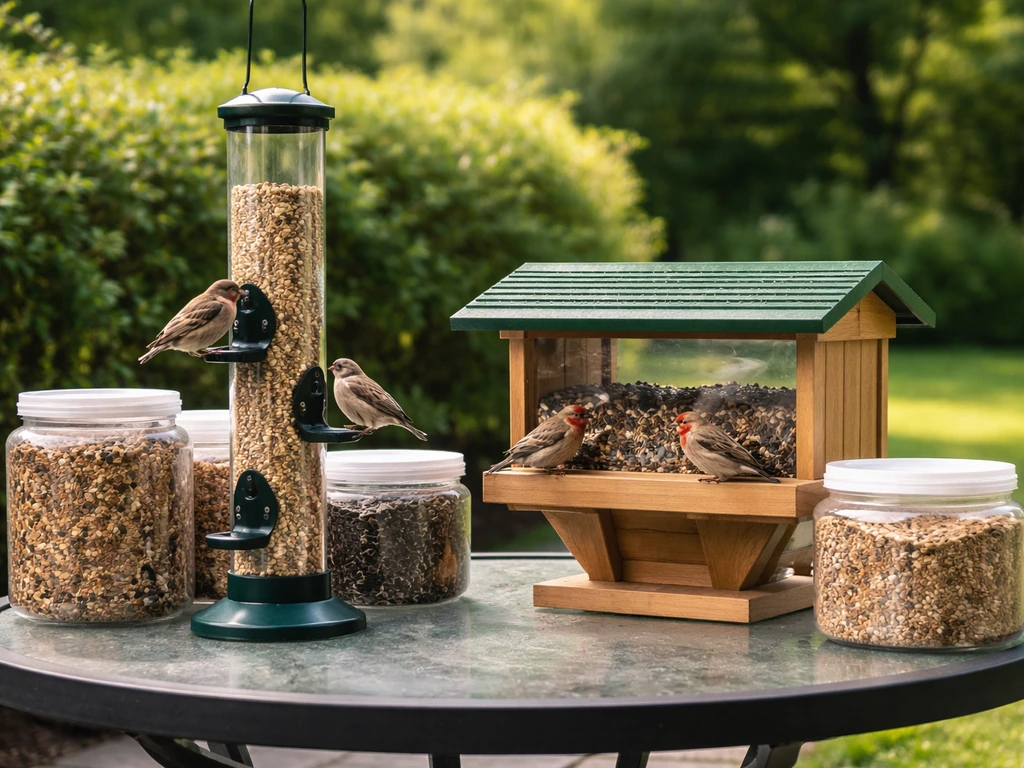
Deer will absolutely eat bird seed, and they're surprisingly good at getting to it. Whether that's a problem depends on what you're trying to do. Bird seed won't immediately harm a deer, but it's not a nutritionally appropriate food for them, it creates real hygiene and pest problems around your yard, and regular access changes deer behavior in ways that cause bigger headaches down the road. If deer are raiding your feeders, the fix is a feeder height of at least 6 feet off the ground plus some specific seed swaps. If you're intentionally trying to support deer, there are better options than bird seed.
Is Bird Seed Good for Deer? What to Feed or Avoid
Maya Collins
26 Apr 2026
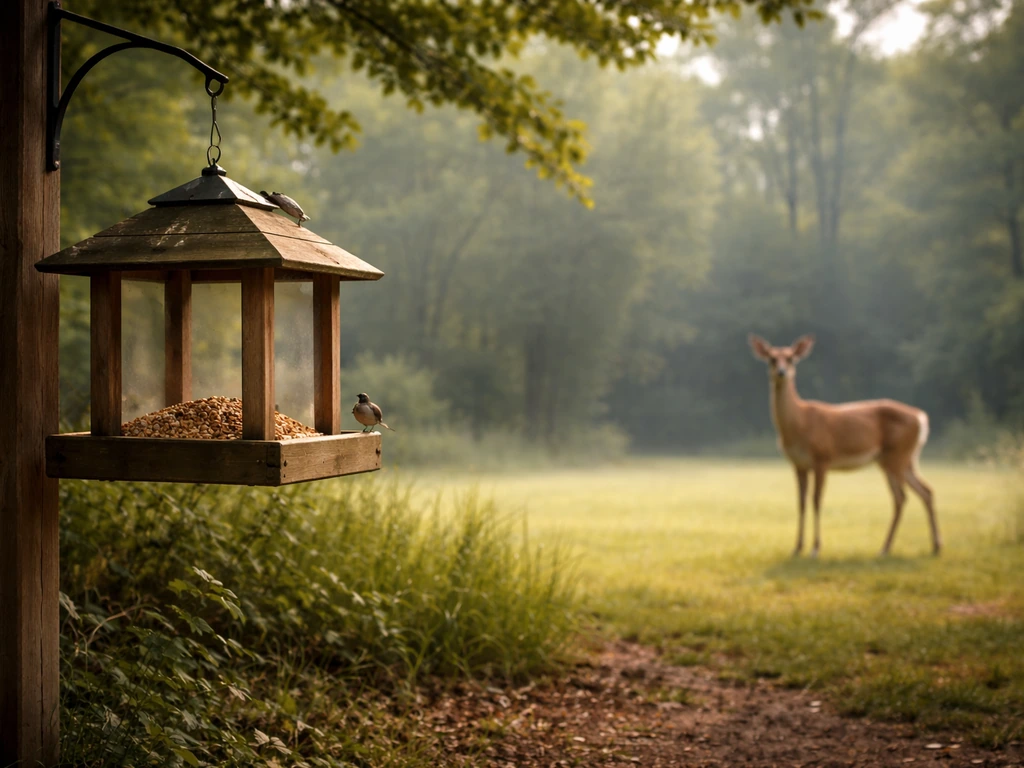
Will deer eat bird seed, and is it actually good for them?
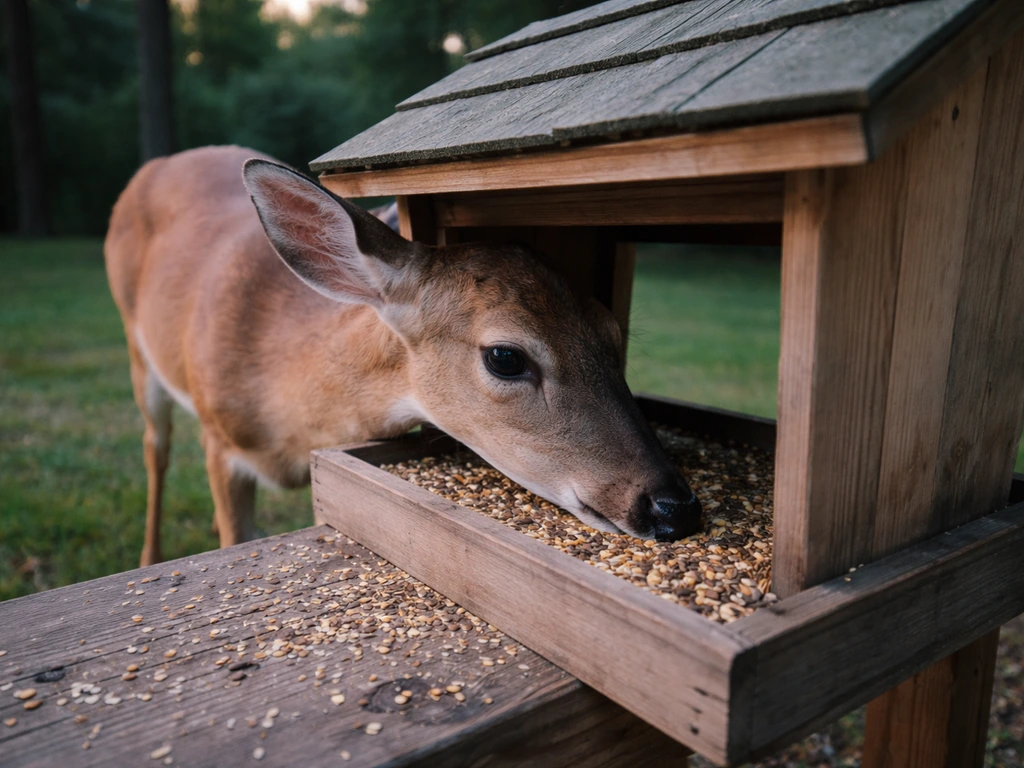
Yes, deer will eat bird seed, and they'll eat a lot of it if they can reach it. University of Nebraska–Lincoln extension researchers put it plainly: deer will eat birdseed. They're drawn to the same high-calorie ingredients that make bird seed attractive to birds, especially whole or cracked corn and black oil sunflower seeds.
As a food source for deer, bird seed is opportunistic rather than nutritious. That means bird seed is generally not good for birds that need a balanced diet, especially if the mix is mostly fillers or low-quality ingredients opportunistic rather than nutritious. Deer are ruminants with digestive systems built for fibrous plant matter: grasses, forbs, browse, and mast like acorns. Bird seed blends are calorie-dense but lack the fiber, mineral balance, and micronutrient profile deer actually need. A handful of sunflower seeds won't hurt a deer, but a steady diet of bird seed can disrupt their rumen flora, especially in winter when their gut bacteria are tuned for low-starch forage. It's not a healthy substitute for their natural diet.
Which bird seeds deer actually prefer (and what repels them)
Not all bird seed is equally attractive to deer. Michigan DNR guidance is specific here: whole corn, cracked corn, and black oil sunflower seeds are the biggest draws. Most mixed bird seed blends also attract deer because they typically contain both. If your feeders hold these ingredients and deer can reach them, expect visits.
Thistle (nyjer) seed, suet cakes, and hummingbird nectar are much less likely to attract deer according to the same Michigan DNR research. Straight safflower seed is also a lower-risk option because deer tend to avoid its slightly bitter flavor, though they may sample it if hungrier alternatives aren't available.
| Seed or Food Type | Deer Attraction Level | Notes |
|---|---|---|
| Whole or cracked corn | Very high | Top attractant; avoid if deer access is a concern |
| Black oil sunflower seeds | High | Extremely common in mixed blends; major draw |
| Mixed bird seed blends | High | Usually contain corn or sunflower; treat as high-risk |
| Safflower seed | Low to moderate | Bitter taste deters most deer; not foolproof |
| Nyjer (thistle) seed | Very low | Too small and bitter; rarely eaten by deer |
| Suet cakes | Very low | Fat-based; deer typically ignore |
| Hummingbird nectar | Very low | Liquid sugar solution; not appealing to deer |
If you want to keep birds fed without attracting deer, switching to straight nyjer seed in a tube feeder or using suet blocks is the most practical swap. You lose some bird diversity (nyjer mainly attracts finches), but you also lose the deer problem almost entirely.
Real risks of deer getting into bird seed
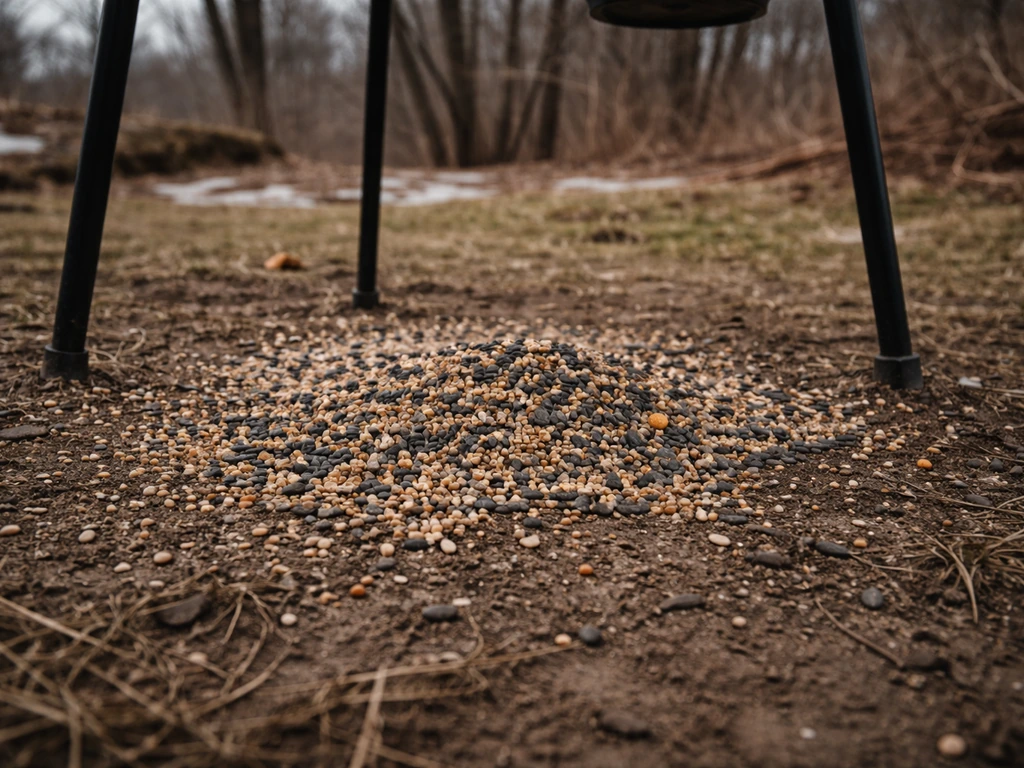
Nutrition and digestive problems
As covered above, bird seed isn't formulated for deer. The bigger risk comes from high-starch, high-sugar loads hitting a deer's rumen in winter when their microbiome can't process it efficiently. This can cause acidosis and digestive distress. Because deer often move off before symptoms fully develop, Colorado Parks and Wildlife specifically warns that illness from artificial feeding can go unnoticed by the people doing the feeding.
Behavioral changes and congregation problems
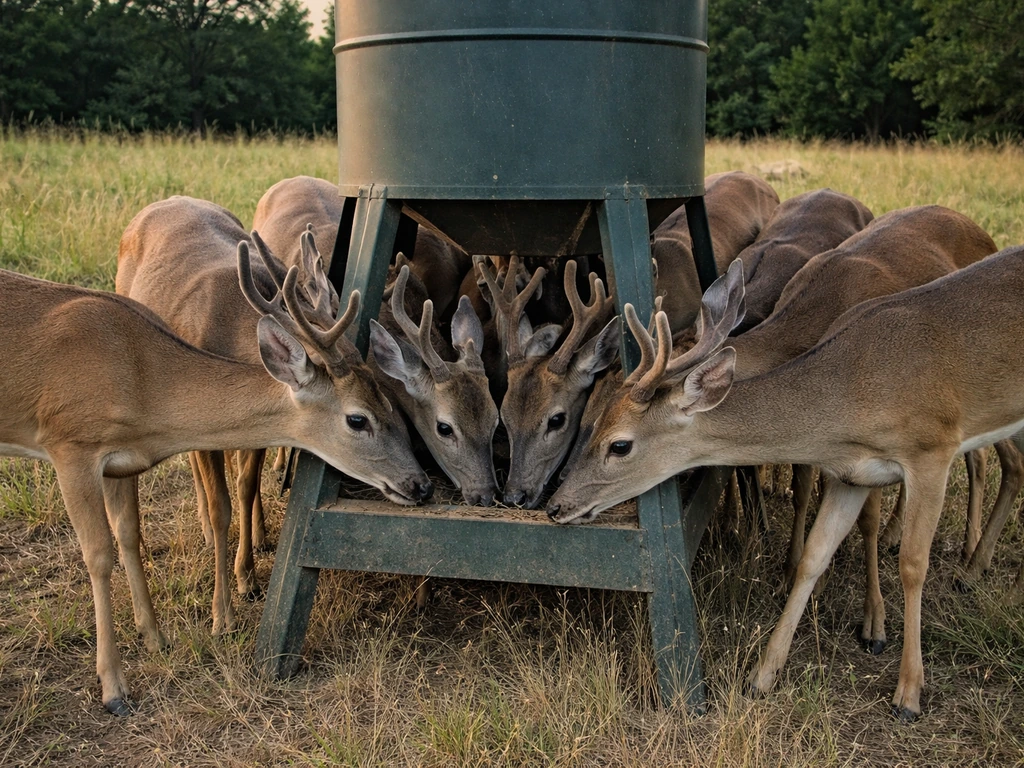
Washington Department of Fish and Wildlife discourages feeding deer and elk because concentrating them at a single food source creates predictable, compounding problems: increased predation risk, higher poaching vulnerability, and faster disease spread. Even unintentional feeding through accessible bird feeders triggers the same behavioral response. Deer that find a reliable food source return repeatedly, bring other deer, and become bolder around human structures. That escalates to garden damage, fence collisions, and deer that have lost their wariness of people.
Disease transmission
When deer congregate around feeders, nose-to-nose contact increases the transmission risk for diseases like Chronic Wasting Disease (CWD), which spreads through saliva and nasal secretions. CWD is present across a large portion of the U.S. and parts of Canada. Feeding stations that attract multiple deer become hotspots. This is one of the main reasons state wildlife agencies from Washington to Colorado actively discourage supplemental deer feeding.
Secondary pest problems
Deer don't just eat bird seed cleanly. They knock feeders over, scatter seed across the ground, and create large spills that sit in damp soil and rot. Nebraska Extension explicitly lists deer alongside mice, rats, and raccoons as unwanted guests that bird feeders attract. Once seed is on the ground in volume, rodents move in. Mice and rats are fast to colonize a reliable food spill, especially near structures. Deer access is often the trigger event that turns a tidy feeder setup into a pest problem.
Pest and mold trouble from deer-spilled seed
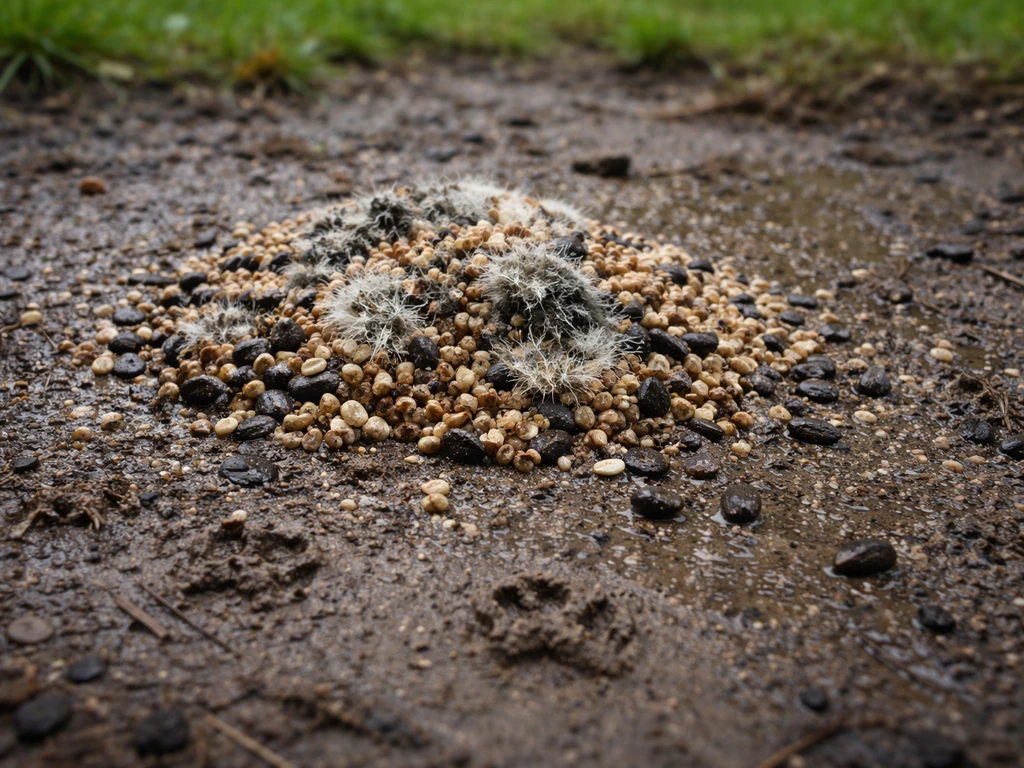
When a deer bumps or tips a feeder, you often end up with a large pile of seed on the ground. In dry weather that's messy. In wet weather it becomes a mold and rodent problem within a day or two. Here's how to handle it when it happens.
- Remove spilled seed from the ground within 24 hours of a wet event (rain, heavy dew, snow melt). Wet seed starts growing mold, especially Aspergillus, within 24 to 48 hours.
- Don't just scatter it further. Scoop it into a bag and dispose of it, or spread it in a thin layer in a sunny, dry spot away from your main feeding area if it's still dry and uncontaminated.
- Rake the ground under and around the feeder to remove seed husks, hulls, and shell debris. Hulls mat down, trap moisture, and prevent grass from growing, creating a permanent wet zone that invites rodents and mold.
- If you see visible mold (gray, black, or green fuzz on seed piles or on the ground), treat it as a biohazard. Wear gloves, bag the contaminated material, and avoid inhaling dust. Aspergillus mold can be dangerous to birds and to people with respiratory conditions.
- After cleanup, rinse the ground area with a diluted bleach solution (1 part bleach to 9 parts water) if the spill was large or repeated. Let it dry fully before refilling feeders.
- Check the feeder itself for cracks or damage from deer impact. Cracked plastic and splintered wood hold moisture and become mold sources even when refilled with clean seed.
For ongoing rodent prevention, clear all seed debris within a 10-foot radius of your feeder daily. A hardware cloth apron buried 6 inches below the ground surface around a feeder post discourages burrowing rodents from setting up under the spill zone. If you're already seeing mice or rats, stop feeding entirely for two to three weeks to break the foraging cycle before trying a rodent-deterrent setup.
Storage, moisture, and sprout prevention
Deer-related seed problems are mostly ground-level and moisture-driven, so good storage and feeder management reduce both the attraction and the cleanup burden. If you're trying to pin down pennington bird seed problems specifically, the same deer-spilled, moisture-driven patterns and storage checks described above are usually the key starting point.
- Store bulk bird seed in airtight metal or thick plastic containers with locking lids. Thin plastic bins are easy for rodents to gnaw through. A galvanized metal trash can with a bungee-secured lid is a reliable low-cost option.
- Keep stored seed in a cool, dry location, ideally below 70 degrees Fahrenheit. Heat and humidity accelerate mold growth even in sealed containers. A garage corner or shed shelf works well; avoid basements with humidity issues.
- Fill feeders in amounts that will be consumed within two to three days. Seed sitting in a feeder through rain or humidity clumps, molds, and ferments. Smaller, more frequent refills are better than loading up for a week.
- Use feeders with drainage holes or sloped floor trays so rain water doesn't pool in the seed. Remove wet seed from tray feeders the same day if it gets soaked.
- Sprouting seed in a tray feeder is a sign seed has been sitting too long in moisture. Remove sprouted seed immediately: it's not dangerous to birds in small amounts but it's a signal that mold is likely developing below the surface.
- In high-humidity climates (Pacific Northwest, Gulf Coast, Southeast), consider switching to no-mess or hulled seed blends during summer. Hulled seeds leave less organic debris and don't sprout.
How to keep deer away from your bird seed
The most reliable physical fix is height. blank" rel="noopener noreferrer">Michigan DNR guidance states feeders should be at least 6 feet off the ground or above the snow surface to prevent deer access. A deer's browse height is typically 5 to 6 feet in normal footing, but deer standing in packed snow can reach higher. In snow-prone regions, measure from the snow surface, not bare ground.
Feeder placement and hardware
- Mount tube feeders and hopper feeders on smooth metal poles at least 6 feet high. A smooth metal pole is harder for deer to use as leverage compared to wood posts.
- Add a baffle below the feeder, positioned about 4 to 5 feet up. Baffles designed for squirrels also prevent deer from nudging the pole to tip seed out.
- Hang feeders from a horizontal wire strung between two trees or posts, with the feeder suspended at least 6 feet high and at least 10 feet from any surface a deer could stand on. This is the most deer-proof hanging setup.
- Avoid platform or tray feeders at ground level if deer are active in your yard. These are essentially serving dishes for deer and other ground-feeding wildlife.
- If deer are knocking a setup over despite height, use a ground anchor (rebar or a concrete base) for the pole and add a physical barrier of wire mesh fencing in a 4-foot radius around the base.
Seed swaps that reduce deer interest
Switching your main feeder fill to nyjer seed, safflower, or suet removes the primary attractants (corn and black oil sunflower) from reach. This doesn't require any hardware changes and is often the quickest solution. You'll still attract a good range of backyard birds, especially finches, chickadees, nuthatches, and woodpeckers, without the deer magnet effect of corn-heavy blends.
If you actually want to help deer: better options than bird seed
If your goal is to support deer on your property rather than just stopping them from raiding your feeders, bird seed is a poor vehicle for that. The more effective and less risky approach is native habitat planting: browse species like native dogwoods, viburnums, and crabapples provide food deer can digest naturally and don't concentrate them in a single spot the way a feeder does.
If you're in a rural area and want to supplement deer during hard winters, check your state wildlife agency's current guidance first. Several states (including states with active CWD management zones) either restrict or strongly discourage supplemental deer feeding entirely. Where it's permitted, purpose-formulated deer feed (pelleted corn and soy blends with proper mineral ratios) is far more appropriate than bird seed, and it should be spread in small amounts over a wide area rather than piled at a single point to reduce disease risk.
For backyard wildlife observers who simply enjoy seeing deer without the feeder raid problem, a water source is a low-risk attractant. A shallow basin or garden pond brings deer, birds, and other wildlife into view without creating the nutritional, pest, or behavioral problems tied to food-based feeding. It's the lowest-friction option if your goal is wildlife observation rather than active supplemental feeding.
It's worth noting that bird seed suitability questions come up for other species too. Is pennington bird seed good for deer? The bigger takeaway is that bird seed generally is not a nutritionally appropriate food for deer and can lead to hygiene, pest, and behavioral issues around your yard. Whether bird seed is appropriate varies considerably depending on the animal, and the same seed mix that works fine for finches may pose real problems for chickens, pigeons, or deer.
The same logic applies to pigeons, too: bird seed is not a specially formulated pigeon food, so it may not meet their needs and can contribute to mess and pests is wild bird seed good for pigeons. In that same way, you should be cautious about the question “is bird seed good for chickens” and prioritize feed made specifically for chickens.
The throughline is that bird seed is formulated for wild birds, and using it as a general wildlife food usually creates more problems than it solves.
FAQ
Will a little bird seed hurt a deer, or is it only a problem if they eat a lot?
Occasional nibbling is unlikely to cause immediate harm, but risk increases quickly with repeat access. If deer can reach the feeder daily, the bigger issues become rumen disruption from high starch in winter, and yard mess that brings in rodents, so short term exposure usually becomes a long term problem when access is consistent.
Do deer prefer any specific types of bird seed beyond corn and black oil sunflower?
Yes. Deer are most drawn to energy-dense components, especially whole or cracked corn and black oil sunflower. If you are trying to reduce deer visits, check labels for these ingredients first, because many “mixed” blends contain them even when the bag looks finch oriented.
If I keep the feeder high, will deer still raid it in winter?
They might. A feeder 6 feet off bare ground can still be reachable when snow packs raise the effective height. In snowy areas, measure feeder distance from the snow surface, and recheck after heavy snowfall or when the ground changes.
Are suet, nyjer (thistle), and safflower completely deer-proof?
They are lower risk but not guaranteed. Deer generally avoid nyjer and safflower, and suet is less attractive, but hungry deer can sample options that are easier to access. The safest approach is pairing low-attractant seed with height and stricter access control.
What’s the fastest way to stop the pest spiral after deer tip the feeder?
Stop feeding the high-attractant seed immediately, then do a thorough cleanup. Remove scattered seed promptly (especially before it rains), because damp seed accelerates mold and quickly becomes a food source for mice and rats. If rodent activity is active, pausing feeding for a couple of weeks helps break the foraging routine.
Should I keep refilling the feeder if I see deer visiting at night?
Usually no. Night visits suggest the feeder is a dependable resource, which makes deer return and become bolder near your property. If deer are showing up, switch feed type first and reduce access, rather than continuing to provide the same attractants on a schedule.
Does feeding birds near my house increase deer disease risk like CWD?
It can. The concern is not just that deer eat, it’s that they congregate at a reliable spot and make nose-to-nose contact and shared contamination more likely. Any feeding station that draws multiple deer repeatedly can increase transmission risk for diseases such as CWD, even if your goal is bird watching.
Can deer learn to jump higher or reach a feeder after they tip it once?
They often do. If a feeder is successfully accessed even occasionally, deer may test the setup again, and repeated access can make them more comfortable around the structure. Consider changing both access (height or location) and attractant (seed type) rather than relying on one adjustment.
Is water alone enough to reduce deer interest in my bird feeder area?
Water can redirect attention if it becomes the easier, safer option. A shallow basin or small garden pond attracts deer without concentrating nutrients, so deer may spend less time at the food spot. However, it will not fix the underlying deer access issue if the feeder remains reachable.
What should I do if I want to help deer during a hard winter but avoid attracting them to my feeders?
First check your state’s current supplemental feeding rules, especially where CWD management is active. If feeding is allowed, use purpose-formulated deer feed and spread it over a wider area in small amounts, instead of piling it at one point, which reduces congregation and compounding disease and predation risks.
Next Article
Is Bird Seed Good for Birds? Safety, Storage, and Setup Guide
Learn if bird seed benefits wild birds, which types attract species, safe storage, feeder setup, and mold or pest preven