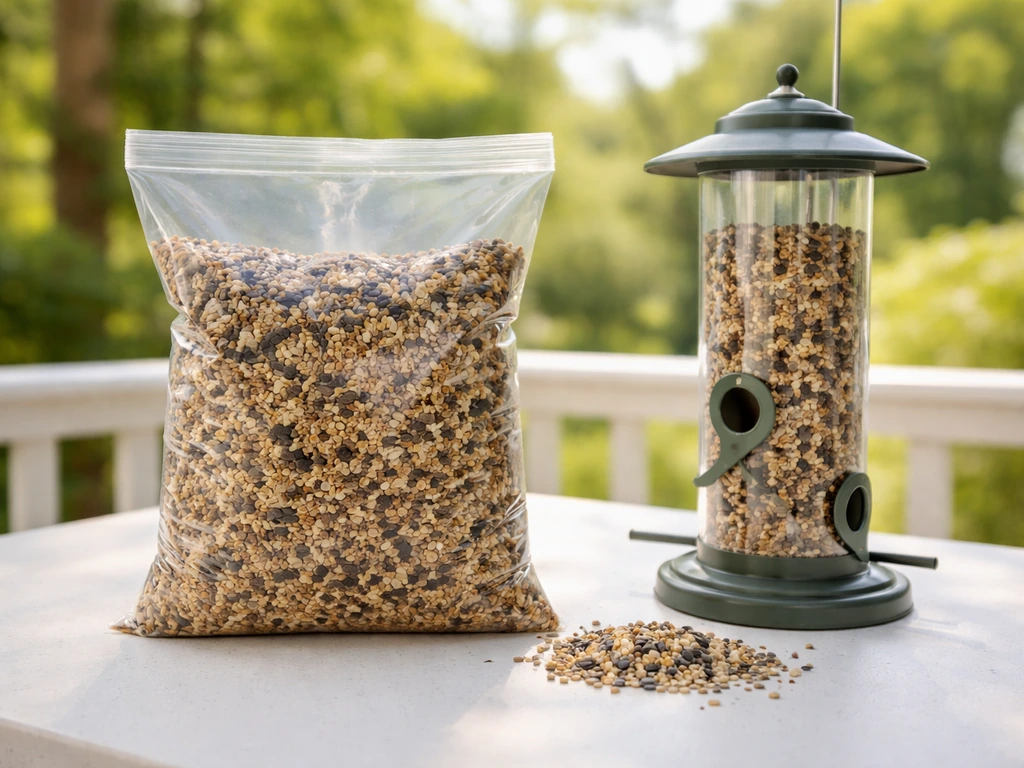
Yes, bird seed is good for wild birds, but only when it's the right seed, stored correctly, offered in a clean feeder, and matched to the birds actually visiting your yard. A bag of cheap mixed seed dumped into a dirty feeder is not the same thing as a well-chosen, fresh sunflower or safflower blend in a clean tube feeder. The quality of what you put out, and how you manage it, makes all the difference between a healthy backyard feeding station and one that spreads disease, attracts pests, and wastes money.
Is Bird Seed Good for Birds? Safety, Storage, and Setup Guide
Maya Collins
23 Apr 2026
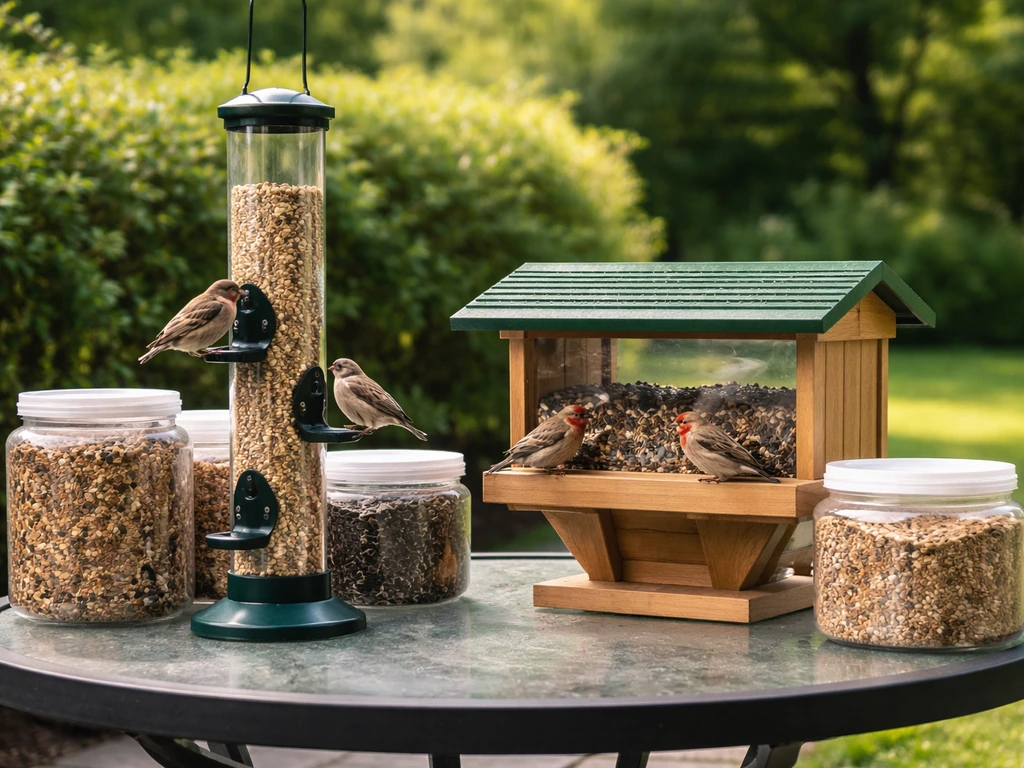
What 'good for birds' actually depends on
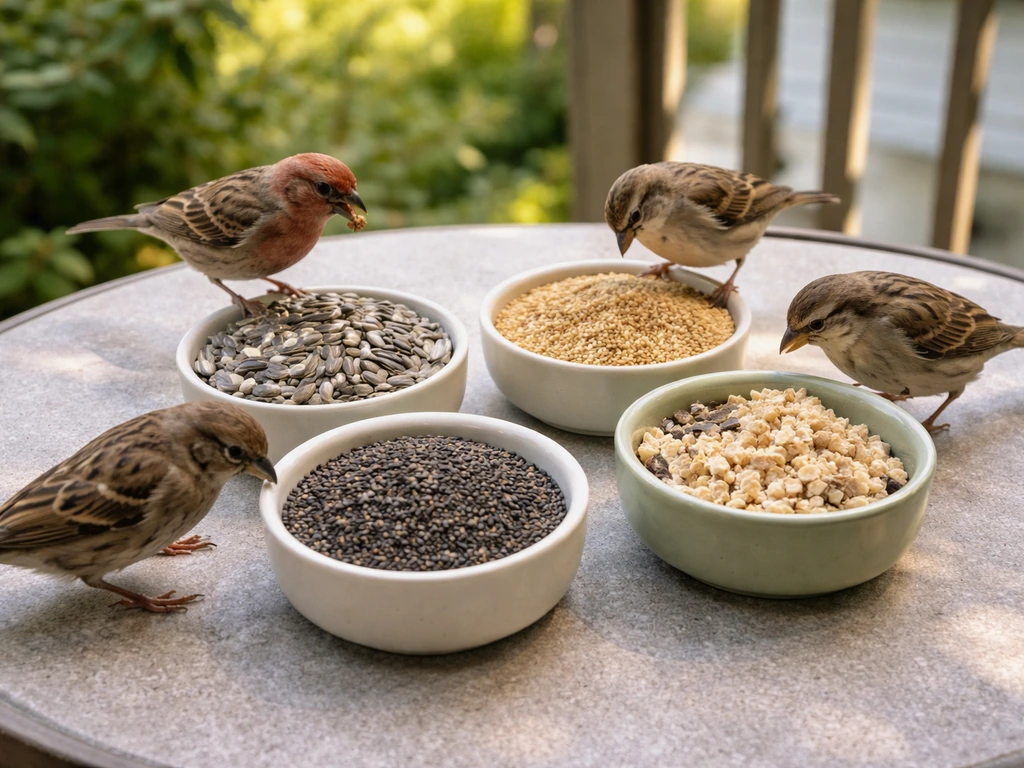
When people ask whether bird seed is good for birds, they usually mean two things: is it nutritious, and is it safe? Both matter, and neither is guaranteed by just buying any bag off the shelf.
On the nutrition side, birds need energy-dense foods that are easy to crack open and digest. Black oil sunflower seed is the gold standard here. Purina's black oil sunflower formula lists a minimum crude fat content of 38.5%, and Kaytee highlights its high oil content as a key energy source. That fat content is what fuels birds through cold nights and migration. Safflower is another strong option: it's a high-fat, high-protein oilseed that shows up in premium blends, and birds like cardinals, finches, and chickadees actively seek it out. Suet (rendered animal fat, often pressed into cakes with seeds or fruit) is similarly energy-dense and is especially valuable in winter when birds need the most calories per bite.
On the safety side, the risk is almost never from the seed itself. It comes from mold, moisture, contamination, and stale seed that has gone rancid. Fresh, dry, high-quality seed from a reputable brand is safe. Old, clumped, wet, or moldy seed is not. That distinction is the whole ballgame.
A common myth worth busting right here: more seed is not always better. Overloading a feeder means seed sits too long, gets wet, and goes bad. A feeder that's refilled with fresh seed every few days is far healthier than one that's topped off over and over without ever being emptied and cleaned.
Which wild birds benefit from seed, and what actually attracts them
Not every bird that visits your yard wants the same thing. One of the biggest mistakes backyard feeders make is putting out a single mixed blend and expecting it to work for everyone. Here's how common backyard species actually break down.
| Bird | Preferred Seed/Food | Best Feeder Type |
|---|---|---|
| Northern Cardinal | Black oil sunflower, safflower | Platform or hopper feeder |
| House Finch / Purple Finch | Black oil sunflower, nyjer (thistle) | Tube feeder |
| Black-capped Chickadee | Black oil sunflower, safflower | Tube or small hopper feeder |
| American Goldfinch | Nyjer (thistle), sunflower chips | Nyjer/finch tube feeder |
| White-breasted Nuthatch | Black oil sunflower, suet | Tube or suet cage feeder |
| Downy / Hairy Woodpecker | Suet, sunflower chips, peanuts | Suet cage feeder |
| Dark-eyed Junco | Millet (white proso), sunflower chips | Ground or platform feeder |
| Mourning Dove | White proso millet, safflower | Ground or platform feeder |
| Blue Jay | Whole peanuts, sunflower seeds, corn | Platform feeder |
| Tufted Titmouse | Black oil sunflower, peanuts | Tube or hopper feeder |
Cheap mixed seed bags often contain a lot of filler: milo (red sorghum), wheat, oats, and cracked corn in proportions that most desirable backyard songbirds simply toss aside. That rejected seed piles up under the feeder, rots, and draws pests. If you want cardinals, chickadees, and finches, skip the generic mix and invest in straight black oil sunflower or a blend built around sunflower, safflower, and nyjer.
A note on regional variation: in the South and Southwest, white proso millet goes fast because sparrow diversity is higher. In the Pacific Northwest, black oil sunflower and nyjer attract the most variety. In cold northern climates, high-fat suet cakes become essential October through March. Adjust what you buy to match your region and your actual visitors.
When bird seed is not good for birds
There are several situations where bird seed becomes actively harmful rather than beneficial. Knowing the warning signs saves birds and saves you money.
Mold and wet seed
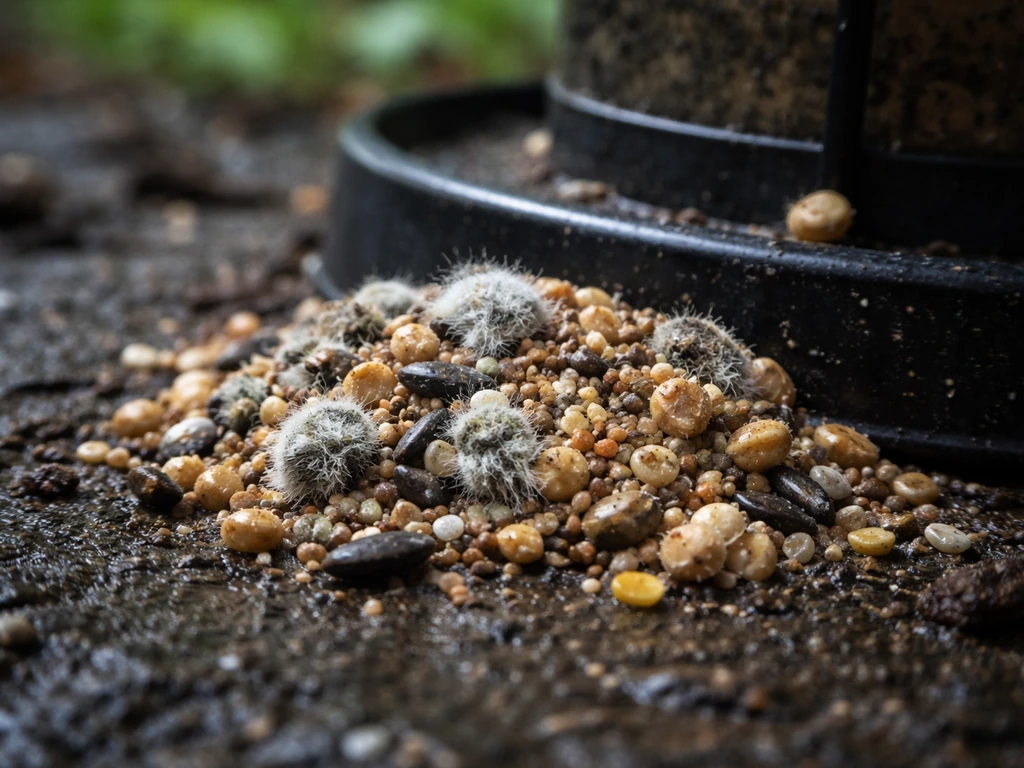
Moldy seed is the most common and most dangerous problem. Aspergillus fungi thrive in damp seed and produce aflatoxins that can kill birds outright, especially small songbirds. If you see any clumping, gray or black fuzz, or an off smell (musty, sour, or rancid), that seed is garbage. Do not try to dry it out and reuse it. Discard it, clean the feeder thoroughly, and start fresh.
Old and rancid seed
Seed that has been stored too long or exposed to heat loses its nutritional value and the oils go rancid. Birds may still eat it out of hunger, but it offers little energy and can cause digestive issues. A general rule: once a bag is opened, use it within 4 to 6 weeks if stored in a cool, dry space. Unopened bags kept in a climate-controlled area can last up to a year, but check the manufacturer's best-by date.
Sprouted seed
Sprouted seed is a common source of confusion. Some people assume it's harmless or even nutritious since it means the seed was viable. In reality, seed that has sprouted in your feeder has been sitting in moisture long enough to germinate, which means it's also been sitting long enough for bacterial and fungal growth. Remove and discard sprouted seed, clean the feeder, and figure out why moisture is getting in (rain cap issues, feeder design, or overfilling).
Contaminated seed and husk buildup
Empty shells and seed husks build up below feeders and inside them over time. Wet husks decompose into a matted layer that harbors mold, bacteria, and parasites. This debris also attracts rodents. Husk buildup inside the feeder itself can block drainage holes and trap moisture against fresh seed. Sweep or rake under your feeders at least once a week, and clear the inside of feeders every time you refill them.
How to store bird seed to prevent spoilage and pests
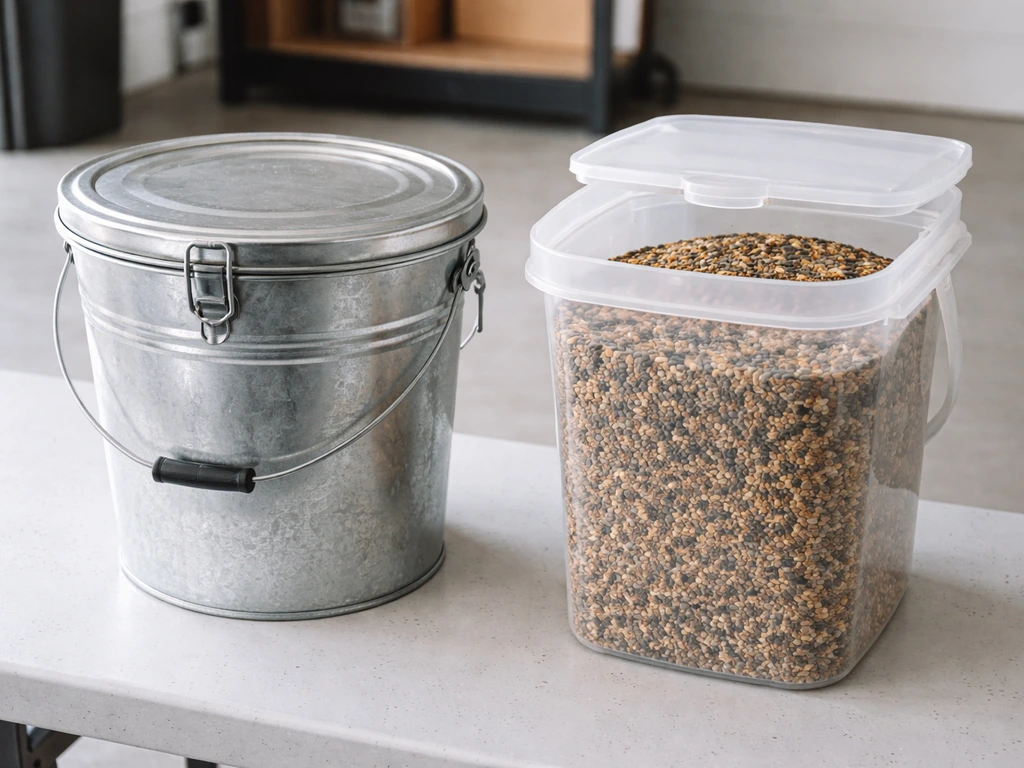
Storage is where most backyard feeders go wrong. A 50-pound bag tossed in a garage corner or left in a warm shed will be problematic within weeks. Here's what actually works.
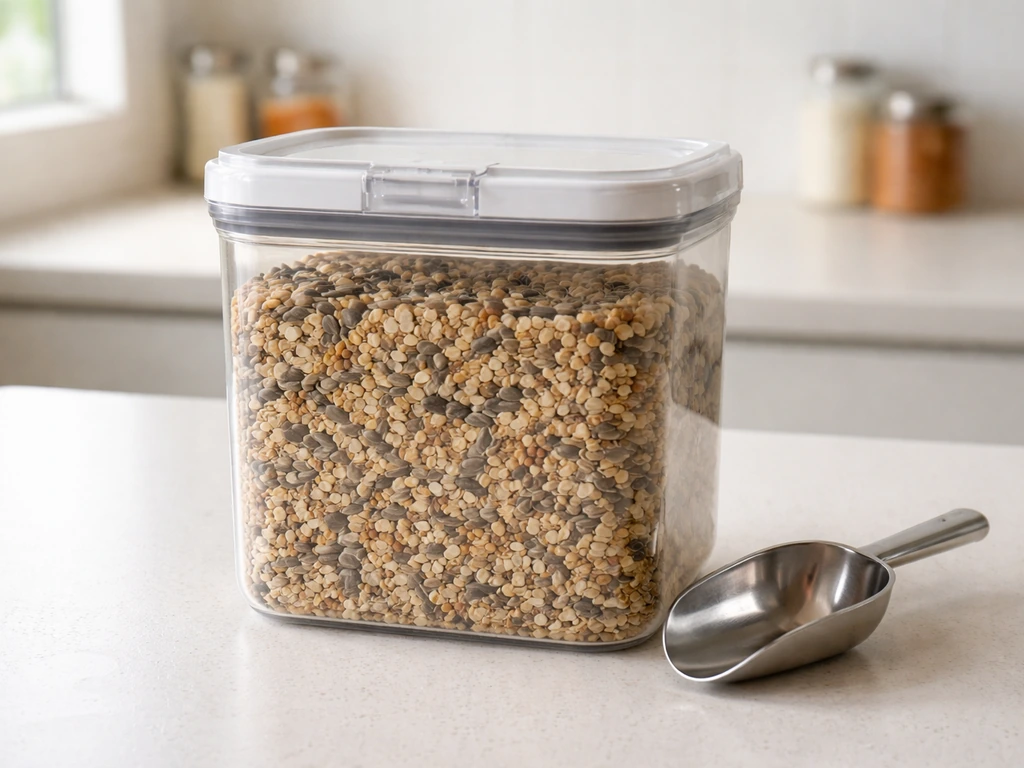
- Use a metal or heavy-duty plastic container with a tight-fitting lid. Galvanized metal trash cans or purpose-built seed bins both work well. Thin plastic bags and cardboard boxes attract rodents and allow moisture in.
- Store seed in a cool, dry location. Aim for under 70°F and below 60% relative humidity. A climate-controlled garage, basement, or mudroom is ideal. Avoid sheds that heat up in summer.
- Keep seed off the floor. Place containers on a shelf or pallet to prevent moisture wicking up from concrete.
- Don't mix old and new seed. Dump the container, wipe it out, and refill with fresh seed rather than topping off over old stock. Bacteria and mold from old seed contaminate fresh seed immediately.
- Buy in quantities you'll use within 4 to 6 weeks after opening. Buying in bulk is economical, but only if you can store it properly and move through it fast enough.
- Check for insect infestation regularly. Indian meal moths and grain weevils are common in stored seed. If you see webbing, larvae, or adult moths near the container, discard the seed, clean the bin with a dilute bleach solution, let it dry completely, and inspect where the infestation originated.
- Rotate stock using the FIFO (first-in, first-out) method: older seed gets used before newer purchases.
Feeder and setup tips to reduce waste and keep birds safe
The feeder you choose and how you set it up directly affects how safe the seed stays and how much actually gets eaten versus wasted.
Match the feeder to the seed and the bird
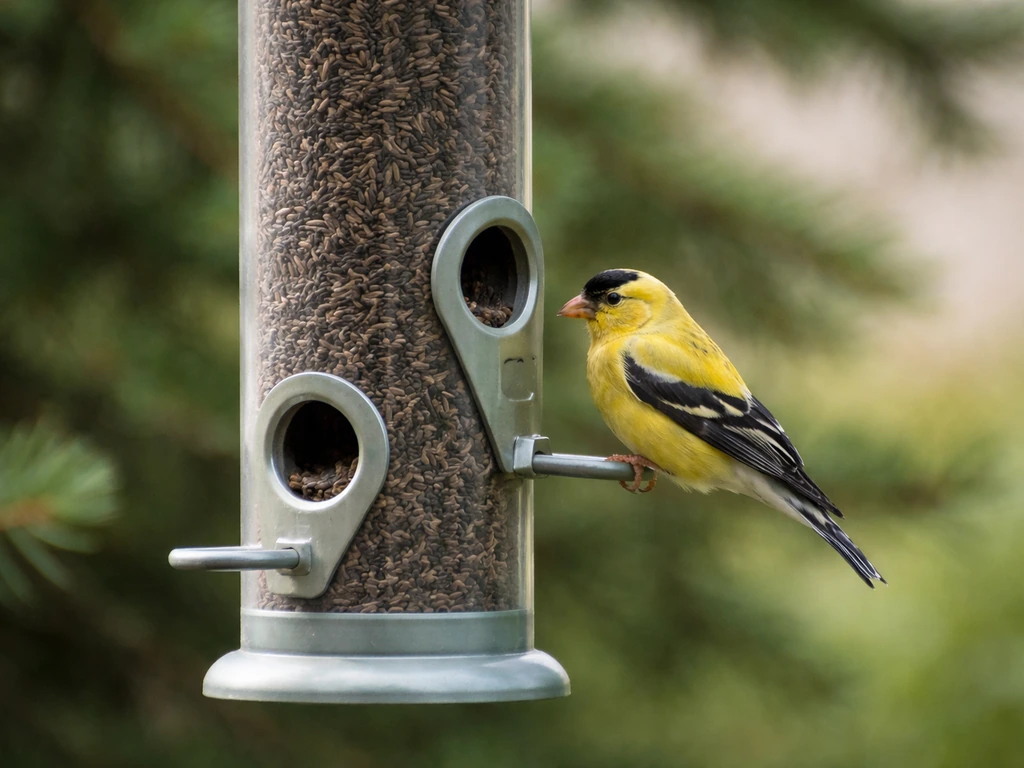
Tube feeders with small ports work best for nyjer and sunflower chips, keeping out larger birds that would otherwise dominate. Hopper feeders with weather guards protect seed from rain better than open platform feeders. Suet cages should be positioned away from direct sun to prevent suet from melting and going rancid in warm weather. Platform or ground feeders work for millet and safflower to attract doves and sparrows, but they need to be cleaned more frequently since seed sits directly on a surface exposed to weather and droppings.
Fill levels and refill cadence
Fill feeders to about half to two-thirds capacity rather than topping them off. This forces a natural rotation where seed is consumed within a day or two before more is added. In humid climates or during rainy stretches, reduce fill levels further so seed doesn't sit long enough to absorb moisture. A good rule: if you're going out to refill and there's still significant seed at the bottom, don't add more yet.
Placement and spacing
- Place feeders at least 10 feet from shrubs or fences to reduce predator ambush points, but within 3 feet or more than 30 feet of windows to reduce bird-window strikes.
- Space multiple feeders at least 6 to 10 feet apart to reduce crowding and disease transmission between birds.
- Use baffles (cone or cylinder-shaped guards) on feeder poles to block squirrels and climbing rodents. A smooth metal pole with a 16-inch baffle mounted 4 to 5 feet off the ground is effective.
- Position feeders so spilled seed falls onto a surface that's easy to rake or sweep, not into dense ground cover where it sits and rots.
One-size-fits-all is a myth
Running multiple feeder types with different seed choices will attract more species and reduce competition. A nyjer tube, a sunflower hopper, a suet cage, and a small platform with millet is a well-rounded setup that covers most common backyard birds without the filler waste of a cheap catch-all mix.
Cleanup and hygiene: spilled seed, moldy debris, and feeder maintenance
Feeder hygiene is non-negotiable. Dirty feeders spread diseases like salmonellosis, avian pox, and house finch eye disease (mycoplasmal conjunctivitis). The goal is a cleaning routine that removes pathogens without making the whole process so burdensome you skip it. All About Birds (Cornell Lab) recommends using a dilute bleach solution of no more than 1 part bleach to 9 parts water for cleaning bird feeders.
How often to clean
- Tube and hopper feeders: clean every 1 to 2 weeks in dry weather, every 3 to 5 days in wet or humid weather.
- Platform and ground feeders: clean every 2 to 3 days since they're most exposed to droppings and weather.
- Suet cages: wipe down weekly; replace suet before it turns soft, oily, or discolored.
- Under-feeder ground area: rake or sweep at least weekly to remove seed husks, droppings, and sprouted material.
How to clean a feeder properly
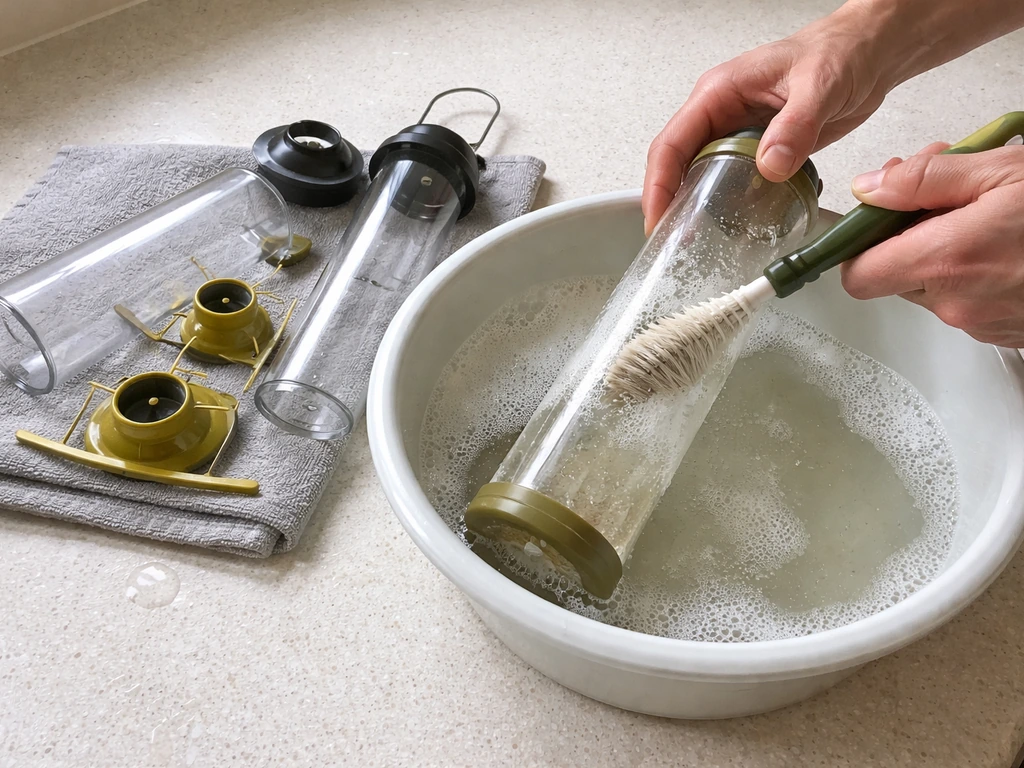
- Empty all old seed. Do not mix it with fresh seed.
- Disassemble the feeder as much as possible.
- Scrub with hot soapy water using a feeder brush to remove debris and biofilm from ports, perches, and reservoir walls.
- Soak in a dilute bleach solution (1 part bleach to 9 parts water) for 10 to 15 minutes to disinfect.
- Rinse thoroughly with clean water until no bleach smell remains.
- Allow to air dry completely (at least a few hours) before refilling. Moisture left in the feeder will immediately begin to degrade fresh seed.
Handling spilled seed and contaminated debris
Spilled seed under feeders should not be left to accumulate. Beyond mold and pests, decomposing seed debris can introduce weed seeds into your lawn and create persistent wet spots. Rake the area, bag the debris (seed husks, droppings, and any sprouted material), and dispose of it in the trash rather than composting it since it may contain pathogens. If you're dealing with a persistently wet area, consider moving the feeder or laying a gravel or paving stone pad underneath to improve drainage and make cleanup easier.
Troubleshooting pests and recurring problems by season and region
Even a well-managed feeding station will run into problems. Here's how to diagnose and fix the most common ones, organized by what you're dealing with.
Rodents (rats and mice)
Spilled seed under feeders is the number-one rat and mouse attractant. Fix: use a tray or catch-basket under feeders to collect fallen seed, and clean it daily. Switch to no-mess seed blends (hulled sunflower chips, shelled peanuts) that leave almost no waste shell debris. Remove all spilled seed by evening since rodents are most active at night. Store all seed in metal containers with locking lids. If you're already seeing rodents, stop ground feeding immediately and consider pausing all feeding for 1 to 2 weeks to break the attraction cycle.
Squirrels
Squirrels are persistent and clever. The most effective deterrents are a smooth metal pole (at least 5 feet tall) with a 16-inch squirrel baffle, and feeders hung on a wire between two poles with plastic pipe or spinning baffles on the wire. Squirrel-resistant feeders with weight-activated perch closures also work well for sunflower and mixed seed. Safflower is a useful tool here too: squirrels tend to dislike its bitter taste, so switching a feeder to straight safflower can significantly reduce squirrel visits.
Ants
Ants are primarily attracted to nectar feeders, but they will also invade suet and seed feeders, especially in warm months. Ant moats (small water-filled cups that mount above the feeder on the hanging hook) are highly effective for hanging feeders. Keep feeder poles free of vegetation and apply a sticky barrier product around the base of the pole if ants are traveling up from the ground. Clean up any sugary spills around the feeding area promptly.
Mold recurrence
If mold keeps coming back, the root cause is almost always moisture entry. Check that the feeder has a functional rain guard or weather dome. Make sure drainage holes at the bottom of the feeder reservoir are clear and not blocked by seed husks. In very humid climates (Gulf Coast, Pacific Northwest), switch to covered hopper feeders with weather guards and use smaller fill quantities. Avoid positioning feeders under dripping eaves or in low-lying areas where humidity concentrates.
Insects in stored seed
Indian meal moths and grain beetles are common in stored bird seed, especially in warmer months. If you find webbing or larvae in your storage bin, discard the affected seed, wash and bleach-rinse the container, and let it dry fully. Lowe’s also recommends washing and bleach-rinsing storage containers to help keep bird seed safe, scrubbing the areas birds contact and using a 9-to-1 water-to-bleach mix wash and bleach-rinse the container. Freezing fresh seed for 48 hours before storing it can kill any eggs already present in the bag. Keep storage areas cool and dry, and inspect seed bags for signs of infestation before purchasing if possible.
Seasonal adjustments
In summer, reduce feeder fill levels and increase cleaning frequency since heat accelerates mold and rancidity. Suet melts above 90°F, so switch to no-melt suet or remove suet cages entirely in peak heat. In winter, increase fill levels and shift toward high-fat foods: black oil sunflower, suet cakes, and peanuts are the most valuable cold-weather offerings per the K-State Extension feeding guidelines. During spring and fall migration, you'll see unusual visitors passing through: keep feeders clean and stocked during these windows since transient birds are often calorie-depleted and actively seeking reliable food sources.
What to do right now
If you're reading this and not sure whether your current setup is doing more good than harm, here's a practical checklist to run through today.
- Inspect your current seed: smell it, look for clumping or fuzz, and check the purchase or best-by date. If it's questionable, discard it.
- Check your storage container: is it airtight, metal or hard plastic, and stored somewhere cool and dry? If not, upgrade before your next purchase.
- Empty and clean your feeder using the bleach-soak method described above. Let it dry fully.
- Identify which birds are actually visiting your yard and match your seed choice to them. Ditch cheap mixed seed with heavy filler if your target birds are cardinals, finches, and chickadees.
- Set a refill and cleaning schedule and stick to it: once or twice a week for refilling with fresh seed, full cleaning every 1 to 2 weeks.
- Rake and clear the area under your feeders, then set up a system (catch tray, gravel pad, or daily sweeping) to manage future buildup.
- If you're dealing with squirrels or rodents, add a baffle and switch to no-mess hulled seed to eliminate the ground-litter attractant.
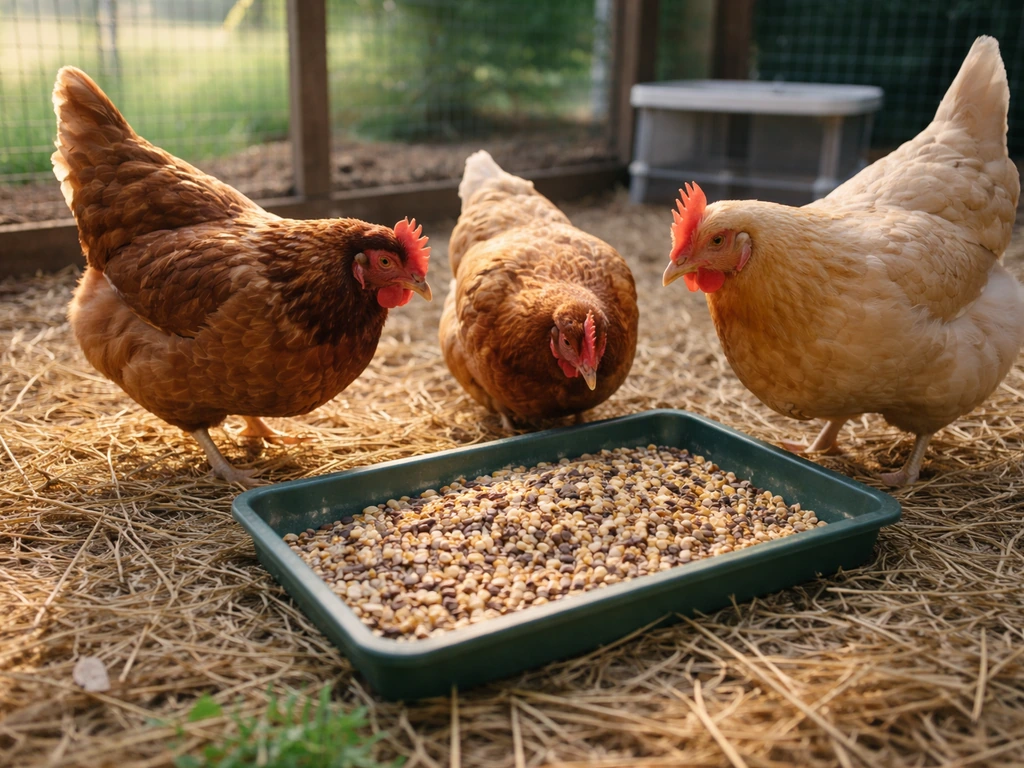
Bird seed is genuinely good for wild birds when it's the right seed, kept fresh, offered in a clean feeder, and managed consistently. is bird seed good for deer. When it comes to backyard chickens, you should use poultry-safe feed and avoid relying on bird seed as a staple Bird seed is genuinely good for wild birds. Pigeons have different dietary needs than typical backyard songbirds, so bird seed is not always a good choice for them bird seed for pigeons. The birds that visit your yard are worth the extra effort of doing it properly. If you're dealing with Pennington bird seed problems, look closely for mold, rancidity, and pest signs before feeding anything to the birds. A well-run feeding station supports real nutritional needs, especially during cold winters and migration, and it's one of the most effective ways to bring wild birds reliably into your backyard.
FAQ
Is bird seed good for birds if I use a cheap mixed bag?
It can be, but only if the mix is fresh and you prevent waste. Many mixes contain a lot of filler that birds ignore, and the leftover husks below the feeder can turn mold-prone. Choose a bag that stays dry, remove rejected seed buildup weekly, and refill only when the feeder is mostly empty.
How often should I refill bird seed so it stays safe?
Refill on a schedule that keeps seed from sitting too long, typically every 1 to 3 days depending on weather and feeder type. In humid or rainy stretches, use smaller fill levels so moisture never has time to soak into the seed. If you still see significant seed when you go to refill, wait and let what is there get eaten.
Can I leave bird seed out in winter snow or heavy rain?
You can, but only if the feeder design sheds water and you keep debris from trapping moisture. Use weather guards or covered hoppers for rainy periods, and avoid open platform feeders where seed sits directly on surfaces that stay wet longer. After storms, check for clumping, off smells, or sprouted seed and remove any affected portions right away.
What should I do if birds suddenly stop eating after I filled the feeder?
First check for spoilage signs like clumping, gray or black fuzz, and rancid or musty odors. Then look for feeder drainage problems, blocked ports, or husk buildup that keeps new seed damp. Finally, confirm you offered the right food for the species in your area, since an overly mixed or filler-heavy blend may be ignored even when it is technically safe.
Is sprouted bird seed ever okay to leave in the feeder?
No, sprouted seed should be removed. Sprouting means the seed sat in moisture long enough for bacterial and fungal growth to start. Discard it, clean the feeder thoroughly, and fix the moisture source, commonly a malfunctioning rain cap or overfilling that lets seed linger at damp levels.
How can I tell if my bird seed has gone rancid?
Rancid seed often smells off (sour, musty, or strongly stale) and may look slightly darker or oily, especially with high-fat seeds. Birds may still nibble it, so smell and texture checks matter. If in doubt and you notice odor or clumping, discard it rather than trying to salvage it by drying.
Do I need to change what I feed based on region or season?
Yes. In colder northern months, energy-dense foods like black oil sunflower and suet cakes typically perform best. During warmer months, reduce fill levels and increase cleaning because heat speeds rancidity and mold. In some regions, certain seeds like white proso millet can be more attractive to local sparrows than sunflower-heavy blends.
Will bird seed attract pests like ants, rodents, or moths?
It can if seed waste and storage are not controlled. Under-feeder spilled husks are a common rodent attractant, and infested storage can introduce grain beetles or meal moths. Use a catch tray, remove fallen seed daily, and store seed in a cool, dry area in metal containers with locking lids.
Can I compost used bird seed or seed husks?
Avoid composting seed or husks if there is any chance of mold, sprouting, or contamination. The article’s approach is to bag and dispose of it in the trash, since pathogens may persist. If you want to compost generally, separate plant-only debris from seed waste, and do not compost anything that had off smells, fuzz, or visible mold.
Are there situations where feeding should be paused completely?
Yes. If rodents are actively showing up, stop ground feeding immediately and consider pausing all feeding for 1 to 2 weeks to break the attraction cycle, then resume with a cleaner setup and better deterrents like a tray and daily cleanup. Also pause feeding if you cannot maintain a cleaning routine, because dirty feeders spread diseases.
Is bird seed good for birds if I’m feeding on the ground?
Ground feeding increases mess and dampness, so it is harder to keep safe. If you do it, use very small amounts, rake up husks and droppings frequently, and keep the area dry where possible. Switching to a feeder style that keeps seed off the ground usually reduces mold risk and pest pressure.
What is the safest way to store bird seed after opening?
Keep it in a cool, dry location in a sealed metal container with a locking lid. Use opened seed within about 4 to 6 weeks if possible, and inspect for webbing or larvae before feeding. Freezing fresh seed for 48 hours before long storage can help kill eggs that may already be present.