Yes, deer absolutely eat bird seed. They'll eat sunflower seeds, millet, cracked corn, and most mixed seed blends with zero hesitation. If you have a feeder low enough for them to reach, or seed spilled on the ground, deer will find it and keep coming back. The Michigan DNR notes that deer access and feeding preferences can vary by feeder and food type, with deer less likely to use some bird foods than others like whole or cracked corn and black oil sunflower seeds feeder low enough for them to reach, or seed spilled on the ground. This isn't a rare or unusual behavior. It's predictable, it happens year-round, and it gets worse in winter when natural food is scarce.
Do Deer Eat Bird Seed? How to Stop Seed Theft Fast

Maya Collins
23 Mar 2026
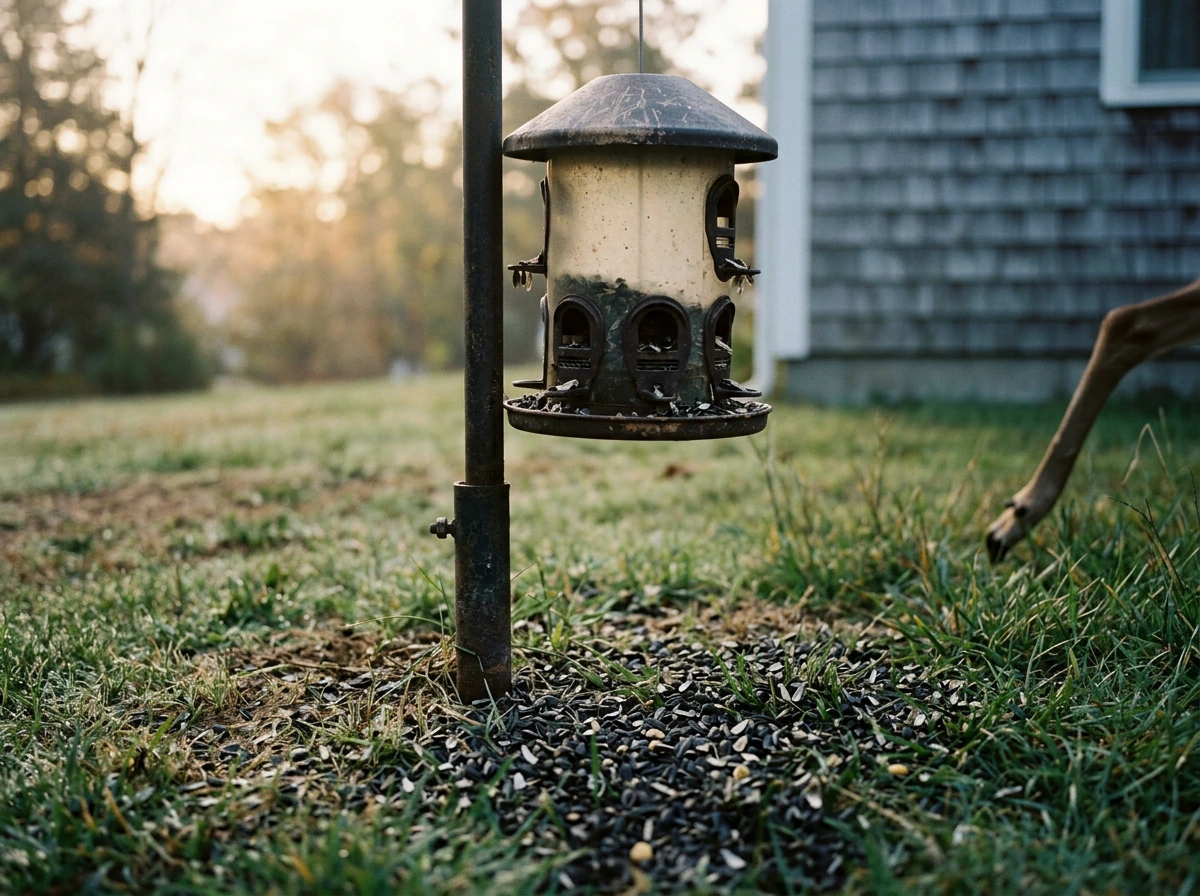
Why deer are drawn to bird seed in the first place
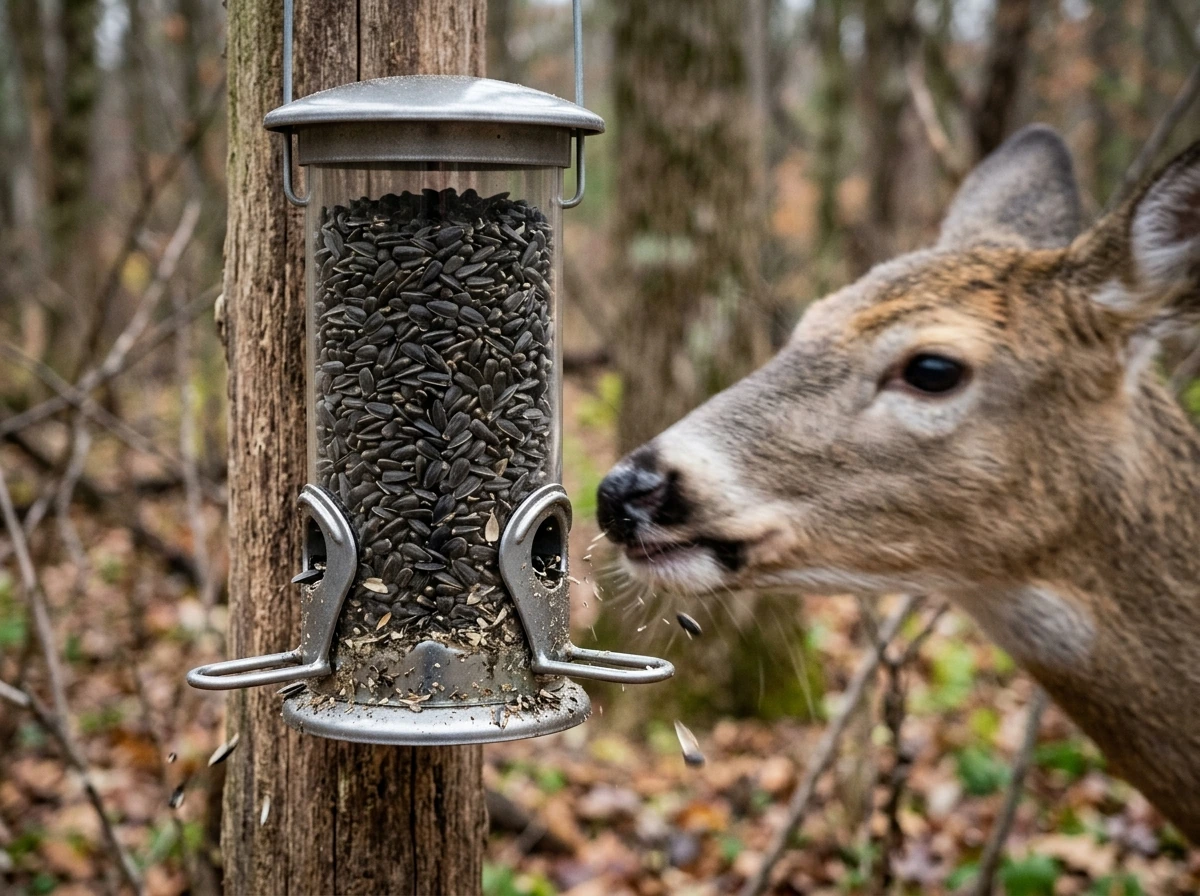
Bird seed is calorie-dense, easy to eat, and often left out in predictable locations. For a deer, that's ideal. Black-oil sunflower seeds in particular are high in fat and protein, which makes them especially attractive during fall and winter when deer are building or maintaining body condition. Millet, safflower, and cracked corn are also readily consumed. Suet can attract deer too, though it's less of a primary target than seed.
Scent plays a big role. Deer have a strong sense of smell, and a feeder full of sunflower seeds or a patch of spilled seed under a tube feeder gives off a noticeable odor. Once one deer finds your yard, others follow. And once deer associate your yard with food, they'll return to check it regularly, even on nights when there's nothing there.
Seasonality matters a lot here. In summer and fall, deer may occasionally visit but have plenty of other food options. In winter, especially after snow covers natural browse, your bird feeder can become a reliable food source they actively seek out. In northern states and high-elevation areas (think Colorado, Wyoming, the upper Midwest), winter deer pressure at feeders is significantly higher than in milder southern climates.
Will deer eat from feeders or just from the ground?
Both, but ground seed is the easiest target. Any seed that falls beneath your feeder, which happens constantly with most feeder styles, is immediately accessible to deer. Birds are messy eaters. They toss seed looking for their preferred type, hull sunflower seeds and drop the shells, and knock seed off platform feeders while landing. All of that accumulates below the feeder and creates a ground-level buffet.
Deer will also reach up into low-hanging feeders. A standard shepherd's hook places many feeders at exactly the right height for an adult deer to nose into or knock over. Tube feeders, hopper feeders, and platform feeders hanging below 5 feet are all within reach. Deer won't delicately pick at a tube feeder the way a bird does. They'll push it, lick at it, or simply knock it to the ground and eat from there.
Ground feeding setups (trays, flat platforms at ground level, or seed scattered on a deck or stump) are the worst possible scenario for deer. Virginia's Department of Wildlife Resources specifically recommends against ground feeding because it concentrates wildlife at a single spot, which increases disease transmission risk and reliably draws in deer and other mammals.
The real problems deer cause at your feeder
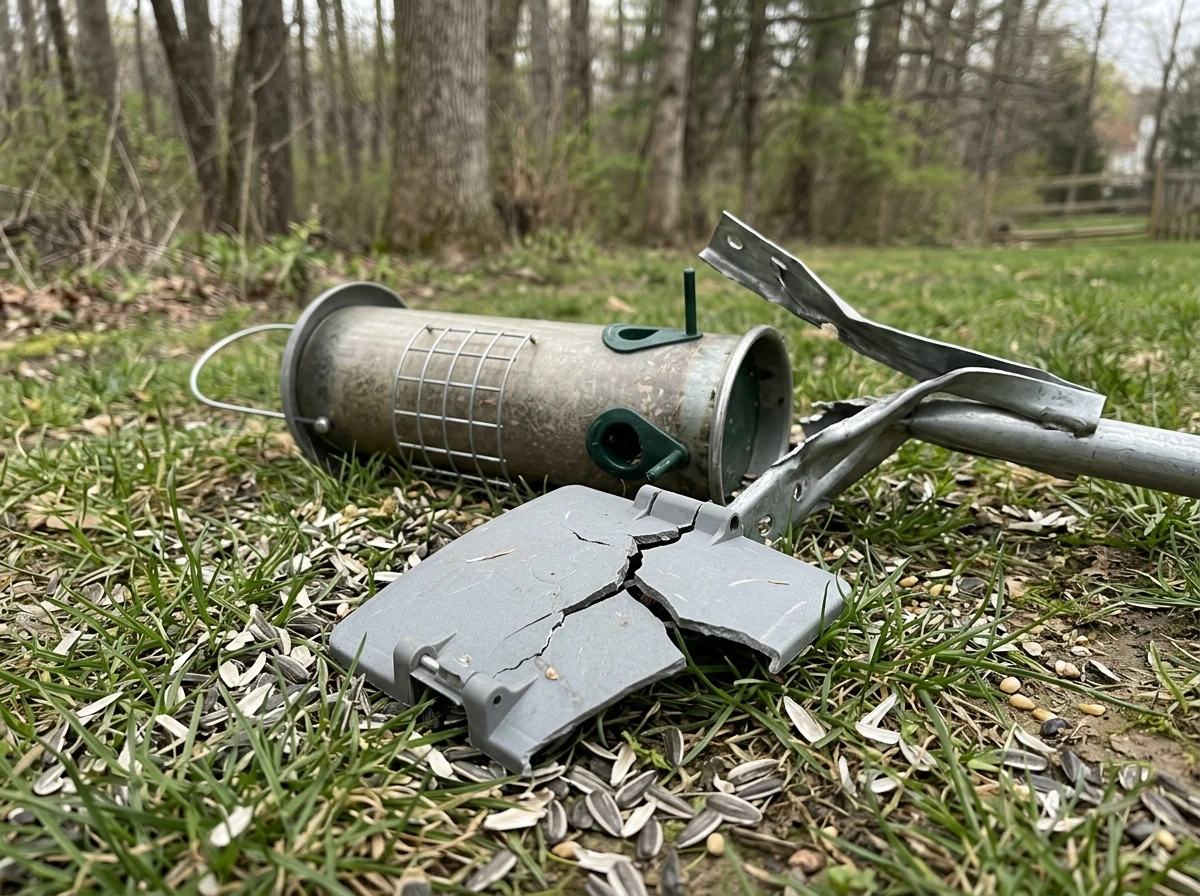
The obvious issue is that deer eat a lot of seed fast. A single deer visit can empty a feeder or clean out a ground pile in minutes, which is expensive and means your birds don't get fed. But there are bigger concerns than just seed loss.
- Feeder damage: Deer push, knock over, and break feeders. Plastic tube feeders and lightweight hopper feeders are especially vulnerable. Broken feeders expose seed to moisture, which speeds up mold and spoilage.
- Disease risk: Wildlife agencies including Virginia DWR warn that deer congregating at feeders increases the risk of disease transmission, including Chronic Wasting Disease (CWD). CWD is a serious, fatal prion disease in deer, and any setup that brings multiple deer to a concentrated food source raises that risk.
- Attracting additional pests: Spilled seed and deer activity signals to other wildlife that food is available. West Virginia University Extension notes that seed buildup under feeders attracts mice, squirrels, raccoons, and bears in addition to deer. If you're already dealing with deer, mice and rats are likely not far behind.
- Mold and spoilage: Deer root around in ground seed and spill more of it. Wet, trampled seed molds quickly. That moldy seed can make birds sick if they eat it, and it creates an ongoing hygiene problem under and around your feeder.
How to stop deer from getting to your bird seed today
The good news is that you have several practical options, and you can implement most of them without buying expensive equipment. The key is combining feeder height with physical exclusion and reducing ground seed accumulation.
Get the feeder up high enough
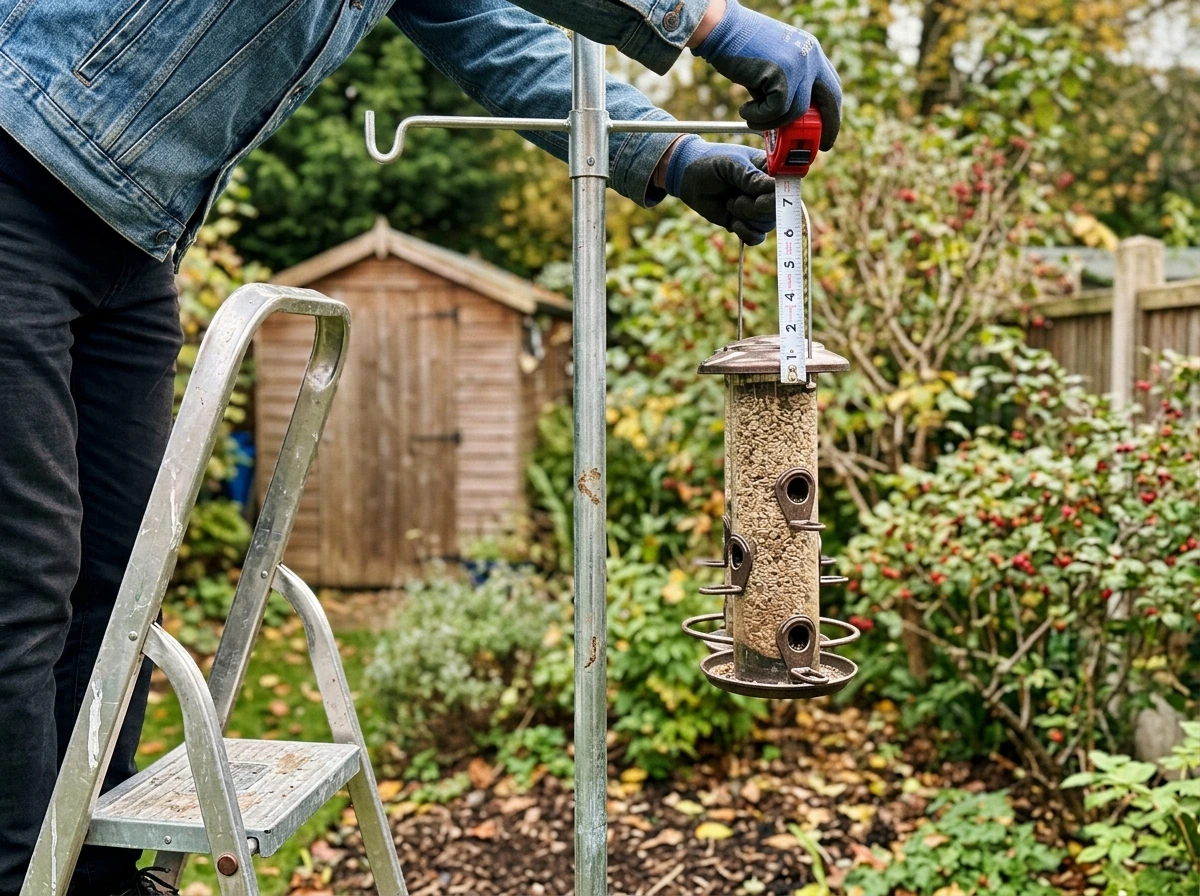
Hang feeders at least 6 to 7 feet off the ground. An adult white-tailed deer can reach roughly 5 to 6 feet with its neck extended, so 7 feet is the practical minimum for reliable protection. This means replacing short shepherd's hooks with taller poles or hanging feeders from a tree branch or a mounted bracket on a fence post or building eave at the right height.
Add a baffle to the pole
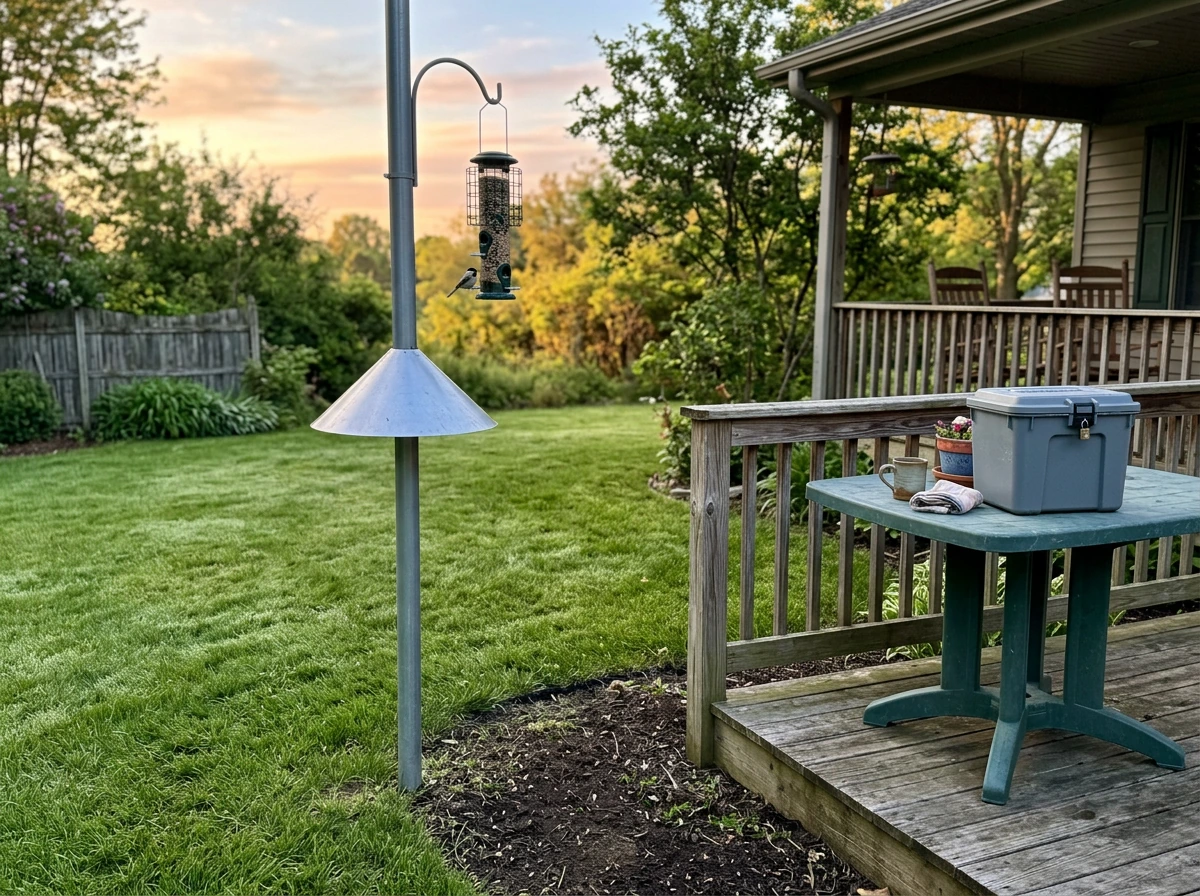
A wide cone or cylinder baffle mounted on a smooth metal pole keeps mammals from climbing up to a feeder. While baffles are primarily marketed against squirrels, they also prevent deer from using the pole as leverage to tip or pull down a feeder. University of Nebraska-Lincoln's guidance on deterring nuisance wildlife specifically recommends baffles as part of a feeder-exclusion setup. Use a pole-mounted baffle placed about 4 to 5 feet up on a pole that's at least 7 feet tall overall.
Use a cage or exclusion setup around the feeder
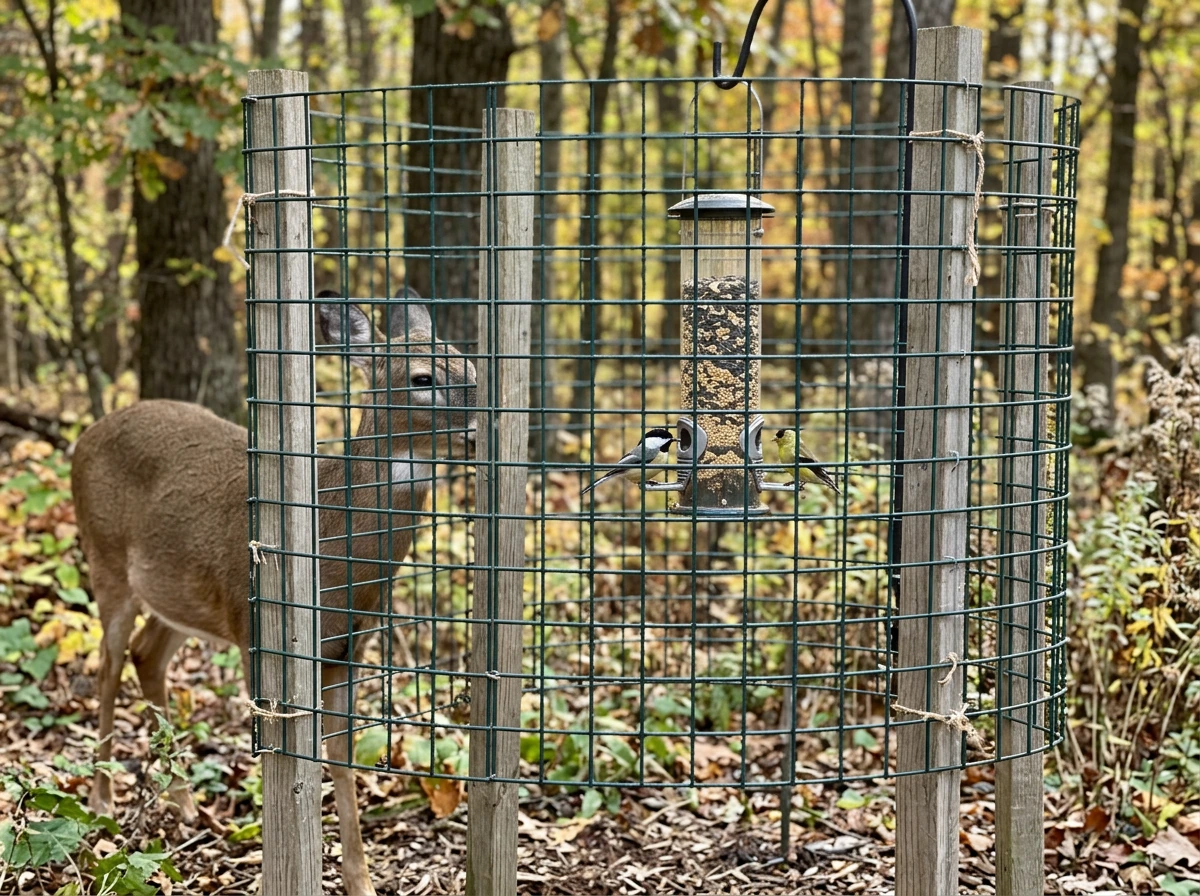
Wire mesh cages (sometimes called feeder cages or caged feeders) surround the feeder with a grid that small birds can pass through but larger animals cannot. These work well against squirrels and partially against deer, though a determined deer will still lick at any seed near the cage opening. A more robust option is to install a small wire fence or tomato-cage style enclosure around the entire feeder pole area, which physically prevents deer from approaching closely enough to reach up.
Stop ground seed from accumulating
This is the single most effective step you can take today. Rake or sweep up fallen seed under your feeder every day, or at minimum every two to three days. Use a seed tray or catch tray attached to the feeder to intercept fallen seed before it hits the ground. No-mess seed blends (pre-hulled sunflower chips, hulled millet) drop significantly less debris because birds don't need to shell them. Switching to a no-mess blend reduces ground accumulation by a large margin.
Consider feeder placement relative to deer travel routes
If you know deer regularly move through a section of your yard, move your feeder to a location closer to your house, on a deck with stairs deer won't use, or in an area fenced for another purpose (like a garden enclosure). Colorado Parks and Wildlife notes that accessible feeders teach wildlife that food is reliably available near homes. Moving the feeder changes the association and makes your yard a less consistent reward for deer.
Keeping your seed dry and in good condition
Deer problems and seed quality problems often go together. A feeder that's been knocked around by deer is more likely to have cracked ports, broken seals, or a compromised lid, all of which let moisture in. Wet seed molds within days, and moldy seed is dangerous for birds.
Storage basics
Store bulk seed in a sealed, rigid container in a cool, dry place. Metal garbage cans with locking lids or purpose-built seed storage bins work well. Cornell Lab recommends keeping seed in a dark location in a closed container to prevent both moisture and rodent access. Avoid storing seed in a garage where temperature swings are extreme, or in any spot where it can get rained on or where humidity regularly runs high. Wet seed clumps, molds, and can sprout, and none of those outcomes are good.
Seed in the feeder
Only fill your feeder with as much seed as birds will eat in one to two days, especially in wet weather. Oregon State University advises using only a one to two day supply when feeders are in locations that get wet regularly. This prevents old, damp seed from sitting in the feeder long enough to develop mold. If you notice seed clumping inside the feeder, or if you see white fuzzy growth, empty the feeder completely before refilling.
Sprouted seed under the feeder
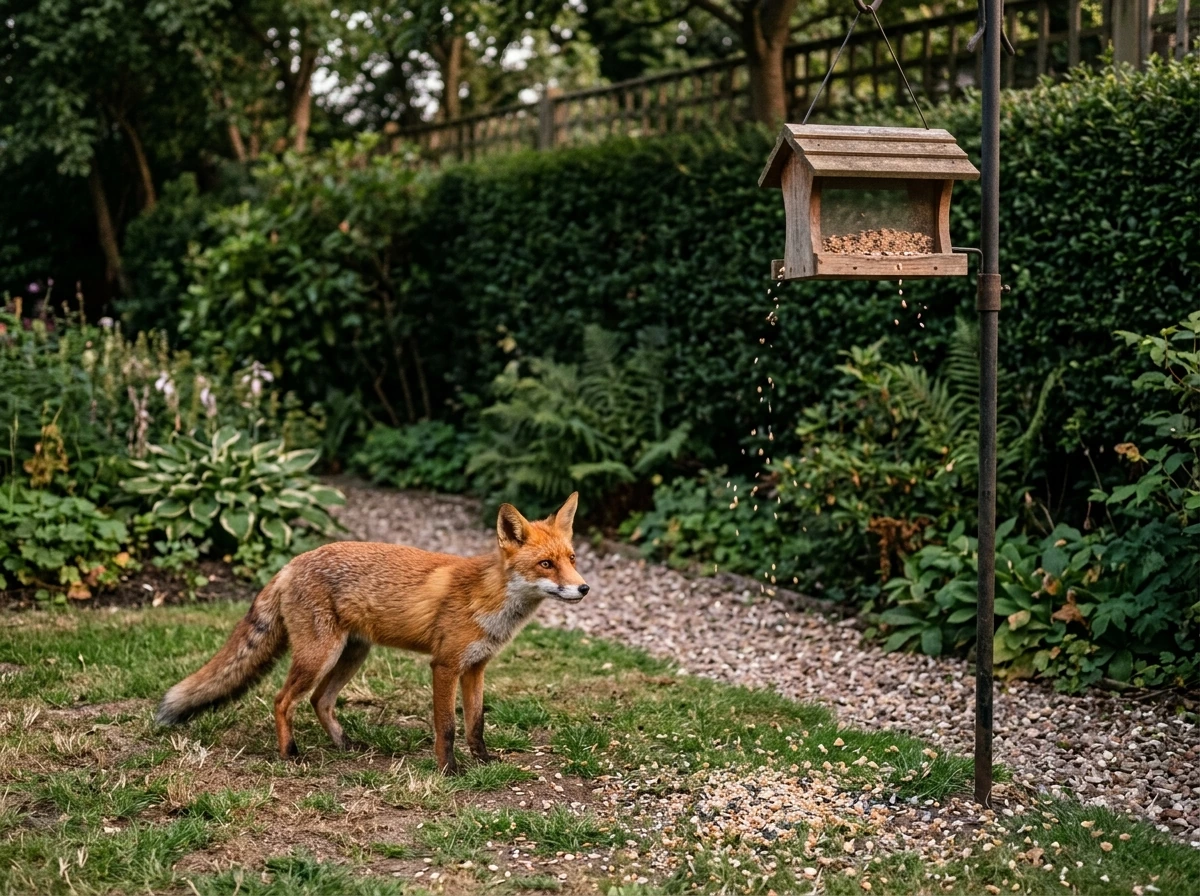
Sprouted seed creates a wet, decomposing mess that attracts more insects and fungi. do rabbits eat bird seed Georgia DNR notes that seeds like millet and sunflower will sprout under feeders if not cleaned up. Do foxes also eat bird seed? Yes, they may take it from feeders or from spilled seed on the ground Do foxes eat bird seed. Georgia DNR also notes that seeds like millet and sunflower can attract rabbits when they're left around feeders do rabbits eat bird seed. do bears eat bird seed
Cleanup, hygiene, and reducing follow-on wildlife
A yard that's attracted deer is often also attracting mice, raccoons, and other mammals. Deer aren't the only problem seed on the ground creates. Regular cleanup is the foundation of fixing all of it.
Daily and weekly ground cleanup
Rake fallen seed, hulls, and debris from beneath the feeder and dispose of it in a sealed trash bag. Don't compost spilled bird seed, it will attract the same animals to your compost pile. WVU Extension specifically recommends removing spillover seed from under feeders to reduce mold buildup and pest attraction. If you've had deer or rodent activity, do this daily until the pattern breaks.
Treating the ground under the feeder
If you have moldy seed worked into the soil or grass beneath your feeder, Georgia DNR recommends raking up the material and then soaking the area with a diluted bleach and water solution to kill fungal growth. A 1:9 bleach-to-water ratio works for this. Let it sit for a few minutes, then rinse. Avoid over-applying near plant roots.
Cleaning the feeder itself
Disassemble your feeder and wash all parts with a 1:9 bleach-to-water solution (1 part bleach, 9 parts water). Clemson's Home and Garden Information Center recommends soaking feeder sections for 10 minutes in this solution, then rinsing thoroughly and letting everything dry completely before reassembling. K-State Extension suggests doing this cleaning on a regular basis, and more frequently (as often as every few days) during wet weather or after disease concerns arise in your area. Dry the feeder fully before refilling. Putting wet seed into a damp feeder is a recipe for mold within 24 to 48 hours.
Reducing the follow-on wildlife cascade
Deer at your feeder signal to mice, raccoons, and other animals that your yard is worth visiting. If you are wondering about other backyard visitors, skunks can also be attracted to scattered bird seed, especially when it is easy to reach. (If you're also seeing small rodents, that's a separate but related problem.) The fastest way to break this pattern is to eliminate all ground seed for at least one to two weeks, clean up thoroughly, and raise your feeder height. blank" rel="noopener noreferrer">USDA APHIS recommends not allowing bird food to accumulate on the ground and discourages any practice that makes food consistently available to wildlife. Once the food source disappears, most mammals stop visiting within a week or two.
Feeder setup options compared
If you're deciding what kind of feeder setup to use going forward, here's how the common options stack up against deer access specifically.
| Feeder Setup | Deer Risk | Best For | Practical Notes |
|---|---|---|---|
| Ground tray or scattered seed | Very high | Nothing if deer are present | Avoid entirely. Directly accessible to deer and all ground mammals. |
| Low shepherd's hook (under 5 ft) | High | Squirrels, sparrows only if no deer | Easily reached by adult deer. Upgrade to taller pole. |
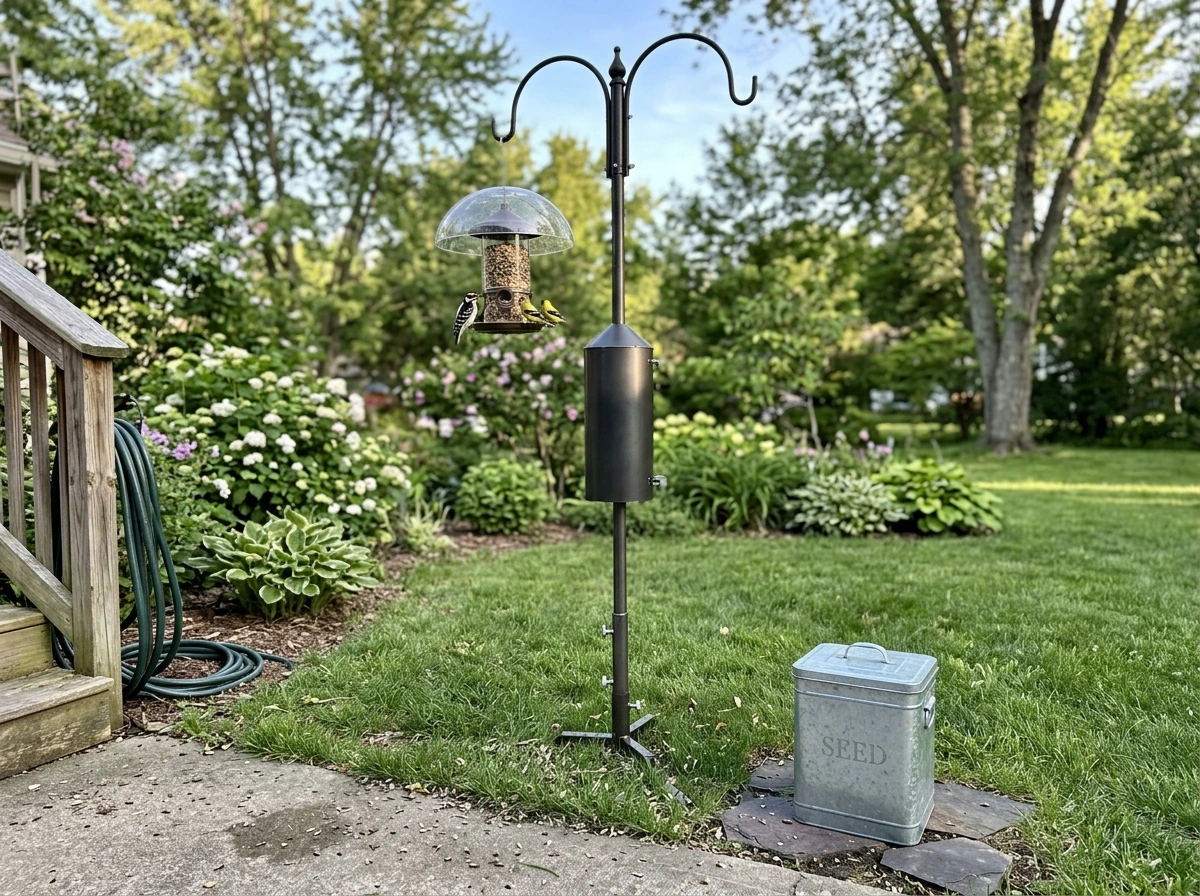
| Tall pole (7+ ft) with baffle | Low | Most backyard birds | Best all-around setup. Combine with no-mess seed to cut ground debris. |
| Hanging from tree branch (7+ ft) | Low to moderate | Finches, chickadees, titmice | Works if branch is far enough from trunk that deer can't reach from below. |
| Deck-mounted feeder (above railing) | Low if deck has stairs deer avoid | Cardinals, jays, sparrows | Deck elevation helps if deer don't use the deck. Add a catch tray. |
| Caged feeder on tall pole | Low | Small songbirds | Cage limits deer nose access. Still needs 7-ft height minimum. |
The most practical starting point for most yards is a smooth metal pole at 7 or more feet with a wide cone baffle, a tube or hopper feeder at the top, and a catch tray below the feeder to intercept falling seed. Add daily raking and switch to no-mess hulled seed, and you'll eliminate the vast majority of deer attraction without giving up bird feeding entirely.
FAQ
Will deer eat bird seed if I use a feeder with only a small amount of seed at a time?
Yes, but it’s less likely to become a reliable “food route” if the feeder is quickly emptied and you keep spillover minimal. Aim to refill only enough for 1 to 2 days, and immediately sweep up any hulls or dropped seed so deer do not learn that your yard consistently pays off.
Do baffles really work for deer, or are they only for squirrels?
Baffles help for deer too, mainly as a leverage and approach blocker. The key is placement and setup: use a smooth metal pole at least 7 feet tall and mount the baffle several feet up on the pole (about 4 to 5 feet from the ground). If the area below still has a lot of fallen seed, deer may still lick near gaps or openings.
What is the most common mistake people make when trying to stop deer from eating from a bird feeder?
They focus on deer proofing the feeder, but ignore the ground. Deer most easily access spilled seed and tossed hulls beneath feeders. If you don’t rake or sweep daily (or every 2 to 3 days at minimum) and install a catch tray, deer pressure usually continues.
Can I keep feeding birds, but stop deer without relocating the feeder?
Often yes. Use a higher hanging setup (7+ feet), add a catch tray to intercept falling seed, and switch to no-mess hulled blends (pre-hulled sunflower chips, hulled millet). Also, keep the feeder area clean for 1 to 2 weeks, because deer will keep checking an “established” spot even if you change the feeder.
Do deer prefer sunflower seed over other bird seed mixes?
They often do, especially black-oil sunflower seeds because they’re high in fat and protein. But deer will still consume many other convenient items in mixed blends, including millet and cracked corn. The practical decision is less about the brand name mix and more about seed spillage control and feeder height.
Is it better to use hulled seed or can I use regular mixed seed?
Hulled and no-mess seed is usually the better choice because it drops far fewer shells and debris. Regular mixed seed increases ground accumulation, which means even a well-placed feeder can still create a ground buffet that deer quickly exploit.
How long will it take for deer to stop visiting after I clean up and change the feeder setup?
If you eliminate ground seed and raise the feeder, many yards see reduced visits within about 1 to 2 weeks, but it can take longer if deer have strong local food habits. Consistency matters, keep cleanup and exclusion in place long enough that the yard no longer produces food on a predictable schedule.
What should I do if the feeder already has moldy or wet seed?
Empty it completely, discard the moldy seed, and wash feeder parts before refilling. Mold can develop quickly when wet seed sits, and moisture inside the feeder can happen even if the roof is intact. Let everything fully dry before adding fresh seed.
Does covering the seed with a roof stop deer, or do they still reach it?
A roof can help with rain, but it does not prevent access if deer can reach up into the feeder or if seed still falls to the ground. You still need a tall mounting height, a baffle or physical barrier, and a catch tray or regular cleanup under the feeder.
Will deer also be attracted if I feed birds in winter only?
Yes. Winter is when deer are most likely to seek out feeders because natural browse becomes scarce and snow reduces access to other foods. Even if you feed only seasonally, keep the feeder high, use spill interception, and do daily cleanup during the colder months.