Yes, skunks will eat bird seed. They are opportunistic omnivores, and spilled seed on the ground is an easy, calorie-dense meal they will return to night after night if you let them. That said, seed itself is not always the main draw. Skunks are also hunting the insects, grubs, and small rodents that congregate around feeders, so even a perfectly tidy feeding station can attract them if your lawn or garden has a healthy bug population underneath. Understanding both angles is what actually lets you solve the problem. do bears eat bird seed They are opportunistic omnivores, and spilled seed on the ground is an easy, calorie-dense meal they will return to night after night if you let them. That said, seed itself is not always the main draw. Skunks are also hunting the insects, grubs, and small rodents that congregate around feeders, so even a perfectly tidy feeding station can attract them if your lawn or garden has a healthy bug population underneath. Understanding both angles is what actually lets you solve the problem.
Will Skunks Eat Bird Seed? How to Stop Visits

Why skunks come to your feeders in the first place
Skunks follow their nose. They have an exceptionally strong sense of smell and can detect seeds, suet, and fermented or spoiled organic material from a significant distance. Skunks follow their nose. They have an exceptionally strong sense of smell and can detect seeds, suet, and fermented or spoiled organic material from a significant distance. Spilled millet, cracked corn, and sunflower seeds on the ground are particularly appealing because they are energy-rich and require no effort to catch. Research from USDA Wildlife Services and the Internet Center for Wildlife Damage Management (ICWDM) both explicitly list spilled birdseed as one of the human-provided food sources that draw mesocarnivores like skunks into backyards.
The secondary draw is hunting. Skunks are naturally ground-foragers that dig for grubs, beetles, and earthworms. A feeder that drops seed regularly creates a thriving insect ecosystem in the soil beneath it, which is essentially a buffet for a skunk even if every last seed is cleaned up. UC IPM specifically notes that managing grubs and insects in lawns can reduce skunk activity, because food-hunting behavior is a major part of what keeps them coming back.
Timing matters too. Skunks are nocturnal, so most of their visits happen between dusk and dawn. If you are not seeing skunks directly, you are probably seeing the aftermath: disturbed ground, digging in mulch or lawn, and scattered seed husks. Filler seeds like milo and red millet, which many birds reject and simply push out of feeders, add up fast on the ground and are a particularly reliable skunk attractant. Avoiding filler-heavy mixes is a straightforward first step.
How to tell if a skunk has been visiting
The most obvious sign is smell. Skunks spray only when they feel cornered or threatened, so a faint musky odor in the yard without a full spray event can indicate a skunk passed through recently. A strong, lingering sulfur-like odor almost always means a spray occurred nearby, possibly because a pet or another animal startled it.
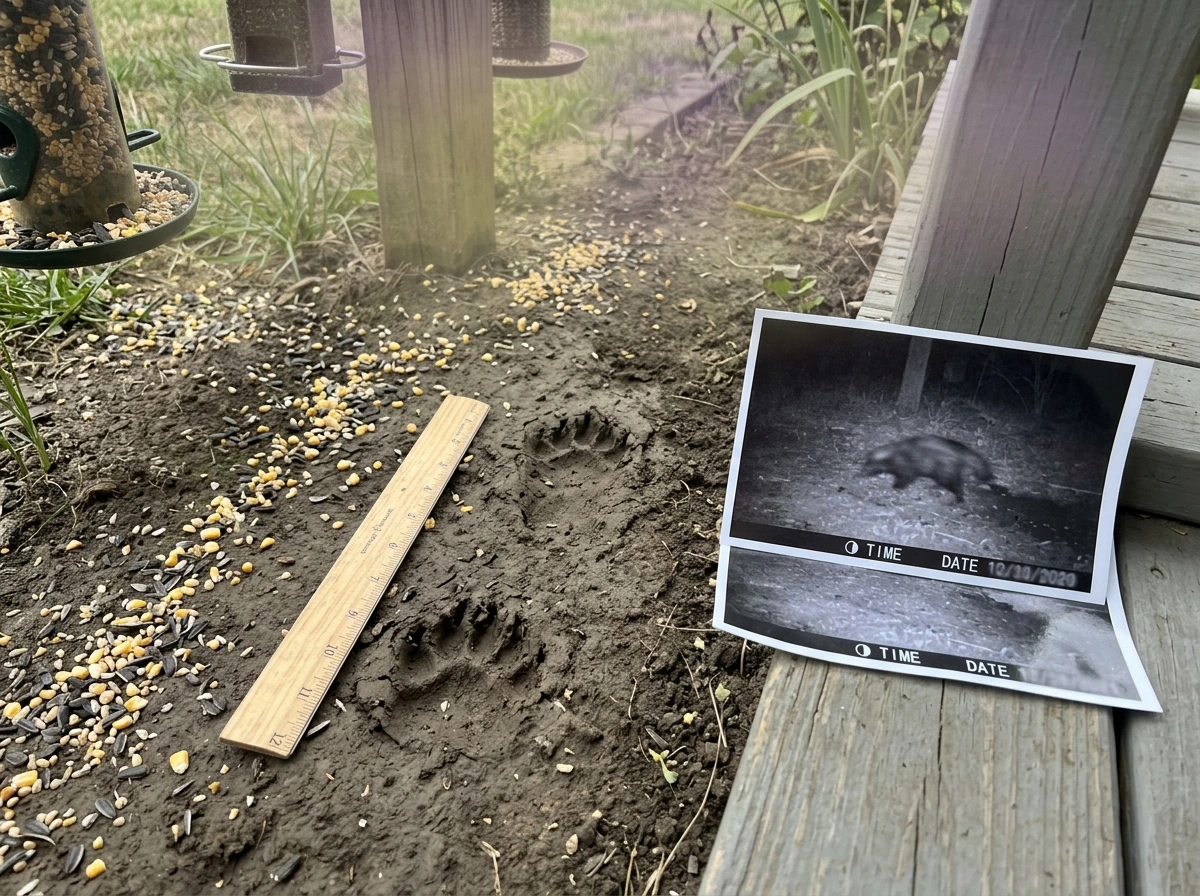
Track identification is your next best tool. Skunk tracks show five toes on both the front and hind feet, and the hind print is noticeably larger than the front. The hind imprint often lands near or slightly overlapping the front print as the skunk walks. Look for tracks in soft soil, mud, or sand under and around your feeder. Compare what you find to raccoon tracks (which look like small human handprints) and opossum tracks (which have a distinctive thumb on the hind foot). Skunk front claws are long and will leave visible claw marks ahead of the toe pads.
Other signs to look for: small cone-shaped digging holes or disturbed patches of lawn and mulch within a few feet of the feeder base, and scattered or displaced seed husks in a pattern that suggests ground-level foraging rather than birds dropping hulls from above. Mice and rats also forage on the ground, so if you are unsure what is visiting, a motion-triggered camera placed at ground level will settle the question quickly.
Keeping your yard safe for birds, pets, and people
Skunks are not aggressive animals. They give clear warning signals before spraying: foot-stomping, raised tail, and short charges. The risk comes when pets rush them in the dark or when a skunk gets cornered. Keep dogs on leash or supervised at dusk and dawn, especially in the area around feeders. If your dog does get sprayed, the Iowa State Extension recommends a fresh mixture of 1 quart of 3% hydrogen peroxide, 1/4 cup of baking soda, and 1 teaspoon of liquid dish detergent. Apply it immediately, avoid eyes and mouth, and do not store any leftover solution because it can build pressure in a closed container.
Skunks are a rabies-vector species in many states, which means you should never approach, handle, or attempt to corner one. A skunk that is active during the day, acting disoriented, or approaching without any provocation should be reported to your local animal control. Do not rely on trapping and relocating as a fix. Several states (including Pennsylvania) prohibit relocation of rabies-vector species, and in many jurisdictions a professionally trapped skunk is legally required to be euthanized. Check your local wildlife regulations before considering any trap.
How to stop skunks from visiting your feeders
Redesign your feeding area to reduce ground spill
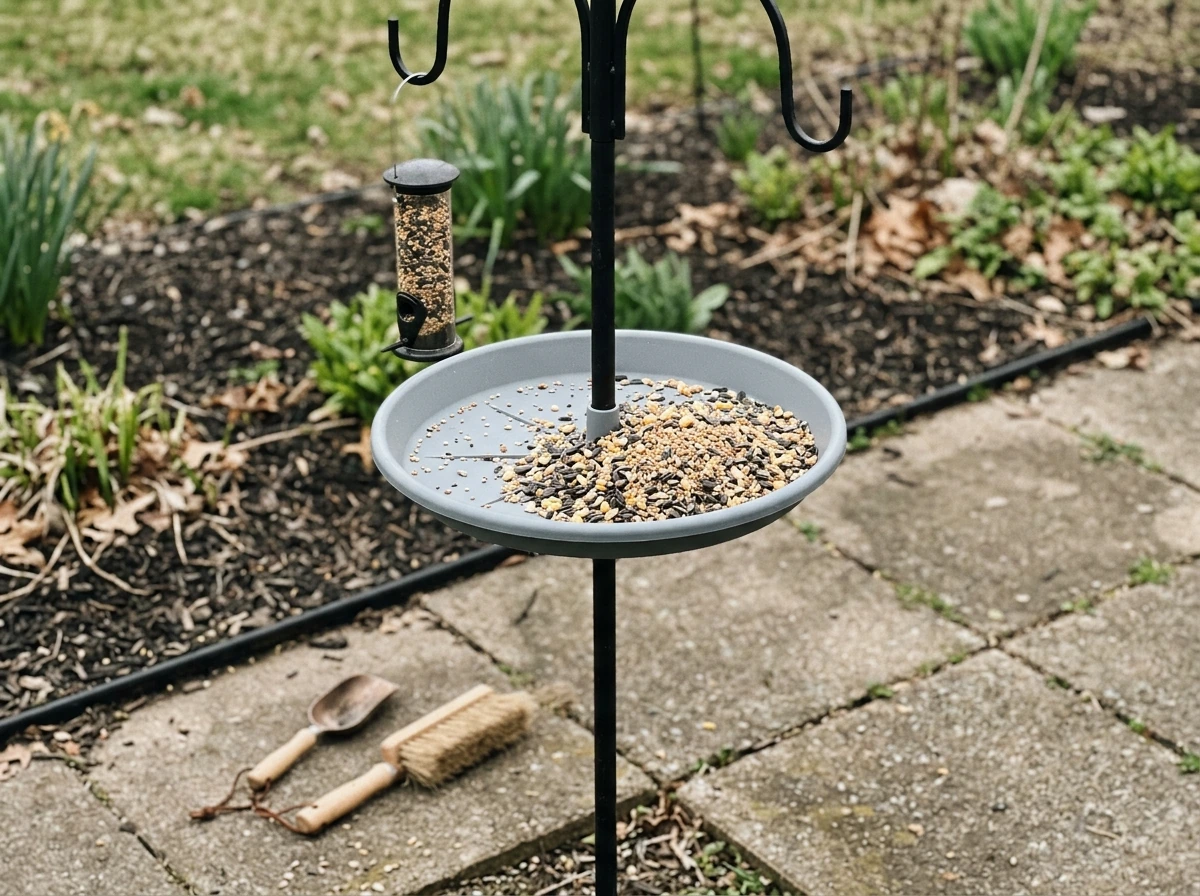
This is the single most effective change you can make. The USDA Forest Service and Virginia DWR both specifically recommend keeping spilled seed off the ground as a primary wildlife management step. Place a seed-catching tray directly under your feeder to intercept falling seed before it hits the ground. Empty and clean the tray every day or two, especially in humid conditions. Switch to no-mess or no-waste seed blends that contain hulled sunflower chips, shelled peanuts, or Nyjer, since birds consume more of what they pick up and drop less. Avoid mixes with milo, oats, or red millet unless you know your local bird species eat them.
Move feeders up and use baffles
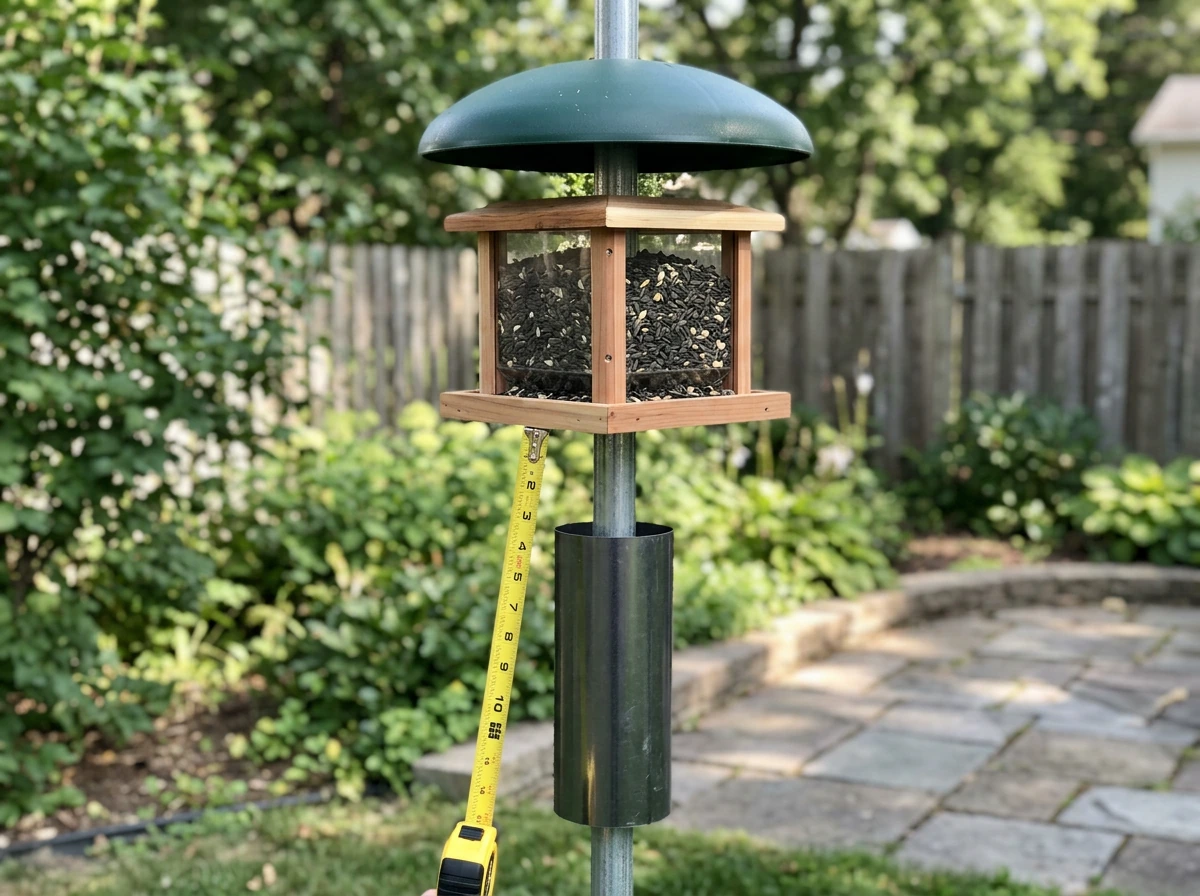
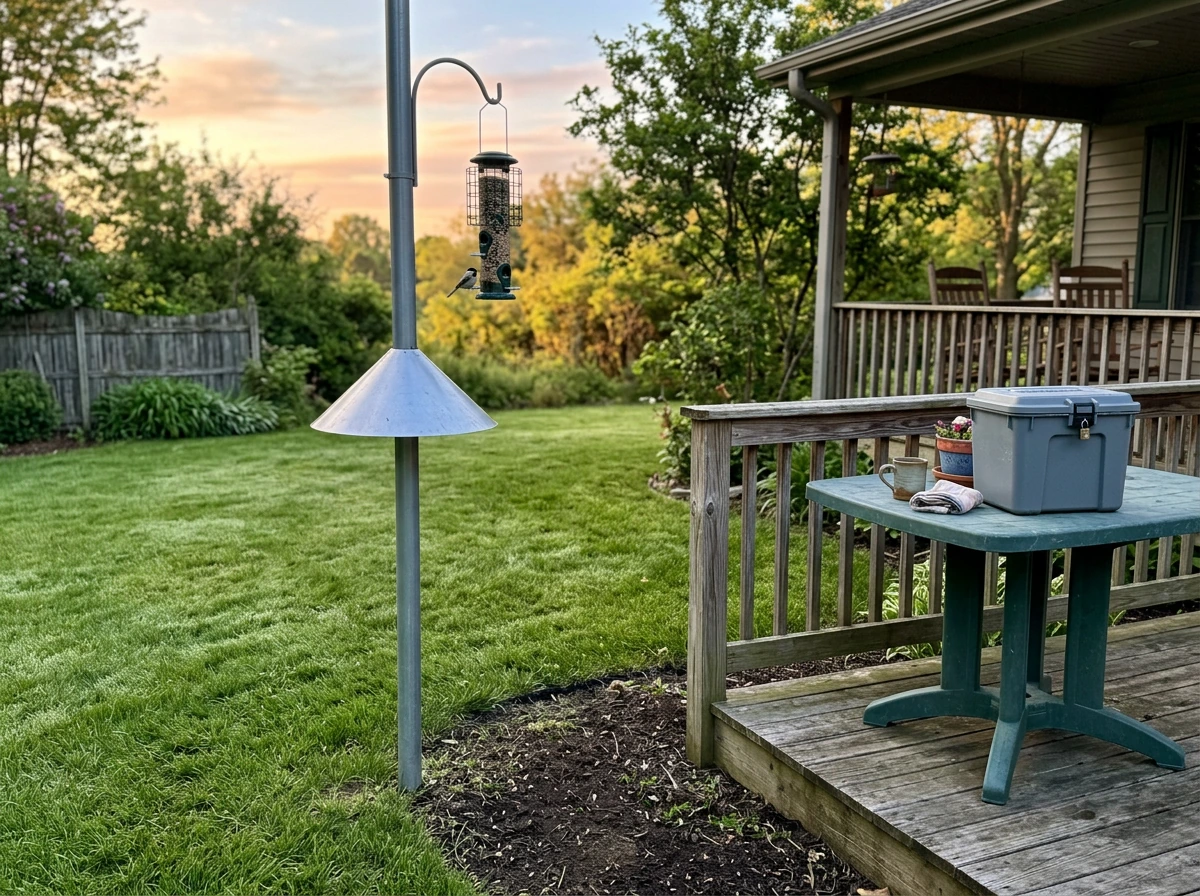
Mount feeders on smooth metal poles at least 5 feet off the ground and add a baffle (a dome-shaped or cylindrical guard) both above and below the feeder. Skunks cannot climb smooth metal poles, so a proper pole-and-baffle setup removes their access to the feeder itself. The real issue, again, is ground-level seed, so baffles work best when combined with a seed tray and a daily cleanup routine.
Bring feeders in at night
Since skunks are nocturnal, removing feeders from dusk to dawn eliminates the overlap between skunk activity and feeder access. This is the simplest short-term fix if you are dealing with a persistent visitor right now. Most feeder birds feed during the day, so the birds lose nothing. Bring the feeder inside or hang it in a shed or garage overnight.
Use physical exclusion around the feeding zone
Iowa State University Extension recommends hardware cloth as a practical exclusion material for skunks. A low fence of 1/4-inch or 1/2-inch hardware cloth around the perimeter of your feeding area (about 2 feet high, with the bottom 6 inches bent outward and buried a few inches into the soil) can deter ground-level foraging near the feeder. This works especially well if skunks are also getting under a deck or shed nearby, which is a common nesting behavior. ICWDM notes that foothold traps should not be used near houses for skunks specifically because of the spray risk, so exclusion is the preferred hands-on approach.
Eliminate other attractants in the yard
Securing trash cans with locking lids and keeping compost in a sealed bin removes secondary food sources that keep skunks in the habit of visiting your yard. Treat your lawn for grubs in late summer (the active grub season) to reduce the insect food supply that skunks are hunting. Do not leave pet food outside overnight. All of these adjustments reduce the overall attractiveness of your yard, which makes it less worth a skunk's nightly route.
Seed handling that accidentally invites skunks
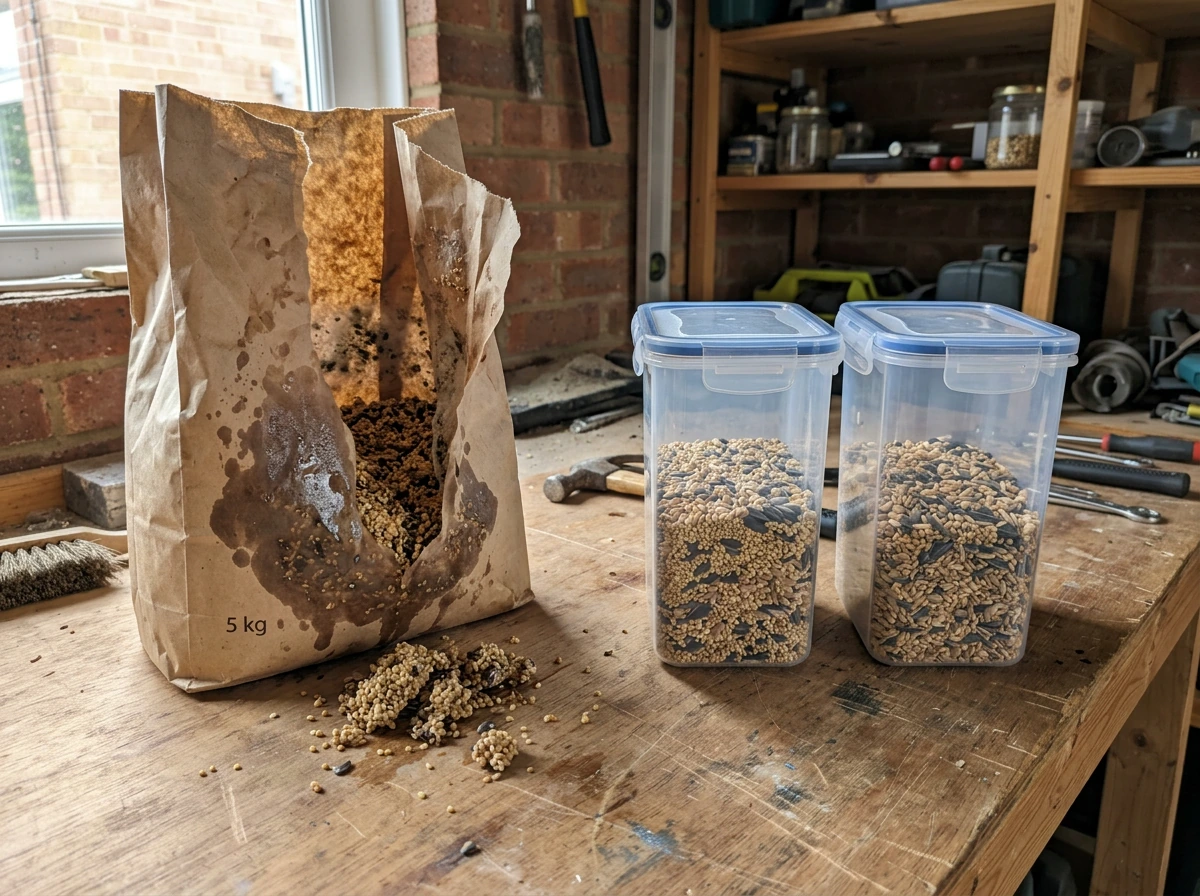
Wet, sprouted, or moldy seed is one of the biggest overlooked attractants. Seed that has gotten damp ferments and develops a strong, distinctive odor that is actually more attractive to wildlife than fresh seed. If your feeder has been rained on or your seed storage has any moisture exposure, the smell travels farther and signals an easy food source to anything with a good nose, including skunks.
Humane Animal Rescue specifically recommends airtight, watertight, rodent-proof storage containers placed away from areas where rodents already live as the baseline standard for smart seed storage. A metal trash can with a locking lid or a purpose-built seed storage bin works well. Keep storage off the ground on a shelf or pallet to prevent moisture from wicking up from concrete floors. Buy seed in quantities you can use within 4 to 6 weeks to prevent it from going stale or developing mold.
Check your feeders weekly for clumped, discolored, or foul-smelling seed. Hulled seeds and suet go rancid faster than whole seeds, especially in warm or humid weather. If you spot mold (gray, green, or black patches) or see seed that has started to sprout, discard the entire batch, clean the feeder thoroughly with a 9:1 water-to-bleach solution, rinse it completely, and let it dry before refilling. Do not just add fresh seed on top of spoiled seed.
What to do when skunks keep coming back
If you have cleaned up ground seed, secured storage, brought feeders in at night, and skunks are still showing up, the issue is likely that a skunk has denned nearby, under a deck, shed, porch, or wood pile within 100 to 200 feet of your feeders. Skunks have small home ranges and will continue patrolling a familiar route even without a strong immediate food draw. The fix at this stage is exclusion from the den site, not just feeder management.
Use the hardware cloth approach described above to seal off access points under structures, but check first for active occupation. Loosely stuff the opening with newspaper or light material for a few days. If it remains undisturbed, the den is empty and you can seal it permanently. If it is moved, wait until late spring or early summer when young skunks are old enough to move with the mother, then seal the opening.
If exclusion is not feasible on your own (for example, the den is in a hard-to-access crawl space or you are dealing with multiple animals), contact a licensed nuisance wildlife control operator in your state. Iowa DNR's nuisance wildlife operator guidebook and ICWDM both support professional escalation when home prevention is not sufficient. A licensed operator will know your state's specific trapping and relocation laws and can advise on legal, humane options. Skunk conflicts that involve potential rabies exposure, repeated spraying events, or property damage are clear situations where professional help is worth it.
The pattern with skunks and bird feeders is almost always the same: an easy food source creates a habit, the habit keeps a skunk in the area, and the area becomes part of the animal's regular nightly route. Break the food source first, then address the den if visits continue. That order of operations resolves the majority of backyard skunk problems without traps or chemicals. If you are also dealing with deer, raccoons, or mice at your feeders, many of the same ground-level seed management steps apply, since all of these animals are drawn by the same accumulation of spilled or spoiled seed.
FAQ
If I stop leaving seed on the ground, will skunks still eat from my bird feeder?
Yes, especially if seed is scattered, spilled, or clumped under the feeder. If you want to keep skunks away, focus on what reaches the ground, not just what the birds eat. A tray, daily cleanup, and using no-mess blends (like hulled sunflower chips or shelled peanuts) usually matters more than switching seed types alone.
What’s the most common reason skunks keep coming back even after using a seed tray?
Choose a location and hardware that prevent ground foraging. A common mistake is using a tray under the feeder but leaving spilled seed around the tray edge. Clean the surrounding area daily, and consider a baffle plus a smooth pole so the skunk cannot reach the feeder and then drop the remainder below.
Will landscaping changes alone (like trimming brush or removing leaf litter) stop skunks from visiting?
Not usually. Skunks mainly hunt by smell and by finding easy calories at ground level, so removing standing water and damp leaf litter can reduce insect habitat. Still, if you have an ongoing den nearby, skunks may continue patrolling until exclusion is done.
Does a skunk spray event mean the skunk will stop coming back?
If you have a skunk spraying in the area, assume residue is present. Spraying can deter skunks temporarily, but it does not reliably “solve” the habit, especially if seed and insect attractants remain. The practical move is to remove ground food sources and secure potential den access, then consider professional cleanup if odor is an issue for pets and people.
How can I tell if the problem is skunks digging or birds dropping seed?
Often, yes, because many people assume the “messed up ground” is birds dropping hulls. To differentiate, check whether the damage clusters right under the feeder and includes digging holes or claw marks. Bird waste usually drops from above and shows more scattered hulls without obvious digging.
Where should I place a trail camera to confirm a skunk is the visitor?
A motion camera helps, but place it low and aimed at ground level where seed would collect, not only at the feeder perch. Add night-appropriate settings (infrared, not bright floodlights that may alter animal behavior), and check the first 10 to 20 seconds after dusk to catch the beginning of the visit.
If I bring the feeder in overnight, do I still need to empty the seed tray?
Feeding only during daylight can reduce overlap, but you must still manage the “day leftovers.” Birds may eat during the day, but any seed that falls and sits until evening can still attract skunks. Bring the feeder in at night, and also empty any tray or catch system before dusk.
Can storing seed better still fail, and what storage mistake causes skunks to notice it?
Yes. You should also verify storage is truly rodent-proof and watertight. A typical miss is leaving seed in a vented bag, a loosely sealed bin, or a container on the ground where moisture and odor build up, which can attract skunks at night.
What if I see a skunk during the day, is it still the same plan?
Yes, and it changes the best approach. Daytime activity, disorientation, or repeated daytime approach can indicate illness and raises rabies risk. In that case, keep distance, do not attempt exclusion while it is acting strangely, and contact animal control or local wildlife authorities for guidance.
Why does the article discourage trapping and relocation, and what should I do instead?
Trapping and relocation can be legally restricted and are rarely a durable fix. Skunks with a nearby den may simply reappear, and professionals often recommend exclusion and habitat removal instead. If you choose to escalate, confirm your local rules first, especially around rabies-vector species.
If I fix the feeder and seed storage, how long should it take before skunks stop coming?
Yes. If a skunk has a den under a structure, simply fixing the feeder may reduce visits briefly but not stop the route. Start with feeder cleanup, then inspect for entry points under decks, sheds, porches, and wood piles, and only seal openings when you confirm the area is inactive.
What’s the safest pet-management routine if skunks are regular visitors?
Most skunks avoid threats, but pets can trigger a fast cornering situation, especially in low light. Keep dogs leashed at dusk and dawn around feeding areas, supervise at night, and block access to crawlspaces or under-deck areas where a pet might chase a skunk.
How high and how secure does a hardware cloth barrier need to be to stop skunk foraging?
Hardware cloth can work, but the edge details matter. Bend the bottom outward and bury part of it to prevent digging underneath, and use enough material thickness so it cannot be pushed or pulled. Also check for any existing tunnels or gaps, because one accessible gap can undo an otherwise solid fence line.
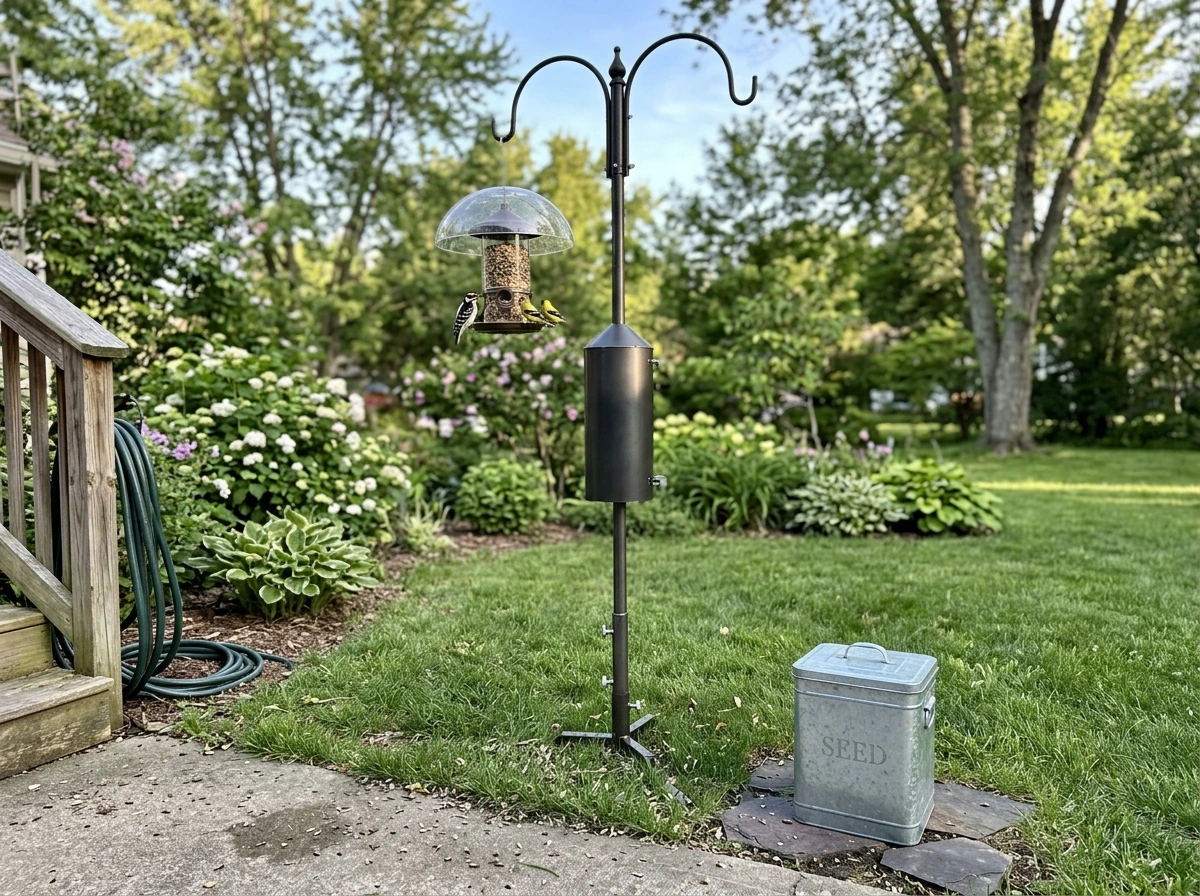
Do mice eat bird seed and is it harmful? Get fast steps to stop them, secure feeders, and prevent mold.
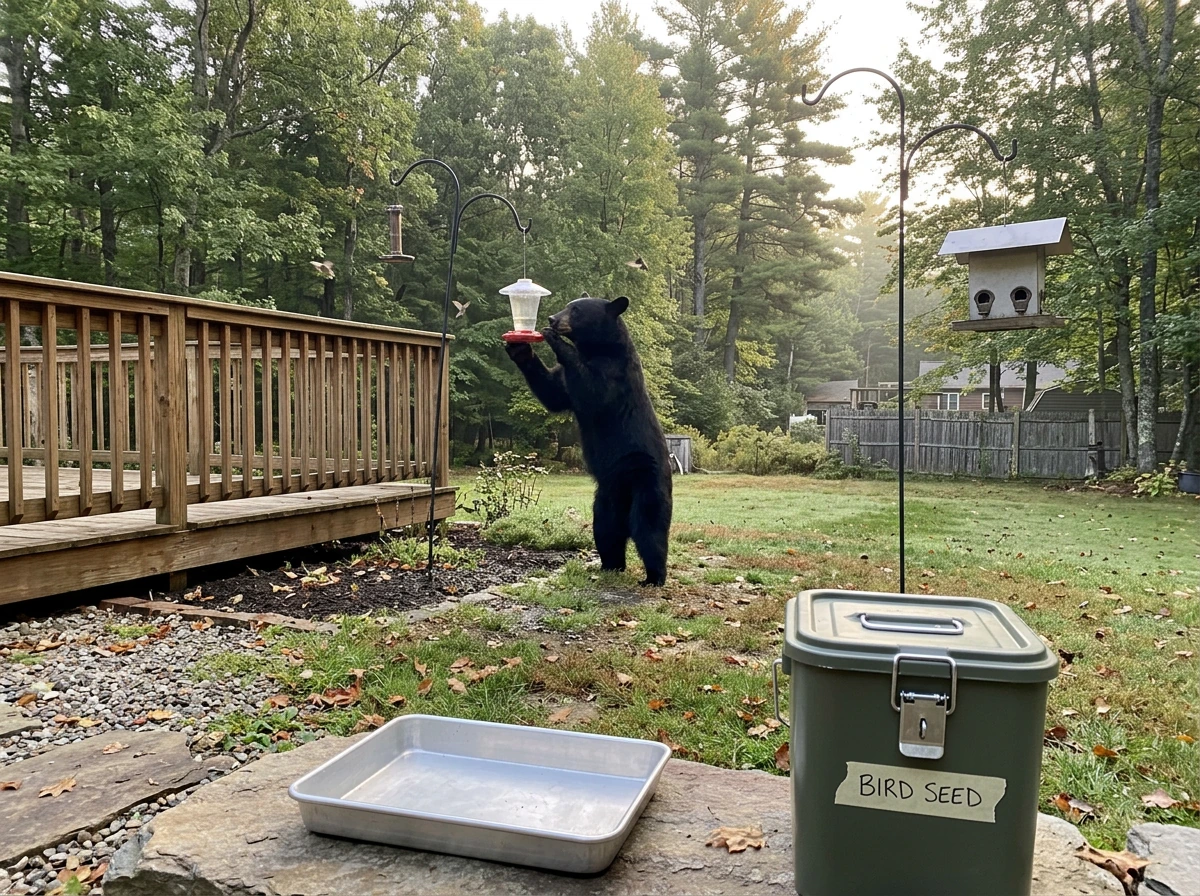
Yes, bears eat bird seed, attracted by easy calories and spills. Learn signs and steps to secure feeders today.
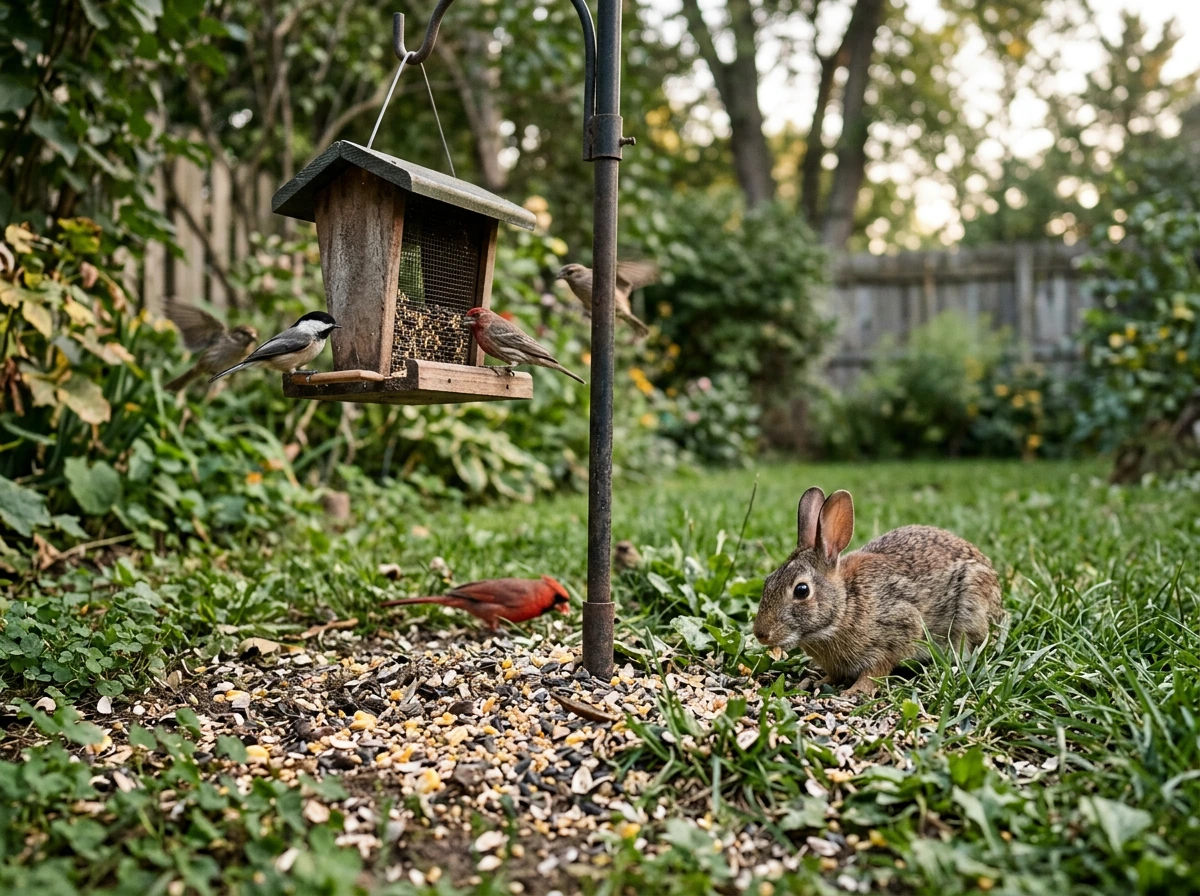
Find out if rabbits eat bird seed, the risks, safe storage and cleanup steps, and better ways to keep seeds from them.