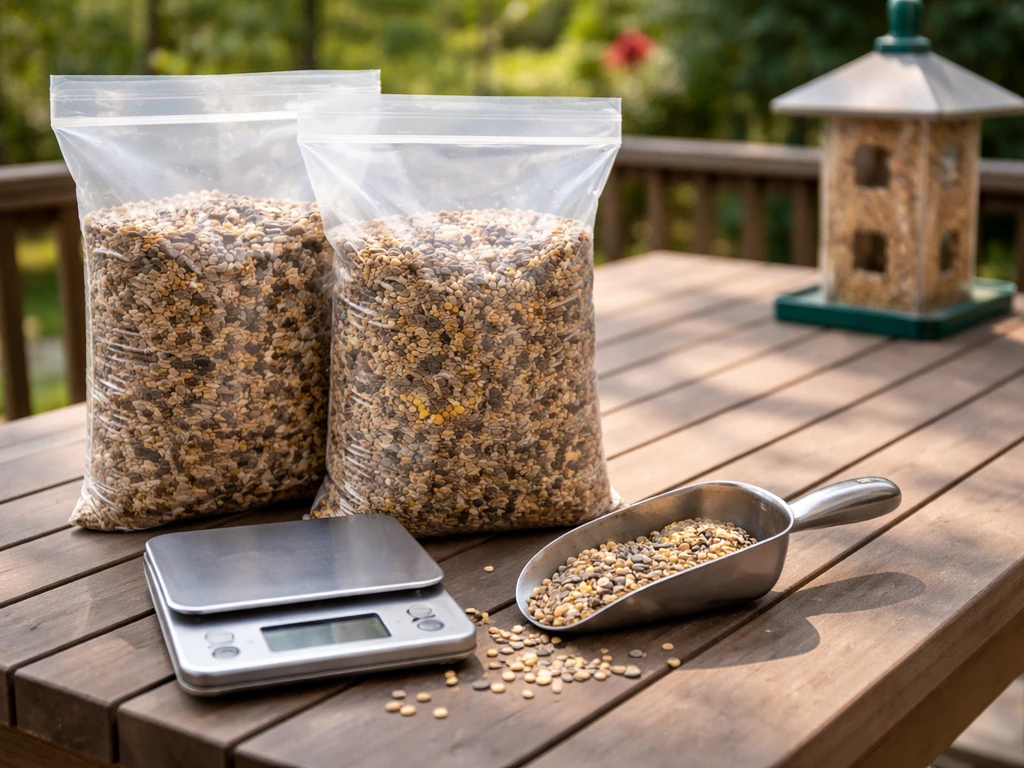
If Nellie is buying bird seed today, the single best starting point is a bag of black-oil sunflower seed. It attracts more species than any other seed, it works in almost every feeder type, and it gives a beginner the best return on a first purchase. From there, the decisions get easier: pick the right mix or add-on seeds based on which birds she actually wants, check the bag for freshness before leaving the store, store it in a sealed container off the ground, and feed only what birds can eat in a day. That sequence covers the vast majority of common beginner mistakes.
Nellie Is Buying Bird Seed: A Safe Starter Checklist
Maya Collins
4 May 2026
Before you buy: figure out which birds you want to attract
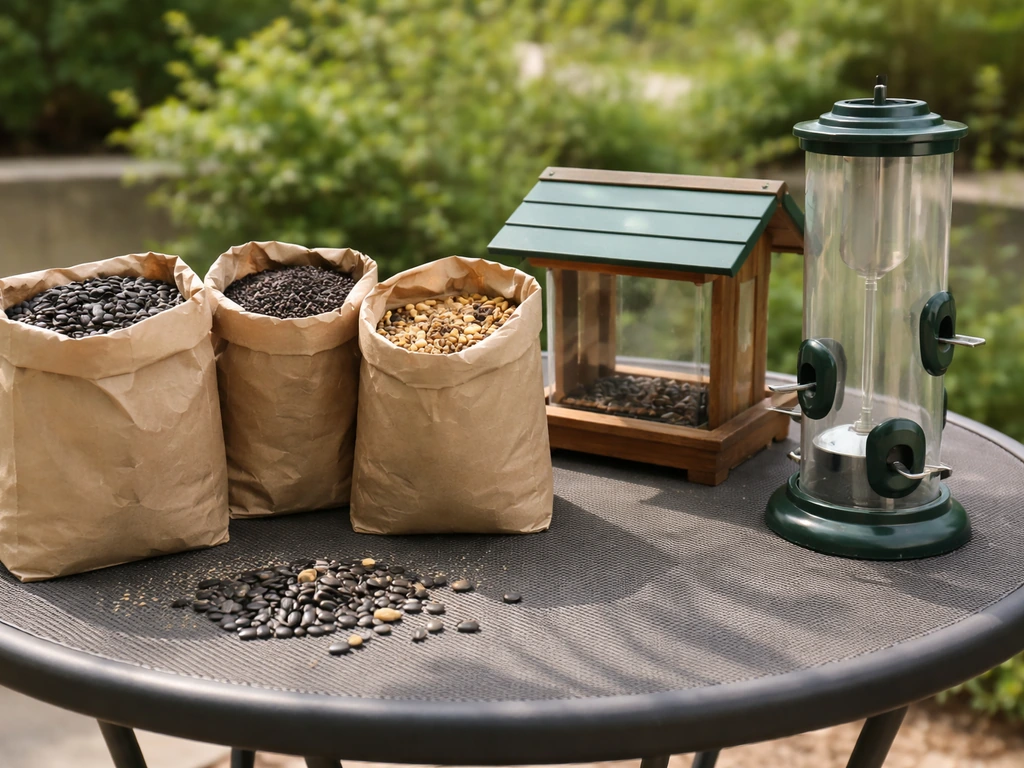
Seed choice and feeder choice work together. Buying the wrong seed for the birds in your yard means you will end up with a pile of rejected hulls under the feeder and a lot of wasted money. Before Nellie grabs a bag, it helps to spend five minutes thinking about which birds are actually in her neighborhood.
In most North American backyards, the everyday cast includes chickadees, titmice, nuthatches, house finches, goldfinches, cardinals, sparrows, jays, and woodpeckers. If any of those are regulars or the goal, a black-oil sunflower-centered approach will cover most of them. If she specifically wants goldfinches, nyjer (thistle) seed fed on its own in a dedicated nyjer feeder is the most reliable path. If cardinals and grosbeaks are the priority, adding safflower seed works well. Ground-feeding sparrows and juncos respond especially well to white millet, which they will pick up from a tray or the ground below a feeder.
One regional note worth knowing upfront: if you are in the eastern United States, avoid mixes that are heavy on milo (a round reddish grain that pads out cheap bags). Most desirable eastern feeder birds ignore it, and it just sits in the feeder until it gets wet and goes bad.
Seed types, what they contain, and who actually eats them
There are only a handful of seeds worth your attention as a beginner. Here is what each one is, what birds eat it, and where it fits in a practical setup.
| Seed Type | Key Nutrients / Composition | Birds It Attracts | Best Feeder Type |
|---|---|---|---|
| Black-oil sunflower | High fat, thin shell, easy to crack | Chickadees, titmice, nuthatches, finches, jays, cardinals, woodpeckers | Hopper, tube, or platform feeder |
| Hulled sunflower (no shell) | Same fat content, no waste hulls | Same as above, plus smaller birds that struggle with shells | Tube or tray feeder |
| White millet | Carbohydrate-rich small seed | Sparrows, juncos, doves, towhees (ground foragers) | Tray, platform, or scattered on ground |
| Safflower | Bitter coating, high fat | Cardinals, grosbeaks, chickadees; squirrels and starlings tend to avoid it | Hopper or tube feeder |
| Nyjer (thistle) | Tiny, oily seed | Goldfinches, pine siskins, redpolls | Dedicated nyjer/finch tube feeder only |
| Cracked corn | Starchy, low fat | Ground feeders: sparrows, doves, jays, wild turkeys | Platform tray or scattered on ground |
| Peanuts (whole or pieces) | High protein and fat | Woodpeckers, jays, nuthatches, chickadees | Wire mesh peanut feeder or hopper |
| Suet (beef fat cake) | Very high fat, energy-dense | Woodpeckers, chickadees, titmice, nuthatches, creepers | Suet cage feeder, hung away from main feeder |
A practical beginner mix that covers the most ground: black-oil sunflower as the main ingredient, white millet as the secondary, and cracked corn in smaller amounts. Those three seeds are the most widely eaten at North American feeders. If Nellie wants to buy a pre-made bag instead of mixing herself, she should look for a blend that lists those three prominently on the label and avoids milo as a filler.
One myth worth busting here: a bigger, more colorful bag with 10 listed seeds is not better than a simpler mix. Many of those extra ingredients are fillers that most birds ignore. Cheaper blends with lots of filler lead to seed piling up under the feeder, which brings pests and mold.
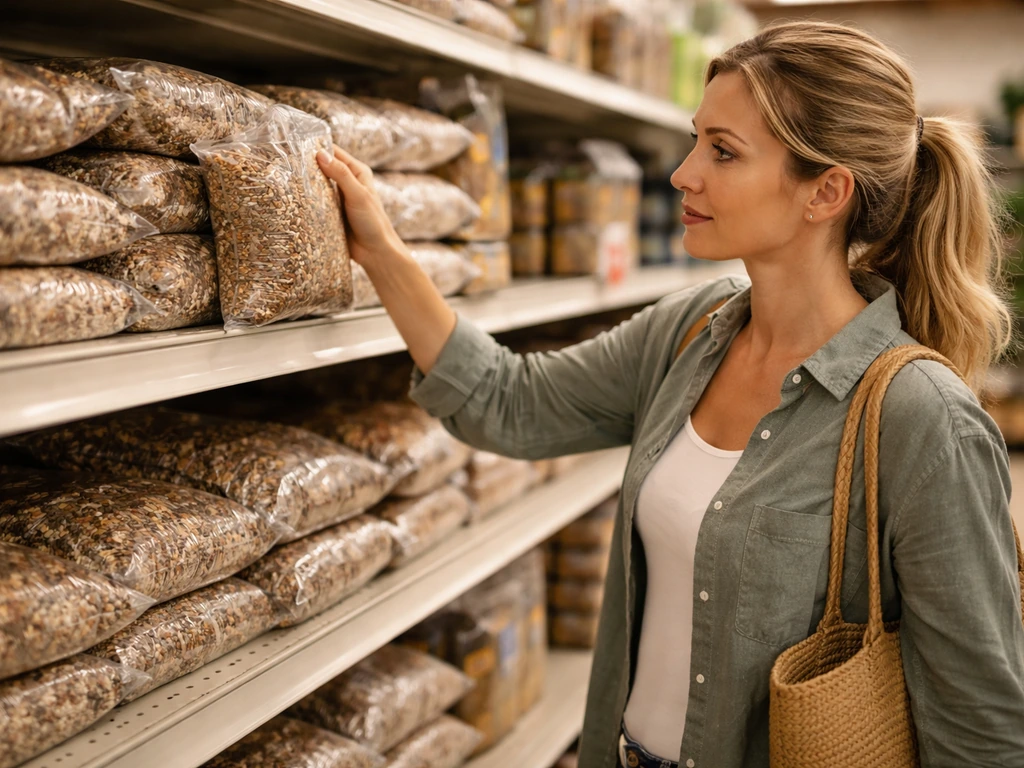
How to choose fresh, high-quality seed at the store
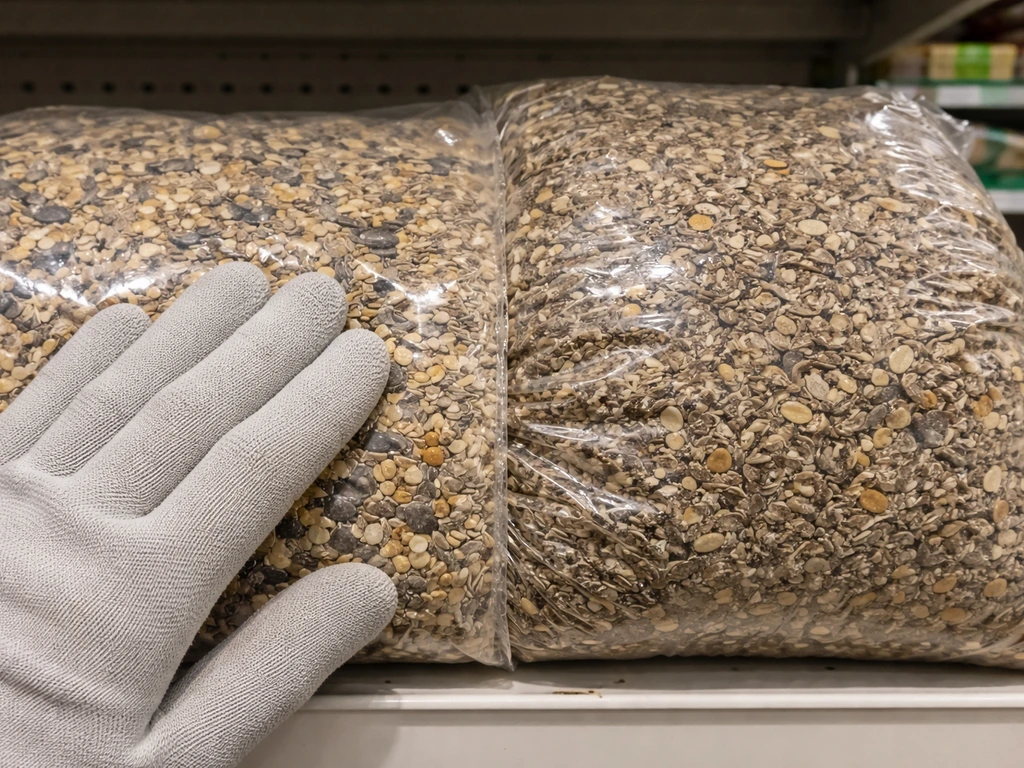
Freshness matters more than most beginners realize. Stale or poorly stored seed loses nutritional value, develops mold faster once it is in your feeder, and birds will often reject it. Here is what to check before buying.
- Check the bag for any moisture damage. Feel the outside for soft or damp spots, which usually mean the seed inside has already been exposed to water.
- Look through the bag if it has a clear window. The seeds should look clean, whole, and consistent in color. Avoid bags with visible dust, powdery residue, or discolored seeds, which are signs of age, mold, or insect activity.
- Smell it if you can open or smell through the bag. Fresh sunflower seed has a faintly nutty smell. A musty, sour, or chemical smell means the seed has started to degrade.
- Check for a 'best by' or production date if one is printed. Seed sold in bulk bins at farm stores can sit for months, so newer-dated bags from a store with high turnover are the safer bet.
- Buy from stores with good turnover. A pet store or wild bird specialty shop that sells a lot of seed will have fresher stock than a hardware store where a few bags sit on a shelf for a season.
- Avoid bags that look sun-bleached or dusty on the outside. That usually means they have been sitting in a warm spot for a while, which speeds up rancidity in the oils.
- Start with a smaller bag (5 to 10 lbs) on your first purchase. If birds in your yard ignore a particular seed, you have not wasted a 40-lb bag.
On bag size and planning: it is worth knowing roughly how much seed your setup will use before buying in bulk. To figure out how many gallons you can get from 40 lbs of bird seed, you need to know the seed type and its approximate volume per pound, because different seeds pack differently how many gallons is 40 lbs of bird seed.
If you also want to budget, it helps to estimate how much bird seed you will go through, since that affects how much you will pay per refill roughly how much seed your setup will use. A single tube feeder serving a small yard may go through 5 lbs per week in active seasons, while a full platform setup with multiple species can move through that in a day or two.
How many gallons 20 lbs of bird seed makes depends on the seed type and how tightly it is packed, so check the bag’s volume information when possible. If you have a smaller household routine, like Stephanie using about 7/8 pound of bird seed, plan your feeder refills around that amount so nothing sits too long how much seed your setup will use. If you only buy small amounts like this, you can keep your seed fresher and reduce the chances that it will spoil in storage feeder refills.
If you are wondering how many pounds of bird seed in a gallon, the answer depends on the specific seed type and how tightly it is packed. If you are planning to scale up, buying a larger quantity makes economic sense, but only if you have proper storage ready to go.
How to store seed so it stays fresh and safe
This is where a lot of beginners go wrong. They buy a good bag, then leave it in the paper or plastic bag it came in, sitting in a garage or shed. Within a few weeks, the seed is stale, possibly rancid, and sometimes infested with pantry moths or grain weevils that then spread into the house.
The right storage container
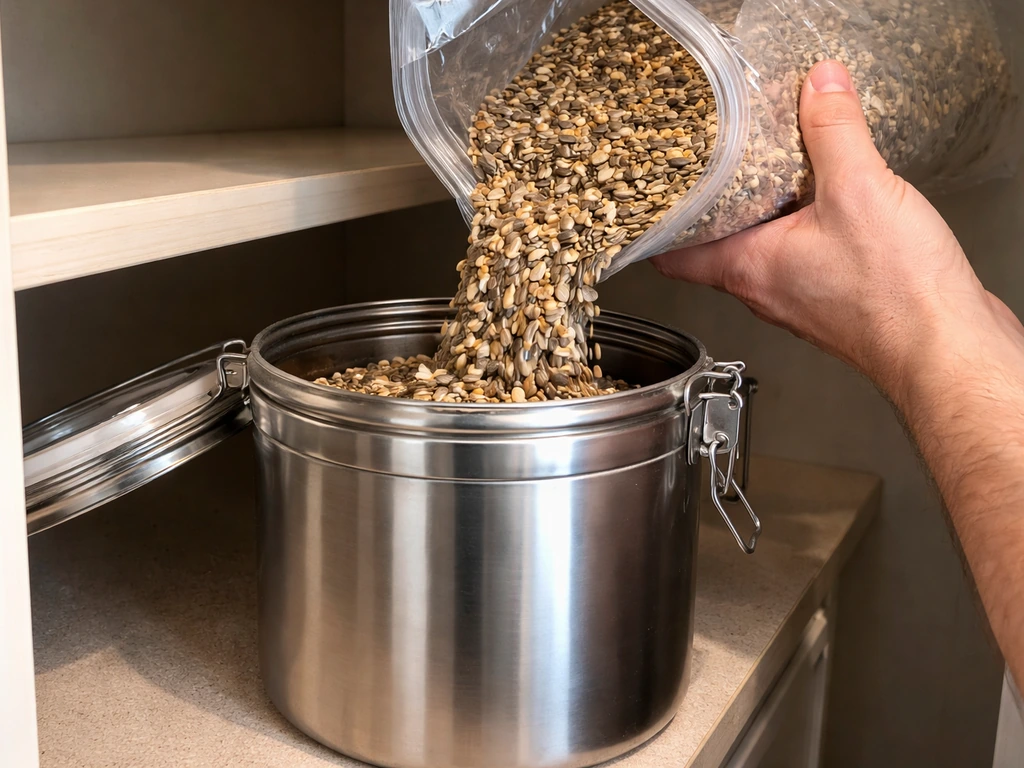
Transfer seed into a hard-sided, tightly sealed container immediately after buying. A metal or thick plastic bin with a locking lid works well. Metal is better in areas with mouse pressure because rodents can chew through thin plastic. Keep the container off the ground on a shelf or table, ideally in a cool, dry spot. A garage or shed is fine as long as it does not get very hot or humid in summer, because heat speeds up rancidity and moisture triggers mold.
Expected shelf life by seed type
| Seed Type | Typical Shelf Life (cool, dry storage) | Notes |
|---|---|---|
| Black-oil sunflower (in shell) | Up to 12 months | Oils go rancid faster in heat; store below 70°F when possible |
| Hulled sunflower | 4 to 6 months | No protective shell, goes rancid more quickly; buy in smaller quantities |
| White millet | Up to 12 months | Very stable if kept dry |
| Nyjer (thistle) | 4 to 6 months | Oils degrade faster than most; goldfinches will reject stale nyjer |
| Safflower | Up to 12 months | Durable shell helps preserve freshness |
| Cracked corn | Up to 6 months | Prone to mold in humid conditions; keep especially dry |
| Peanuts (pieces) | 2 to 3 months | High fat content; goes rancid and can grow aflatoxin mold; buy small quantities |
| Suet cakes | Refrigerator: 1 to 2 months. Feeder in cold weather: 1 to 2 weeks | Do not use suet in temperatures above 70°F; it goes rancid and melts |
Regional note: if you live somewhere with hot, humid summers (like the southeastern US or along the Gulf Coast), cut those shelf-life estimates roughly in half for any seed stored in an uninsulated garage or outdoor shed. High ambient humidity is the fastest way to degrade seed even if the container is sealed. In those climates, buying smaller quantities more frequently is smarter than buying in bulk.
Watch out for pantry pests

Birdseed is a common source of pantry moth and grain weevil infestations in homes. If you store seed indoors (in a closet, basement, or pantry), inspect it regularly. If you spot tiny moths, webbing, or small beetles in the seed, dispose of the infested bag immediately in an outdoor trash can, wash the container thoroughly, and check nearby food items in your pantry. Keeping seed in a hard-sided sealed container and never storing it near food you plan to eat is the simplest prevention.
What to do if seed gets wet, sprouted, or looks moldy
This situation comes up frequently, especially after rain, during humid stretches, or when a feeder does not drain well. The guidance here is straightforward: do not feed it and do not try to salvage it.
Wet or clumped seed
If seed inside a feeder or storage container has gotten wet and is clumped together but does not yet show visible mold or smell bad, spread it out on a dry surface in a warm spot and let it dry fully before using it again. Do not put wet seed back into a container or feeder. Once dry, inspect it carefully before refilling.
Sprouted seed
Sprouted seed in the feeder tray is not immediately toxic, but it means the seed has been wet long enough to germinate, which also means it has been wet long enough to start growing mold or bacteria. Remove and discard it. The other thing to know: sprouted seeds and dropped hulls under a feeder can take root in your lawn and produce unwanted plants. Cleaning up the ground below the feeder regularly prevents this.
Moldy seed
Moldy seed should be thrown out completely. Do not pick out the obviously moldy bits and use the rest. Mold in grain-based seed can produce mycotoxins, including aflatoxins, that are dangerous to birds and potentially to other wildlife like squirrels. These toxins penetrate beyond what you can see, so cutting around visible mold is not safe. Dispose of moldy seed in a sealed bag in an outdoor bin, away from areas where birds or pets can access it.
When cleaning out a moldy feeder, wear gloves and avoid breathing in dust or spores from the mold. Scrub the feeder with a 10-percent bleach solution (one part bleach to nine parts water), rinse it thoroughly, and let it dry completely before refilling. This last step matters: putting fresh seed into a still-damp feeder restarts the mold cycle immediately.
Prevention is simpler than cleanup
The best approach is preventing wet seed in the first place. Use a feeder with a roof or dome cover to keep rain off the seed. In humid climates or rainy seasons, switch to a tube feeder with small ports rather than an open tray. Add drainage holes to any platform or tray feeder if they are not already there. Fill feeders with only as much seed as birds can eat in a day or two, so nothing sits long enough to get wet and spoil.
Setting up your feeder and tray to reduce waste and attract the right birds
Seed choice matters, but so does the feeder. A mismatch between seed type and feeder design means birds will struggle to use it, drop more seed on the ground, and you will burn through your supply faster with less result.
Match the feeder to the seed and the bird
- Tube feeder with standard ports: best for black-oil sunflower, hulled sunflower, and safflower. Works well for chickadees, nuthatches, titmice, and finches.
- Nyjer/finch tube feeder (small ports or mesh): use only for nyjer seed. Goldfinches need the small ports to access the tiny seeds.
- Hopper (house-style) feeder: good for sunflower, safflower, or a quality mix. Shelters seed from rain better than open trays.
- Platform or tray feeder: best for millet, cracked corn, or peanut pieces. Ground-foraging birds like sparrows and doves will use these, and some birds that rarely perch on hanging feeders will come to a low tray.
- Suet cage: hang separately, ideally on the side of a tree or post, at least 5 feet off the ground. Woodpeckers and nuthatches prefer to approach from the side or below.
- Wire mesh peanut feeder: designed for whole or large pieces of peanuts, works well for jays and larger woodpeckers.
Placement and daily feeding amount
Place feeders within sight of a window if you want to enjoy watching birds, but far enough from the glass to reduce collision risk (either within 3 feet or more than 30 feet away). Set up feeders near shrubs or trees that provide cover, because most feeder birds want an escape route nearby. Fill feeders with only as much seed as birds can realistically eat in a single day for platform and open-tray setups.
If you need a quick conversion, you can look up how many gallons of bird seed roughly match a given weight like 20 lbs how many gallons is 20 lbs of bird seed. For enclosed hopper or tube feeders, filling every two to three days in active seasons is reasonable, but reduce the amount if you notice seed sitting and going stale.
A note on inconsistent bird traffic: if birds seem to be ignoring the feeder for a day or two, do not immediately assume the seed is bad. Many ground-feeding sparrows, towhees, and fox sparrows prefer to pick up seed that has fallen below the feeder rather than landing on it. If you see birds on the ground underneath but not at the feeder, the setup is still working. Conversely, if you notice seed disappearing rapidly overnight but do not see daytime bird activity, that points to rodents rather than birds.
Pest and hygiene troubleshooting
Attracting birds means potentially attracting other things too. Mice, rats, squirrels, and insects are the four most common pest problems at backyard feeders, and each has a practical solution.
Mice and rats
Rodents are drawn by seed that accumulates on the ground or in easily accessed storage. If you notice gnawed containers, droppings near the feeder base, or seed disappearing at night, act quickly. Move your storage container to a metal bin with a tight-fitting lid. Clean up fallen seed from the ground under the feeder daily or every other day. If you are using a platform feeder, consider switching to a tube or hopper feeder where seed is less accessible from below. Avoid leaving seed in any feeder overnight if rodent pressure is high.
Squirrels
Squirrels can empty a feeder in a day and will also discourage birds from visiting. The most reliable deterrent is a pole-mounted baffle, a physical barrier (typically a smooth metal or plastic dome or cylinder) that squirrels cannot grip, climb past, or gnaw through. Place the feeder on a smooth metal pole at least 5 feet off the ground and 8 to 10 feet away from any structure, branch, or fence that a squirrel could jump from. Hanging baffles above the feeder can help too. Safflower seed is also worth considering because most squirrels do not like its bitter taste.
Insects in the feeder or stored seed
Grain moths, weevils, and small beetles can infest stored seed, especially if the seed was already slightly old when purchased or if the storage container has gaps. Check stored seed every couple of weeks. If you find webbing, small larvae, or adult insects, discard the seed and sanitize the container before refilling. Keep the area under feeders raked clean, because dropped hulls and moist seed residue are a breeding ground for insects. During hot summer months, inspect feeder trays more frequently.
Feeder and ground cleanup routine
A basic cleaning schedule prevents most hygiene problems before they start. Clean tube and hopper feeders every one to two weeks in normal conditions, and more frequently in hot or humid weather. Scrub them with the 10-percent bleach solution mentioned earlier, rinse completely, and dry fully before refilling. Rake or sweep the ground below feeders at least once a week to remove accumulated hulls, droppings, and uneaten seed. Do not just pile up seed hulls; bag them and dispose of them. If you use a tray feeder, scrub it at the same interval.
If seed you have already put in a feeder is not being eaten and has been sitting for more than two days in wet or humid conditions, remove it and replace it rather than waiting for birds to finish it. Uneaten seed that sits and gets rained on is the starting point for mold, disease, and pest attraction. Feed only what gets eaten. That single habit solves most of the problems beginners run into after their first bag. If you are feeding a budgie specifically, the amount can be smaller than what you would offer other backyard birds, so it helps to calculate how much bird seed does a budgie need each day.
FAQ
What should Nellie do if she cannot identify the birds in her yard right away before buying seed?
Start with black-oil sunflower (and optionally white millet) because it covers the broadest set of common feeder birds. Then keep notes for 3 to 5 days (which species show up and what they land on), and adjust by swapping to nyjer for goldfinches or safflower for cardinals instead of buying a new multi-seed mix immediately.
Is it okay to buy a larger bag to save money, even if Nellie does not use seed quickly?
Only if she can store it properly. If her household goes through less than about 5 lbs per month, consider buying smaller bags more often in hot or humid climates to reduce how long seed sits, which is a major driver of rancidity and insect issues. Freshness and storage matter more than total bag size.
How can Nellie tell if the sunflower seed bag is already old or has been stored poorly at the store?
Check for any clumping, an off or sharp odor, and visible signs of insects (webbing, tiny holes, live beetles). Also look for a sealed bag that has been handled normally, and verify the “packed” or “best by” date printed on the packaging.
If the seed is only slightly damp in the storage container, can Nellie dry it and use it?
Yes, but only if it is not moldy and does not smell sour. Spread it in a thin layer on a dry surface in a warm, well-ventilated area until fully dry, then inspect carefully before refilling. Do not return damp seed to a sealed container because trapped moisture speeds up spoilage again.
What is the safest way to handle seed that has tiny mold spots, but the rest looks okay?
Discard it completely. Mold can be deeper than what the eye can see, and partial salvage is not reliable because mycotoxins can be present beyond visible patches. Seal it in an outdoor trash bag and clean the feeder/container to prevent re-contamination.
How often should Nellie change seed in a feeder during winter or cold snaps?
During mild cold and dry weather, refill on the same schedule she sees birds actually consuming, but do not let seed sit longer than a few days in damp conditions. In snow or sleet, treat it like a wet-weather scenario, remove any clumped or sprouted seed, and keep the feeder sheltered to prevent moisture buildup.
If birds visit the ground under the feeder but not the feeder itself, does that mean the seed is bad?
Not necessarily. Many species prefer fallen seed, so the feeder may still be working even if they ignore the tray. In that case, confirm that the feeder is designed for the seed type, and consider adjusting placement and fill level, for example using a tube feeder if birds are mostly ground feeders.
What is the best seed for minimizing waste under the feeder?
Use a seed and feeder combination that birds can efficiently access. Black-oil sunflower generally reduces “rejected hull” compared with some cheaper blends, and using the right feeder style (tube or hopper for many small finches) helps birds use more seed while keeping less loose hulls on the ground.
How can Nellie reduce rodent problems without giving up feeding?
Remove the easy sources, clean fallen seed more frequently (at least every other day when rodent pressure is high), and eliminate gaps in storage by using a metal bin with a locking lid. If rodents are active at night, stop filling feeders overnight and consider switching from a platform feeder to a feeder where seed is less accessible below.
What should Nellie do if she notices pantry moths or weevils after buying new seed?
Do not try to “save” the infested bag. Dispose of it in an outdoor bin, wash and dry the storage container thoroughly, then inspect nearby pantry foods because infestations often spread. Afterward, restart with a fresh batch stored in a tightly sealed container and check again in two weeks.
How much seed should Nellie put in a feeder to avoid spoilage after rain?
A practical rule is to fill only enough to cover what birds can eat within about one day (platform/open tray) when the weather is wet. For sheltered tube or hopper feeders, her refill interval can be longer in dry weather, but once she sees sitting seed, clumping, or sprouting, she should remove it and refill with fresh dry seed.
Should Nellie clean feeders with bleach every time she refills?
No, only when there is contamination risk, after moldy seed events, or on a regular schedule (typically every 1 to 2 weeks in normal conditions). If she uses bleach, rinse thoroughly and dry completely before refilling, because leftover moisture can restart mold growth.
Next Article
How Much Is Bird Seed? Price Guide by Bag and Type
Real bird seed price guide by bag and type, plus tips to calculate cost per pound and avoid waste safely.