A healthy adult budgie needs roughly 1.5 to 2 teaspoons of dry seed per day, which works out to about 5 to 8 grams depending on the density of the mix. That is the practical baseline. Where things get more nuanced is when you factor in the bird's age, whether you are mixing seed with pellets and fresh food, and how much of that seed actually gets eaten versus shelled, flicked, and wasted on the cage floor.
How Much Bird Seed Does a Budgie Need? Feeding Guide
Maya Collins
2 Apr 2026
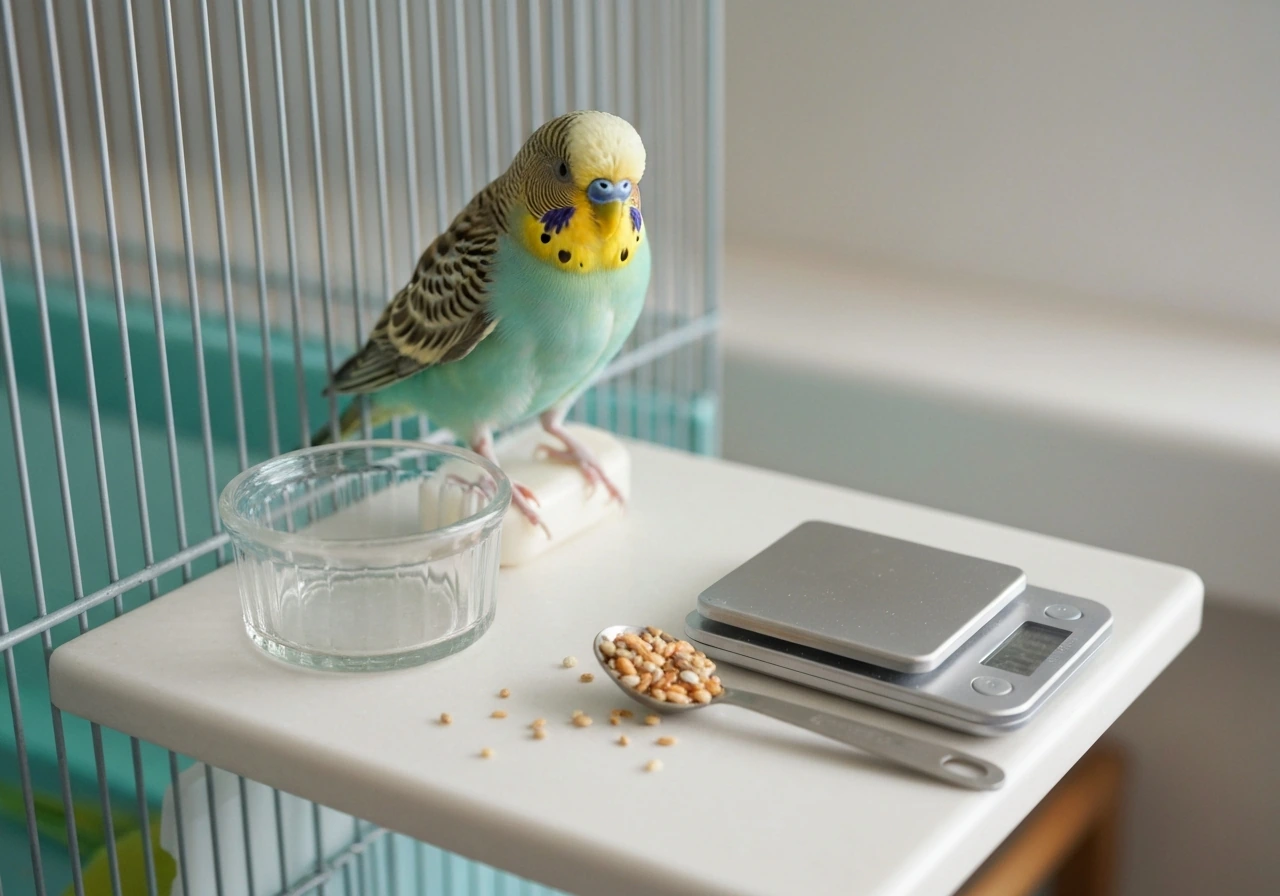
Typical daily seed portion for a budgie
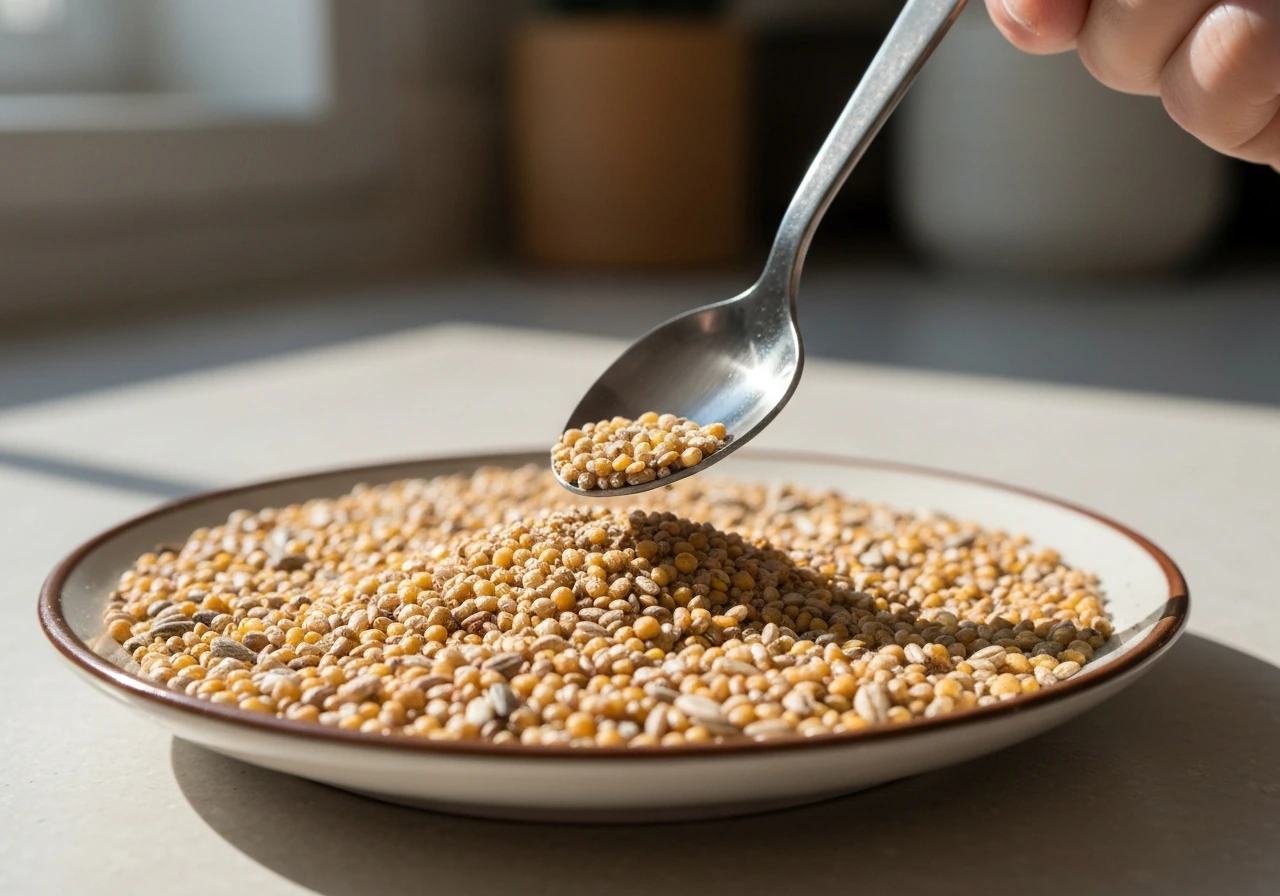
Most adult budgies (weighing around 30 to 40 grams) do well with 1.5 to 2 teaspoons of dry seed as their staple portion. If you are using seed as only part of the diet alongside pellets and vegetables, the seed component should sit at the lower end: roughly 1 teaspoon or about 4 to 6 grams. If seed is the main food source, aim for 2 teaspoons (6 to 8 grams) and monitor carefully.
The Scenic Bird Food feeding protocol lists 20 to 50 grams as a serving range for birds in their category, but that is a product protocol intended for a range of small parrots, not a per-budgie daily target. For a single budgie, the SpectrumCare-referenced Merck guidance of 1.5 to 2 teaspoons per day is the number to work with in practice. Think of it this way: a level teaspoon of mixed budgie seed weighs roughly 3 to 4 grams, so two teaspoons gets you to the 6 to 8 gram range without a scale.
| Measure | Approximate weight | Best used when |
|---|---|---|
| 1 level teaspoon | 3–4 g | Seed is part of a pellet/veg diet |
| 1.5 teaspoons | 5–6 g | Standard mixed diet, healthy adult |
| 2 level teaspoons | 6–8 g | Seed-primary diet, active or breeding bird |
| 2.5–3 teaspoons | 8–10 g | Not recommended except under vet guidance |
If you have a kitchen gram scale, use it at least for the first week or two. It takes 30 seconds and removes all the guesswork. Weigh what you put in the dish, then weigh the leftovers (shells and uneaten seed) the next morning before refilling. The difference is what the bird actually consumed.
How age, weight, and activity change the amount
Fledglings and juveniles under three months are still growing and need more caloric density relative to their body weight. During this phase, offer slightly more seed (closer to 2 teaspoons) and check that they are actually eating, not just scattering it. Young birds can be messy and inefficient at first.
Senior budgies (roughly five years and older) tend to be less active and can gain weight more easily on a seed-heavy diet because seeds are calorie-dense. For an older, sedentary bird, lean toward the lower end of the range (1 to 1.5 teaspoons of seed) and make up the rest with pellets and vegetables.
Breeding pairs and birds that fly in a large aviary use more energy and need a bigger seed allowance. A breeding hen especially will eat more, and that is normal. On the other hand, a single budgie in a smaller cage that does not get much out-of-cage flight time is at real risk of obesity on a free-choice seed setup. Never just keep the bowl full and walk away.
- Juvenile (under 3 months): ~2 teaspoons seed, monitor intake closely
- Healthy adult, active: 1.5–2 teaspoons seed per day
- Sedentary adult or overweight bird: 1–1.5 teaspoons, supplement with pellets and veg
- Senior (5+ years): 1–1.5 teaspoons, reduce fatty seeds like sunflower
- Breeding pair or aviary bird: up to 2–2.5 teaspoons, adjust based on observed weight
Seed mix choice and how it affects portioning
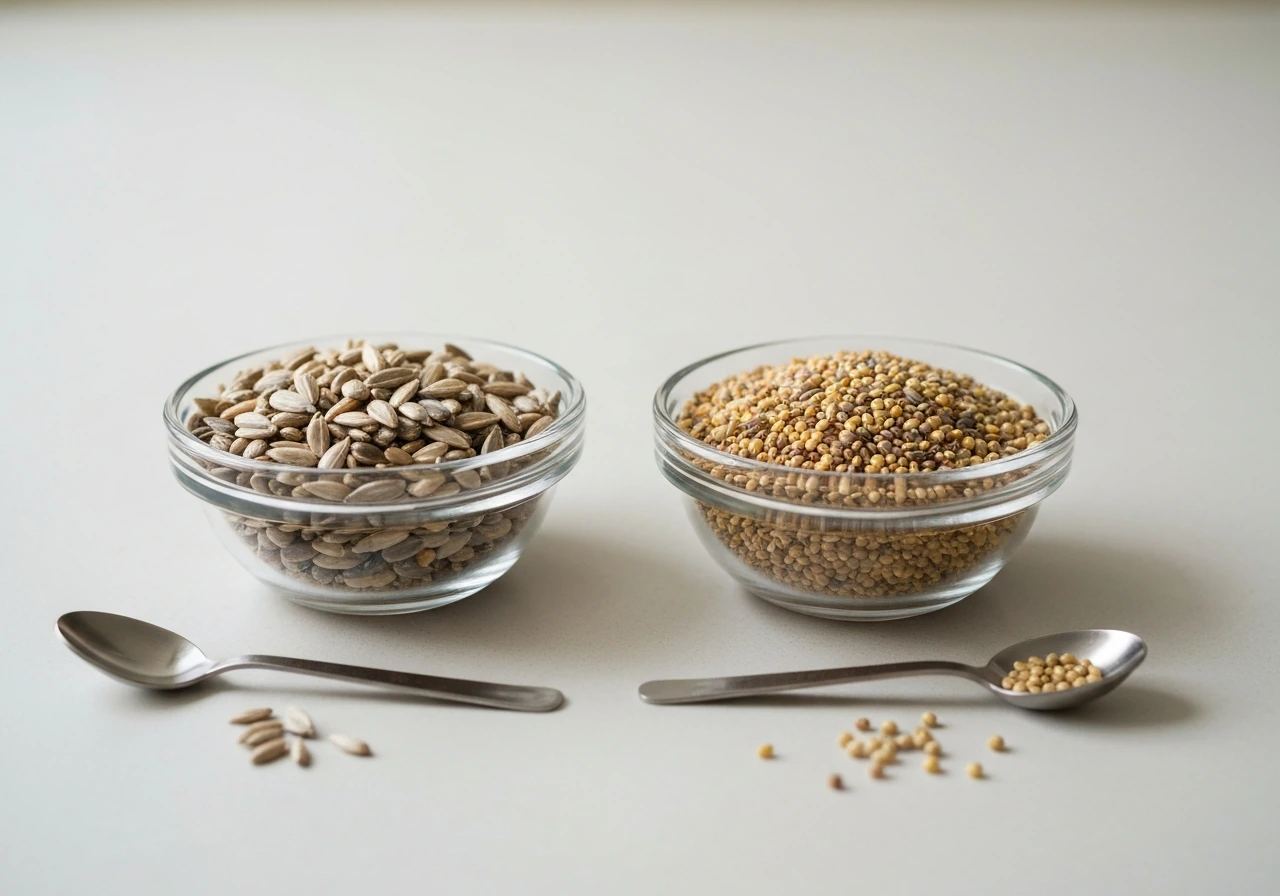
Not all seed mixes are equal, and the composition of your mix directly affects how much to feed. A mix that is heavy in sunflower seeds or safflower is high in fat. Merck Veterinary Manual also notes that seeds are high in fat and not very nutritious, so they should not make up most of a bird’s diet [A mix that is heavy in sunflower seeds or safflower is high in fat. ](https://www.
merckvetmanual. com/en-us/veterinary/bird-owners/choosing-and-taking-care-of-a-pet-bird/feeding-a-pet-bird). A bird eating 2 teaspoons of a fatty mix is consuming far more calories than a bird eating 2 teaspoons of a millet-based budgie blend. The Avian Welfare guidelines specifically warn against using wild-bird seed mixes for parrots, citing pesticide and mold risks, and caution against high-fat ingredient heavy formulas for parrots.
A good budgie seed mix is primarily canary grass seed and small millets (white millet, Japanese millet), with smaller amounts of oat groats and perhaps a little flaxseed. Sunflower should be minimal or absent in the base mix. If you are buying a blend that lists sunflower as a top-three ingredient, treat it as a treat supplement (half a teaspoon a few times a week at most), not the main staple.
Where seed fits into the overall diet also changes how much you offer. A widely referenced target diet for budgies breaks down to roughly 40 to 50 percent quality pellets, 30 to 40 percent seed mix, 10 to 15 percent vegetables, and 5 to 10 percent fruit.
The Merck Veterinary Manual recommends a target diet for many small birds (including budgerigars) of about 40 to 50 percent pellets, 30 to 40 percent seed mix, 10 to 15 percent vegetables, and 5 to 10 percent fresh fruit roughly 40 to 50 percent quality pellets, 30 to 40 percent seed mix, 10 to 15 percent vegetables, and 5 to 10 percent fruit. In that setup, seed is not the majority of the plate.
If pellets and fresh food cover half the diet, your seed portion can drop to around 1 teaspoon. If you are not offering pellets at all, seed needs to cover more nutritional ground and portion control matters even more.
Monitoring intake: leftovers, waste, and weight checks
The single most useful habit you can build is weighing your bird weekly. A healthy adult budgie should stay within a gram or two of its normal weight week to week. Consistent weight loss suggests underfeeding or a health problem. Consistent gain suggests overfeeding or too many fatty seeds. A small digital postal scale works perfectly and costs very little.
Budgies shell their seeds before eating the kernel, so what looks like a full bowl of seed is often just empty husks. Blow or brush the husks off the top of the dish before each feeding so you can actually see how much unshelled seed remains. If there is still plenty of unshelled seed at the end of the day, you are overfeeding. If the dish is empty by midday, bump up the portion slightly.
A simple daily routine that works well: measure the seed portion each morning, offer fresh food (a small spoonful of vegetables or greens) in the morning, remove any uneaten fresh food within 4 to 8 hours to avoid spoilage, and replenish or top up dry seed in the afternoon or evening. Remove any dry food at bedtime if you want to track intake precisely, though this is optional for seed-only staples.
Troubleshooting overconsumption or low intake
When your budgie seems to eat too much
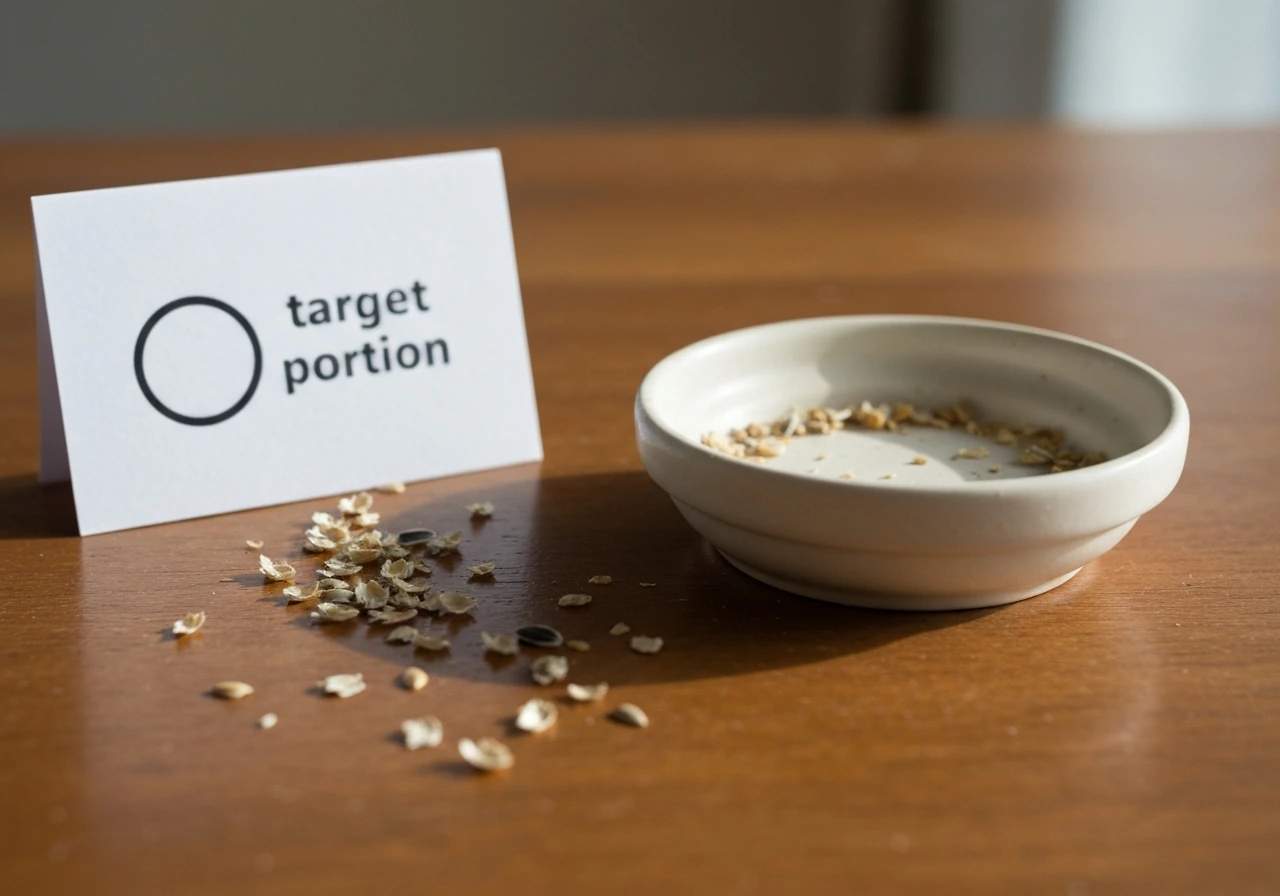
If your bird is constantly at the seed dish and gaining weight, the first thing to check is what kind of seed is in the mix. High-fat seeds are palatable and easy to overconsume. Switch to a leaner millet-based mix, reduce total seed to 1 to 1.5 teaspoons, and increase fresh vegetables. Do not cut seed cold turkey. That creates stress and can cause rapid weight loss in small birds, which is genuinely dangerous. Pismo Beach Veterinary Clinic recommends starting a diet transition by limiting seed to half of what the bird would eat per day, then adjusting gradually.
Boredom is another cause of overconsumption. A bird that has nothing to do will often eat more than it needs. More out-of-cage time, foraging toys, and fresh foods to investigate can reduce obsessive seed eating significantly.
When your budgie seems to eat too little
Low seed intake can signal a health problem, but before going straight to the vet, check a few basics. Is the mix fresh and dry? Rancid or stale seed smells slightly off and birds will often refuse it. Is the bird actually eating but leaving just empty husks (see the husks issue above)? Is the bird new to the home or recently stressed by changes in the cage, other pets, or routine? Stress suppresses appetite.
If the bird is genuinely not eating and has lost more than 10 percent of its body weight, or is sitting fluffed at the bottom of the cage, that is a vet visit, not a feeding tweak. Small birds can deteriorate quickly. Do not wait more than 24 to 48 hours if the bird looks unwell.
A common issue with low-quality seed mixes is that they may contain seeds the bird simply does not like or that are nutritionally inadequate, so the bird cherry-picks and discards the rest. If you are scooping up a lot of specific seed types on the cage floor, try a different blend and see if intake improves.
Safe seed storage: keeping mold, moisture, and rancidity out
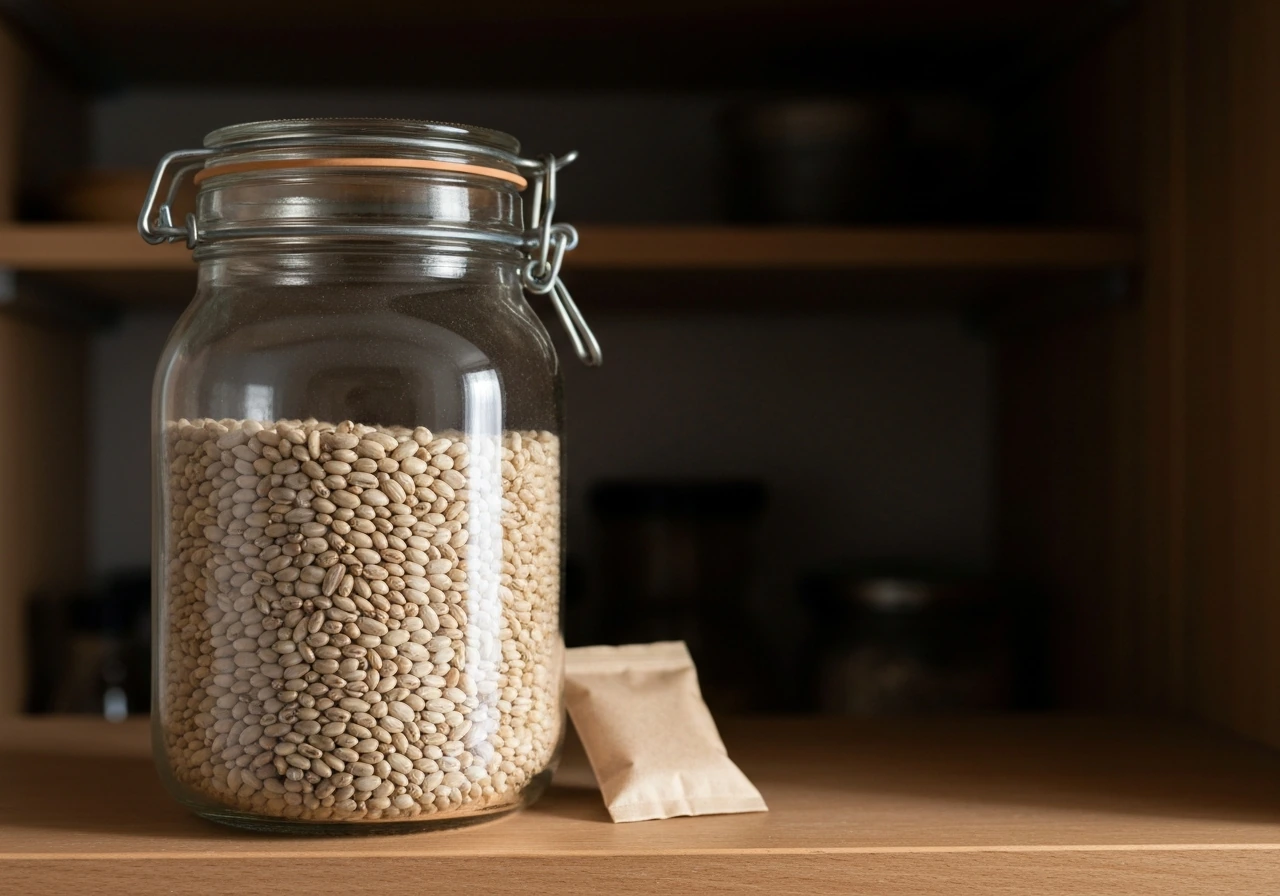
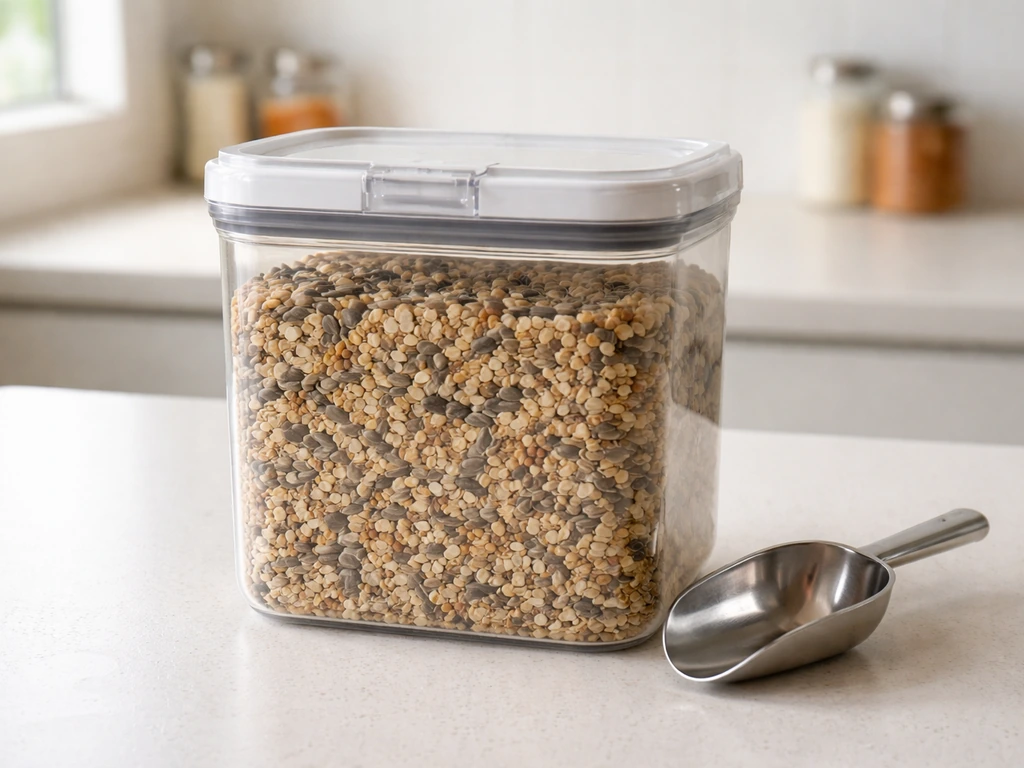
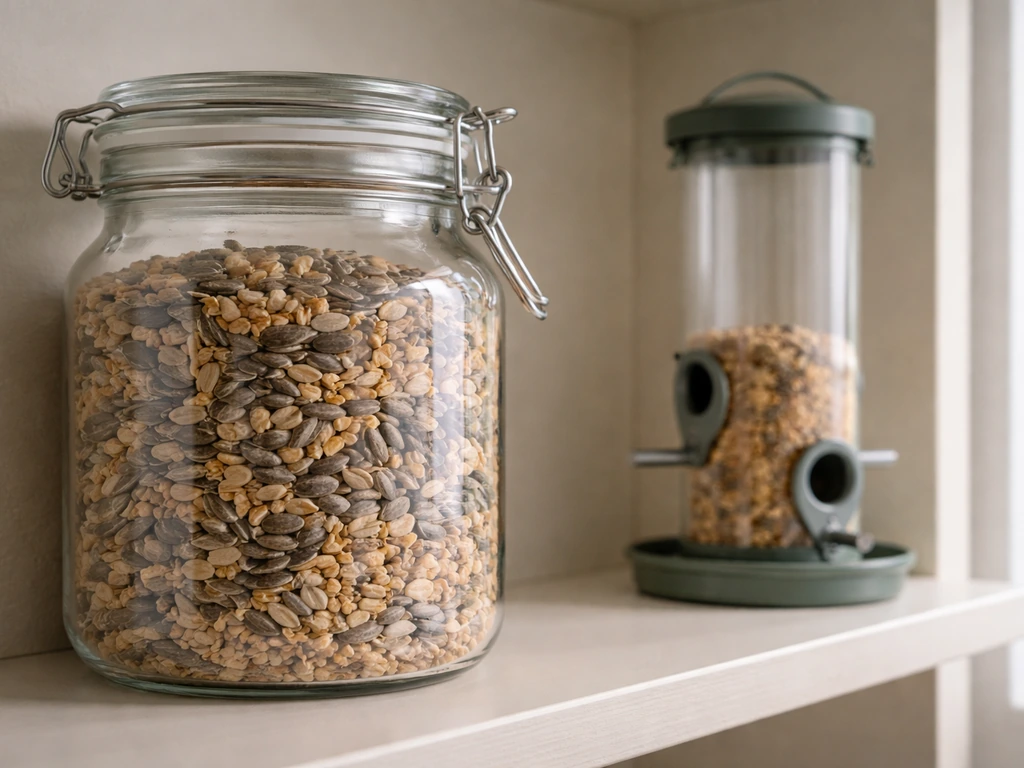
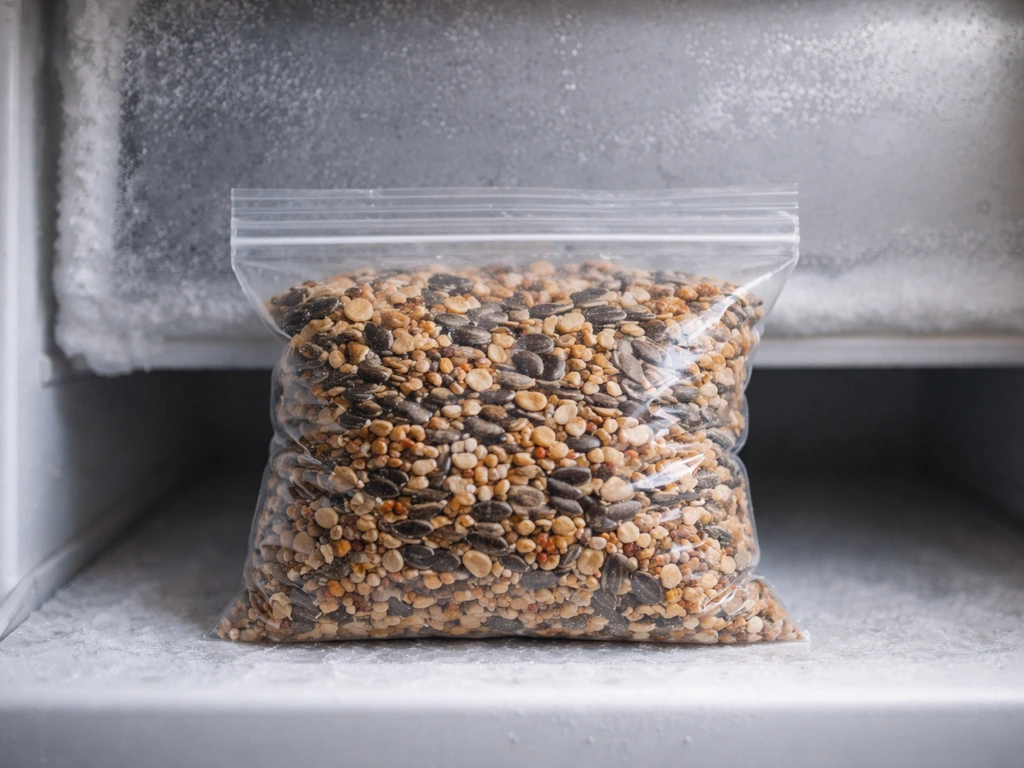
Seed quality matters as much as seed quantity. Feeding the right amount of bad seed is worse than feeding slightly too much good seed. The core rule: dry, cool, dark, and airtight. An airtight glass jar or food-grade plastic container with a tight lid is all you need for quantities up to a few pounds.
Moisture is the enemy. Seeds absorb humidity from the air and, once damp, can begin to mold or sprout within days in warm weather. Never pour fresh seed on top of old seed that may have absorbed moisture. Tip the container, check for any clumping or off smell, and discard anything that does not look and smell clean and dry. A small silica gel packet inside the storage container helps reduce internal humidity, especially in summer.
Avoid storing seed in garages, attics, or garden sheds. Temperature and humidity swings in those spaces accelerate spoilage and attract pests. A kitchen cabinet, pantry shelf, or climate-controlled storage room is far better. If you buy seed in bulk (say, a 5 to 10 pound bag), consider how much volume that actually occupies before committing to a storage container size, and decant into a smaller working container for daily use while the rest stays sealed. If you are following a storage and portion routine for a specific budgie, Stephanie’s 7/8 pound of bird seed is a useful quantity to track and keep airtight.
Sprouting inside the storage container is a warning sign. It means the seed got damp somewhere along the way, either before you bought it or during storage. Sprouted seed in a feeding dish is not automatically harmful (some bird keepers intentionally sprout seed as a treat), but sprouted or damp seed left in a warm cage environment will mold quickly. Remove uneaten damp or sprouted seed within a few hours.
Feeder setup, pest control, and cleanup
Spilled seed is the main source of pest problems and mess with budgies. Budgies are enthusiastic hullers and flingers, and a standard open dish on the cage floor will result in seed scattered widely. A few simple changes make a real difference.
- Use a covered seed dish or a small hopper feeder with a catch tray. These contain husks and reduce floor scatter significantly.
- Place the cage on a hard, easy-clean surface rather than carpet. A rubber mat or tray under the cage makes daily sweeping fast.
- Sweep or vacuum spilled seed daily. Seed sitting on the floor for more than a day attracts insects (particularly grain moths and ants) and in humid conditions can begin to mold.
- Do not let a pile of husks and uneaten seed build up in the dish. Empty and wipe the dish every 2 to 3 days at minimum, daily if you are feeding fresh or damp foods alongside seed.
- If you spot weevils or grain moths in stored seed, discard the entire batch. Do not try to pick them out. Clean the storage container thoroughly before refilling.
For rodent prevention, the same airtight container rule applies. A bag of seed left loosely folded in a cupboard is an open invitation. Glass jars and hard-sided plastic bins with locking lids are rodent-resistant. If you store larger quantities, knowing how many pounds fit per gallon helps you size your containers correctly so you are not leaving overflow seed in an open bag. If you are converting bird seed weight to volume for storage or measuring, this will also help you estimate gallons for a given pound amount like 20 lbs how many pounds fit per gallon.
In humid or warm climates, seed in the feeder dish can go stale or begin to absorb moisture within a couple of days. In those conditions, offer smaller amounts more frequently (once in the morning, top up in the evening) rather than filling a large dish that sits all day. This also gives you a natural twice-daily check-in on how much the bird is actually eating.
Your immediate next steps
Here is what to do today to get this right quickly. First, measure out 1.5 teaspoons of your current seed mix and weigh it if you have a scale. That is your starting baseline. Offer it in the morning, check what is left (accounting for husks) by the next morning, and adjust up or down by half a teaspoon based on what you find. If Nellie is buying bird seed, use this same measured portion approach so she can tell whether the bird is eating what you planned. Do this for a week before making any bigger changes.
Second, check your seed storage situation. Is it airtight? Is it in a cool, stable-temperature spot? If not, move it. Smell the seed: it should smell neutral and slightly nutty, not musty, sour, or oily-rancid. If it smells off, replace it. Fresh seed costs very little, and budgie-appropriate seed mixes are widely available at reasonable prices.
Third, weigh your bird this week and note the number. Weigh again in seven days. If weight is stable and the bird is active, bright-eyed, and vocalizing normally, your feeding routine is working. If weight drops or the bird seems lethargic, do not hesitate to contact an avian vet. Getting the amount right is a two-week process of observation, not a single measurement, and the adjustments you make in the first couple of weeks will set up a reliable routine you can maintain long term.
FAQ
How do I tell if my budgie is eating the full amount I’m measuring, or just scattering husks?
Use a “leftovers” check that accounts for hull waste. After 12 to 24 hours, remove the dish contents, brush off the top husks, then visually estimate how many unshelled kernels remain. If you have access to a scale, weigh the unshelled seed portion only, then compare it to what you measured in. If the dish looks empty but weight is rising, your budgie may be overconsuming while still shelling efficiently.
What portion should I offer if I’m feeding pellets and vegetables but want seed only as a small supplement?
Start seed closer to the lower end, about 1 teaspoon per day (roughly 4 to 6 grams for typical mixes), and keep pellets and vegetables as your main volume. The key is to prevent the “bowl-full” habit. Instead of leaving seed out all day, measure it in the morning and top up only once, so you can confirm the seed is truly being consumed.
Can a budgie have seed free-choice all day, and if not, what’s the safer alternative?
Free-choice seed often leads to gradual overconsumption because budgies keep shelling and eating whenever the dish is present, especially if the mix has sunflower or other fatty ingredients. A safer approach is measured feeding (morning portion only, optional small evening top up) and using weight trends to adjust. If you must leave seed in the cage, use a smaller dish and monitor daily leftovers, not just whether the bird visits the bowl.
How much should I adjust if my seed mix is heavier in sunflower or other high-fat ingredients?
Reduce the quantity immediately when switching to a fattier blend. A practical rule is to keep the same teaspoon amount only for a brief trial, then reassess in 5 to 7 days using body weight and how quickly the bowl empties. If weight is trending up or the bird seems especially hungry, drop seed by about half a teaspoon, then lean harder on vegetables and pellets.
My budgie is new or stressed. Should I still give the same seed amount right away?
Use the same measured baseline but expect a short appetite dip. In a new environment, many budgies shell less and may eat more selectively, so don’t assume “low intake” equals underfeeding unless you see significant weight loss or lethargy. Offer the measured seed, add fresh foods in small portions, and monitor weight and activity for several days before making large portion changes.
What if my budgie is always hungry and keeps begging at the seed dish?
First check whether there is constant access to seed, and remove the “always full” cue by feeding measured portions. Then increase foraging opportunities and add more vegetables appropriate for budgies. If begging persists even when weight is stable, it can be behavioral, but if weight is rising, the seed amount or mix fat content is likely too high and should be reduced.
How often should I weigh my budgie to make sure the seed amount is correct?
Weigh at least weekly for routine tracking, and do a short, higher-frequency check when adjusting portions. When changing diet or mix types, weigh daily for 3 to 5 days or at minimum every other day, then use the average trend. If weight changes faster than expected, adjust sooner rather than waiting the full month.
My budgie is not eating much seed and there’s lots of husk. Could the seeds be bad or just unpreferred?
Check both. Smell the remaining seed, it should be neutral to slightly nutty, if it smells musty, sour, or oily-rancid, replace it. Also observe for cherry-picking: if only certain kernels disappear and the rest accumulates, the bird may not like that mix. In that case, switching to a leaner millet-based blend can improve intake without increasing the total quantity.
Should I worry if my budgie’s seed dish gets empty quickly?
Empty by midday can be normal for an active bird, but confirm with weight. If the bird remains bright and maintains weight on your routine, it’s likely fine. If the bird loses weight or looks weak, increase by a small step, about half a teaspoon, and recheck the next day and the next week’s weight trend.
When transitioning from a seed-heavy diet to pellets and vegetables, how do I avoid a sudden drop in calories?
Don’t cut seed abruptly. Reduce in steps over about 1 to 2 weeks, for example start by limiting seed to roughly half of what the bird previously consumed per day, then adjust gradually based on body weight and activity. If the bird starts fluffed, lethargic, or loses more than about 10% body weight, stop the transition approach and contact an avian vet promptly.
Is it okay to sprinkle a little extra seed during colder weather or if my budgie seems less active?
Avoid “automatic extra” adjustments. Cooler temperatures can change activity, but weight trend is the decision tool. If weight stays stable, don’t increase seed, focus on ensuring the bird is warm and comfortable. If weight increases, reduce seed slightly and keep vegetables and pellets consistent, if weight decreases, adjust cautiously and confirm health first.