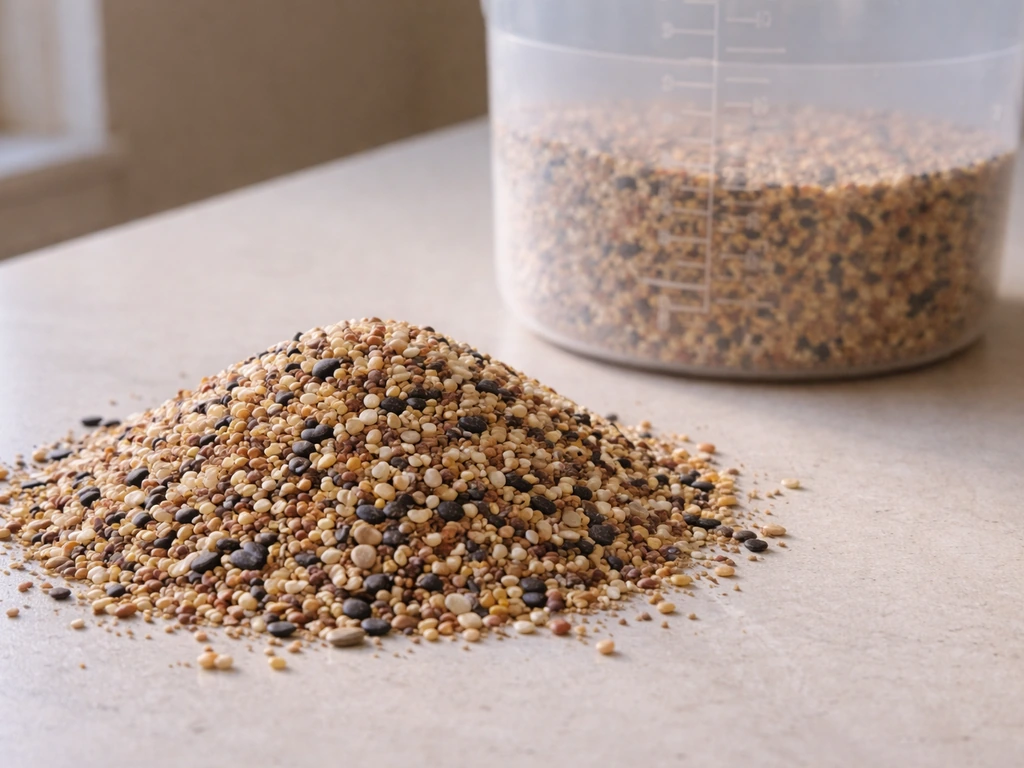
A gallon of bird seed typically weighs between 3.5 and 7 pounds, depending on the seed type and how tightly it's packed. Whole sunflower seeds land around 3.5 to 4.5 pounds per gallon because they're bulky with lots of air gaps. Millet and mixed seed run closer to 5 to 6 pounds per gallon. Cracked corn is denser still, often hitting 6.5 to 7 pounds per gallon. If you need one working number for a typical sunflower-heavy backyard mix, use about 5 to 5.5 pounds per gallon as your starting estimate, then adjust once you've weighed your specific seed.
How Many Pounds of Bird Seed in a Gallon
Maya Collins
19 May 2026
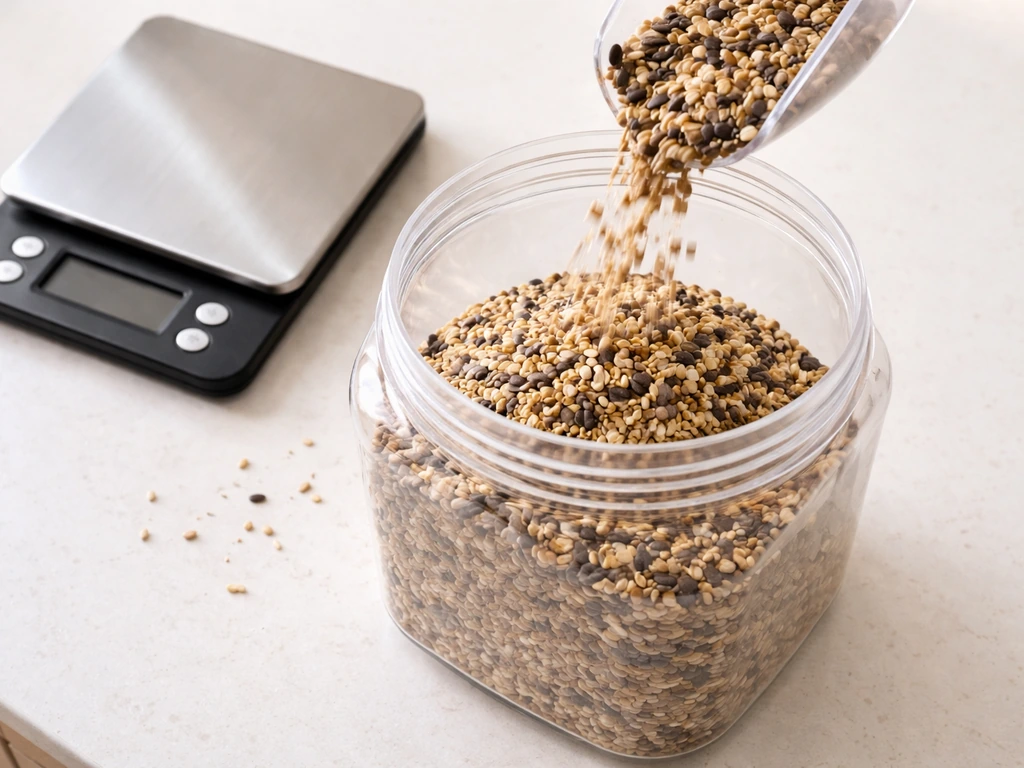
Why the answer isn't one fixed number
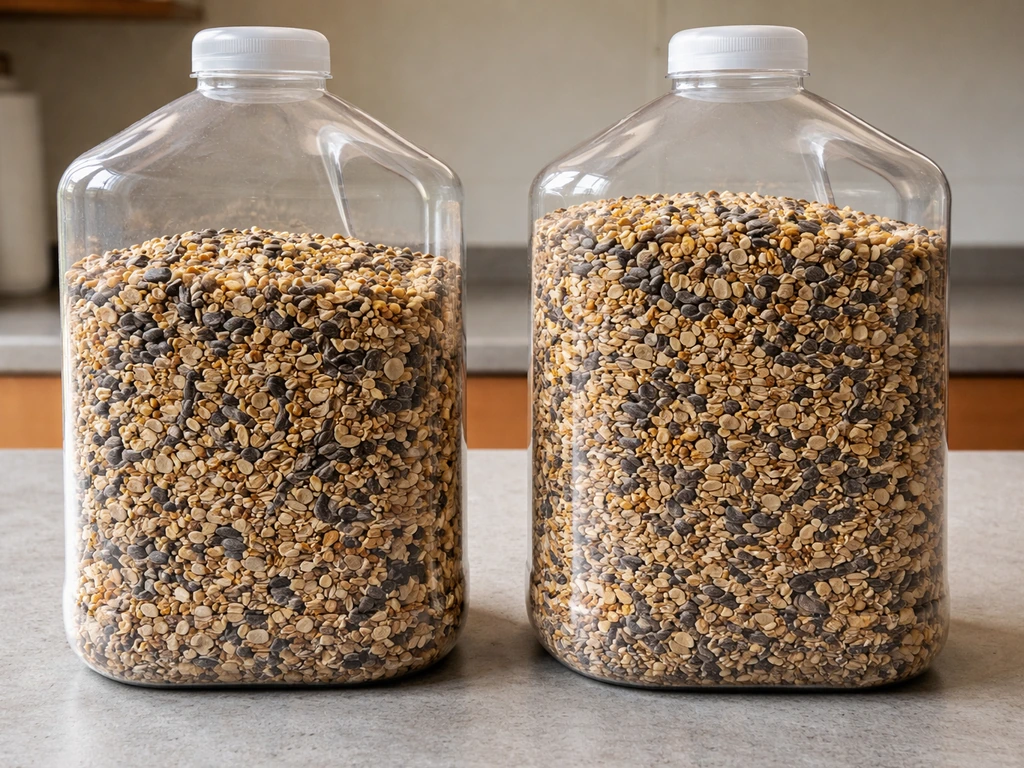
Pounds measure weight. Gallons measure volume. Those two things only convert neatly if you know the density of what you're measuring, and bird seed density shifts a lot depending on seed type, shape, and how the seed settles in a container. Scientists call this bulk density: the mass of a material per unit of volume, including all the air spaces between individual seeds. A container of whole sunflower seeds has far more air gaps than a container of tiny millet, so sunflower seeds weigh much less per gallon even though each individual seed weighs more than a millet grain. EngineeringToolBox lists a blank" rel="noopener noreferrer">bulk density for “Grain, Millet” of 640 kg/m³, with a unit conversion of 1 kg/m³ = 0.0624 lb/ft³ (which corresponds to about 39.9 lb/ft³).
Packing state matters just as much as seed type. Loose-poured seed (just dumped in) weighs less per gallon than seed that's been tapped or vibrated to settle. The same gallon jug can hold meaningfully different weights of the same seed depending on whether you scooped gently or shook the container down. That's why any single published pounds-per-gallon figure is an approximation, not a guarantee. For precise buying or storage planning, the right move is to measure your specific seed in the container you actually use.
Quick estimates for common backyard bird seeds
The numbers below are derived from published bulk density data for these seed types, converted using the US gallon-to-cubic-foot relationship (1 gallon equals about 0.134 cubic feet). They reflect a loose-to-moderately-settled pour, which is how most people fill a storage container or feeder. Packed-tight figures will run 10 to 15 percent higher.
| Seed Type | Approx. lb/gal (loose) | Approx. lb/gal (settled/packed) | Notes |
|---|---|---|---|
| Whole sunflower seeds | 3.5 – 4.0 | 4.0 – 4.5 | Very bulky; lots of air gaps |
| Black oil sunflower | 3.5 – 4.2 | 4.0 – 4.8 | Slightly smaller than striped; packs a bit tighter |
| Millet (white or red) | 4.7 – 5.3 | 5.3 – 6.0 | Small and round; settles quickly |
| Mixed seed (sunflower-heavy) | 4.5 – 5.5 | 5.0 – 6.0 | Varies widely by brand blend |
| Cracked corn | 5.5 – 6.7 | 6.5 – 7.0 | Dense; closer to grain bulk density |
| Nyjer (thistle) seed | 4.5 – 5.5 | 5.0 – 6.0 | Tiny and oily; moderate density |
| Safflower seed | 4.5 – 5.6 | 5.0 – 6.0 | Real-world mix example: ~5.6 lb/gal per one supplier |
For context, a 40-pound bag of sunflower-heavy mix fills roughly 8 to 10 gallons of storage space depending on how tightly you pack it. A 20-pound bag of millet takes up roughly 4 to 5 gallons. Those rough volume figures help when you're sizing a storage bin before you buy.
How to measure your exact seed at home
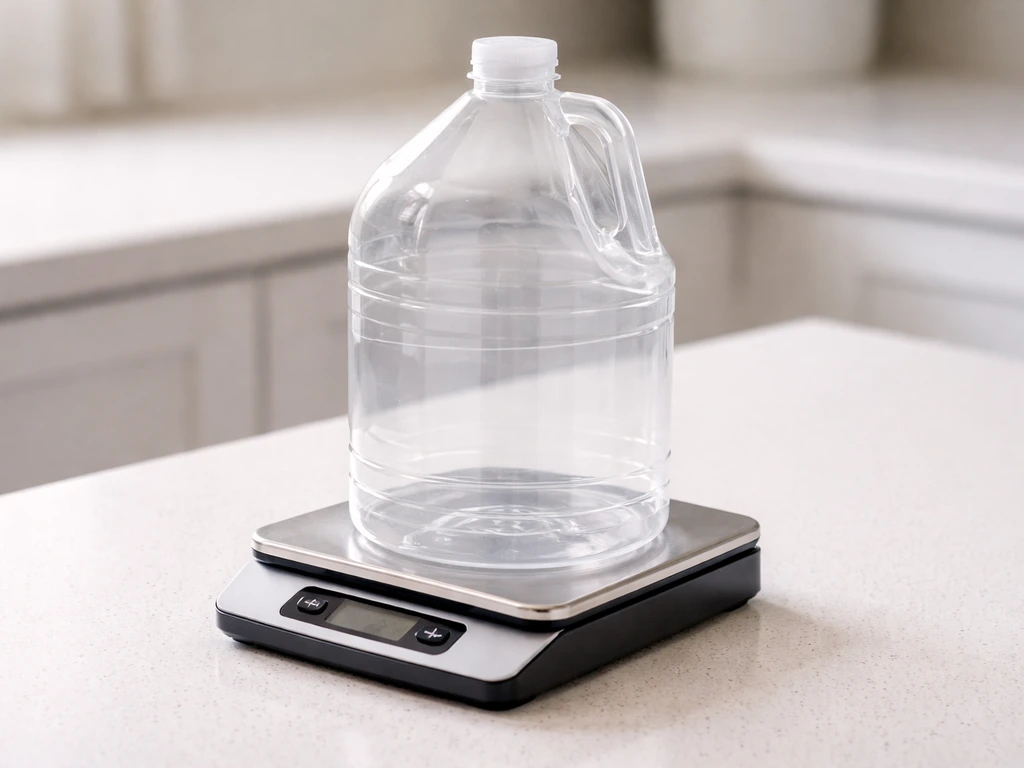
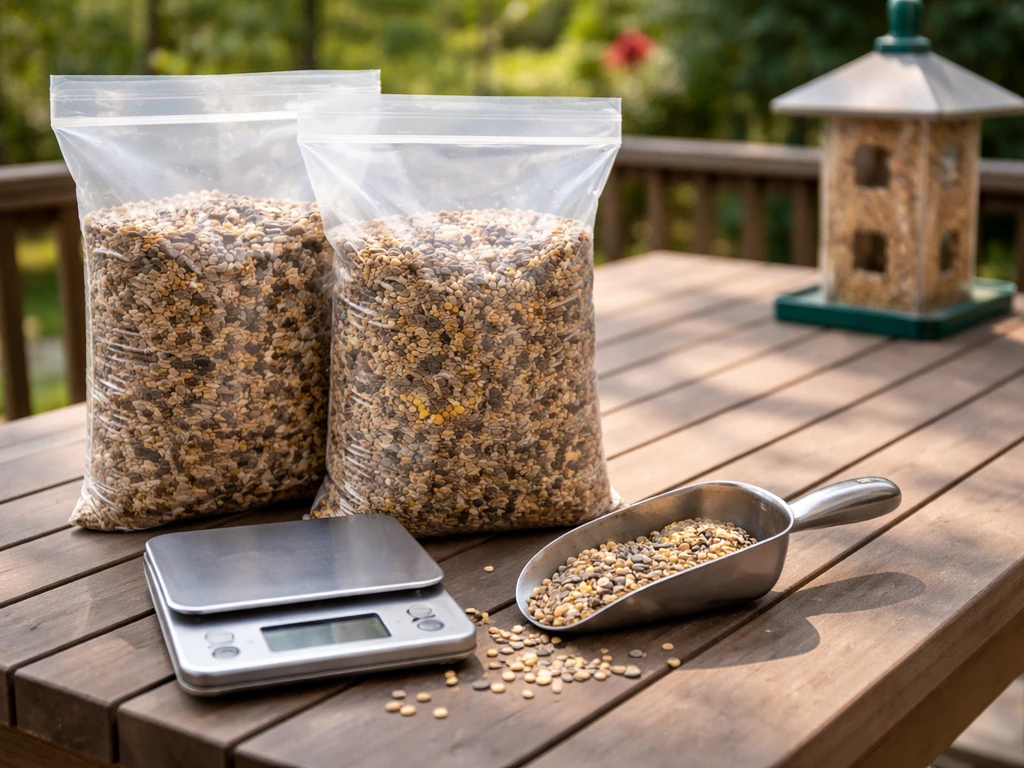
This takes about five minutes and gives you a number you can actually trust for your specific seed and container. You'll need a kitchen or postal scale that reads in pounds, a 1-gallon container (a clean milk jug or a marked storage bin works), and a scoop or cup.
- Zero out your scale with the empty gallon container on it (tare the weight so you're only measuring seed).
- Scoop seed into the container the same way you normally would: don't shake it down or pack it, just fill it as you would when refilling a feeder or storage bin.
- Level off the top with a straight edge (a ruler or the flat back of a knife works). Don't press down.
- Read the scale. That number is your pounds-per-gallon figure for that seed, poured your way.
- Repeat once with the same seed, tapping the container gently on the counter a few times before leveling. The second weight will be 5 to 15 percent higher and reflects a more settled state.
- Use the loose figure for feeder-fill estimates and the settled figure for storage bin capacity planning, since seed in a full bin settles over time.
If you only have a partial gallon container, just use a known fraction. A half-gallon container is fine: double the reading. A quart (one-quarter gallon) reading multiplied by four gives a close gallon estimate. One commercial safflower mix seller lists their quart portion as about 1.7 pounds, which scales to roughly 6.8 pounds per gallon loosely, so real-world branded mixes do vary from the bulk density estimates above.
Converting between gallons and pounds for buying and feeder refills
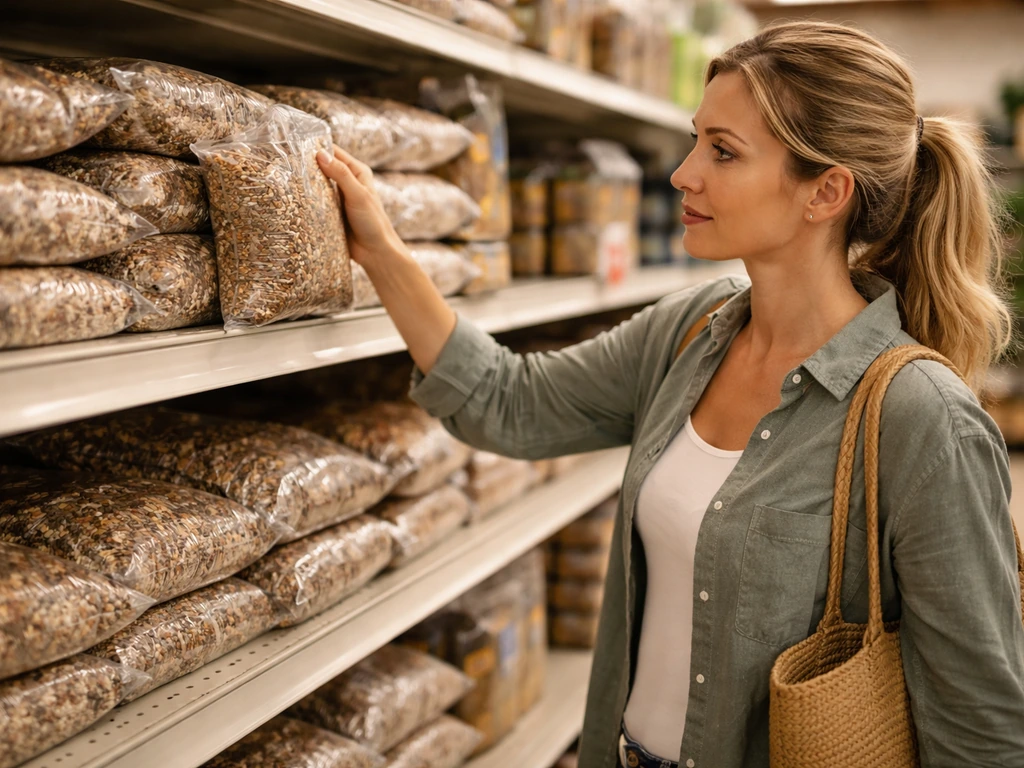
Bird seed at retail is sold by weight, not volume. That means if your storage bin says it holds 10 gallons and you want to know how many pounds of mixed seed to buy, you need to convert. Use these quick formulas once you have your own pounds-per-gallon figure, or use the table above as a ballpark.
- Pounds needed = gallons of storage space × your lb/gal figure
- Gallons of storage needed = pounds purchased ÷ your lb/gal figure
- Feeder capacity in pounds = feeder volume in gallons × lb/gal for your seed
Example: you have a 6-gallon storage bin and you're buying black oil sunflower seed. If Nellie is buying bird seed, use your pounds-per-gallon estimate to choose the right bag size for your storage bin Example: you have a 6-gallon storage bin and you're buying black oil sunflower seed.. At roughly 4 pounds per gallon loose, you can fit about 24 pounds before the bin is full. If you buy a 40-pound bag, you'll need about 10 gallons of bin space, or plan to split the bag across two smaller containers.
For feeder refills, most tube feeders hold between 0.5 and 2 quarts (0.125 to 0.5 gallons). At 4 pounds per gallon for sunflower seed, a 2-quart feeder holds about 2 pounds of seed. Hoppers can run 1 to 4 gallons, so you're looking at 4 to 16 pounds depending on feeder size and seed type. These numbers help you shop for a bag size that matches your refill cycle without leaving seed sitting too long.
Storing measured seed to keep it fresh
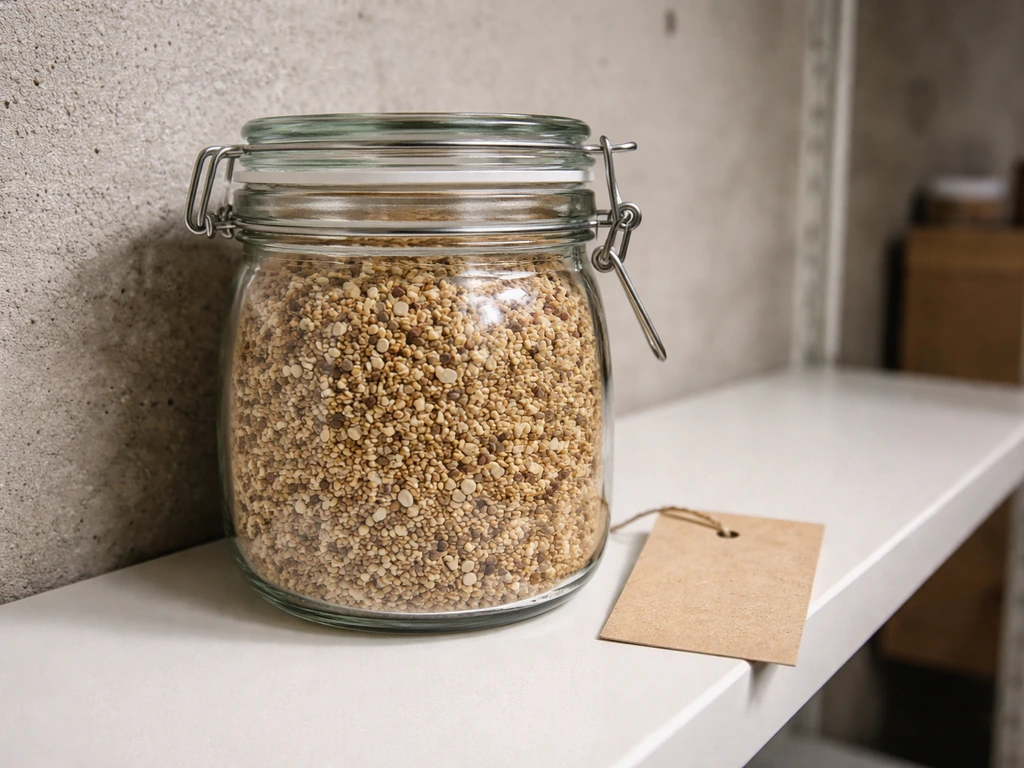
Once you've done the measuring, how you store the seed matters a lot. The two main enemies are moisture and pests. Airtight containers are the single most important storage choice: hard plastic or metal bins with tight-fitting lids block both humidity and rodents far better than the original paper or plastic bags.
- Store seed in a cool, dry location. A garage, shed, or basement works well if it stays below 70°F and stays dry. Avoid anywhere with humidity above 60 percent: mold grows fast on damp seed.
- Keep containers off the ground on a shelf or pallet. This reduces moisture wicking from concrete floors and limits rodent access.
- Don't overfill containers. Seed packed very tightly at the bottom compresses under its own weight and can trap moisture, especially in warm weather. Leave a few inches of headspace.
- Use a dedicated scoop that stays in or near the bin, not one that moves between wet and dry environments.
- Buy only as much seed as you'll use in 4 to 6 weeks. Seed stored longer than that, especially in warm months, starts losing nutritional quality and becomes a mold risk.
- In humid climates (the Southeast, Pacific Northwest coast, or anywhere with wet summers), consider smaller, more frequent purchases and check seed weekly for off smells or clumping.
What to do when seed gets wet, clumps, or starts sprouting
Wet seed is a real problem, and the right answer is usually to throw it out. Mold spores, including Aspergillus fungus, grow on damp seed and can make birds seriously ill. Once seed has gotten wet and clumped, the moisture has already penetrated the seed coat, and simply spreading it out to dry does not reliably eliminate mold or bacteria already present. Attempting to dry and reuse wet seed is not a safe workaround.
Sprouting is a related but slightly different issue. Seed that sprouts under a feeder or in a storage bin has enough moisture to germinate, which means it definitely has enough moisture to support mold growth too. Sprouted seed in storage should be discarded. Sprouted seed under a feeder is a sign you're either overfilling the feeder, the seed is getting rained on, or hulls and debris are retaining moisture on the ground.
In a feeder, wet and clumped seed can also block ports and prevent birds from reaching food. Check feeders after heavy rain. If the seed inside has clumped at all, empty the feeder, rinse it out, let it dry completely, and refill with fresh seed. A feeder that takes a few hours to dry is worth the wait: reloading damp seed just restarts the problem.
Cleanup and hygiene when handling seed and spills
Seed handling produces fine dust, hull fragments, and occasional bird droppings from feeder contact. These aren't just messy: they can carry bacteria and fungal spores, and the dust itself is an irritant. Keep these habits in mind whether you're measuring seed, filling feeders, or cleaning up spills. PetMD advises not to reuse old seed, because it can recontaminate a feeder that is otherwise clean Do not reuse old seed.
- Wear gloves when handling large quantities of seed or cleaning feeders. If you're dealing with visibly moldy or contaminated seed, add a dust mask. Avoid stirring up seed dust unnecessarily, especially in enclosed spaces.
- Never reuse seed that came out of a dirty or contaminated feeder. Old seed can reintroduce mold or bacteria to a freshly cleaned feeder immediately.
- Clean up spills under feeders regularly. Hulls, uneaten seed, and droppings accumulate quickly and attract rodents, insects, and create mold patches at ground level. Rake or sweep the area weekly in warm months, less often in winter.
- Wash hands thoroughly after handling bird seed, feeders, or cleaning supplies. This is basic but easy to skip.
- If you're cleaning a feeder that had visibly moldy or wet seed, use a diluted bleach solution (1 part bleach to 9 parts water), rinse thoroughly, and allow the feeder to air dry completely before refilling.
- Keep measuring scoops, funnels, and storage bins clean. A quick rinse and dry when you empty a bin prevents residue buildup that can harbor moisture and contaminants.
Putting it all together
If you just need a quick number to work with right now, use 4 to 5.5 pounds per gallon for most sunflower-heavy mixes, 5 to 6 pounds for millet or mixed seed, and up to 6.5 to 7 pounds for cracked corn. For anything more precise, the five-minute weigh-and-pour method above will give you a figure you can actually rely on for your specific seed and storage setup. From there, scaling up to buy the right bag size, choosing the right storage bin, and keeping seed fresh and safe is mostly a matter of the storage and hygiene habits described here. Get those right and you'll waste less seed, spend less money, and give backyard birds a consistently clean food source.
FAQ
If my seed is already in the bag, how can I estimate pounds per gallon without remeasuring with a clean container?
Use the five-minute method but keep the seed in the same condition you’ll store it in, pour from the bag into your 1-gallon container, and weigh it. If the bag has been partially settled for a while, scoop from the middle, not just the top, since bulk density can change as fine dust and small pieces settle.
Does “1 gallon” mean an exact measurement for storage bins, or do bin markings include wall volume?
Bin labels often reflect internal volume, but some tubs and hoppers include sloped walls or unusable corners. For accuracy, do a one-time calibration by filling the bin to the mark with water, then measure that water in gallons, subtracting any volume that you cannot actually fill with seed.
How should I fill the 1-gallon container for measuring, loose pour or packed tight?
Choose one method and stick with it. If you’re trying to match typical real-world filling, do a loose-to-moderately-settled pour (no tamping). If you tend to shake or tap containers down, record that value separately, because packed-tight can be about 10 to 15% higher.
What changes for black oil sunflower seed versus sunflower hearts or other sunflower types?
Seeds with different hull content and shape usually have different bulk density. Hull-on, whole sunflower tends to be bulkier per volume than more uniform, smaller, or more densely filling varieties, so you should not assume the same pounds per gallon even within “sunflower” labeled mixes.
Can I convert pounds per gallon to kilograms per liter (or vice versa) for international bags?
Yes. 1 gallon is 3.785 liters. If you know pounds per gallon, pounds per liter equals (lb per gallon) ÷ 3.785. Then multiply by 0.4536 to convert pounds to kilograms, so kg per liter equals (lb per gallon × 0.4536) ÷ 3.785. Keep in mind the result is still bulk-density dependent.
Do kitchen scales need special settings to measure bird seed accurately?
Use whatever scale reads in pounds (or grams), but weigh in a stable way: tare the empty container, then pour slowly. Avoid measuring too close to the scale’s minimum capacity, and if you use grams, convert carefully (1 lb equals 453.6 g) before calculating pounds per gallon.
If I’m only measuring a quart or half-gallon, how do I prevent extra error?
Measure at least a half-gallon if possible. For quarts, small differences in how you scoop (level versus mounded, gentle versus shaken) become a bigger percentage error when you multiply by four. If you use a quart, do two trials and average them.
How do I handle mixed seed that separates in the bag over time?
Stir the bag gently or mix by scooping from multiple depths before you measure. If you measure a top layer and later fill a container after the mix settles, your pounds per gallon can drift because smaller, lighter components and larger, heavier components settle differently.
What’s the safest way to reuse seed that smells fine but looks clumped from humidity?
Do not assume it’s safe. If seed is damp, clumped, or has any visible mold, discard it. Spreading it out to dry does not reliably remove mold or bacteria that may already be present in the seed coat.
How can I tell whether a wet seed problem is from feeder rain versus overall bad storage?
If seed clumps only after heavy rain, the feeder is likely allowing moisture in, check for drainage and covered designs, and empty the feeder promptly. If clumping happens in storage too, it points to storage humidity and the container seal, airtight storage and dryness should be corrected before refilling.
What should I do if my feeder ports clog after refilling?
Empty the feeder, remove any remaining seed and debris, then rinse and dry it completely before refilling. Clogged ports are often caused by hull fragments and clumps, reloading damp or partially clumped seed tends to restart the blockage quickly.
For buying, should I plan using “loose” or “packed” pounds per gallon?
Plan for your worst-case packing behavior. If you tend to shake the bag or compact seed during loading, use the higher end of the estimate (packed-tight direction) so you don’t run short mid-fill. If you fill gently and level off, use loose-to-moderate values.
How many pounds should I expect for a typical tube feeder refill in real life?
Tube feeders often hold less than the advertised capacity because of sloped sections and internal mechanisms. Measure your specific feeder once by filling it with seed to the brim, then weigh it, and use that as your pounds-per-fill baseline.