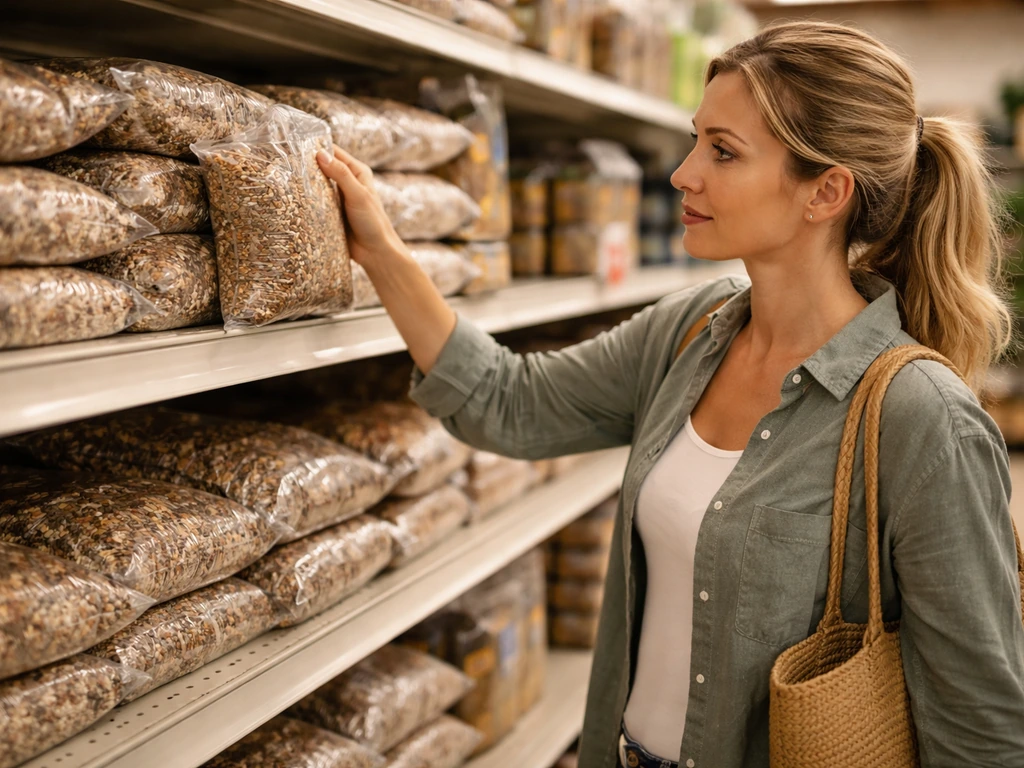
40 lbs of bird seed is roughly 6 to 8 gallons, depending on the seed type and how loosely it's poured. Stephanie can use the same pounds-to-gallons conversion logic to estimate how many gallons 7/8 pound of bird seed will occupy stephanie has 7/8 pound of bird seed. A bag of straight black oil sunflower seed lands closer to 6.5 to 7 gallons, while a lighter mixed blend with millet and small filler seeds can stretch toward 7.5 to 8 gallons. If you need a single working number to plan your storage container size, use 7 gallons as your baseline for a typical mixed birdseed bag.
How Many Gallons Is 40 Lbs of Bird Seed?
Maya Collins
14 May 2026
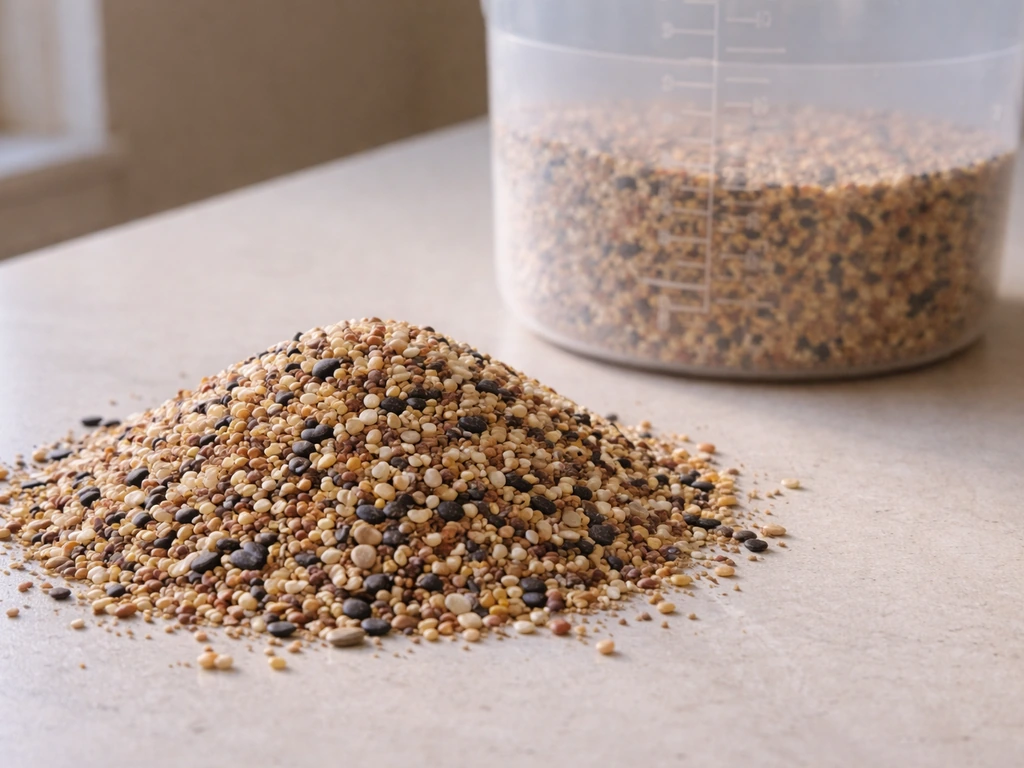
Quick conversion: 40 lbs of bird seed to gallons
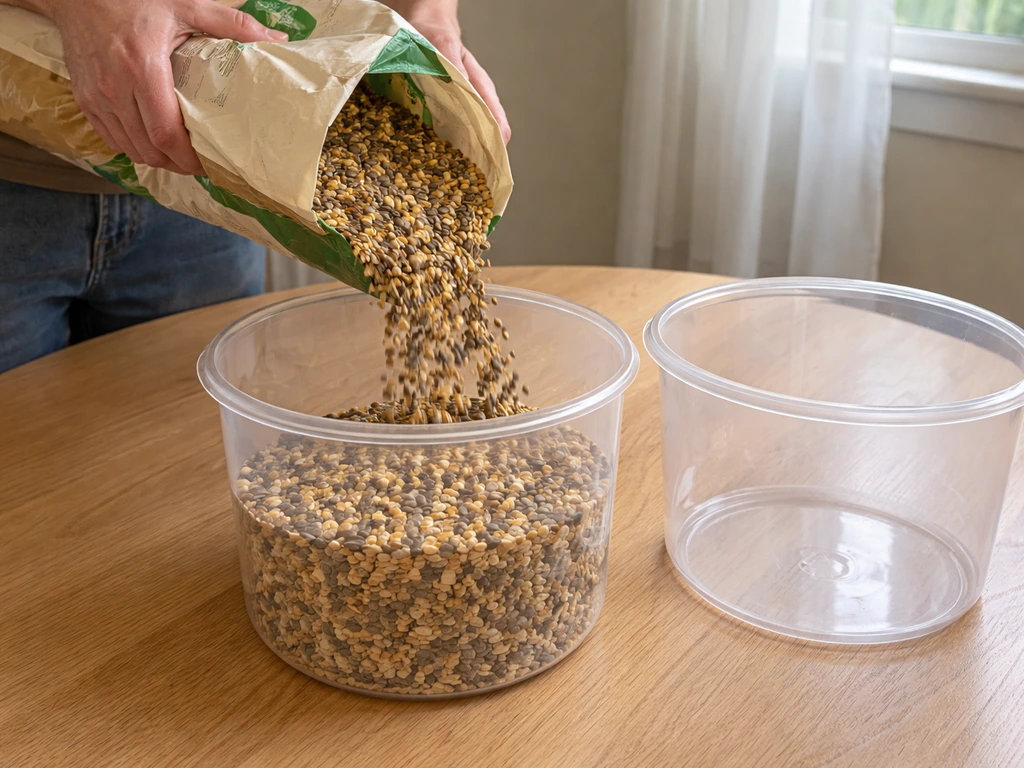
The math starts with bulk density, which is just how much a seed weighs per unit of space it takes up, including all the air gaps between individual seeds. KWS’s bulk material table shows that particle type affects bulk density, listing “Corn, Cracked” at 40, 50 lbs/ft³ (a range) KWS Mfg. Most common birdseed mixes fall between 5 and 6.5 lbs per gallon when freely poured (not packed down). Using that range, here's where 40 lbs lands:
| Seed Type | Approx. lbs per gallon | 40 lbs equals (gallons) |
|---|---|---|
| Black oil sunflower seed | 5.5–6.0 lbs/gal | ~6.5–7.3 gal |
| Striped sunflower seed | 5.0–5.5 lbs/gal | ~7.3–8.0 gal |
| Safflower seed | 5.5–6.0 lbs/gal | ~6.5–7.3 gal |
| White proso millet | 6.0–6.5 lbs/gal | ~6.2–6.7 gal |
| Cracked corn | 6.5–7.0 lbs/gal | ~5.7–6.2 gal |
| Nyjer (thistle) seed | 5.0–5.5 lbs/gal | ~7.3–8.0 gal |
| Typical mixed blend | 5.5–6.0 lbs/gal | ~6.7–7.3 gal |
| Sunflower hearts (hulled) | 6.5–7.0 lbs/gal | ~5.7–6.2 gal |
Notice that hulled sunflower hearts are denser than whole seeds with shells. The shells take up a lot of space but add relatively little weight, so once the hulls are removed, you get significantly more seed mass per gallon. This also connects to a related question worth bookmarking: if you need to flip the conversion and figure out how many pounds fit in a given container, that's the inverse of the same calculation.
Why the answer varies: seed type, density, and packing method
Weight and volume are not the same thing, and seed is a perfect example of why. A gallon jug filled with water weighs 8.34 lbs. That same jug filled with bird seed weighs somewhere between 5 and 7 lbs, because the seed particles leave air gaps that water fills completely. If you need how many pounds of bird seed are in a gallon for your situation, use the dry, freely poured range as your starting point how many pounds of bird seed in a gallon. Those air gaps are what make bulk density a range, not a fixed number.
Three main factors shift where your specific bag falls in that range:
- Seed shape and size: Round, dense seeds like millet pack tightly and push up the lbs-per-gallon figure. Large, flat, or irregular seeds like striped sunflower leave more air space and come in lighter per gallon.
- Hull presence: Whole seeds with hulls are much lighter per gallon than hulled or cracked versions of the same seed. A bag of whole black oil sunflower weighs less per gallon than a bag of sunflower chips.
- Packing method: Freely poured seed (just tipped out of the bag) is measurably lighter per gallon than seed that's been shaken, tapped, or settled. If you shake your storage bin while filling it, the seed compacts and you'll fit more pounds into the same space.
Moisture also plays a role. Damp or recently rained-on seed is slightly heavier per gallon than dry seed, and it also tends to clump rather than settle evenly, which throws off any visual estimate. This is one reason retailers who sell feeders will list a capacity like '1 gallon holds approximately 6 lbs of seed', that number assumes a specific dry mix, poured normally, and it won't apply equally to every blend.
How to measure accurately at home: the bucket test
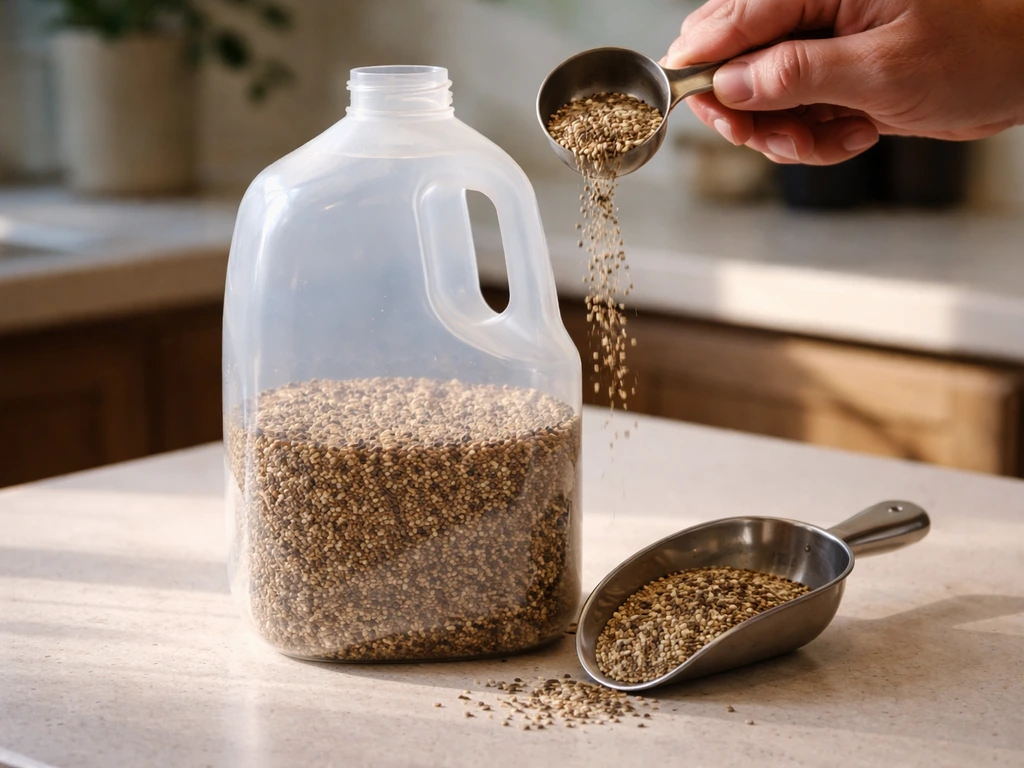
If you want the exact gallon figure for your specific seed bag rather than an estimate, do this simple bucket test before you commit to buying a storage container or setting up your feeder stations.
- Find a container you know the volume of. A standard 1-gallon milk jug or a marked 5-gallon bucket both work well. Make sure it's completely dry inside.
- Pour seed into the container at a natural pace — don't shake, tap, or pack it down. Let it settle the way it would if you were filling a feeder.
- Level off the top with a flat edge (like a ruler or piece of cardboard) so you have a clean, flat surface.
- Weigh the seed you just poured in. A simple kitchen scale or a hanging luggage scale works fine. Subtract the weight of the empty container to get the seed-only weight.
- Divide that weight by the volume of the container (1 gallon, 5 gallons, etc.) to get your lbs-per-gallon figure.
- Divide 40 by your lbs-per-gallon number to get the total gallons your 40 lb bag equals.
Example: You pour seed into a 1-gallon jug and weigh it at 5.8 lbs (seed only). Divide 40 by 5.8 and you get about 6.9 gallons. That's your real number for that specific blend. This bucket test takes about three minutes and removes all guesswork when you're sizing a storage bin or planning a bulk purchase.
Rule-of-thumb conversions by common seed mixes
If you don't want to run the bucket test right now, use these working estimates. They're based on freely poured (not compacted) dry seed, which is the most realistic condition for a typical backyard birder filling feeders or pouring into a storage bin.
| Seed / Mix | Rule of Thumb: lbs per gallon | 40 lbs converts to (approx.) |
|---|---|---|
| Black oil sunflower (whole) | ~5.75 lbs/gal | ~7 gallons |
| Mixed wild bird blend | ~5.75 lbs/gal | ~7 gallons |
| Millet-heavy mix | ~6.25 lbs/gal | ~6.4 gallons |
| Cracked corn or dense grains | ~6.75 lbs/gal | ~5.9 gallons |
| Nyjer / thistle | ~5.25 lbs/gal | ~7.6 gallons |
| Sunflower hearts / chips | ~6.75 lbs/gal | ~5.9 gallons |
For most people buying a 40 lb bag of standard mixed birdseed, a 7-gallon container is the right size. Go with an 8-gallon container if you want a comfortable margin and room to pour without overflow. If you're working with a 20 lb bag instead of 40 lb, you're looking at roughly half those values, about 3. For a 20 lb bag, you can expect around 3.5 to 4 gallons depending on the seed mix and how it is poured how many gallons is 20 lbs of bird seed. 5 gallons for a typical mixed blend.
Practical advice for buying, filling feeders, and avoiding waste
Knowing your gallon conversion matters most in three real situations: picking a storage container before you buy in bulk, figuring out how often you'll need to refill your feeders, and estimating how much seed to buy without running out or over-buying and letting it go stale.
Choosing the right storage container
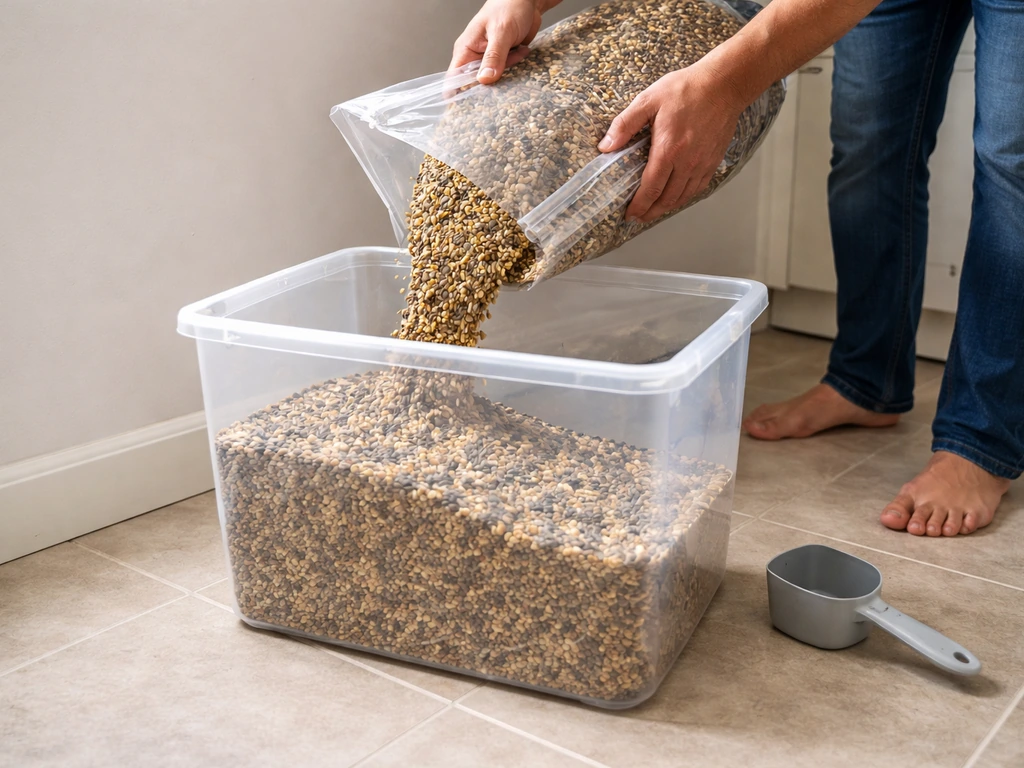
A 40 lb bag of mixed seed needs a container with at least 7 to 8 gallons of usable space. For most budgie owners, you can start with the same rule of thumb for dry mixes: roughly 5 to 7 pounds per gallon, then adjust based on how your seed bag measures in your own bucket test 7 to 8 gallons.
Don't go by the listed container volume alone, a 10-gallon bin has about 10 gallons of theoretical space, but you lose capacity to the lid mechanism, the shape of the base, and the headroom you need to scoop without spilling. In practice, a 10-gallon container fits a 40 lb bag comfortably. A 7-gallon container works but is tight. Avoid going smaller, compacting seed to make it fit accelerates moisture buildup at the bottom and makes it harder to scoop cleanly.
Filling feeders without overflow
Feeder manufacturers sometimes list capacity in pounds and sometimes in quarts or gallons, and those numbers don't always match. A feeder listed as holding '6 lbs or 1 gallon' is using a specific seed type as its reference, usually a dense mix. If your seed is lighter (like nyjer or whole sunflower), you may get more volume but less weight in the same feeder, and vice versa. The practical tip: fill feeders to about 80% of stated capacity the first time, see how fast the birds work through it, and calibrate from there. Overfilling leads to seed sitting at the bottom too long, which is where mold and clumping start.
Buying in bulk without waste
Bulk buying saves money but only if you can store seed properly. If you can't keep a full 40 lb bag dry and pest-free, it's cheaper in the long run to buy smaller bags more often. In humid climates or during summer months, seed can start going stale or growing mold within a few weeks if storage conditions aren't right. Plan to use a full 40 lb bag within 4 to 6 weeks once opened.
If Nellie is buying bird seed in bulk, plan to use it within the first month or so after opening use a full 40 lb bag. If your birds are going through less than that, either split a bulk bag with a neighbor or buy 20 lb bags and convert from there.
Storage and handling tips after converting and adding seed
Once you've done the conversion and know your container size, the next job is keeping that seed in good shape from the moment it goes into storage until the last scoop hits the feeder.
Container basics
- Use a hard-sided, airtight container with a tight-fitting lid. Metal galvanized cans or thick plastic bins with locking lids are best for keeping out mice, squirrels, and insects.
- Store containers off the ground and away from exterior walls where moisture and pests travel.
- Label your container with the seed type and the date you opened the bag so you're not guessing at freshness.
- Rotate stock: use older seed first before adding a new bag on top. Pouring fresh seed on top of old seed means the old stuff sits at the bottom and eventually goes bad.
Moisture and mold prevention
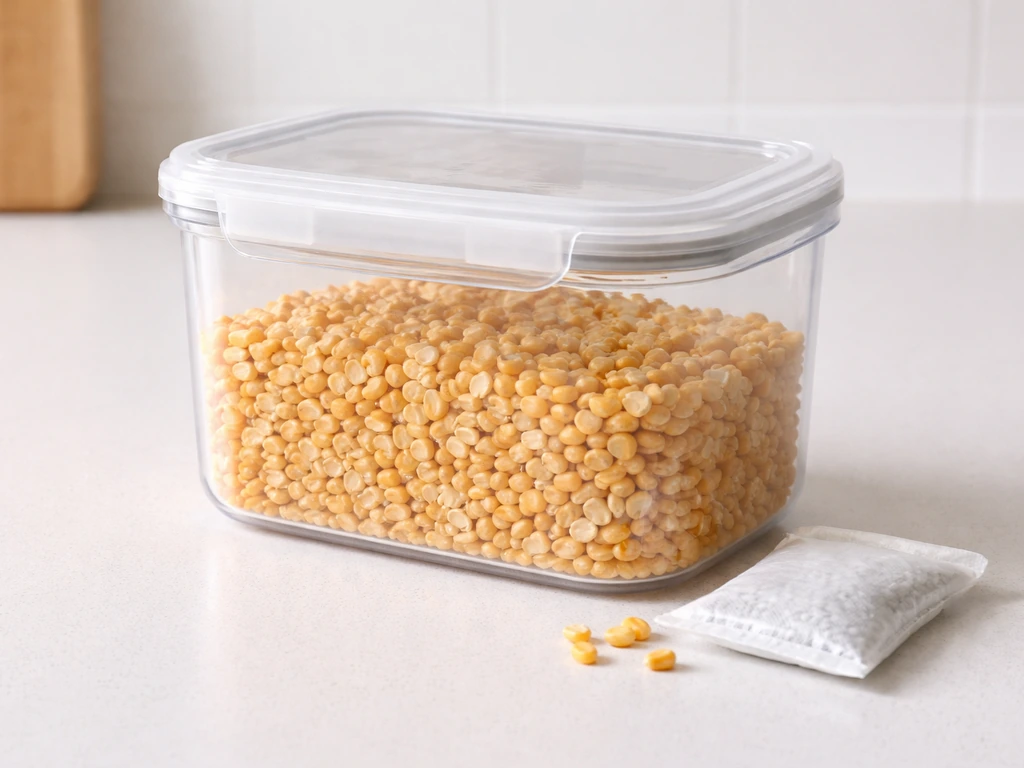
Moisture is the main enemy of stored seed. Even a small amount of humidity can cause clumping, mold growth, and aflatoxin contamination, which can make birds sick. Moldy birdseed is one of the documented causes of illness and death in backyard birds. Don't give birds damp or sprouted seed, if it's clumping or smells musty, discard it. Keep the storage area temperature below 70°F when possible, and never store seed in direct sunlight or in a hot garage in summer.
Feeder hygiene that connects back to your storage
How you handle seed at the feeder affects how quickly your stored supply degrades too. If you overfill feeders and seed gets rained on or wet, that wet seed can get carried on birds' feet back toward the feeder port and contaminate fresh seed. Clean tube feeders and hopper feeders at least every two weeks, and more often during rainy or humid weather. Use a dilute bleach solution (nine parts water to one part bleach), rinse thoroughly, and let the feeder dry completely before refilling. Never pour fresh, dry stored seed into a feeder that's still damp inside.
Cleanup if seed gets wet or sprouts
Seed that spills under feeders can sprout or go moldy on the ground. Rake it up and dispose of it rather than leaving it. Ground-feeding birds will pick at sprouted or moldy debris, and it's a disease vector. If your stored seed got wet from a leaky container or flooding, don't try to dry it out and use it. The moisture has already started degradation processes you can't reverse, and the risk to birds isn't worth it. Bag it and toss it, clean and dry your container, and start fresh.
FAQ
Does 40 lbs of bird seed equal 40 quarts or 5 gallons for all seed types?
No. Those values only match if you know the seed’s bulk density. Most dry mixes freely poured land around 5 to 6.5 lbs per gallon, which is why 40 lbs comes out closer to about 6 to 8 gallons, not a single fixed number.
If I pack the seed down in a container, will 40 lbs take fewer gallons?
Yes. Compacting reduces air gaps, so the same 40 lbs occupies less volume. The tradeoff is practical and health related, packed seed can trap more moisture at the bottom and become harder to scoop without getting wet or clumpy.
How can I estimate gallons for my seed if I do not have a scale for the bucket test?
Look for a pounds-per-gallon or weight-per-quart statement on the bag or retailer listing (many blends have one). If you cannot find it, you can still get a usable estimate by weighing only a smaller sample (for example, fill a known 1-quart container, weigh it once, then scale up). Without any weight data, you are stuck with broad ranges that vary by blend.
What should I do if my container is a “10-gallon” bin but I still overflow with a full 40 lb bag?
Treat container “gallon” ratings as theoretical interior volume. Account for lid height, base shape, and the headroom you need to prevent spilling while scooping. If you overflow, either move to a larger size, or fill to a safe level (many people target around 80% of stated capacity for feeder use).
Can I use the same conversion if my seed is already opened and slightly damp?
Not reliably. Damp seed weighs more per gallon and also tends to clump, which changes how it settles. For best results, run the bucket test with the same moisture condition you have, or better, dry and replace seed that is clumping or has a musty smell.
How much seed should I buy if I want to run feeders for two months?
Convert your refill schedule into an “average lbs used per week,” then multiply by weeks, and round up based on the pounds-to-gallons range for your blend. The article notes a common rule for a 40 lb bag once opened, plan to use it within about 4 to 6 weeks, so for two months you often need smaller splits (for example, multiple 20 lb bags) rather than one bag.
Is it safe to dry out bird seed that got wet in storage or from a spill?
Usually no. If the seed has already started clumping, sprouting, or developing mold, drying it later does not reverse degradation processes and can still pose health risk. The safer option is to bag it and discard it, then clean and fully dry the container before starting fresh.
How often should I clean feeders if I live in a humid or rainy area?
At minimum, clean tube and hopper feeders about every two weeks, but increase frequency during rainy or humid spells. Wet seed can be carried back toward the port on birds’ feet, which contaminates fresh seed and accelerates clumping and spoilage.
Next Article
Nellie Is Buying Bird Seed: A Safe Starter Checklist
Nellie buying bird seed checklist: choose safe fresh mix, store right, prevent mold pests, and set feeders for reliable