Fish will opportunistically nibble at bird seed that falls into the water, but bird seed is not a safe or suitable food for them. Omnivorous species like common carp are the most likely to go after spilled seed since they naturally forage on plant seeds, detritus, and organic material at the bottom of ponds.
Can Fish Eat Bird Seed? Safety, Risks, and Cleanup Tips
Maya Collins
20 May 2026
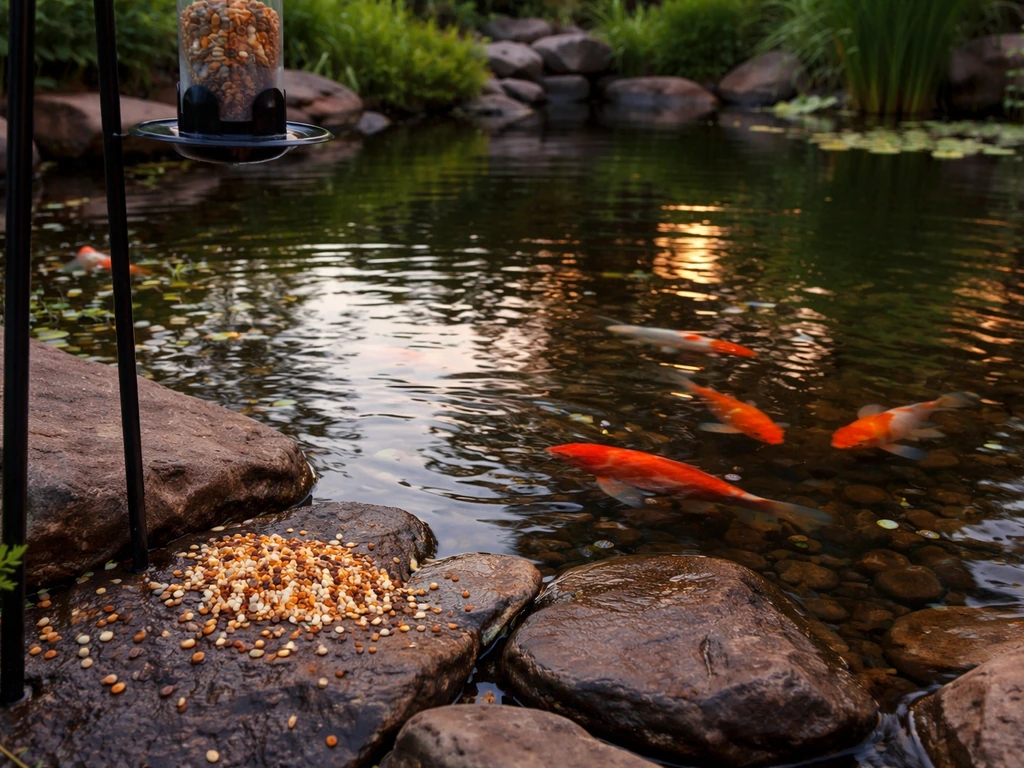
The bigger problem is not whether fish eat a few seeds, it is what happens to the water when seed sits, swells, and starts to decay. Excess organics from decomposing seed drive ammonia spikes, bacterial blooms, and oxygen depletion fast enough to harm fish, especially in smaller ponds or aquariums.
So the answer is: yes, some fish will eat bird seed, but you should not let them, and you need to act quickly if seed has already spilled into the water.
What's actually in bird seed and what matters for fish

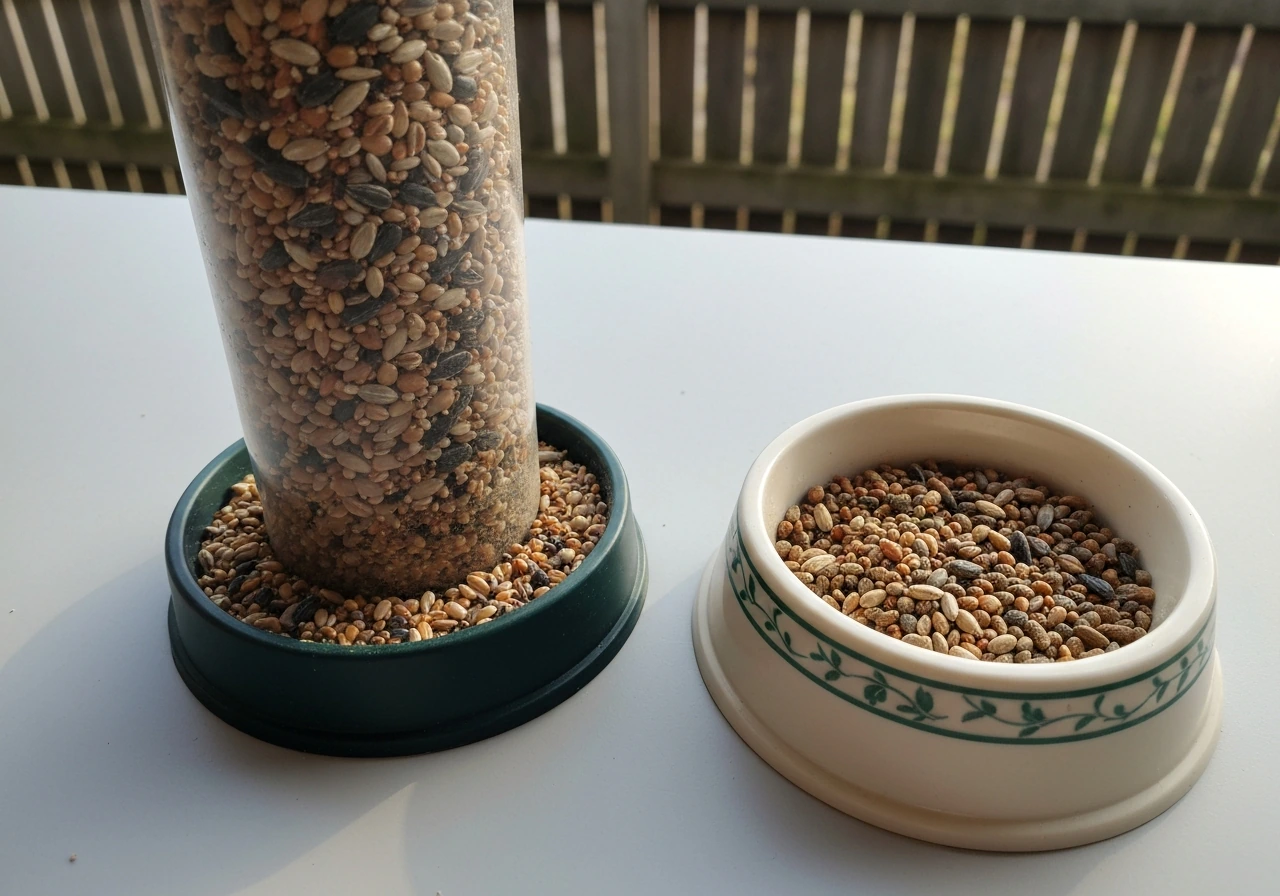
Most wild bird seed mixes contain a combination of black oil sunflower seeds, white millet, cracked corn, safflower, nyjer (thistle), and sometimes peanut pieces. Each of those ingredients carries a different level of risk when it hits water. Understanding what you are actually dealing with helps you prioritize the cleanup.
| Ingredient | What it does in water | Risk level for fish |
|---|---|---|
| Black oil sunflower seeds | Hulls release tannins and oils; seed swells and rots within 24–48 hours in warm water | High: oil film reduces oxygen transfer; decomposing hull creates heavy organic load |
| White millet | Small, light grain that floats initially then sinks and ferments quickly | Moderate: fast to ferment, raises ammonia as it breaks down |
| Cracked corn | Absorbs water fast, softens, and starts to cloud the water within hours | High: rapid starch fermentation feeds bacterial blooms |
| Safflower | Hard shell, sinks, and sits on the bottom for days before breaking down | Moderate: slow decay, but accumulates if not removed |
| Nyjer (thistle) | Tiny seeds, mostly oil; spreads widely in water and is hard to remove | Moderate: oil content can foul surface and reduce oxygen transfer |
| Peanut pieces | High fat and protein; oil leaches immediately into water | High: fat/oil from peanuts is one of the fastest routes to oxygen depletion in a closed system |
| Suet or fat-based mixes | Coats the water surface; creates a visible oil slick | Very high: even non-petroleum oils consume dissolved oxygen needed by aquatic life |
The hulls and shell fragments are also a concern beyond just chemistry. They are indigestible roughage that fish were never meant to process. If a fish does swallow hulls, it can cause gut irritation. Most of the real damage, though, happens before any fish even gets to eat the seed: oils leach out within minutes of contact with water, and starch and protein start feeding bacteria almost immediately.
The real risks to fish and water quality
This is where it stops being a minor inconvenience and becomes a genuine fish-health issue. The chain reaction from bird seed in water looks like this:
- Organic matter from decomposing seed feeds bacteria, which consume dissolved oxygen (DO) in the water as they break it down.
- As DO drops, fish become stressed. In a small aquarium or a shallow garden pond, you can hit dangerous oxygen levels within 12–24 hours of a significant seed spill in warm weather.
- The breakdown process also produces ammonia. Ammonia above zero is not safe for aquarium fish; even low concentrations in a pond can cause gill damage and behavioral changes.
- Starch and phosphorus from corn and millet act as nutrients for algae. A small seed spill can trigger a visible algal bloom within a few days in summer, especially in a sun-exposed pond.
- Dense algal blooms look like they add oxygen, and they do during daylight. But at night, the same algae consume oxygen. A thick bloom following a seed spill can cause overnight oxygen crashes that kill fish.
- Wet, decomposing seed near or in the water can also develop mold and bacteria, adding another layer of microbial load that the pond or tank's biological filter may not be able to handle.
If your bird feeder is positioned above or close to a pond and you have had wet weather, this is not a theoretical risk. Runoff from a feeder tray loaded with soaked, germinating seed carries the same organic load as tipping the seed directly into the water.
Outdoor pond vs. home aquarium: the considerations are different

Outdoor ponds
A larger, established outdoor pond has more buffer capacity. Beneficial bacteria in the sediment and on pond surfaces handle a certain level of organic input, and surface area helps with gas exchange. That said, the risk scales fast with water temperature. In summer, water above 75°F holds less dissolved oxygen to begin with, and bacterial decomposition of seed accelerates. Common carp, koi, and goldfish in garden ponds are the species most likely to actively forage on spilled seed at the bottom, so you also have the double problem of fish ingesting material they should not be eating and the seed itself degrading the water.
Shallow ponds (under 3 feet deep) are the most vulnerable because there is no thermally stratified deep zone that holds cooler, oxygenated water as a refuge. Excess organic matter from feeding or uneaten food increases oxygen demand, and dissolved oxygen depletion can be especially likely after cloudy or overcast periods and heavy nutrient loading or feeding. If you have a pond shallower than 3 feet near a bird feeder, treat any significant seed spill as a priority cleanup task, not a wait-and-see situation.
Home aquariums
An aquarium is far more sensitive than an outdoor pond. The water volume is small, biological filtration is a closed system, and ammonia above zero is immediately unsafe for the fish inside. Even a small amount of bird seed, say a tablespoon of mixed seed landing in a 20-gallon tank, is enough to cause a measurable ammonia spike within hours as it softens and begins breaking down. Uneaten or unremoved seed also clouds the water fast by feeding heterotrophic bacteria. The good news is that cleanup in an aquarium is faster and more controlled than in a pond, but you need to act within the first hour if possible.
One thing to be aware of with aquariums: avoid the instinct to do an immediate 100% water change. A large water change can crash your biological filter (the beneficial nitrifying bacteria on your filter media), which makes the ammonia problem worse the next day. A targeted removal of the seed followed by a 25–30% water change is a safer approach.
How to stop bird seed getting into the water in the first place
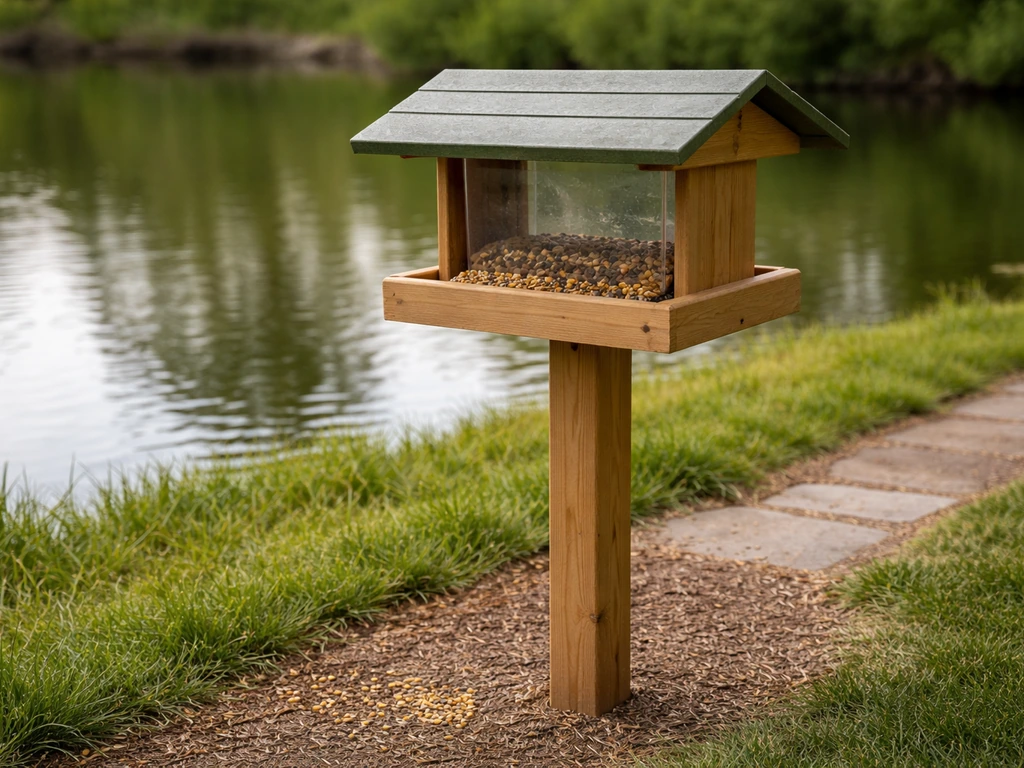
Prevention is genuinely easier than cleanup here. A few practical positioning and feeder setup choices make a big difference.
- Position feeders at least 10 feet from the edge of any pond or water feature, and further if you are in a sloped yard where rain runoff naturally flows toward the water.
- Use a seed tray or catch tray under hanging feeders. These collect fallen seed and hulls before they hit the ground, where rain can wash them into the water.
- Choose hull-free or no-mess seed mixes near water. Hulled sunflower (chips), pre-shelled millet, and similar products leave far less debris under the feeder and reduce the organic load available to wash into the pond.
- Avoid suet, peanut butter feeders, or fat-based mixes anywhere near open water. The oil risk is high and these are the hardest to clean up from a water surface.
- Hang feeders over a hard surface (a patio slab or deck) rather than grass or bare ground near the water's edge. Hard surfaces let you sweep up dropped seed quickly before rain events.
- If you use an aquarium stand or shelf near a window where indoor birds are fed, keep seed handling away from the tank and wash hands before any tank maintenance.
Regional note: if you are in a wet climate or going into a rainy season, check your feeder placement relative to your pond more carefully. What works fine in dry conditions can become a consistent runoff problem once you get regular rain. This is also the time when seed in feeders gets wet and starts to sprout or mold faster, creating a higher-toxicity spill if it does reach the water.
Cleanup steps after a spill
For an outdoor pond
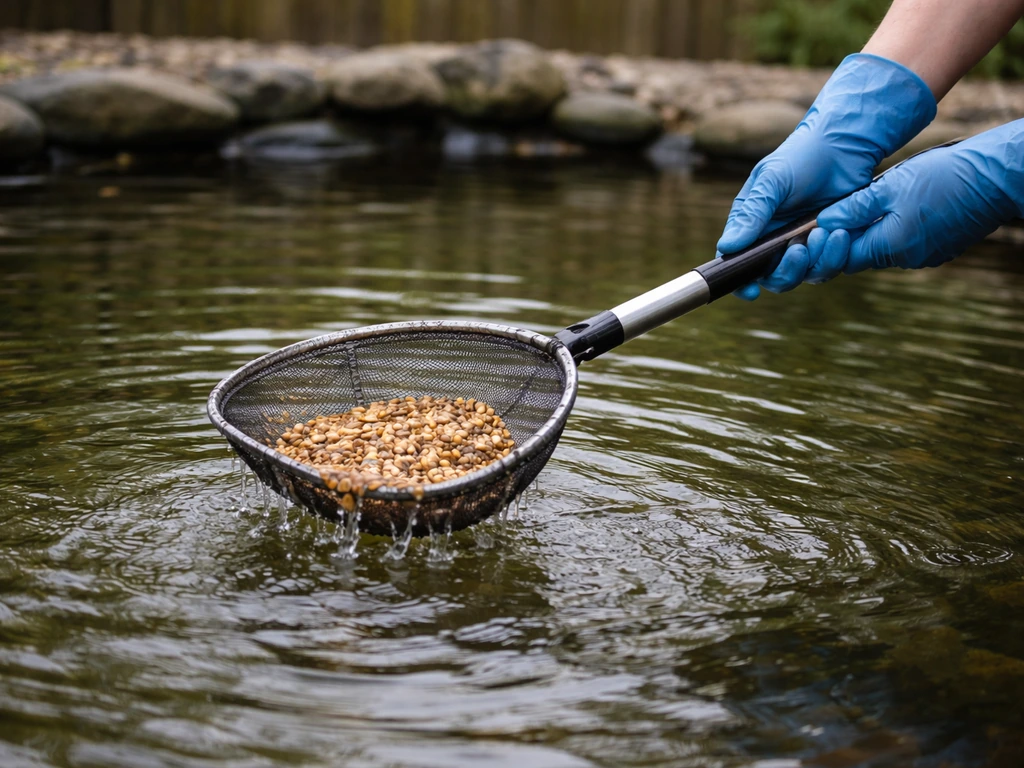
- Act within the first 1–2 hours if you can. Seed that is still floating is far easier to remove than seed that has swelled, sunk, and settled into the sediment.
- Use a fine mesh skimmer net to skim floating seed and hulls from the surface. Work gently from the edges inward to avoid creating currents that push material to the center or stir up the bottom.
- For seed that has sunk, use a pond vacuum or a gentle siphon to remove it from the bottom without stirring up sediment. Stirring up bottom sediment releases stored ammonia and nutrients into the water column, which is the opposite of what you want.
- Do a partial water change of 15–25% after removing visible seed. This dilutes any dissolved organics, starch, or early ammonia without shocking the pond ecosystem.
- Avoid doing this cleanup in the middle of a hot afternoon. Oxygen levels in a warm pond are lowest in late afternoon. Do your water change in the cooler morning hours if possible.
- Monitor the pond for the next 48–72 hours. Watch fish for surface gasping (a sign of low oxygen), lethargy, or loss of appetite. If you have a DO meter or test kit, check levels daily.
For a home aquarium
- Remove seed immediately using a fine fish net or turkey baster for loose pieces. Get as much out as you can before it softens.
- Run the aquarium siphon along the substrate to pull up any seed that has settled. Focus on the area directly under the spill point.
- Perform a 25–30% water change with dechlorinated, temperature-matched water. Do not do a full water change as it can disrupt your biological filter.
- Test water parameters (ammonia, nitrite, pH) within a few hours and again the next day. Ammonia or nitrite above zero means the organic load was enough to stress the filter, and you may need a second partial water change.
- If water clouds significantly within 24 hours, that is a bacterial bloom from the organic input. Continue daily 20–25% water changes until the water clears and ammonia/nitrite return to zero.
- Do not add extra food during this period. The fish are already dealing with elevated organics, and extra feeding makes it worse.
Hygiene after cleanup
Wash your hands thoroughly with soap and water after handling pond water, wet seed, or aquarium water during cleanup. If you are dealing with water that has been sitting with decomposing organic matter for more than a day, wear gloves. Pond water can carry bacteria and other pathogens, and wet, decaying seed is a potential host for mold and bacterial growth. Keep cleaning equipment (nets, siphons, buckets) separate from any food-prep or general household use, and rinse them with clean water after each use.
Troubleshooting common problems after seed gets in water
Cloudy water
Milky or white-cloudy water after a seed spill is almost always a bacterial bloom. Bacteria are feeding on the decomposing organics from the seed and multiplying rapidly. In an aquarium, this typically peaks 24–48 hours after the spill and clears on its own with partial water changes and no extra feeding. In a pond, a bacterial bloom can follow a bloom of algae a few days later as nutrients cycle through. The fix is the same either way: remove as much of the seed source as possible, do partial water changes, and do not add more food or nutrients until water clears.
Mold or sprouting seed near the water's edge
Seed that lands in wet soil at the pond edge or on the deck near a feeder can sprout within a few days or develop visible mold within 24–48 hours in warm, humid conditions. Both are a problem if rain washes them into the pond. Moldy seed carries fungal spores and bacteria that can add directly to your pond's microbial load. Rake up and bag wet seed waste from around feeder areas regularly, especially before forecast rain.
Project FeederWatch also recommends cleaning feeders and raking or cleaning up waste below them, since leftover bits of seed or hulls can become moldy and make birds ill, especially when spilled seed gets wet and decays near ponds or aquaria. Do not compost wet, moldy seed near the pond as runoff from a compost pile carries the same risks.
Pests attracted to spilled seed near water
Spilled seed near water is attractive to rats, mice, and raccoons, and those animals are also a stress risk for pond fish. Raccoons in particular will actively hunt fish in garden ponds. If you are seeing mammal activity near your feeder and pond, pull back on how much seed you put out, switch to a weight-sensitive feeder that closes under larger animals, and do not leave seed on the ground overnight.
Seed that floats on the pond surface can also attract ducks, which add their own nutrient load in the form of droppings. If you are wondering does bird seed float, keep in mind that wet seed and seed husks can stay at the surface for a while before breaking down or sinking. Keeping feeders well away from the water is your best deterrent for all of these scenarios.
Foul odor from the pond
A sulfur or rotten smell from a pond after a seed spill means anaerobic decomposition is happening in the sediment, usually from seed that sank and was not removed. This produces hydrogen sulfide, which is directly toxic to fish at very low concentrations. If you smell this, do a 20–25% partial water change immediately, use a pond vacuum to remove bottom debris without stirring it up, and increase aeration (a fountain head, air stone, or waterfall pump) to restore dissolved oxygen and help drive off the gas. Do not stir the bottom aggressively; you want to remove the material, not suspend it in the water column.
Fish actively nipping at floating seed
If you watch your pond fish (koi, goldfish, or carp) actively mouthing floating seed, remove the seed promptly. Finches can eat certain bird seeds, but if wild bird seed spills into a pond or aquarium, the water-quality risks discussed here still apply to the fish you keep. Fish investigating or swallowing a few seeds is not likely to cause immediate harm, but it is a habit you do not want to encourage.
Fish investigating or swallowing a few seeds is not likely to cause immediate harm, but canaries eat wild bird seed, so you should still avoid letting pond fish treat seed as food. These fish will start expecting seed as a food source and may congregate near the feeder area, which increases their exposure to any future spills.
It is also worth noting that fish begging at the surface near a feeder can look like they are hungry when they are not, which leads to overfeeding with actual fish food, compounding the nutrient load in the water.
A note on storing bird seed near fish tanks or ponds
If you store bird seed in a garage or shed near an outdoor pond, or keep a bag near a room with an aquarium, proper storage matters more than people usually realize. Wet or improperly stored seed sprouts and molds quickly, and that moldy seed is riskier than dry seed if it does contact the water.
Keep seed in a sealed, airtight container (a metal bin with a lid works well and also keeps out rodents), store it off the ground in a cool, dry spot, and inspect it every couple of weeks for clumping, musty smell, or any signs of moisture. Do not mix old seed into fresh seed, and do not store it in mesh bags where moisture and insects can get in easily.
The same habits that protect the birds eating the seed also protect your fish if the seed ever ends up near the water. If you are also wondering about feeding lovebirds, make sure you use the right type of bird-safe seed and avoid any wet or moldy seed that could cause illness.
FAQ
How much spilled bird seed is “too much” for a pond or aquarium?
There is no safe threshold, because damage depends on water volume, temperature, and how quickly you remove the seed. In aquariums, even about a tablespoon in a typical tank can trigger an ammonia rise within hours, so treat any visible spill as urgent and remove the seed first.
What should I do if fish already started eating the seed but I notice it late?
Remove remaining seed immediately, then monitor fish closely for gasping, clamped fins, or staying near the surface. In an aquarium, test ammonia the same day if you can, and do partial water changes rather than relying on a full replacement.
Can I use bird seed that is labeled “safe” or meant for small birds in a way that minimizes risk to fish?
Even if it is marketed as bird-safe, it is still risky in water because oils, starch, and protein fuel bacterial growth and oxygen depletion. If any seed can reach your pond or tank, use feeder designs and placement that physically prevent water contact rather than relying on labeling.
Should I vacuum or siphon out the seed from the bottom of my pond?
Yes, if seed sank or you suspect debris at the bottom. Use a pond vacuum to remove material without aggressively stirring the sediment, because stirred organics can worsen oxygen loss and amplify ammonia and other toxic compounds.
My pond water turns cloudy after a spill, is it always a bacterial bloom?
Cloudiness after a seed spill is often bacteria or a bacteria-driven bloom, but sometimes it can overlap with algae or suspended debris. If the water is milky and fish are acting normal but slightly sluggish, keep removing seed and do partial water changes, then watch for improvement over 24 to 48 hours.
How long should I wait before feeding fish their normal food again after cleanup?
Hold off on extra feeding until the water clears and fish behavior returns to normal. Additional food adds to the organics load, which can prolong ammonia and oxygen problems that started from the seed decomposition.
Is it safe to rinse pond nets, buckets, and siphon tubing in the sink after cleanup?
It is safer to avoid cross-contamination with food areas. Rinse and store equipment separately from kitchen or food-prep tools, and if you use bleach or disinfectants, rinse thoroughly and let equipment dry completely before the next pond or aquarium use.
Do I need to remove every single seed piece, or is it fine if some stay behind?
For best results, remove as much as possible, including hulls and floating husks. Small residues can still keep releasing oils and organics into the water, especially in small aquariums or shallow ponds.
Can I compost wet bird seed or seed waste from around the feeder?
Avoid composting wet, moldy, or rotten seed near water. Moldy seed can carry spores and bacteria that can spread via runoff from the compost pile if it gets rained on or washed downslope.
Will fish recover quickly if oxygen levels drop after a seed spill?
Recovery depends on whether the source is removed and whether oxygen rebounds. Increasing aeration and doing timely partial water changes helps, but if there is a strong rotten smell or fish show distress, you should treat it as an emergency and focus on removing the bottom source.
What feeder changes reduce the chance seed reaches the pond?
Use a feeder that closes under larger animals (where appropriate), hang it farther from the water, and add a tray design that minimizes runoff. After rainy periods, check for soaked seed under and around the feeder, since that edge waste is a common source of water contamination.
Next Article
Can You Feed Wild Bird Seed to Pet Birds Safely?
Can wild bird seed harm pet birds? Learn safe exceptions, label checks, sorting, storage, and better diet alternatives.