If you just spotted tiny bugs crawling around in your bird seed, you are almost certainly looking at one of four things: grain mites, booklice (psocids), Indian meal moth larvae, or grain weevils. Each one looks a little different, behaves differently, and points to a slightly different problem with your storage setup. The good news is that all of them are solvable today without any special equipment. Here is exactly how to figure out what you have and what to do about it.
Mites Tiny Bugs in Bird Seed: Quick Fix and Prevention

Maya Collins
11 Apr 2026
What are those tiny bugs? How to tell them apart
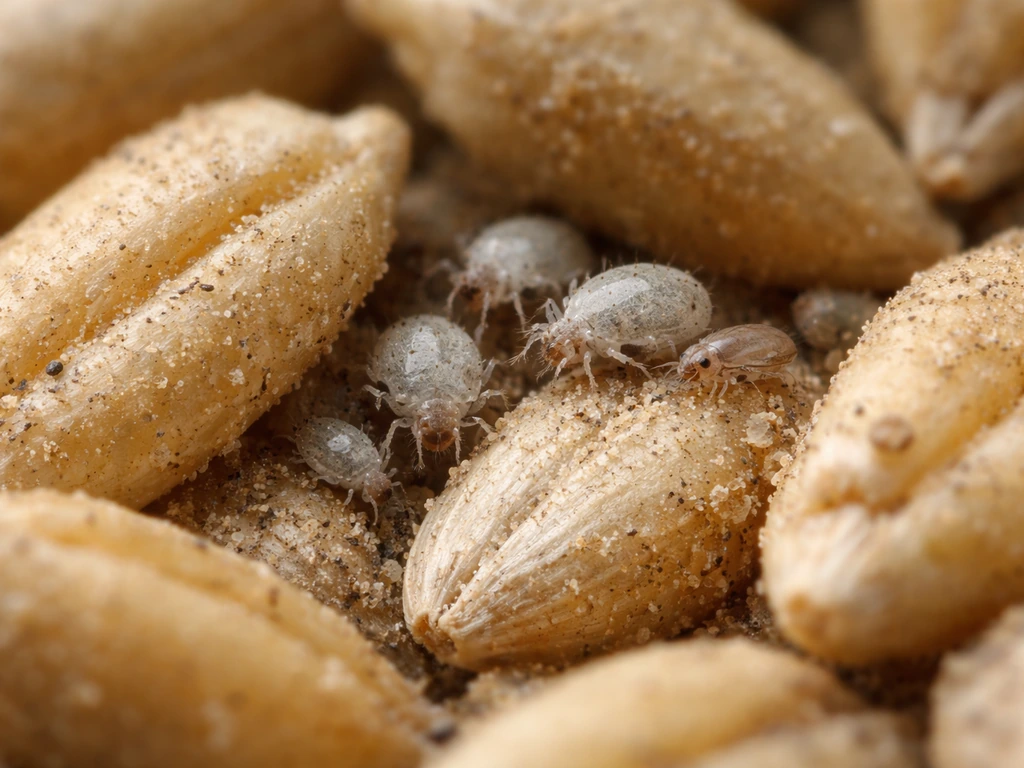
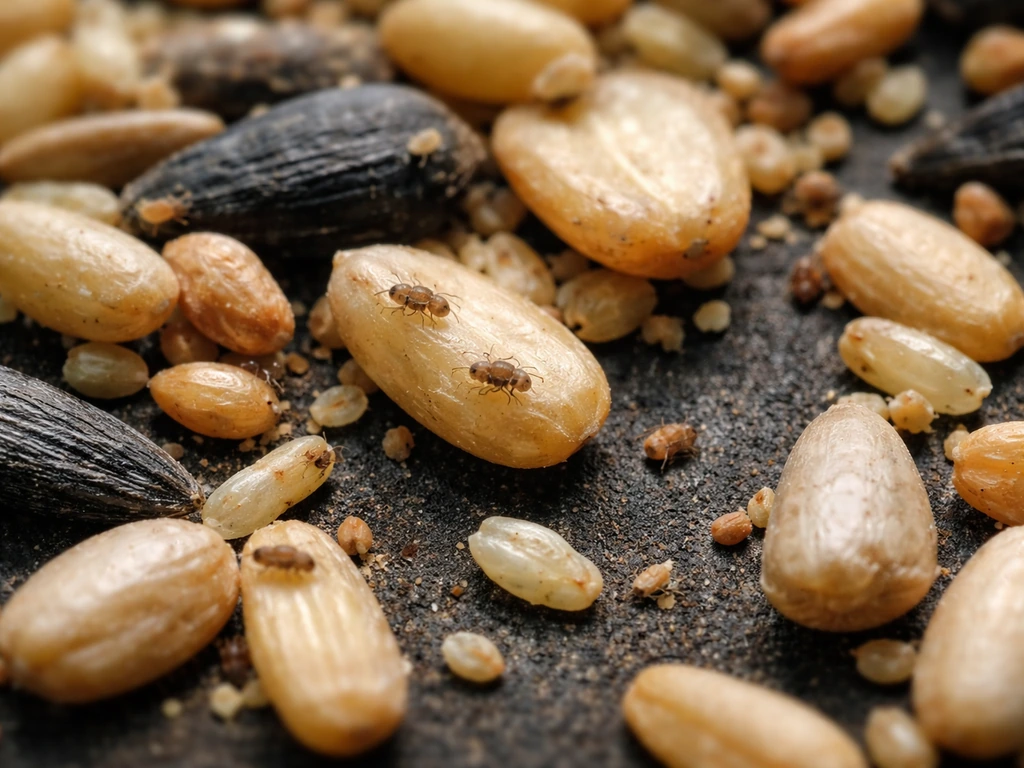
The most common culprit is the grain mite (sometimes called a flour mite). Grain mites are small, pale grayish-white, soft-bodied, and wingless. They are so small they can look like a fine powder or dust moving around on the surface of your seed. One telltale sign is what researchers call "mite dust": a tan or brownish coating on the seed, the container walls, or the bottom of your feeder. This is a mix of living mites, dead mites, and their waste, and it has a faintly sweet or musty smell. Grain mites thrive when seed moisture climbs above about 14%, and the problem gets serious fast once moisture hits the 15-18% range.
Booklice (psocids) are another very common find in bird seed. They are tiny, soft-bodied, and pale to grayish, typically less than 1mm long (roughly 1/25 to 1/13 of an inch). When there are a lot of them, they can look like a "moving carpet of dust" across the seed surface. Unlike mites, booklice are insects with six legs and tiny antennae you can sometimes see under magnification. They are not mites at all, but they show up for the same reason: moisture and microscopic mold. If your seed smells musty, booklice are a strong possibility.
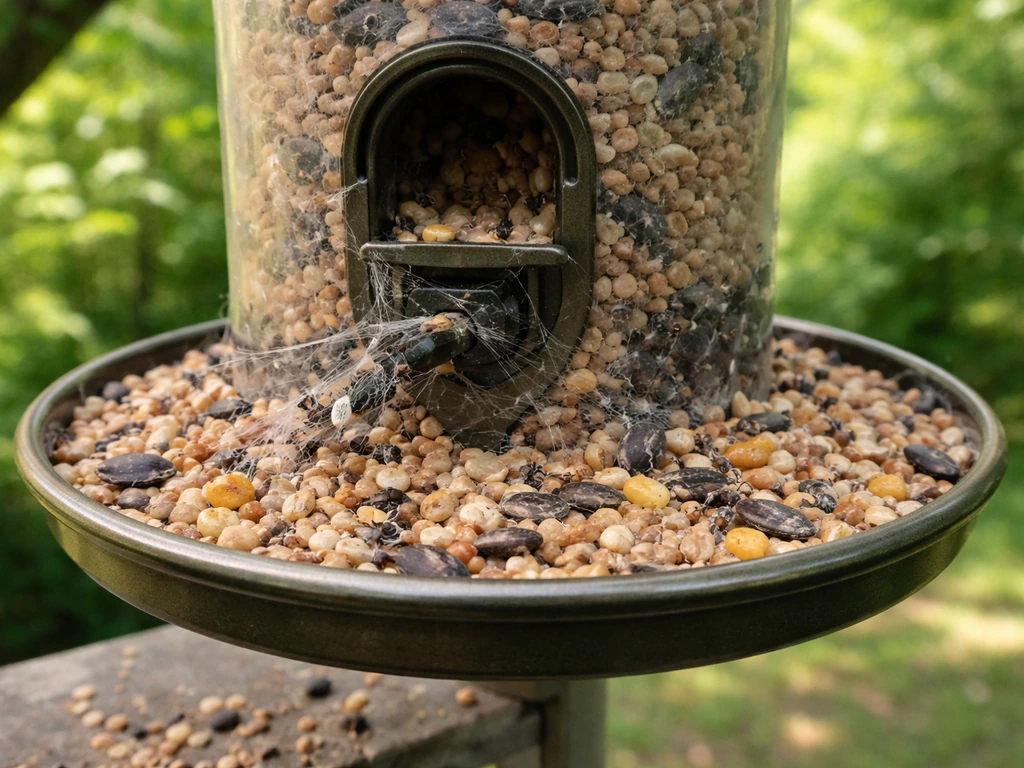
Indian meal moth larvae are a different situation entirely. If you see silky webbing clumped through the seed, small off-white caterpillar-like larvae, and dark frass (tiny droppings), that is an Indian meal moth infestation. The larvae spin threads as they crawl through the seed, making it look webbed together in clumps. WSU Pestsense notes that Indian meal moth larvae are associated with “blank" rel="noopener noreferrer">a great deal of webbing” near or on the food source. This pest is very commonly associated with bird seed specifically, and it is one of the more obvious infestations to identify because of that webbing. Understanding bugs that live in bird seed like the Indian meal moth helps you know what you are dealing with before you decide what to toss.
Grain weevils are brown to reddish-brown, hard-bodied, and have a distinctive snout. They are larger than mites or booklice and easier to see with the naked eye. House infestations can actually originate from bird seed bags, so if you find small brown beetles in your pantry after opening a new seed bag, weevils are the likely source. Finally, if you see tiny jumping bugs near damp seed or a wet feeder tray, those could be springtails, which are strongly associated with excess moisture and organic debris rather than the seed itself.
| Bug type | Color/size | Key visible sign | Main cause |
|---|---|---|---|
| Grain mites | Pale gray, microscopic | Mite dust (tan coating), musty smell | Damp seed, humidity above ~65% RH |
| Booklice (psocids) | Pale/grayish, <1mm | Moving carpet of dust-like specks | Moisture + microscopic mold |
| Indian meal moth larvae | Off-white, caterpillar-like | Silky webbing clumped through seed | Infested bag, warm storage |
| Grain weevils | Brown/reddish-brown, ~3mm | Hard-bodied beetles with a snout | Infested source bag |
| Springtails | White/gray, tiny, jump | Jump when disturbed, near wet areas | Excess moisture and organic debris |
Where these bugs come from in the first place
Moisture is the single biggest driver. Storage fungi, mites, and most stored-product pests need relative humidity of at least around 65% to get going, which corresponds to a seed moisture content of roughly 13% or more in cereal grains. Once seed moisture climbs above 14%, mite populations can explode, and above 15-18% you are looking at a serious, fast-moving infestation. In a practical backyard setup, this happens when seed is stored in a garage or shed that gets humid in warmer months, when condensation forms inside a container with a loose lid, or when a feeder gets rained on and seed is left wet.
Old or stale seed is another major contributor. Many people buy a large bag, use some of it, and leave the rest unsealed for months. Seed that sits too long attracts pests even in relatively dry conditions because the natural oils in seeds go rancid, which encourages mold, and mold attracts mold-feeding mites and booklice. There is also the contaminated bag problem: Indian meal moths and weevils are often already in the seed when you buy it, introduced at the processing or packaging stage. If you open a brand-new bag and immediately see webbing, the infestation came with the product. People who want a broader overview of whether bird seed attracts bugs in general will find that the seed itself is rarely the problem on its own: the real issue is almost always storage conditions.
Here is an important feedback loop worth knowing: grain-infesting insects and mites can actually increase the moisture content of seed themselves as they feed and respire. So a small infestation left unchecked creates wetter conditions that accelerate mold growth, which attracts even more pests. This is why acting quickly matters.
Quick triage: what to do right now
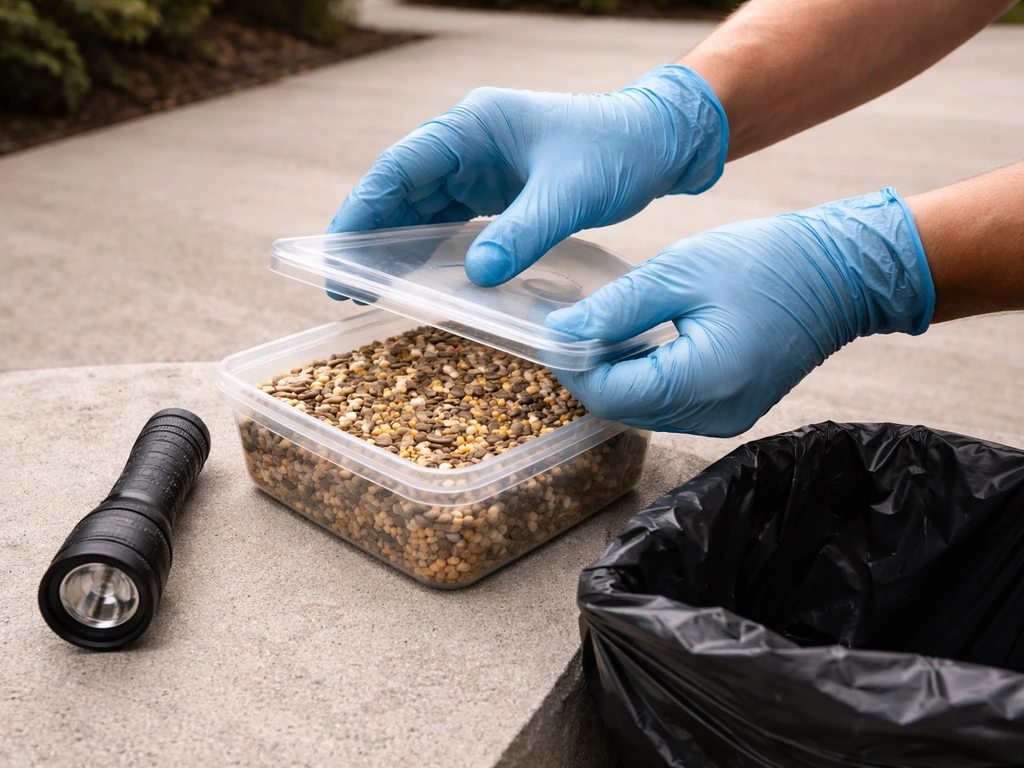
Do not just close the container and walk away. Here is a fast triage sequence you can run in about 15 minutes.
- Take the seed container outside or to a well-ventilated area before doing anything. You do not want to spread mites or moth larvae indoors.
- Open the container and inspect under good light. Look for movement (mites, booklice), webbing (moth larvae), visible beetles (weevils), or mite dust (tan coating on the walls or bottom). Smell the seed: a musty or sour odor means mold is present.
- Check for clumping or wet patches. Seed that clumps together is absorbing moisture, and clumped seed around mold is unsafe for birds even if you remove the bugs.
- Decide: discard or sift. If you see webbing plus frass, heavy mite dust with a strong musty smell, or any visible mold, discard the whole batch. If the seed smells clean, looks dry, and you only see a small number of mites or booklice on the surface, you can sift the seed through a fine mesh sieve to remove loose bugs and debris, then spread it thinly on a clean dry tray in the sun for a couple of hours to dry before reusing.
- Stop feeding immediately if the seed is heavily infested or moldy. Moldy seed can harm birds, and heavily infested seed should not go out while it is in this condition.
- Bag and seal discarded seed in a zip-lock or tied garbage bag before putting it in an outdoor bin. This prevents spreading the infestation.
One myth worth busting here: a few mites or booklice on the surface of otherwise dry, clean seed does not automatically mean you have to throw out the whole batch. The critical factor is mold and moisture. If the seed is dry, smells fine, and the bug count is low, surface sifting and sun-drying is a reasonable option. But if there is any doubt, discard it. Seed is cheap; a sick bird is not.
Safe cleanup: feeders, trays, and the surrounding area
Cleaning the feeder
Empty the feeder completely outside. Shake or scrape out any remaining seed, hulls, and debris. Put on rubber gloves before you start scrubbing, especially if there was visible mold. Wash all feeder parts inside and out with a stiff brush and a cleaning solution (a diluted bleach solution of about 1 part bleach to 9 parts water works well, or hot soapy water for plastic feeders). Rinse thoroughly for at least 10 seconds per section to remove all cleaner residue. Then let the feeder air-dry completely, ideally in direct sunlight, before you add any new seed. A damp feeder will restart your mite problem within days.
Cleaning trays and the area under the feeder
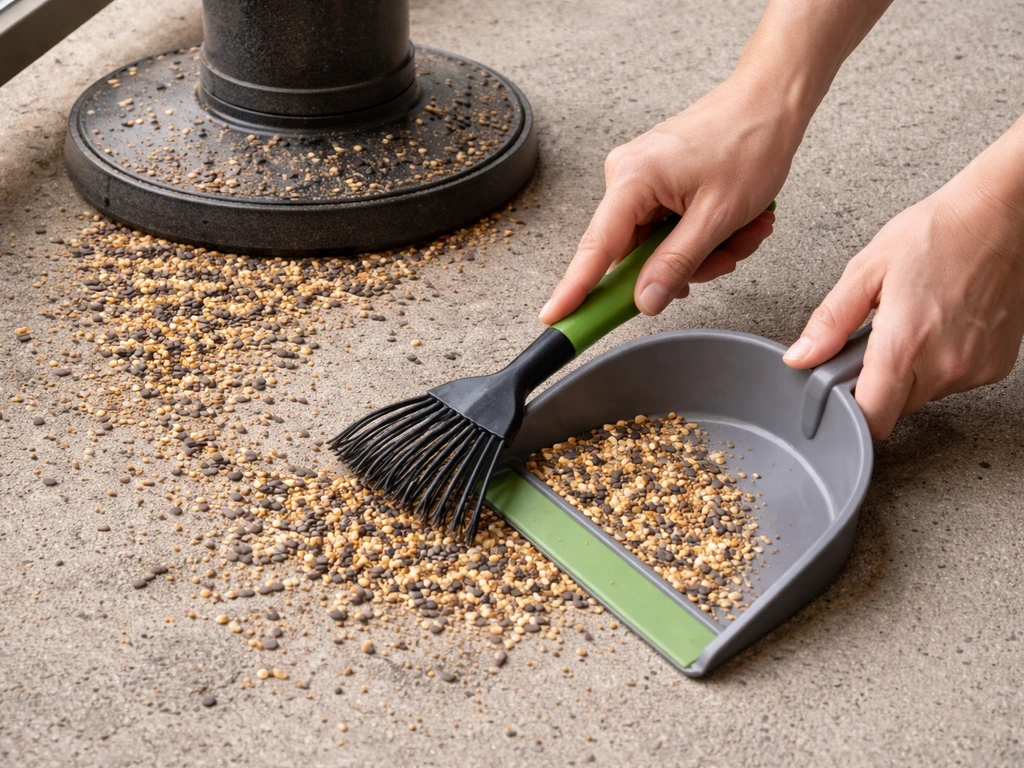
Spilled seed under and around feeders is a prime breeding ground for bugs, and it gets ignored more often than the feeder itself. Rake or sweep up all spilled seed from the ground around the feeder and dispose of it in a sealed bag. If you use a tray feeder or a catch tray, scrub it with the same solution you used on the feeder and let it dry fully. For platform feeders especially, getting into the habit of checking on bugs in bird seed and cleaning the tray weekly during humid months makes a big difference.
Avoid spreading pests indoors
Do not carry infested seed or an uncleaned feeder back inside your house before completing cleanup. Indian meal moths in particular can establish themselves in kitchen pantries from bird seed bags left in mudrooms or garages with open pantry access. Seal infested seed in double bags before indoor disposal, and wipe down any surface the seed container touched with a damp cloth.
How to prevent bugs from coming back
Get the storage right
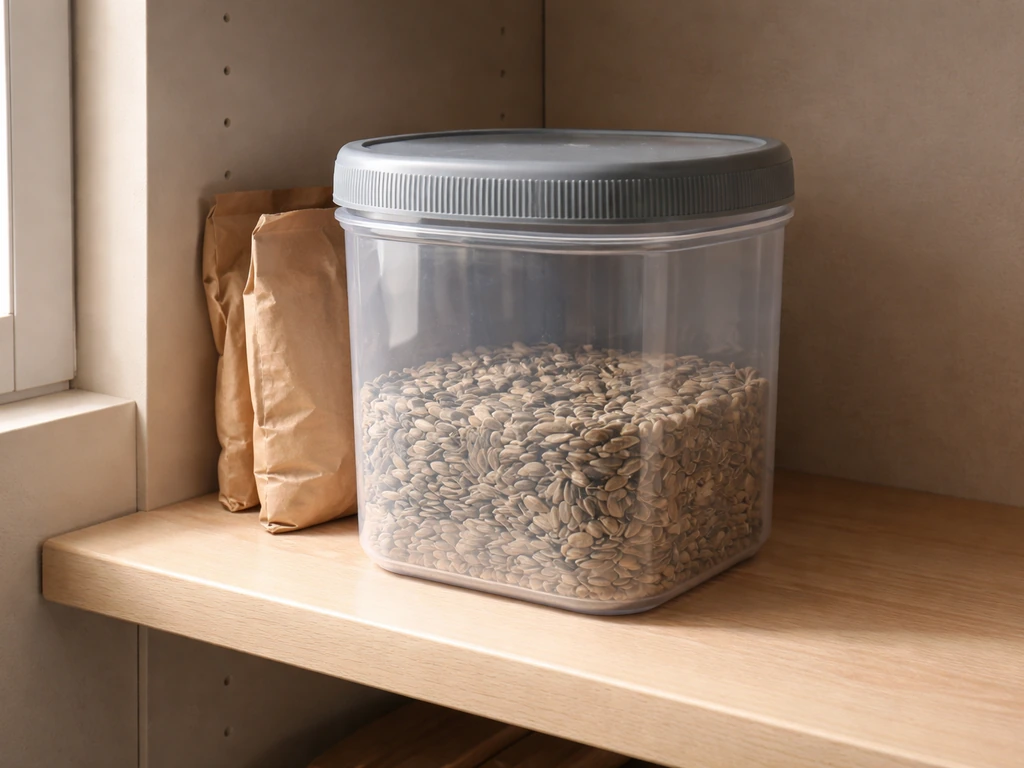
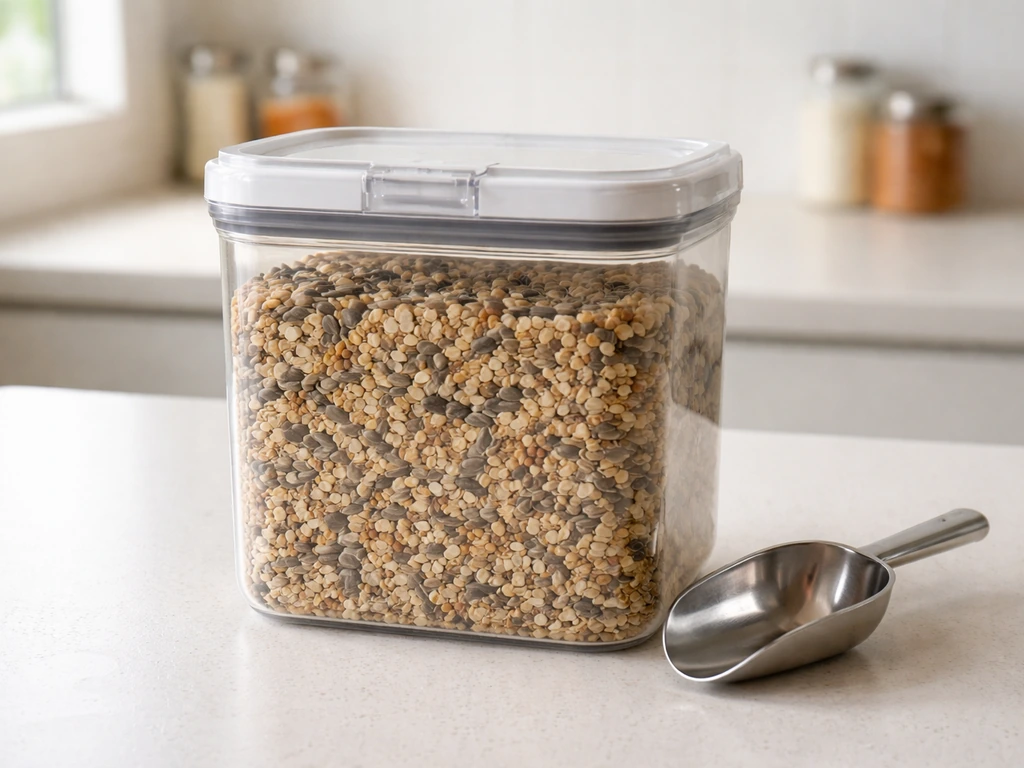
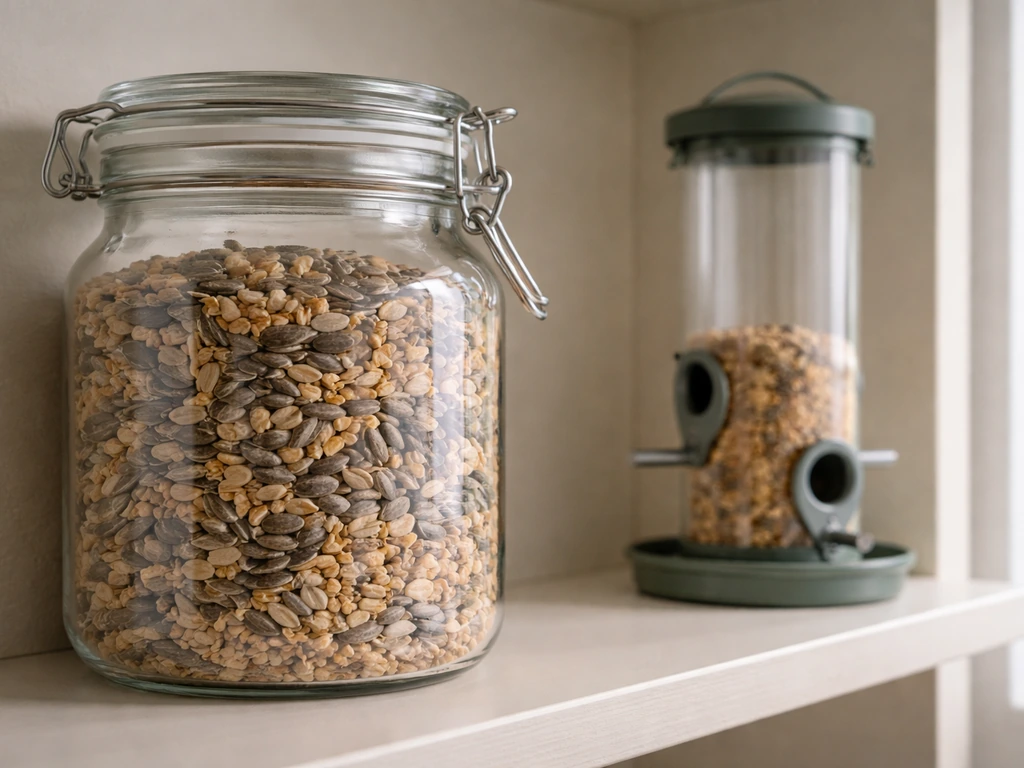
The single most effective prevention step is using the right storage container. Airtight, hard-sided containers with tight-fitting lids are the standard recommendation: screw-top glass jars, heavy-gauge plastic bins with locking lids, or metal containers with rubber-seal lids. These cut off moisture exchange and stop moths from laying eggs in your seed supply. Airtight packaging also dramatically reduces the risk of introducing pests during storage or transport.
Store seed in a cool, dry location. A garage or shed that gets humid in summer is one of the worst places for seed, but if that is your only option, use a dehumidifier or silica gel packets near (not inside) the container, and check the seed monthly during warm months. The target is keeping ambient relative humidity below 65%, which is the threshold below which storage fungi and mold-associated mites struggle to get established. Clemson’s Home and Garden Information Center notes that booklice are negatively affected by low humidity, especially around 50, 60%, and control is best when indoor or building humidity is reduced to below 50%. If you live in a humid climate (the Gulf Coast, Pacific Northwest, southeastern states in summer), you may need to store smaller quantities and rotate more frequently.
Rotate your stock and watch expiration
Buy seed in quantities you will use within 4-6 weeks, especially in summer. The idea that bulk buying saves money falls apart if half the bag goes rancid or infested. Use the oldest seed first (first in, first out), and do not top up a container without emptying and cleaning it first. Fines (the dust and broken seed fragments at the bottom of a bag) are a major source of moisture accumulation and mold. Dump the fines out before refilling, rather than adding fresh seed on top of old debris.
Anyone wondering about wild bird seed bugs in general will find that most infestations trace back to the same two issues: seed sitting too long, and storage that lets in humidity. Fixing those two things eliminates the problem for most people.
Feeder and habitat setup to reduce reinfestation
Feeder placement and airflow
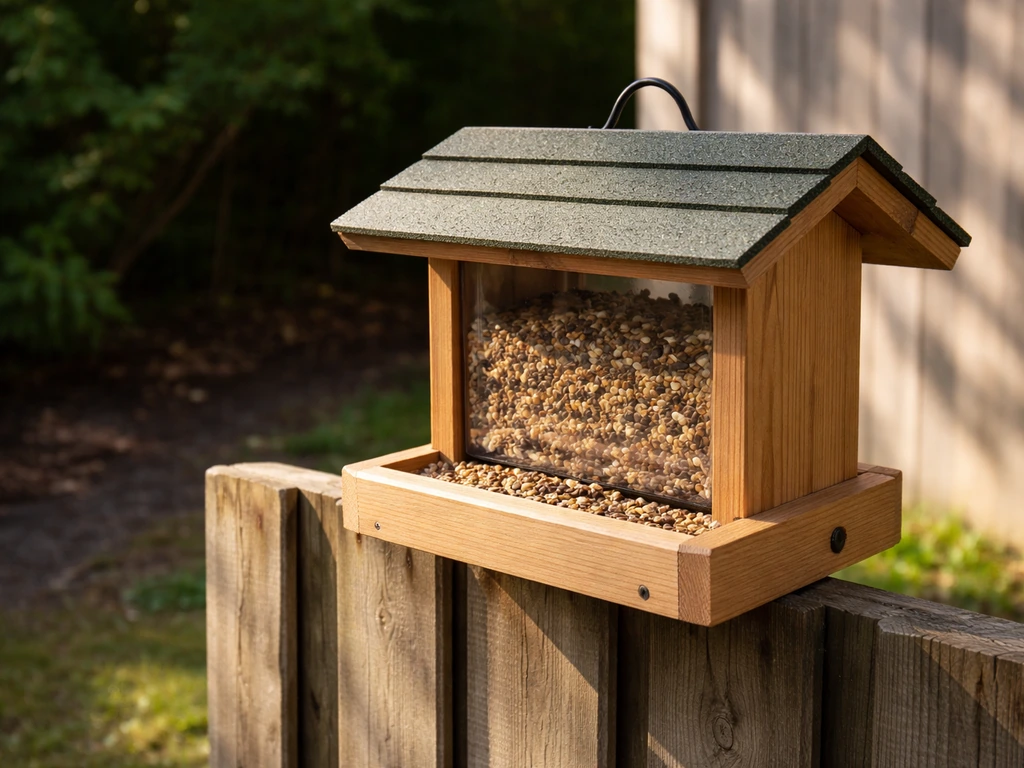
Place feeders in locations with good airflow and some sun exposure. A feeder in a shaded, still corner stays damp longer after rain, which is exactly the microclimate mites and booklice prefer. A feeder that gets a few hours of direct sun dries out faster after wet weather. Hang tube feeders rather than using open platform feeders when bug pressure is high, since tube feeders hold less seed, keep it drier, and make it easier to empty and clean regularly.
Seed sorting and what you put in the feeder
Millet, cracked corn, and milo hold moisture more readily than black oil sunflower seeds and tend to attract more pests. If you are in a humid region and have repeated bug problems, consider switching to primarily black oil sunflower seeds or safflower, which hold up better in damp conditions. Fill feeders with only as much seed as birds will eat in 1-2 days during warm, humid weather. If you notice seed sitting for longer than that, reduce the fill amount rather than topping up. For anyone curious about what pests might become airborne from a feeder, there is good information on flying bugs from bird seed that covers moth adults and other flying pests that can spread from an infested setup.
Physical exclusions and hygiene habits
Keep the area under feeders clean. Ground-level spilled seed is the main reason feeder pest problems persist even after you clean the feeder itself: the spilled seed underneath keeps the infestation alive and gives moths a place to pupate. A hardware cloth or mesh tray under a hanging feeder catches falling seed and makes cleanup much easier. Rake or vacuum the ground area every week or two during active feeding season.
A monthly deep clean of your feeder during peak summer humidity is a good minimum schedule. During spring and fall migration, when you are going through seed faster, bugs are less likely to build up because the seed does not sit long enough. Winter in cold climates is generally low-risk for mites because the cold suppresses pest activity. The riskiest window is late spring through early fall, especially in humid regions, and that is when tighter storage discipline and more frequent feeder cleaning matter most.
If you want a broader look at the full range of pests that can move into a feeder setup over time, reviewing what counts as wild bird seed bugs gives useful context for what is normal versus what signals a real infestation worth acting on. The bottom line: most infestations are storage and moisture problems in disguise, and fixing those conditions solves the bug problem at the source rather than just treating the symptom.
FAQ
How can I tell if mites or booklice are just surface dust versus a real infestation I should throw out?
Check for a musty or sweet odor and for “mite dust” on container walls, seams, or the bottom. Then shake a small amount onto a white paper and observe for 30 to 60 seconds. If you see continuous movement, spreading webbing, or any sign the seed has clumped from moisture, discard it. Dry seed with a low, non-spreading bug count and no odor is more likely to be surface-only.
Do I need to freeze seed to kill mites and other pests, or is cleaning and storage control enough?
Freezing can reduce live pests, but it does not fix underlying moisture issues or remove molds and webbing residues. If you freeze, keep the seed in an airtight container immediately after freezing to prevent rehydration, and still confirm the seed is truly dry and odor-free before refilling.
Can I save and reuse the same seed container after I clean it?
Usually yes, but only after a full wash, rinse, and complete air-dry. Focus on seams, lid gaskets, and any area that contacted fines or “mite dust.” If the lid seal is worn or the container ever had visible mold, replace the lid gasket or the lid entirely, because remaining moisture-retaining residue can restart the problem.
What should I do if I keep seeing bugs returning within a week after cleaning the feeder?
That pattern usually means the feeder is being re-seeded from an infested bag, spilled seed is still breeding nearby, or the container is allowing humidity in. Re-check the bag you refilled with, remove all spilled seed under and around the feeder, and verify the lid is truly airtight (not just “tightly closed”).
Is it safe for birds to eat seed from a feeder that has mites, even if the seed looks mostly fine?
If you see musty smell, mite dust, clumping, or any sign of mold, don’t feed it. Even when you do not see mold directly, persistent moisture can trigger fungal growth that birds should not consume. When in doubt, discard and restart with dry seed after the feeder area is fully cleaned and dried.
Do springtails mean the seed is infested, or do they mainly point to moisture problems?
Springtails are a strong signal that the area is too damp, typically from a wet tray, spilled organic debris, or lingering moisture around the feeder, more than from the seed bag itself. Dry out and scrub the catch tray or platform, improve airflow, and remove wet debris, then reassess. If springtails keep appearing even with dry seed, investigate drainage and feeder placement.
Will switching seed types alone solve a mite or booklice problem?
Switching can help, but it rarely fixes the root cause if moisture control is off. Some seeds hold moisture more readily, but mites and booklice still need humidity to grow. If you change to black oil sunflower or safflower, still store in airtight containers, keep feed amounts small, and remove fines and spilled seed.
What is the best way to manage fines at the bottom of bags or containers?
Do not pour fresh seed on top of old debris. Empty the container first, scrape and discard any dust and broken fragments, then wash and fully dry the container before refilling. Fines collect moisture and provide food for mold-associated pests, so ignoring them often causes recurring infestations even after good feeder cleaning.
How often should I deep-clean in humid weather versus dry seasons?
In humid conditions, aim for at least monthly deep cleaning and more frequent quick cleanups during active feeding season. If you notice any musty odor, increased dust, or leftover wetness in the tray after rain, clean immediately rather than waiting for the next scheduled month.
Should I move my feeder when I see bugs, or just clean harder?
Moving can be as important as cleaning. Place feeders where they dry faster after rain, with better airflow and some sun exposure when possible. Avoid shaded, still corners and locations where water can splash onto the feeder or tray, because those microclimates keep humidity high and favor mites and booklice.
How do I prevent introducing pests from a brand-new bag of seed?
Treat the first opening carefully. Before refilling, empty a small amount into a separate clean container and inspect for webbing, live larvae, or continuous movement. Keep the opened bag tightly sealed and store the bag or container away from garage humidity. If you see obvious webbing or beetles right away, it is likely coming with the product, and you should stop using that bag.
Can moths or weevils spread from the bird feeder setup into my pantry?
Yes, especially for Indian meal moths, which can establish in nearby storage if seed bags or spilled seed are accessible. Seal infested seed in double bags for outdoor disposal, wipe any surfaces the seed container touched, and store all pantry grains and bird seed in airtight containers to reduce cross-infestation risk.