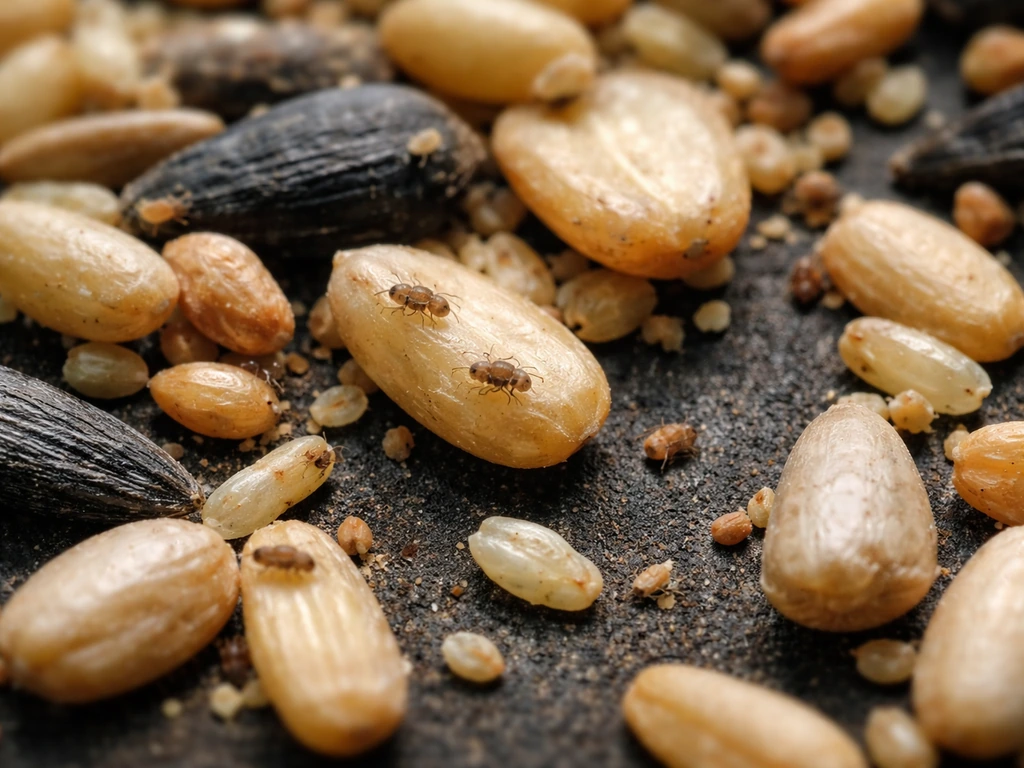
Flying bugs coming from bird seed are almost always one of two culprits: Indian meal moths or grain weevils. If you suspect wild bird seed bugs, learning the exact pest is the first step before you clean and reset your storage. Indian meal moths are the most common by far. Their larvae hatch inside stored seed, feed for weeks, and eventually become small flying moths you notice fluttering around your garage, shed, or kitchen.
Flying Bugs From Bird Seed: Fix It Fast and Prevent It

Maya Collins
6 May 2026
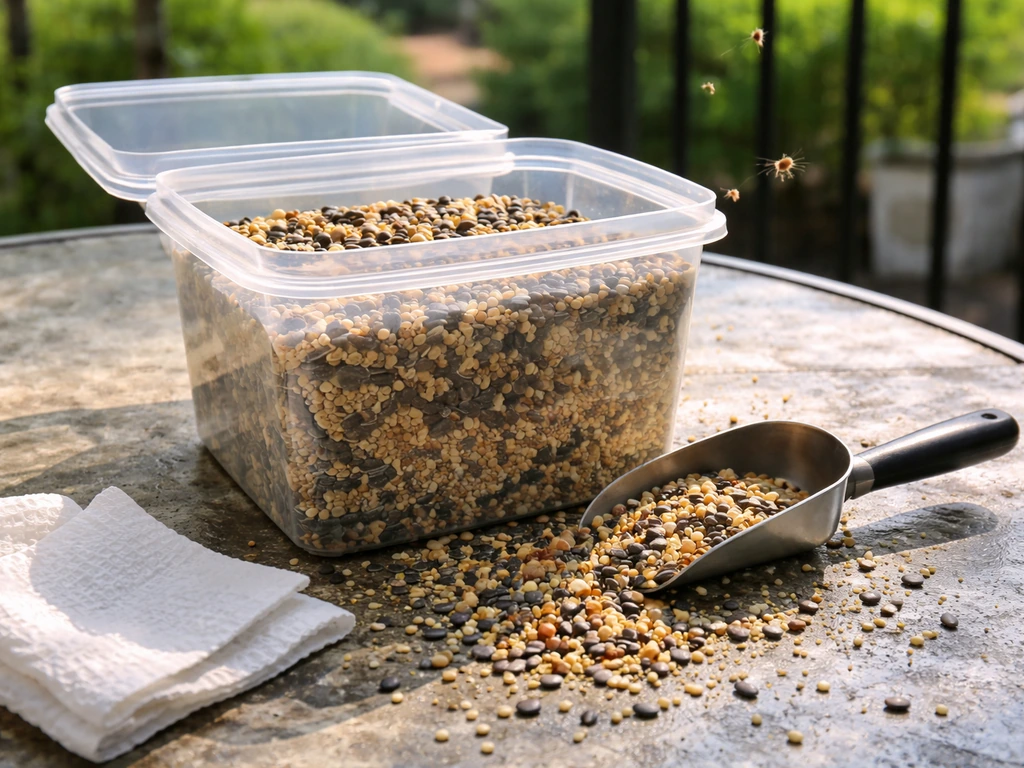
Grain weevils spend their whole larval stage inside individual kernels and emerge as flying adults by chewing exit holes out of the grain. Either way, the seed itself is the source, and you need to act today before the infestation spreads to other stored food.
Identify the Flying Bug and Where It's Coming From
Before you do anything else, spend two minutes confirming what you're dealing with. The fix is the same for most seed pests, but knowing which bug you have tells you how far the problem might have spread.
Indian Meal Moths
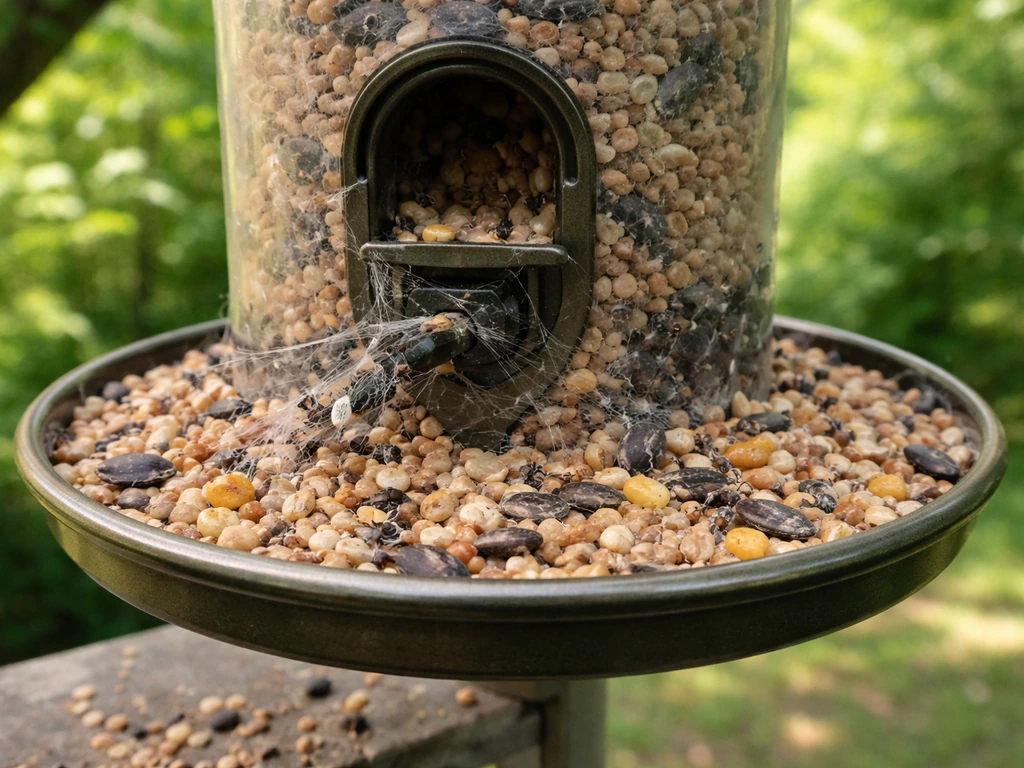
These are small moths, about 3/4 inch long, with a distinctive two-tone wing pattern: reddish-brown on the outer two-thirds, grayish near the body. The larvae are small, off-white caterpillars with a darker head. The clearest sign of Indian meal moth infestation is silk webbing matted through the seed, often with tiny dark pellets (frass) mixed in. Mature larvae will crawl up walls or across ceilings to find a pupation spot before becoming adults, so don't be surprised if you see them far from the seed bag. Female moths lay 60 to 300 eggs directly on or near food material, so if your seed has been sitting around in a warm space, you may have multiple generations at once.
Grain Weevils
Grain weevils are small, reddish-brown beetles about 1/8 inch long with a distinctive snout. Because their entire larval development happens inside the kernel, you won't see larvae at all until the adults chew their way out. What you will notice is tiny exit holes in individual seeds, fine powdery dust on the bottom of the container, and small beetles moving slowly through the seed or flying around the storage area. Grain weevils are less likely than meal moths to spread into other household food, but they can still infest other stored grains you have nearby.
Other Flying Insects Worth Knowing
Fungus gnats and fruit flies are sometimes confused with grain pests, but they're attracted to moisture and decaying organic matter rather than dry seed. If you see tiny, dark, slow-moving flies hovering near wet or sprouted seed rather than coming from inside a dry bag, moisture and mold are your primary problem, not a seed infestation.
Psocids (booklice) are another common seed pest, but they don't fly noticeably and are covered in more depth in the related articles on bugs in bird seed and mites and tiny bugs in bird seed. They can be hard to see, but if mites are the issue, the seed may look dusty or feel off even when no larger insects are flying mites tiny bugs in bird seed.
If you suspect mold or other pests, it can also help to cross-check common mites and tiny bugs in bird seed that sometimes show up with the same storage issues.
Quick At-Home Checks to Confirm What You're Dealing With
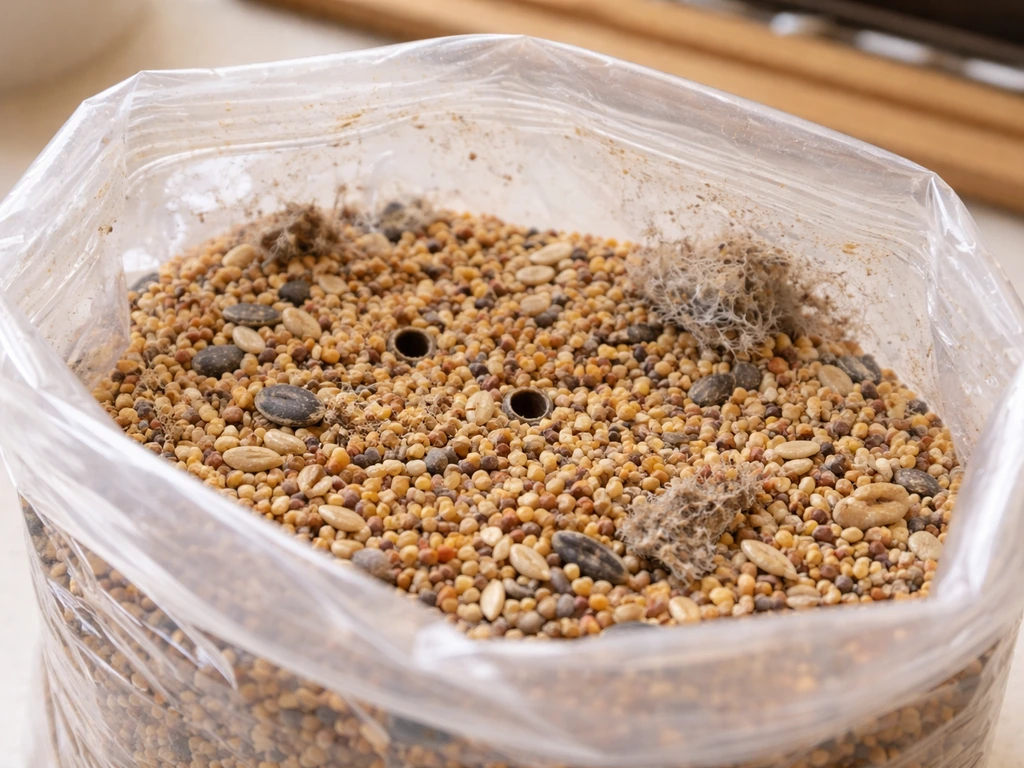
Run through these checks before you throw anything away or start cleaning. They take less than five minutes and tell you whether you're dealing with a true insect infestation, a moisture or mold problem, or both.
- Open the seed bag or storage container in good light and look at the surface. Webbing matted across the seed means Indian meal moths. Tiny exit holes and powdery dust means grain weevils. No webbing or holes but seed is clumping together means moisture is the issue.
- Smell the seed. Fresh seed smells nutty or neutral. A musty, sour, or fermented smell points to mold from moisture, which can attract secondary insects on its own. Discard moldy seed regardless of whether you see bugs.
- Check the bottom of the container. A layer of fine powder or broken seed pieces suggests weevil activity. Dark, grain-sized pellets mixed with silk threads point to meal moths.
- Move the seed to a white paper or tray and look for movement. Grain weevils move slowly. Meal moth larvae wriggle. If nothing moves but you see flying insects in the room, check nearby stored food, not just the seed.
- Remove the seed container from the space for 24 hours and see if flying insects continue. If moths or weevils are still present in the room after removal, they've likely pupated or spread to other food sources and you need to inspect everything.
What to Do Right Now
The moment you confirm an infestation, stop feeding birds from that seed. This isn't about bird safety in the short term; birds eat insects regularly and a few meal moth larvae won't harm them. The real reason to stop is that every day the infested seed goes into your feeder, you're spreading eggs and larvae into the outdoor environment and potentially back into your storage area. Pause feeding for at least 48 to 72 hours while you clean and reset.
- Isolate the infested seed immediately. Seal it in a heavy-duty garbage bag, twist the top, and place it in a second bag. Take it outside to a trash bin away from the house.
- Do not shake or pour infested seed indoors. Larvae and eggs can drop and survive in carpet, wall crevices, and other stored food.
- Check all other stored dry goods in the same area: pet food, grains, flour, dried fruit, nuts, cereals. Indian meal moths do not stay in bird seed only.
- If you find other infested food, bag and discard it using the same double-bag method.
- Temporarily store any unaffected bird seed in the freezer (more on this below) while you clean.
How to Dispose, Clean Feeders, and Sanitize Storage Areas
Disposing of Infested Seed
Double-bag all infested seed and any seed you're uncertain about. Seal tightly and put it in an outdoor bin with a lid. Do not compost infested seed; the eggs and larvae will survive and spread. Do not dump it in the yard as a "gift for the birds" either, because you'll be depositing an infestation directly into your backyard environment and potentially back into your feeder.
Cleaning Your Feeders
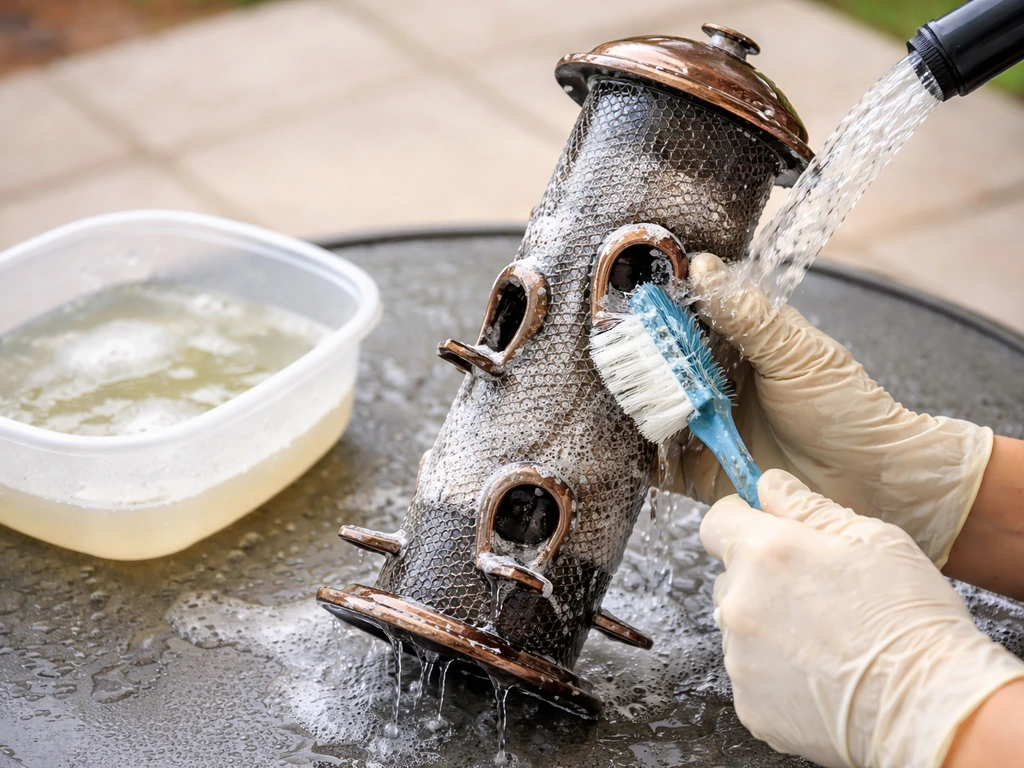
Empty each feeder completely. Shake out any remaining seed into a trash bag, not onto the ground below the feeder. Scrub feeders with a solution of 1 part white vinegar to 9 parts hot water, or use a 9:1 water-to-bleach solution (about 1 tablespoon of bleach per quart of water). BirdNet’s fact sheet recommends a 10% bleach solution (1 part bleach to 9 parts water) for feeder cleaning [1 tablespoon of bleach per quart of water](https://www.
birdnet. org/wp-content/uploads/2026/02/Bird-Feeder-Fact-Sheet. pdf). Use a feeder brush or old toothbrush to get into seams and perch holes where larvae and pupae can hide.
Rinse thoroughly and allow feeders to air dry completely in the sun before refilling. A damp feeder can kick off a new mold or insect problem within days, especially in warm weather.
Sanitizing the Storage Area
Vacuum shelves, corners, and crevices in any area where infested seed was stored. Larvae and pupae hide in cracks, so don't skip corners or under shelf liners. After vacuuming, wipe down all surfaces with the same vinegar or diluted bleach solution. Empty the vacuum canister or bag immediately into an outdoor trash bin. If you stored seed in a cloth bag, cardboard box, or paper sack, throw those away. Indian meal moth pupae can survive inside cardboard and paper.
Dealing With Moths Already in the Room
Pheromone-based Indian meal moth traps (available at hardware stores and online for roughly $5 to $10 for a pack of two) catch adult males and break the breeding cycle. They won't eliminate an infestation on their own, but they're a useful monitoring tool after cleanup to confirm the problem is resolved. Place one trap in each affected room and check it every few days. If you're still catching large numbers of moths after two weeks of clean storage, inspect all stored food again.
Fix Storage and Handling: Containers, Moisture Control, and Rotation
The root cause of most bird seed insect problems is poor storage. Thin paper or plastic bags are not barriers to insects. Meal moths can chew through plastic bags and cardboard. Even if the eggs were already in the seed when you bought it (which happens regularly in commercial seed production), good storage prevents them from hatching and multiplying.
The Right Containers
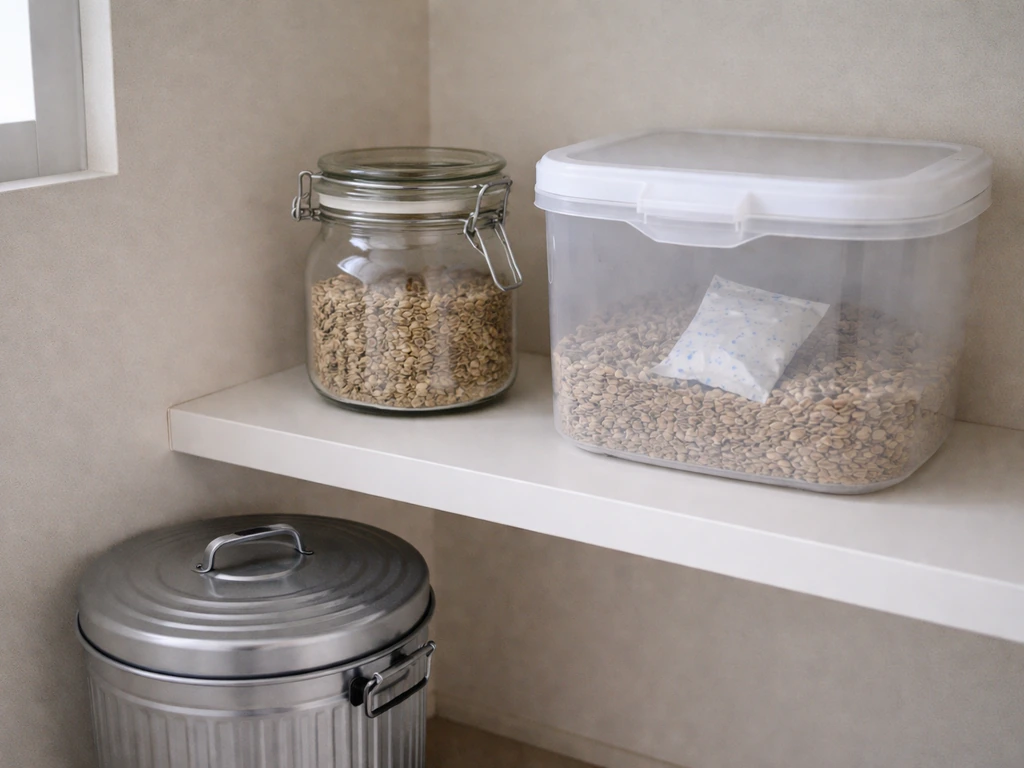
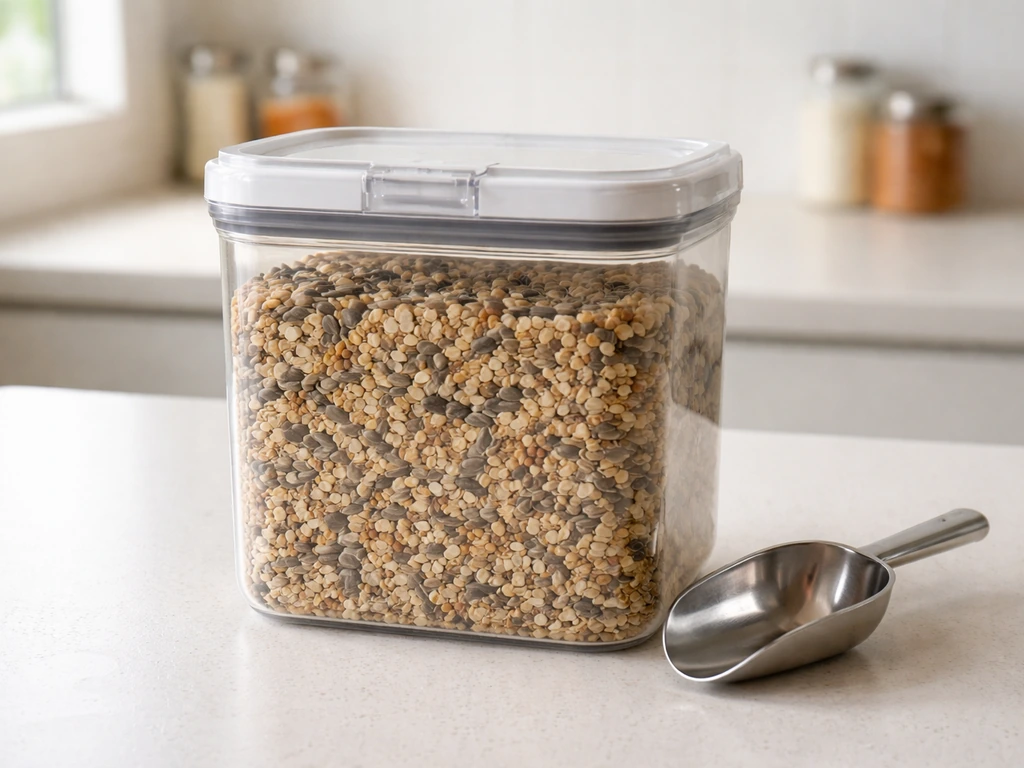
Use hard-sided, airtight containers made of metal, thick polypropylene, or glass. Metal trash cans with locking lids work well for large quantities. For smaller amounts, wide-mouth plastic storage bins with gasket seals are practical. Avoid repurposing thin plastic bins or buckets with loose-fitting lids; they don't create a genuine barrier. Label containers with the purchase date using a piece of masking tape so you know how old the seed is.
Moisture Control
Moisture is the accelerant for both mold and insect activity. Store seed in a cool, dry location away from direct sunlight. Garages and sheds work in cooler climates, but in humid regions (the Southeast, Gulf Coast, Pacific Northwest), they can become moisture traps in summer. If your storage space stays above 70°F and above 60% humidity for extended periods, you're fighting an uphill battle. Consider a small desiccant pack inside the storage container to absorb ambient moisture, and avoid storing seed directly on a concrete floor where condensation can wick upward.
Freezing and Rotating Seed
Freezing new seed for 72 hours before storing it kills any eggs or larvae that may have been present at purchase. Most seed types (sunflower, safflower, millet, nyjer) tolerate freezing without any reduction in nutritional value or palatability. Let the seed return to room temperature in a sealed container before opening to prevent condensation from forming on the seed. Buy seed in quantities you can use within four to six weeks. Letting a large bag sit for months, especially through warm weather, is one of the most reliable ways to produce a moth infestation.
Prevention Plan for Next Season
Feeder Setup and Under-Feeder Management
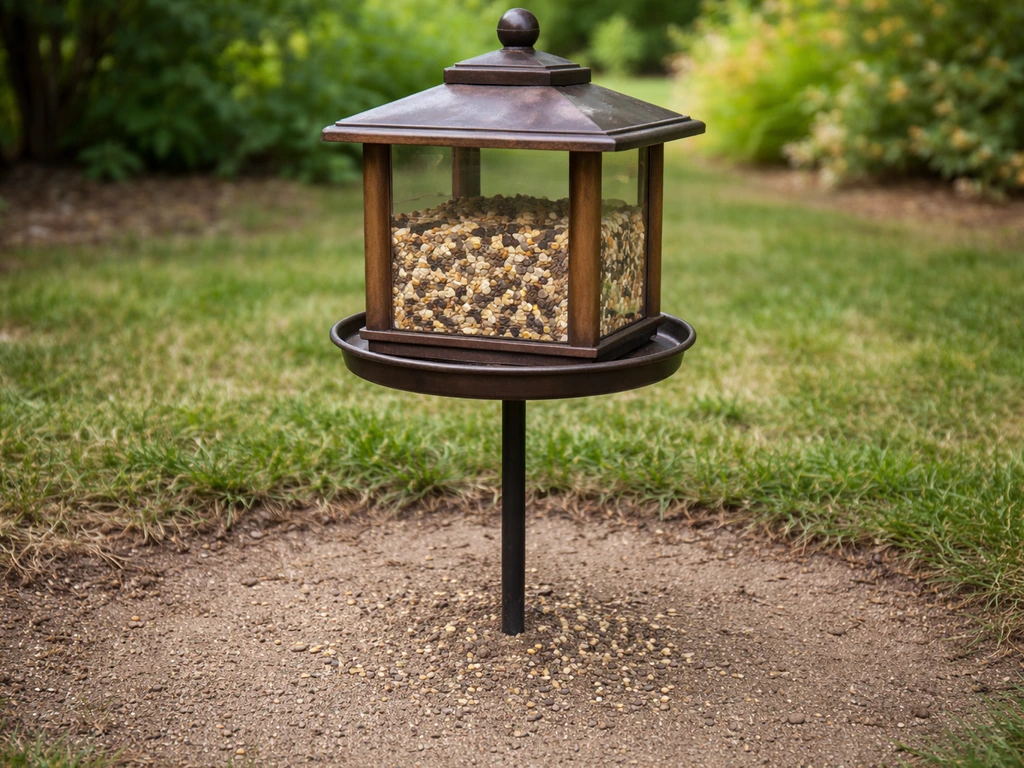
Fallen seed on the ground under feeders attracts insects, rodents, and mold. If you're wondering whether bird seed attracts bugs, that dropped seed below the feeder can be a big part of why pests show up bird seed attract bugs. Use a tray or catch basin under tube feeders to collect dropped seed, and empty and clean it weekly. Rake or sweep the ground beneath feeders every one to two weeks, especially in warm months.
If you're in a region with hot, humid summers (May through September across much of the South and Midwest), increase that to twice weekly. Consider switching to no-waste seed mixes or shelled sunflower during peak insect season to reduce the amount of organic debris accumulating below the feeder.
Feeder Cleaning Schedule
Clean tube and hopper feeders every two weeks during warm weather, and monthly in cold weather when insect activity is low. Platform feeders, which hold seed in open trays, need weekly cleaning because they expose seed directly to moisture and droppings. The process is the same each time: empty, scrub with a brush and vinegar or diluted bleach solution, rinse well, and dry completely before refilling. A wet feeder left to sit for 24 hours in summer heat is a mold and insect problem waiting to happen.
Seasonal Storage Adjustments
In regions with cold winters, insect pressure on stored seed drops significantly from November through March. You can safely store larger quantities during that window. In spring, switch to buying smaller amounts every two to three weeks and use the freeze-before-storing method consistently. If you live in a warm climate where temperatures stay above 60°F year-round, treat every purchase as a summer purchase and buy no more than a two to three week supply at a time.
Pest Exclusion Tactics
- Store seed in a separate shed or garage space away from your home's interior to prevent meal moths from migrating into kitchen pantries.
- Never leave seed bags open or partially rolled. Even a small opening is enough for a moth to lay eggs.
- Use pheromone traps in your storage area as a year-round early-warning system. Replace them every three months.
- Inspect new seed purchases before storing. If you see webbing or powdery residue in the bag at the store, choose a different bag or a different product.
- Avoid buying seed in bulk from bins where multiple shoppers scoop. These bins are frequent infestation sources because they're exposed and rarely rotated fully.
When to Call It Quits: Signs Seed Is Unsafe or the Problem Won't Stop
Not every batch of infested seed is worth saving, and not every infestation resolves with a single cleanup. Here are the situations where you should discard the seed without hesitation and consider whether a larger issue is at play.
- Seed that smells sour, musty, or fermented is moldy. Mold can produce mycotoxins harmful to birds. Discard it regardless of whether you also see insects.
- Seed that is heavily clumped, sprouting, or wet throughout is a safety risk. Once moisture has penetrated seed at this level, you cannot dry it back to a safe state.
- If you're continuing to see flying moths or weevils two to three weeks after a full cleanup and fresh seed in proper containers, inspect every dry food item in the storage area. A persistent infestation means you missed a source.
- If moths have spread into your home's kitchen or pantry, check all stored grains, flour, dried fruit, pet food, and nuts. Indian meal moths are pantry pests, not just bird seed pests.
- If mold keeps returning despite clean containers and a dry storage location, test the humidity in your storage space. Sustained humidity above 65% will defeat any other prevention effort. A dehumidifier or relocation of the storage area may be necessary.
- If you've had multiple infestations in the same season, reconsider your buying habits. The issue is usually buying too much seed at once and storing it too long in conditions that favor insect development.
A Note on Re-Using Infested Seed
A common question is whether you can salvage infested seed by sifting out the bugs and using the rest. The honest answer is no. By the time you see adult flying insects, eggs have already been laid throughout the seed and larvae have likely been feeding for weeks. Sifting removes visible insects but leaves behind eggs, frass, and larvae too small to see. The seed will re-infest quickly and any mold from larval activity remains. Cut your losses, discard it cleanly, and start fresh with properly stored seed. The cost of a new bag is much lower than the cost of a recurring infestation.
| Bug Type | Key Signs | Spread Risk | Primary Fix |
|---|---|---|---|
| Indian meal moth | Silk webbing, worm-like larvae, small two-tone moths flying | High: spreads to pantry food | Discard seed, clean storage, use pheromone traps |
| Grain weevil | Exit holes in kernels, powdery dust, small brown beetles | Moderate: mainly stored grains | Discard seed, airtight containers, freeze new seed |
| Fungus gnats / fruit flies | Hovering near wet or sprouted seed, no webbing or holes | Low: tied to moisture source | Fix moisture problem, discard wet seed, clean feeder |
| Psocids (booklice) | Tiny slow-moving specks, no flying, humid conditions | Low | Reduce humidity, replace seed, airtight storage |
FAQ
If I only see a few flying bugs around my garage, does that still mean the bird seed is infested?
Not always. A small number of Indian meal moth adults can appear after eggs hatched in one overlooked bag or in cardboard/paper around storage, but also check for other indoor sources (old pantry grains, pet food, or stored spices). If the bugs show consistent fluttering from near the seed storage area, treat the seed as the source first.
How long after I stop feeding should I expect to still see moths flying?
If you clean and reset promptly, you may still see adults for up to 1 to 3 weeks because larvae already inside seed or in hidden cracks can finish pupating. Pheromone traps should gradually decline after cleanup, if the source was removed and feeders and storage are dry.
Can I save time by only cleaning the feeder, instead of vacuuming shelves and cracks?
Usually not. Meal moth larvae and pupae can hide in seams, perch holes, and tiny crevices, and weevils can remain near exit-hole dust. Vacuuming shelves, then wiping with the same vinegar or diluted bleach solution helps prevent a delayed restart even if the feeder looks clean.
What should I do if the seed bag looks fine but I still find flying moths?
Assume eggs could be present even without obvious silk or exit holes. Follow the same discard decision rule if you see active flight, and when unsure, double-bag and store separately outdoors while you confirm with traps or by checking for frass, dust, or exit holes in a small sample.
Is vinegar cleaning enough, or do I need bleach on everything?
Use vinegar for routine scrubbing and then diluted bleach for a more aggressive reset, especially where you see heavy dust, silk, or moisture. Whichever you use, rinse and dry completely, because leaving residue or moisture can promote mold or leave a hospitable surface for pests.
How do I dispose of infested seed without spreading bugs in the yard?
Seal it in a trash bag, then place it directly into an outdoor bin with a lid. Avoid tipping seed on the ground, composting, or using it in gardens because eggs and larvae can survive and re-enter storage or feeders nearby.
Can I vacuum infested seed and reuse the same vacuum later?
Empty the canister or bag immediately into an outdoor trash bin after vacuuming, then wipe the vacuum surfaces if they contacted seed dust. Otherwise, leftover pupae or frass in the vacuum can lead to new adult emergence later.
Do pheromone traps work for grain weevils too?
No, the pheromone approach described is specific to Indian meal moth adults. For weevils, monitoring is mainly through checking for exit holes, dust at the bottom, and adult activity in storage. Use the trap only for meal moth confirmation and post-cleanup verification.
Should I freeze all seed, including seed that already has pests?
Freezing new seed is for prevention, it does not reliably fix an active infestation already distributed through storage and feeders. For infested seed, the article’s approach is to discard when you see flying insects and otherwise isolate questionable seed during cleanup so you do not spread eggs or larvae.
What humidity level should I aim for in storage?
Aim for consistently cool and dry conditions, because problems escalate when storage stays hot and humid for extended periods. If your storage area often runs above about 70°F and 60% humidity, treat it as a risk zone and consider desiccant packs inside airtight containers.
How do I know if what I’m seeing is fungus gnats or fruit flies instead of seed pests?
If the insects are hovering around wet, sprouted, or decaying material, and they are not coming from inside a dry seed bag, they are likely moisture-driven rather than seed-insect driven. In that case, focus on removing damp sources and drying storage before you do deep seed pest cleanup.
Is it safe to reuse cardboard boxes or paper sacks for seed after cleanup?
Avoid it. Pupae can survive inside cardboard and paper, so even if the container seems intact, you can restart the infestation. Switch to hard-sided airtight containers with proper seals.