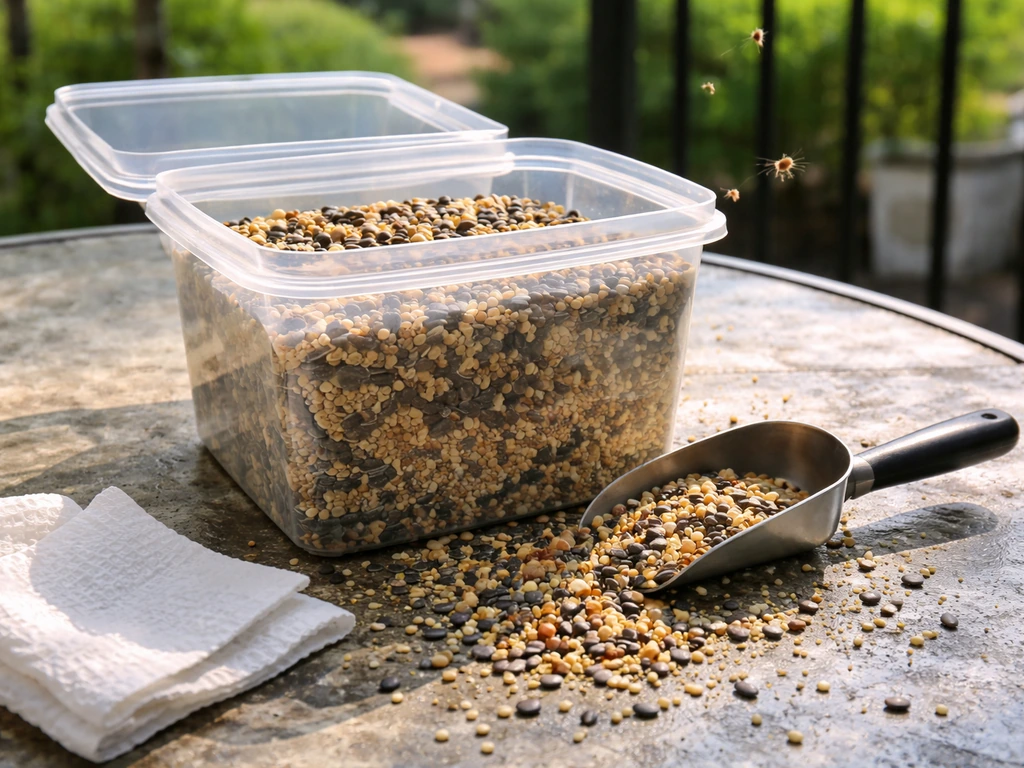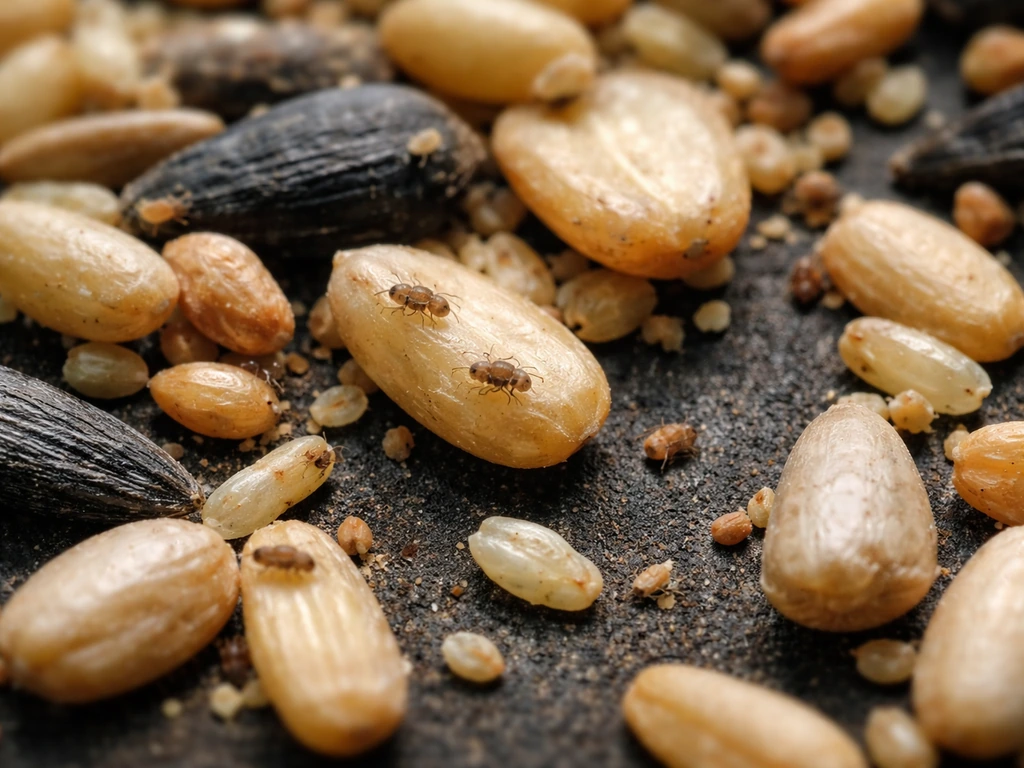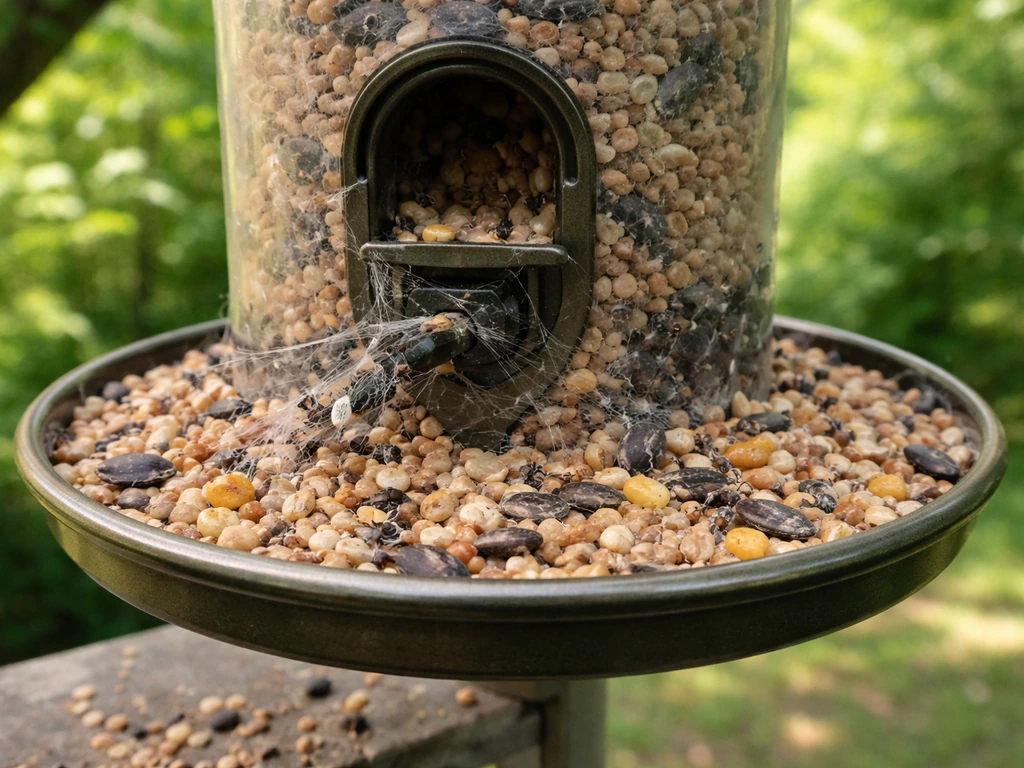
If you're seeing small crawling insects, webbing, or wriggling larvae in your wild bird seed, you almost certainly have Indian meal moths, booklice, or darkling beetles. These are real bugs, not mold or sprouting, and they got in because of moisture, warmth, or a compromised storage container. The fix is the same in every case: stop feeding immediately, isolate the affected seed, discard what's infested, clean everything, and store replacement seed correctly. Here's exactly how to do all of that today.
Wild Bird Seed Bugs: Identify, Fix, and Prevent Fast

Maya Collins
27 May 2026
Is it actually bugs? How to tell bugs from mold and sprouting
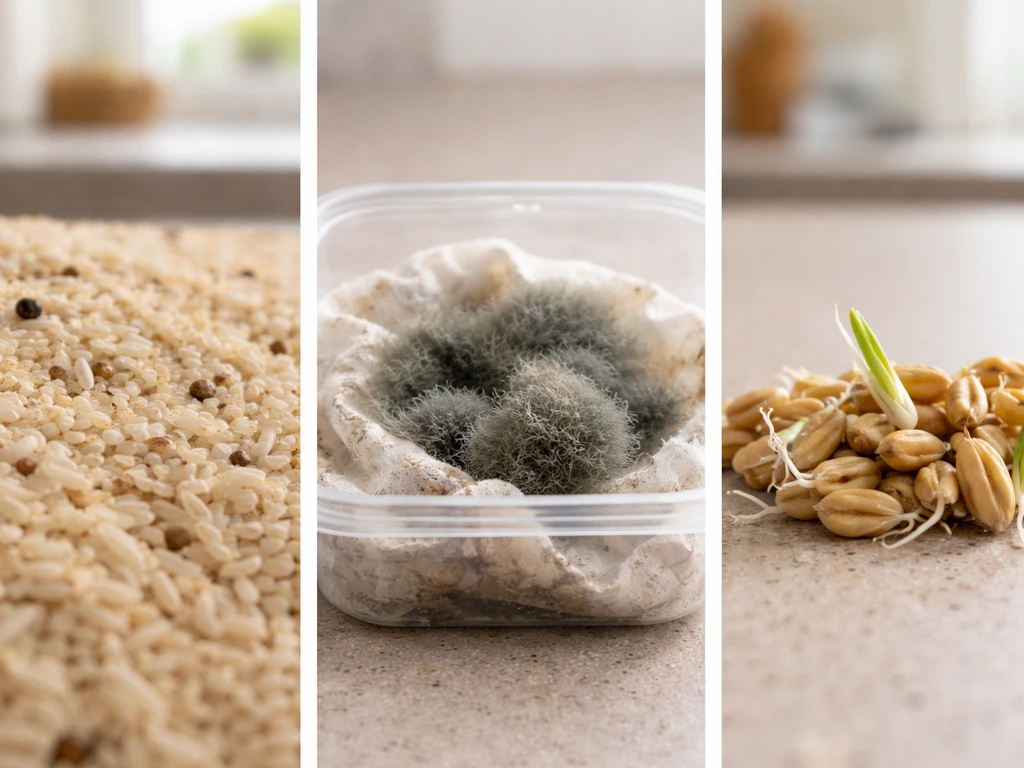
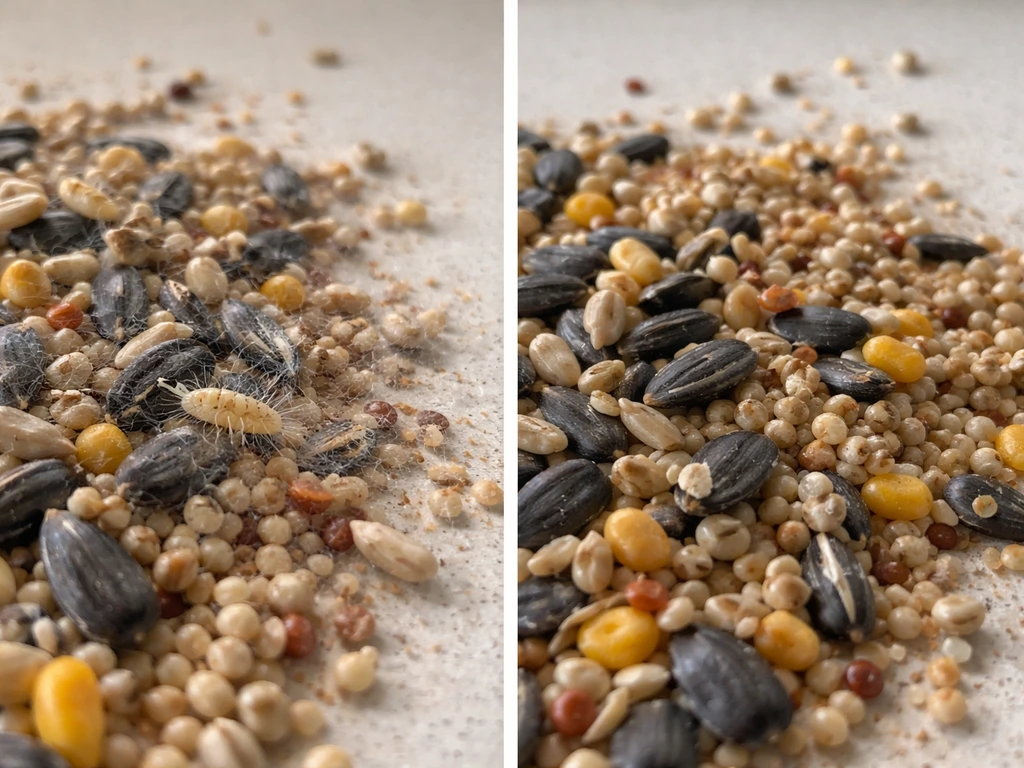
This is worth sorting out before you do anything else, because the response is slightly different for each problem. If you're trying to separate bugs from mold and sprouting, it's also helpful to review common bugs in bird seed so you know what you're actually seeing. All three can look alarming, but they are not the same issue. If you are wondering does bird seed attract bugs, start by identifying whether you're actually seeing insects versus mold or sprouting.
| What you see | Most likely cause | Key distinguishing detail |
|---|---|---|
| Tiny moving specks, crawling or flying | Insects (booklice, Indian meal moth larvae, beetles) | They move. Mold and sprouts do not. |
| White or grayish webbing matted through seed | Indian meal moth larvae | Silky tunnel-like casing made of frass and silk; look for small cream-colored caterpillars inside |
| Tiny pale specks that don't move | Booklice (psocids) | Almost dust-like; they cluster in humid areas and feed on mold, not seed directly |
| Fuzzy gray, white, green, or black patches on seed or hulls | Mold/fungal growth | Static; no movement; distinct color; musty smell |
| Seed splitting open or showing pale sprouts/roots | Germination (sprouting) | Green or white shoot emerging from seed; no webbing, no smell, no movement |
| Discolored or shrunken seed kernels | Seed spoilage/age | No movement; dull color; often combined with mold or moisture damage |
The clearest test: scoop a small amount of seed onto a white plate and watch it for 30 seconds. Movement means insects. If nothing moves, look for webbing (moth larvae), fuzzy patches (mold), or tiny white shoots (sprouting). Each problem has a different priority level, but if you spot live insects, especially larvae or moths, treat it as an infestation and act immediately.
The most common bugs in wild bird seed
A handful of pests account for the vast majority of wild bird seed infestations. Knowing which one you're dealing with helps you find the source and gauge how bad things are.
Indian meal moth (the most common culprit)
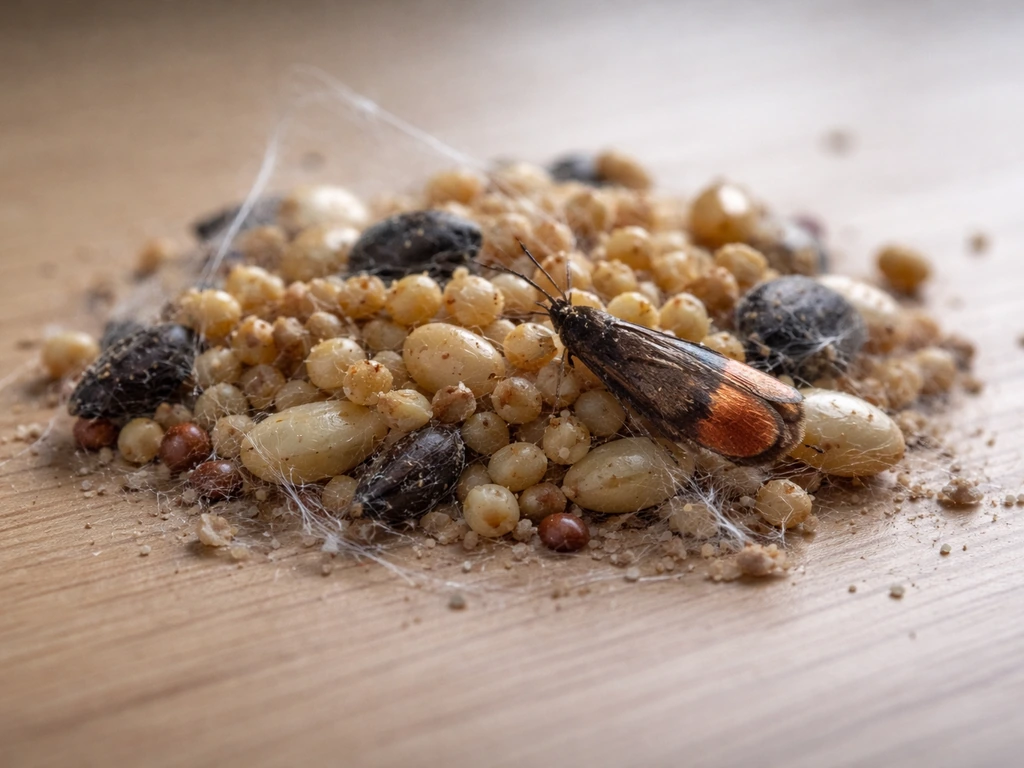
Indian meal moths are responsible for more bird seed infestations than any other insect. The adults are small moths with a distinctive two-toned wing pattern (copper-red at the tips, gray near the body), but the real damage is done by the larvae: pale, worm-like caterpillars about half an inch long that spin silky webbing through seed as they feed. Larvae can mature in as few as 21 days at warm temperatures, so an infestation moves fast.
Critically, larvae often migrate away from the seed bag to pupate on walls, ceilings, or inside cabinet crevices, which is why you might find caterpillars crawling on the ceiling even after you've removed the seed. If you see small moths fluttering in your garage, shed, or pantry, bird seed is one of the first things to inspect.
Booklice (psocids)
Booklice are tiny, almost translucent insects that look like specks of dust until you see them move. They don't eat the seed itself. They eat the mold and fungi growing on it, so finding booklice is actually a sign that your seed has a moisture and mold problem underneath the bug problem. Relative humidity above 50% is what enables them. Drop the humidity below 50% in the storage area and most booklouse infestations collapse on their own, once you've removed the affected seed.
Darkling beetles and lesser mealworms
Darkling beetles and their larvae (mealworms) are grain-based feeders that will happily establish in birdseed, especially in floor litter below feeders where seed accumulates and gets damp. They need some moisture to thrive and tend to show up in storage areas or under outdoor feeders where spilled seed sits for a long time. If you're intentionally offering mealworms to attract bluebirds or robins, know that the same conditions that support feeder mealworms also attract these beetles to any spilled seed nearby.
Why bugs show up in the first place
Bird seed is a dried food product, and like any dried food, it's vulnerable to pests under certain conditions. These are the most common reasons an infestation develops:
- Moisture in the storage area: humidity softens seed hulls, promotes mold, and creates ideal conditions for booklice and Indian meal moths
- Infested seed from the store: Indian meal moths can be introduced in store-bought seed before you even open the bag; the eggs are tiny and invisible at purchase
- Storing seed in original paper or thin plastic bags: these offer almost no barrier to insects or humidity
- Large bulk quantities held too long: the longer seed sits, the higher the odds of an infestation taking hold
- Spilled seed left under feeders: wet, decomposing seed below feeders is a breeding ground for beetles and mold
- Warm storage temperatures: larvae develop faster at higher temperatures, so a warm garage or shed in summer accelerates an infestation
- Seasonal pressure: late spring through early fall (May through September in most of the U.S.) brings higher ambient humidity and warmer temperatures, which is when most seed pest problems peak
What to do today: your immediate action plan
Don't delay on this. Indian meal moth larvae can mature in about three weeks, and if you have moths in the seed, they may already be spreading to nearby dry goods. Work through these steps in order.
Step 1: Stop feeding and remove the seed
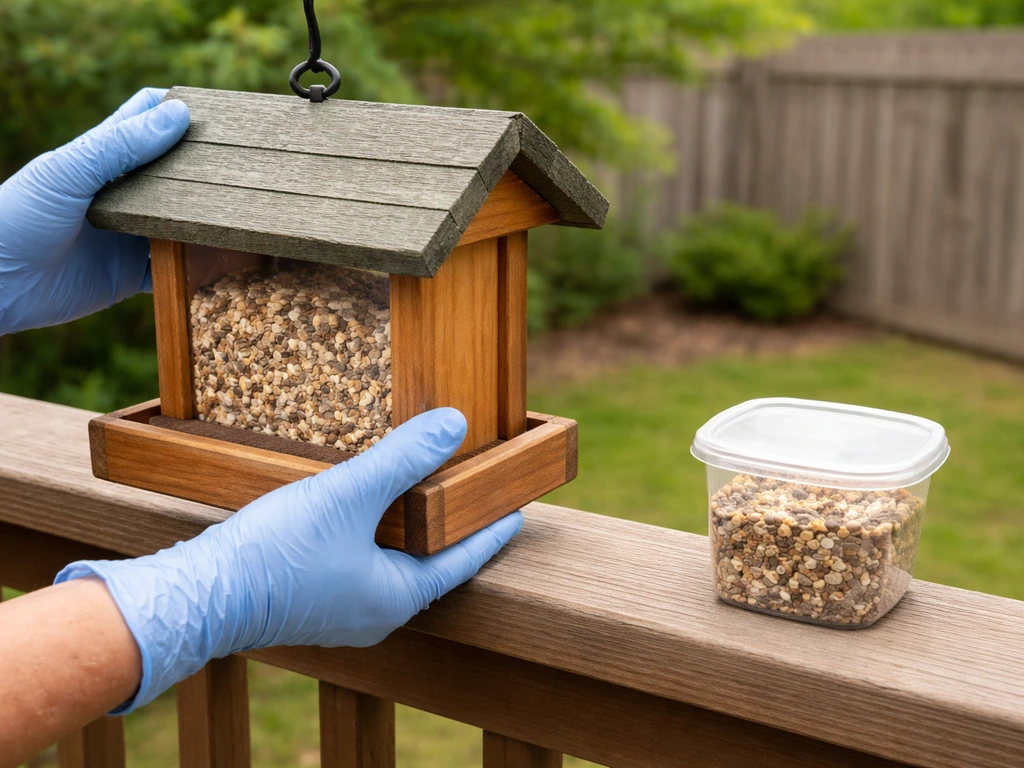
Take the feeder down now. Don't top it off or let birds keep feeding from potentially infested seed. Carefully move the suspect storage bag or container outside or into a garage, keeping it sealed as much as possible so you're not spreading insects through your home.
Step 2: Inspect and isolate all seed in the area
Check every bag, bin, and container of bird seed (and any dry pet food, grains, or cereals stored nearby) for signs of infestation. Look for webbing, larvae, adult moths, or unusual clumping. Any container showing signs needs to be isolated immediately. Don't forget to check the feeder itself, including the bottom of any hopper or tube where seed accumulates.
Step 3: Discard or salvage
If the seed has visible larvae, webbing, mold, or a sour/musty smell, discard it. Seal it in a heavy trash bag and put it in an outdoor bin immediately. Seed with only a few adult moths present and no larvae or webbing can sometimes be salvaged by spreading it on a baking sheet in thin layers and freezing at 0°F for at least four days, which kills eggs and larvae. But be honest with yourself: if there's any doubt, bagged seed is cheap compared to a kitchen infestation. Toss it.
Step 4: Check for larvae migration
If you had a confirmed Indian meal moth infestation, inspect the storage area thoroughly: check wall corners near the ceiling, the undersides of shelves, and any cracks or gaps in the walls. Larvae leave the food source to pupate, so you may find silky cocoons in these spots even if the seed is gone. Remove and dispose of any you find. If all sources are eliminated, adult moths should disappear within two to three weeks.
How to safely sort and handle infested seed
If you're dealing with a large quantity and want to check whether any of it is worth salvaging, do this outside or in a garage, not over your kitchen counter.
- Spread a section of seed on a white tray or sheet of paper in good light
- Look for movement, webbing, clumping, mold, or off-color seed
- Discard any section showing webbing or larvae directly into a sealed bag without touching the webbing with bare hands
- Seed that looks and smells clean with no signs of pests can be set aside for the freezer treatment
- Wash your hands thoroughly with soap after handling any potentially infested seed
- Clean and wipe down any surface the seed touched before bringing it back inside
Be aware that seed mites (which are even smaller than booklice and often invisible to the naked eye) can also hitch a ride on seed. If you suspect mites, those tiny bugs in bird seed can also be a sign that the seed has been sitting too long or exposed to moisture mites tiny bugs in bird seed. If you're seeing what looks like dust moving very slowly, that's worth a separate look.
Related to this, flying insects emerging suddenly from a seed bag are almost always Indian meal moths or fungus gnats attracted to mold, depending on what else is present. Flying bugs from bird seed are often related to Indian meal moth adults or fungus gnats drawn to mold and moisture.
Cleaning your feeders, trays, and the ground below them
Once the seed is dealt with, the feeder and surrounding area need a proper clean. A quick rinse isn't enough, especially if you've had insects or mold present.
Cleaning solution options
| Method | Ratio | Soak time | Notes |
|---|---|---|---|
| Bleach and water (standard) | 1 part bleach to 9 parts water | 10-15 minutes | Effective against mold, bacteria, and most pest residue; Cornell Lab and Audubon standard recommendation |
| Bleach and water (Minnesota DNR) | 2 oz bleach per 1 gallon water | Scrub, no long soak required | Good for heavily soiled feeders with thick debris buildup |
| Vinegar and water (alternative) | 1 part vinegar to 4 parts hot water, or 50-50 | 15 minutes after soap scrub | Gentler option; less effective against bacteria but useful if bleach isn't available |
Step-by-step feeder cleaning
- Empty the feeder completely and shake out all remaining seed into a trash bag
- Disassemble all removable parts (trays, caps, perches, ports)
- Scrub every surface with hot soapy water and a stiff brush; use a bottle brush for narrow ports and tubes
- Soak all parts in a 1: 9 bleach-to-water solution for 10 to 15 minutes
- Rinse thoroughly under running water for at least 10 seconds to remove any bleach residue
- Air-dry completely before refilling: this step is non-negotiable, because damp seed in a wet feeder is exactly what caused the problem in the first place
- Wipe down the outside of the feeder pole, hanging hardware, and any adjacent surfaces
Don't forget the ground below the feeder
Spilled seed, wet hulls, and droppings under and around the feeder are just as important to clean as the feeder itself. Rake or scoop up all seed debris, bag it and discard it, then hose down the area. If you're on a deck or patio, scrub the surface with your bleach solution as well. Moldy seed casings and droppings on the ground are a genuine source of illness for birds, and they also draw beetles, ants, and rodents that will work their way back into your storage area.
How often should you clean?
As a baseline, clean feeders every two weeks. Iowa DNR also recommends cleaning bird feeders, waterers, and baths about once each month using a 10% bleach solution and making sure the feeder is dry before refilling with seed clean feeders every two weeks. During hot humid weather (summer in most U.S. regions), weekly cleaning is better. If there's been heavy rain or you're in a high-humidity area like the Southeast or Gulf Coast, clean more frequently and consider pulling feeders in during prolonged wet spells. If any sick birds have been reported at your feeder, clean immediately and increase frequency to every few days until the situation passes.
How to prevent bugs from coming back
Store seed correctly
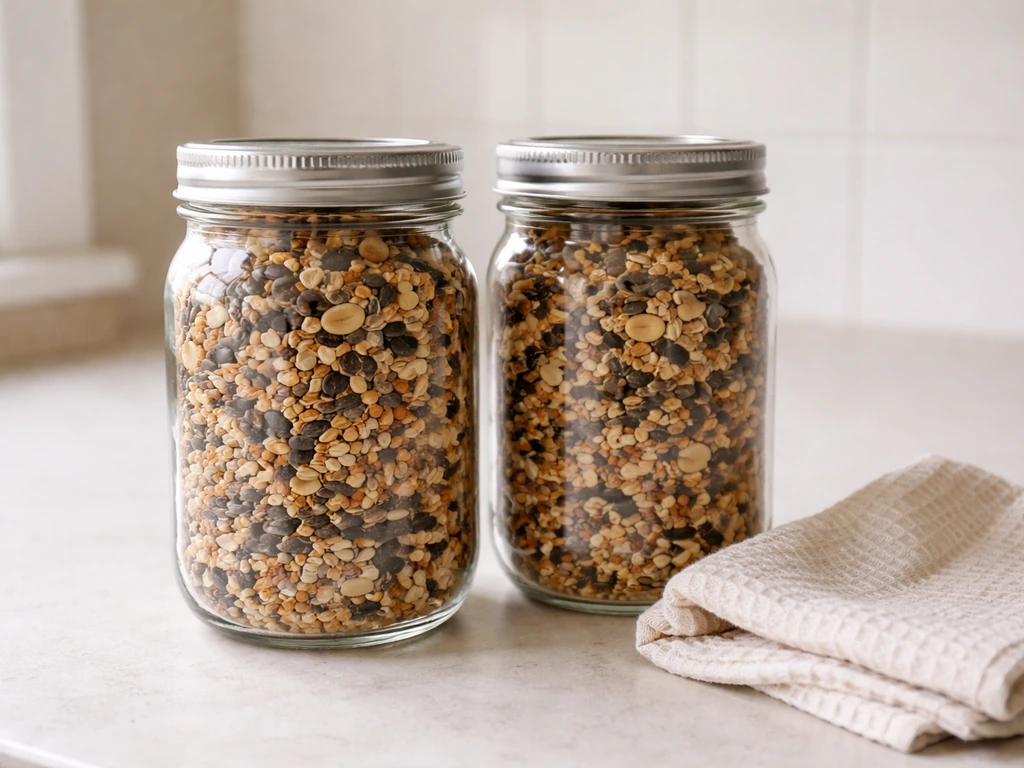
The single biggest change you can make is moving seed out of paper bags or thin plastic sacks and into hard-sided, airtight containers. Metal trash cans with tight-fitting lids, thick-walled plastic bins with locking lids, or purpose-made seed storage containers all work well. Keep the container off the floor on a pallet or shelf to avoid ground moisture. Store seed in a cool, dry location: a climate-controlled space is ideal. Garages and sheds are fine in most climates, but in humid summer regions, the combination of heat and humidity turns them into incubators for Indian meal moths.
Control moisture aggressively
Keeping relative humidity below 50% in your storage area is one of the most effective pest prevention strategies available. A small dehumidifier or moisture absorber in a garage or shed makes a real difference. If you're in a humid climate (the Southeast, Pacific Northwest, or any coastal area), check seed more frequently and buy in smaller quantities so nothing sits long enough to absorb moisture.
Buy less, buy fresh, rotate stock
Bulk buying feels economical, but a 50-pound bag sitting in a warm shed for three months is a liability. Buy quantities you'll use within four to six weeks during warmer months, and check seed every time you refill the feeder. Use older seed first. If anything smells musty, looks clumped, or shows any moisture damage, discard it before it becomes an infestation.
Smarter feeder setup to reduce mess
Spilled seed under feeders is a primary source of ground-level pest problems. A few setup changes can dramatically reduce this:
- Use hopper-type feeders or fly-through feeders rather than open platforms, which let more seed get wet and spread
- Add a seed tray or seed catcher below the feeder to collect fallen seed so it doesn't build up on the ground
- Position feeders over grass rather than a deck or patio when possible, so spilled seed is easier to manage
- Offer shelled seeds (hulled sunflower, shelled peanuts) where practical, since less hull debris accumulates below
- Don't overfill: fill only as much as birds will eat in one to two days during warm weather so seed doesn't sit and get damp
- Avoid filling feeders right before rain or prolonged wet weather if you know conditions are coming
When to stop and reassess (and when to call in help)
Most wild bird seed bug problems are manageable with the steps above and won't require professional pest control. But there are situations where you need to escalate or take a longer break from feeding.
Signs the problem has spread beyond your feeder
If you're finding Indian meal moth larvae crawling on walls and ceilings in your home (not just your shed or garage), or if you've found adult moths or larvae in pantry goods like cereal, flour, nuts, or dried fruit, the infestation has spread. In that case, inspect every susceptible dry food item in the area, discard anything compromised, and consider using pheromone moth traps to catch remaining adults while you eliminate sources. If the problem keeps recurring after two to three weeks of full cleanup, there's a source you haven't found yet, possibly a forgotten bag of seed, pet food, or a dried arrangement.
When to pause feeding entirely
It's always okay to take a temporary break from feeding birds. Birds will find other food sources. If you're in the middle of a bad infestation, if your cleaning and storage setup isn't yet ready, or if you've been seeing sick birds at the feeder, pausing for two to four weeks is a responsible and often recommended step. Resume feeding only once you have clean equipment and a solid storage plan in place.
Health concerns and household safety
Indian meal moth larvae and booklice are not dangerous to humans in the way that some food-borne pathogens are, but contaminated seed that's been exposed to mold can carry fungal spores that are worth taking seriously, especially for people with respiratory sensitivities. Handle heavily molded seed outdoors, use gloves, and avoid inhaling seed dust or debris. Moldy seed and droppings under feeders can contribute to bird illness, so keeping that area clean isn't just about aesthetics. If you're concerned about mold exposure or if a seed infestation has spread into your home's food storage, consulting a pest control professional is a reasonable and practical step.
The good news is that once you identify and remove all infested sources, act fast on cleanup, and switch to proper sealed storage with moisture control, most wild bird seed pest problems are a one-time event. The combination of airtight containers, dry conditions, regular feeder cleaning, and smaller seed purchases covers the vast majority of what causes these infestations in the first place.
FAQ
Are wild bird seed bugs dangerous to humans or pets?
Indian meal moths and booklice are not typically a direct health threat to people the way many pathogens are, but moldy seed can release fungal spores. Wear gloves, handle heavily infested seed outdoors, and avoid stirring up dust. For pets, keep infested bird seed (and any spilled debris) away from dry pet food storage until everything is cleaned and sealed.
I saw movement, but I am not sure if it is insects or sprouting. How can I confirm quickly?
Do the white-plate test, then look for pattern and behavior. Insect activity usually includes crawling or sudden movement, and you may see tiny webbing threads or larvae bodies. Sprouting typically shows tiny white shoots that grow without crawling, usually appearing in clusters rather than multiple moving points.
What is the right way to freeze seed if I want to try salvaging it?
Freezing can kill eggs and larvae only if you can reach and hold the whole batch at freezer temperature long enough. Spread the seed in a thin layer on a baking sheet, then freeze at 0°F or colder for at least four days. If you see any webbing, larvae, or strong musty odor, do not rely on freezing, discard instead.
Can I keep feeding birds while I clean up an infestation?
No, topping off or continuing to feed from potentially infested seed increases the chance of larvae and moths spreading to your feeder and nearby dry goods. Take the feeder down immediately, seal the suspect storage container, clean the feeder and the ground area, then resume only after you switch to properly sealed, dry replacement seed.
How long should I wait before I resume feeding after a moth infestation?
After you remove all infested seed and eliminate pupation sources, adult moth activity should drop within about two to three weeks. If you still see adults after that window, you likely missed another source, such as a forgotten bag, pet food, or dried pantry items that were close by.
What should I do if I find larvae inside my feeder hopper but the seed looks mostly normal?
Treat it as an active infestation source even if the rest looks fine. Remove and discard the affected seed, take the feeder apart, clean the hopper tube and any crevices, then inspect the feeder base and the immediate ground area for spilled seed and droppings. Larvae often travel for pupation, so check for cocoons in nearby cracks and gaps.
Do I need to clean my entire kitchen if moths come from the bird seed?
Usually focus on areas close to the suspected source, but broaden the inspection if you found moths or larvae in pantry goods. If you only saw insects near the shed, garage, or feeder, deep-clean the feeder, then clean storage areas where bird seed or similar dry foods are kept. If moths appeared in your pantry, inspect and discard compromised cereal, flour, nuts, and dried fruit.
Why do I keep seeing booklice or mites even after I cleaned the feeder?
Booklice are often a sign of ongoing moisture and mold, not just a leftover bug. Check for damp seed, wet hulls, or condensation in storage, and confirm you have airtight containers and a dry storage location. If the infestation recurs, look for a hidden moisture source, such as a leaking container, a bag stored against a wall with humidity, or seed sitting too long.
How can I tell if it is mites versus booklice?
Mites are even smaller and often invisible without close inspection, they can appear like dust that slowly moves. If you see dust-like specks drifting or creeping very slowly in seed or along container seams, treat it as a moisture-related storage issue. Improve humidity control and discard any seed that has been sitting long enough to develop visible moisture damage or clumping.
What is the best way to prevent infestations when using bulk seed or refilling often?
Do not store large amounts in warm, humid spaces. Buy enough to use in about four to six weeks during warmer months, keep seed in hard-sided airtight containers, and use older seed first. During refilling, check for clumps, musty smell, or any webbing so you catch problems before they spread to the next batch.
Should I stop feeding forever if I find moths inside my home?
Not necessarily, but a moth presence indoors means the infestation has spread beyond the feeder. Escalate your cleanup to every susceptible dry item in the area, dispose of compromised goods, and consider pheromone traps to reduce remaining adults while you remove sources. If you still see recurrence after two to three weeks of full cleanup, inspect for an additional hidden source, such as a sealed but forgotten bag or pet food.
How often should I clean the feeder if I am in a rainy or humid area?
Use more frequent schedules than the baseline. Clean every two weeks in typical conditions, weekly during hot humid periods, and increase frequency further if there is heavy rain or high humidity. If you have had sick birds reported at the feeder, clean immediately and then clean every few days until the issue passes.