
Yes, bird seed attracts bugs. The most common culprits are Indianmeal moths, merchant grain beetles, and various mites, all of which are drawn to the oils, starches, and moisture in seed mixes. But here is the important nuance: the seed itself is not automatically a bug magnet. Poor storage, excess moisture, cracked or sprouted seed, and dirty feeders are what turn a normal bag of bird seed into a pest problem. Fix those conditions and you will stop most infestations before they start.
Does Bird Seed Attract Bugs? Causes and How to Prevent

Maya Collins
19 Jun 2026
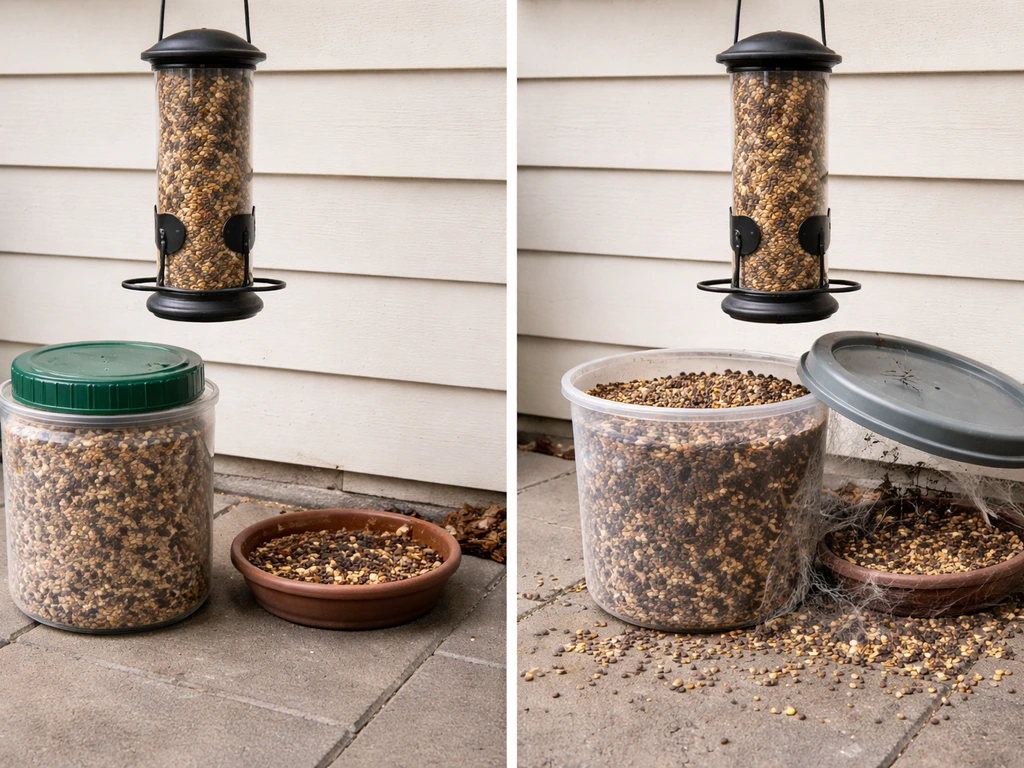
Which bugs bird seed actually attracts
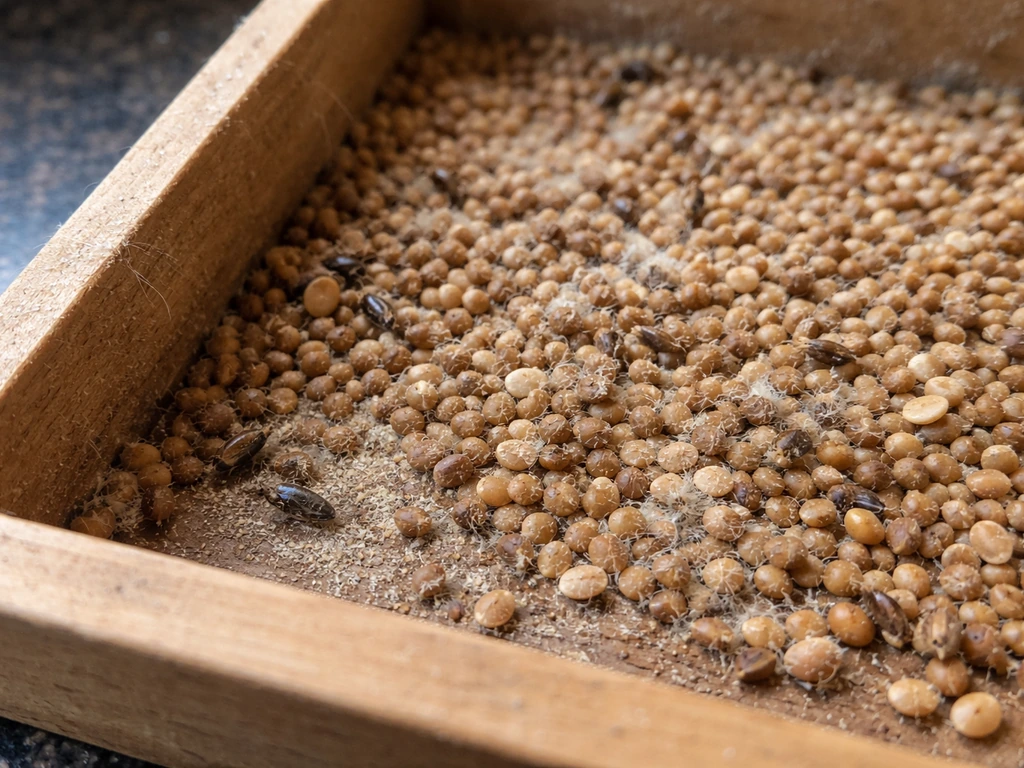
A few specific insects and mites show up again and again around bird seed, both in storage and at outdoor feeders. Knowing which ones you are dealing with makes it a lot easier to fix the problem.
| Pest | What it looks like | Where you find it | Main draw |
|---|---|---|---|
| Indianmeal moth (Plodia interpunctella) | Small moth with reddish-brown wingtips; larvae are creamy-white caterpillars up to ~1.3 cm | Inside storage containers, pantries, feeder ports | Cracked grain, seeds, nuts, dried fruit in mixes |
| Merchant grain beetle (Oryzaephilus mercator) | Tiny flat brown beetle, ~2–3 mm long | Stored seed bags and bins | Oily seeds: sunflower, safflower, peanuts |
| Bird mites (northern fowl mite, chicken mite) | Barely visible; bright red after feeding, dark otherwise | Feeder surfaces, nesting areas, sometimes on handlers | Attracted to birds using feeders, not seed directly |
| Fungus gnats | Small, dark, slow-flying flies; larvae leave slime trails | Damp ground under feeders, wet spilled seed | Moist organic debris and decomposing seed hulls |
The Indianmeal moth is the single most common stored-product pest in homes and is well documented as an infester of bird seed. These same practices also target wild bird seed bugs such as larvae and beetles infester of bird seed. Its larvae are the destructive stage, spinning silky webbing through seed as they feed. Adults are the small reddish-winged moths you might notice fluttering near a pantry or cabinet.
The full egg-to-adult cycle can run anywhere from about 27 days in warm, humid conditions to six months or more in cool, dry environments, which is why warm summers accelerate infestations so dramatically. Penn State Extension reports a typical Indian meal moth life cycle (egg to adult) of about 40, 55 days egg-to-adult cycle can run anywhere from about 27 days in warm, humid conditions to six months or more in cool, dry environments.
Merchant grain beetles prefer seeds and products with higher oil content, which is why sunflower-heavy mixes are a favorite target. Signs include surface-scarred kernels, a musty or rancid smell, and visible adults and larvae moving through the grain. Bird mites are a slightly different story: they are not drawn to the seed itself but rather to the birds visiting your feeders. When a bird leaves or a nest is abandoned, mites actively search for a new host and can end up crawling on feeder surfaces, your hands, or nearby structures. Related pests like flying bugs and worm-like larvae in seed are closely connected topics worth investigating if you are seeing multiple pest types at once.
Why bugs show up in the first place
Moisture is the biggest driver. Storage fungi in grain begin to grow aggressively above roughly 14.5% moisture content, and insect activity increases significantly as relative humidity climbs. Most commercial bird seed arrives at a safe moisture level, but once you open the bag, ambient humidity starts working against you. A bag left open in a garage during a humid summer can reach problem moisture levels surprisingly fast.
Cracked and broken seed is another major factor. Whole seeds have a protective outer coat. Once that coat is cracked, whether from rough handling, age, or freeze-thaw cycles, the starchy interior is exposed and much more accessible to larvae and beetles. This is especially relevant to mixes that have been sitting in a bag for months or that were stored in conditions with temperature swings.
Seed sitting too long in a feeder is a third trigger. Wet seed inside a feeder, especially after rain, creates exactly the warm, moist, organic environment that both insects and mold need to establish. Spilled seed and accumulated hulls on the ground under your feeder compound this: that debris pile becomes a habitat for fungus gnats and other moisture-loving insects, and in wet weather it can also support mold and bacterial growth. Temperature matters too. Warm indoor storage (above 70°F) shortens insect life cycles significantly, meaning what might be a slow-building infestation in a cool shed can become a fast, visible problem in a heated garage or basement.
How to store bird seed so bugs don't move in
Use the right containers
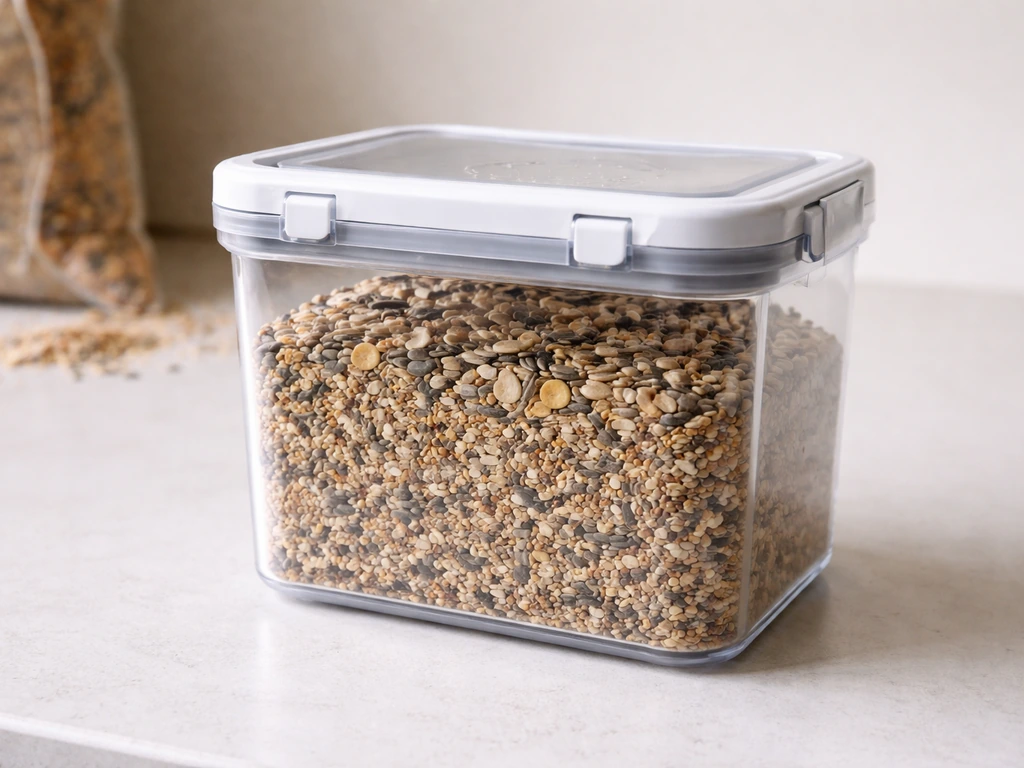
Stop storing seed in the bag it came in. Open bags are not airtight, and insects can chew through or squeeze into paper and thin plastic. Transfer seed to hard-sided, airtight containers: glass jars, heavy-duty airtight plastic bins, or metal cans with tight lids all work well. The goal is to cut off airflow and humidity exchange completely. If you are buying in bulk, consider portioning seed into smaller sealed containers so you are not opening the main supply every few days.
Control temperature and humidity
Cold, dry storage is the gold standard. A chest freezer is genuinely excellent for bird seed storage because it keeps both temperature and humidity low enough to stop insect development entirely. If you store seed in a garage, shed, or basement, aim for the coolest and driest spot available. Avoid areas where temperatures swing dramatically between day and night, as condensation inside containers is a real risk. Keep seed moisture content below about 12% as a target: this is the threshold below which most storage pests struggle to thrive.
Freeze new seed if you suspect contamination
If you buy bulk seed or have any reason to suspect a bag might already be carrying eggs (which are invisible to the naked eye), freezing is a reliable way to break the pest life cycle before it starts. At 0°F, a small package needs about 4 days in the freezer; a larger quantity needs closer to a week. Texas A&M pest management guidance suggests a deep freeze at -4°F for 7 to 14 days will kill most stored-product insects at all life stages. After freezing, let the seed return to room temperature before sealing it in your storage container, or condensation will raise the moisture content.
Keeping bugs away from your feeder
Clean feeders on a schedule
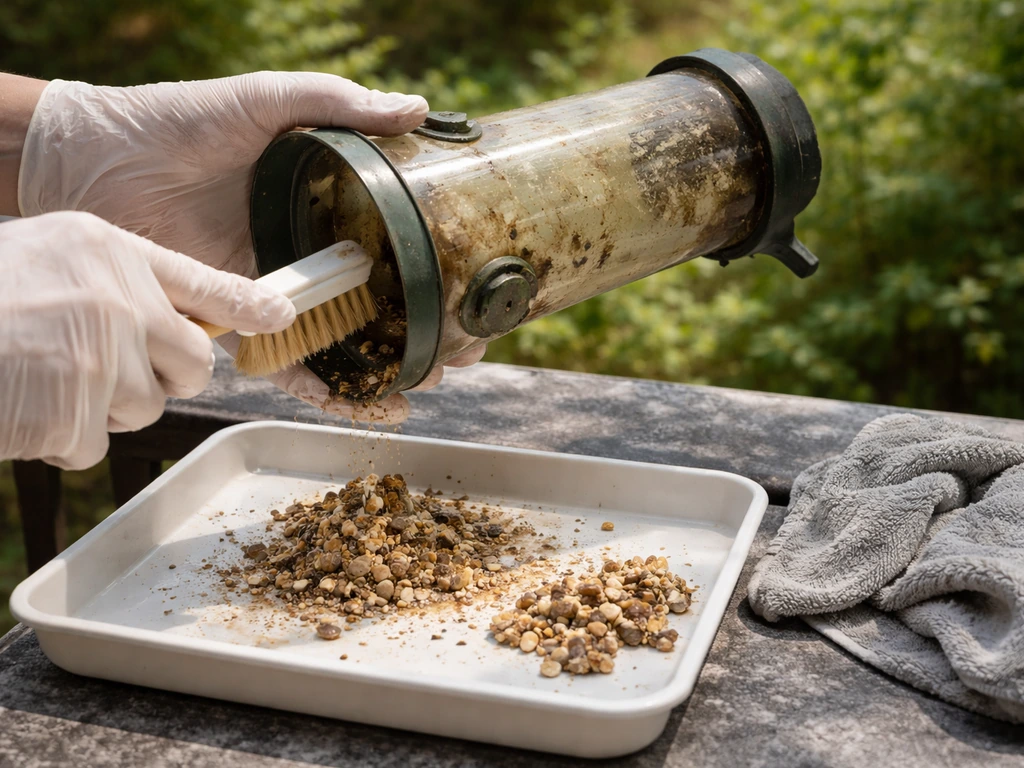
A dirty feeder is a pest incubator. Empty and scrub feeders every one to two weeks during warm months, and any time you see wet, clumped, or discolored seed. Remove all old seed first, discard it, and clean the interior surfaces with a mild bleach solution (roughly 1 part bleach to 9 parts water), then rinse thoroughly and let the feeder dry completely before refilling. Never just top off a feeder without checking what is already in it: old seed at the bottom can harbor larvae and mold even when it looks fine from the outside.
Clean the ground underneath too
Spilled seed and accumulated hulls under your feeder are just as important to manage as the feeder itself. Rake or sweep the area regularly and dispose of the debris rather than leaving it to decompose. After a period of wet weather, the Minnesota DNR recommends spreading a thin layer of lime (about 1/4 inch) over the cleaned area to suppress bacteria and mold in the soil. Be aware this can temporarily affect grass, but it is effective for hygiene.
Use tray design and placement to your advantage
Feeders with built-in drainage holes or mesh trays let rain water pass through rather than pooling under the seed. If your feeder does not have good drainage, consider a tray attachment with holes or switching to a tube feeder where seed stays relatively protected. Placement matters too: a feeder in a spot with good air circulation dries out faster after rain than one tucked under a dripping overhang or dense foliage. Mounting feeders on baffled poles rather than hanging them from tree branches also helps with ant access, since ants can carry in and further attract other insects.
Portion seed so it does not sit
Only put out as much seed as your birds will eat in two to three days, especially in warm or wet weather. A feeder that gets emptied frequently stays cleaner and drier than one that sits full for a week. This single habit change reduces bug problems more than almost anything else at the feeder level.
How to tell if you already have a problem
The earlier you catch an infestation, the easier it is to deal with. Here are the specific signs to look for, organized by pest type.
Indianmeal moth signs
- Silky webbing or fine threads clumped through stored seed
- Creamy-white larvae (small caterpillars) wriggling in or on seed
- Small reddish-brown moths flying near storage areas, walls, or ceilings
- Powdery frass (insect waste) mixed into the seed
- A musty or stale smell from the container
Merchant grain beetle signs
- Tiny flat brown beetles (about 2–3 mm) moving through seed
- Surface pitting or chipping on individual seed kernels
- Musty, rancid odor from the storage bin
- Visible larvae (small, pale grubs) in seed mass
Bird mite signs
- Tiny moving specks on feeder surfaces, hands, or nearby structures (barely visible without magnification)
- Bright red coloration after feeding (distinguishes fed mites from dark debris)
- Skin irritation or crawling sensation after handling feeders or working near active bird nests
- Large numbers concentrated around feeder mounting points or nest sites
Fungus gnat and general moisture-pest signs
- Small, slow-flying dark gnats hovering near the feeder or damp ground below
- Slime trails or clumped wet seed on the ground
- Visible mold (fuzzy gray, black, or white growth) on seed or in the feeder
- Strong musty or fermented smell from wet hulls under the feeder
One thing worth knowing: if you remove infested seed from a container and seal the container, you may still see adult Indianmeal moths flying in the area for a few weeks. Those are adults that developed from remaining pupae. Keep monitoring and do not assume the problem is gone just because the source has been removed.
What to do when seed is already infested
Throw it out or freeze it, depending on the stage
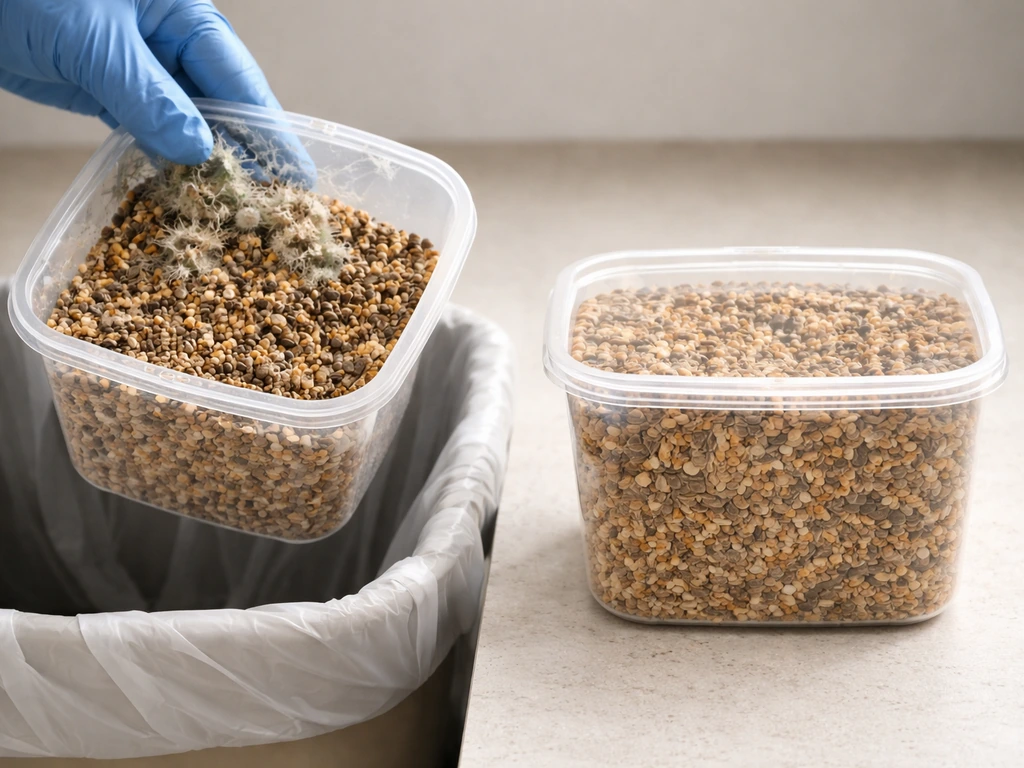
If you see active larvae, webbing, live beetles, or visible mold in your seed, discard it. Do not try to salvage moldy seed for birds: mold in bird seed is a genuine health risk, and the toxins some molds produce can harm birds. If you want to compare this with a different pest issue, the signs and fixes for bugs that live in bird seed start with identifying what is actually showing up in the bag.
Seal the infested seed in a bag and put it in an outdoor trash bin immediately. Do not leave it in your garage or near other stored food. If you caught the problem early and see only a few adult moths with no visible larvae or webbing in the seed itself, you can attempt to freeze the remaining seed at 0°F for at least a week to kill any eggs before reusing it, but when in doubt, throw it out.
Clean the storage container thoroughly
Empty the container completely, then vacuum out any remaining frass, larvae, or debris. Wipe interior surfaces with a solution of dish soap and hot water, then follow with a diluted bleach wipe-down (about 1 part bleach to 9 parts water). Rinse and let it dry completely, ideally in sunlight, before adding any new seed. Check lids and seals for cracks or gaps that might have allowed entry.
Deal with mite-infested feeders safely
If you are seeing large numbers of mites on your feeder, blank" rel="noopener noreferrer">wear gloves and use a scrub brush. Disassemble the feeder, scrub all parts with soapy water, rinse thoroughly, and let everything dry in direct sunlight (UV helps kill mites). Wash your hands and any clothing that contacted the feeder immediately after handling. If mites have spread to your deck or surrounding surfaces, scrubbing those areas with soapy water and rinsing thoroughly is effective. Avoid tracking mites indoors on your shoes or clothes. blank" rel="noopener noreferrer">When bird mites can't feed on birds, they will search for new hosts including humans and pets, so speed and thoroughness matter here.
Protect your household
During cleanup, wear a dust mask if you are dealing with heavily infested seed: frass and mold spores can become airborne when you disturb the seed. Wash hands thoroughly after any contact with suspect seed or feeders. Keep infested material sealed and away from indoor food storage areas. If you have an Indianmeal moth infestation that has spread into your pantry from bird seed stored inside the home, check all adjacent dried goods (cereal, pasta, nuts, dried fruit) for webbing or larvae, and seal or discard anything that looks suspect. Adults can wander well away from the original source, so inspect a broader area than just where you found the seed.
Reset and prevent the next round
- Move all bird seed storage to sealed, hard-sided containers outside the main living area if possible.
- Freeze any new bulk purchases for at least 4 to 7 days at 0°F before storing.
- Keep the feeder area raked and dry, and clear debris after every rainy stretch.
- Put out only 2 to 3 days of seed at a time during warm months.
- Check stored seed every two weeks for any early signs: smell it, look for webbing, and inspect the container lid seal.
- Deep-clean feeders every 1 to 2 weeks through summer, and at minimum monthly in winter.
The underlying logic is simple: bugs need moisture, warmth, and undisturbed time to establish. Cut off any one of those three things consistently and you will not have an infestation. Cut off all three and you will rarely see a problem at all. The seed is not the enemy here. Neglect is.
FAQ
Will bird seed attract bugs if I keep it completely dry and sealed?
Usually no. If the seed stays sealed in an airtight container and you store it in a cool, dry spot, you remove the conditions most pests need (humidity and undisturbed time). The main exception is if the bag was already infested when you bought it, so freezing a new bulk bag before long-term storage can still be a smart safeguard.
Do bird seed pests fly to my house, or do they stay outdoors?
Some do end up inside. Indianmeal moth adults can flutter around cabinets and nearby rooms after the initial seed source is removed. Also, the warm air of a garage or basement can help adults remain active longer, so if you see moths near indoor storage areas, check adjacent dried foods too, not just the feeder.
What’s the difference between bird mites on the feeder and the “bugs” people see in the seed?
Bird mites are driven by visiting birds, they are not primarily breeding in the seed mix itself. If you see lots of tiny moving specks on feeder surfaces and nearby structures, focus on cleaning the feeder and reducing mite transfer from the bird host. If you see webbing, larvae, or beetles inside the seed, focus on storage and feeder cleanliness instead.
Can I feed birds after freezing the seed, or does freezing change it?
Freezing mainly affects pest survival, it does not make seed unsafe by itself. Let the seed fully return to room temperature before opening or re-sealing, because condensation can raise moisture content and undo the benefit by encouraging mold or insect activity. Then use airtight storage going forward.
Why do I keep getting bugs even after I switch brands of bird seed?
The issue may be your storage conditions or the feeder setup, not the seed brand. Warm temperatures, bag-in-bag storage, open-air humidity, and wet spilled seed under the feeder can repeatedly reintroduce pests. A thorough freezer or container change for storage, plus strict feeder cleaning and limiting fill amount, is often what finally breaks the cycle.
Is it safe to top off a feeder with fresh seed when the old seed looks okay?
It’s usually a mistake. Even if the surface looks fine, old kernels at the bottom can hide larvae, frass, or mold. If you notice clumping, discoloration, or any dampness, remove and discard the old seed first, then refill only after the feeder is fully cleaned and dried.
What should I do if I see moldy seed in the feeder or container?
Discard it, do not try to salvage it for birds. Mold in seed can be a health risk, and some molds produce harmful toxins. After disposal, clean the feeder thoroughly and let it dry completely before adding new seed, otherwise you can carry spores back into the fresh bag.
How often should I clean feeders to prevent infestations?
During warm months, aim for a full empty-and-scrub every one to two weeks, and immediately after rainy weather or when seed becomes wet, clumped, or discolored. Quick rinses are not enough if seed has been sitting. Also clean around the area under the feeder because hull piles keep moisture-loving pests alive.
Do I need to throw away the entire bag if I find a few adult moths?
Not always, but you need to inspect carefully. If you see only a few adults with no visible webbing or larvae, you can freeze the remaining seed to interrupt eggs and life stages before reuse. If you find larvae, webbing, or active beetles, discard the seed and clean the storage container because larvae and frass can persist in crevices.
What’s the best way to prevent ants from bringing other insects to the feeder area?
Use physical barriers and feeder placement. Mount feeders on baffled poles rather than hanging from tree branches, and keep the area under feeders cleaned of spilled seed. Since ants can transport other small insects and also protect certain pests, reducing ant access often reduces bug activity overall.
How can I tell if the problem is insects in seed versus condensation or moisture only?
Look for signs of life or damage. Moisture alone may cause clumping or a musty smell, but larvae, webbing, live beetles, or visible frass point to active infestation. If the seed is damp without any signs of insects, focus on fixing storage humidity and feeder drainage, then monitor for changes over the next few days.