If you've opened a bag of bird seed and found something crawling, webbing, or flying around inside, you're dealing with a stored-product pest infestation. The good news: this is fixable today. The bad news: if you don't act on every bag and surface nearby, it will come back. Here's exactly what to do, step by step.
Bugs in Bird Seed: Identify, Remove, and Prevent Them

Maya Collins
3 Apr 2026
What bugs are you likely seeing in bird seed
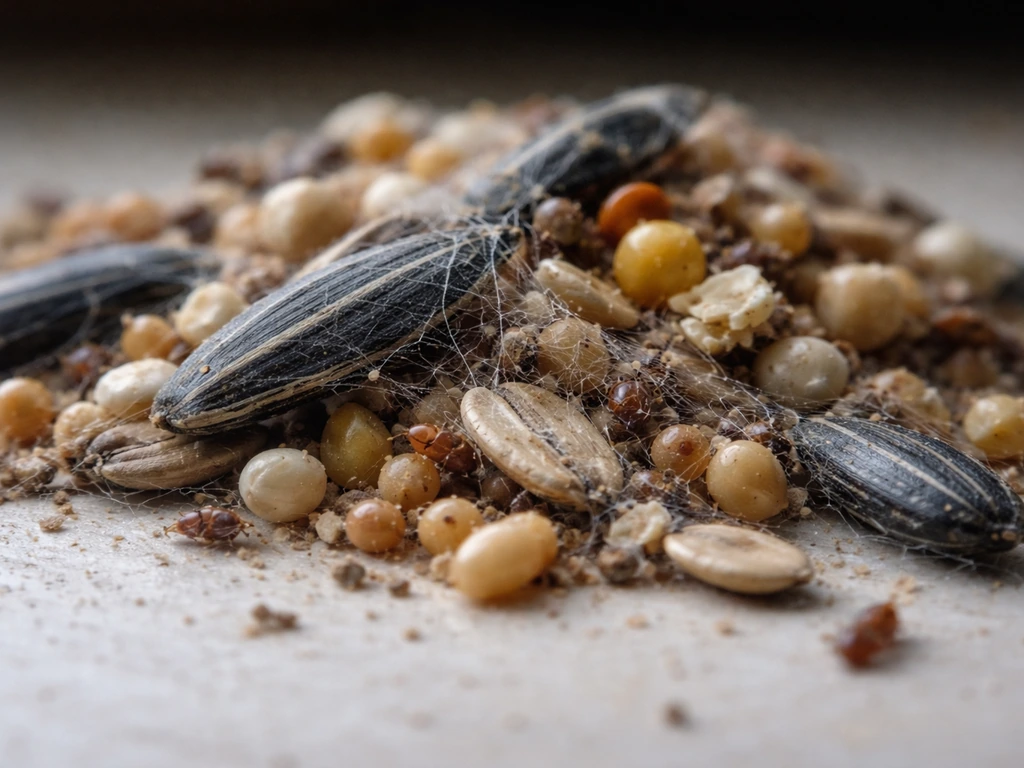
Most of the bugs people find in bird seed fall into three categories: moths, beetles, and mites. USU Extension’s Indian meal moth profile also lists bird seed among foods these moths attack and infest, which is why they show up in home seed supplies. Knowing which one you're dealing with helps you understand how far the infestation has spread and what cleanup looks like.
Indian meal moths
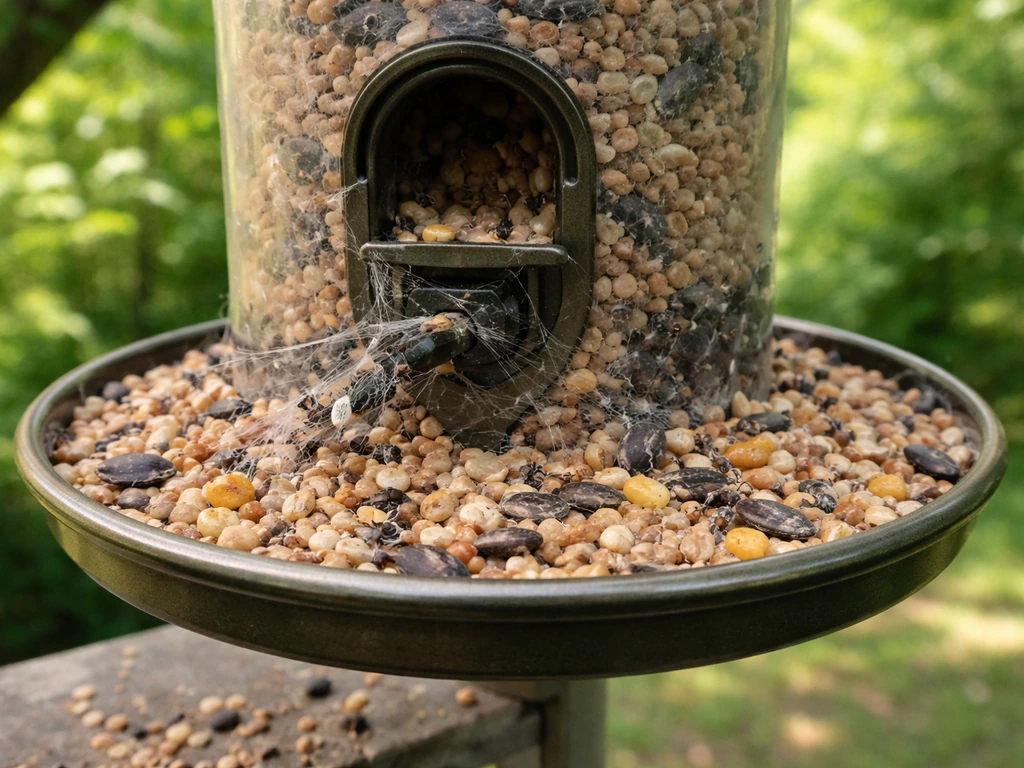
These are the most common culprit. Adult Indian meal moths have a wingspan of about 10 to 15 mm, with forewings that are gray near the head and reddish-copper toward the tips. The larvae are the stage you'll most often notice first: small, pinkish-white, worm-like caterpillars that produce silky webbing and matted clumps in the seed. Clemson Extension notes that the first sign of Indian meal moths is often those larvae crawling on walls, counters, or even ceilings near where you store the seed. The webbing and frass (insect droppings) they leave behind are key identifiers.
Warehouse beetles and flour beetles
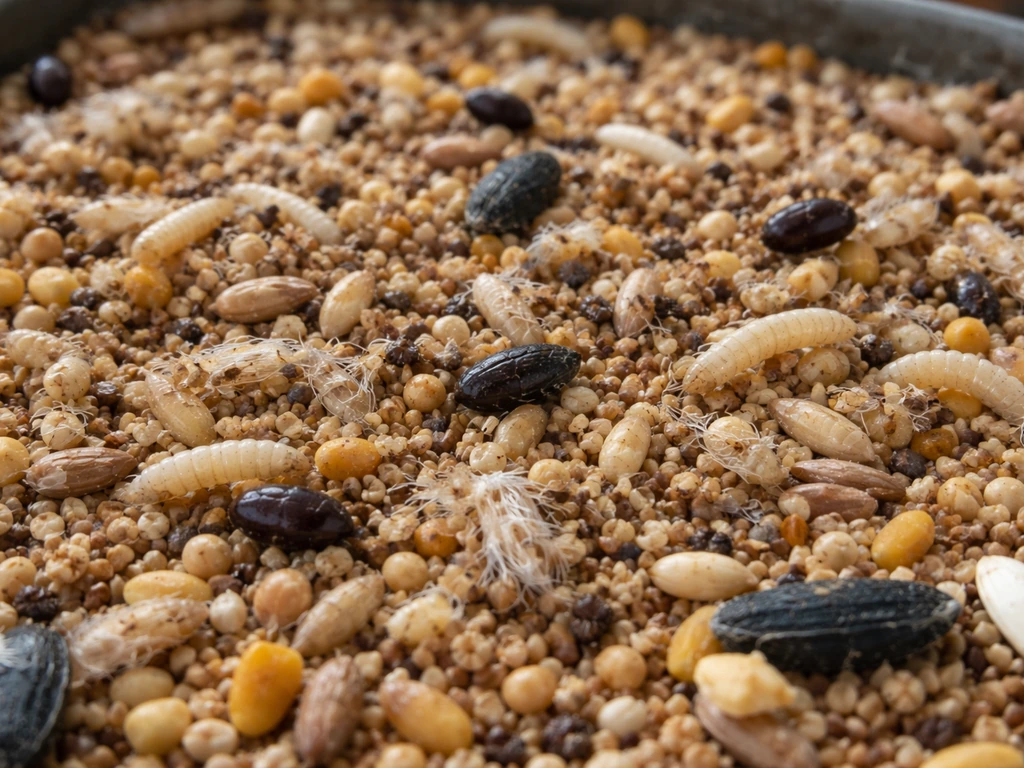
Warehouse beetles are a frequent problem in bagged grain and processed packaged food, including bird seed. Their larvae can go dormant (diapause) for up to two years in unfavorable conditions, which means they can survive long-term in an undisturbed bag sitting in a shed or garage. Flour beetles are similar: you may find all life stages (egg, larvae, pupae, and adults) mixed together in the same infested seed. Both produce secretions that can give seed a disagreeable smell, which is often the first thing people notice before they actually see an insect.
Mites and other tiny crawlers
If what you're seeing is very tiny and moving slowly through the seed, you may be looking at mites rather than insects. Mites in bird seed are a separate problem with slightly different treatment priorities, though the storage and hygiene fixes overlap significantly.
Why bugs get into bird food (most common causes)
Understanding how this happened helps you fix it permanently, not just for this bag. Bird seed does attract bugs, and there are predictable reasons why an infestation develops.
- Infested seed at purchase: Stored-product pests are most commonly introduced through an already-infested package. The eggs or early larvae are invisible at the time of purchase and only become obvious weeks later.
- Warmth triggers hatching: Eggs are laid and hatch once grain temperatures reach around 50°F or above. A bag that sat fine in a cold garage all winter can erupt with larvae as soon as spring arrives.
- Opened or unsealed bags: Indian meal moths can chew through plastic and cardboard packaging to reach seed inside. An opened bag left loosely rolled or clipped is an easy target.
- Heat and humidity in storage: Sheds, garages, and outdoor storage areas get warm and humid in spring and summer, accelerating the insect life cycle. Under warm conditions, Indian meal moths can complete their full life cycle (egg to adult) in as little as 45 days.
- Old seed sitting too long: Seed that's been stored for months without rotation gives insects time to breed through multiple generations undetected.
- Feeder and tray contamination: Wet seed, seed dust, and debris in feeders and trays are breeding grounds. Bugs can move from the feeder back into your seed supply or vice versa.
- Mixed seed composition: Bird seed blends with cracked corn, millet, and sunflower pieces offer diverse food sources that support multiple pest species simultaneously.
What to do right now when you find bugs
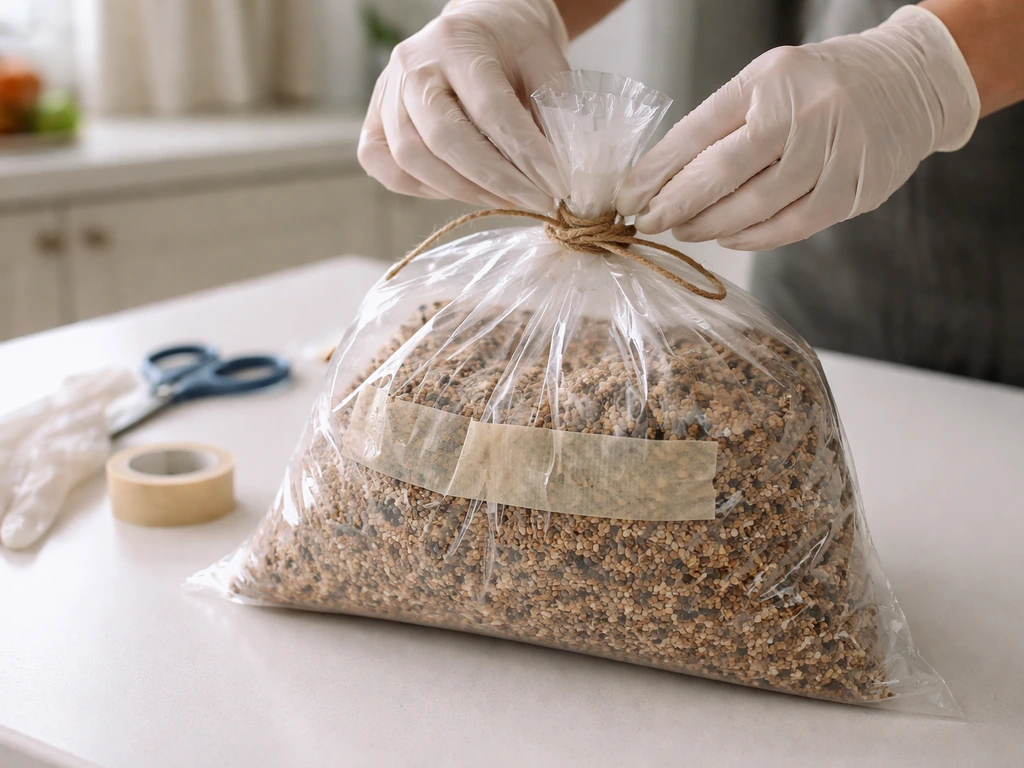
The first thing to do is contain the problem. Don't pour the seed out on the ground near your house or feeders, and don't leave the open bag sitting while you decide what to do. Here's your immediate action sequence:
- Seal the infested bag inside a heavy plastic bag right now. Tie or tape it shut.
- Move it outside or into a trash can with a lid. This stops adults from flying into other food storage areas in your home.
- Check whether you can salvage any of it (see the discard vs. keep section below). For most moderate-to-heavy infestations, just discard it.
- Do not shake the bag in your garage, shed, or kitchen. Adult moths and beetle adults are mobile and will immediately seek other food sources.
- If you saw any moths flying, note which rooms they were in. Indian meal moth females lay 100 to 400 eggs directly on a food source within about three days of emerging. Flying adults mean eggs may already be elsewhere.
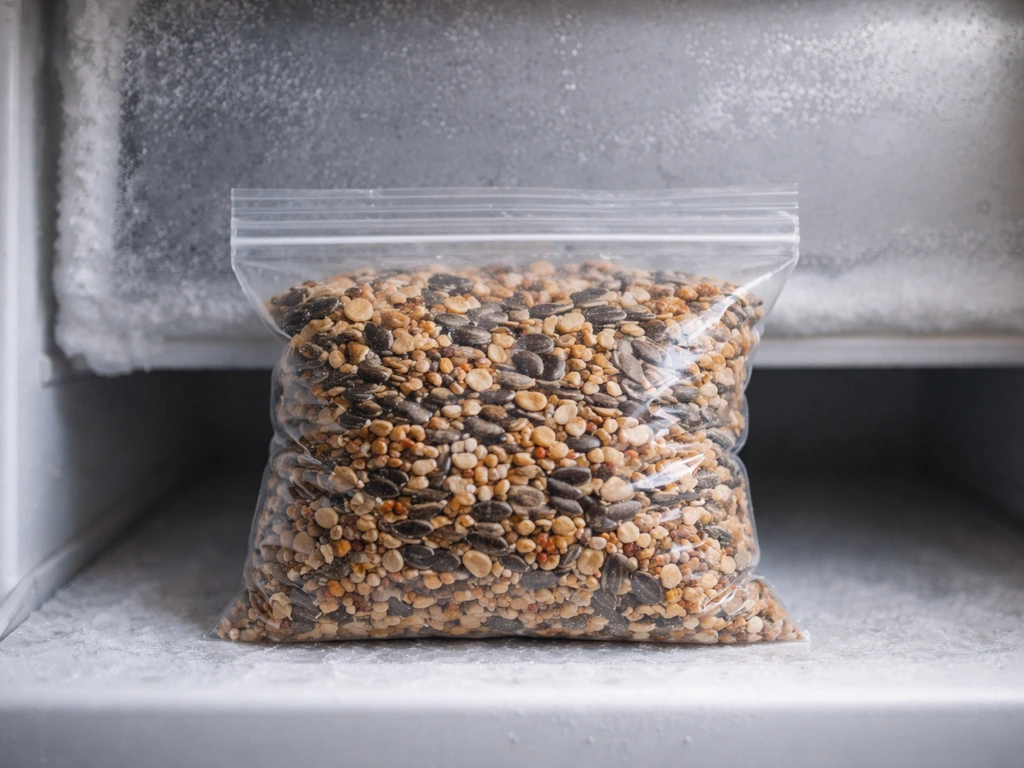
If the infestation looks light (a few insects, no heavy webbing, seed otherwise smells fine), you have a salvage option. Sift the seed through a coarse mesh to remove visible insects and debris, then freeze the seed at 0°F for a minimum of 4 days for small quantities, or up to a week for larger amounts. Freezing kills all life stages: eggs, larvae, pupae, and adults. Let it warm to room temperature before use to avoid condensation, since moisture in seed is a problem on its own.
How to inspect your seed supply and bird area
A single infested bag rarely means a single bag problem. You need to check everything nearby before you consider the situation handled.
Inspecting seed bags and containers
- Pull out every bag, bin, and container of bird seed in your storage area.
- Look for webbing on the outside of bags first, especially around seams and the top fold.
- Open each bag and inspect the seed surface: look for webbing, clumping, larvae, frass, or an off smell.
- Check the inside corners of bins and the undersides of lids for pupae or cocoons, which look like small silky capsules attached to surfaces.
- Feel along the sides and bottom of bags for moisture or matted seed clumps, both signs of larval activity.
- If you find any signs in one bag, treat every other bag in the same storage area as potentially exposed.
Inspecting the feeding area
Walk out to your feeders and trays. Wild bird seed bugs can establish in the feeder itself and re-infest fresh seed you add, so the feeding station is part of the inspection, not an afterthought. Look inside the feeder for webbing, larvae, or compacted wet seed at the bottom. Check beneath the tray or feeding station for seed debris on the ground, which is a separate insect reservoir. Also check the walls and ceiling of any enclosed storage space, since Indian meal moth larvae migrate away from the food source before pupating and you may find them on surfaces far from the actual seed.
Cleaning and cleanup steps for feeders, trays, and storage spots
Cleaning is where most people cut corners, and it's why infestations come back. Insects leave behind eggs, pupae, and frass in crevices that survive even after you remove all the seed. Here's how to clean properly:
Storage area cleanup
- Remove all seed, containers, and utensils from the storage area completely.
- Vacuum the entire area using a crevice attachment along corners, shelf edges, wall gaps, and the floor. Vacuuming physically removes eggs and pupae that soap and water won't wash away.
- Dispose of the vacuum bag or empty the canister outside immediately after.
- Wash all surfaces with soap and water, paying close attention to corners and crevices where larvae and pupae hide.
- Let the area dry fully before putting anything back. Moisture is a reinfestation risk.
Feeder and tray cleanup
- Empty the feeder completely and discard old seed.
- Disassemble the feeder as far as possible to access ports, seams, and the bottom reservoir.
- Scrub all surfaces with a brush, hot water, and a dilute dish soap solution. For plastic and metal feeders, a dilute bleach solution (one part bleach to nine parts water) is effective and bird-safe once rinsed and dried.
- Rinse thoroughly and let the feeder dry in the sun before refilling. Do not refill a wet feeder.
- Clean seed trays and the area beneath them. Rake up or sweep fallen seed from the ground below feeders.
Prevention: storage, handling, and feeder practices that stop reinfestation
Once you've cleaned everything out, this is where you lock in the fix. Many bugs that live in bird seed are endemic to stored grains and will return if you go back to the same storage habits. Prevention comes down to four things: container choice, temperature, rotation, and feeder hygiene.
Container and storage
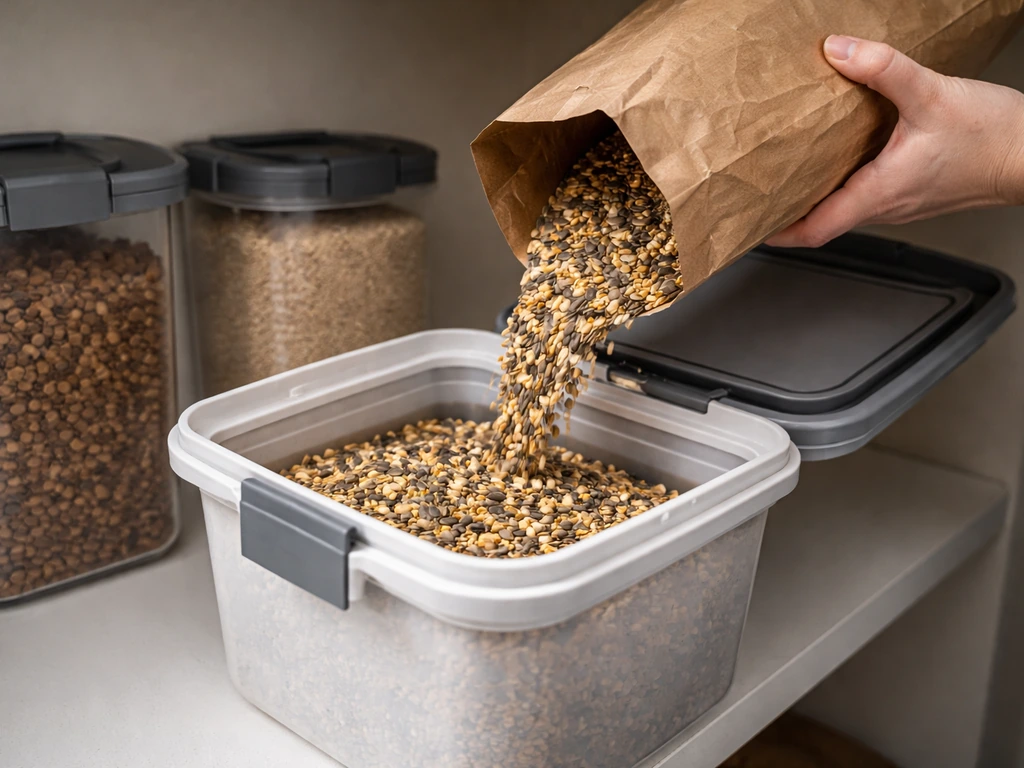
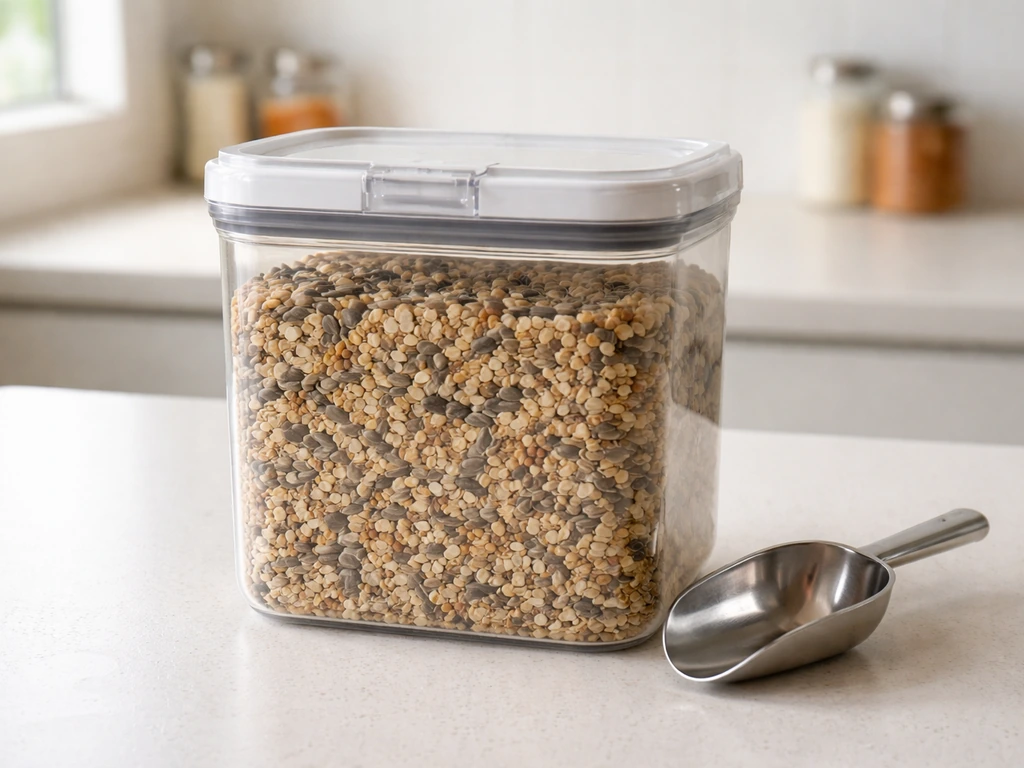
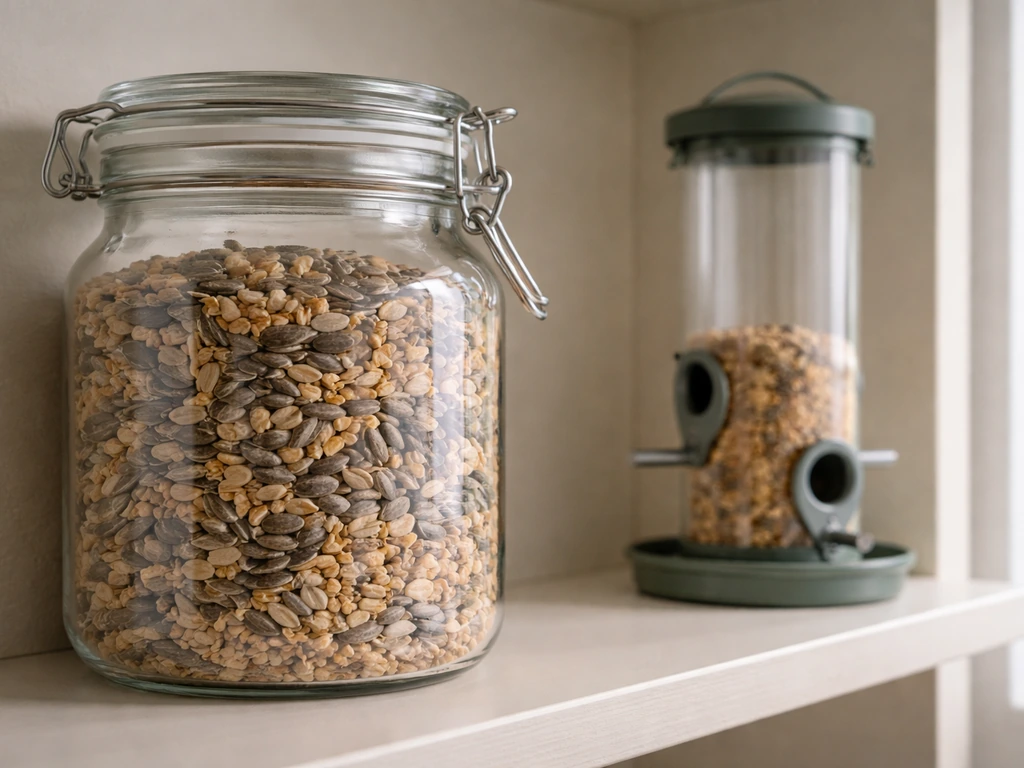
- Transfer seed from paper or plastic bags into tightly sealed, food-safe hard containers (metal or thick hard plastic with gasket lids). Moths can chew through thin plastic and cardboard.
- Store seed at cool temperatures. The ideal range for minimizing insect activity is 35°F to 45°F. A cool basement or climate-controlled garage is far better than an outdoor shed in summer.
- If cool storage isn't possible, freeze new seed for 4 days at 0°F before transferring to a storage container. This kills any eggs present at purchase.
- Buy in quantities you'll use within 4 to 6 weeks. Rotation matters more than bulk savings.
Feeder and handling habits
- Never top off a feeder with fresh seed on top of old seed. Empty and inspect the feeder every 1 to 2 weeks.
- Don't leave seed in feeders during hot, humid weather if birds aren't actively depleting it. Wet or heated seed in a feeder is an incubator.
- Use a dedicated scoop that stays with the seed bin. Cross-contamination from outdoor surfaces can introduce pests.
- Place pheromone sticky traps for Indian meal moths in your storage area. These catch male moths before they mate, reducing the chance of new egg laying.
- Check the seams and underside of your storage bin lid monthly for pupae during warm months.
A note on climate and season
If you live in a warm or humid region (the Southeast, Gulf Coast, or similar climates), you're at higher risk year-round and should treat prevention as a continuous habit rather than a seasonal one. In cooler northern climates, the higher-risk window is late spring through early fall when storage temperatures rise. In either case, outdoor storage in uninsulated sheds should be avoided if you've had infestations before.
When to discard vs keep, and how to stop bugs from spreading to other bags
Here's a straightforward decision framework based on what you're seeing:
| What you see | Severity | Action |
|---|---|---|
| A few adult insects, no webbing, seed smells fine | Light | Sift out insects, freeze at 0°F for 4 days, then use |
| Webbing present, some larvae visible, seed mostly intact | Moderate | Discard the affected bag; salvage only if webbing is confined to one section and seed smells normal after sifting |
| Heavy webbing, matted seed, larvae throughout, bad smell | Heavy | Discard entirely; do not attempt to salvage |
| Larvae or pupae found in nearby bags that look clean | Potential spread | Freeze all nearby bags as a precaution before use |
| Moths flying in your home or storage area | Active adult stage | Discard infested seed, set pheromone traps, clean all surfaces before restocking |
To stop bugs from spreading when you discard seed, double-bag infested material in sealed plastic bags before placing it in an outdoor trash bin. Do not compost infested seed. If you're discarding multiple bags, inspect the storage area walls and floor before sealing the trash, since larvae may have already migrated out of the bags onto surrounding surfaces.
One thing worth knowing about flying bugs that come from bird seed: once adult moths are in the air inside your home, they will seek out other stored food beyond bird seed. Check your pantry for any grain-based products (cereals, flour, pasta, dried fruit) if you've spotted flying moths indoors. The same discard and clean protocol applies to any pantry food showing webbing or larvae.
If you've dealt with this before and keep getting re-infested despite good storage habits, the issue is likely either infested seed at the point of purchase (a supplier problem worth addressing) or a pupation site in your storage area you haven't found yet. Go back through the inspection steps above and specifically look for cocoons in wall cracks, along ceiling edges, and behind storage shelves. That's almost always where the cycle is restarting.
FAQ
Can I just sift the seed and throw the bag away, will that be enough?
Yes. Moths and beetles can leave behind eggs, pupae, and debris that you cannot see, so you need to clean and seal the storage area, not just remove the seed. A practical sign you missed something is finding insects again within weeks of freezing or sifting, especially near wall cracks, ceiling edges, and behind shelves.
What’s the best way to sift bugs in bird seed without spreading them around?
Avoid using a kitchen sieve that can’t remove fine webbing and frass. A coarse mesh works for visible insects and clumps, but after sifting you still need freezing (or another kill step) for the remaining life stages. If you skip freezing, you may only reduce the visible bugs while the infestation continues to grow.
Why do I need to let bird seed warm up after freezing, and how careful do I need to be?
Freeze timing depends on quantity and how tightly you pack the seed, but condensation risk is the real edge case. Let frozen seed return to room temperature in its sealed container before opening, otherwise melted moisture can encourage mold and create a separate problem even after insects are killed.
How can I tell if the issue is mites versus beetles or moths?
If you notice very tiny, slow-moving creatures throughout the seed, treat it like mites even if you also see a few insects. Mite infestations can be harder to detect and may persist if you only remove caterpillars. In practice, focus on deep cleaning the storage area and ensure the seed is fully sealed and dried, since overlapping storage hygiene fixes matter most.
If I only find bugs in one bag, do I still need to check feeders and storage surfaces?
Not always. A bag can be infested in the middle or near the bottom, and adult moths may have already moved to surfaces before you see larvae. That’s why you should inspect feeder bottoms, tray areas, ground beneath stations, and nearby walls and ceilings, not only the exact bag you opened.
What should I do if I see flying moths indoors after finding bugs in bird seed?
If the flying bugs are adult moths, they can spread to other stored products that share similar food types, especially grain-based foods. When you see moths in your living space, check pantry items for webbing, larvae, or sticky residue around packages, then use the same clean-and-discard approach for any affected products.
Can I compost or recycle bird seed that had bugs in it?
Yes, but isolate first. Double-bag the infested seed in sealed plastic bags before it hits any outdoor bin, then inspect the immediate storage area walls and floor before you finish disposal, since larvae may have already migrated away from the bag. Don’t compost infested material because eggs and pupae can survive.
Why do I keep getting bugs in bird seed even after freezing and cleaning?
If you have repeating infestations, it often means either reintroduction at purchase or a hidden pupation site. The fastest decision aid is to redo the surface inspection specifically for cocoons in wall cracks, along ceiling edges, and behind shelving, then compare timing: if it restarts soon after adding new seed, supplier or newly added product is more likely.
What kind of storage container works best for preventing bugs in bird seed?
Use a sealed, airtight container to reduce the chance that adults lay eggs or that larvae develop inside. Airtight storage is particularly important if you live in warmer, humid regions, because higher-risk conditions support faster life cycles, so the benefit of prevention is greater year-round.
How does rotating bird seed help, and how often should I replace old seed?
Rotation matters even with good containers. If you store seed for long periods, you’re giving any leftover eggs or debris more time to mature, especially when storage temperatures rise. A practical rule is to keep seed usage cycles short and avoid topping off old seed with new without checking the container interior.