Squirrels, raccoons, rats, mice, deer, opossums, and a surprising number of birds you never intended to feed all eat backyard bird seed. The birds you want at your feeder (cardinals, finches, chickadees, and sparrows) are competing with a long list of uninvited guests, and the fix depends entirely on knowing which animal is actually showing up. This guide walks through every common visitor, how to identify which one you're dealing with, and what to do about it today.
What Animals Eat Bird Seed and How to Stop Them
Maya Collins
26 Apr 2026
What's in bird seed and why everything wants it
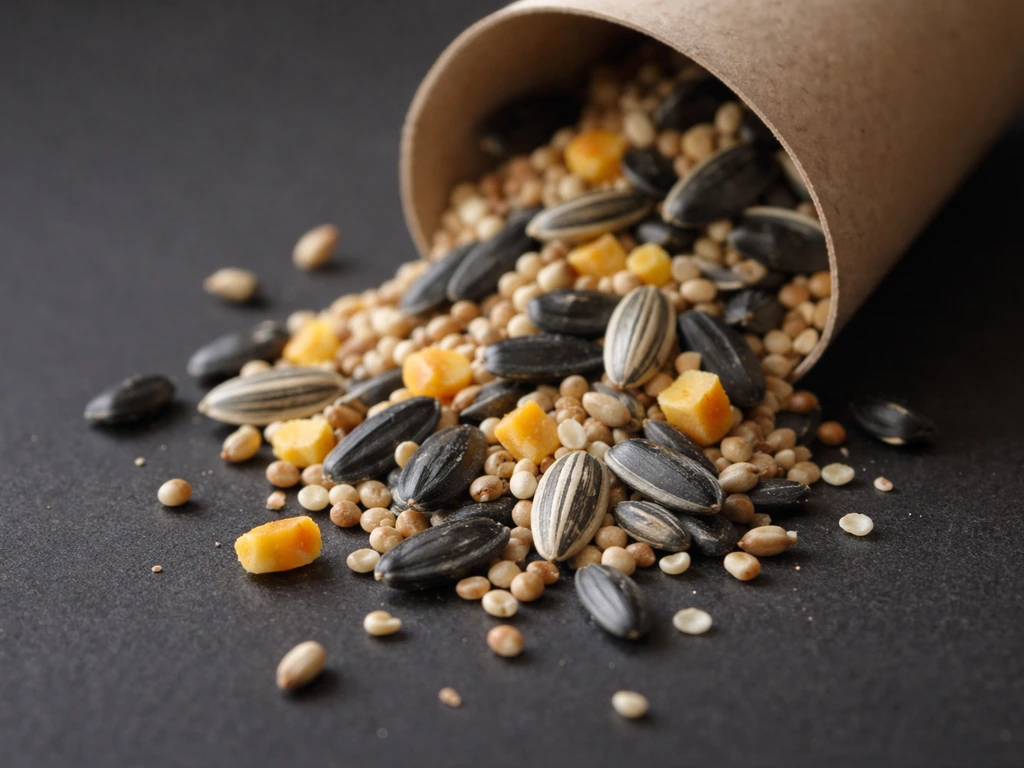
Commercial wild bird mixes are calorie-dense by design. A typical blend contains black oil sunflower seed, striped sunflower, white or red millet, cracked corn, and often peanut pieces or safflower. Some premium blends add nyjer (also called niger or thistle seed), sunflower chips, and raw split peanuts. That combination of fat, protein, and carbohydrates is essentially a high-energy buffet, and it attracts anything with a nose or eyes sharp enough to find it. Sunflower seeds run about 26% fat. Peanuts run even higher. Cracked corn is pure starchy carbohydrate. From a wildlife standpoint, a filled feeder is one of the most reliable calorie sources in your yard, which is exactly why so many animals target it.
Safflower deserves a special mention because it sits in an interesting middle ground. It's high in protein, fat, and fiber, and it's strongly associated with attracting cardinals, chickadees, doves, titmice, and house finches. It also has a slightly bitter taste that squirrels and many nuisance birds tend to avoid, making it a useful tool for selective feeding. Nyjer seed works similarly as a specialist feeder ingredient, primarily drawing in finches and not much else.
Which birds actually eat which seeds
Not every bird that visits eats every seed type. Knowing which species targets which seed helps you diagnose what's going on at your feeder and set things up more intentionally.
| Bird | Preferred Seeds | Feeding Notes |
|---|---|---|
| Northern Cardinal | Safflower, black oil sunflower, cracked corn, peanut pieces | Prefers platform or tray feeders; strong bill cracks hulls easily |
| American Goldfinch | Nyjer, sunflower chips, millet | Strictly granivorous; uses a specialized bill to extract seed quickly |
| House Finch / Purple Finch | Black oil sunflower, nyjer, safflower, millet | Clings well; comfortable at tube feeders |
| Chickadees | Black oil sunflower, safflower, peanut pieces | Takes one seed at a time, flies off to cache or eat it |
| Mourning Dove | Millet, cracked corn, safflower | Ground feeder; picks up spilled seed below the feeder |
| Nuthatches / Titmice | Sunflower, safflower, peanuts | Strong clinging ability; often seen on hanging feeders |
| Sparrows | White millet, cracked corn, milo (in some regions) | Primarily ground feeders; drawn to seed scattered under feeders |
| Starlings / Grackles / Blackbirds | Cracked corn, millet, sunflower | Prefer upright platform feeding; can crowd out smaller birds |
Finches are worth a closer look because they shell sunflower seeds at an almost alarming speed using a specialized bill structure that lets them crack and strip the hull in one motion. If you're finding piles of neat, split shells directly under your tube feeder, that's finch activity. Starlings, grackles, and blackbirds are a different problem altogether. They prefer upright feeding positions and can show up in flocks large enough to empty a feeder in an hour. Feeder designs that force birds to hang upside down or feed from below exploit a behavioral mismatch: starlings and grackles typically won't feed in that position, so they move on. Smaller birds like chickadees and finches have no problem clinging from below.
Non-bird animals that raid bird feeders
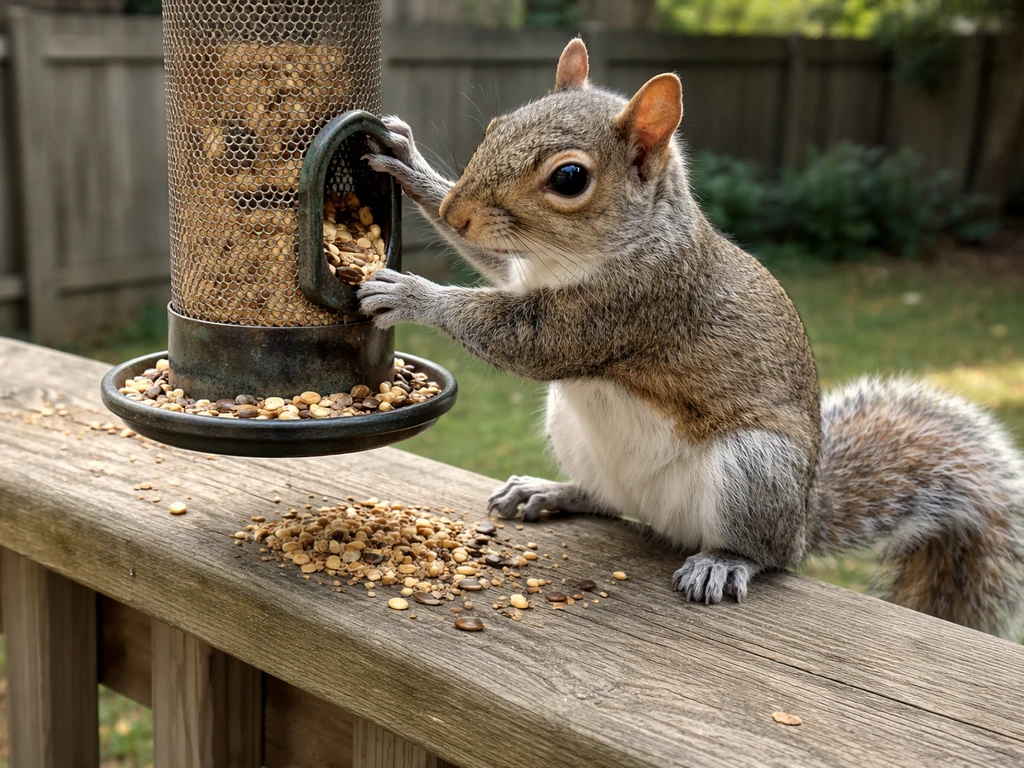
This is where the visitor list gets long. Nearly every common backyard mammal will eat bird seed if given the chance, and a few reptiles and insects will too in warm climates.
Squirrels
Squirrels are the most common non-bird seed thief by a wide margin. Eastern gray squirrels, fox squirrels, and red squirrels all target sunflower, peanuts, and corn heavily. They're agile enough to reach most standard feeders by jumping from fences, trees, or rooftops, and strong enough to physically dismantle poorly secured feeders. They typically eat on-site or cache seeds nearby.
Raccoons
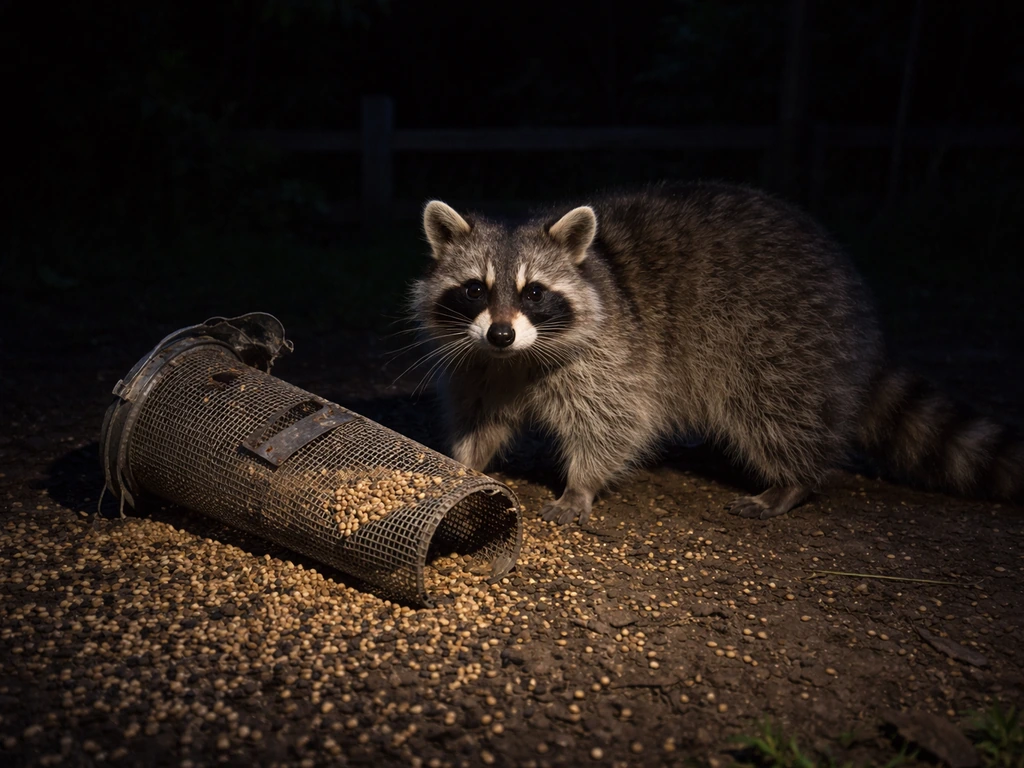
Raccoons are primarily nocturnal and will pull feeders down, pry open lids, and tear through mesh or plastic to reach food. They're strong and dexterous, so feeder damage (bent wire, broken ports, tipped-over pole systems) is a reliable sign of raccoon activity rather than squirrel activity. They don't just eat seed either. A raccoon that visits your feeder may also disturb nearby nesting birds or other wildlife in the process.
Rats and mice
Rodents are serious feeders and serious hygiene risks. Rats (Norway rats especially) and house mice are attracted to any seed that falls to the ground, and they'll gnaw through plastic storage containers and feeders to reach seed directly. Their activity is often nocturnal, and the presence of droppings near your feeder or storage area is an almost certain indicator. In the UK, common night-time bird seed raiders include rodents like rats and mice as well as nocturnal mammals such as raccoons what animals eat bird seed at night UK. Consistent seed spillage under feeders creates exactly the habitat conditions rodents look for.
Deer
White-tailed deer will stand at or beneath feeders and eat whatever is accessible, including reaching up to knock seed loose. They favor platform feeders and anything close to ground level. Deer pressure is more common in suburban and rural areas and tends to increase in fall and winter when other food sources shrink.
Opossums, chipmunks, and bears
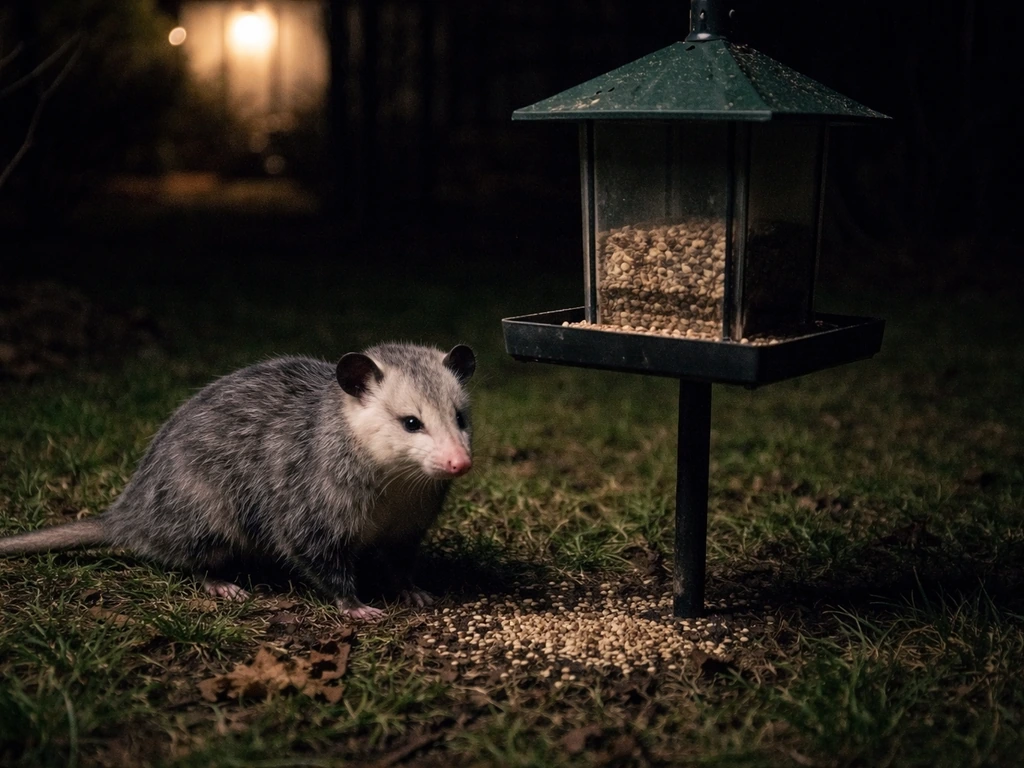
Opossums are opportunistic ground feeders and will eat spilled seed along with anything else they can find. Chipmunks cache seed aggressively and can empty a feeder surprisingly fast for their size. In areas where black bears are present (much of the eastern US, the Rockies, and parts of the Pacific Northwest), a bird feeder is essentially a bear attractant. Bears can destroy feeders completely and, once habituated to a food source, become a genuine safety problem. Many state wildlife agencies recommend taking feeders down entirely from spring through fall in bear country.
How to figure out who's visiting your feeder
You don't always catch the culprit in the act. But the evidence left behind almost always tells the story clearly if you know what to look for.
- Neat split shells in a pile directly under a tube feeder: finches shelling sunflower seeds
- Whole seeds cracked open and scattered across a wider area: squirrels or larger birds like cardinals eating on-site
- Feeder tipped, bent, or pulled apart with physical damage: raccoons or bears
- Seed disappearing very fast with no shells left: squirrels caching whole seeds, or a flock of grackles/starlings consuming everything
- Small droppings (rice-grain size) near the feeder or under it: rodents (rats or mice)
- Larger cylindrical droppings near the feeder: raccoons or opossums
- Hoof prints or disturbed soil around ground-level feeders: deer
- Tracks in mud or soft soil: use a track ID guide; raccoon tracks look like small handprints, squirrel tracks show 4 toes front and 5 toes back in a bounding pattern
- Seed level dropping overnight with no daytime explanation: nocturnal visitor (raccoon, opossum, rat, or flying squirrel)
If you're not sure whether you're dealing with a nighttime visitor, a simple trail camera pointed at the feeder for two or three nights will answer the question definitively. Nocturnal seed theft is often caused by raccoons, rodents, or other nighttime visitors, so the first step is identifying which animal you’re dealing with. For more focused guidance on specifically nighttime seed theft, that's a topic worth exploring on its own since the visitor list and deterrents shift considerably after dark.
Practical ways to stop unwanted seed raiders
Squirrel-proofing the right way
A pole-mounted baffle system is the most reliable long-term squirrel deterrent. Mount the baffle between 4 and 4.5 feet off the ground on a smooth metal pole, and position the whole setup at least 8 feet away from any fence, deck railing, tree branch, or structure a squirrel can jump from. That 8-foot clearance is non-negotiable. Squirrels can clear 6 to 7 feet horizontally from a standing start, so anything closer just becomes a launch pad. A baffle that's too low is equally useless because squirrels will climb past it.
Dealing with raccoons
Raccoons are strong enough to defeat most basic baffles if they can reach the feeder from above. A smooth metal pole with a wide cone baffle works, but you also need to eliminate overhead access points (tree branches hanging over the feeder area). Bringing feeders in at night is the simplest and most effective solution if raccoon pressure is high. Raccoons are almost entirely nocturnal, so birds miss nothing if you pull the feeder inside before dark and put it back out in the morning.
Reducing rodent pressure
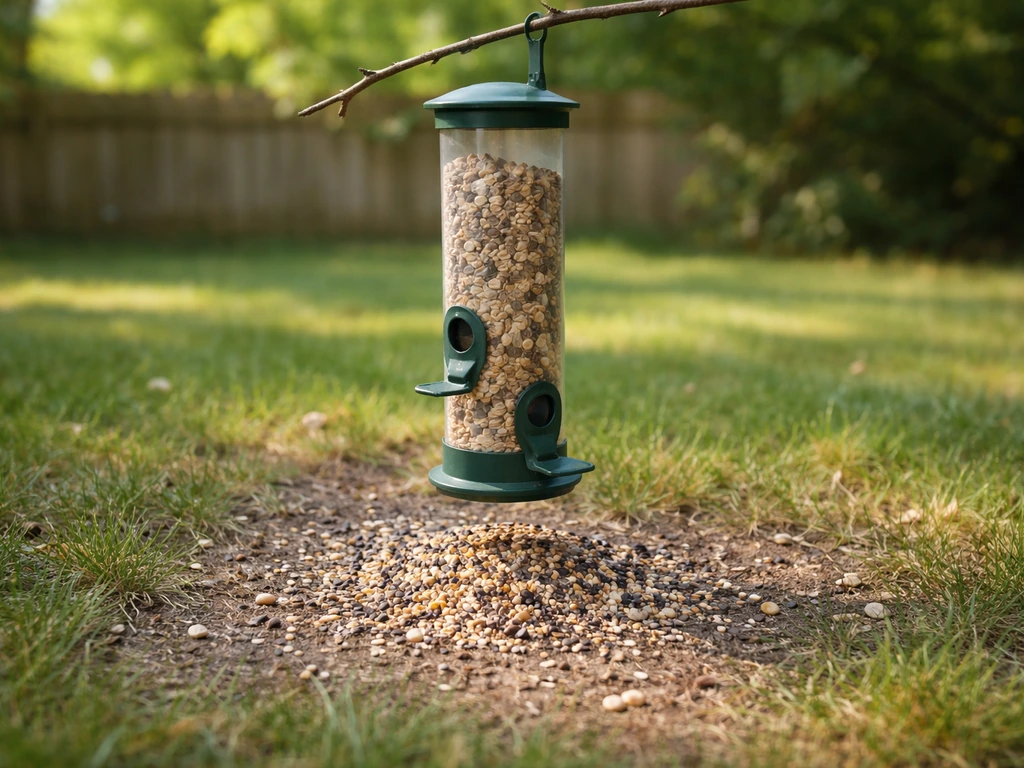
Rodents are primarily attracted to seed that lands on the ground. Reducing spillage is the single most effective control measure. If your dog is targeting bird seed, use the same ideas like reducing spillage and keeping seed contained to block access. Use a no-mess seed blend (hulled sunflower chips, shelled peanuts, or nyjer) so there's nothing for ground feeders to collect. Add a seed catcher tray under the feeder to intercept falling seed, and empty it daily. Never let seed accumulate in a pile on the ground. If you already have a rodent problem, suspend feeding temporarily until the population disperses.
Keeping bully birds off feeders
Switch to feeders that require birds to hang upside down or feed from ports on the underside. Starlings and grackles strongly prefer upright feeding and will typically skip feeders that don't accommodate that posture. Cage-style feeders that allow smaller birds to pass through but exclude larger birds are also effective. Removing cracked corn from your mix helps too, since corn is a primary attractant for grackles, blackbirds, and starlings. This problem tends to peak during spring and summer migration windows when these birds move through in large numbers.
Regional notes
In the southeastern US and parts of the Southwest, opossums are far more common feeder visitors than in northern states. Bear activity near feeders is a real concern in most of the eastern mountain states, much of the Rockies, and the Pacific Northwest. In those regions, many wildlife agencies recommend bringing feeders in from April through November. In cold northern climates, seed consumption spikes in winter as birds and mammals need more calories to stay warm, so filling feeders more frequently and monitoring for ice-crusted or frozen seed becomes important.
Storage, weather, and keeping seed safe to eat
Storing seed correctly
Seed stored improperly is the fastest way to create both a pest problem and a bird health problem. Store seed in a metal container with a tight-fitting lid. Rodents can chew through plastic bins, sometimes within a day. Keep the container in a cool, dry location, ideally a garage or shed rather than outdoors. Don't store more than a two- to four-week supply at a time, especially in humid climates where seed can go rancid or begin to mold quickly.
Wet and sprouted seed
Rain-soaked seed clumps together, which accelerates mold growth and fermentation. Sprouted seed (you'll see small green shoots emerging from seeds in the tray) isn't immediately toxic, but it signals moisture conditions that support Aspergillus and other mold growth. Aspergillosis is a serious respiratory disease in birds caused by inhaling Aspergillus spores, and moldy seed in a feeder is a documented exposure risk. If seed is wet or sprouting, remove it entirely, don't just add dry seed on top. Let the feeder dry out completely before refilling.
Cleaning feeders properly
Clean feeders every one to two weeks during heavy use periods, and immediately any time you find moldy, clumped, or soiled seed. Cleaning and sanitation are recommended to help prevent disease outbreaks that can spread at feeders, including salmonellosis blank" rel="noopener noreferrer">prevent large-scale outbreaks. The standard method recommended by ornithological groups and wildlife agencies is blank" rel="noopener noreferrer">a 10% bleach solution: 1 part bleach to 9 parts water. Disassemble the feeder, scrub it with the solution, rinse thoroughly with clean water, and air-dry completely before refilling. This prevents both mold regrowth and chemical residue in the seed. If you prefer to avoid bleach, a hot water and white vinegar solution (1 part vinegar to 9 parts water) is a reasonable alternative for routine cleaning, though bleach is more effective for disinfecting when disease has been observed near your feeders.
Ground cleanup
Seed hulls, droppings, and spilled seed accumulate under feeders and become a moldy, disease-spreading mess that attracts rodents. Rake or sweep under the feeder at least once a week. In wet climates or rainy seasons, do it more often. If seed has been soiled by animal droppings, treat it as contaminated waste and dispose of it rather than leaving it for ground-feeding birds to eat.
Do this today: a quick action checklist
- Identify your visitor using the damage signs listed above. Check for droppings, footprints, shell patterns, and the timing of seed loss.
- If seed is wet, clumped, or sprouting: empty the feeder now, rinse it with a 1:9 bleach-to-water solution, rinse again with clean water, and let it air dry before refilling.
- Sweep or rake the area under the feeder and dispose of accumulated hulls and any soiled material.
- Move your feeder pole at least 8 feet from trees, fences, or structures and mount a cone baffle 4 to 4.5 feet off the ground if squirrels are the problem.
- If raccoons are visiting, start bringing feeders inside at night.
- Switch to a no-mess or hulled seed blend to reduce ground spillage and rodent attraction.
- If you're in bear country and it's spring or summer, take the feeders down and wait until late fall or winter to put them back up.
- Move your seed storage into a metal container with a locking or tight-fitting lid.
- If bully birds are the issue, swap to an upside-down or cage-style feeder and remove cracked corn from your mix.
FAQ
If I see seed shells or piles under my feeder, does that always mean finches are to blame?
Not always. Neat piles of split sunflower hulls strongly suggest finch activity, but starlings and grackles can also leave fragments if they’re dropping bits while feeding. The deciding clue is whether shells are mostly uniform and “clean” (finches) versus mixed with corn hulls and other debris, plus larger footprint and droppings nearby (often indicating larger birds or rodents).
What’s the best way to tell whether the problem is squirrels versus raccoons?
Look at the pattern of damage and timing. Squirrels typically chew or dismantle feeders in one spot and cache seeds nearby, they are more visible during daylight. Raccoons more often pull the whole feeder down, pry lids, and destroy mesh or plastic, and their activity is usually concentrated at night. Bent wire, broken ports, or a tipped pole strongly points to raccoons.
Will changing my bird seed type completely stop animals from eating it?
It can reduce the odds for specific visitors, but it rarely eliminates all seed thieves. For example, safflower and nyjer can help reduce squirrel and general nuisance bird pressure, yet squirrels and opportunistic mammals may still switch to whatever is accessible. The most reliable “stop” comes from reducing spillage, securing storage, and using feeder designs that match the bird’s feeding style.
Do animals like rats and mice eat bird seed even if I don’t see any seed on the ground?
Yes, they can, but they rely on access points. If seed rarely lands outside the feeder, rodents often turn to gnawing through feeder housings or storage containers instead. Check for small tooth marks on plastic bins, look for droppings along walls or near the storage area, and verify the feeder base and tray are installed and emptied daily.
How often should I clean the tray or area under the feeder to prevent mold and pests?
A good baseline is sweeping or raking under the feeder at least weekly, and more often during wet weather. During heavy use periods or if you notice clumping, clean more frequently and empty seed catchers daily. This prevents both mold growth and the “foraging runway” rodents use to find food.
I removed wet seed, but animals keep coming. Should I keep feeding while I fix the problem?
Temporarily reducing or stopping feeding can help if rodents are already established, because it removes the calorie source that keeps them returning. If your goal is raccoon control, bringing feeders in before dark is usually more effective than total shutdown. If you have birding priorities, consider switching to a spillage-resistant setup and smaller, more frequent refills rather than leaving a large amount out.
What if my feeder attracts both nuisance birds and seed-eating mammals, how do I choose what to change first?
Start with the biggest lever: eliminate ground seed and secure storage. Then adjust feeder design, such as using ports or underside feeding for larger pest birds, and use a properly mounted baffle for squirrels. Seed mix changes come last, because even a “selective” blend can still attract animals if spillage and access points remain.
Are pole-mounted baffles always effective for squirrels?
They are highly effective only when installed correctly. If the baffle is too low, squirrels can climb past it, and if it’s too close to branches, fences, or deck rails, they can launch from those access points. Make sure there’s at least 8 feet of clearance from any jump-off structure, and position the baffle on a smooth, unobstructed metal pole.
When I use underside or hanging-feeder designs, will smaller birds be able to feed comfortably?
Often yes. Many of the target species, like finches and chickadees, readily cling upside down or from below. The key is choosing a feeder with appropriately sized openings and stable perches so smaller birds can grip reliably, and then monitoring for a few days to ensure they’re actually using it.
Does bringing feeders in at night reduce bird benefits as well as pest visits?
It can, but the tradeoff is usually worth it if raccoon pressure is high. Birds that feed during daylight typically won’t be affected much if you take the feeder inside before dark and return it in the morning. If you have nighttime-active birds in your region, you may need an alternate feeding strategy such as different feeder placement or more aggressive raccoon-proofing.
How can I store seed so rodents cannot access it quickly?
Use a metal container with a tight lid, and keep it in a cool, dry garage or shed. Avoid leaving seed in plastic tubs, because rats can chew through them quickly. Also limit how much you store at one time (roughly a few weeks), so you reduce the time a persistent problem has to exploit an easy food source.
Is sprouted or slightly clumped seed always dangerous to birds?
Sprouted seed is a moisture signal, not automatically instant poison, but it strongly suggests conditions that promote mold and fungal spores. The safer approach is to remove it entirely if it looks wet, clumped, or actively sprouting, then let the feeder fully dry before refilling. When in doubt, prioritize hygiene over topping off with fresh seed.
Next Article
Will Possums Eat Bird Seed? What to Expect and How to Stop It
Learn if possums eat bird seed, signs they visited, and bird-safe fixes to stop feeding and prevent mold.