Yes, possums will absolutely eat bird seed. They are opportunistic omnivores and will eat almost anything they find, including seed on the ground, in low trays, and in feeders they can physically reach. They are not picky about seed type, but they are especially drawn to high-calorie options like black oil sunflower seed, cracked corn, and suet. The good news is that a few straightforward changes to your feeder setup can stop them almost entirely. If the goal is to stop your dog from eating bird seed, remove the seed spills and keep feeders and fallen seed out of reach stop them almost entirely.
Will Possums Eat Bird Seed? What to Expect and How to Stop It

Maya Collins
25 Apr 2026
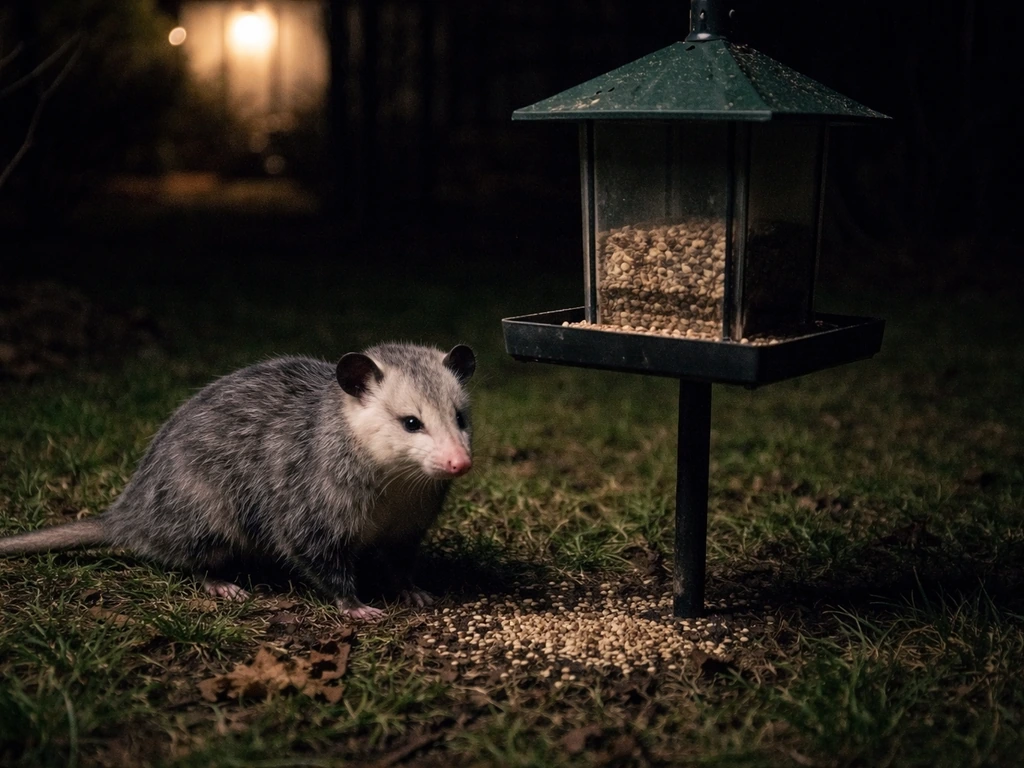
Do possums eat bird seed? What they actually target at feeders
Virginia opossums (the only marsupial native to North America) are true generalists. In the wild they eat insects, carrion, fruit, small animals, and whatever else crosses their path. Bird seed fits neatly into that profile. They are not seed specialists the way squirrels are, but they are persistent and will work their way through a full tray feeder or clean up everything that has fallen to the ground under your feeders overnight.
The most important thing to understand is where possums eat. They almost always work from the ground up. They will eat spilled seed off the ground first, then move to low platform or tray feeders they can climb onto, and occasionally access hanging feeders if there is a nearby structure to launch from. If you are dealing with a question like what animals eat bird seed at night uk, the same general idea applies: most visitors are attracted by accessible spilled seed seed on the ground. This means the single biggest driver of possum visits is seed on the ground, not the feeders themselves.
Possums are nocturnal, slow-moving, and not particularly afraid of feeders or feeder areas. They will visit repeatedly once they learn your yard has food. In urban and suburban areas where natural food sources are limited, this can happen year-round, with visits peaking in late fall and winter when other food is scarce and in late spring when females with young joeys are under extra nutritional pressure.
How to tell possums from other feeder pests
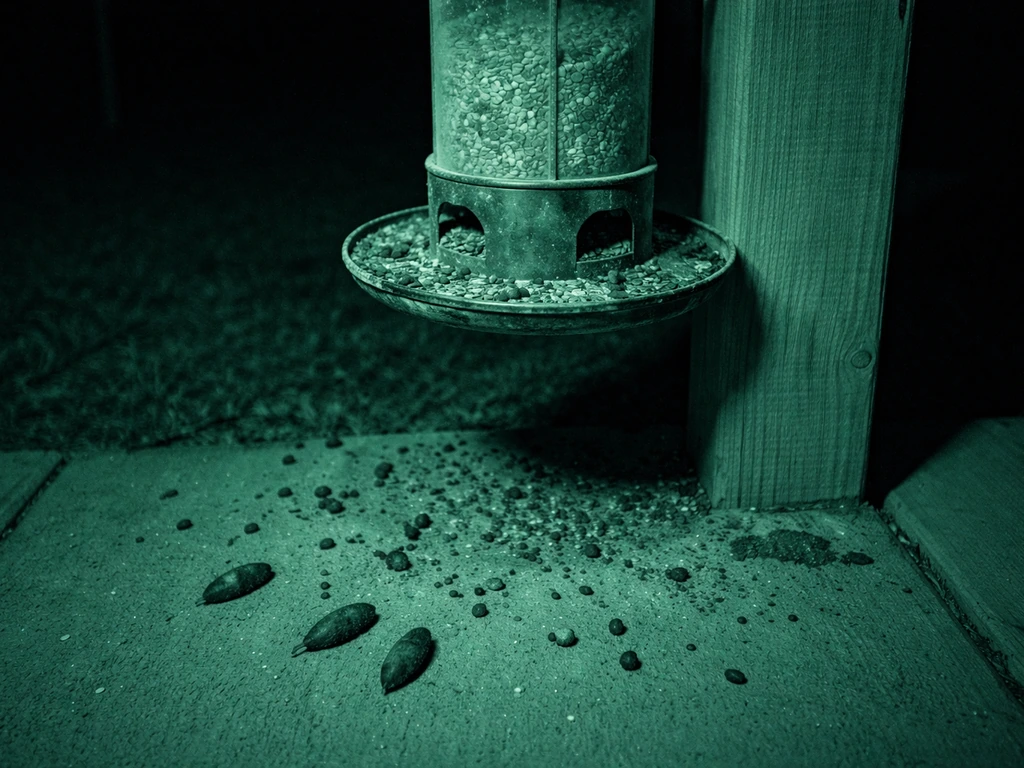
Before you can fix the problem, you need to confirm it is actually possums and not squirrels, rats, raccoons, or deer. Each pest leaves different clues. Possums are nocturnal (rarely active before dusk), slow-moving, and tend to eat seed methodically without scattering it widely. Here is how to compare signs:
| Animal | Timing | Physical signs | Feeder damage |
|---|---|---|---|
| Possum | Night only | Cone-shaped droppings, muddy paw prints (5 toes, rear feet look almost hand-like), greasy smears on feeder poles | Seed gone from trays or ground; low feeders tipped or dislodged |
| Raccoon | Night only | Larger hand-like prints (5 fingers, more uniform), scattered seed, latches undone or broken | Feeders physically dismantled or pulled apart |
| Rats/mice | Night (and dawn/dusk) | Small cylindrical droppings near seed piles, gnaw marks on feeder plastic or wood | Seed tunneled into; bags or storage containers chewed |
| Squirrels | Daytime | Scattered hulls, chewed feeder ports, acrobatic damage to baffles | Feeder ports chewed out or enlarged |
| Deer | Dawn/dusk/night | Hoof prints, feeders knocked off hooks, large amounts of seed cleared quickly | Feeders pulled down entirely |
If you are not sure what is visiting at night, a basic trail camera set to night mode will confirm it within a day or two. Position it so it covers both the feeder and the area directly under it. You will usually have a possum on video by the second night if one is in the area. This is also the most reliable way to distinguish possums from rats, which is an important distinction since rats require more aggressive management.
Possum droppings are a useful confirming sign. They are roughly cone-shaped, about 1 to 2 inches long, and dark brown. You will usually find them within a few feet of the feeder or along the fence or tree line the possum uses to approach. If you are troubleshooting what is eating your bird seed at night more broadly, checking for droppings under and around feeders is always a good first step. If you are troubleshooting what is eating my bird seed at night more broadly, checking for droppings under and around feeders is always a good first step.
Which bird seeds possums are most likely to eat
Possums do not have strong seed preferences the way birds do. They eat what is available and what delivers the most calories for the least effort. That said, some seed types are more likely to draw them than others.
- Black oil sunflower seed: high fat content makes it extremely attractive; a possum will clean up every hull and remaining kernel on the ground
- Cracked corn: easy to eat, energy-dense, and often used in mixed seed or thrown on the ground as ground-feeder scatter, which makes it highly accessible
- Suet: possibly the biggest draw of all; possums will cling to or knock down suet cages and lick them clean overnight
- Mixed seed blends: the millet, milo, and sunflower components all get eaten; possums rarely leave any of it behind
- Safflower seed: less attractive to possums than sunflower, which is one reason many birders shift to safflower when managing squirrels and mammals
- Nyjer (thistle): low interest from possums since the seeds are tiny and require a specific feeder port; possums rarely target nyjer feeders directly
A common myth is that possums "prefer" certain seeds and will ignore others. That is not quite right. They eat what they find. If cracked corn is on the ground and safflower is in a hanging feeder they cannot reach, they eat the corn. The preference is really about access and calorie density, not any genuine taste preference.
Feeder and placement fixes that actually stop access
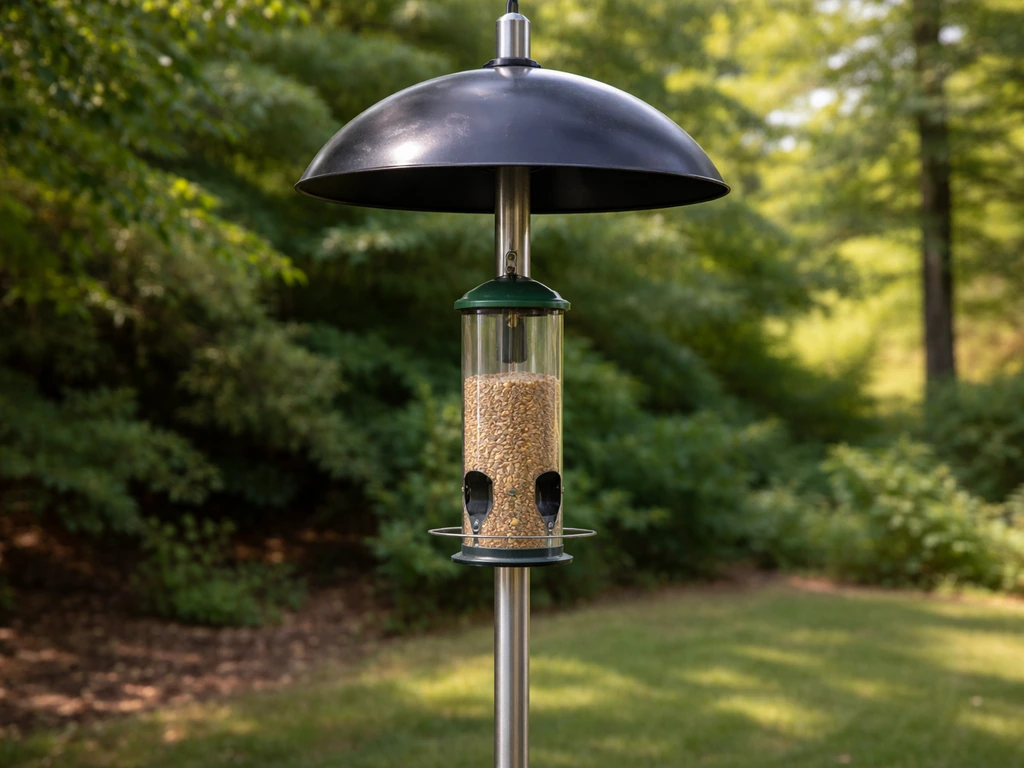
The most effective possum deterrents are physical, not chemical or sensory. Possums are not fast or particularly agile climbers compared to squirrels, which means a properly set up feeder pole with a baffle is genuinely effective against them.
Pole height and baffle placement
Mount feeders on a smooth metal pole at least 5 feet off the ground. Install a pole-mounted baffle (a dome or cylinder type) at least 4 feet up from the ground, so the possum cannot reach past it even when standing on its hind legs. A smooth metal stovepipe baffle about 24 inches long is one of the most reliable options because possums cannot grip it. Make sure the pole is at least 10 feet from any fence, tree, shed, or structure a possum could use to bypass the baffle entirely.
Feeder style matters
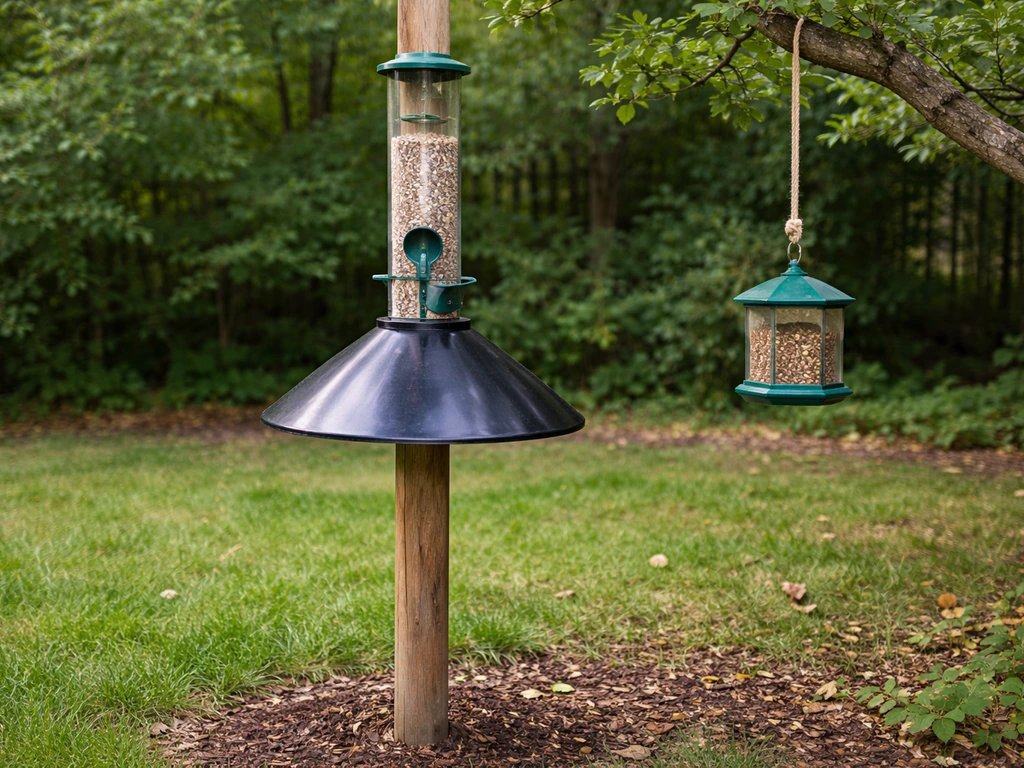
Avoid platform or open tray feeders at or near ground level if possums are active in your yard. Tube feeders on baffled poles are much harder to access. If you want to offer ground-level seed for doves, juncos, or sparrows, switch to a shallow tray that you only fill during daylight hours and bring in before dark. That single change eliminates most nocturnal possum visits.
Hanging feeder placement
If you hang feeders from a line or branch, use a line baffle (a plastic cone or disk threaded onto the wire) on both sides of the feeder. The line should be at least 5 feet off the ground and the feeder should hang at least 18 inches below the line attachment point. Possums can walk along narrow branches and wires slowly, so baffles on the wire itself are important.
Suet cages
If possums are getting your suet, move the cage to a hanging position on a baffled pole rather than mounting it directly to a tree trunk. Possums climb trees easily. A tail-prop suet feeder (designed so only woodpeckers can access it from below) also physically limits how much of the suet surface a possum can reach, though a determined possum will still try.
Seed protection: stopping spills, wet seed, and sprouting
Spilled and waste seed under feeders is the number one possum magnet. Reducing it is your highest-leverage fix. Most of the seed that ends up on the ground is pushed there by birds themselves while they sort through a feeder for preferred seeds, so feeder choice and seed quality both matter here.
- Use seed trays or catchers that attach to the bottom of the feeder; they catch falling seed so it does not reach the ground and so birds can still access it from the tray
- Fill feeders only enough for what birds will eat in a day; topping off daily also lets you check for wet or moldy seed
- Switch to no-mess or hulled seed blends; because the hulls are already removed, birds drop less and there is less shell waste to accumulate under feeders
- Rake or sweep under feeders every 2 to 3 days; do not let a seed pile build up on the ground
- In wet climates or during rainy periods, reduce or pause ground-accessible feeding entirely; wet seed molds within 24 to 48 hours and attracts insects and mammals
Sprouting is a related issue. Millet and cracked corn that sits wet on the ground will germinate within a few days. Once sprouted, the seed pile becomes a persistent food source that draws possums, rats, and other wildlife even after you stop filling feeders. If you notice green sprouts under feeders, scrape them up, bag them, and dispose of them in a sealed container. Do not compost them near the yard.
In wetter climates (Pacific Northwest, Gulf Coast, Southeast) and during prolonged rainy periods anywhere, wet and moldy seed under feeders is a much bigger issue than in dry regions. If you live somewhere that gets regular rainfall, covered feeders (with a roof or hood) dramatically reduce the amount of seed that gets soaked. Mold in seed is dangerous to birds, so keeping seed dry is a hygiene issue as much as a pest-prevention issue.
Cleanup and safety after possum visits
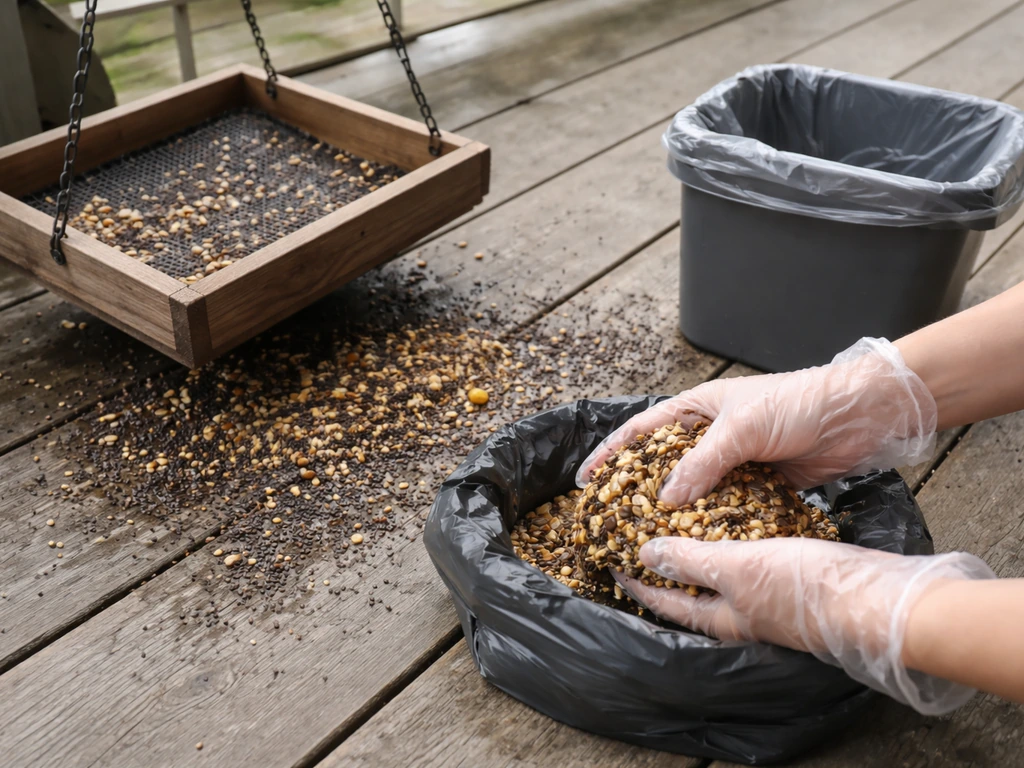
Possums can carry leptospirosis, salmonella, and other pathogens in their droppings. They can also deposit these through contact with feeder surfaces. After a confirmed possum visit, you should clean feeders and the area under them before birds use them again. After a confirmed possum visit, clean feeders and the area under them before birds use them again.
- Put on disposable gloves before handling anything in the feeder area
- Scoop up spilled seed, droppings, and debris from the ground and double-bag it in plastic bags before putting it in the trash
- Remove feeders and scrub them with a stiff brush and hot soapy water, rinse thoroughly, then soak in a solution of 1 part bleach to 9 parts water for 10 minutes
- Rinse feeders again with clean water and let them air-dry completely before refilling; wet feeders can cause seed to mold within hours
- Wipe down the feeder pole and any surfaces the possum may have touched using the same dilute bleach solution
- Wash your hands thoroughly after removing gloves, even if the gloves looked intact
- Do not use the same rake or tools you use on your garden or lawn without washing them first
A common question is whether this level of cleanup is really necessary if possums visit regularly. The short answer is yes, at least weekly. Droppings left on or near feeders build up and become a disease risk for birds (especially salmonellosis) and for people handling feeders. Virginia DWR specifically advises against ground feeding partly because of how quickly contamination accumulates when wildlife traffic is high. Even if you cannot fully exclude possums right away, keeping the feeder area clean reduces risk significantly.
Storage and long-term prevention
How and where you store seed matters as much as how you set up feeders. Improperly stored seed attracts rodents and other mammals even before it reaches your feeder, and it creates a persistent draw that makes possum exclusion much harder.
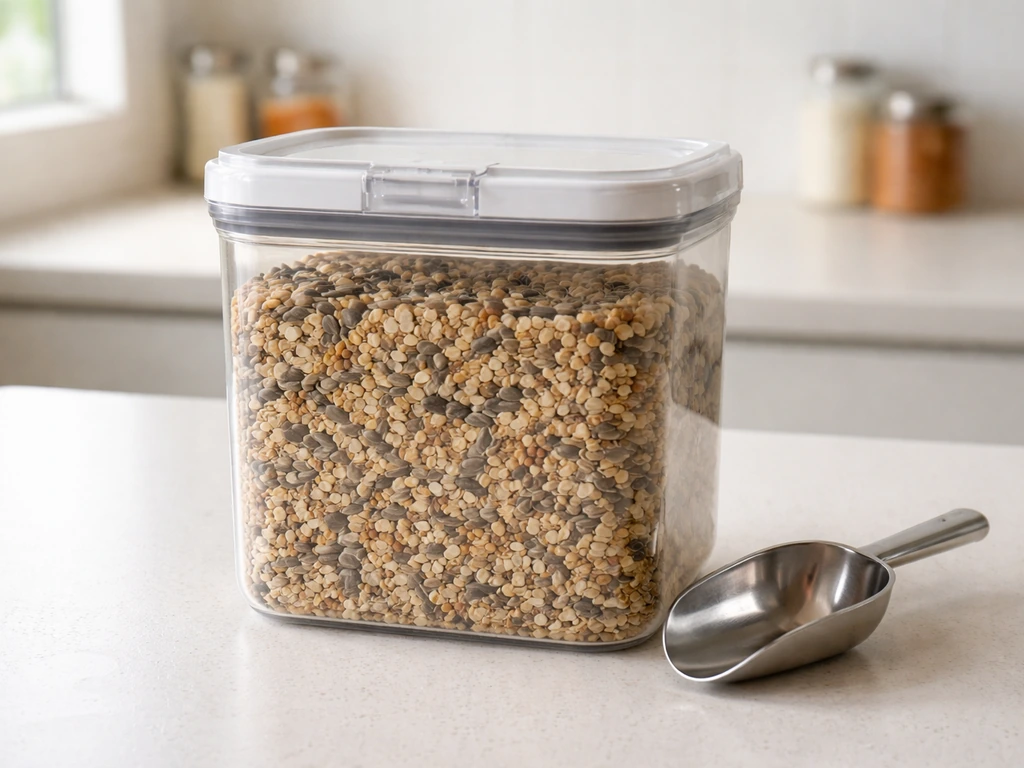
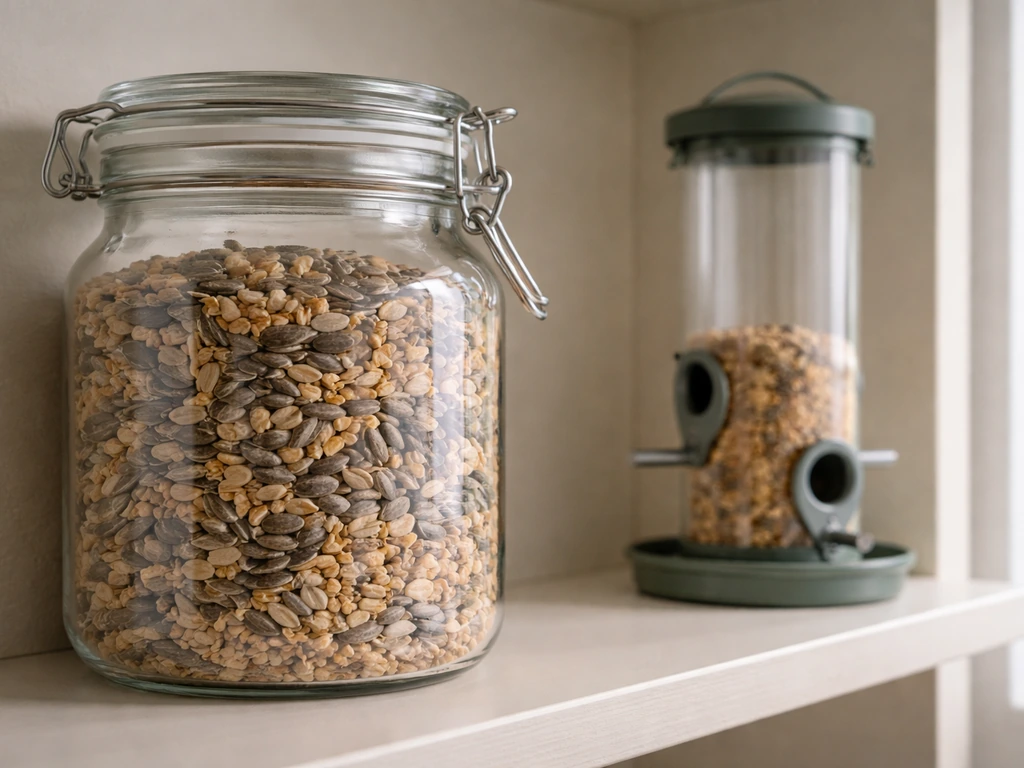
Store seed in airtight, hard-sided containers
Plastic bags and cardboard boxes are not possum-proof or rat-proof. Use metal or heavy-duty plastic bins with tight-fitting lids. Galvanized steel trash cans with locking lids work well and hold 20 to 40 pounds of seed. Keep the container in a garage, shed, or other enclosed space rather than outside, and elevate it off the floor on a pallet or shelf so moisture does not seep in from below.
Rotate seed and buy in reasonable quantities
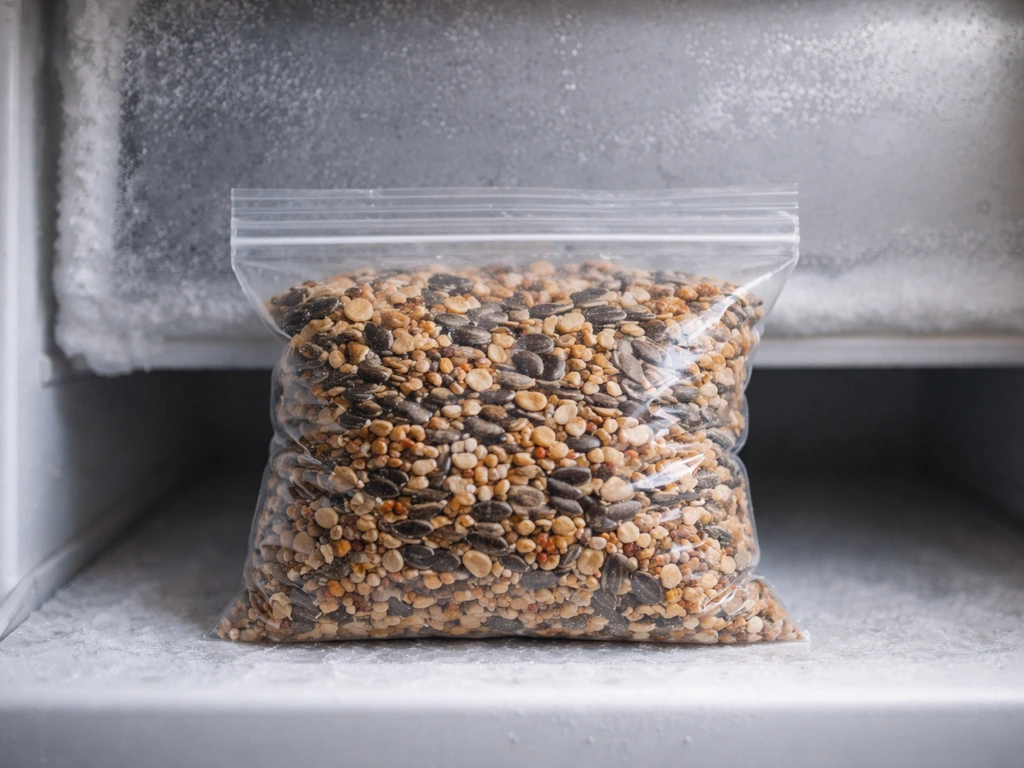
Bird seed has a shelf life. Most dry seed stored in a cool, dry, airtight container stays fresh for 6 to 12 months. Suet cakes last 4 to 6 months stored in a freezer, and 1 to 2 weeks outdoors in cool weather. Do not buy more seed than you will use in 2 to 3 months unless you have excellent storage conditions. Old or rancid seed is less attractive to birds and more likely to develop mold, which creates problems for both birds and wildlife management.
Keep seed off the ground permanently
Nebraska Extension research on selective bird feeding makes the point clearly: limiting seed that reaches the ground is the most effective single strategy for reducing unwanted mammal visitors at feeders. This means using trays, switching to hulled seed, filling feeders conservatively, and sweeping up regularly. If you can keep the ground under your feeders consistently clean, possum visits will drop off dramatically within a week or two because the reward is no longer there.
Regional notes
In warmer, wetter climates (the Southeast, Gulf Coast, and Pacific Coast), possums are active year-round and seed molds faster, so the pressure to keep things clean is higher and more constant. In colder northern states, possum activity drops significantly in winter but does not stop entirely since opossums do not hibernate. In rural areas, possums face more natural predators and tend to be more cautious; in urban and suburban yards they are often bolder and more habituated to people. Urban possums may visit at the same time every night for weeks once they identify a reliable food source, so exclusion needs to be consistent, not just occasional.
If you are dealing with multiple nocturnal visitors at once (possums plus raccoons, or possums plus rats), prioritizing the structural fixes above handles all of them reasonably well. Each of those animals is primarily driven by accessible seed and shelter, and removing the seed removes the incentive. Getting in the habit of clean-up, covered storage, and conservative filling will make your feeding setup more effective for birds and much less interesting to everything else.
FAQ
Can a possum get to bird seed if I use covered or tube feeders?
Yes, but only when the seed is already accessible. Possums cannot “find” hidden seed inside most covered or tube-style feeders, but if any seed is leaking, spilling, or collecting in a tray or on the pole base, they will target that area first.
If I stop filling the feeder, will possums still come back?
If you stop filling a feeder, they may still linger for a short time because sprouted or moldy seed, or leftover waste seed, remains available. In practice, you will usually see the fastest improvement when you combine no-refill at night with a full clean-up of the ground under the feeder for several days.
How can I tell whether the visitor is a possum or a squirrel?
Squirrels usually scatter seed widely and you often see quick, climbing movement during the evening, while possums tend to feed methodically and stay closer to approach routes like fence lines. If you are unsure, set a night camera to confirm, because the exclusion hardware that works for squirrels can differ from what prevents possums from reaching ground seed.
Do I really need to clean the feeder area if I only see possums sometimes?
Cleaning is important for disease risk even when you do not see droppings, because residue and contaminated moisture can build up on feeder surfaces and in debris piles. After a confirmed visit, wash feeders and scrub the area below, then let everything dry before refilling.
What’s the best way to offer seed for doves or sparrows without attracting possums?
Put ground-level trays away from windows and doors, and use a “day-only” schedule. Possums are nocturnal, so the simplest edge case is people who refill late in the day, which gives possums an immediate food source right when activity starts.
Why do possums keep returning even after I stop filling feeders?
Millet and cracked corn on the ground can germinate quickly, creating a new food source that attracts wildlife even after you stop filling feeders. If you notice green sprouts, remove and bag them for disposal in a sealed container rather than leaving them to dry or rot in place.
Do scented sprays or ultrasonic devices work on possums eating bird seed?
Leaning on deterrents like noise, sprays, or scent products usually fails with habituated possums. The more reliable approach is structural access control: stop seed from reaching the ground and use baffled feeder poles positioned away from bypass routes.
My feeder has a baffle, but possums still get the seed. What’s usually wrong?
Possums are often active on the same nightly schedule once they learn a route. If your baffle setup is correct but visits continue, the most common mistake is that the feeder pole is too close to a fence, tree, or shed that allows a bypass line, or the baffle is set too low to prevent reach.
How do I find the access point if my feeder looks secure?
If the seed is inside the feeder but you are still seeing possums, the likely issue is spilled seed around the base or wet seed accumulation. Check for leaks, loosened tray edges, and seed piles that collect during windy weather or in corners where you do not notice it.
Will proper seed storage make possums less interested in my yard?
Yes. Use only covered, tightly sealed storage containers, because even if a possum cannot open a bin, smell and spilled seed during handling can draw other animals and increase overall traffic. Keep seed inside a garage or shed and elevate bins off the floor to prevent moisture uptake.