In the UK, the most likely animals eating your bird seed at night are mice, rats, and wood mice, followed closely by hedgehogs, foxes, grey squirrels (if they can reach the feeder after dark), and occasionally cats or neighbourhood dogs. Rats and wood mice are by far the most common culprits at ground level, while hedgehogs hoover up spillage and foxes tend to investigate anything scattered on the ground. If your feeder is being emptied overnight and you are not sure which animal is responsible, the evidence left behind (droppings, tracks, and feeder damage) will usually tell you within a couple of nights.
What Animals Eat Bird Seed at Night in the UK

Maya Collins
24 May 2026
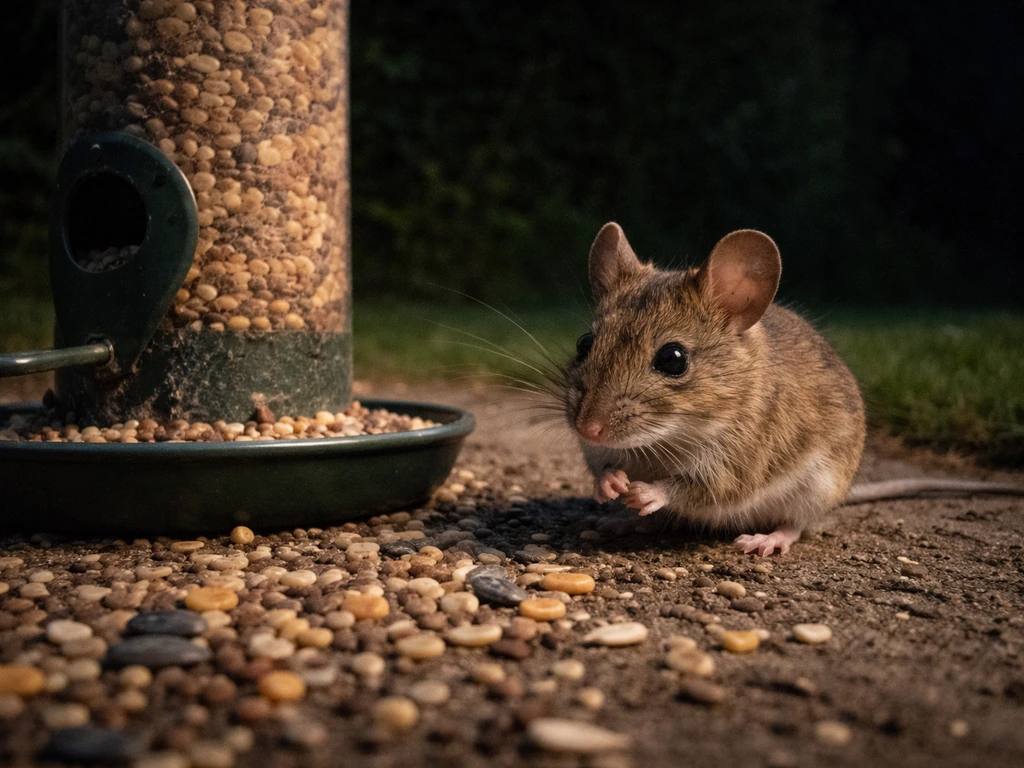
Common night visitors to bird feeders in the UK
Britain's gardens host a surprisingly busy night shift. Once the birds go to roost and the garden goes quiet, a different cast of characters moves in. These are the animals you are most likely dealing with, roughly in order of how often they show up at feeders after dark.
- Wood mice and house mice: the most frequent overnight feeder visitors in almost every UK region. They are agile climbers and can reach hanging feeders more easily than people expect.
- Brown rats: bigger, bolder, and more destructive. They tend to arrive after mice have already found a food source and can strip a ground tray or spilled seed pile in a single night.
- Hedgehogs: ground-only feeders that patrol gardens between dusk and around midnight, eating whatever has fallen beneath the feeder. They are more interested in mealworms and suet crumbs than dry seed.
- Foxes: opportunistic scavengers that will nose through spilled seed for anything worth eating, especially suet pellets, mealworms, and grain mixes. They rarely touch dry sunflower seeds alone.
- Grey squirrels: mostly active in the hour or two after dusk and before full dark, though in summer they can stay active later. They are vigorous and destructive at hanging feeders.
- Cats and dogs: not seed eaters themselves, but cats will ambush wildlife at your feeder overnight while some dogs will knock feeders over and scatter seed, attracting rodents.
- Bank voles: similar to mice in behaviour but chunkier, slower, and more likely to stay at ground level. Common in gardens near hedgerows or woodland edges.
- Badgers: uncommon in urban gardens but worth noting in rural areas. They will overturn ground trays and feeders looking for food, leaving obvious digging signs.
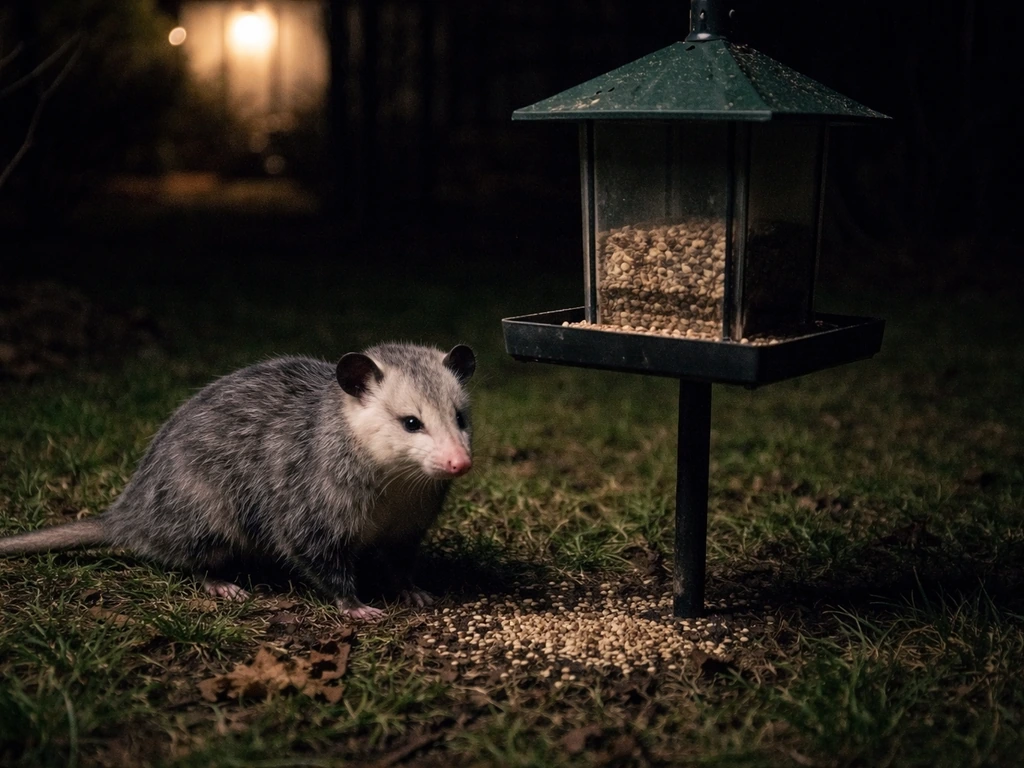
It is worth noting that if you are also wondering about possums, they are not native to the UK and are not a factor here. Likewise, if birds are ignoring your feeder entirely, that is a different problem with its own set of causes.
What different animals eat (and how they feed)
Not every visitor is after the same thing, which is actually useful when you are trying to work out who visited last night. Here is what each animal targets and how they go about it.
| Animal | Preferred seed/food | Feeding style |
|---|---|---|
| Wood mouse / house mouse | Sunflower hearts, nyjer, millet, peanuts | Carries food away to cache it; leaves husk piles nearby |
| Brown rat | Anything, especially peanuts, suet, grain mixes | Eats in place; gnaws through plastic feeders and bags |
| Hedgehog | Mealworms, suet crumbs, fallen grain | Grazes ground level; rarely touches dry whole seeds |
| Fox | Suet pellets, mealworms, grain, scraps | Noses through spillage; flips trays; takes suet blocks |
| Grey squirrel | Sunflower hearts, peanuts, suet, maize | Hangs from feeders; gnaws ports wider; empties in bulk |
| Bank vole | Grain, sunflower seeds, millet | Ground feeder; slower and less destructive than rats |
| Badger | Peanuts, suet, fallen seed | Digs and overturns; leaves large clumps of disturbed soil |
The high-energy items are the main draw. Sunflower hearts, peanuts, and suet are calorie-dense and attractive to almost every mammal on this list. If you use a mix heavy in millet or grain, you will get more spillage on the ground and that is what attracts rodents most reliably. Nyjer seed is less appealing to most mammals and is mostly taken by mice only when nothing better is available.
How to identify the culprit: tracks, droppings, and damage
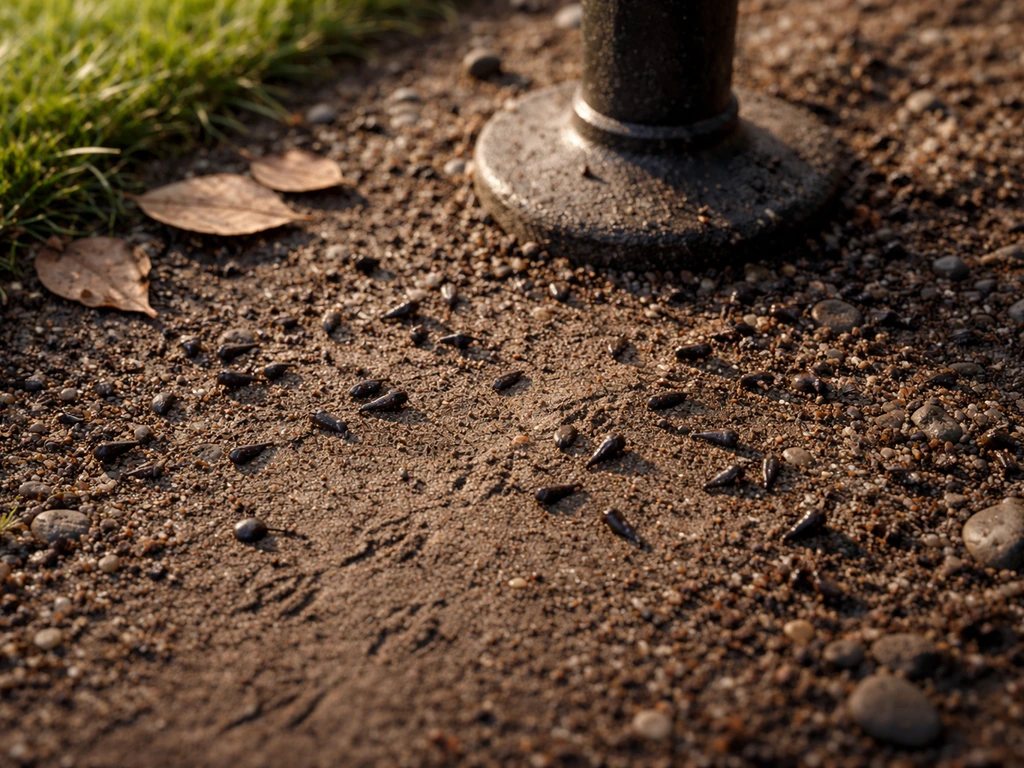
Spend five minutes with a torch or check your garden first thing in the morning and you can usually identify the visitor within a day or two. Here is what to look for.
Droppings
- Mouse droppings: 3–6mm long, spindle-shaped, dark brown or black, scattered randomly near the feeder base or along fence lines.
- Rat droppings: 12–18mm long, blunt-ended, dark, usually in clusters. Often found along walls and under feeders.
- Hedgehog droppings: 2–3cm long, dark, shiny, and twisted, often containing insect fragments. Left in the open on lawns.
- Fox droppings: 5–10cm long, often twisted with a pointed end, may contain berry seeds or fur. Usually left on prominent spots like path edges.
- Squirrel droppings: small, oval, and pale brown, usually scattered near the feeder or in flower beds.
Footprints
Lay a strip of damp sand or a shallow tray of mud-dampened soil about 30cm wide under your feeder before dark. Check it in the morning. Mouse prints are tiny (under 1cm) with four front toes and five rear. Rat prints are larger (around 2cm) with the same pattern. Fox prints look like a dog's but are neater and more oval, around 5–6cm long. Hedgehog prints show five toes and often leave a belly-drag mark in soft ground. Badger prints are wide and show five toes with prominent claw marks.
Feeder and container damage
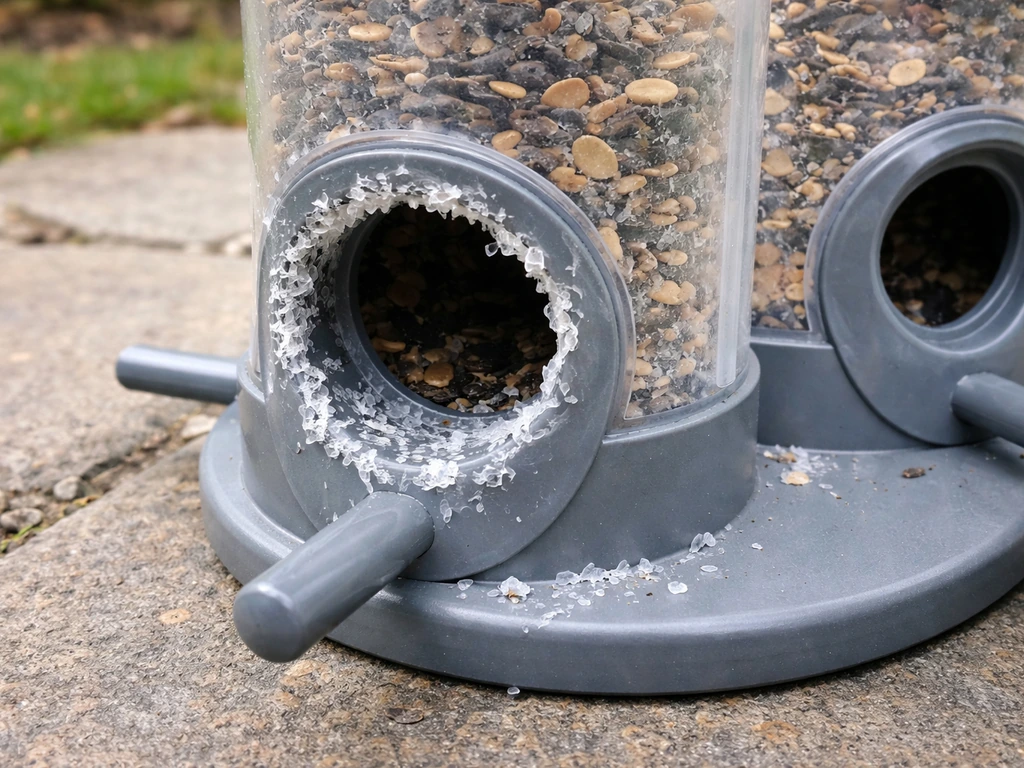
- Gnawed plastic ports or seed hopper lids: almost always rats or squirrels. Rats leave rough, splintered gnaw marks; squirrel gnaw marks are cleaner.
- Toppled or shifted feeders: foxes, badgers, or squirrels. Foxes tend to pull ground trays sideways; badgers leave the area disturbed.
- Seed gone but feeder undamaged: wood mice or voles accessing fallen spillage, or a squirrel that has learned to work the feeder carefully.
- Suet block or fat ball entirely missing: most likely a fox, which will carry the whole thing away.
- Husk piles under a fence or in a corner: mice caching and opening seeds elsewhere, then leaving husks.
Timing clues
If your seed disappears between dusk and midnight, hedgehogs and foxes are most active in that window. Mice and rats tend to peak in the two hours after dusk and again before dawn. If seed is gone first thing every morning but you see nothing in the evening, brown rats are a strong suspect because they become very wary of open, lit spaces and feed in the darkest part of the night. A cheap motion-triggered wildlife camera (often under £40) left overnight will confirm the culprit definitively and is well worth the investment if you are unsure.
Preventing night seed theft (feeder, tray, and tactics)
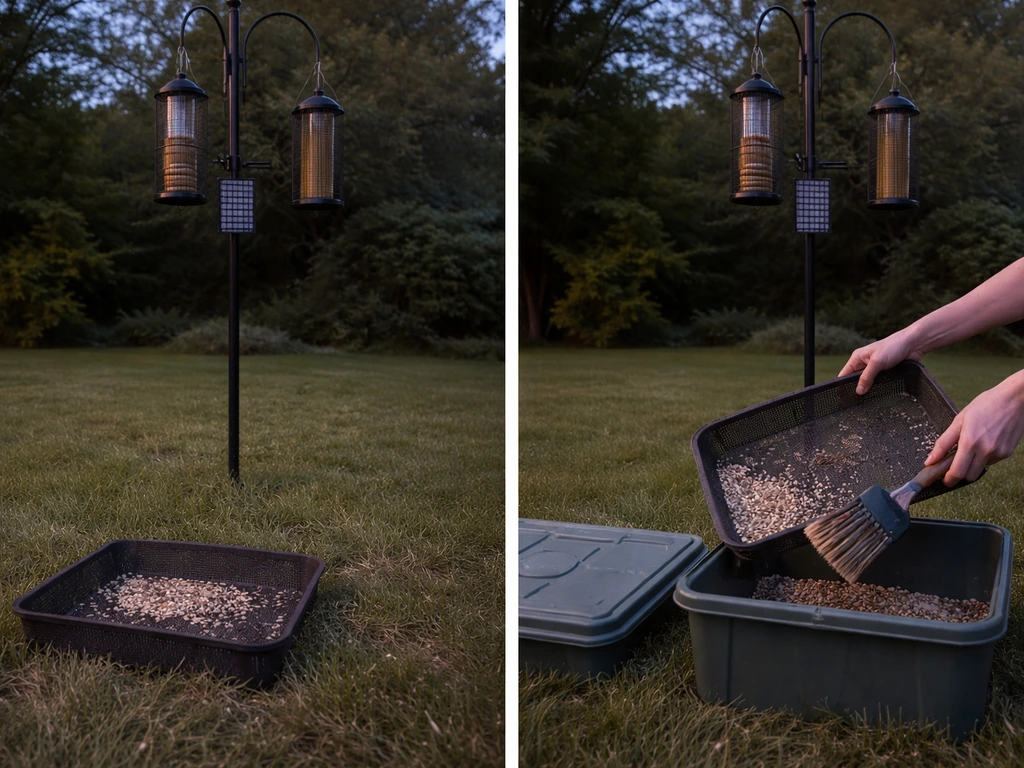
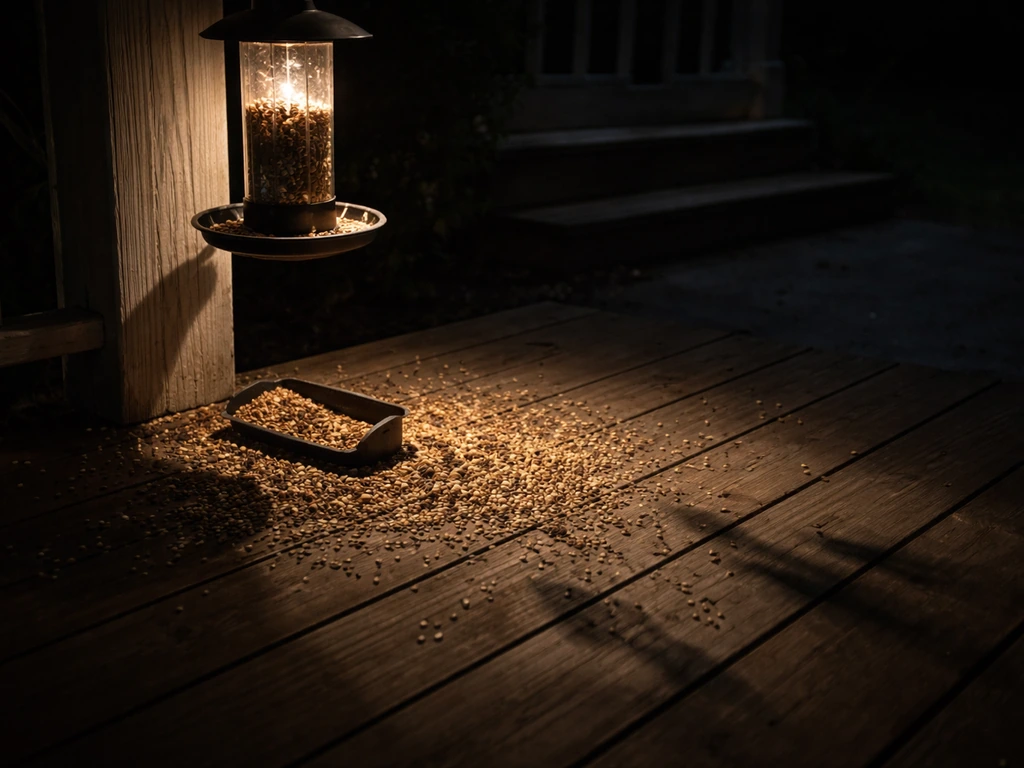
The single most effective step you can take tonight is to bring any ground trays, scattered seed, and accessible food inside before it gets dark. This alone removes the main attraction for most nocturnal visitors. Beyond that, here are the practical measures to put in place this week.
Feeder placement and design
- Hang feeders at least 1.5m off the ground and at least 1m away from any fence, wall, or branch that rodents or squirrels can use as a launch point.
- Use a metal pole rather than a wooden post. Mice and rats will climb any rough wooden surface but struggle with smooth metal, especially if you add a cone-shaped baffle below the feeder.
- Choose metal feeders over plastic where possible. Rats can gnaw through most plastic feeders within a few nights. Stainless steel or powder-coated metal feeders are far more durable.
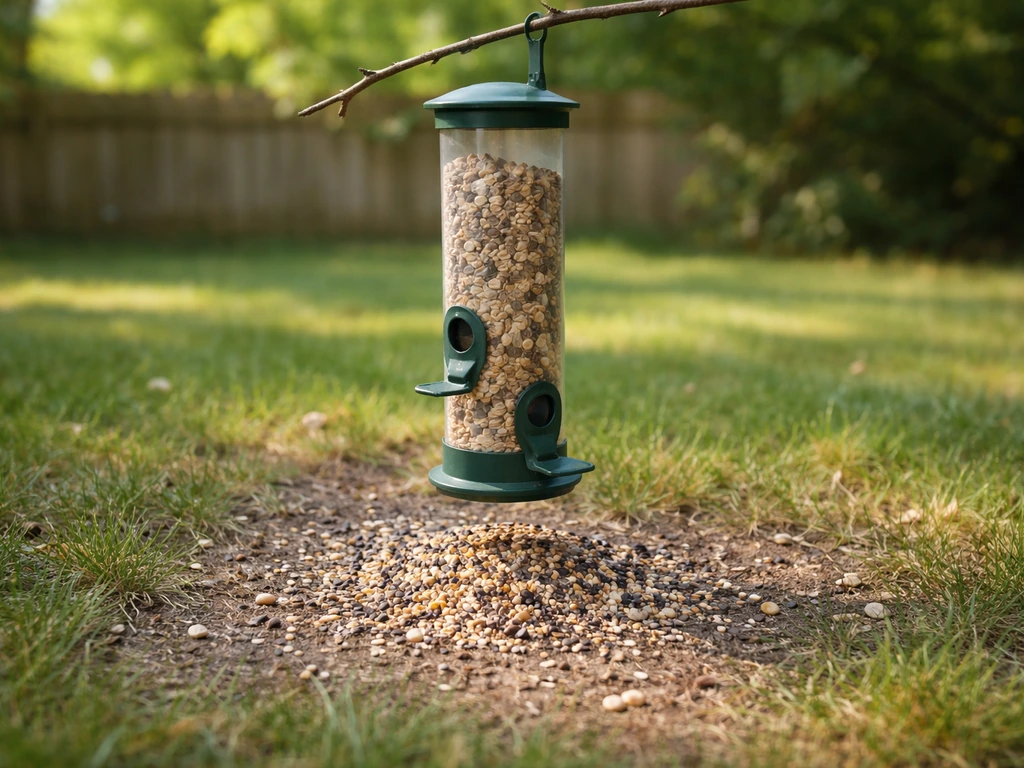
- Fit a seed catcher tray under hanging feeders to reduce ground spillage, but bring the tray in at night or empty it at dusk, as seed collected in a tray is easy pickings for ground feeders after dark.
- Use a squirrel-proof cage feeder if squirrels are your main problem. The cage bars let small birds in but exclude larger animals.
Baffles and guards
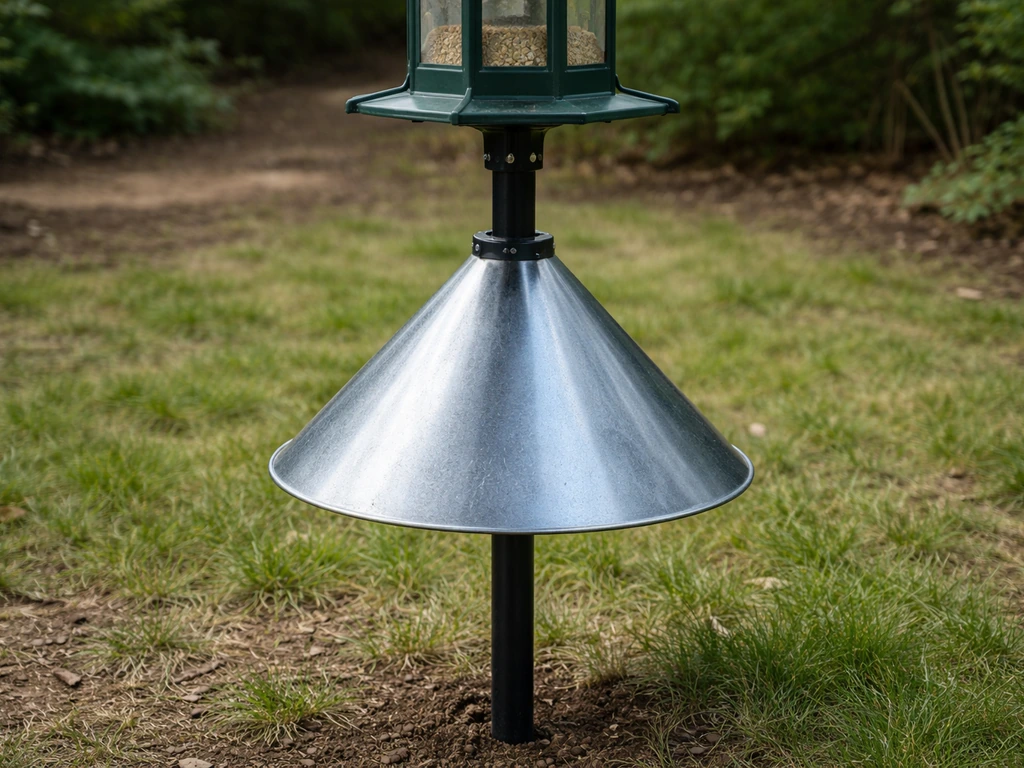
A cone or cylinder baffle fitted below any pole-mounted feeder is one of the most reliable physical deterrents for rodents. The baffle needs to be at least 45cm in diameter and positioned roughly 1m above the ground to be effective. Above the feeder, a dome baffle deters squirrels approaching from above. Both types are widely available online and in garden centres for between £8 and £25.
Removing spillage and timing feeds
Spillage on the ground is the root cause of most rodent problems. Suffolk Wildlife Trust specifically recommends removing any food left at nightfall to prevent encouraging a rodent population in your garden. Put out only as much seed as birds can realistically consume before dusk and sweep or rake the area under your feeder every evening. You might also consider shifting to feeding birds at set times only, putting feeders out for a few hours in the morning and early afternoon, then bringing them in. This is inconvenient but it completely eliminates the overnight food source.
Seed type choices that reduce mammal interest
Nyjer seed is the least attractive option for most mammals because it is tiny, oily, and not very palatable to rodents. Switching to a nyjer-only feeder will not eliminate night visitors entirely but will make your feeder less of a target. Whole peanuts in shells, large grain mixes, and suet blocks are the most attractive to nocturnal mammals, so use those in moderation or only during daylight feeding times. Sunflower hearts, despite being high-value to birds, do attract mice, but they are also one of the cleanest options because they produce minimal husk debris on the ground.
Seed storage, hygiene, and cleanup after nocturnal feeding
Nocturnal feeding creates real hygiene problems. Animals walking through feeders and seed trays overnight leave droppings, urine, and pathogens behind. Damp conditions overnight also accelerate mould growth in any seed left out, which can make birds sick when they feed the following morning. Taking this seriously is not fussy, it is genuinely important for your birds' health.
Cleaning the feeder and the area beneath it
- Remove and discard any seed that has been left out overnight, especially if it is damp, clumped, or smells musty. Do not tip it back into your seed store.
- Wipe down feeder ports, perches, and trays with a dilute disinfectant solution (5% bleach in water, or a purpose-made bird feeder cleaner). Rinse thoroughly and allow to dry completely before refilling.
- Rake or sweep the ground beneath the feeder and collect debris in a bag. Dispose of it in your general waste or compost bin (if no rodent activity is present). Do not leave it in a pile nearby.
- Wash your hands thoroughly with soap after handling feeders, seed trays, or the area beneath a feeder where wildlife has been active.
- Do this full clean at least once a week. The RSPB recommends weekly cleaning as a minimum, and if you have had overnight mammal activity it is worth cleaning every two to three days until the visits stop.
Storing seed safely
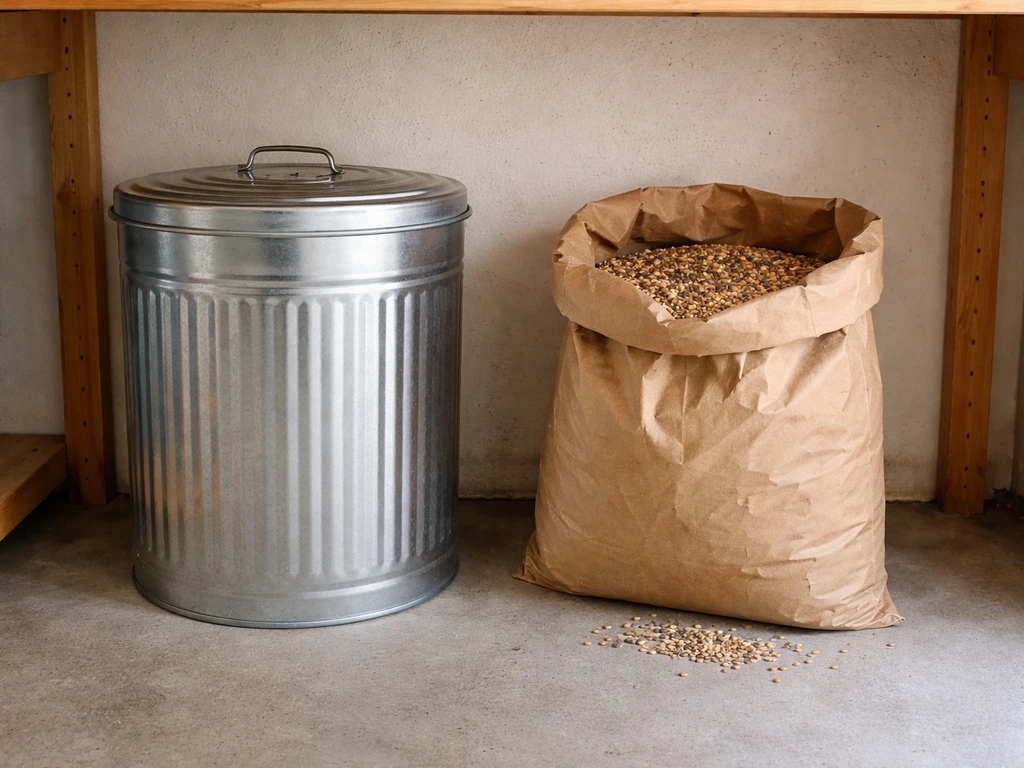
Never leave bags of seed in a shed or garage without a sealed container. Rats and mice will chew through paper and thin plastic bags within minutes. Store seed in a metal or rigid hard-plastic bin with a tight-fitting lid, ideally off the floor on a shelf. If seed has been chewed into or you find droppings near your supply, discard the entire batch because rodent urine can contaminate seed and pose a health risk. Keep only a two to four week supply at a time so your stock stays fresh and does not attract long-term interest.
Dealing with damp or sprouted seed
Seed left out overnight in British weather absorbs moisture quickly, especially in autumn and spring. Damp seed can develop aflatoxin-producing moulds within 24 to 48 hours, which are harmful to birds. Any seed that has clumped, gone soft, or begun to sprout should be discarded rather than dried out and reused. If you notice your feeder seed getting damp regularly, it is worth switching to a feeder with a weatherproof roof and reducing the fill level so seed cycles through faster.
When to worry: protected species, pets, and safety considerations
Hedgehogs are protected
Hedgehogs are a Schedule 6 species under the Wildlife and Countryside Act 1981, which means it is an offence to intentionally kill or injure one. If you are putting out exclusion measures to stop nocturnal animals reaching your feeder, make sure any traps or barriers cannot trap or harm a hedgehog. Do not use glue traps anywhere in your garden. If a hedgehog is regularly visiting, you can discourage it from your feeder area by removing ground-level food at night rather than physically blocking its access. You might also leave a small dedicated hedgehog dish of cat food or specific hedgehog food away from the feeder to divert it.
Rats and pest control
If you have confirmed a rat problem, act promptly. Rats breed fast and a small problem becomes a large one within weeks. You can use snap traps (more humane than poison and no risk to other wildlife) placed in a tunnel or under a wooden box to exclude access by birds and hedgehogs. If you use rodenticide, use it only in enclosed bait stations and never leave it accessible to pets, children, or other wildlife. Consider contacting your local council's pest control team if you have an established rat population because home measures alone may not be enough.
Pets and children
Bird seed scattered on the ground can attract dogs to eat it, and while seed itself is usually harmless in small quantities, seed contaminated by rodent droppings or mould is a real risk. If your dog is regularly eating seed from the ground, clean up ground spillage daily and consider a raised feeder setup that keeps food away from ground level entirely. Children should be kept away from areas where rodent droppings have been found, and hand washing after garden play near feeders is sensible hygiene.
Disease risk to birds
Rodent activity at feeders increases the risk of salmonella and other diseases spreading to birds using the same feeder surfaces. This is a real concern, not a theoretical one. The RSPB also advises taking down seed and peanut feeders from 1 May to 31 October to reduce the risk of avian diseases like trichomonosis and finch diseases that spread more easily in warm weather when birds gather at feeders. During that period, the reduced seed availability naturally reduces the overnight mammal attraction too, so the two goals align.
If you keep on top of the basics, nightly seed loss and the problems that come with it are very manageable. Bring food in at dusk, clean your feeder weekly, store seed in a sealed metal container, and choose a feeder design that makes access difficult for climbing rodents. Most people who do all of this find the overnight visits stop or drop to a level that causes no real damage within a week or two.
FAQ
If I stop feeding at dusk, will the animals still come and eat bird seed at night in my UK garden?
Yes. If you feed early in the evening and then put the feeder away well before night fully falls, you remove the overnight window when rats, wood mice, and hedgehogs usually peak. A practical approach is to offer seed for a short daytime block (for example, morning and early afternoon), then take the feeder in at dusk and keep the area under it clean so there is nothing left to find after dark.
I brought the feeder in at dusk, but I still see footprints at night. Why would animals keep coming?
Not always. Some animals learn to use predictable routes, especially if they can access the feeder from cover (hedges, bins, fencing). Even if you bring the feeder in, you can still get night activity if spilled seed remains on the ground or if other accessible food sources are present. Check for pet food, fallen fruit, compost scraps, and open bins, and eliminate ground-level attractants before changing feeder type.
What’s the best way to confirm which animal is eating the seed at night, and not just what visits?
A motion camera is most reliable when it records multiple nights and captures the approach path, not just the feeder itself. Place it low enough to see paws and face height, and aim it so you can distinguish mouse-size visitors from rat-size ones. Also, avoid triggering false events from branches by slightly stabilizing the camera and positioning it away from swaying cover.
Can I tell the culprit by when the feeder is emptying (at dusk, midnight, or morning)?
Often, yes, but timing matters. Hedgehogs and foxes can take seed later in the evening, while mice and rats are more likely to coincide with the two-hour window after dusk and again before dawn. If you find the feeder noticeably emptied overnight but it’s still full immediately at dusk, that timing pattern points more toward nocturnal mammals rather than daytime birds.
If I see mouse or rat droppings under the feeder, is the seed still safe to leave out?
It can, but the safest interpretation is to treat it as a hygiene and contamination risk first. Fresh droppings, urine stains, and especially damp seed can carry pathogens, and wet seed can also develop mould quickly. If you see rodent droppings near the feeder, wear gloves, remove wet contaminated seed promptly, and sanitize feeder surfaces before refilling.
If I buy a baffle, does that automatically stop all overnight seed loss from rats and squirrels?
Usually no, because rodents can enter through surprising gaps and climbing access. In practice, a feeder can be rodent-proof against one species but still vulnerable if there is a nearby launch point (low fences, patio furniture, plant pots, or tall weeds). Recheck the full setup for climb routes and make sure the baffle is positioned correctly and stays clear of touching branches.
I take the feeder in at dusk, but some seed still disappears. Could I be taking it in too late?
Yes, and it’s a common mistake. Some birds will feed at the same time nocturnal mammals start (for example, before full dark), so removing seed too late can still leave a short overnight trail. Aim to finish feeding early enough that the feeder is already taken in before the first animals begin their approach, and do a quick ground check for spillage before dark.
What feeder or feeding schedule change reduces night visitors without stopping bird feeding entirely?
Choose based on what you can control and what you’re willing to tolerate. If you want fewer mammals at night, avoid large, high-calorie ground-accessible foods in the evening, and use a feeder designed to shed less mess (for example, one with a weatherproof roof and lower spillage). If you still want to feed birds, set a strict schedule so nocturnal mammals get less opportunity.
I sweep under the feeder, but rodents still appear. What else can make spillage less of an issue?
Spillage management is critical, but it isn’t only about sweeping. If your garden has bare soil, paths, or easy cover near the feeder, rodents are more likely to forage even with small amounts left behind. Try to create a 30 to 60 cm clear zone under the feeder, keep ground cover trimmed close, and consider a feeder location away from fences and dense hiding spots.
If I need to use pest control for rats, what’s the safest approach around hedgehogs and pets?
If you use rodent control, avoid any method that risks hedgehogs, birds, or pets. The article’s guidance effectively points to enclosed snap traps or enclosed bait stations, never glue traps, and not leaving poison accessible. Also, keep children and pets away during setup and disposal, and monitor for signs of non-target access.
Does taking feeders down in summer also help with nighttime rodent visitors?
Yes. Starting in the warm season, removing some feeders can reduce certain bird-to-bird disease risks, and it also naturally reduces overnight food availability that attracts mammals. If you stop feeding during the recommended period, you may need to reintroduce gradually and restart cleaning and hygiene routines so you don’t leave residues that keep attracting rodents.
If my cat or dog eats seed from the ground, does that necessarily mean the feeder itself is the main problem?
Probably not. Even if seed is not the main part of their diet, mammals can be attracted to feeders because of calorie-dense foods and easy access. If you are also feeding other animals, leaving water bowls, or have fallen fruit and compost scraps, those can keep the area interesting overnight. Reduce the total attractants near the feeder first, then adjust seed type and feeder access.
How do I decide whether damp bird seed can be dried and reused or should be thrown away?
Discarding damp or clumped seed is correct, and you should also remove any seed that has been wet long enough to grow mould (clumping, soft texture, or sprouting are key signs). Don’t try to dry it and reuse it, because mould toxins are not reliably removed by drying. If dampness keeps happening, switch to a weather-protected feeder and reduce refill volume so seed cycles through faster.