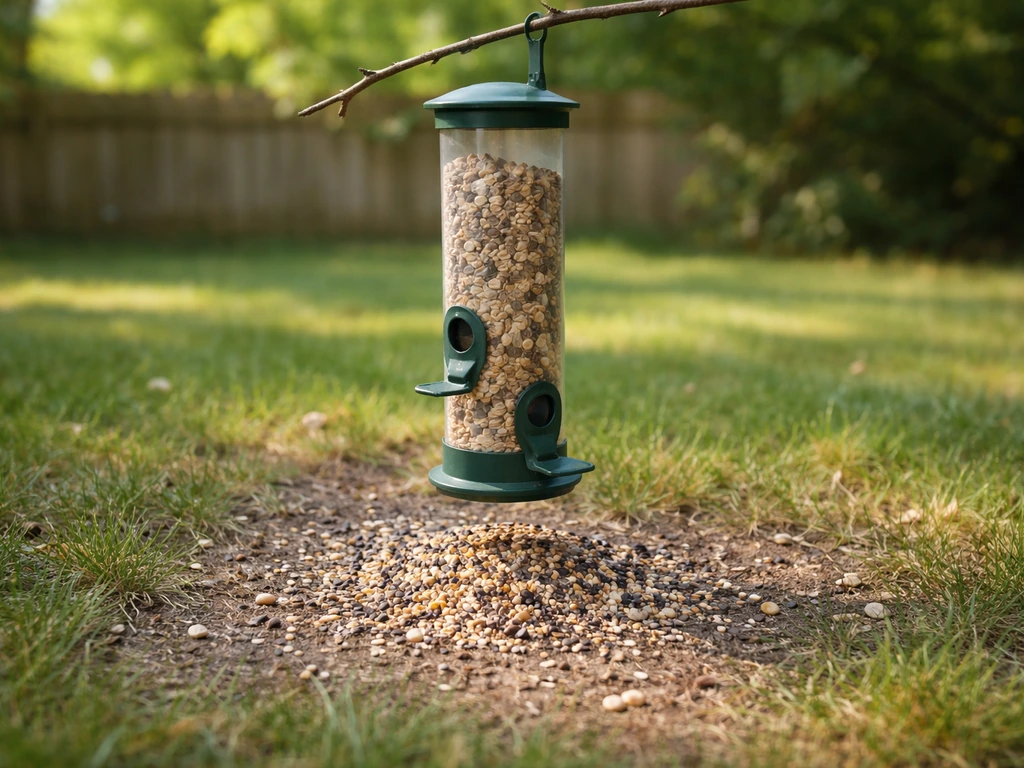
If your bird seed is disappearing overnight, the most likely culprit is a mouse, rat, or squirrel, with raccoons, opossums, and skunks rounding out the usual suspects depending on where you live. Nocturnal birds like owls or nightjars are rarely responsible for seed theft, so focus on mammals first. The good news: you can identify exactly who's visiting, stop the damage fast, and set up your feeder so it stays that way.
What Is Eating My Bird Seed at Night? How to Identify and Stop It

Maya Collins
5 May 2026
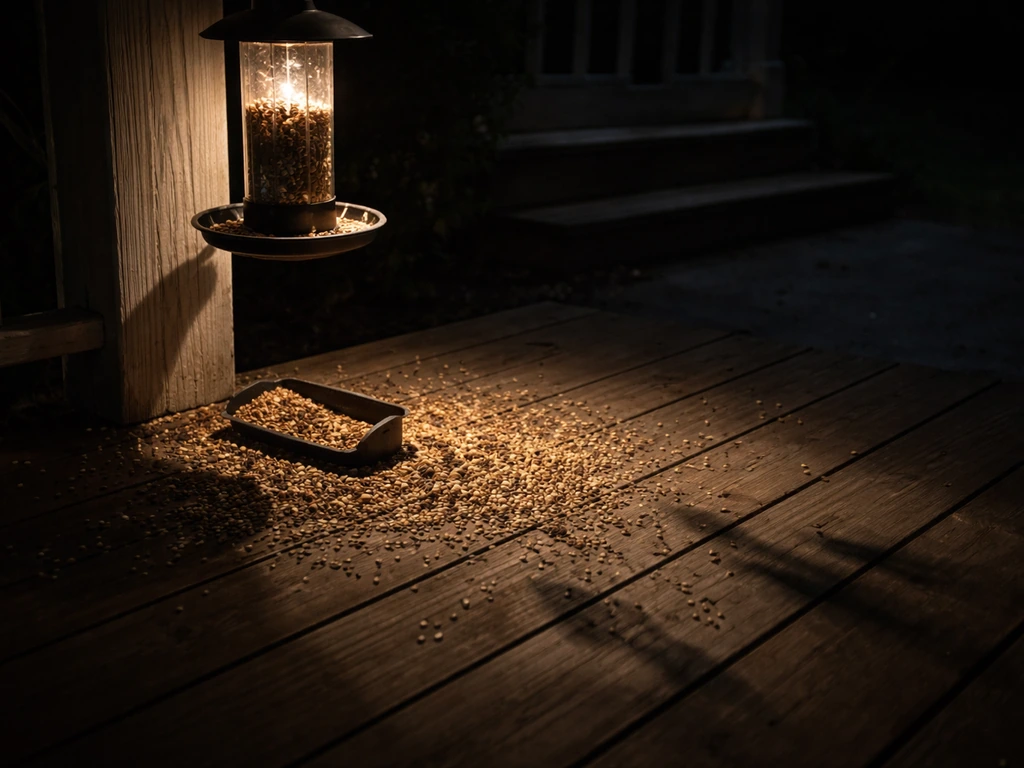
The most likely culprits eating your seed at night
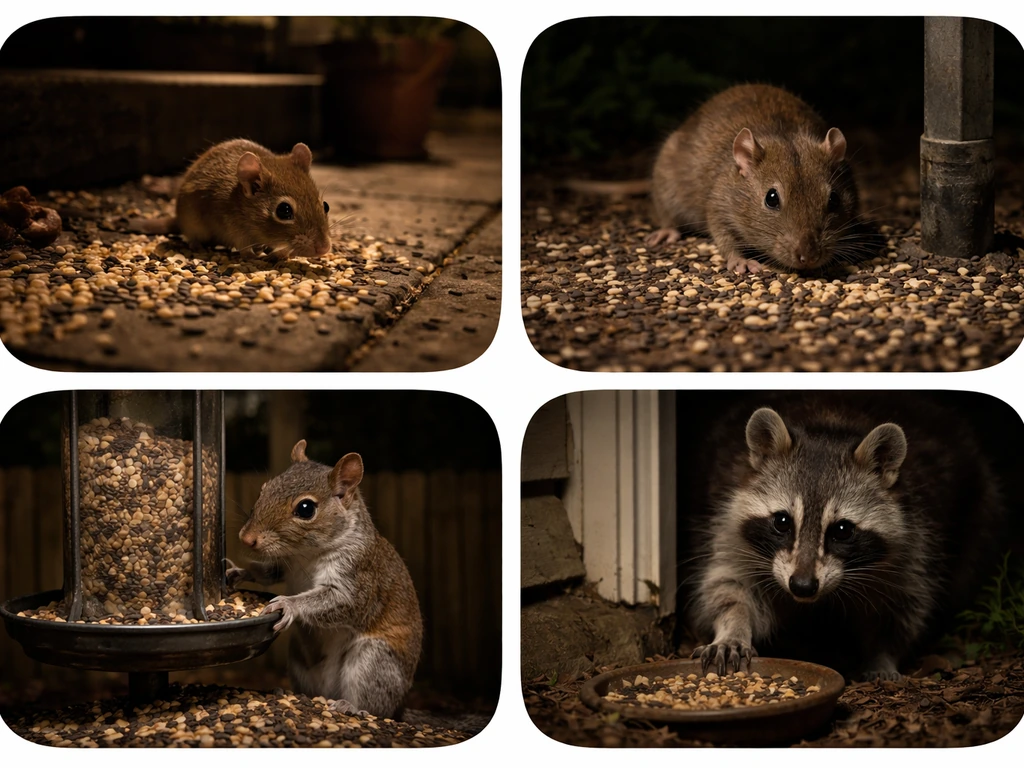
Most overnight seed theft falls into a short list of animals. Here's who to suspect and why.
Mice and rats
These are the most common overnight seed thieves in most backyards. They're small enough to squeeze into feeders, fast enough to work under cover of darkness, and they breed quickly once they find a reliable food source. Spilled seed on the ground is basically a dinner invitation.
Squirrels
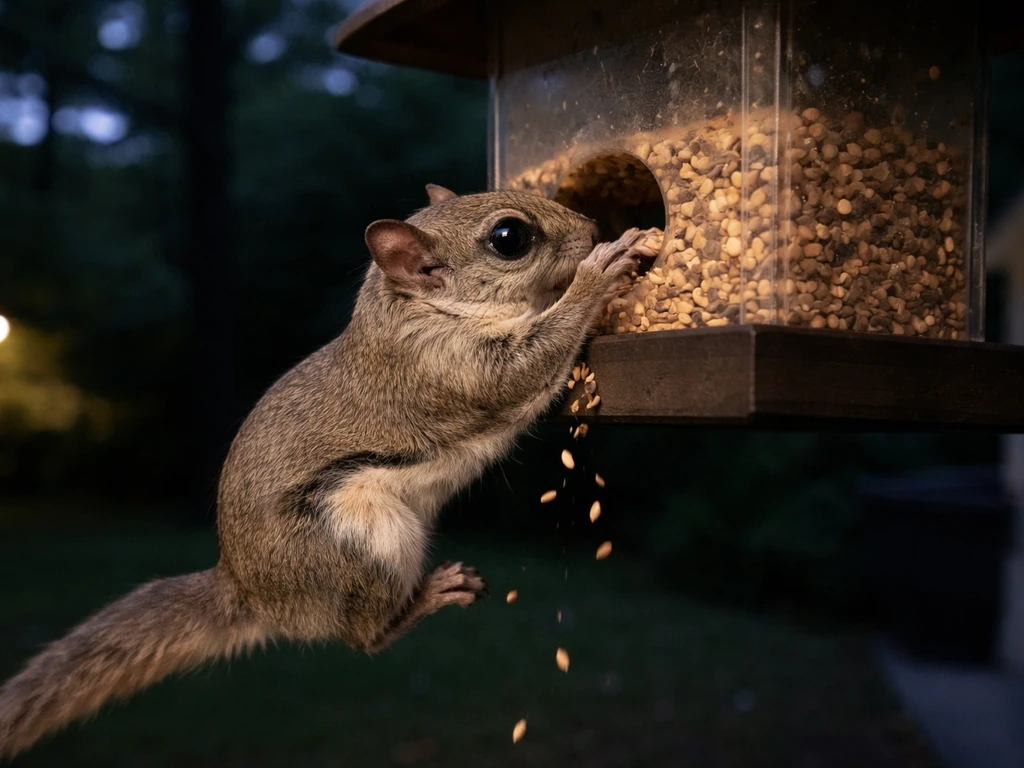
Most squirrels are active during the day, but flying squirrels are genuinely nocturnal and are frequently mistaken for mice at feeders. Even regular gray and fox squirrels will feed at dusk and dawn, especially in warm months. They particularly love sunflower seeds and will clean out a feeder fast.
Raccoons
Raccoons are strong, dexterous, and almost entirely nocturnal. They'll knock feeders down, pry off lids, and drag trays across your yard. If your feeder is tipped over or pulled apart, raccoons are the prime suspect.
Opossums and skunks
Opossums are opportunistic foragers and will happily eat spilled seed from the ground beneath your feeder. If you suspect will possums eat bird seed, focus on limiting spilled seed on the ground and using a baffle to block access. Skunks are mostly nocturnal and will dig around feeder bases for fallen seed, millet, or insects attracted to spilled grain. Neither is particularly agile, so elevated feeders are less vulnerable to these two.
Nocturnal birds
Owls don't eat seed. If you see a large bird at your feeder at night, it's likely hunting the mice that your feeder attracted. True seed-eating birds are almost always daytime feeders, so disappearing seed overnight is almost never a bird problem.
How to tell exactly who's visiting
You don't need a trail camera to figure this out, though one helps. Look for a combination of tracks, droppings, feeding style, and where the seed ends up. Each animal leaves a signature.
Tracks
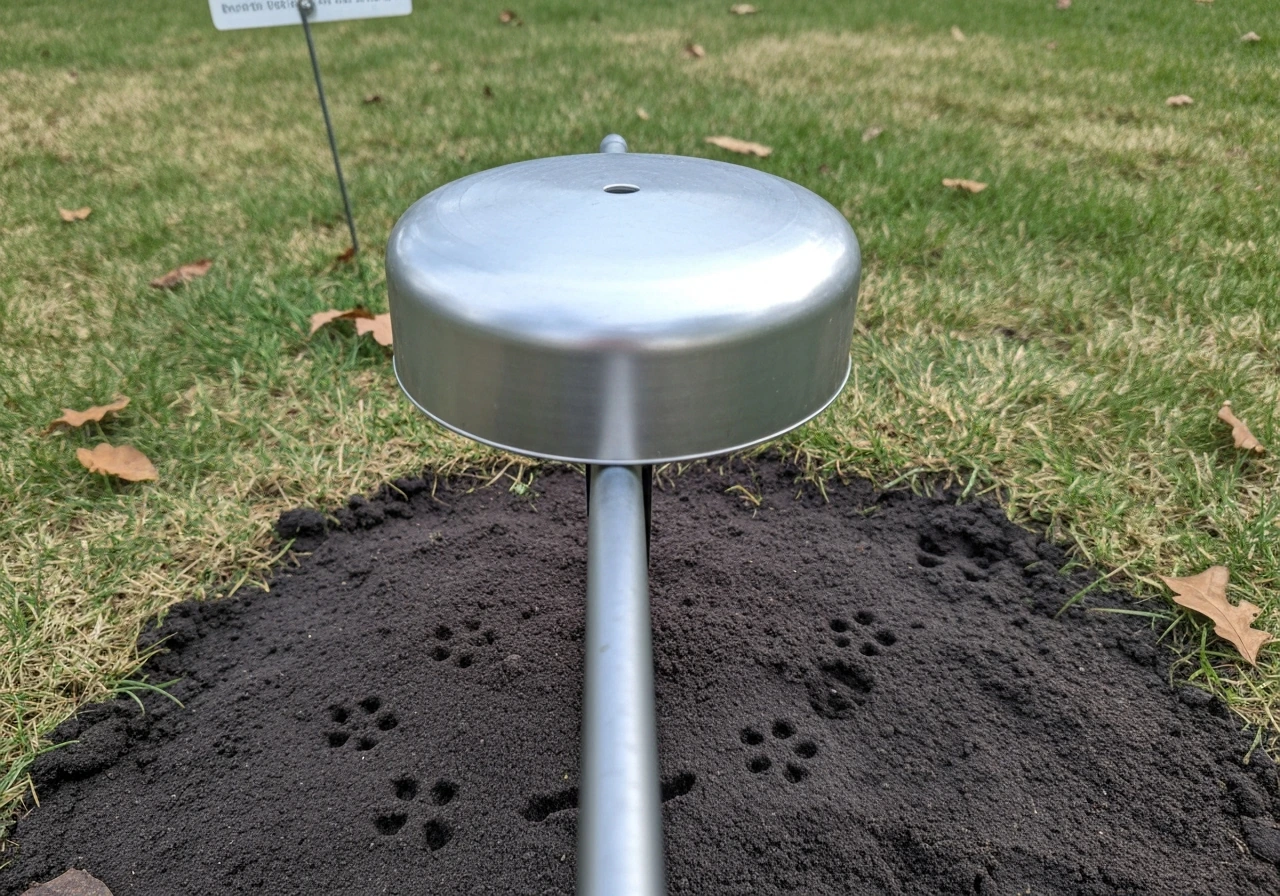
Soft soil or mud under your feeder is the best tracking surface. Mice and rats leave tiny four-toed prints in paired groups with a thin tail drag between them. Raccoons leave hand-like prints about 3 to 4 inches long, unmistakable once you've seen one. Opossums have five toes with the hind feet showing a thumb-like toe pointing sideways. Skunk tracks are similar in size to opossum prints but show claw marks and often paired with signs of digging. Squirrel tracks show four front toes and five hind toes, usually in a bounding pattern.
Droppings
Mouse and rat droppings are small, dark, and cylindrical, roughly the size of a grain of rice. Raccoon droppings are larger, roughly 2 to 3 inches long, with blunt ends, which distinguishes them from opossum or fox droppings that tend to be more tapered or pointed. Skunk droppings are similar in size to raccoon droppings but often contain insect parts or seed husks.
Feeding style and seed clues
| Animal | Feeding sign | Where seed ends up |
|---|---|---|
| Mouse/rat | Gnaw marks on feeder plastic or wood, husks left in neat piles | Mostly at ground level or inside feeder |
| Flying squirrel | Similar to mouse but higher up; prefers sunflower seeds | Inside feeder or just below |
| Gray/fox squirrel | Entire feeder emptied quickly, chewed ports or lids | Scattered widely on ground |
| Raccoon | Tipped or dismantled feeder, entire tray cleared | Seed spread across a wide area |
| Opossum | Ground-level feeding only, messy scatter of husks | Under and around feeder |
| Skunk | Digging marks in soil under feeder, husks and dirt mixed | Ground directly beneath feeder |
Stop the damage tonight: immediate steps
You can significantly reduce overnight raiding tonight with a few quick actions. Don't wait until the weekend.
- Bring feeders in at dusk. This single step removes the food source during peak nocturnal activity. Hang them back out at sunrise.
- Clean up spilled seed from the ground right now. Use a rake or broom and bag the debris. Even a thin layer of seed shells attracts rodents, opossums, and skunks.
- Check your feeder for gaps, cracks, or loose ports where seed is leaking out at rest. Seal or replace damaged parts.
- Temporarily switch to a no-mess or hulled seed blend that produces far less ground litter and is less attractive to rodents.
- If you use a ground tray, remove it tonight. Ground-level feeding setups are the easiest targets for every animal on this list.
Note that some ground-feeding birds like towhees rely on scattered seed under feeders, so ground cleanup is a trade-off. If songbirds using fallen seed matter to you, consider a designated ground tray you bring in each evening rather than leaving seed out overnight.
Feeder setup that keeps nocturnal pests out for good
Bringing feeders in every night works, but if that's not practical, the right physical setup does most of the work for you.
Baffles and pole placement
A smooth metal baffle mounted on a pole is the most effective physical barrier against squirrels, raccoons, and opossums. The baffle needs to sit at least 4 to 5 feet off the ground and be positioned so the feeder is more than 8 feet from the nearest tree, fence, or structure an animal can jump from. Audubon also recommends mounting a baffle 4 to 5 feet off the ground to deter squirrels at least 4 to 5 feet off the ground. Audubon notes this approach gets you pretty close to squirrel-proof. For raccoons, the baffle needs to be at least 18 inches in diameter since raccoons are strong enough to grip and pull themselves around smaller ones.
Caged feeders
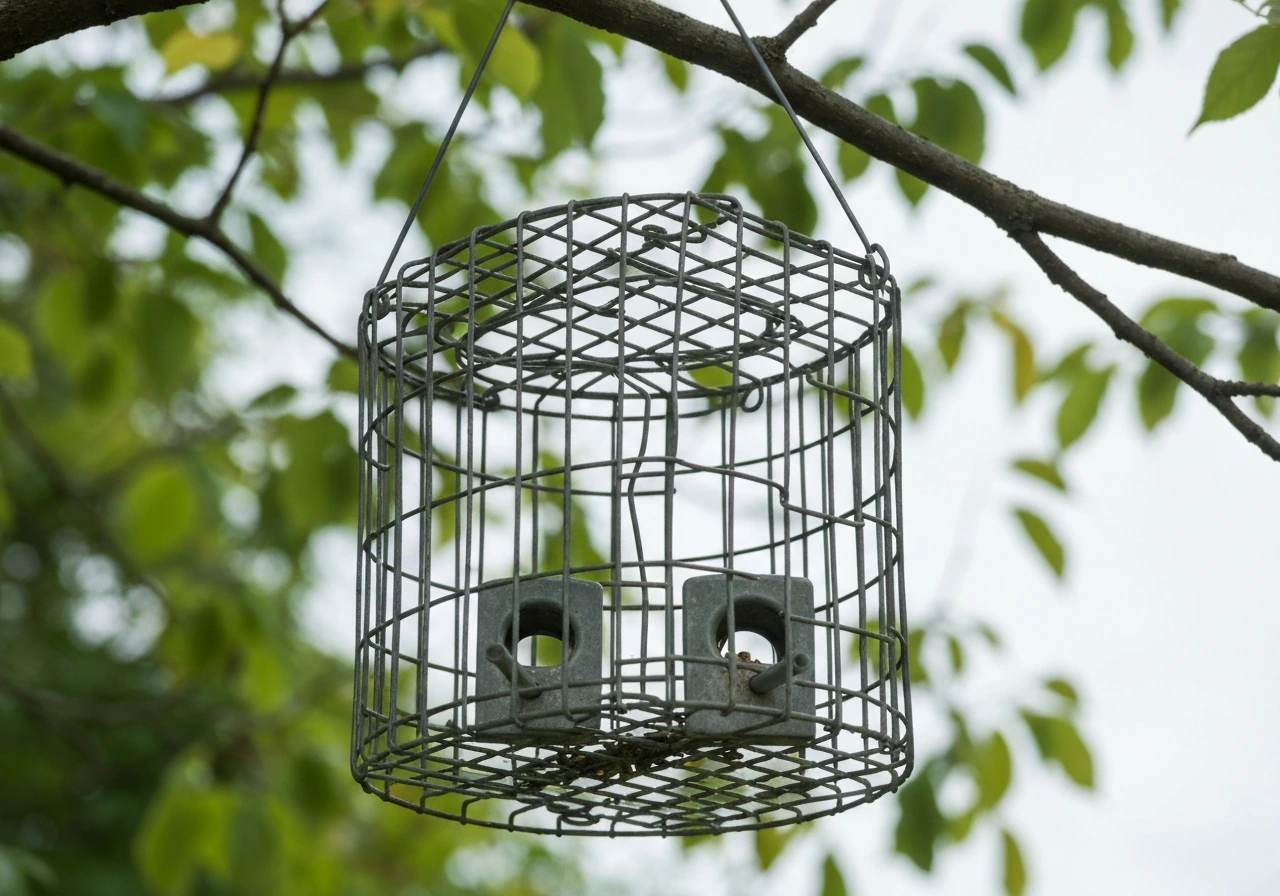
Wire-cage feeders with openings sized for small birds block squirrels and large mammals entirely. They're particularly good if you're dealing with flying squirrels, which are small enough to fit through large-opening cages, so look for models with openings no larger than 1.5 inches.
Tray and catch-tray design
If your feeder has a catch tray, choose one that holds minimal seed and drains well. A wide, flat tray sitting close to the ground is a buffet table for opossums and skunks. Narrow trays placed high up on a baffled pole are much harder to exploit.
Seed choice as a deterrent
Safflower seed is a useful tool here. Squirrels tend to avoid it, while most songbirds eat it readily. Switching partially or fully to safflower can reduce squirrel pressure. For mice and rats, hulled seed blends leave less ground litter for them to forage on.
Seed storage and hygiene to stop attracting more wildlife
Improper seed storage is one of the fastest ways to turn a minor pest problem into a major infestation. Mice and rats can smell seed through thin plastic or cardboard, and damp seed also grows mold and bacteria that create additional health risks for birds and make the area even more attractive to foragers.
How to store seed properly
- Use a metal, airtight container with a locking lid. Rodents cannot chew through galvanized metal like they can through plastic bins.
- Store seed off the ground on a shelf or raised platform, not directly on a garage or shed floor.
- Buy only as much seed as you'll use in 2 to 4 weeks. Old seed goes stale, gets damp, and molds faster.
- Check stored seed weekly for moisture, clumping, or an off smell. Discard any seed that smells musty or shows mold.
Feeder cleaning routine
Wet or moldy seed in a feeder is both a bird health hazard and a stronger attractant for pests. In wet weather, mold and bacteria form quickly on damp seed inside the feeder or on the ground below. Clean your feeder every 1 to 2 weeks in dry weather and every few days in wet or humid conditions. A 10 percent bleach solution (one part bleach to nine parts water), a thorough rinse, and complete air-drying before refilling is the standard approach. Scrub the area under the feeder too: bird droppings and moldy seed casings on the ground spread disease and are a documented attractor for rodents, raccoons, and bears.
Safe cleanup when pests have already been there
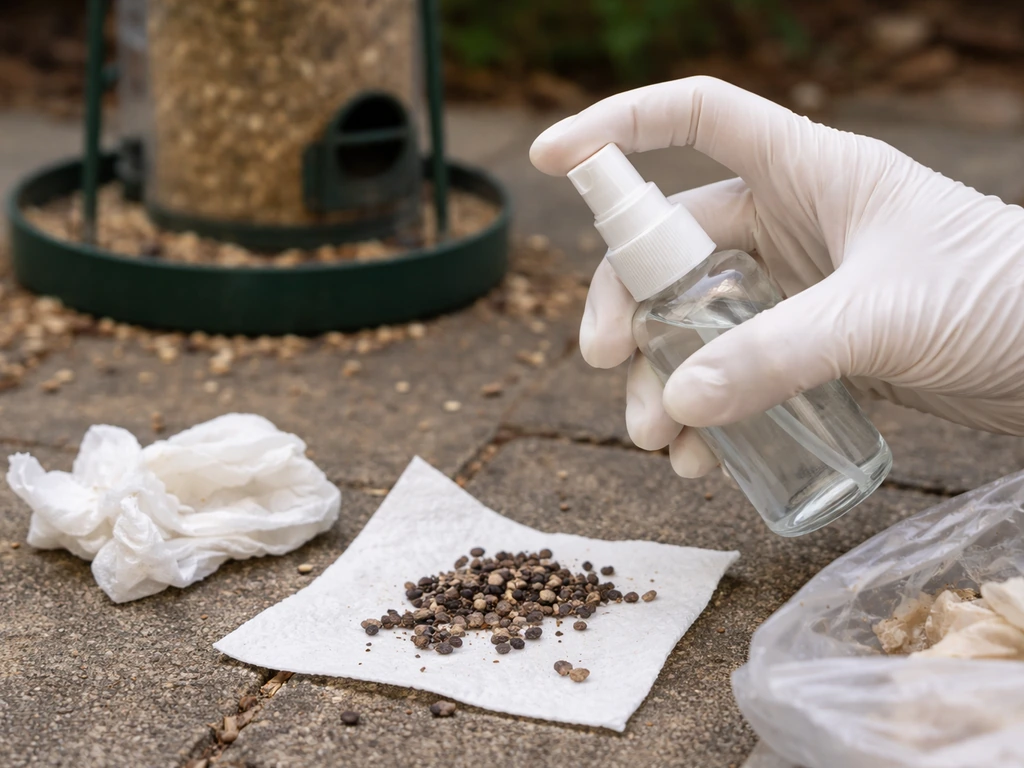
If you find rodent droppings near your feeder or storage area, follow CDC guidance: wear rubber gloves, dampen the droppings with a disinfectant spray before picking them up (don't sweep or vacuum dry droppings, which can aerosolize Hantavirus particles), seal waste in a plastic bag, and dispose of it in an outdoor bin. For raccoon feces, which can carry Baylisascaris roundworm, wear gloves and if possible use disposable shoe covers, clean up promptly, and wash hands thoroughly afterward.
Regional and species-specific adjustments
What's raiding your feeder depends a lot on where you live and what season it is. The same setup that works in suburban Minnesota may need tweaking in rural Georgia or the Pacific Northwest.
Northern and cold-weather regions
Squirrels remain active year-round in most northern states and are bolder in winter when natural food is scarce. Raccoons can be semi-active through mild winters. Flying squirrels are particularly common in northeastern and Great Lakes forests and are frequently overlooked because they're so small. If you're losing seed overnight and think it's a mouse but the quantities seem larger than mice could manage, suspect flying squirrels.
Southern and warm-climate regions
Opossums and skunks are year-round visitors across the South and West. In the Southeast, fire ants can be attracted to spilled seed too, creating a secondary pest issue under feeders. Keeping the ground under your feeder clean is especially important in warm, humid climates where mold develops within a day or two on fallen seed.
Western and rural areas
In parts of the West and rural areas, bears are a real consideration from spring through fall. If you're in bear country, bringing feeders in at night is not optional, it's essential. No baffle stops a bear. Store seed indoors or in a bear-resistant container, not in a shed with a wooden door.
Readers in the UK will find their nocturnal visitor list looks a bit different, with hedgehogs, wood mice, and grey squirrels topping the charts rather than raccoons or flying squirrels.
When to escalate: safe controls and what to avoid
For most people, the combination of bringing feeders in at night, installing a baffle, cleaning up spilled seed, and switching to a tighter seed blend will solve the problem within a week or two. But if you've done all that and still have a persistent problem, or if you're seeing signs of rodent nesting near your home, here's what to do next and what to skip.
Reasonable escalation steps
- Live traps for squirrels and chipmunks: use a standard wire cage trap baited with sunflower seeds. Check it twice daily. Relocate at least 5 miles from your property, and check local regulations since relocation rules vary by state.
- Snap traps for mice and rats placed in enclosed bait stations (so birds, pets, and children can't access them) near known rodent runs along walls or fences.
- Motion-activated lights or sprinklers: these startle and deter raccoons and opossums reliably without harming them.
- Contact your local wildlife agency or a licensed wildlife removal specialist if raccoons are nesting on your property or you're in a bear-active area.
What not to do
- Do not use rodenticide (poison bait) near bird feeders. Raptors and owls that eat poisoned rodents can suffer secondary poisoning, and the same risk applies to cats, dogs, and hawks.
- Do not use sticky/glue traps outdoors. Birds and beneficial animals get caught in them.
- Do not use mothballs as a deterrent near feeders or in storage areas. They're toxic and ineffective for wildlife.
- Do not relocate raccoons without checking state regulations first. In many states it's illegal to relocate raccoons due to disease (especially rabies and distemper) transmission risk.
If you also have dogs getting into seed or birds outright refusing your feeder, those are separate problems worth tackling on their own terms. If your dog is eating bird seed, use the same approach of removing access at night, securing the feeder area, and offering a separate dog-safe routine to break the habit dog eating spilled seed. The fix for a dog eating spilled seed is very different from managing a raccoon raiding a feeder at 2 a.m. Keeping those issues distinct helps you solve each one more cleanly.
FAQ
If the seed is gone overnight but there are no tracks or droppings, what does that usually mean?
It often means the animal is clearing seed off the feeder quickly before it leaves obvious signs, or the surface you have is too hard to capture prints (like compact pavement). Check the underside and feeder supports after rain or sprinkling the ground with a light dusting of flour or sand to reveal footprints overnight.
Could ants, beetles, or other insects be what is “eating” my bird seed at night?
Yes, especially if you see holes in seed or clumps of husk rather than missing quantities. Insects tend to increase when seed is damp or poorly stored. Store seed in sealed containers and replace any moldy or clumped seed rather than only adjusting the feeder.
How can I tell whether the culprit is taking seed from the feeder versus feeding from the pile of fallen seed?
Look for where the loss is concentrated. If the seed bin is mostly intact but the ground is stripped, it is likely ground foragers like opossums or skunks. If the seed tray or hopper looks disturbed, focus on feeder access behavior like knocking, prying lids, or dragging trays.
Do nocturnal birds ever cause this problem, and how do I rule them out quickly?
Seed-stealing at night is rarely caused by birds, because most seed-eating birds feed during daylight. If you repeatedly see activity and it is accompanied by mammal-like tracks or droppings, treat it as a mammal issue. If you see feathered birds entering after dusk, switch to a feeder cage design and add a baffle to stop mammals that may also be present.
What’s the most common mistake that makes baffles fail?
Baffles installed too low, or placed where animals can jump from a nearby tree, fence, railing, or roof edge. Ensure the baffle is high enough and keep the feeder far (more than 8 feet) from anything an animal can use as a launch point, then re-check after trimming or seasonal growth.
If I switch seed to safflower, should I fully replace my mix or just change part of it?
Start with a partial substitution if you still want variety for songbirds, then increase safflower if squirrel pressure remains high. Squirrels often avoid safflower immediately, while many songbirds adapt quickly, so you can adjust based on who shows up after a few nights.
How often should I clean the feeder during humid weather to prevent pests and mold?
In wet or humid conditions, clean more frequently, every few days, because mold can form quickly on damp seed left in the feeder or on the ground. Also rinse thoroughly after any bleach treatment and let everything dry completely before refilling, since moisture accelerates re-infestation.
Is it safe to use the same gloves and tools for raccoon and rodent cleanup?
Avoid cross-contamination. Use dedicated gloves or disinfect tools afterward, and follow the cleanup cautions for the specific animal waste you see. If you are unsure whether droppings are from rodents or raccoons, assume higher risk and handle with the stricter precautions, including dampening before pickup.
What should I do if I suspect flying squirrels instead of mice, and the damage is bigger than I expect?
Flying squirrels often manage faster, cleaner theft from feeders and can be missed because they are small. In that case, prioritize feeder designs that reduce access (wire-cage openings no larger than about 1.5 inches) and ensure the baffle setup blocks climbing or reaching from nearby structures.
If I bring feeders in at night, how do I avoid creating a mess the next morning?
Keep a ground tray or wipe-up plan ready if you have ground-feeding birds. Also remove any spilled seed before bringing the feeder in, because leftover seed overnight can still attract the same pests even if the feeder is indoors.
How do I know when it’s time to escalate beyond DIY prevention?
Escalate if you keep seeing signs of nesting, repeated droppings close to entry points, or ongoing loss even after baffles, cleanup, and seed adjustments. Also act faster if you discover feeder damage that suggests regular, skilled access (especially raccoon prying or repeated feeder tipping).
Should I adjust my feeder location even if the baffle is installed correctly?
Yes. Place the feeder where it is not easily accessed from cover, and keep a clear landing approach for birds while limiting pathways for mammals. Moving it away from dense shrubs, stacked wood, and low fences can reduce how often animals attempt the route even when the physical barrier is present.
Next Article
What Animals Eat Bird Seed and How to Stop Them
Learn what animals eat bird seed, how to identify them, stop raiders, and keep feeders clean and safe.