The fastest fix is removing access before anything else. Pick up spilled seed under your feeders daily, move feeders out of your dog's reach, and store your seed in a chew-resistant container with a tight lid. From there, a solid "leave it" command and a few feeder setup changes will keep your dog out of the seed long term. If your dog already ate some, the main risk is moldy or wet seed, not fresh dry seed, but either way the steps below will tell you exactly what to watch for.
How to Get My Dog to Stop Eating Bird Seed Safely
Maya Collins
2 Jun 2026
Why your dog keeps going after bird seed
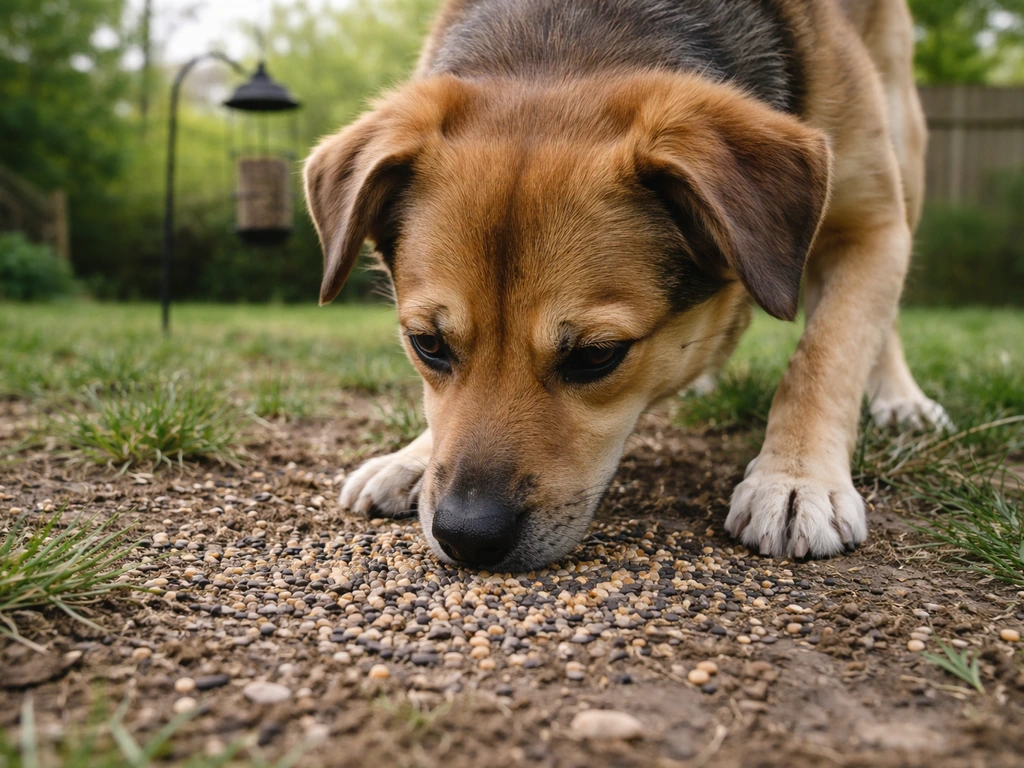
Dogs are scavengers by instinct, and bird seed hits several triggers at once. Sunflower seeds, peanuts, millet, and corn are all calorie-dense and carry strong, appealing smells. Dropped seed under a feeder sits at nose and ground level, which is exactly where a dog already sniffs. Add in the fact that birds scatter hulls and broken seeds constantly, and you have a free, self-replenishing snack bar at your dog's eye level. It is not defiance or bad behavior. It is just a dog doing what dogs do when food is within reach.
There is also a hygiene dimension worth knowing. Ground-level seed accumulates bird droppings, and older or damp seed can grow mold that produces aflatoxins, which are genuinely dangerous. The FDA notes that some foods, such as grains and dried beans or fruits, can be susceptible to fungus or mold that produces mycotoxins mold that produces aflatoxins. So the problem is not just your dog eating a few seeds; it is your dog potentially eating contaminated material you cannot always see. That is why access prevention and seed quality management belong in the same plan.
Make bird seed physically inaccessible
Store seed in chew-resistant containers
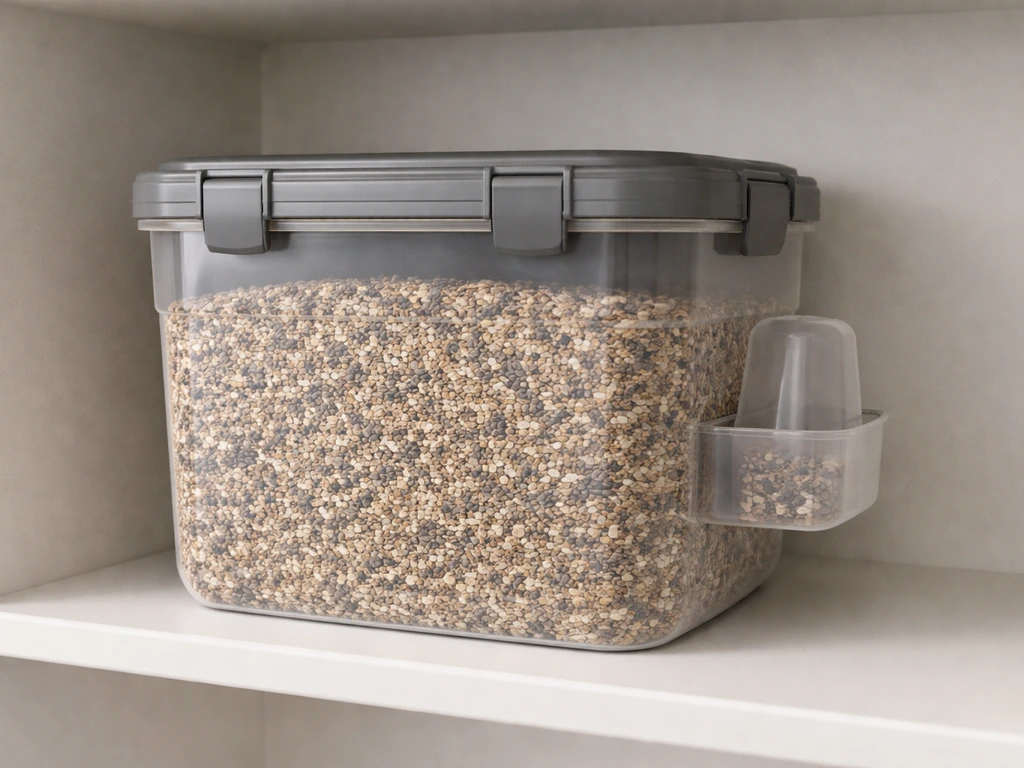
An open bag or a thin plastic bin is not adequate storage when a dog is involved. Rats can chew through basic plastic containers, and a motivated dog will do the same. Use thick, rigid plastic, metal, or glass containers with tight-fitting lids. Galvanized metal trash cans with locking lids work well and are rodent-proof, which also matters because rodent activity around your seed storage is a secondary contamination risk. Keep the storage container in a garage, shed, or fenced area your dog cannot reach unsupervised.
Reposition and upgrade your feeders
The standard guidance for discouraging ground-level pests is to hang feeders at least 4 feet off the ground, ideally on a pole or wire away from fences and branches. For dogs specifically, height alone may not be enough if your dog is large or if seed simply falls. A few feeder changes make a real difference:
- Switch to covered feeders or feeders with deep trays that catch hulls and broken seed before they hit the ground.
- Use tube feeders with small ports that release seed only when a bird perches, reducing scatter.
- Try no-mess or no-waste mixes, such as shelled sunflower hearts or hulled millet, which produce far less debris on the ground.
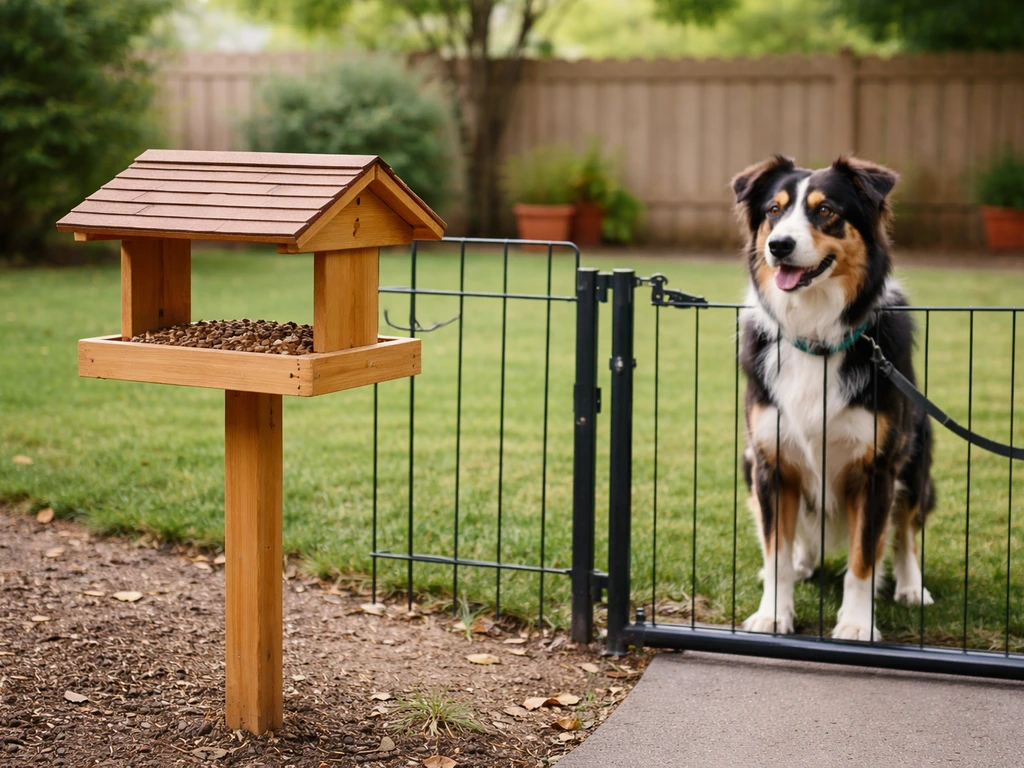
- Place feeders in a section of the yard your dog cannot access, using a fence section, garden gate, or a dedicated dog-free zone.
Block scavenging routes
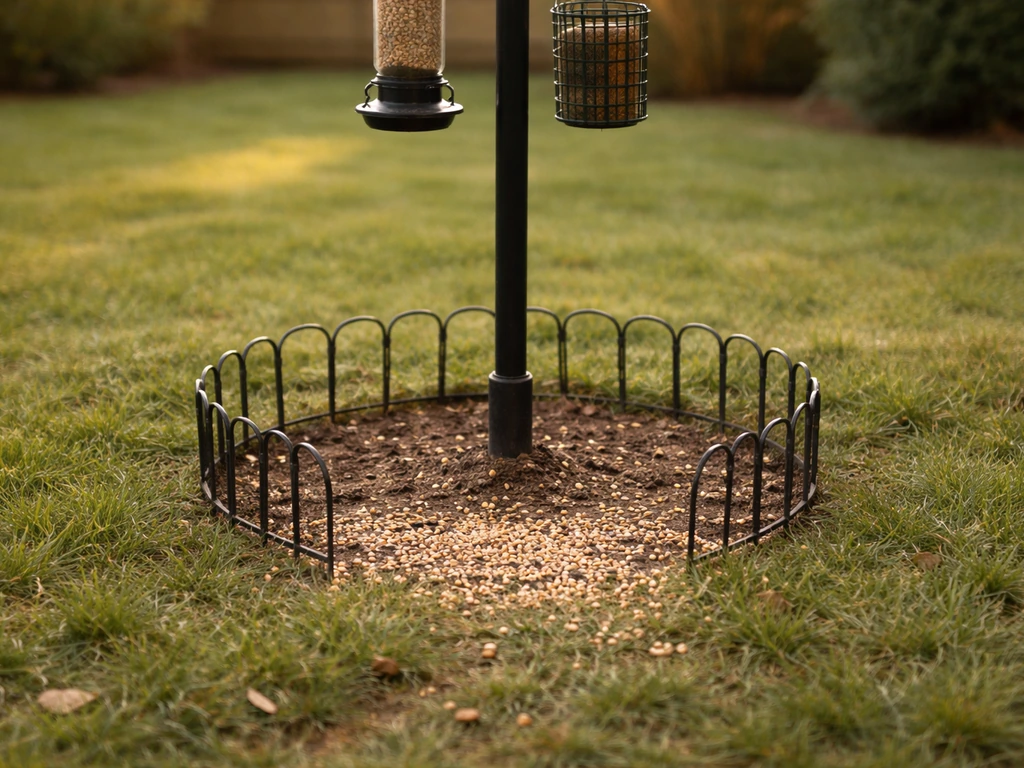
If your yard layout does not allow for a fully separate feeding zone, a simple low garden fence or decorative barrier around the base of a feeder pole keeps your dog out of the drop zone without disrupting the birds. You can also use a concrete paver or flagstone pad under the feeder, which makes daily sweeping much easier and reduces the moist soil conditions that cause seed to sprout or mold.
Seed hygiene troubleshooting: wet, sprouted, stale, moldy, and pest-infested seed
This is the part most dog-owner articles skip, but it matters a lot on a bird-seed-focused site. The condition of your seed directly affects how dangerous it is if your dog gets into it, and it also affects how attractive it smells. Here is how to identify and deal with each problem.
| Seed condition | How to identify it | Risk to your dog | What to do |
|---|---|---|---|
| Wet or clumped seed | Seed sticks together, feels heavy or damp, may have a sour smell | Mold and aflatoxin risk, even early-stage contamination is not visible | Discard immediately in a sealed bag; do not compost |
| Sprouted seed | Green shoots visible in seed tray or on the ground | Lower direct toxin risk, but sprouts signal moisture that promotes mold elsewhere | Remove and discard sprouts; check surrounding seed for dampness |
| Stale or rancid seed | Oily or off smell, kernel color looks faded or greasy | Digestive upset if eaten in volume; may carry mycotoxins from grain mold | Discard; check storage container for moisture entry points |
| Visibly moldy seed | Gray, green, black, or white fuzzy growth on seed or in tray | High aflatoxin risk; treat as urgent if your dog ate this | Discard, clean feeder or tray with dilute bleach solution, dry thoroughly |
| Weevil or moth larvae infestation | Small white or yellowish worms (weevil larvae), webbing or silk threads (Indian meal moth larvae) | Not directly toxic, but infested seed is often also damp and mold-prone | Discard all affected seed; clean container with soap and water before refilling |
Indian meal moths are one of the most common stored-seed pests and their larvae migrate away from the original food source, so if you see silk webbing or small worms in the seed bag, check nearby shelves and containers too. Weevil larvae look like small white or yellowish worms inside individual kernels. Both signal that the seed has been sitting too long or was stored in conditions that allowed moisture in. Either way, the seed should be discarded, not just picked through.
Aflatoxins are produced by the mold Aspergillus flavus and grow on exactly the kinds of ingredients found in common bird-seed mixes: corn, peanuts, sunflower, and other grains. You cannot smell or see aflatoxin contamination reliably, which is why visibly wet or moldy seed should be treated as potentially toxic rather than just unpleasant. This applies whether the seed is in your storage container, in the feeder, or sitting in a damp pile under the feeder.
How to inspect seed before filling feeders
- Pour a small amount onto a white plate or tray in good light. Look for clumping, webbing, visible larvae, or discoloration.
- Smell the seed before adding it to a feeder. Fresh seed smells neutral to mildly nutty. A sour, musty, or oily odor is a discard signal.
- Check the container walls and lid for moisture condensation, which can seed mold growth even in otherwise dry-looking seed.
- If anything looks or smells off, seal it in a plastic bag and throw it in an outdoor bin, not in your kitchen trash.
Cleanup and spill prevention to reduce repeat foraging
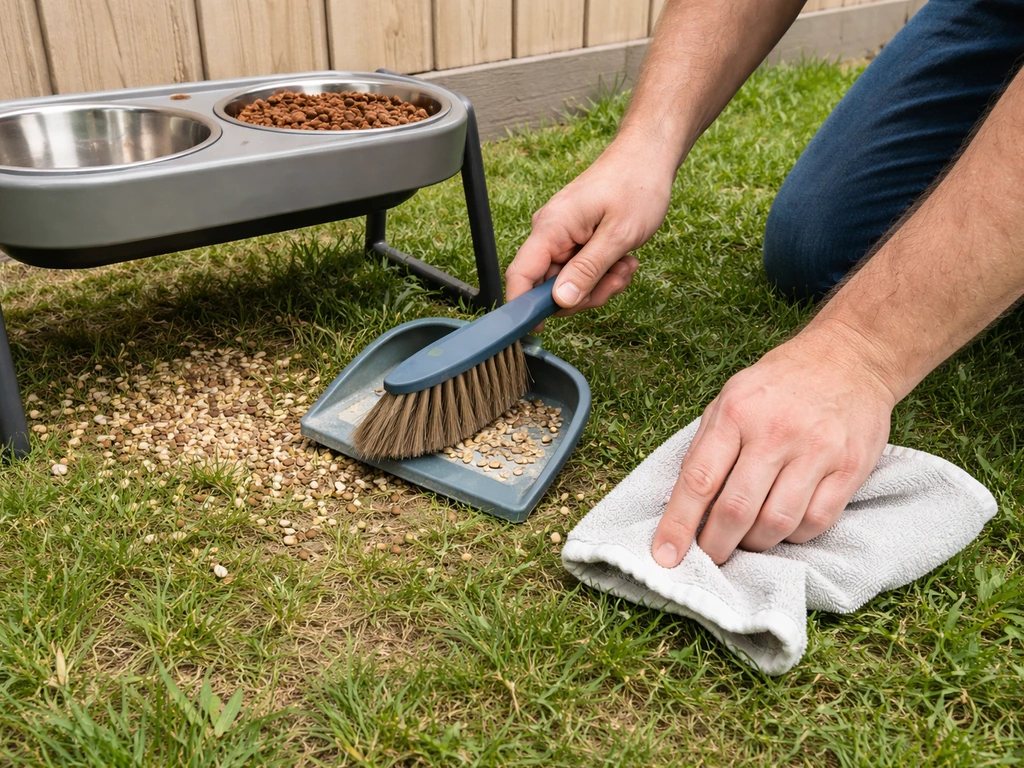
Spilled seed is the number-one driver of repeat foraging. If your dog finds seed on the ground once, they will check that spot every time they go outside. Removing the reward breaks the habit loop, but you need to be consistent about it.
- Rake or sweep under your feeder every day, or at minimum every other day. Seed hulls and broken fragments accumulate fast and are harder to clean the longer they sit.
- If you use a ground-level tray feeder, empty it completely at the end of each day rather than leaving seed out overnight.
- After sweeping, put discarded seed and hulls in a sealed bag before trashing them. Loose hulls in an open bin or compost pile are still accessible to a curious dog.
- Wash the area under a permanent feeder periodically, especially after rain. A flagstone or paver base makes this easy and also prevents the moist soil conditions that promote mold and sprouting.
- If you notice your dog sniffing or hovering near the feeder base even after cleanup, go over the area once more. Dogs can detect seed residue by smell long after you think the ground is clean.
It is also worth checking the areas where other wildlife might be carrying or stashing seed. Rodents, raccoons, and other night-active animals may also raid feeders after dark, so it helps to manage both dog access and wildlife access during nighttime hours night-active animals eat bird seed. Squirrels, possums, and other backyard animals are not the only ones that may eat bird seed, and it helps to know what animals do when the seed is left out.
Squirrels, possums, and other backyard animals interact with bird feeders in ways that spread seed well beyond the immediate drop zone. If your dog is foraging in unexpected spots in the yard, that is often why. Dealing with the feeder itself and the ground underneath it stops most of the problem, but a broader yard scan occasionally is a good habit.
Training and management strategies that actually work
Teach "leave it" in stages
"Leave it" is the single most useful command for this situation, and it takes a few days of consistent practice to make it reliable outdoors. The key is to build the behavior in low-distraction conditions first, then transfer it to the yard. MSPCA-Angell’s step-by-step “leave it/drop it” approach starts with low-value items to lure and tempt, then uses a higher-value treat to redirect and practice until the dog can reliably leave on cue blank" rel="noopener noreferrer">“leave it/drop it” training mechanics.
- Start indoors with a low-value item, like a piece of plain kibble, on the floor. Cover it with your hand and let your dog sniff. The moment they back off or look at you, say "leave it" and immediately reward with a higher-value treat from your other hand.
- Repeat until the dog backs away consistently as soon as you say the cue. Do not repeat the cue over and over if the dog is not responding; just wait, block access, and reward the moment they disengage.
- Gradually increase difficulty: uncover the item, use more appealing items, practice in different rooms.
- Once reliable indoors, move to the yard with the dog on leash. Drop a small amount of seed on the ground and practice the cue from a few feet away. Reward heavily.
- Build up distance and complexity over several sessions until "leave it" works reliably at the feeder base.
Management tools for between training sessions
Training takes time, and in the meantime your dog will still be in the yard. Supervised outdoor time is the most straightforward management tool: keep your dog on a leash or long line during yard time until the "leave it" cue is solid and the feeder area is secured. A long line (15 to 30 feet) lets your dog roam and sniff while you maintain the ability to redirect them before they reach the feeder zone.
You can also use physical barriers as a short-term management layer. A simple low fence or decorative garden border around the feeder base, combined with a no-scatter feeder that reduces ground spillage, will cut most opportunistic foraging even before training is complete. The goal is to make access hard enough that the dog stops seeing it as a reliable food source.
Deterrents worth trying (and ones to skip)
Citrus-based sprays around the feeder base can discourage some dogs from approaching, since dogs generally dislike strong citrus scents. That said, deterrents alone rarely work long term because the smell of seed tends to overpower them. They are most useful as a supplement to physical barriers and training, not as a standalone fix. Commercial bitter-spray deterrents are designed for objects dogs chew, not open ground, so they are largely ineffective for outdoor scavenging.
If your dog already ate bird seed: what to watch for and when to call a vet
A small amount of fresh, dry, uncontaminated bird seed is unlikely to cause serious harm, though sunflower seed shells can be rough on the digestive tract and are worth watching. The real concern is seed that was wet, moldy, or visibly degraded. If you are not sure of the condition of the seed your dog ate, treat the situation cautiously. If you keep finding that birds leave your seed untouched, the next step is to figure out what’s making it unappealing or unsafe birds eat my bird seed.
Symptoms to watch for
Symptoms from moldy food exposure can begin within 1 to 6 hours of ingestion. Aflatoxin poisoning specifically can progress quickly, and in severe cases can be fatal before treatment if not caught early. Watch for any of the following and contact a vet or ASPCA Animal Poison Control (available 24/7) immediately if you see them:
- Sluggishness or unusual lethargy
- Loss of appetite
- Vomiting or diarrhea
- Tremors or muscle twitching
- Yellow tint to eyes, gums, or skin (jaundice)
- Unexplained bruising or bleeding
When to call right now
Call your vet or ASPCA Animal Poison Control (888-426-4435) immediately if: your dog ate a significant quantity of seed you know was wet, clumped, or visibly moldy; if you see any of the symptoms above; or if you simply are not sure what condition the seed was in. Do not wait for symptoms to develop if mold exposure is a real possibility. Aflatoxin poisoning can move fast, and early intervention is what makes the difference. Even if your dog seems fine, a quick call gives you a toxicologist's opinion based on your specific situation.
If the seed looked fresh and dry and your dog ate a small amount, monitor for digestive upset over the next 24 hours and ensure they have access to fresh water. Sunflower seed shells in large quantities can cause constipation or GI irritation, so watch for straining or discomfort. When in doubt, calling your vet costs nothing but a few minutes and gives you peace of mind.
Your action plan: what to do today, tomorrow, and this week
Here is the prioritized sequence so you are not trying to do everything at once.
- Today: Sweep up all seed and hulls under and around your feeder. Check your stored seed for moisture, mold, or pests. Discard anything suspect. Move or secure your seed bag or container.
- Today: If your dog has already eaten seed, assess the seed condition and call your vet or ASPCA Poison Control if there is any mold involved or if symptoms appear.
- This week: Upgrade your storage to a metal or thick rigid container with a locking lid. Swap to a no-scatter or covered feeder if you have not already.
- This week: Start "leave it" training indoors using the staged approach above. Aim for two to three short sessions of 5 minutes per day.
- This week: Set up a physical barrier around the feeder base and supervise your dog on a long line during yard time until the training is reliable.
- Ongoing: Sweep under feeders every one to two days. Inspect seed before each refill. Re-check your storage container monthly for signs of moisture or pest activity.
Once you have the physical setup sorted and the "leave it" cue working in the yard, most dogs will simply lose interest in the feeder zone because the reward is no longer there. The combination of no accessible seed on the ground plus a reliable trained response is what makes this stick long term.
FAQ
What should I do right now if my dog already ate bird seed before I could stop them?
First, remove any remaining seed from your dog’s access and check whether the seed was wet, clumped, or visibly moldy. Then monitor closely for the next 1 to 6 hours (and longer for GI signs), offer fresh water, and call your vet or Animal Poison Control if you are unsure about the seed condition or quantity. Do not wait for symptoms if mold exposure is a realistic possibility.
How much bird seed is considered “significant,” enough to call a vet?
There is no one-size dose because risk depends on mold level, seed mix (corn, peanuts, sunflower), and your dog’s size. A practical rule is to call if you cannot confidently confirm it was fresh, dry, and a small amount, or if your dog is smaller (toxic effects scale faster). When in doubt, it is safer to get a toxicology opinion early.
Are sunflower shells a problem even when the seed is fresh and dry?
They can be, especially if your dog eats a lot. The shells may irritate the GI tract and cause constipation or straining, even without mold. If your dog shows repeated straining, vomiting, or abdominal discomfort, contact your vet rather than assuming it will pass.
My dog only eats the seeds that birds drop, not the feeder food directly. How do I stop that without preventing birds?
Focus on the “drop zone.” Use no-scatter feeders where possible, hang the feeder higher, and add a low barrier or garden base enclosure around the pole so spilled seed is physically out of reach. Also make daily sweeping part of the routine so the reward does not accumulate at nose level.
Will moving the feeder higher alone solve the problem?
Not always. Larger dogs, curious snouts, and simply having seed fall can still put the food within reach. If you try height, pair it with a secured feeding area (barrier around the base) and consistent cleanup, otherwise your dog may learn that dropped seed below the feeder is still worth searching.
What is the best way to store bird seed so my dog cannot access it, including if I have a clever chewer?
Use a rigid, tight-lid container designed for pets or rodents (metal, thick plastic, or glass). Keep it in a dog-inaccessible space such as a garage, shed, or secured fenced area, and do not rely on open bags or thin bins. Also check that rats cannot access the storage area because rodent activity can contaminate seed indirectly.
How can I tell if the seed is unsafe besides “it looks moldy”?
Watch for early pest signs in the bag, like silk webbing or small worms, and look for weevil larvae in individual kernels. Any visibly wet, clumped, discolored, or degraded seed should be treated as potentially toxic, even if it does not smell strongly. If you cannot verify freshness and dryness, discard the questionable batch.
My dog responds to “leave it” at home, but not in the yard. Why, and what should I change?
Outdoor distractions are different, so “leave it” learned indoors often fails under real cues. Practice first in low-distraction spots, then transfer gradually closer to the feeder area, using a leash or long line during yard time until the cue is reliable outdoors. Increase difficulty slowly rather than trying to correct after your dog is already committing to the seed.
Do deterrent sprays or citrus really work long-term?
They usually do not by themselves. Seeds have a strong food smell that can override scent deterrents, and many sprays are not designed for open ground foraging. If you use them, treat them as an add-on to physical barriers, feeder design changes, and training, not the main strategy.
Could squirrels or other wildlife be the real reason my dog is finding seed in odd places?
Yes. Seed can spread beyond the feeder due to wildlife caching and scattering, and your dog may follow those patterns. If foraging happens in unexpected areas, do a broader periodic yard scan and manage wildlife access too, not just the feeder base and daily cleanup.
How long should it take before my dog loses interest once access is removed?
Many dogs start decreasing foraging quickly when the reward is consistently unavailable, but consistency matters. Expect a short management phase (long line, supervision, barriers) while you reinforce “leave it,” then reassess after you have removed spilled seed routinely for several days. If the behavior persists, you may have a hidden access point, poor cleanup schedule, or an unsafe storage setup.