Birds aren't eating your seed for one of four reasons: the seed is bad, the feeder is wrong, the location is off, or something is scaring them away or beating them to it. Some animals will also eat bird seed directly, so it helps to consider what animals eat bird seed where you live. Most of the time you can figure out which one in about 15 minutes and fix it the same day.
Why Won’t the Birds Eat My Bird Seed? Fixes That Work
Maya Collins
23 Jun 2026
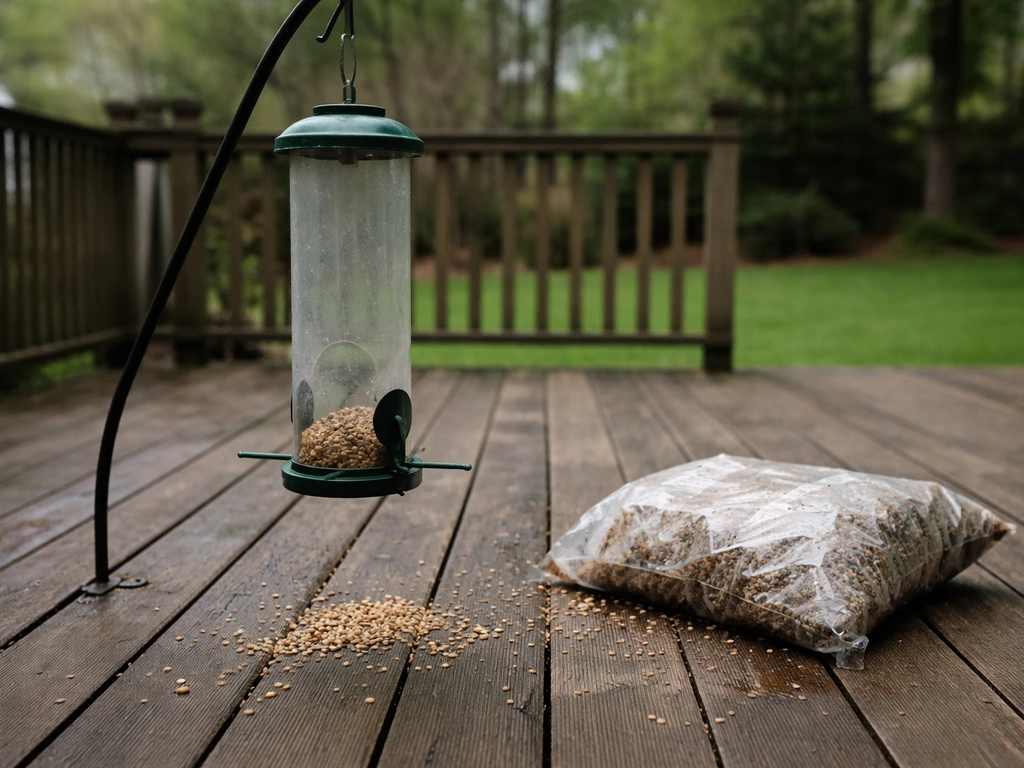
Most common causes: seed, feeder, placement, and competition
The four buckets below cover nearly every case. Knowing which one you're dealing with saves you from buying new seed when the problem is really a dirty feeder, or repositioning a feeder that actually needs to be replaced.
- Wrong seed for local birds: a generic wild bird mix full of milo or filler grains may simply not appeal to the species in your yard.
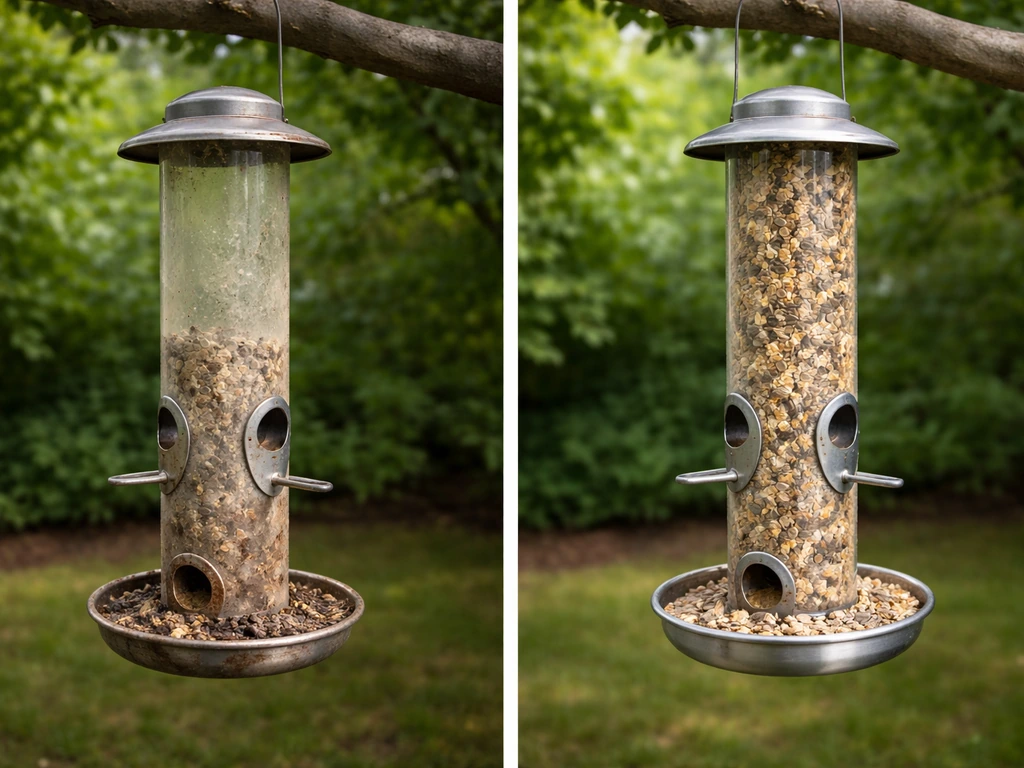
- Seed quality issues: stale, wet, clumped, moldy, or insect-damaged seed smells and tastes off to birds, even if it looks passable to you.
- Feeder or placement problems: ports that are too small, perches that are absent or broken, a feeder hung somewhere birds can't easily see or reach, or access blocked by snow and ice.
- Competition and disturbance: squirrels monopolizing the feeder, rats or mice underneath it at night, aggressive larger birds like grackles dominating the area, or too much foot traffic nearby.
Quick today diagnostic: what to check in 10–15 minutes
Before you spend money on new seed or equipment, walk through this short checklist. You'll almost always land on the cause.
- Smell the seed. Scoop a handful and bring it to your nose. Fresh seed smells nutty and mild. If it smells musty, sour, or like old cooking oil, it has gone rancid or started molding. Toss it.
- Look for clumping or webbing. If the seed is matted together, wet, or has fine webbing through it (a sign of moth larvae or weevils), it is compromised. Do not refill the feeder with it.
- Check the feeder ports. Stick your finger into each port hole. If it is clogged with compacted seed or debris, birds physically cannot get to the food.
- Look at the perches and tray. Slimy, discolored, or smelly trays and perches tell birds the feeder is not safe. Birds are more sensitive to spoiled food signals than most people expect.
- Observe from a window for 20 minutes at dawn or dusk. If birds approach but then leave, the feeder or location is the issue. If no birds approach at all, you may have a placement, competition, or habituation problem.
- Scan for squirrels or large birds. If squirrels are sitting on or under the feeder, or if a flock of grackles has taken over, smaller songbirds will simply stay away.
- Check for snow or ice over the feeder ports or tray. In winter this is surprisingly common and easy to overlook.
Seed quality and storage: stale, wet, clumped, sprouted, or moldy
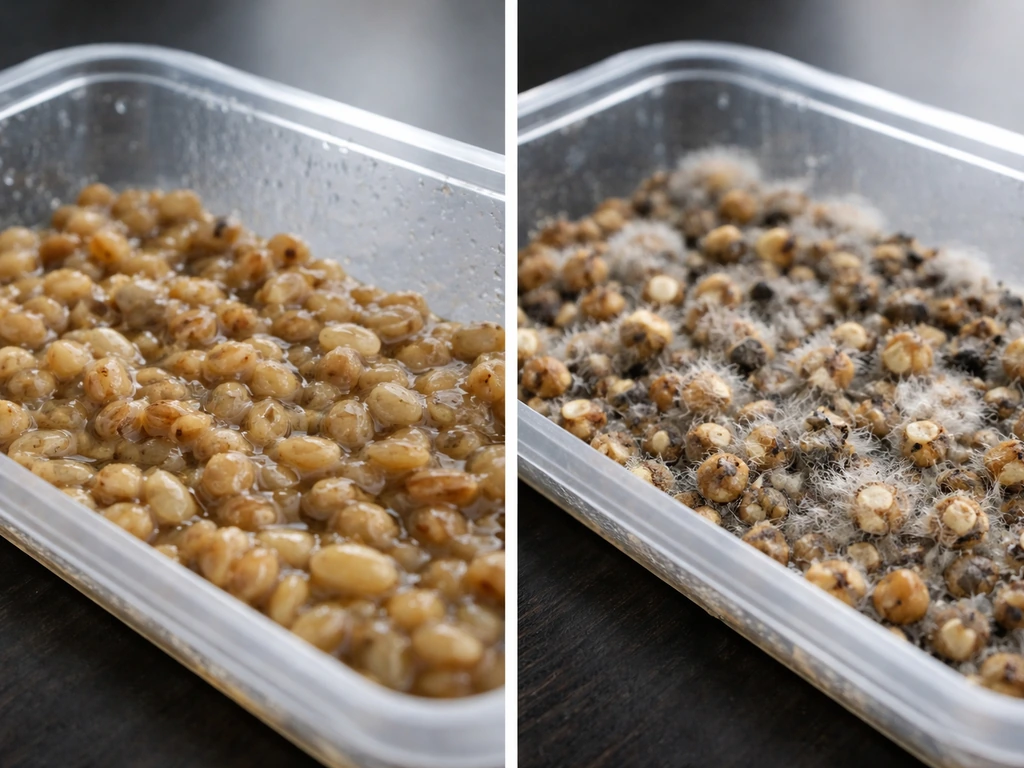
This is the most overlooked problem. Birds have strong senses of smell and will reject seed that has degraded, even if it looks fine to you. Wet weather is one of the fastest ways to ruin a feeder's seed supply. The Minnesota DNR notes that mold and bacteria can form on wet birdseed in feeders or on the ground very quickly in humid or rainy conditions.
How to tell if your seed has gone bad
- Musty or sour smell: rancidity or mold in progress.
- Clumping or caking: moisture has gotten in, which means mold is likely following.
- Sprouting: seed sitting on a wet tray long enough to germinate is too old and damp to be palatable.
- Visible mold: gray, green, or white fuzz anywhere in the seed or on the tray means the whole batch should go out.
- Webbing or small larvae: insect infestation, common in improperly stored bags.
Storage fixes that prevent this
Store seed in a hard-sided airtight container, ideally metal or thick plastic, in a cool and dry location. A garage or shed works well; a hot car trunk does not. Rotate stock so older seed gets used first. Do not pour new seed on top of old seed in the feeder because you're layering fresh seed over potentially spoiled seed at the bottom. Empty the feeder completely before refilling, and make sure it is dry before you add new seed. Audubon specifically recommends ensuring feeders are completely dry before refilling and disposing of uneaten seed rather than leaving it to accumulate.
Cleaning the feeder properly
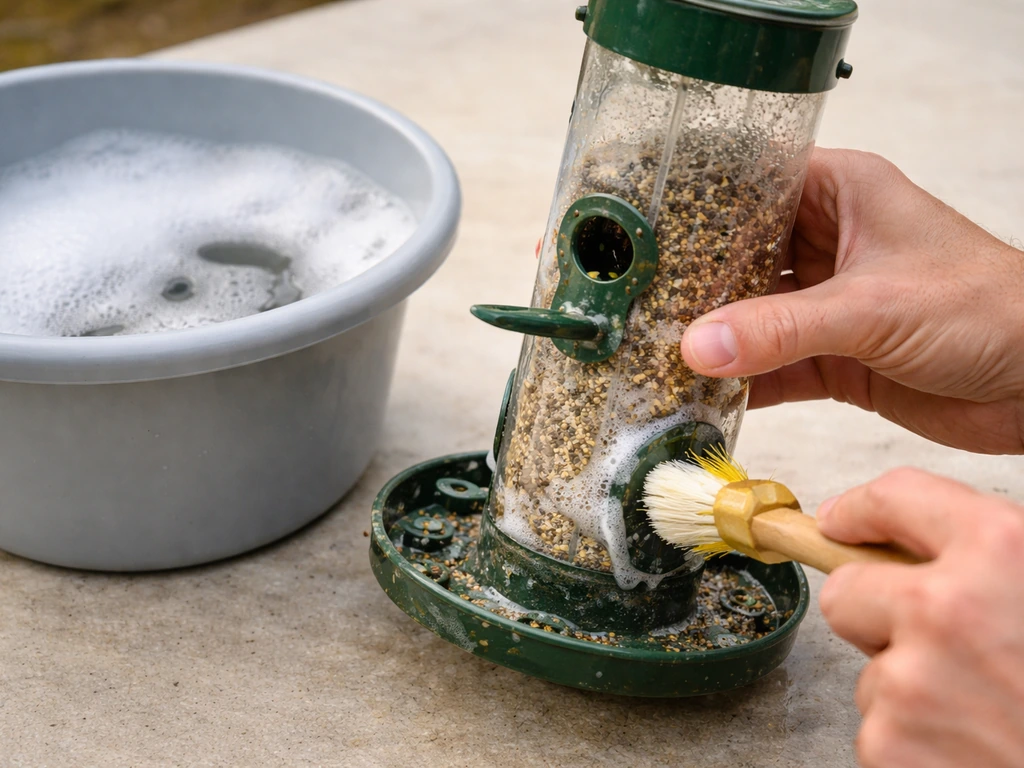
Audubon and Project FeederWatch both recommend cleaning seed feeders about every two weeks under normal conditions, and more often in hot or humid weather. The cleaning method that works: disassemble the feeder, scrub all parts with hot soapy water, then disinfect with a 9:1 water-to-bleach solution (that's roughly 1 part bleach to 9 parts water). Rinse thoroughly and let everything air dry completely before reassembling. All About Birds warns that moldy seed and hull buildup on feeder trays can make birds sick, so do not skip the tray. Also rake or sweep the ground below the feeder regularly to remove wet or spoiled seed that has fallen.
Matching seed to species: the right food for local birds
A generic mixed bag from a grocery store is often the wrong answer. Many cheap mixes are padded with milo, wheat, or oats that most North American songbirds simply ignore. Knowing what birds are actually in your yard tells you what seed to put out. In the UK, several backyard animals can eat seed at night, so check which nighttime visitors you are dealing with before changing feed or feeder placement what animals eat bird seed at night.
| Seed type | Birds attracted | Best feeder type |
|---|---|---|
| Black oil sunflower | Widest variety: cardinals, chickadees, nuthatches, finches, jays | Hopper, tube, or platform feeder |
| Nyjer (thistle) | Finches, goldfinches, siskins, redpolls | Nyjer-specific tube feeder with small ports |
| White millet | Sparrows, juncos, doves, towhees (ground feeders) | Platform or ground tray |
| Peanut hearts | Jays, woodpeckers, nuthatches, titmice | Mesh feeder or hopper |
| Suet | Woodpeckers, nuthatches, wrens, chickadees | Suet cage hung off the ground |
Black oil sunflower seed is the single best general-purpose choice if you are not sure what birds visit your yard. All About Birds calls it the mainstay because it attracts the widest variety of backyard birds. Its thin shell is easy for small birds to crack, and the high fat content makes it nutritionally appealing.
If you are targeting finches specifically, nyjer (also called thistle) is the go-to: goldfinches and house finches in North America go after it reliably, and in the UK the RSPB notes greenfinches and redpolls both favor nyjer and sunflower hearts. If you are seeing mostly sparrows and juncos, switch to white millet on a low platform or directly on the ground, since these are ground-foraging birds that often skip hanging feeders.
Feeder and setup fixes: ports, cleanliness, tray access, and winter blockages
The right food in the wrong feeder is inaccessible food. Wild Birds Unlimited makes this point directly: feeder style and dispensing design determine which birds can actually get to the seed. Here is how to audit your setup.
Feeder type and port size
Tube feeders with small ports are great for nyjer but too restrictive for sunflower. Hopper feeders handle sunflower well. Platform or tray feeders work for ground-feeding species that rarely use hanging feeders. Audubon recommends table-style or platform feeders for ground feeders, and hopper or tube feeders for birds that naturally feed in shrubs and trees. Suet cages should be positioned well off the ground where woodpeckers, nuthatches, and chickadees feel safe. If you only have one feeder type, you are only attracting one segment of the birds available to you. Adding a tray beneath a tube feeder (Wild Birds Unlimited suggests this) can open up access to more species.
Feeder placement
Position your feeder where birds can see it, ideally within a few feet of cover like a shrub or tree so birds feel safe approaching, but not so close that squirrels can jump from branches onto the feeder. About 10 feet from dense cover is a practical compromise. Avoid placing feeders in high-traffic human areas: birds that are new to a feeder or shy species will not come close if people are walking by constantly. Also make sure the feeder is actually visible from the air, not hidden under an overhang or dense foliage.
Snow and ice blocking access
In winter, ice and snow can seal feeder ports, cake seed into an unusable block, or cover a platform feeder entirely. Check your feeder after every storm and clear it out. A covered platform feeder or a hopper with a roof can reduce how often this happens. If you notice birds hovering near the feeder but not landing, ice over the ports is often the culprit.
Pests preventing access: squirrels, rats, mice, and grackles
If the seed is fresh and the feeder is clean and well-placed, competition is likely the problem. If you suspect possums are visiting, know that they may take advantage of accessible seed, including bird seed meant for backyard birds. Squirrels, rats, mice, and large aggressive birds like grackles can all effectively shut smaller songbirds out of a feeder. If you are also wondering what is getting into your seed at night, rats and mice are frequent culprits that many people do not spot during daytime checks.
Squirrels
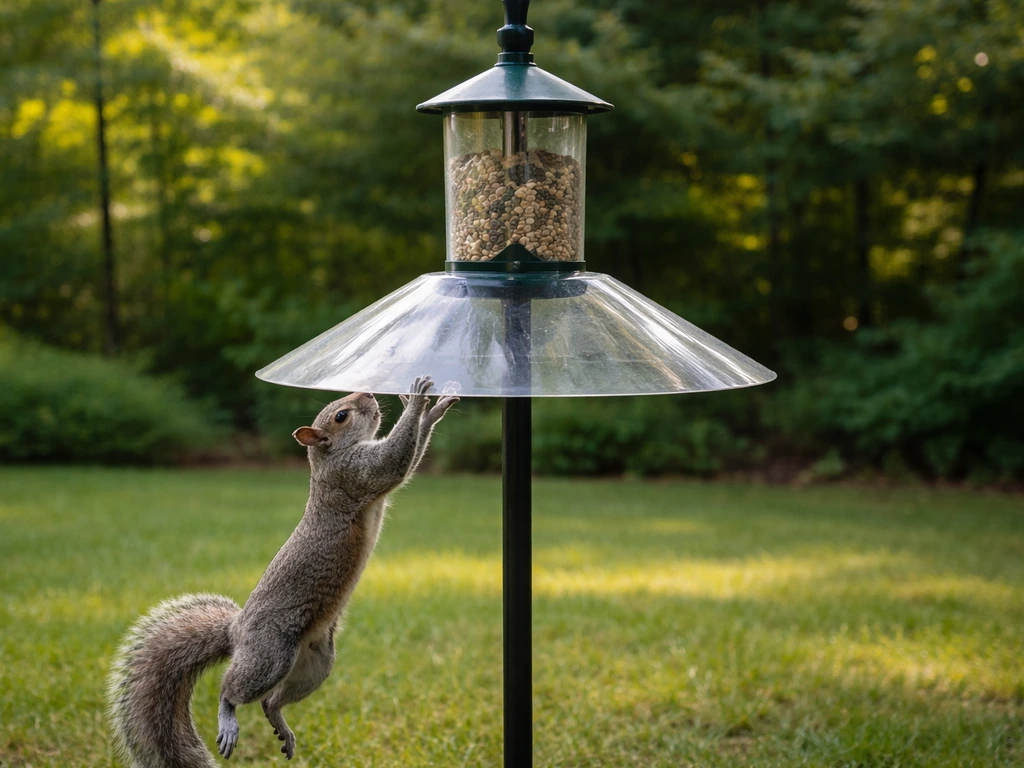
Squirrels are persistent and smart, but they are manageable. The most reliable method is a baffle on a pole-mounted feeder. Install a cone or cylinder baffle on the pole at least 4 to 5 feet off the ground, and make sure the feeder is at least 10 feet away from any jumping point (fence, tree, roof). Audubon and Wild Birds Unlimited both back this approach, though Wild Birds Unlimited also notes that some baffles can fail if the feeder itself is too large or heavy, since squirrels learn to grab and slide off. If you are hanging a feeder from a branch, use a baffled hanging setup rather than a bare wire or string.
Rats and mice
Rodents are almost always attracted by seed spilled on the ground below the feeder, not by the feeder itself. The prevention is straightforward: use a tray to catch falling seed, sweep or rake the ground below the feeder regularly, and do not let seed accumulate on the ground overnight. Consider bringing feeders in at night if rodents are a persistent problem in your area, or switching to seed types like nyjer that rodents find less appealing.
Grackles and large aggressive birds
Grackles, starlings, and house sparrows can overwhelm a feeder and drive away smaller desirable birds. These species are larger and more aggressive, and smaller birds simply will not compete. The most practical fix is switching to a feeder design that limits access for larger birds. [Coping with grackles](https://www.
birdwatchingdaily. com/beginners/getting-started/coping-with-grackles/) recommends using feeder designs that let small birds access the seed while limiting entry for larger birds like grackles. Cage feeders (a small tube feeder surrounded by a wire cage) let small birds through while blocking bigger ones. You can also remove perches from hopper feeders, which disadvantages larger birds more than small ones.
Switching to nyjer in a nyjer-only tube feeder will also naturally filter out grackles, which do not favor that seed.
Attracting birds over time: when to change strategy and what to expect next
If you have fixed the seed, the feeder, and the competition issues, the remaining variable is time and consistency. Birds do not instantly find a new food source. It can realistically take several days to a couple of weeks for birds to incorporate a new feeder into their regular foraging routine, especially if the feeder is in a new location or has recently changed. Keep the feeder stocked and resist the urge to move it every few days out of frustration.
Seasonal behavior matters too. In spring, birds have more natural food available and feeder visits drop. That is normal and does not mean something is wrong. In winter, especially during cold snaps, feeder activity spikes because natural food is scarce and birds need the calorie boost. If you see a sudden drop in activity in spring or summer, it is likely a seasonal shift, not a problem with your setup.
Neighborhood changes can also affect who shows up. Construction nearby, new outdoor cats, or a change in surrounding vegetation can shift which species visit and how often. Project FeederWatch notes that changes in your local environment are a legitimate and common reason for shifts in feeder activity.
Your next steps today
- Smell and inspect your current seed. If it smells off, clumps, or shows any mold or webbing, discard it and start fresh.
- Empty the feeder completely and scrub it with hot soapy water, then disinfect with a 9:1 water-to-bleach solution. Rinse and dry fully before refilling.
- Refill with fresh black oil sunflower seed if you are unsure what birds visit, or match the seed to what you have been seeing (nyjer for finches, millet for sparrows/juncos, suet for woodpeckers).
- Check the feeder placement: visible to birds, near cover but not so close squirrels can jump to it, away from heavy foot traffic.
- Add a baffle to your pole mount or switch to a cage feeder design if squirrels or grackles are the issue.
- Rake up seed debris from the ground beneath the feeder to reduce rodent attraction.
- Leave the feeder alone for a few days and observe from inside. Birds will come once the setup is right and they have had time to find it.
A quick hygiene note before you finish: always wear gloves when handling old or moldy seed, and wash your hands after touching feeders, seed bags, or ground debris beneath feeders. Wet moldy seed and rodent droppings near feeders are real sanitation concerns, not just aesthetic ones. Dispose of spoiled seed in a sealed bag in the trash, not in a compost pile where it can attract more pests. Keep your storage container clean and dry between refills, and you will spend a lot less time troubleshooting and a lot more time watching birds.
FAQ
How long should I wait before assuming my feeder setup is the problem?
After any change (seed type, feeder, or location), give birds a few days to learn the new food source. If no birds appear after about 1 to 2 weeks, then re-check the four buckets, especially feeder accessibility (tube port size, platform height) and seed freshness, not just placement.
What if I see birds but they land and then leave without eating?
That pattern often points to seed rejection or an access problem. Try fresh, dry seed from a newly opened bag, and confirm small birds can physically reach it (tube port size for the species you want, tray depth, or whether a cover blocks visibility). Also check for ice, caked seed, or moldy hull buildup.
Is it okay to mix new seed on top of old seed in the feeder if I’m in a hurry?
Better not. If spoiled seed has settled at the bottom, adding new seed can keep odors and mold active. Empty the feeder, let it dry fully, then refill with fresh seed so birds are reacting only to the current batch.
Why do squirrels or rats show up even when I don’t see any seed on the ground?
Many pests start with falling seed you cannot notice. Use a tray to catch what drops, sweep or rake daily if needed, and check the area under the feeder after a windy day. If rodents persist, try bringing the feeder in at night and consider seed types rodents avoid more.
Do I need to clean the feeder more often if the weather is humid but the seed looks dry?
Yes. Humidity can still create rapid mold or bacterial growth, including in seed that seems okay to you. Disassemble and disinfect on a tighter schedule, and pay extra attention to hull buildup on trays and feeder ports.
My birds hover near the feeder but won’t land in winter. What should I check first?
First check for ice on ports, perches, or tray edges. Clear after every storm, and consider switching to a covered platform or a hopper with a roof to reduce how often ice seals the openings.
Can I attract more birds without increasing seed waste?
Use the least wasteful feeder for your target birds, and avoid overfilling. If you use a tube or hopper, keep it topped up with quantities you expect to consume within a short period, and sweep the area below regularly so uneaten seed does not become a pest magnet.
What’s the fastest way to figure out if the issue is seed quality versus feeder access?
Do a quick controlled test. Replace the seed with a fresh, dry batch in a small container you can offer from the same location, or try a different feeder style (tube versus hopper versus platform) without moving it immediately. If birds eat from the same spot with the new method, the original problem was likely access rather than seed.
Why are the birds gone right after I change the seed type?
Some birds will take time to adapt, and others may not feed on the new mix at all. Only change one variable at a time, and if you are using a mixed bag, expect that many mixes include ingredients most local songbirds ignore. Consider black oil sunflower as a broad baseline if you are unsure of your visitors.
Should I stop feeding in spring if I see fewer birds?
Not automatically. Spring often reduces feeder visits because natural food becomes plentiful. Monitor for a couple of weeks and only troubleshoot if the activity stays low alongside signs like wet seed, cluttered tray buildup, or incorrect feeder type for the species you want.
What can I do about aggressive birds like grackles and starlings?
Use a feeder design that blocks them, not just different seed. Cage feeders can let small birds access food while blocking bigger competitors, and removing perches from certain feeders reduces how effectively large birds dominate the station.
Could nearby cats or frequent human activity be preventing birds from approaching?
Yes. Shy or new birds may avoid the feeder if people are walking close by or if the feeder is in a high-traffic area. Move it closer to cover (like a shrub or tree) but keep enough distance that squirrels cannot jump from those cover points.
How should I handle and dispose of moldy seed safely?
Wear gloves when you handle old or moldy seed, seal spoiled seed in a bag before putting it in the trash, and wash your hands afterward. Avoid adding it to compost, since it can attract more pests and spread issues near your yard.
Next Articles
How to Get My Dog to Stop Eating Bird Seed Safely
Step-by-step plan to stop your dog eating bird seed safely with storage, setup changes, cleanup, and vet red flags.
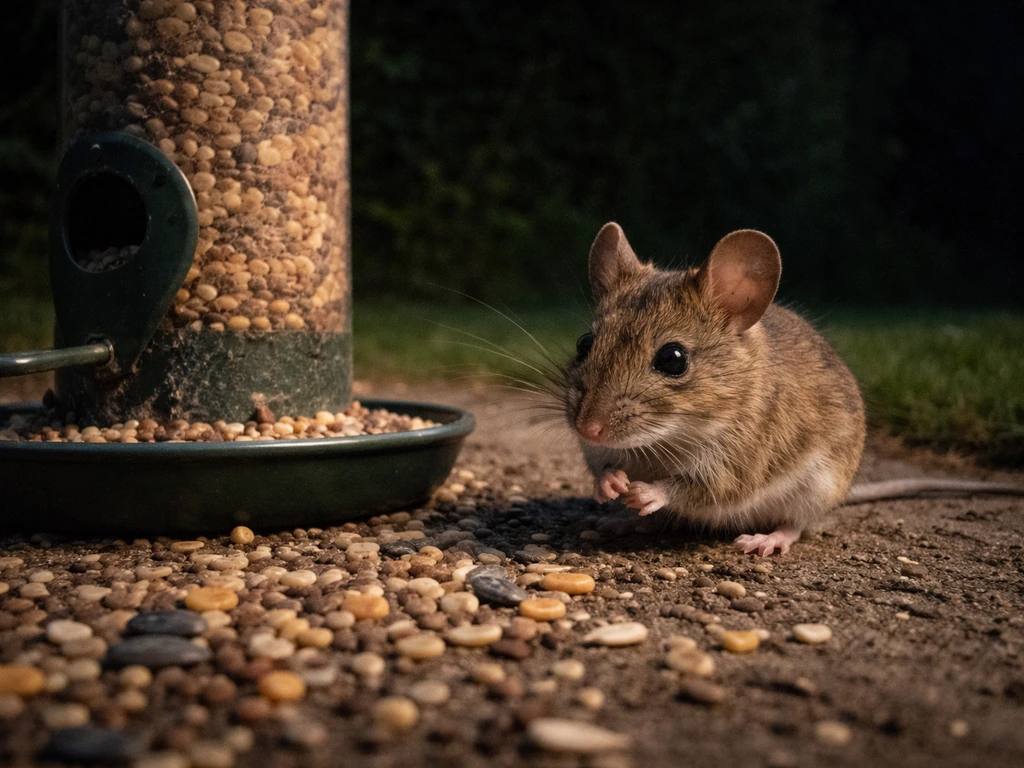
What Animals Eat Bird Seed at Night in the UK
UK nocturnal visitors eating bird seed at night, how to identify them, stop losses, and store seed safely.
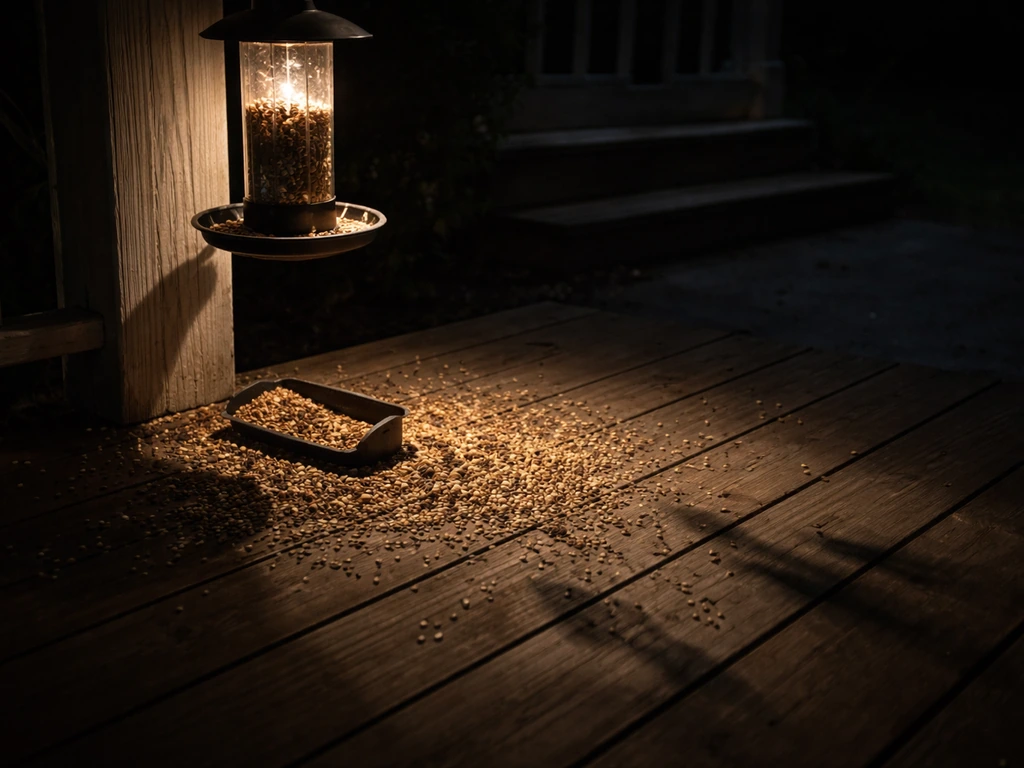
What Is Eating My Bird Seed at Night? How to Identify and Stop It
Identify nighttime seed thieves like mice, squirrels, raccoons, and raccoons using clues, then stop them with cleaning a