Quick answer: is bird seed safe for chickens
Yes, chickens can eat bird seed without dropping dead, but that does not make it a good idea as a regular food source. Wild bird seed is not formulated for chickens, it lacks the protein, calcium, and vitamin balance they need to stay healthy and lay well, and it can carry real risks: mold, pests, and contamination from additives. Wild bird seed is not a good long-term food for pigeons, because it is nutritionally incomplete compared with a balanced pigeon diet is wild bird seed good for pigeons. The short version is this: plain, fresh bird seed can work as an occasional treat or a short-term supplement (think 10 to 15 percent of daily intake at most), but it should never replace properly balanced chicken feed. If you are wondering whether bird seed is good for deer, you can compare it with what deer actually need from a balanced diet rather than assuming seed mixes are nutritious for them bird seed can work as an occasional treat or a short-term supplement. If you are deciding whether brands like Pennington bird seed are good for chickens, the main thing to check is whether it is meant for poultry and whether it is being used only as an occasional supplement, not a complete diet. If you have been using Pennington bird seed and are seeing issues like clumping, moldy smell, or egg and laying problems, the specific troubleshooting steps for pennington bird seed problems can help you pinpoint what went wrong. If you are in a pinch or want to use up a leftover bag, there is a right way to do it, and that is what this guide covers.
Wild bird seed vs chicken feed: key ingredient differences
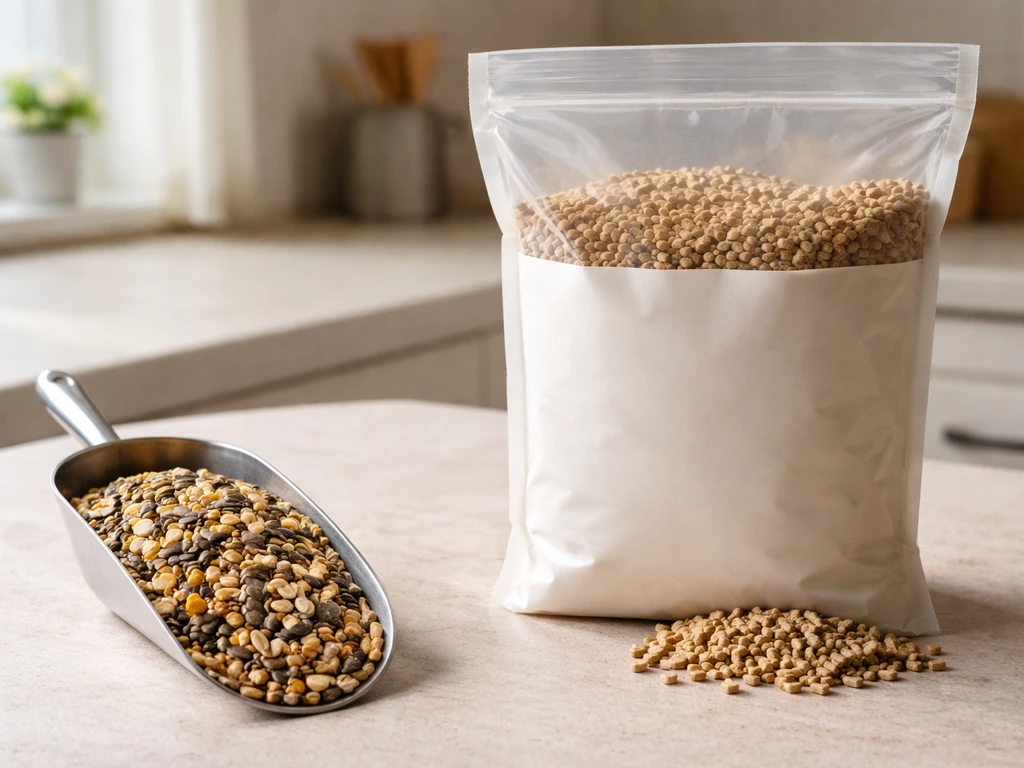
The core issue is not that bird seed is toxic, it is that it is nutritionally incomplete for chickens. Wild bird seed blends are designed for small passerine birds with very different metabolic needs. A standard backyard chicken, especially a laying hen, needs a carefully calibrated diet. Manufactured chicken feeds are, as Oregon State University Extension points out, computer-formulated to provide optimal nutrition for each particular type and age of chicken. Bird seed blends are not.
| Nutrient / Feature | Wild Bird Seed Blend | Complete Layer Chicken Feed |
|---|
| Protein content | Roughly 10–14% (varies by blend) | 16–18% minimum for laying hens |
| Calcium | Very low, rarely listed | 3.5–4.5% (critical for eggshell formation) |
| Vitamin D3 | Not added | Supplemented for indoor/confined birds |
| Methionine (amino acid) | Often deficient | Balanced in formulated feed |
| Grit / shell content | None | Often included or sold alongside |
| Additives | Sometimes coated with oils or dyes | None in quality feeds |
| Primary seeds | Millet, milo, sunflower, safflower | Corn, soybean meal, wheat, oats plus premix |
The University of Georgia's poultry nutrition guidance makes the point clearly: scratch feeds (which are similar to bird seed in ingredient makeup) should not be considered a complete feed because they lack the full nutrient balance chickens require. Long-term reliance on bird seed leads to soft-shelled eggs, poor feather condition, reduced laying, and in laying hens, calcium depletion that can cause serious health problems.
Risks: mold, pests, contamination, and nutritional gaps
Beyond the nutrition gap, there are four practical risks you need to take seriously before you toss bird seed into the coop.
Mold and mycotoxins
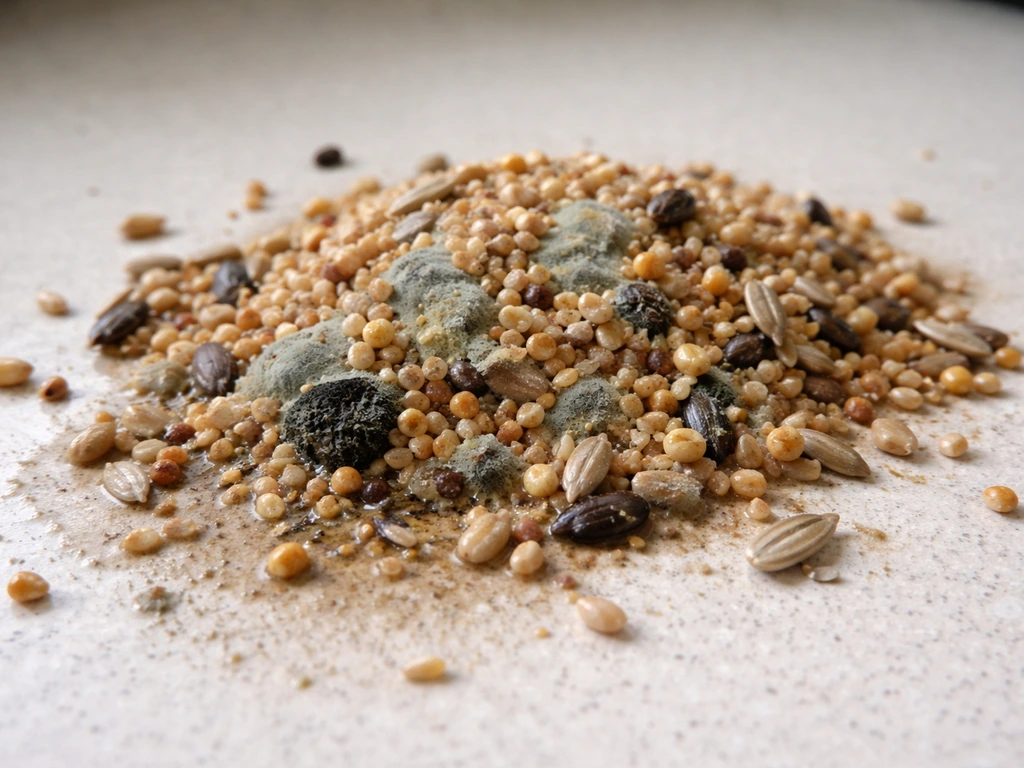
Bird seed is often stored longer and in less controlled conditions than chicken feed. Moisture is the enemy here. Seed that has gotten damp even once can harbor mold, and moldy seed can produce mycotoxins, particularly aflatoxin from Aspergillus mold, which is genuinely dangerous for chickens at even low doses. Symptoms include lethargy, reduced egg production, and in severe cases, liver damage. If a bag of bird seed smells musty, feels clumped, or shows any discoloration, do not feed it to chickens.
Pest insects and rodents
Cheap or improperly stored bird seed is a common host for grain weevils, Indian meal moths, and their larvae. While chickens will happily eat insects and that is not a health risk in itself, an infested bag means you are also bringing pest insects into your coop or storage area, which creates a much larger problem. Rodents are attracted to bird seed at least as strongly as they are to chicken feed, and a coop that smells like scattered seed is an open invitation.
Coatings, dyes, and additives
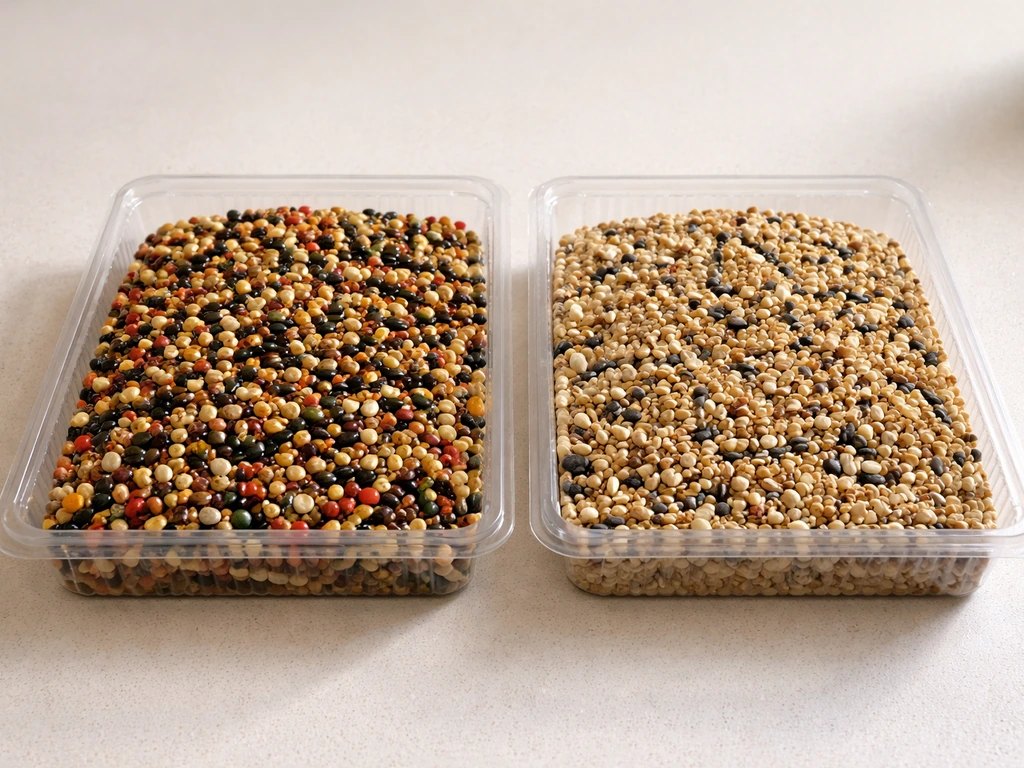
Some commercial wild bird seed products are coated in oils, colored dyes, or pesticide treatments to improve shelf appeal or repel insects. These are not tested or intended for poultry consumption. Always check the bag label. If you see anything beyond plain seeds, skip it for chickens.
Nutritional inadequacy over time
Even if the seed is clean and additive-free, feeding it as a primary diet for more than a few days will start to show. Hens will lay fewer eggs, shells will thin, and you may see feather pecking (a sign of protein deficiency). The University of Georgia is direct about this: scratch grains (and by extension bird seed) should not be used as a substitute if any level of production is expected from your flock.
How to feed it safely (amounts, frequency, preparation, storage)
If you have bird seed on hand and want to use it as a supplemental treat rather than waste it, here is how to do that without causing problems.
The right amount
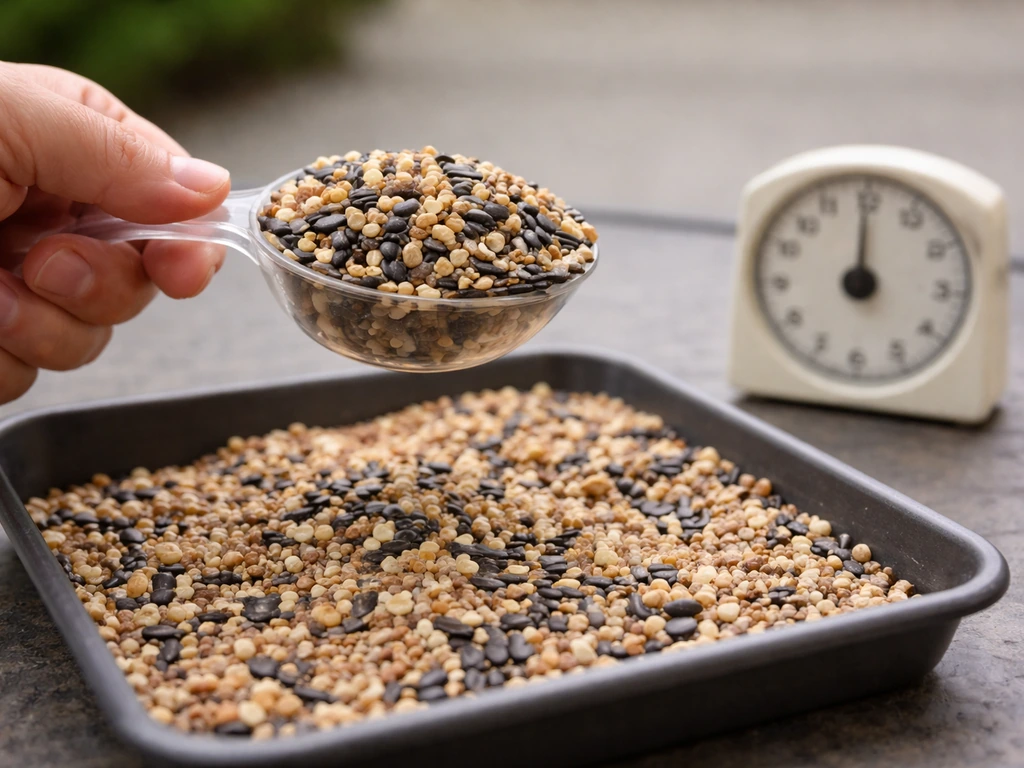
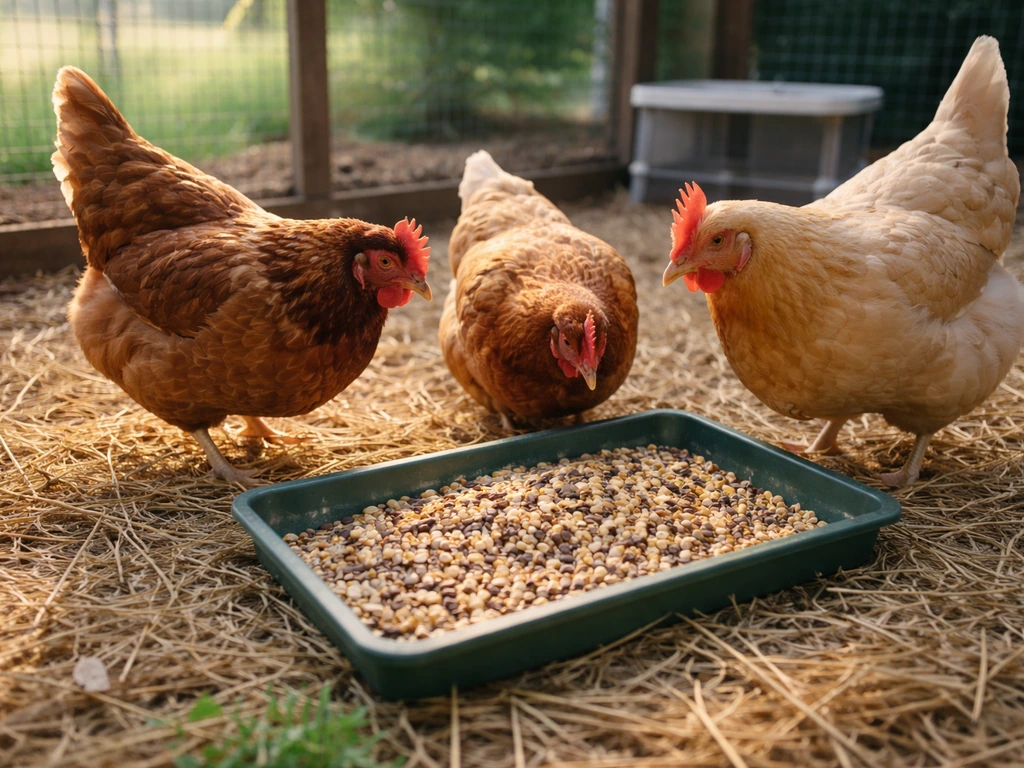
Oregon State University Extension gives a practical rule for scratch grains that applies equally well to bird seed: feed only as much as chickens can consume in about 20 minutes, and keep it to roughly 10 to 15 percent of their total daily food intake. For a small backyard flock of six hens, that typically means a small handful (around 2 to 3 tablespoons total) once a day, not a full bowl. More than that and they will fill up on nutritionally incomplete food and eat less of their balanced feed.
Frequency
Treat bird seed like a snack, not a meal. Two to three times per week is plenty. Daily supplementation at even the 10 to 15 percent level can add up to a meaningful nutritional deficit over weeks, especially in winter when hens need extra energy and protein to maintain body condition.
Sorting and preparation
- Spread the seed out on a flat surface or tray and check it visually. Remove any clumped, discolored, or off-smelling seed before offering it.
- Pick out milo (sorghum) if possible, especially for bantam breeds or smaller chickens. Large quantities of milo are poorly digested by some birds.
- Sunflower seeds (especially black oil sunflower) are the most nutritious component of most bird seed blends. If you want to hand-sort, keeping mostly sunflower and millet while removing filler like milo is a reasonable approach.
- Do not mix bird seed directly into the main feeder. Offer it separately in a low tray or scatter it on clean ground so hens can eat it independently of their regular feed.
Storage to prevent spoilage
- Store bird seed in a sealed, airtight metal or hard plastic container, not the original paper or thin plastic bag.
- Keep it in a cool, dry location. Aim for under 70°F and below 60% relative humidity. In hot, humid climates (the Southeast and Gulf Coast especially), seed can go rancid or mold within weeks if stored in a garage or shed.
- Use older stock first. Label containers with the purchase date.
- Do not store bird seed near chicken feed to avoid cross-contamination from pests or moisture.
- Discard any seed that has been open for more than 3 to 4 months unless it has been kept in ideal conditions.
How to handle wet, sprouted, or spoiled seed
Wet or damp seed is one of the more common issues people run into, whether from a feeder left out in the rain, a leaky storage container, or condensation in a humid climate. Here is how to assess and handle it.
Wet seed
If seed got wet recently (within 12 to 24 hours) and has not started to smell or clump, spread it out in a thin layer on a clean, dry surface (a baking sheet works well) in a well-ventilated area and let it air dry completely before using or storing it again. Do not dry it in the sun in humid weather, as the moisture in the air will slow the process. Once it is fully dry and smells normal, it is still usable. If it has been wet for more than 24 hours, check for early mold signs (white or grey fuzz, a musty or sour smell, unusual clumping). At that point, discard it rather than risk mycotoxin exposure.
Sprouted seed
Sprouted bird seed is actually fine for chickens in small amounts, and some keepers intentionally sprout seeds for added nutrition. When seeds sprout, their starch converts to more digestible sugars and certain nutrient levels improve. The key rule is that sprouted seed must be rinsed daily, fed within 3 to 5 days of sprouting, and never allowed to develop any mold at the root or stem. If you see fuzzy growth that is not a clean root, toss the batch. To sprout intentionally: soak seeds in clean water for 8 to 12 hours, drain and rinse, then spread in a shallow tray and rinse twice daily until small sprouts appear (usually 2 to 3 days). Feed immediately in small amounts.
Spoiled or suspect seed
Trust your nose. Spoiled seed smells sour, musty, or sharp, none of which normal seed smells like. If the seed has visible mold, is heavily clumped, has an insect infestation with frass (fine powder or webbing in the bag), or smells off in any way, dispose of it in a sealed bag in an outdoor bin. Do not compost it in an open pile near the coop, as it will attract pests. Do not try to salvage partially moldy seed by picking out the bad parts; mycotoxins can spread through a batch without being visually obvious.
Cleanup and hygiene: keeping coops and homes pest-free
Scattered seed in and around a coop is one of the fastest ways to attract rats, mice, and grain-eating insects. Whether you are using bird seed or standard chicken feed, the hygiene steps are the same, but bird seed requires extra attention because its smaller seed sizes fall through bedding more easily and break down faster when wet.
Feeder and tray setup
- Use a low-sided tray or flat feeder for bird seed rather than a hanging tube feeder. Chickens are ground feeders and tube feeders create excess scatter.
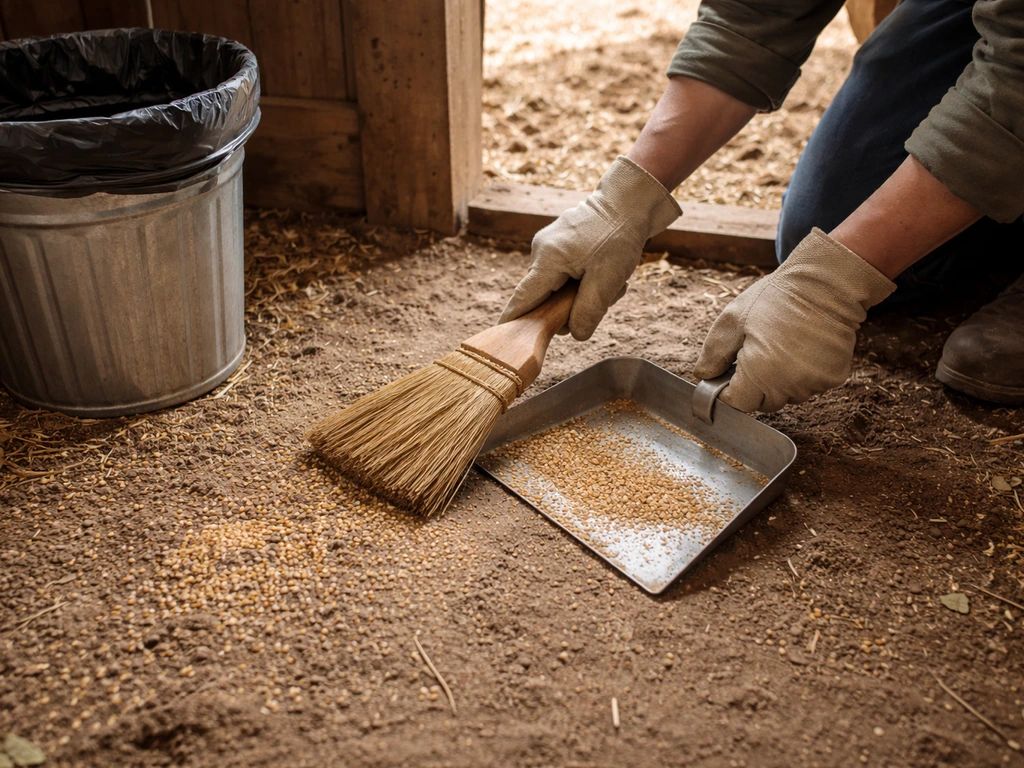
- Place the tray on a solid, cleanable surface (a rubber mat or a piece of plywood) so spilled seed is easy to sweep up.
- Remove the tray within 30 minutes of feeding to prevent leftovers from sitting in the coop and drawing pests.
- Do not leave bird seed out overnight under any circumstances. Rodents are most active at night, and a coop with overnight food is a guaranteed attractant.
Daily and weekly coop cleanup
- Sweep or rake any uneaten seed from the coop floor daily. Small seeds like millet and milo work into bedding quickly, so use a fine-toothed rake or a hand broom to get into corners.
- Inspect under feeders and along walls weekly for seed buildup, insect activity, or rodent droppings.
- Wash feeding trays with hot water and a mild dish soap weekly. Rinse thoroughly and let them dry completely before the next use.
- Replace bedding in the coop more frequently if you are scattering seed in the run or coop area, as seeds buried in damp litter mold faster than seeds on a clean surface.
- Check your storage containers monthly for pest intrusion: look for droppings, chewed lids, webbing, or frass inside the container.
Pest exclusion around the coop
If you are supplementing with bird seed regularly, take the extra step of checking for gaps at the base of your coop walls and around the feed storage area. Hardware cloth (half-inch mesh) along the base of runs and coop walls blocks mice effectively. Keep the area within 3 to 4 feet of the coop clear of tall grass, brush piles, and debris, which all serve as rodent cover. A tidy perimeter makes a big difference.
When to avoid bird seed and switch to proper feed
There are situations where bird seed should not be used at all, even as a supplement. Skip it entirely in these cases:
- Chicks under 8 weeks old: Young chicks need starter feed with 18 to 20 percent protein and precise vitamin levels. Bird seed cannot meet those requirements and can cause developmental problems.
- Molting hens: Molting birds need elevated protein (often 20 percent or higher) to regrow feathers. Filling up on bird seed during this period slows recovery.
- Sick or recovering birds: Any bird that is already stressed, underweight, or fighting illness needs maximum nutrition from every bite. Bird seed reduces the nutritional density of their diet.
- Broiler or meat birds: Fast-growing breeds have very specific high-protein, high-energy requirements. Bird seed dilutes their diet at a critical growth stage.
- Laying hens in peak production: As UGA Extension notes directly, scratch-type feeds should not be used when high production is expected. The same applies to bird seed.
- Any seed that is suspect (damp, old, smells off, shows insect activity): The risk of mycotoxin or pest contamination at that point outweighs any benefit.
When you need to switch away from bird seed, or if you have been relying on it too heavily, the fix is straightforward: move back to a complete, formulated chicken feed appropriate for your flock's life stage. For laying hens, that means a 16 to 18 percent protein layer pellet or crumble with added calcium, plus free-choice oyster shell on the side. For chicks, a starter crumble. For meat birds, a broiler grower. Transition over two to three days by mixing increasing amounts of the new feed with whatever they have been eating to avoid digestive upset from a sudden diet change.
Bird seed is not poison, but it is not chicken food either. But if you are wondering about deer, it is smart to avoid assuming bird seed is automatically safe or nutritious for them <a data-article-id="0F5BCC13-C378-49B6-BACE-19021F557091">Bird seed is not poison. </a> Used occasionally, in small amounts, with clean seed that has been stored properly, it is a harmless treat. Used as a regular substitute for proper feed, it creates real nutritional and hygiene problems. The birds you are keeping depend on you to tell the difference, and now you can.