Bird seed is made primarily from a blend of grains and oilseeds, most commonly black oil sunflower seed, white millet, cracked corn, milo (sorghum), and sometimes safflower, nyjer (niger), peanut pieces, or hulled oats. Those five or six ingredients make up the vast majority of what you find in any retail bag. The exact mix varies by brand and target bird species, but the core ingredients are remarkably consistent. If you want to go deeper on the basics, the what is bird seed overview is a good starting point, but this article goes further: into how those ingredients are processed, what gets added to them, and how to judge whether what you have in your hands is actually safe to put in a feeder.
What Is Bird Seed Made Of? Ingredients and How It’s Made
Maya Collins
7 Apr 2026
Typical ingredients in bird seed blends
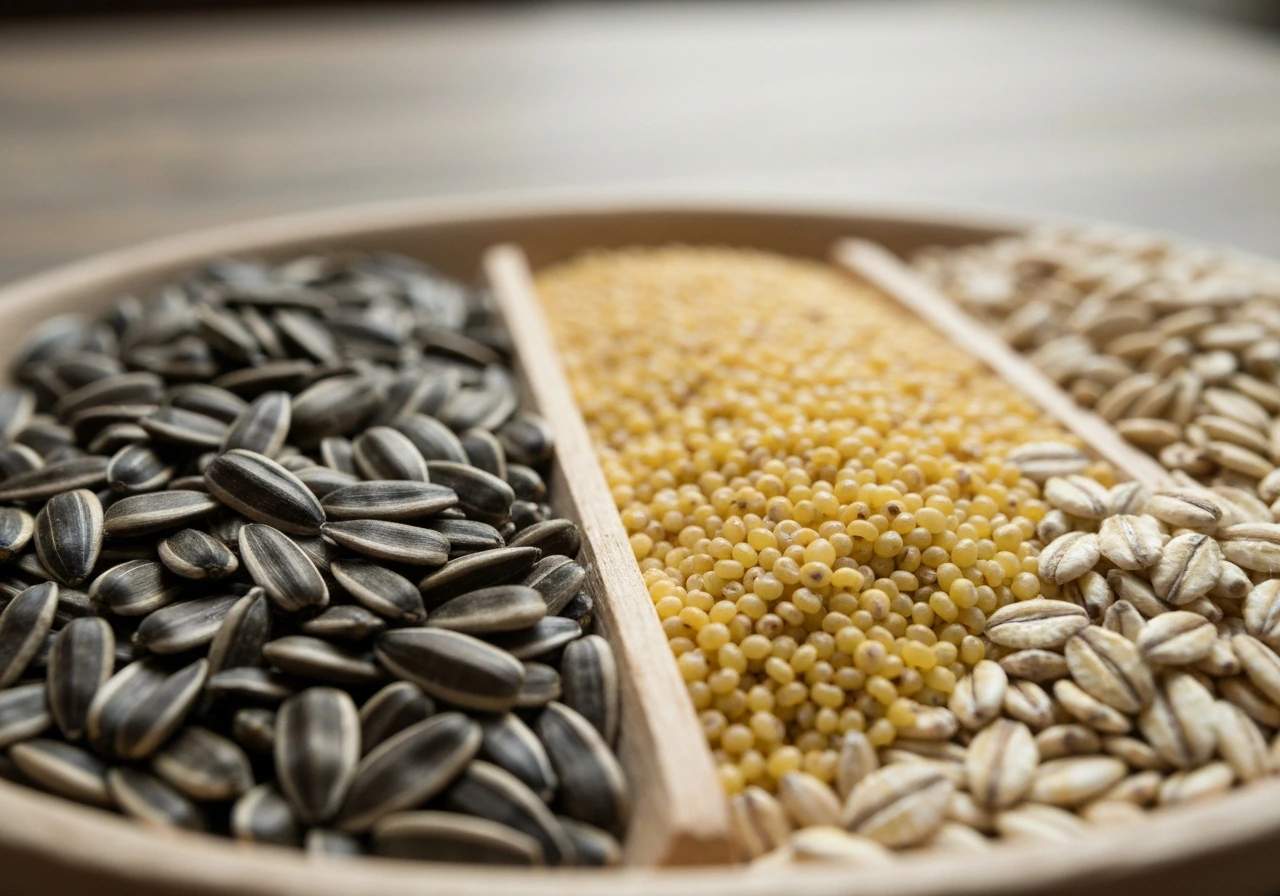
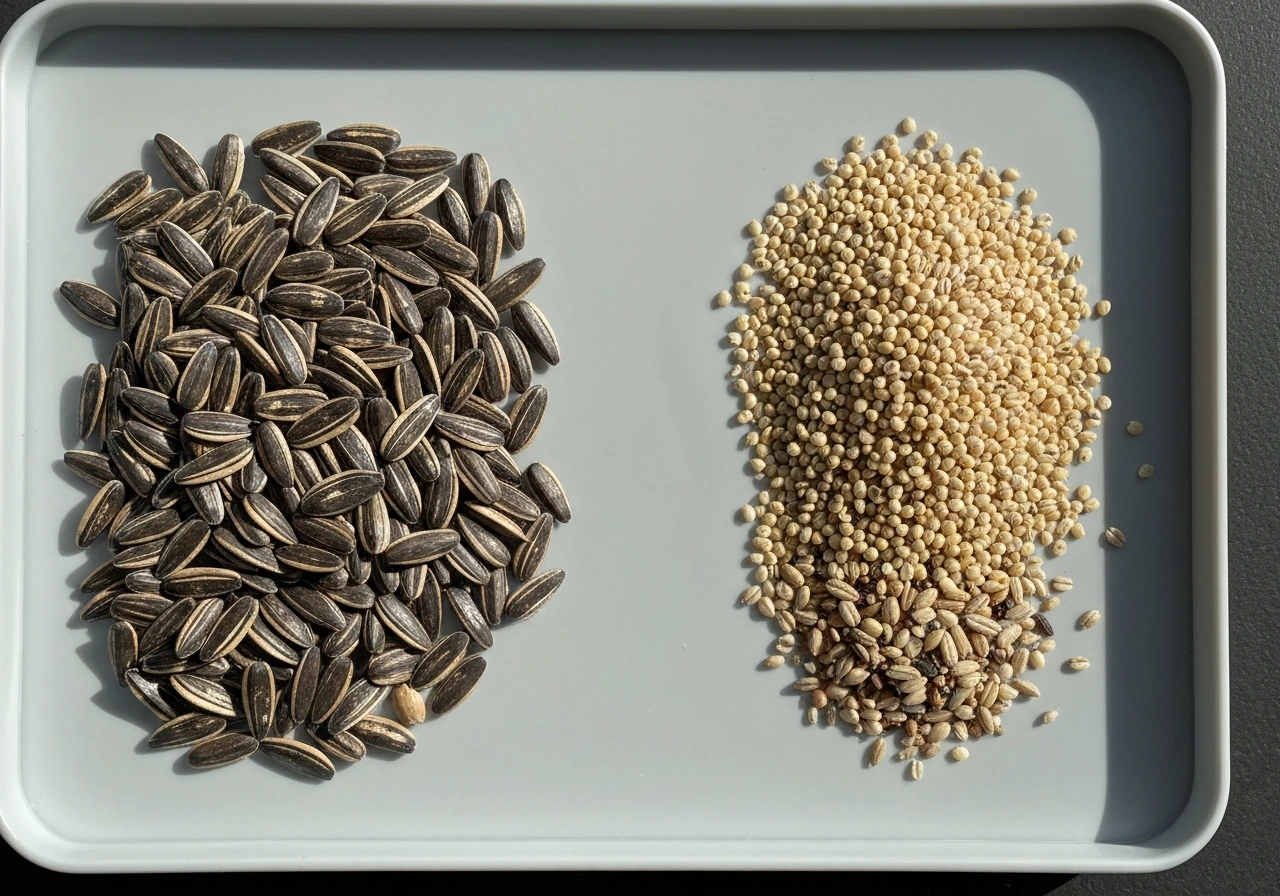
The FAO lists the most common ingredients in bird-food mixtures as black and striped sunflower seeds, decorticated sunflower hearts (meats), wheat, hulled barley, oats, millet, sorghum, niger seed, cracked maize, safflower, groundnut (peanut) pieces, pine nuts, canary seed, and quinoa. That is a long list, but most retail bags only use four to seven of these. The rest show up in specialty or premium blends aimed at specific birds or regions. Ingredient order on the bag matters: by labeling rules, ingredients are listed in descending order by weight, so the first ingredient is the largest component. A bag that lists milo first but sunflower second is mostly filler grain, not the high-fat oilseed mix most songbirds prefer.
A standard economy mix typically reads: black oil sunflower seeds, white millet, milo, cracked corn. A premium mix might read: black oil sunflower, sunflower hearts, safflower, white millet, peanut pieces. Read those first three ingredients and you have a very good idea of whether the blend is worth the price.
How bird seed goes from field to bag
Understanding where bird seed originates helps explain why quality varies so much between brands. Where bird seed comes from starts at commodity grain and oilseed farms, mostly in the US, Canada, and parts of Europe. From the farm, raw seed goes to a processing facility. Here is what actually happens in those facilities, step by step.
- Cleaning and sorting: Raw seed is run through screens and air separators to remove dirt, stems, weed seed, and undersized or broken kernels. This is the most important quality step. Seed that skips thorough cleaning carries more mold spores and insect eggs into the bag.
- Dehulling or cracking: Some seeds are processed further. Sunflower seeds destined to become 'hearts' or 'meats' are dehulled at this stage. Corn is cracked or kibbled to specific particle sizes. Oats may be rolled or crimped. Each process changes the shelf life and moisture behavior of the finished product.
- Drying: Moisture content is actively managed. FAO guidelines stress that moisture must be monitored continuously during processing and storage. Seed with moisture above roughly 10 to 12 percent is at serious risk of mold during storage. Properly processed seed is dried before it reaches the mixing stage.
- Blending and mixing: Individual seed streams are weighed and combined in a mixer to hit the target formulation. This is where the ingredient ratio is set. Large-volume blends are consistent; bargain blends from smaller operations can vary batch to batch.
- Optional treatment or coating: Some seed receives a fungicide or insecticide treatment at this stage, or a colorant coating. More on this below.
- Packaging: Finished blend is bagged, often in woven polypropylene or paper bags, sealed, and labeled. The label must list ingredients, net weight, and any treatment disclosures required by law.
What each common seed actually adds (calories, fat, protein)
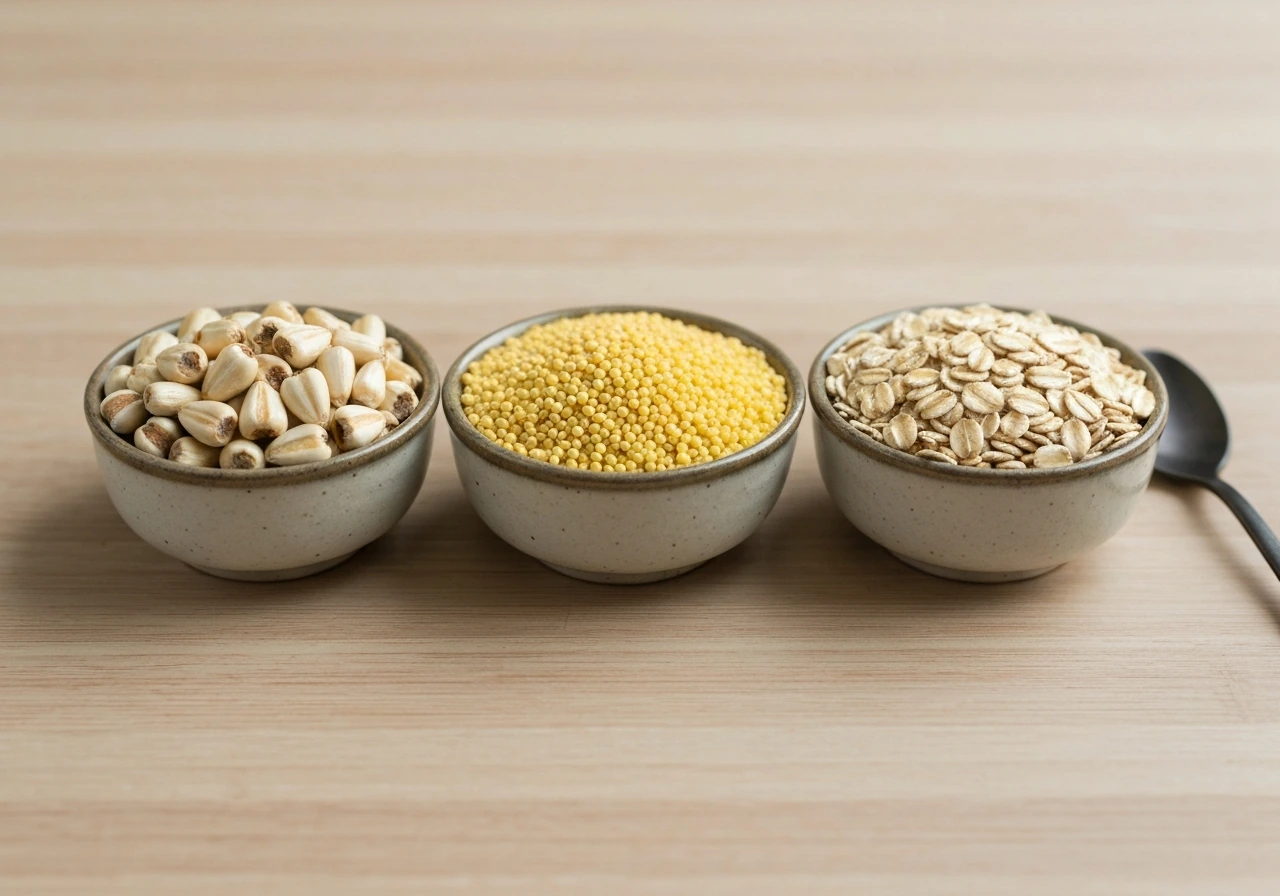
Each seed type contributes a different nutritional profile. Birds choose seed partly by energy density and partly by ease of cracking, so knowing what each ingredient offers helps you understand why certain birds show up (or don't) at your feeder. The table below summarizes the most common seed types and their approximate nutritional role.
| Seed type | Primary nutritional role | Approx. calories (per 100 g) | Key macro | Birds most attracted |
|---|---|---|---|---|
| Black oil sunflower | High-energy oilseed | ~584 kcal | Fat ~51 g, Protein ~21 g | Cardinals, chickadees, finches, nuthatches |
| Striped sunflower | High-energy oilseed (thicker hull) | ~580 kcal est. | Fat ~49 g, Protein ~21 g | Cardinals, larger birds; small birds struggle with thick hull |
| Sunflower hearts (hulled) | Fast-energy, no waste | ~580 kcal | Fat ~51 g, Protein ~21 g | All seed-eating birds; reduces shell debris |
| White millet | Moderate-energy grain | ~378 kcal | Carbs ~73 g, Protein ~11 g | Sparrows, doves, juncos, towhees |
| Cracked corn | Cheap calorie filler | ~365 kcal | Carbs ~74 g, Protein ~9 g | Jays, doves, ducks, squirrels |
| Milo (sorghum) | Filler grain, low preference | ~329 kcal | Carbs ~72 g, Protein ~11 g | Doves, pheasants; most songbirds ignore it |
| Safflower | Moderate fat oilseed | ~517 kcal | Fat ~38 g, Protein ~16 g | Cardinals, chickadees; squirrels often avoid it |
| Nyjer (niger) | High-fat small seed | ~503 kcal est. | Fat ~35 g, Protein ~21 g | Goldfinches, siskins, redpolls |
| Peanut pieces | High protein/fat | ~567 kcal | Fat ~49 g, Protein ~26 g | Woodpeckers, jays, nuthatches, titmice |
Sunflower seed kernels (dried) clock in at roughly 584 kcal per 100 g, with about 51.5 g of fat and 20.8 g of protein. That fat content is exactly why black oil sunflower is the backbone of premium mixes: it delivers serious energy per gram, which matters most for small birds in cold weather. Milo and cracked corn, by contrast, are mostly carbohydrate and are used by manufacturers to add bulk cheaply. If you see milo high on the ingredient list, you are essentially paying for something most of your target birds will scatter on the ground.
Additives, coatings, and treated seed: reading the label
This is the part most backyard birders skip, and it can matter. Treated seed is seed that has been coated or impregnated with a pesticide (fungicide, insecticide, or both) to protect it during planting or storage. Under U.S. federal regulations, any seed treated with a substance that leaves a harmful residue must carry specific caution language on its label, such as 'Do not use for food' or 'Do not use for feed.' State rules add an additional layer: Minnesota, for example, requires the label to state 'TREATED SEED' prominently. If a bag of bird seed carries any of that language, do not put it in a feeder.
Treatment types vary. According to NPIC (Oregon State University's National Pesticide Information Center), seed may be treated to control fungal pathogens, insects, or both. NPIC advises that treated seeds should never be consumed and should never be used for animal feed. Colorant dyes are sometimes added to treated seed to visually distinguish it from food-grade grain, though color alone is not a reliable safety indicator for wild bird seed bags. If you are unsure whether a bag is treated, look for any caution statement, a 'NOT FOR HUMAN OR ANIMAL CONSUMPTION' notice, or a dye-coated seed appearance (bright pink, red, or green kernel coating). When in doubt, skip it.
Beyond pesticide treatments, some premium blends add flavor coatings (anise oil is common), calcium supplements, or hot pepper (capsaicin) to deter squirrels. Hot pepper coatings are generally considered safe for birds (birds lack the capsaicin receptors that make it unpleasant) but should be disclosed on the label. If you have dogs or cats that might access fallen seed, capsaicin-coated seed is worth avoiding near pet activity areas.
Wild mixes vs. single-seed setups: matching the blend to the bird
There is a real reason bird seed comes in so many configurations, and it is not just marketing. Different birds have genuinely different bill shapes, preferred seed sizes, and nutritional needs. A blend designed for ground-feeding sparrows (heavy on white millet and cracked corn) will underperform if you are trying to attract woodpeckers, which want high-fat peanuts and suet-type offerings. Understanding this is part of what makes feeding more effective, and it connects back to the bigger question of why bird seed matters for supporting backyard wildlife.
| Bird group | Preferred seed | Best feeder format | Avoid in their blend |
|---|---|---|---|
| Finches (goldfinch, siskin) | Nyjer, fine sunflower chips | Tube feeder with small ports | Large cracked corn, milo |
| Cardinals, grosbeaks | Black oil sunflower, safflower, striped sunflower | Platform or hopper feeder | Milo, wheat |
| Sparrows, juncos, doves | White millet, cracked corn | Ground tray or low platform | Nyjer (too small to handle efficiently) |
| Woodpeckers, nuthatches | Peanut pieces, sunflower hearts, suet | Suet cage, large tube or tray | Milo, millet (low interest) |
| Jays | Whole peanuts, sunflower, cracked corn | Platform feeder | Nyjer (not worth their effort) |
| Mixed songbird general | Black oil sunflower, white millet, safflower | Hopper or tube feeder | Excess milo and wheat filler |
If you want to minimize waste, single-seed feeders beat mixed blends for targeted feeding. A tube feeder with only nyjer will draw finches without scattering milo no one wants. A platform with only safflower will attract cardinals while discouraging starlings and house sparrows to some degree. Mixed blends are fine for general feeders but expect the least-preferred seeds (milo, wheat) to pile up on the ground. You can reduce this by checking the ingredient list and choosing a mix that omits high-filler ingredients altogether.
How to check seed quality before it goes in the feeder
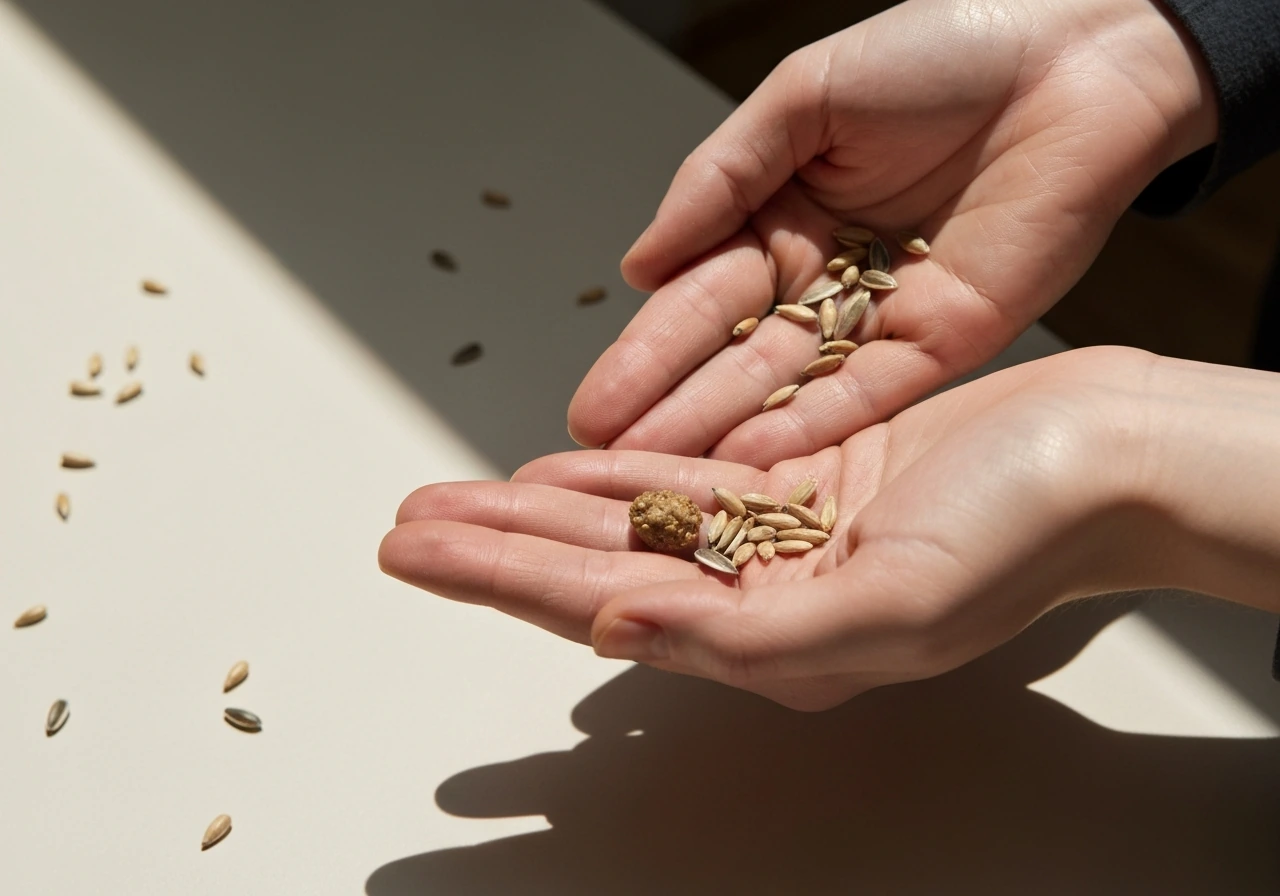
The Wild Bird Feeding Institute (WBFI) quality standards for retail bird seed explicitly require that seed show no mold, no objectionable odor, and no live infestation. Those three criteria are exactly what you should check every time you open a bag or refill a feeder. You do not need any equipment to do this.
- Smell the seed before you scoop it. Fresh seed smells faintly nutty or neutral. A sour, musty, or chemical smell means moisture damage or mold is already present. Do not use it.
- Look for clumping. Seed should pour freely. Clumps, sticky clusters, or a dusty gray/green coating on kernels are mold indicators. Discard the whole clump and assess whether the surrounding seed is clean.
- Check for insects. Grain weevils, Indian meal moths (look for webbing and small larvae), and grain beetles are the most common stored-product pests. If you see live insects, webbing, or larvae, the entire bag should be discarded. Do not attempt to separate infested seed.
- Inspect hulls. Cracked, shriveled, or broken hulls on sunflower seeds that should be whole indicate poor-quality cleaning or old stock. A high proportion of empty hulls adds weight to the bag without nutritional value.
- Check moisture. Squeeze a handful. Good seed flows; wet seed compresses. Moisture is the leading cause of both mold and mycotoxin development.
Mold is not just a cosmetic issue. Texas Parks and Wildlife recommends not feeding grain with aflatoxin levels above 50 parts per billion to wildlife, and seeds exposed to rain, humidity, or morning dew in a feeder can reach dangerous mold levels faster than most people expect. Research published in peer-reviewed journals has found aflatoxin and ochratoxin A residues in retail bird seed at point of sale, meaning the problem can start before you even open the bag. When you see mold, treat it as a discard situation, not a drying-out situation. The FDA notes that mold in grain is a health hazard precisely because mold-colonized grain can harbor mycotoxin-producing fungi, and mycotoxins are not neutralized by drying or airing out.
Storing bird seed so the ingredients actually stay usable
Good seed ruined by poor storage is one of the most common (and avoidable) problems in backyard bird feeding. The moment you bring a bag home, you are responsible for the storage environment. Here is what actually works.
Container and location
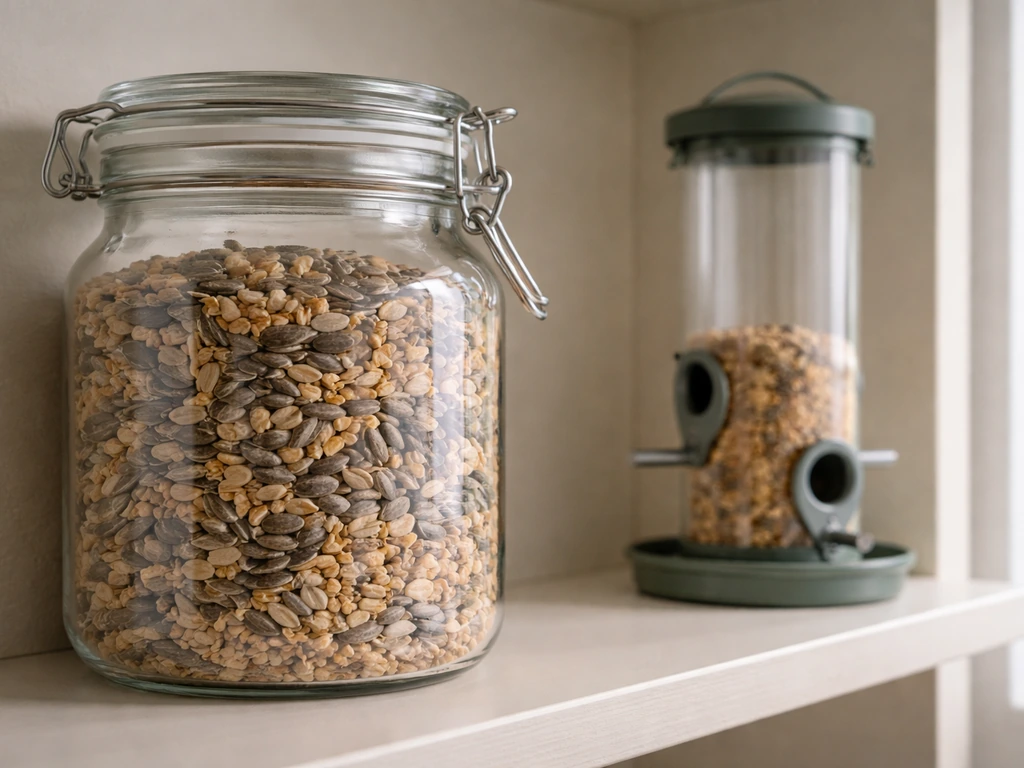
Move seed out of paper or woven poly bags and into a hard-sided, airtight container as soon as possible. Metal trash cans with locking lids are the classic choice because they exclude rodents and hold large volumes. Plastic bins with gasket seals work well if kept in a cool, dry location. Never store seed directly on a concrete floor: concrete wicks moisture. Put the container on a pallet, shelf, or rubber mat. Keep it out of direct sunlight and away from exterior walls in humid climates. South Dakota State University Extension's guidance on stored grain pest management makes the point clearly: store clean, dry grain in clean containers, and keep the storage area itself clean. Old seed residue in a container is an infestation starter.
Temperature and humidity
Cool and dry is the target. Seed stored above 70°F in high humidity will begin to degrade noticeably within weeks. If you live in a humid climate (Gulf Coast, Pacific Northwest, Florida summers), consider buying seed in smaller quantities more frequently rather than stocking up for months. FAO storage guidelines explicitly recommend monitoring moisture content and checking stored seed frequently for spoilage indicators, including insect attack. Once every one to two weeks, open the container and run through the same smell/look/feel checks described above.
How much to buy at once
A general rule: buy no more than a 4 to 6 week supply during warm or humid months, and no more than a 2 to 3 month supply even in dry, cool conditions. Hulled seeds (sunflower hearts, peanut pieces) have a shorter shelf life than whole seeds with intact hulls because the protective outer layer is gone. Nyjer seed goes rancid relatively quickly, especially in warm weather. If birds are ignoring a nyjer feeder they usually visit, stale seed is often the reason.
Handling wet or sprouting seed in a feeder
Wet seed in a feeder is a feeder-cleaning event, not just a refill situation. Wet seed can develop mold or bacteria within 24 to 48 hours in warm weather. South Carolina DNR recommends cleaning feeders at least monthly using a solution of 1 part liquid chlorine bleach to 9 parts hot water, which is consistent with Cornell Lab of Ornithology guidance that also cites the same 1:9 bleach-to-water ratio as effective for pathogen control. Clemson's Extension specialists confirm this dilution is the most effective option for removing salmonella in particular. Always rinse the feeder thoroughly after the bleach soak to remove all residue before refilling, then let it air dry completely.
Sprouting seed in a tray or on the ground below a feeder is a sign that seed is staying moist long enough to germinate. This is not dangerous in itself, but it signals that the feeder is not cycling seed fast enough, drainage is poor, or rain is reaching the seed. Solutions include switching to a covered feeder, reducing fill quantity so seed turns over within a few days, or adding drainage holes to platform trays. Spoiled or visibly contaminated seed (especially from a feeder that has had standing water in it) should be discarded entirely rather than spread on the ground. The risk of toxin production from wet, decomposing seed makes leaving it accessible to wildlife a real hazard.
Putting it all together
Bird seed is a mix of commodity grains and oilseeds, processed to consistent particle sizes, dried to a safe moisture level, blended to a target formulation, and bagged with a label that tells you everything you need to know if you know how to read it. The first three ingredients, the presence or absence of treatment language, and the absence of filler grains like milo and wheat are your main buying signals. Once you get it home, your job is to keep it dry, cool, and sealed. Check it regularly, use the smell-look-feel test before every fill, and clean feeders on a regular schedule. If you have ever wondered how the whole supply chain connects, who delivers bird seed covers the distribution side of that chain. The seed itself is simple: most of what birds need comes down to a handful of clean, dry, high-quality ingredients stored and offered correctly.
FAQ
Is bird seed made from seeds only, or do companies add other ingredients too?
Many blends are mostly grains and oilseeds, but some include non-seed additives like calcium, flavor coatings (for example anise oil), or squirrel-deterrent coatings (for example capsaicin). If you see ingredient names that are not a grain or oilseed, check that they are disclosed and listed near the top or in a separate additive section where applicable.
What does it mean when a bag lists “oil” or “seed hearts” instead of whole sunflower seeds?
“Hearts” usually means the kernel with the hull removed (decorticated), which can be easier for birds to crack and may reduce waste. “Oil” is sometimes used to describe high-fat varieties, but the bag should still list the specific seed type, so rely on the listed ingredient names and order rather than broad terms.
Is hull-less or “cracked” seed always lower quality than whole seed?
Not always, but it is typically more perishable because the protective outer layer is gone. Hulled seeds and kernels can go stale or absorb moisture faster, so they are more sensitive to storage heat and humidity.
Can I tell if my bird seed is treated just by looking at its color?
Color alone is not reliable. Treated seed can be dyed, but some unlabeled or differently colored seed may still be treated. The safest approach is to look for caution statements on the bag, such as “treated seed” language or warnings indicating it is not for consumption.
Are capsaicin-coated seeds safe, and could they affect birds differently than mammals?
Capsaicin coatings are generally aimed at mammals like squirrels, birds usually do not respond the same way because they lack the receptors that create the strong aversion. Still, avoid using these blends where pets frequently access dropped seed, since spilled seed can be picked up by cats and dogs.
What if the ingredient order looks wrong for the bird I’m trying to attract?
Ingredient order is usually the most practical signal, because items are listed by weight. If you are targeting a species known to prefer high-fat foods but milo, wheat, or other low-preference filler grains are near the top, expect more scattering and fewer visits from your target birds.
Why does mixed bird seed sometimes have lots of empty hulls or tiny debris?
That is often due to seed type and processing, for example sunflower hearts create less hull waste while cracked corn and millet can produce more small particles. Some blends also include smaller grades meant to meet a formulation, so the more “cracked” or “decorticated” components you have, the more waste patterns may change.
Is it safe to soak or rinse bird seed to fix a stale or dusty bag?
Rinsing usually makes things worse because moisture accelerates spoilage and mold risk, especially for hulled seeds and nyjer. Instead, discard visibly contaminated seed, and for normal freshness issues, focus on buying smaller amounts and storing seed airtight and dry.
What should I do if my feeder attracts wet, germinated seed shoots?
Sprouting usually means seed stayed moist long enough to germinate, which points to drainage or feeder exposure problems. Adjust the feeder (use a covered design, reduce refill amount so seed turns over faster, improve drainage) and remove any seed that looks spoiled rather than spreading it around.
How can I reduce waste if my blend includes filler grains?
Use feeders that match the preferred seed of your target birds. Tube feeders for nyjer and certain finch-focused setups can reduce scattering, while platform feeders for mixes often collect dropped seed that includes fillers. If the mix has milo or wheat high on the list, consider switching to a blend that omits those ingredients or using more targeted single-seed options.
Next Articles
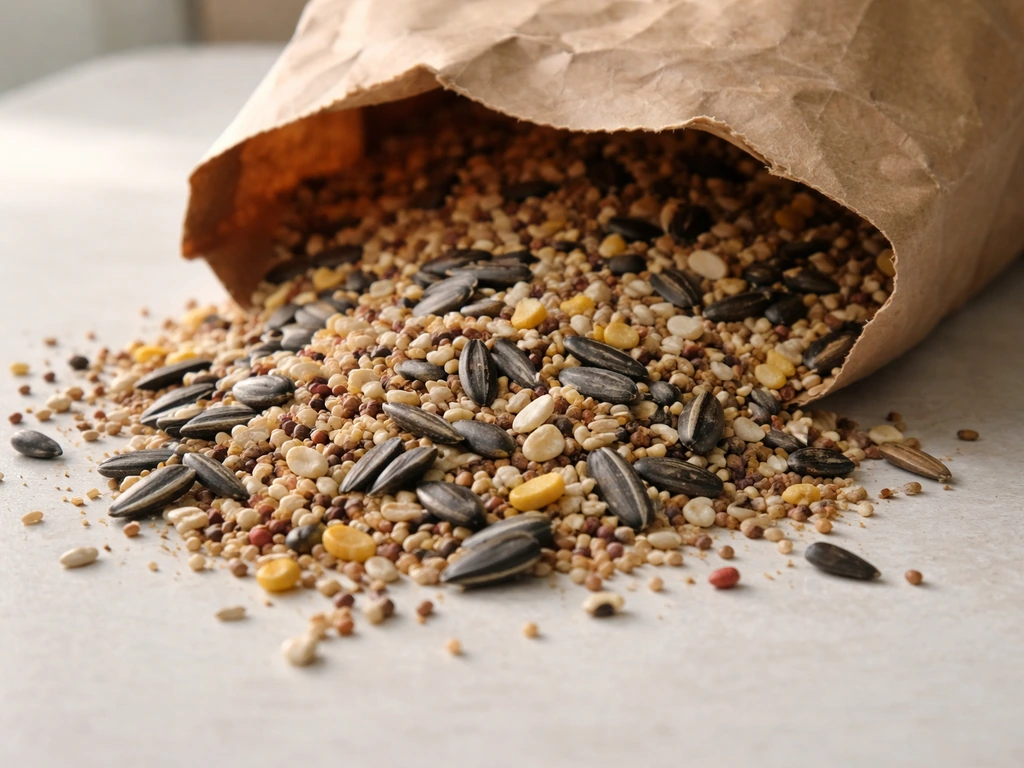
What Is Bird Seed? Ingredients, Types, and Safe Storage
What bird seed is, what ingredients are inside common mixes, and how to store safely to prevent mold, pests, and sprouti
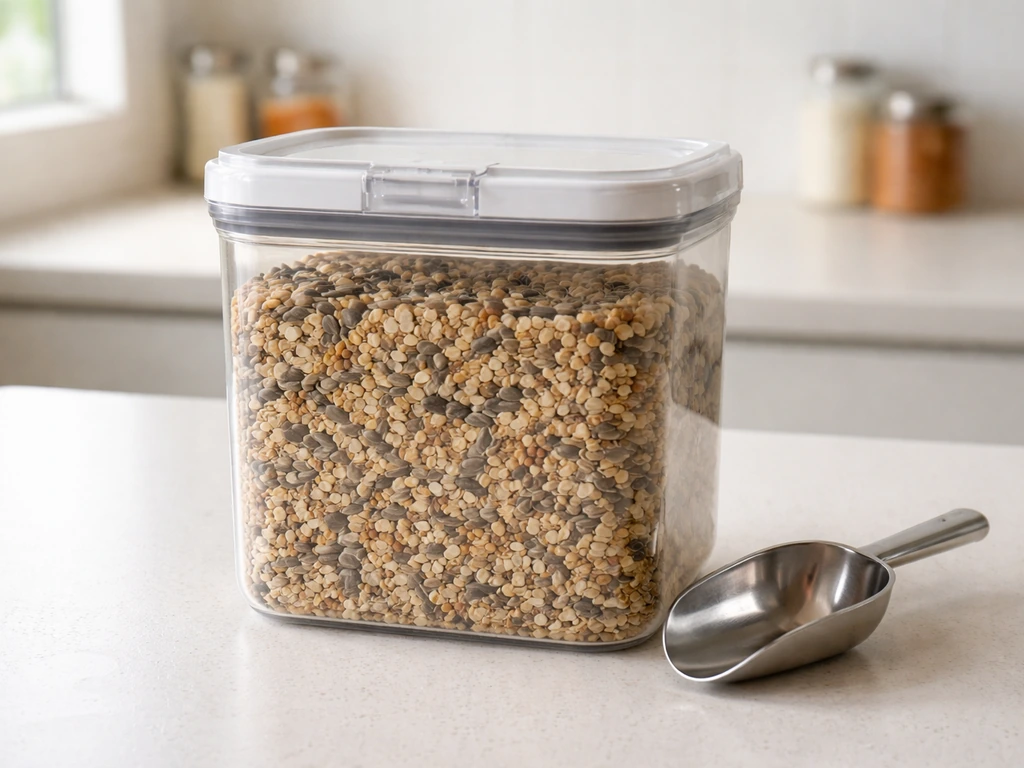
How to Make Bird Seed Last Longer: Storage and Fixes
Learn how to make bird seed last longer with proper storage, humidity control, pest prevention, and fixing wet or moldy
How to Keep Bird Seed Fresh and Stop It From Molding
Stop birdseed mold with smart storage: dry handling, right container, moisture control, bag cleanup, and feeder sanitizi