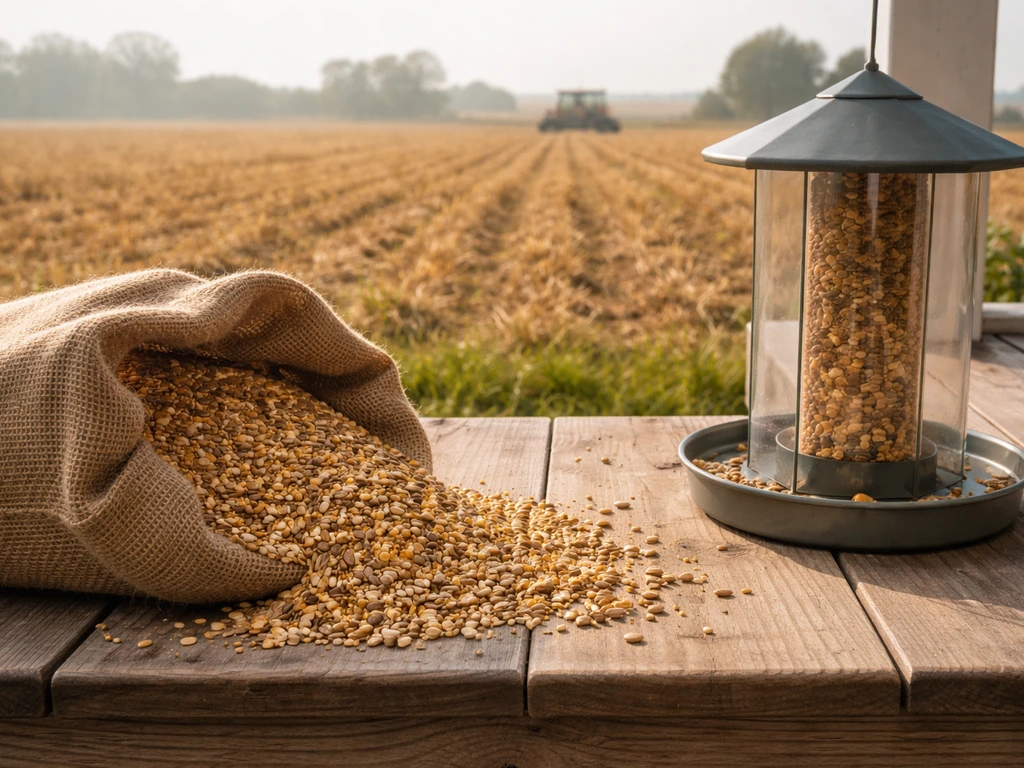
Bird seed comes from real agricultural crops, grown on farms the same way food crops are. The sunflower seeds in your feeder were likely grown in the Northern Plains of the US or Canada. The white millet probably came from fields in the Midwest or Great Plains. Cracked corn, safflower, milo (sorghum), and peanuts each have their own growing regions, harvest seasons, and processing steps before they end up blended, bagged, and on a store shelf. Understanding that chain helps you buy smarter, store better, and spot problems before they harm your birds.
Where Does Bird Seed Come From? Farm to Feeder Guide
Maya Collins
12 Apr 2026
What bird seed is actually made from
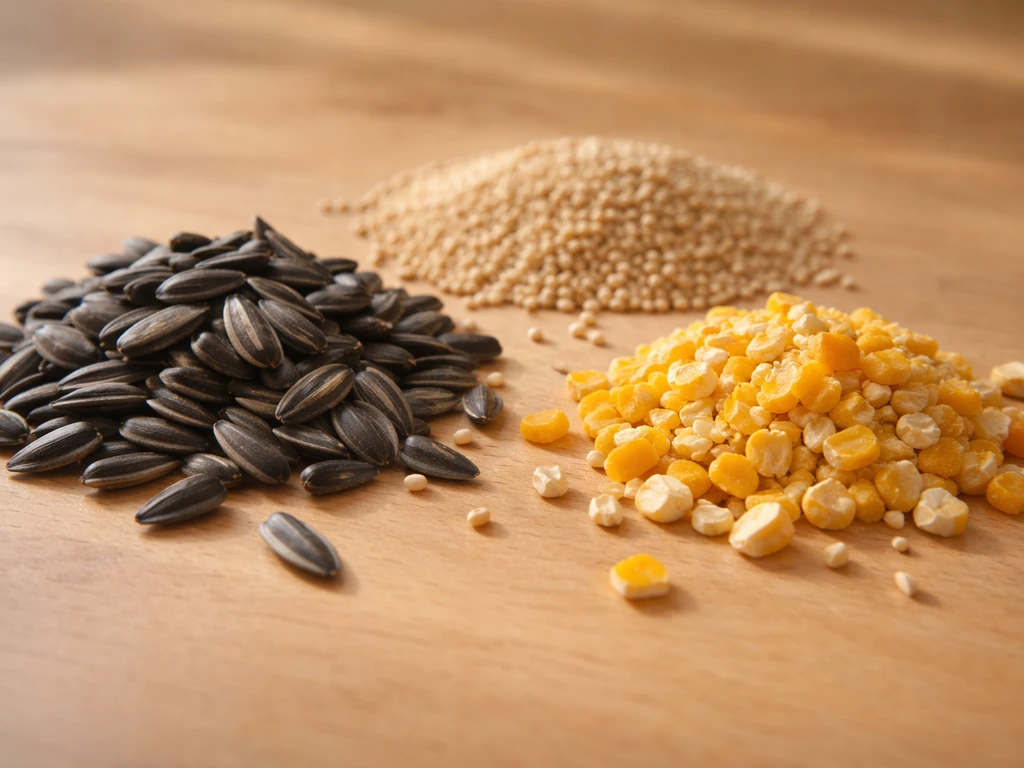
If you've ever wondered what bird seed is made of beyond the vague label on the bag, the short answer is a handful of common agricultural crops. Most backyard bird seed blends pull from the same core ingredient list: black oil sunflower seed, white proso millet, cracked corn, safflower seed, milo (grain sorghum), and sometimes peanuts, striped sunflower, or oats. These aren't specialty items. They're mainstream farm crops grown at scale and diverted (or purpose-grown) for the bird-feed market.
Black oil sunflower is the star. It's thin-shelled, high in fat, and eaten by a wide range of species, which is why it dominates most mixes and sells well as a standalone product. White proso millet is the next most common, favored by ground-feeding birds like juncos and doves. Cracked corn is cheap filler in lower-quality mixes but genuinely attractive to larger birds and squirrels. Safflower has a bitter coating that deters squirrels while still drawing cardinals and chickadees. Milo (sometimes called sorghum or grain sorghum) is common in budget mixes, though many songbirds ignore it and it often ends up in a pile under the feeder.
Where these crops are actually grown
Sunflower production in the US is concentrated in North Dakota, South Dakota, Minnesota, and Kansas. Canada (especially Saskatchewan) is also a major producer. White proso millet is grown heavily across the central Plains states, from Colorado to Nebraska and the Dakotas. Corn is everywhere, but cracked corn for bird feed typically comes from Midwest grain operations. Safflower is grown primarily in the western US, particularly in California, Montana, and the Pacific Northwest. Milo/sorghum is a warm-climate crop centered in Kansas, Texas, and Oklahoma. Peanuts come primarily from the southeastern US, Virginia, and parts of the Southwest. Each of these crops has its own harvest window, drying requirements, and regional transport logistics before it ever reaches a bird-feed blending facility.
From field to bag: how seeds are harvested and processed
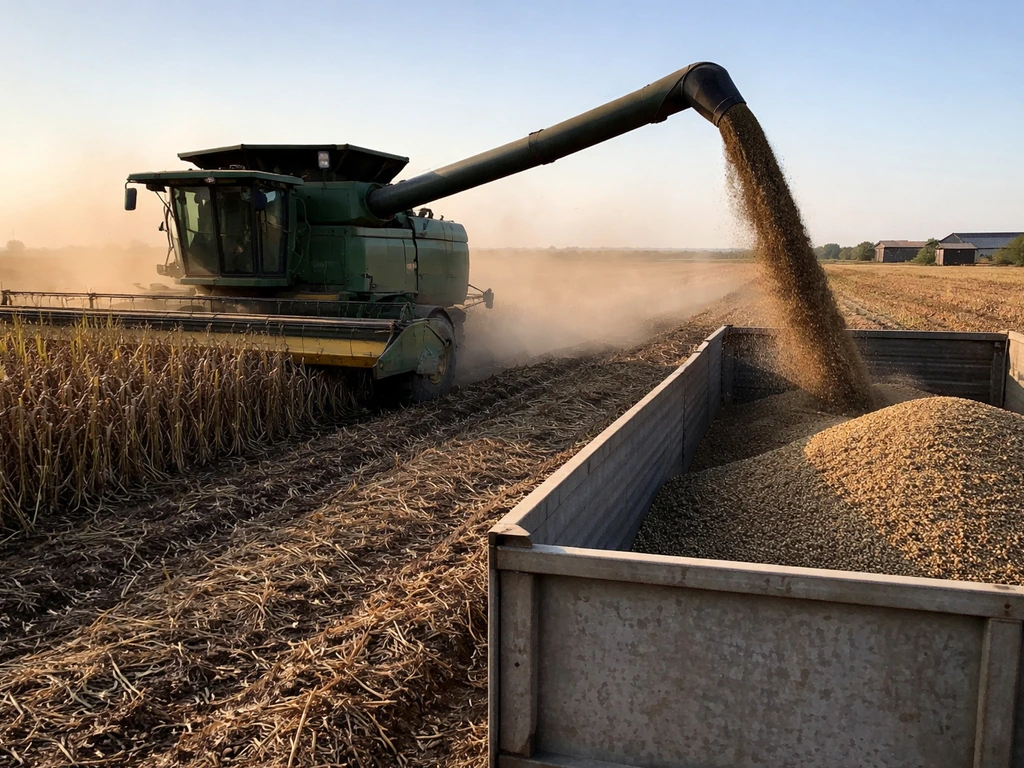
Harvest is just the beginning. After sunflowers or millet come off a combine, they carry field moisture that has to be driven out before the seed can be safely stored or shipped. Moisture is the enemy at every stage of this supply chain. FAO guidelines for small-grain and seed processing set moisture content at no more than 8 to 12 percent for most grains at the processing stage. Sunflower seed specifically has a safe storage moisture target of around 9 to 10 percent. If seeds come in wetter than that (above 15 percent is common at harvest), they go through pre-drying, either in cribs or with forced air, before they're moved into storage or processing.
After drying, seeds go through cleaning and sorting. This removes debris, broken seeds, weed seeds, and anything that would reduce quality or introduce contamination. Commercial processors use screens, air separators, and gravity tables to get a clean, uniform product. For sunflower in particular, the high-moisture or damaged fractions get removed during drying and handling because they raise the overall risk of spoilage and pest pressure in the batch. What you want reaching the blending step is dry, clean, whole seed within spec.
Once cleaned and dried to spec, seeds from different crops get combined at a blending facility in proportions that define the final product. A typical wild-bird mix might combine black oil sunflower, fine cracked corn, white millet, and striped sunflower. After blending, the mix is weighed, bagged, sealed, and labeled. That's the bag you pull off a hardware store shelf or receive at your door.
How seed type changes where it comes from and how it behaves
Not all bird seed is processed or shipped the same way, and the differences matter for freshness and quality. Here's how the main categories compare:
| Seed Type | Primary Source Region | Key Processing Step | Main Storage Risk |
|---|---|---|---|
| Black oil sunflower (whole) | North Dakota, South Dakota, Canada | Drying to ~9% moisture, cleaning | Rancidity, mold if moisture rises |
| Wild-bird mix (multi-seed blend) | Multiple US regions, blended at facility | Multi-crop drying, sorting, blending | Uneven moisture across components |
| White proso millet | US Great Plains | Cleaning, drying, sometimes hulled | Pest infestation (small grain pests) |
| Safflower (whole) | Western US | Minimal processing, whole seed | Lower risk; bitter coat deters pests |
| Cracked corn | US Midwest | Drying then mechanical cracking | Mold and aflatoxin risk at high moisture |
| Suet-style feeds (rendered fat blocks) | Rendering plants, blended with seed/grain | Fat rendering, molding, setting | Rancidity in warm weather, especially summer |
Suet-style feeds are worth calling out separately because their supply chain is different. The fat base is rendered beef or pork fat, processed at rendering plants and then mixed with seeds, grains, nuts, or fruit at a manufacturing facility. The result is pressed into cakes or plugs. These don't come from a farm field the same way a bag of millet does, and they behave differently in storage: they go rancid faster at warm temperatures, which is why most suet recommendations say to avoid feeding them in summer heat or to switch to a no-melt formula during hot months.
Wild-bird mixes present their own complexity because you're blending seeds from different crops with different optimal moisture levels and different pest risks. A multi-seed mix is only as good as the most vulnerable component in it. That's one reason premium mixes from reputable brands tend to hold up better than bargain blends: the ingredient sourcing and drying standards are tighter across the whole mix, not just the lead ingredient.
Where store-bought bird seed actually comes from
The US wild-bird feed market is supplied by a mix of large national brands and regional producers. Major names you'll see on store shelves source from agricultural commodity networks, buying from grain elevators and processors across the growing regions described above. Some larger brands operate their own blending facilities; others contract with co-manufacturers. Regional brands often source more locally, which can mean fresher product with a shorter transport chain, but it varies.
Label reading is your best tool for evaluating what's in the bag. blank" rel="noopener noreferrer">Under Wild Bird Feeding Institute guidelines, ingredients on wild-bird feed products must be listed in descending order by weight, just like on human food. So on a bag that lists "sunflower seed, millet, cracked corn," sunflower makes up the largest portion by weight. This matters because filler-heavy mixes sometimes lead with millet or milo to keep costs down while burying sunflower further down the list. If you want to understand what bird seed is in a given bag, the ingredient list is the most reliable place to start.
Traceability on packaging is worth paying attention to. FDA recall notices for bird-feed products (including a documented Kaytee wild bird food recall) show that consumer packages carry a lot number and a best-by date. These two fields are your primary tools for checking freshness and for identifying whether a bag is involved in any safety event. Make a habit of noting the lot number and best-by date when you open a new bag, especially if you buy in bulk. If something looks off with the seed, those numbers help you trace back to the production batch.
If you're ever unsure about sourcing options and need to figure out who delivers bird seed in your area, local feed stores, farm co-ops, and regional bird specialty retailers often carry product with shorter supply chains than big-box stores, which can translate to fresher seed with a longer remaining shelf life.
How the journey from farm to feeder affects what you get
Every step between harvest and your feeder is a chance for seed quality to drop. Shipping, warehousing, and retail storage all expose seed to temperature swings, humidity, and handling that can compromise the moisture levels set at processing. A bag of sunflower that left the blending facility at 9 percent moisture can absorb enough humidity in a warehouse or store to climb above that threshold, which is where fungal risk and pest pressure start to increase.
At home, storage conditions matter just as much as what happens in the supply chain. Here are the practical rules that follow directly from how seed is processed and what it needs to stay stable:
- Store seed in a sealed, hard-sided container (metal or thick plastic) to block moisture and pests.
- Keep the container off the floor and away from exterior walls where temperature fluctuates.
- Don't store seed in a hot garage or shed in summer: heat accelerates rancidity in oily seeds and suet.
- Use older seed first. Rotate stock so you're not letting a bag sit for months behind a newer purchase.
- Don't mix old seed with new seed in the same container without inspecting the old supply first.
Shelf life is real and variable. Whole sunflower seed in good conditions holds quality for roughly 12 months, but a bag that's been through warehouse heat and humidity may be noticeably degraded before you open it. Suet cakes are typically best within 6 months if kept cool. Mixed blends depend on the most perishable component. The best-by date on the package is a reasonable guide, but it assumes proper storage from production onward, which you can't always verify for product that's sat on a retail shelf.
What to check when you open a new bag
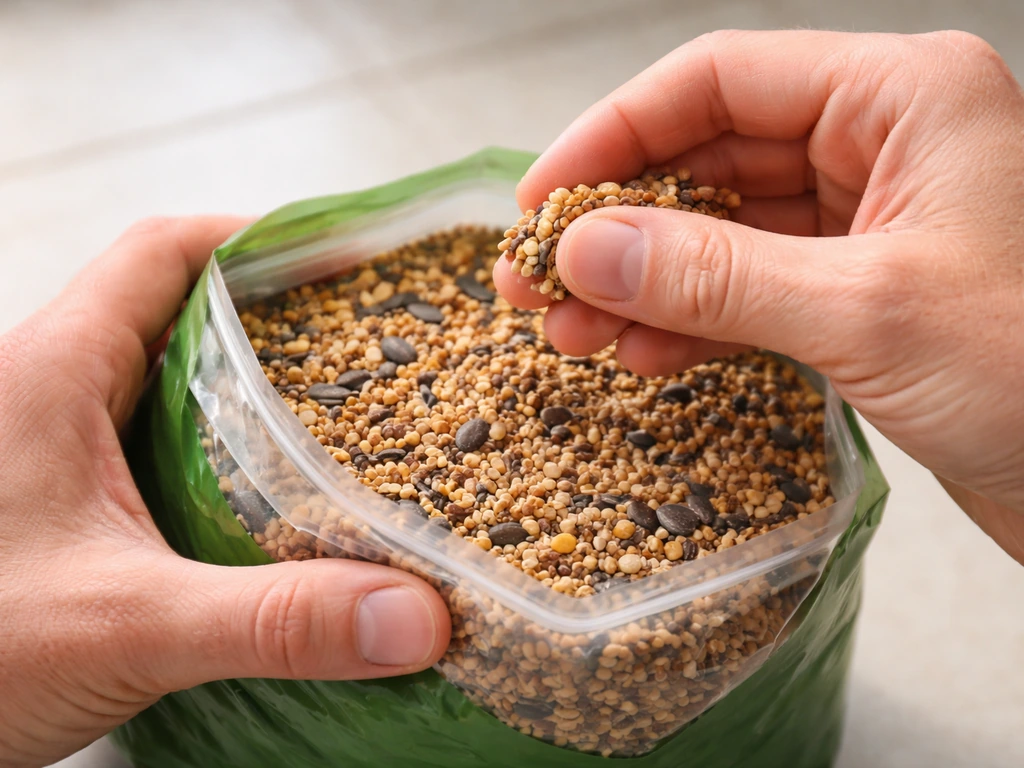
Opening a bag of bird seed isn't just tear-and-pour. A quick inspection takes 30 seconds and can prevent introducing pests or contaminated seed to your yard. FAO quality requirements for bird-seed products are explicit: seed should be free of dead or live insects, mold, and noxious weeds. That's a reasonable checklist for your own inspection too.
Signs something is wrong
- Musty or sour smell: indicates mold or fermentation from excess moisture.
- Clumping: seeds stuck together usually means moisture got in, which opens the door to fungal growth.
- Visible mold: white, gray, or greenish fuzz anywhere in the bag. Do not use this seed.
- Live or dead insects: webbing, small beetles, weevils, or larvae inside the bag signal an infestation.
- Sprouting: if seeds are germinating inside the bag, moisture content was too high at some point.
- Off color or shriveled seeds: sign of heat or moisture damage during storage or shipping.
What to do if you find a problem
If you spot live insects (weevils, grain moths, or small beetles), the seed is infested and should not go into a feeder. Washington State University's guidance on granary weevils in stored product is clear that insecticide sprays are not appropriate for stored food products like bird seed. The right move is to seal the infested bag, discard it in an outdoor trash container, and clean out your storage container thoroughly before adding new seed. Do not dump infested seed into your yard, as this spreads pest pressure and can introduce weed seeds.
Mold is a discard situation, full stop. Moldy seed can carry Aspergillus species, which produce aflatoxins harmful to birds. Higher moisture in stored sunflower seed specifically is linked to increased fatty acid degradation and fungal invasion. USDA AMS provides official sunflower seed standards and grade requirements, including quality indicators such as musty or sour foreign odor and heating that can signal low quality USDA AMS provides official sunflower seed standards/grades, including quality requirements and odor and heating indicators. There's no salvaging a moldy bag. The risk isn't worth it.
Sprouting is a bit more nuanced. Early-stage sprouts in otherwise clean, fresh-smelling seed are mostly a quality issue rather than a safety emergency, but they signal that moisture was present somewhere in the chain. Sprouted seed degrades faster and can become a mold vector as the sprouts die and decompose. If you're seeing significant sprouting, reduce your fill quantity in feeders so the seed turns over quickly, and address your storage setup to prevent it recurring. You can read more about why bird seed behaves the way it does in different conditions to get a fuller picture of what's driving these problems.
A simple inspection routine
- Open the bag and sniff immediately. Fresh seed smells slightly nutty or neutral. Any sour, musty, or off odor is a red flag.
- Look at the surface of the seed for clumping, webbing, or movement.
- Scoop a small handful and examine it for insects, shriveled seeds, or mold spots.
- Check the lot number and best-by date and note them somewhere accessible.
- If everything looks and smells clean, transfer to a sealed storage container and label it with the date you opened it.
The practical bottom line
Bird seed starts on real farms in specific US and Canadian growing regions, moves through drying and cleaning at processing facilities, gets blended and bagged, then travels through a supply chain that can span thousands of miles before reaching your hands. Every step in that chain has moisture as the central variable. Processors work hard to get seed to 9 to 12 percent moisture before it ships.
Your job is to keep it there by using proper storage containers, rotating stock, and doing a quick inspection every time you open a new bag. Buy from sources with good turnover, check the best-by date, and don't let a bag sit open or unsealed. That's the full chain, from field to feeder, in practical terms.
FAQ
Can I tell where bird seed comes from just by looking at the bag?
Sometimes. Look for an origin country or region on the label, and check the lot number and best-by date, but ingredient sourcing can be mixed across suppliers even when the bag looks “single-origin.” If origin isn’t stated, the most reliable clue is the ingredient list order plus whether the brand is willing to provide batch-level traceability details during a question or safety inquiry.
Is “bird seed” always made from the same crops, or do specialty mixes change the supply chain?
Specialty formulas often use less common ingredients, for example safflower oil or additional nuts, and that can shift sourcing farther or to different processors. Also, some “premium” mixes include smaller-seed components that are easier to damage during handling, so freshness and drying standards matter even more than the crop list suggests.
Why do some bags say “no-melt suet” or “summer suet,” and does that change where ingredients come from?
Yes. “No-melt” products still use rendered fat, but manufacturers adjust the fat blend and additives so the cake holds shape longer in heat. That means the fat ingredient flow is from rendering plants, not farms, and the stability depends heavily on processing and storage temperature after manufacturing.
What should I do if my seed smells “off,” but it isn’t visibly moldy?
Don’t assume it is safe. An unusual, oily-rancid, musty, or sour odor can indicate fat oxidation or early spoilage from humidity and warm storage. The safest move is to stop feeding it, empty the feeder, and inspect the rest of the bag for clumping, discoloration, or insect activity.
How can I prevent pests if I store seed at home in a garage or shed?
Store seed in sealed, pest-proof containers, not just the original bag, and keep moisture out by choosing dry locations and using a tight lid. If you buy in bulk, consider smaller sealed containers so you only open what you need, reducing time spent exposed to humidity and adult insects.
Is it safe to reuse a feeder container for multiple seed types (like moving from millet to sunflower)?
It can be risky if you don’t clean between changes. Different seeds can leave residue that attracts insects, and clumps can trap moisture. Wash and fully dry the feeder and any trays before switching types, especially if you previously saw sprouting, insects, or residue build-up.
What’s the difference between “best-by” and “packed for” or “packed on” dates for bird seed freshness?
Best-by is a quality expectation under assumed proper storage, while packed or packed-on indicates when the batch was processed and sealed. If a bag is well within its packed date but near the best-by, it suggests it may have spent more time in warmer retail storage. For bulk purchases, prioritize recent packed dates and confirm the bag stayed sealed.
Should I feed sprouted seed anyway if it looks mostly intact?
Only in limited situations. Light, early sprouting can indicate moisture exposure, and sprouted material can degrade faster or contribute to mold if conditions worsen. If you see significant sprouting, reduce fill so it turns over quickly, then improve storage and monitor for moldy or musty odors in the feeder.
What’s the most common mistake people make when they inspect a new bag?
They only check for mold visually and skip checking for insects and weed debris. Do a quick scan for live movement, webbing, cast skins, or unusual specks, and look for clumps or damp patches that suggest moisture issues. If you spot live insects or noxious weed material, discard rather than “sort it out.”
If I find a moldy or infested bag, how should I dispose of it safely?
Seal the bag in a tied trash bag, place it in outdoor waste, and do not dump contents onto the ground. Then clean the storage container and any nearby surfaces, and wash feeders. This reduces both pest carryover and weed seed introduction.
Does buying from a local feed store really improve the supply chain and freshness?
Often, but not guaranteed. Local sources can mean fewer handling steps and faster turnover, which helps seed stay closer to its target moisture. However, the key factor is how quickly they move inventory, so ask about turnover and check the packed date or best-by date before buying.