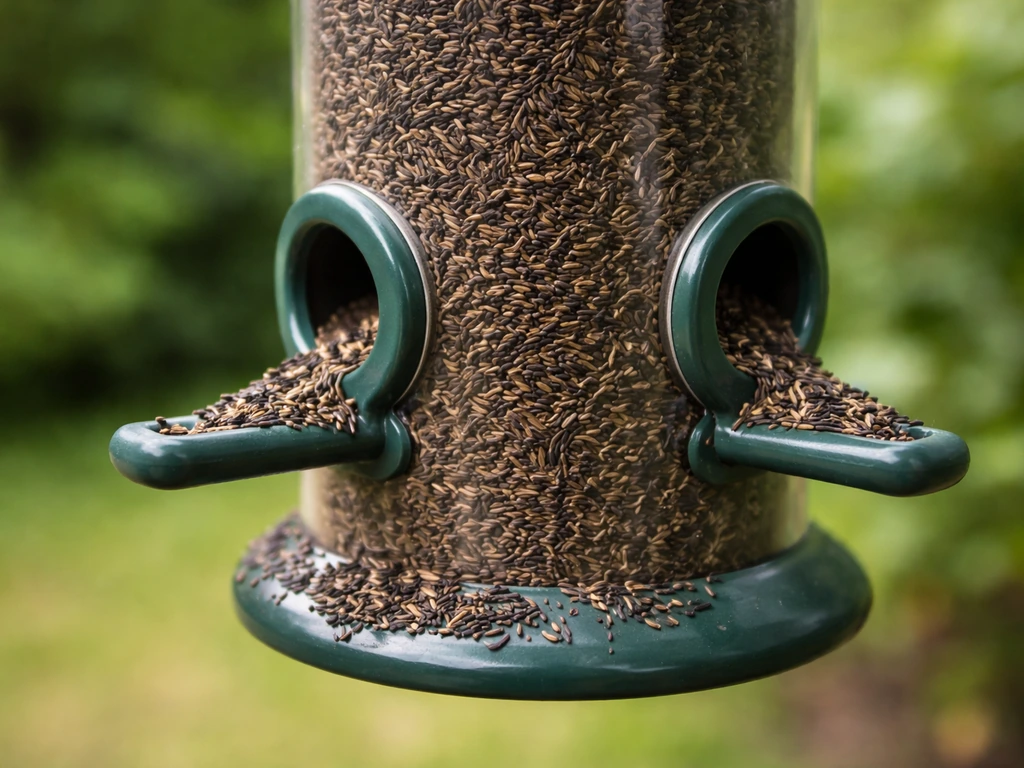
Properly imported Nyjer (thistle) bird seed almost certainly will not sprout and grow. Every bag of Nyjer sold in the US must be heat-treated at 248°F (120°C) for 15 minutes before it crosses the border, a process that kills the embryo inside each seed. That means no viable living tissue, no germination. The real problem you'll actually run into with wet thistle seed isn't sprouts, it's mold, clumping, and spoiled seed that finches won't touch.
Will Thistle Bird Seed Grow? Germination Guide and Fixes
Maya Collins
7 May 2026
Quick answer: will thistle bird seed sprout?
Almost never, and here's why. The [USDA APHIS Treatment Manual](https://aphis. stg. platform.
usda. gov/sites/default/files/treatment. pdf) is the primary downloadable PDF reference for PPQ treatment schedules and procedures. The Wild Bird Feeding Institute identifies the mandatory heat treatment as schedule T412-a: 248°F for 15 minutes.
USDA APHIS publishes the approved phytosanitary treatment types for imported commodities on its Plant Imports treatments page schedule T412-a.
That temperature destroys the embryonic tissue that makes germination possible. Heath Manufacturing and other major seed suppliers confirm the same thing. So if you're worried about a thistle plant taking over your yard because of spilled feeder seed, you can relax. If you're wondering where does thistle bird seed come from, it helps to know how these seeds are handled before they ever reach your feeder.
Even in the unlikely scenario where a stunted plant did emerge from a rare untreated seed, the Wild Bird Feeding Institute notes it would be sterile and unable to produce viable seeds of its own.
That said, 'thistle seed' is a loose term that covers a few things. The Nyjer seed sold in bags specifically for bird feeders is the heat-treated product described above. True wild thistle species, like musk thistle or bull thistle, are a different story entirely. Those seeds can absolutely germinate, and understanding what triggers germination helps explain why the heat treatment matters so much.
What actually triggers germination in thistle
For any seed to germinate, it needs a living embryo, moisture to kick off internal biochemical processes, the right temperature range, and sometimes light. Penn State Extension explains that seeds must contain living embryonic tissue before moisture can do anything useful, without that, water just soaks a dead seed. For wild thistle species like musk thistle, the USDA Forest Service reports germination kicks in at soil temperatures between 59°F and 86°F (15–30°C) and is strongly enhanced by white or red light. Darkness actually inhibits germination in musk thistle.
Light requirements can also vary by species and physiological state. Bull thistle research shows seeds don't always need light if temperatures are optimal, which means conditions under and around a feeder could theoretically support germination in wild thistle. But again, properly heat-treated Nyjer has no living embryo to respond to any of those triggers. Trill bird seed has changed in ways that can make it different from older formulations, so it is worth checking what you are buying. Moisture, warmth, and light are all irrelevant once the embryo is destroyed.
Sprouting vs. mold: what you're actually seeing in your feeder
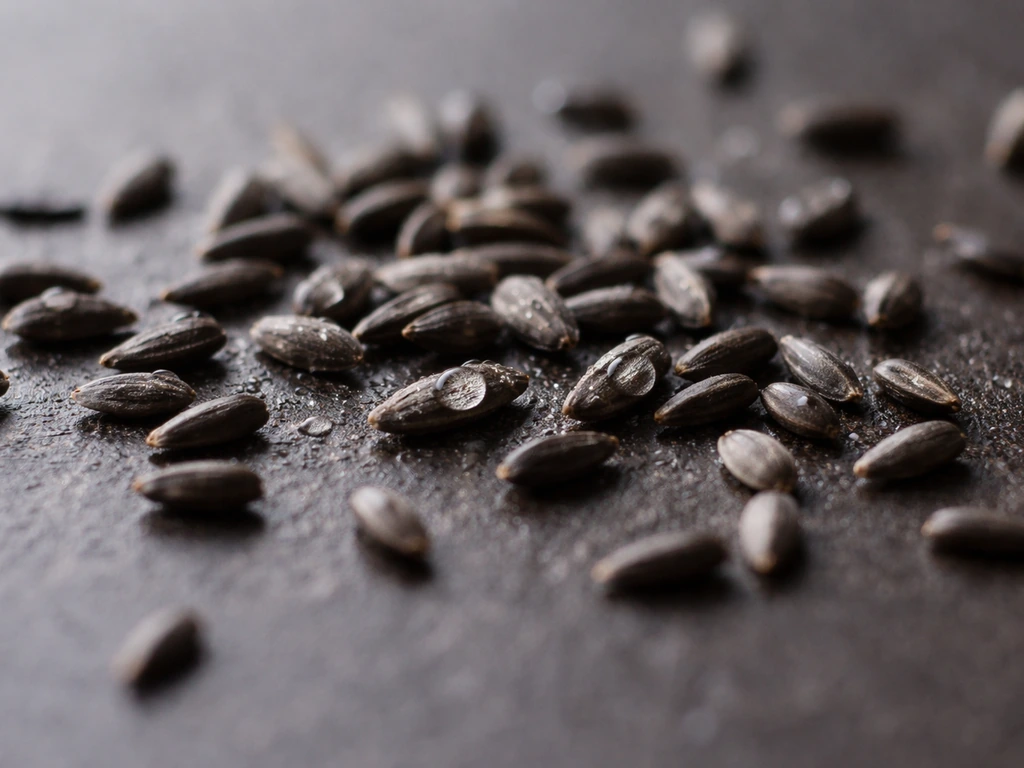
If you're noticing something wrong with the seed in your feeder or tray, it's almost certainly mold or clumping, not germination. Nyjer is notoriously susceptible to moisture. BirdWatching Daily specifically calls out tube feeders holding Nyjer as highly prone to spoilage in wet weather. Here's how to tell what you're dealing with:
| What you see | What it is | What to do |
|---|---|---|
| Tiny pale green shoots, hair-like roots | Germination (rare, possibly untreated seed or a different seed type) | Remove and discard immediately; clean feeder with bleach solution |
| Gray, white, or black fuzzy patches | Mold growth | Discard all affected seed; do not mix back in; clean feeder thoroughly |
| Clumped or caked seed, musty smell | Moisture damage and early mold | Discard the clumped batch entirely; dry feeder before refilling |
| Dark or discolored seed, no smell yet | Wet seed beginning to degrade | Remove, inspect closely, discard anything questionable |
Mold on birdseed is not a minor cosmetic issue. Minnesota DNR is direct about this: moldy birdseed can make birds sick. If the seed smells musty, looks clumped, or has visible fuzzy growth, stop feeding and deal with it right away. Do not try to pick out the bad bits and use the rest, moisture and mold spread through the whole batch quickly.
How to prevent wet seed and sprouting problems
Store it right from the start
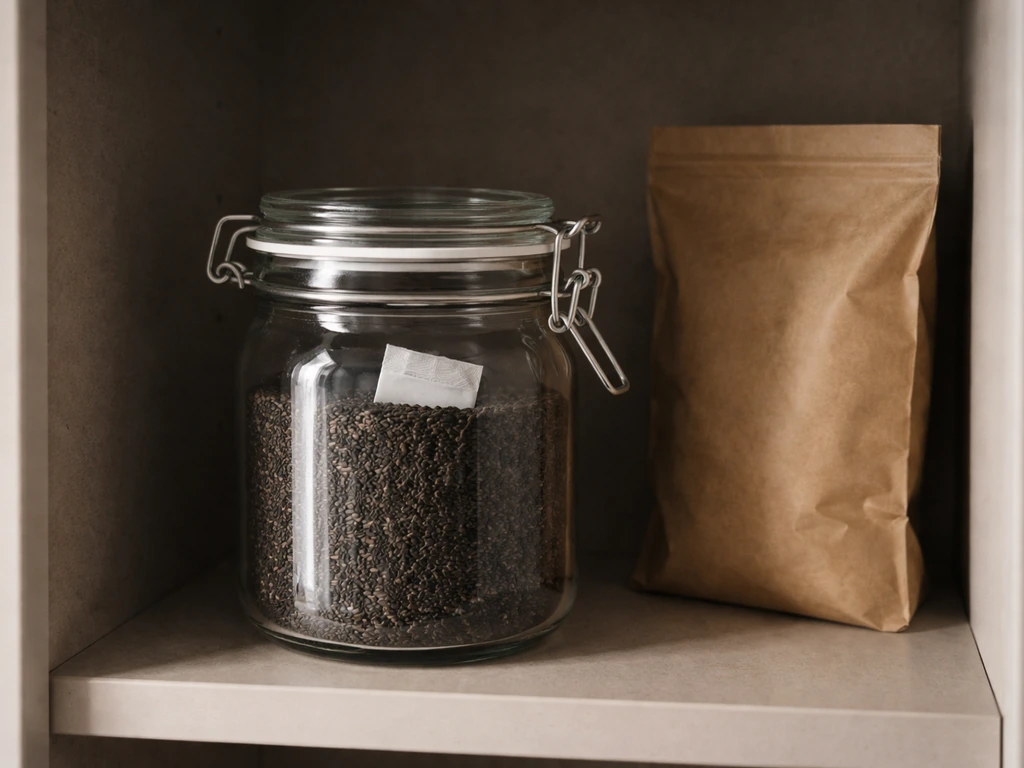
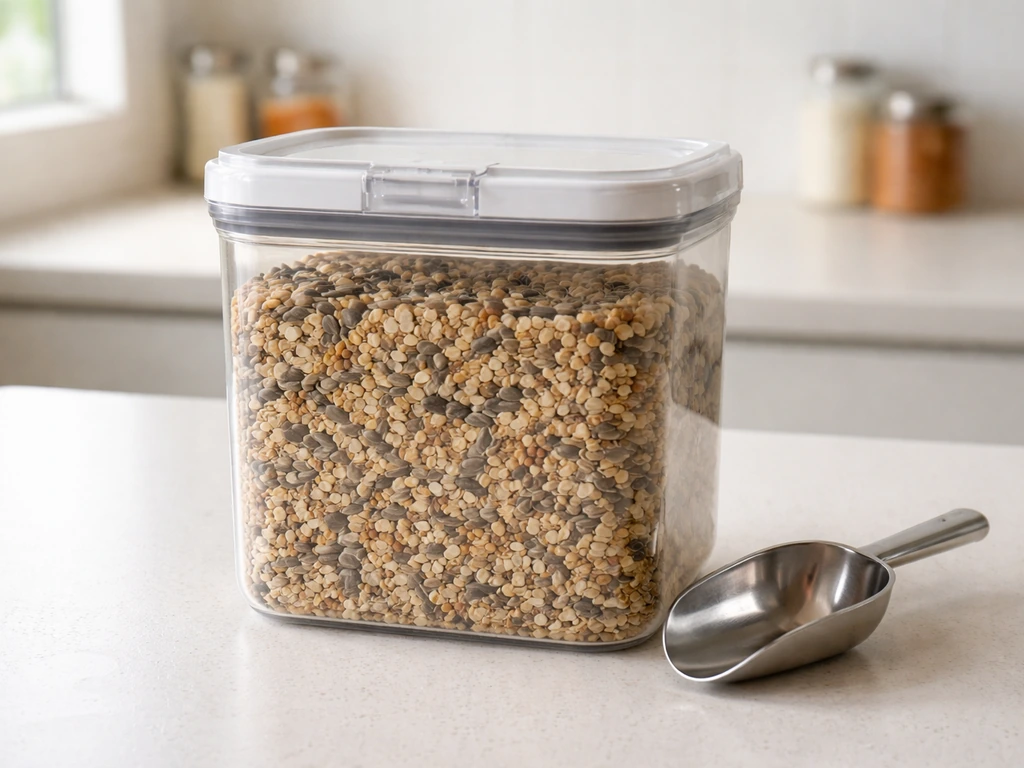
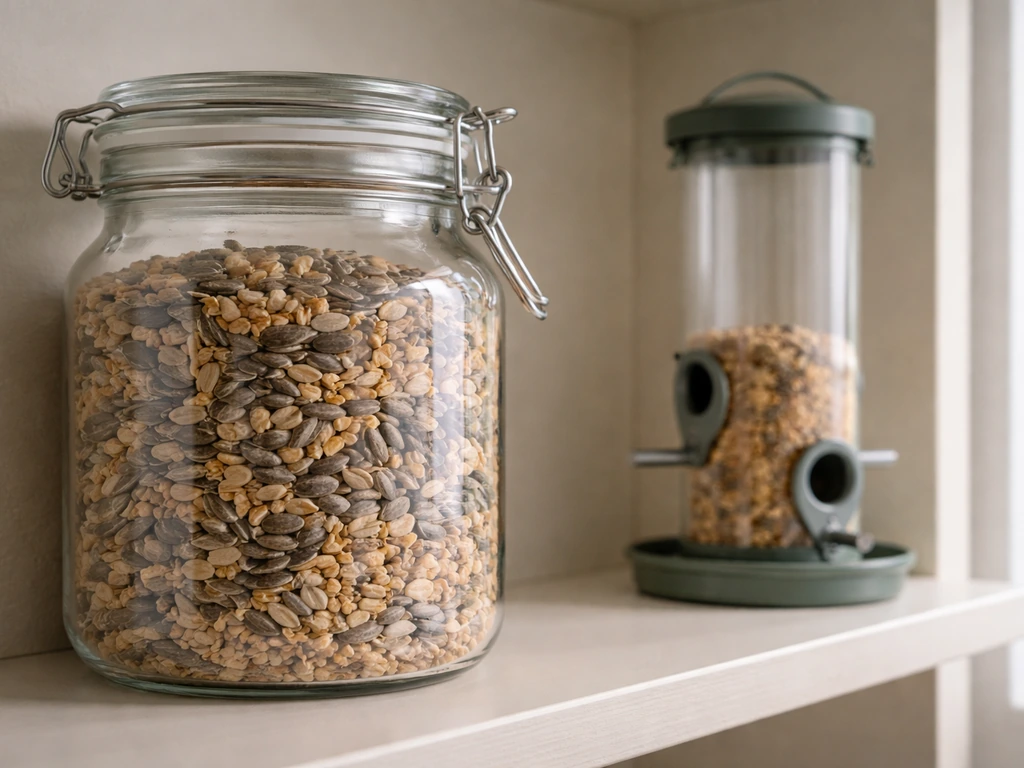
Nyjer seed does best in a cool, dry, dark place in an airtight container. FAO and Holmes Seed Company both agree on that basic formula: sealed container, low humidity, no heat buildup. A garage shelf in summer is not ideal if it gets hot. A cool basement, pantry, or shed works well. The goal is to keep moisture out before the seed ever hits the feeder.
Set up feeders to shed water, not trap it
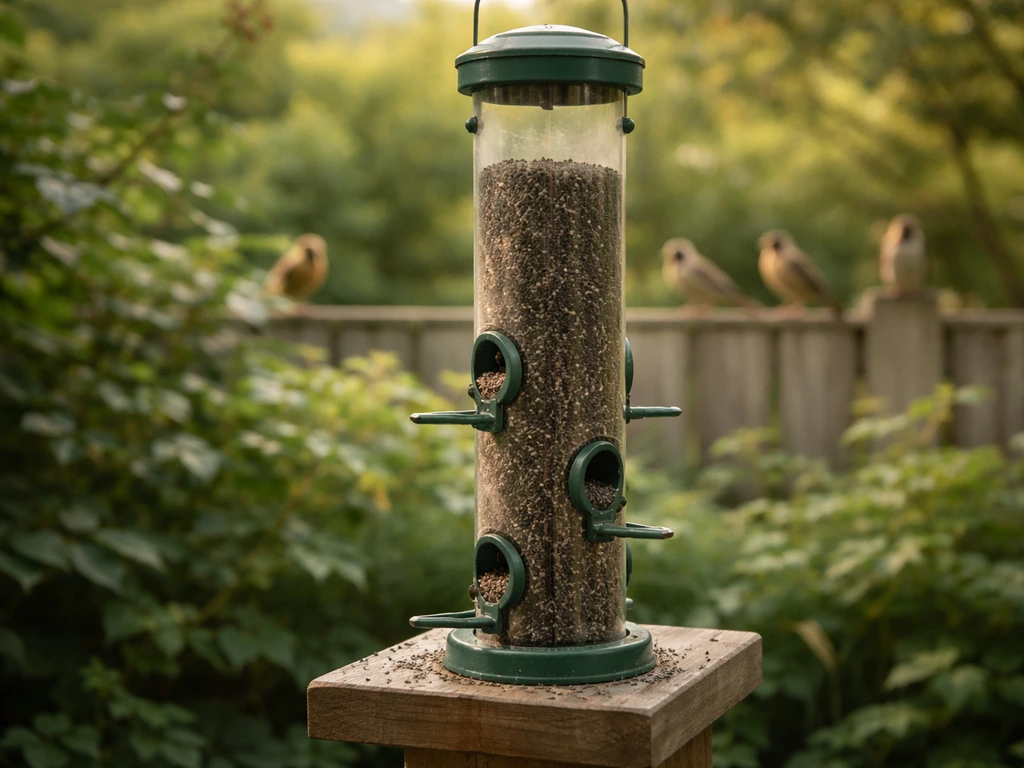
Feeder design matters a lot with Nyjer. Project FeederWatch notes that hopper-style feeders with roofs and walls offer better weather resistance than open trays. For finch feeding specifically, tube feeders and fine-mesh feeders work well, but you need to check that the drainage holes at the bottom of the tube aren't clogged. The Wild Bird Store recommends checking those holes every time you refill. Blocked drainage means water pools at the bottom and the seed sitting there turns into a moldy plug.
- Use tube feeders or fine-mesh finch feeders with drainage holes
- Check and clear drainage holes every time you refill
- Position feeders under a roof overhang or add a weather dome above them
- Avoid open platform trays for Nyjer in rainy climates
- Fill in smaller amounts so seed turns over quickly and doesn't sit
Don't overfill
Overfilling is one of the most common causes of wet, spoiled Nyjer. If you load a tube feeder with more seed than your birds will consume in a few days, the bottom seed sits there and absorbs humidity. In warm, damp weather, the Pennsylvania/Audubon guidance recommends cleaning feeders more frequently than the standard every-two-weeks schedule. A practical approach: fill only half to two-thirds of capacity, refill more often, and do a quick visual check each time.
What to do when seed gets wet or something goes wrong
Dealing with wet or clumped seed
If you pull the feeder down and the seed is clumped or damp but not visibly moldy and not smelling yet, you have a narrow window to salvage it. If you're wondering about mixing other seed types, like chia seeds, into a bird feeder, it's best to follow species-safe feeding guidance can you put chia seeds in a bird feeder.
Spread it in a thin layer on a clean dry surface (a paper towel on a tray works) and let it air dry completely in a warm spot. Once it's dry and back to free-flowing, you can return it to a clean feeder. If there's any doubt, musty smell, discoloration, clumps that don't break apart, throw it out. The cost of a partial bag of seed is far less than a sick bird or an infected feeder.
Cleaning a feeder after mold or sprouting
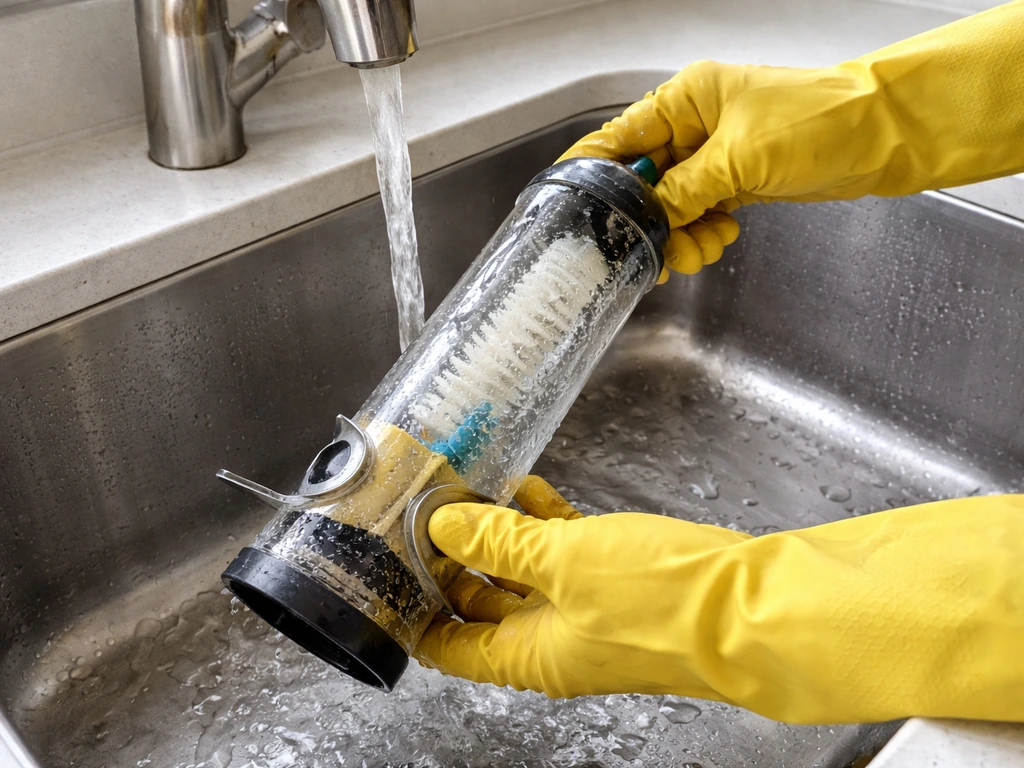
- Empty all remaining seed and discard it completely—do not mix old seed with fresh
- Rinse the feeder with hot water to remove loose debris
- Scrub all surfaces with a bottle brush using a dilute bleach solution: 1 part bleach to 9 parts water (All About Birds) or 2 oz bleach per 1 gallon of water (Minnesota DNR)
- Rinse thoroughly with clean water until no bleach smell remains
- Allow the feeder to air dry completely before refilling—Iowa DNR specifically calls this out as essential
- Clean the area under the feeder too: rake up seed hulls and spilled seed, and spray the deck or ground surface with the same 10% bleach solution if contamination is visible
Do this deep clean any time you find mold, and do a lighter cleaning (hot water scrub, full dry) every two weeks as routine maintenance. In warm, humid summers, bump that up to weekly. Project FeederWatch flags that cold-tolerant molds can even grow in cooler conditions, so don't assume winter lets you skip cleaning.
Feeding finches well without the mess
Nyjer is essentially a finch-specific food. American goldfinches, lesser goldfinches, pine siskins, and common redpolls are the main birds you're trying to attract with it. The thin, tiny seed is designed for their small beaks, and they'll ignore most other seeds to get to it. That specialization is also why feeder setup matters so much, these birds will stop visiting if the seed is consistently wet or stale.
- Use a dedicated finch tube feeder or fine-mesh sock feeder rather than a general hopper
- Keep ports small so seed doesn't pour out into rain and wet immediately
- Refill with fresh seed every 3 to 5 days in humid or rainy weather
- Tap the feeder lightly when refilling to check for a solid, caked plug at the bottom—if present, remove it before adding fresh seed on top
- In very wet climates (Pacific Northwest, Gulf Coast summers), consider a weather baffle above the feeder and reduce fill amounts to what birds will consume in two to three days
- If you're new to thistle seed and curious about the difference between nyjer and true thistle, understanding what the seed actually is helps make sense of why it behaves this way in the feeder
One practical note: Nyjer seed does have a shelf life. The oil content in the seed can go rancid even without moisture, and finches will often refuse stale seed before it looks obviously bad to you. If your birds suddenly lose interest in a feeder they've been visiting reliably, try replacing the seed with a fresh batch before assuming a bigger problem. Fresh, dry, properly stored Nyjer in a clean feeder is almost always the answer.
FAQ
If I scatter Nyjer/thistle bird seed, will it sprout in my yard?
If your goal is growing thistles, bird-seed Nyjer is not a dependable planting source because the border heat treatment removes the ability to germinate. Even if you manage to sprout something, it would be from a different, untreated thistle species seed mixed in, not the standard bagged product meant for feeders.
What can I see that looks like seedlings if Nyjer will not grow?
It is still possible to see fungus and fuzzy growth on Nyjer after you spill it, but that is mold on the seed coating or trapped moisture, not a new plant. Moldy seed can also discourage birds, so focus on drying and cleanup rather than expecting vegetation.
How do I know whether my “thistle bird seed” is Nyjer or a wild thistle seed?
Check the label and packaging, because “thistle seed” can mean multiple products. Nyjer sold for feeders is typically heat-treated, while true wild thistle (for gardening or naturalization) may be sold as seed that is not treated. If the bag does not specify Nyjer or feeder-grade Nyjer, treat it as a different product.
Can I soak or stratify Nyjer to make it germinate?
Avoid germination attempts in the usual way, because you would only be moistening a nonviable seed. If you are trying to do something with mixed seed for gardening, the safer path is to use labeled live seed from a reputable plant seed supplier rather than trying to “force” sprouting from bird-feed Nyjer.
My Nyjer got damp, can I just dry it and keep feeding?
The most common mistake is assuming “it is wet” equals “it will mold but it will be fine for birds later.” Mold can spread through the whole batch quickly, so once you notice a musty smell, clumps that do not loosen, or visible fuzzy growth, discard the remaining seed and clean the feeder fully.
How do I prevent Nyjer from spoiling in a tube feeder?
Do not just shake out the feeder. For tube feeders, make sure drainage holes are clear, then rinse with hot water scrub, then dry completely before refilling. Pooling water at the bottom is a major reason Nyjer spoils even when the rest of the tube looks normal.
What if birds stop eating the Nyjer but it does not look moldy?
Yes, finches can reject seed for several reasons besides germination, especially rancidity. If birds abruptly stop visiting, try replacing with a fresh, newly opened bag, because oil can turn stale before the seed looks obviously bad.
How should I store Nyjer after opening so it does not clump?
Storage matters because Nyjer is moisture-sensitive. Keep it in an airtight container in a cool, dry spot, and avoid storing near heat sources. If you opened the bag in humid weather, consider transferring to a sealed container promptly to reduce clumping.
Can I salvage damp Nyjer that does not have visible mold yet?
For most Nyjer problems, there is a narrow “rescue” window only if it is damp but not musty and not visibly moldy. Spread a thin layer on clean paper towel and air dry until it is fully free-flowing, then refill only if there is no odor or discoloration; otherwise discard.
What should I do if I am worried about thistles taking over my yard?
If your area grows wild thistles, spilled seed is not the likely cause of new established plants from feeder Nyjer, but wild thistle management still matters. The practical next step is to remove any living thistle seedlings you find and avoid leaving wet feeder waste that can keep birds concentrated around the same spot.