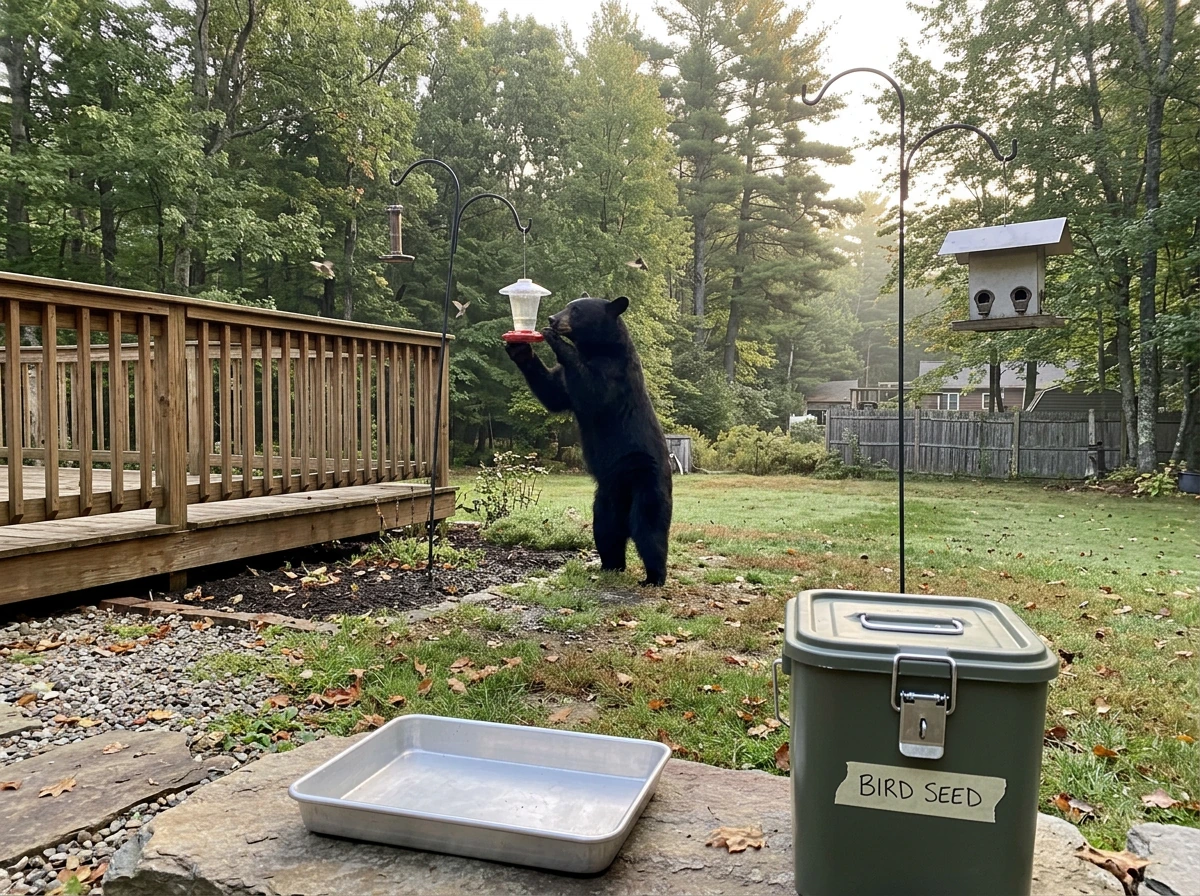
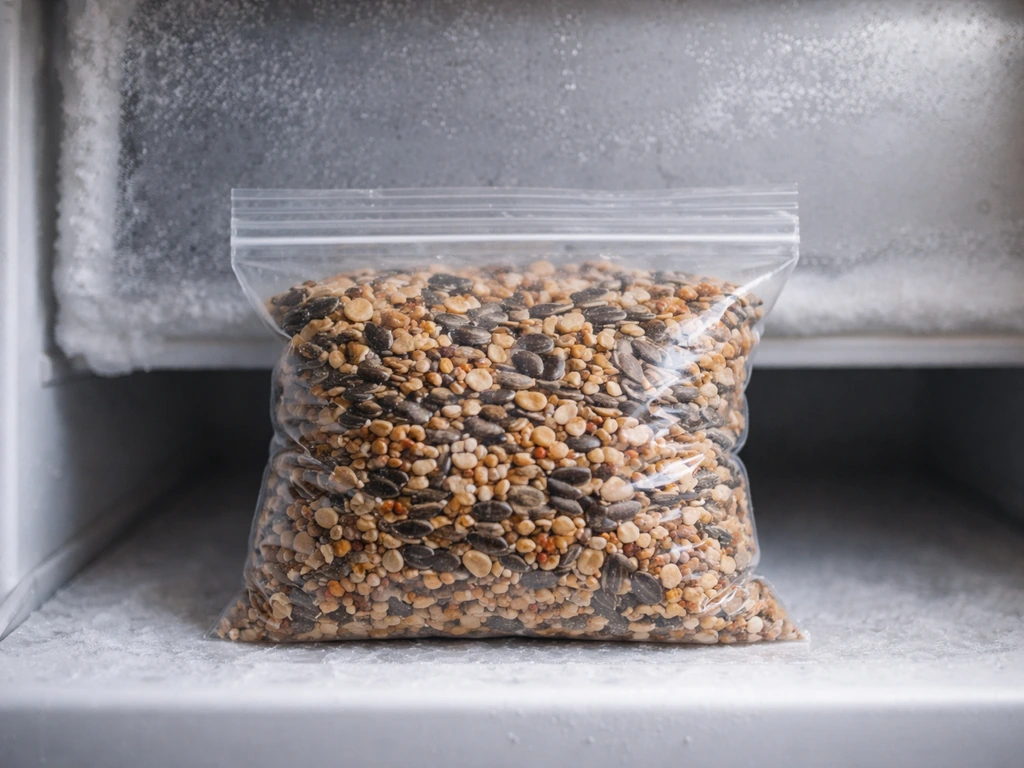
Black bears are opportunistic foragers, meaning they don't hold out for their preferred food when something easier is available. If natural food sources like berries, acorns, or insects are scarce, or even just less convenient than your yard, a bear will pivot immediately. State wildlife agencies in North Carolina, Massachusetts, Maine, and New York all specifically call out bird feeders as a documented attractant, not something that occasionally happens. This is a well-established, consistent pattern of bear behavior.
Why bird seed draws bears: what's appealing and what gets them in
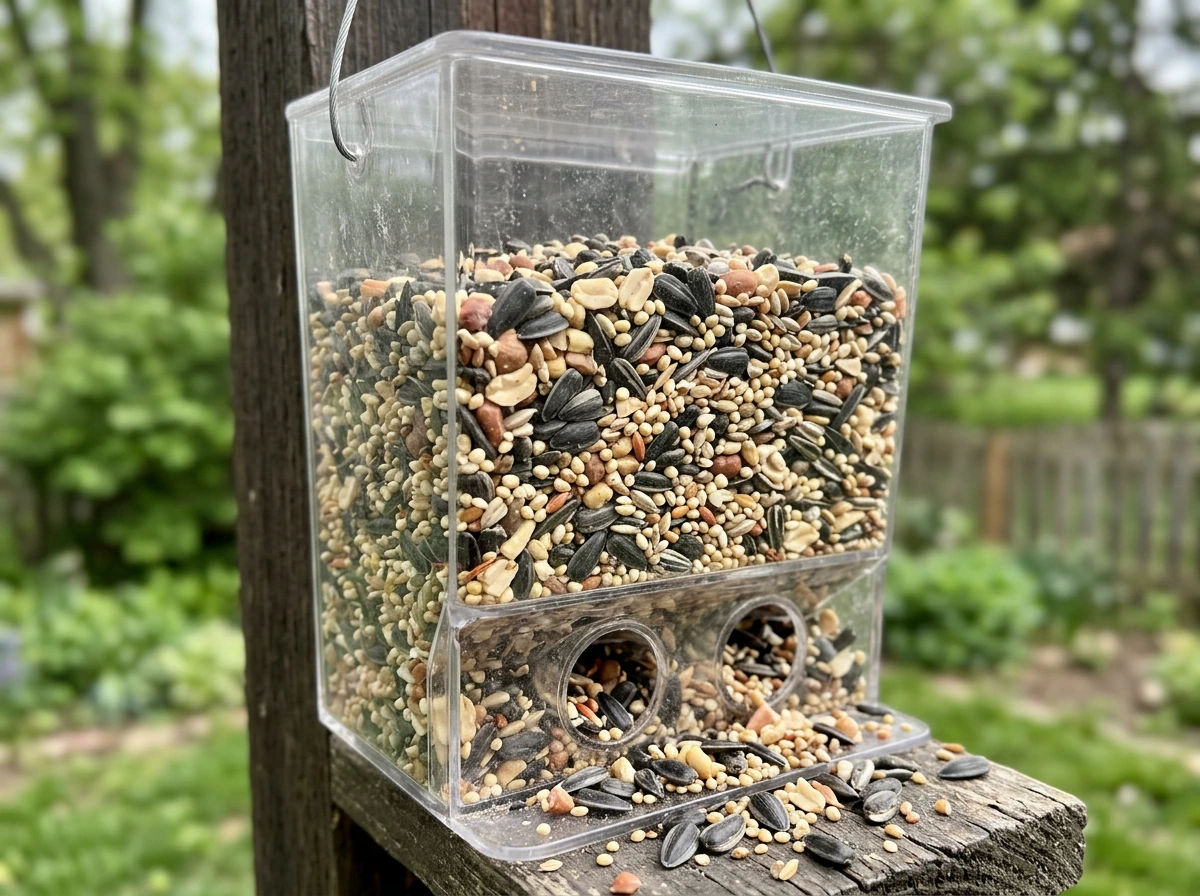
Bird seed is almost purpose-built to appeal to a bear's foraging instincts. Sunflower seeds, peanuts, safflower, and millet are all calorie-rich and fat-dense. A typical backyard feeder or storage bin can hold several pounds of seed, which from a bear's perspective is a concentrated, reliable food reward in a fixed location. That reliability is actually the bigger problem: once a bear finds your feeder and gets a meal, it will come back. Repeatedly.
The odor is a major factor. Bears have an extraordinarily keen sense of smell, and seed, especially oily seed like black-oil sunflower, gives off a strong scent that travels far. Spilled seed on the ground amplifies this, and wet or sprouting seed smells even stronger as fermentation and mold begin. If you have seed piled up under a feeder or stored in a shed in a loosely closed bag, that scent plume can pull a bear in from a significant distance. Get Bear Smart explicitly lists bird seed alongside garbage and pet food as one of the primary attractants to eliminate.
Timing matters too. Black bears are most active and most aggressively foraging in late summer and fall, a period called hyperphagia, when they eat constantly to build fat reserves before winter. Maine IFW also notes that bears emerge from dens in spring already hungry after losing weight over winter. Rhode Island's wildlife guidance specifically recommends taking feeders down between March and November for exactly this reason. That's a wide window, and it covers the seasons most people think of as prime birdwatching time.
Other attractants in your yard can work together with bird seed to increase the risk. Unsecured garbage, compost, and pet food all contribute. A bear that smells garbage may find the feeder as a bonus, or vice versa. Deer can also help explain why bird seed doesn’t stay untouched, dealing with bird seed alone is necessary but not always sufficient if other food sources remain accessible.
How to tell if bears are visiting your feeder area
Sometimes the evidence is obvious: a wrecked feeder, a flipped tray, or a storage bin that's been ripped open. But early visits can be subtler. Here are the most reliable signs to look for around your feeder area.
- Tracks in soft soil or mud near the feeder: black bear tracks are plantigrade (flat-footed like a human), with five toes on each foot. Front paw prints are typically 4 to 5 inches wide, and hind prints are longer, often 7 to 9 inches. Toe pads are rounded and usually show claw marks just above them.
- Bent, broken, or knocked-down feeders, particularly pole-mounted or hanging feeders pulled down or twisted.
- A tray or platform feeder that's been flipped, dragged, or emptied far faster than birds could account for.
- Seed scattered in a wide radius around the feeder, with large quantities gone overnight.
- Scat (droppings) near the feeder: bear scat is large (1 to 2 inches in diameter), often cylindrical or segmented, and may contain undigested seeds, berries, or insect parts depending on the season.
- Scratch marks or bite marks on wooden feeder poles or storage shed doors.
- A disturbed or dug-up patch of ground below the feeder where a bear nosed through dropped seed.
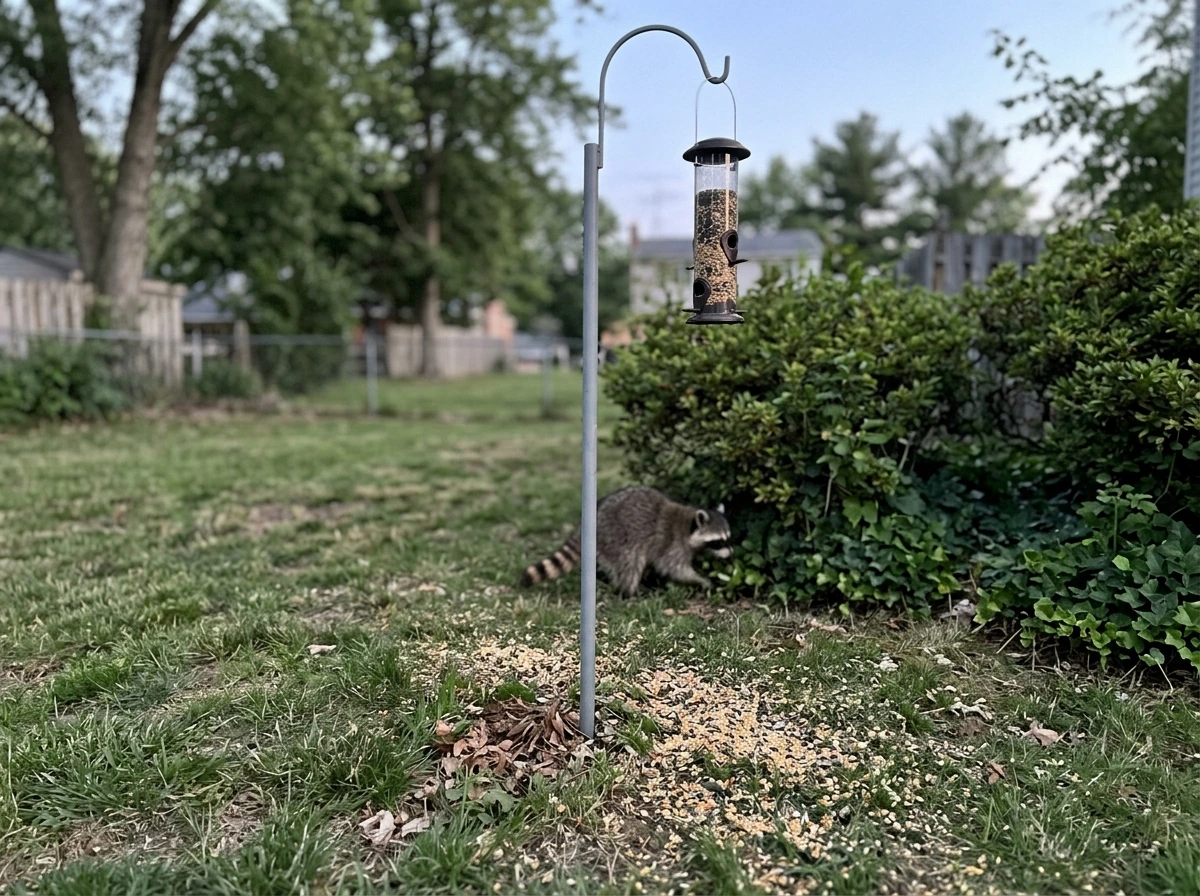
If you're not sure whether you're dealing with a bear versus a raccoon or a deer, pay attention to scale. Raccoon tracks are much smaller (about 2 to 3 inches), and while raccoons can do real damage to feeders, they can't bend a steel pole or rip open a heavy plastic bin. Deer leave cloven hoof prints and tend to knock over rather than destroy feeders. A heavily damaged feeder with large tracks nearby is almost certainly a bear. (If you're sorting out which animals are visiting your yard, we also have articles on raccoons, deer, and other common wildlife and how they interact with bird seed.)
Bear-proofing bird seed storage and feeder setup
The most effective strategy is also the most direct one: remove the food source. South Carolina DNR, Connecticut DEEP, and Audubon all advise removing feeders entirely when bear activity is reported in your area. But if you're committed to feeding birds and want to reduce risk, there are physical strategies that can help. The key word is placement, which the Florida Fish and Wildlife Conservation Commission identifies as the single most critical factor in making a feeder bear-resistant, more important than the feeder's material or brand.
Feeder placement rules that actually work
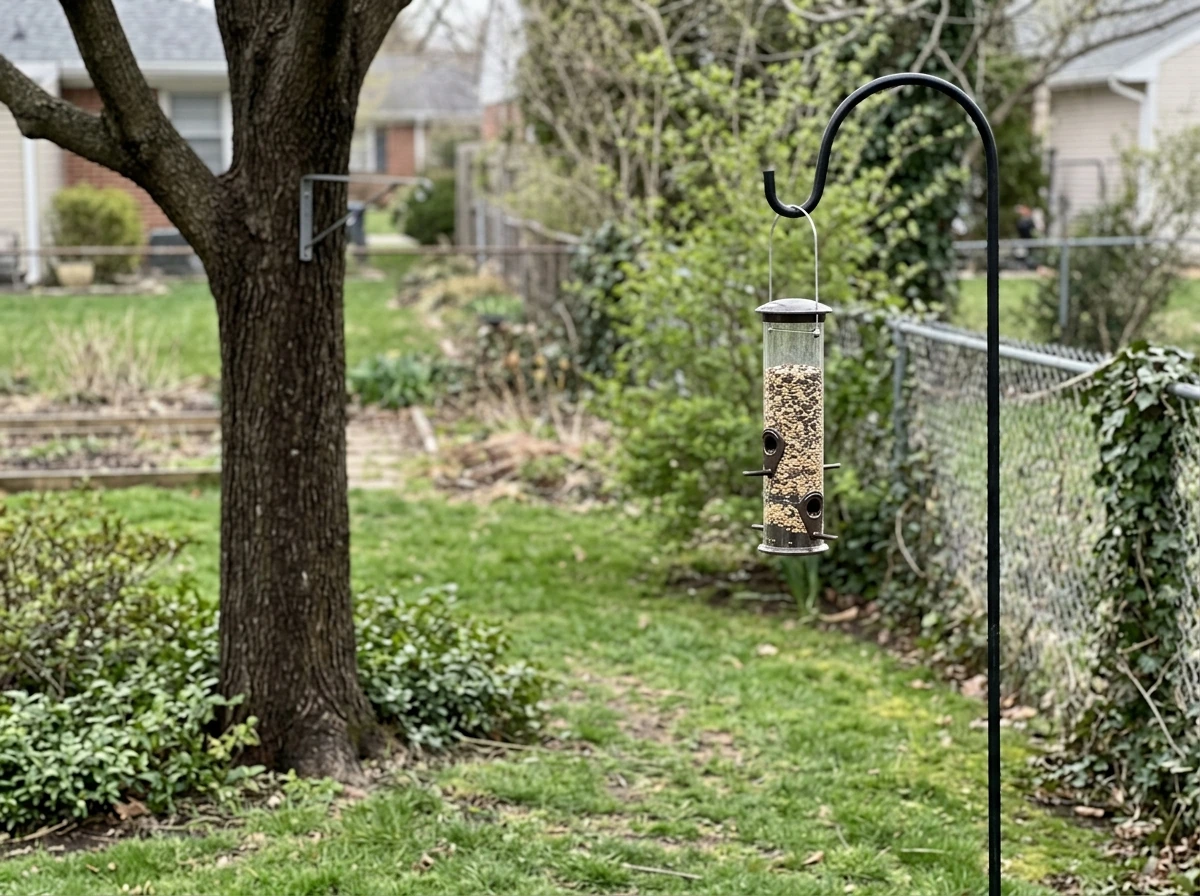
- Suspend feeders at least 10 feet off the ground and at least 4 feet away from any attachment point (tree trunk, pole, wall) a bear could grab or climb past.
- Use a free-hanging wire between two anchor points rather than a pole mount. A bear can bend or uproot most standard poles.
- Bring all feeders indoors at night. Bears are most active at dusk and dawn. If the feeder isn't there at 10 p.m., the incentive to visit disappears fast.
- Consider a commercially manufactured bear-resistant feeding station if you want a permanent outdoor setup in a high-risk area.
- Do not place feeders near windows, decks, or structures a bear could damage while trying to reach them.
Storing bird seed securely
How you store seed matters as much as how you hang the feeder. A flimsy plastic bin in a shed or garage is not bear-resistant. Bears can smell through walls and can open most standard latches or break lightweight containers. Use a metal trash can with a locking lid, a purpose-made bear-resistant canister, or store seed inside your home or in a locked vehicle. The U.S. Forest Service's bear canister guidance for backcountry camping applies equally well here: if a bear can smell it and reach it, assume it will eventually try. Keep storage containers clean on the outside too. Oily residue on the lid of a seed bin is enough to draw repeated attention.
NJDEP recommends storing bird feed in a secure location where bears are unlikely to see or smell it. That means inside whenever possible. If you have to store it in an outbuilding, use a metal container with a locking lid and keep the shed door secured with a padlock, not just a latch.
One deterrent that does NOT work
Hot pepper seed or capsaicin-treated seed is sometimes marketed as a way to deter squirrels and other mammals. It works reasonably well on some smaller animals, but Virginia DWR explicitly states it will not deter bears. Don't rely on it as a bear deterrent. Physical barriers and removing the food source are your only reliable tools.
Seasonal strategy by region
If you're in a state with significant black bear populations (the Northeast, mid-Atlantic, Southeast, Pacific Northwest, and parts of the Midwest), a practical seasonal approach is to stop outdoor feeding entirely from March through November, then resume only in the winter months when bears are denning or largely inactive. Rhode Island's guidelines use exactly this window. In southern states like Florida, Georgia, and South Carolina where bears may be active year-round, the safest approach is to use bear-resistant stations with strict nightly retrieval, or to skip outdoor feeders altogether and use window-mounted feeders instead.
Cleanup and troubleshooting: spilled seed, wet/sprouted seed, mold and pests
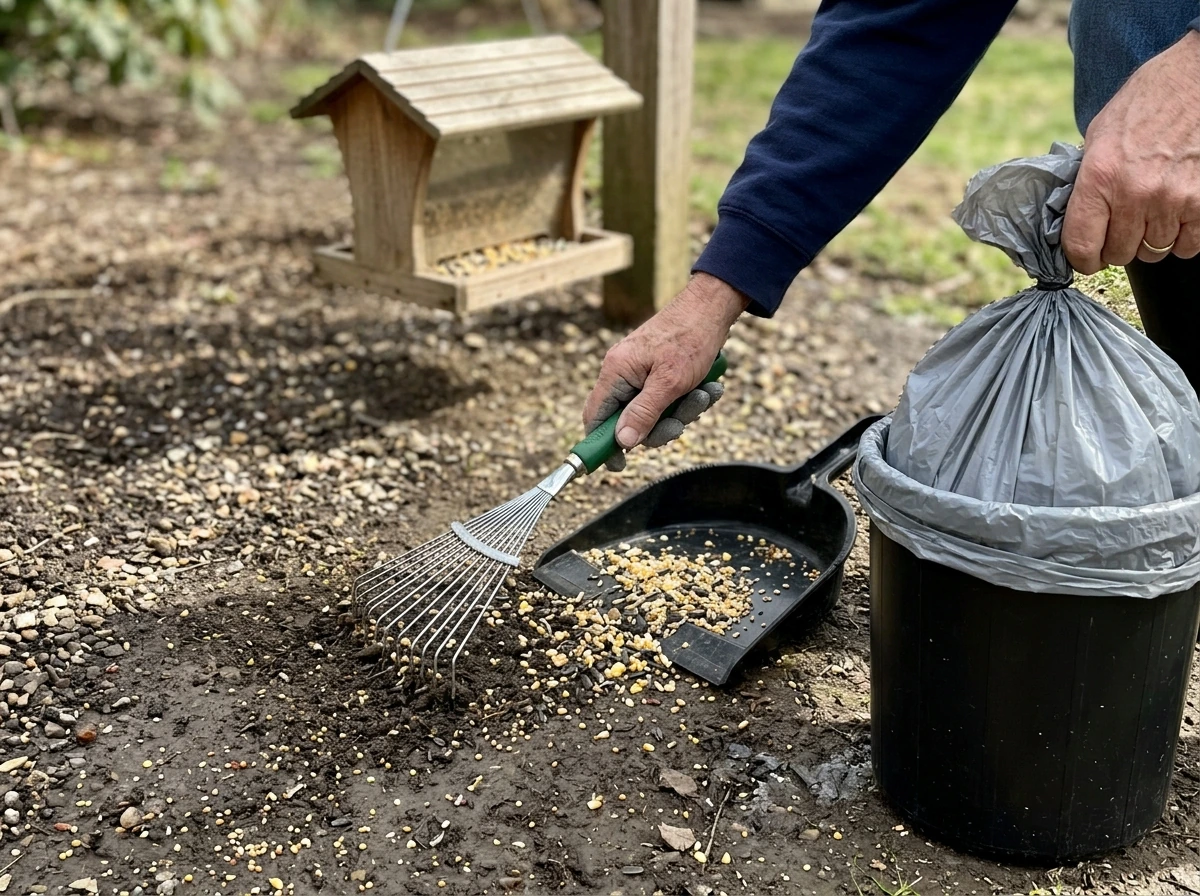
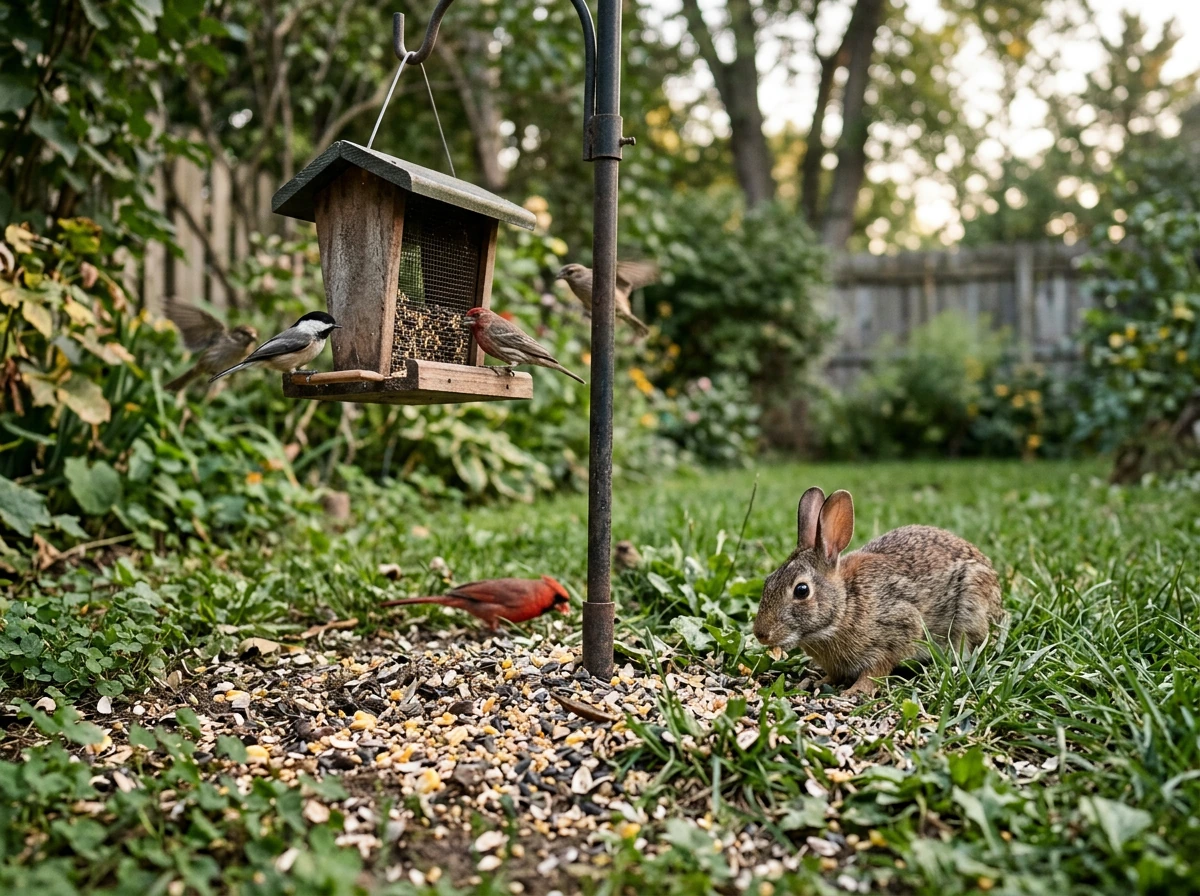
Spilled seed under a feeder is often overlooked, but it's one of the strongest ongoing attractants for bears and other wildlife. do foxes eat bird seed A feeder that's been cleaned up but has two weeks of fallen shells and old seed rotting into the ground is still broadcasting a scent invitation. NJDEP is direct about this: clean up spilled seeds and shells daily if you're in bear country. That's not excessive. It's the minimum.
Cleaning up spilled and old seed
- Sweep or rake the ground under and around the feeder every day during active feeding season.
- Bag the sweepings and put them in a sealed trash container immediately. Don't leave a pile nearby.
- If seed has been sitting on the ground long enough to sprout or mold, rake it up thoroughly, then soak the area with a diluted bleach solution (roughly 1 part bleach to 9 parts water) to break down organic residue and reduce odor. Georgia DNR specifically recommends this approach.
- If there's a tray or catch tray under the feeder, empty and rinse it every day in bear-active seasons.
- Move feeders periodically so seed doesn't accumulate in one patch of ground long enough to sprout or attract ground-dwelling insects.
Handling wet, sprouted, or moldy seed
Wet seed is a problem on multiple levels. It molds quickly, it can harbor bacteria that harm birds, and as it ferments it produces a stronger odor that draws wildlife. Virginia DWR advises discarding any seed that has gotten wet or damp, and specifically notes that open tray feeders without covers are especially prone to this. If you find sprouting seed in or under your feeder, treat it as a contamination issue, not just a mess. Remove it, clean the surface, and if it's in a feeder tray, scrub with a diluted bleach solution and let it dry completely before refilling.
Cornell Lab's All About Birds recommends cleaning seed feeders approximately every two weeks under normal conditions, and more frequently during wet weather or heavy use. Texas Parks and Wildlife suggests weekly cleaning with a bleach solution during humid seasons to prevent mold buildup. The routine is simple: empty the feeder, discard any old or damp seed, scrub with a 1:9 bleach-to-water solution, rinse thoroughly, and let it air dry completely before refilling. Filling a damp feeder just restarts the mold cycle.
Pests and the indirect bear connection
Mice, rats, and other small mammals are attracted to spilled seed and seed stored in unsecured containers. will mice eat bird seed (We cover this in more detail in the articles on mice and bird seed and raccoons and bird seed.) The connection to bears is indirect but real: a feeder area that's attracting mice and insects is producing a stronger overall scent profile, and bears that are foraging broadly may zero in on that zone. Keeping your feeder area clean doesn't just reduce the direct bear attractant, it reduces the layered attractant effect of a pest-heavy spot in your yard. will skunks eat bird seed
Safe next steps when bear activity continues
If you've already had a confirmed or suspected bear visit, the most important immediate step is to remove all bird feeders and stored seed from the outdoor space entirely. Not just at night, not just moved to a different spot. Remove them. South Carolina DNR frames this clearly: a bear that becomes accustomed to getting food from a human-provided source is, in their words, 'an accident waiting to happen.' Habituation is the core risk. Every time a bear successfully gets food from your yard, it reinforces that behavior and makes the bear bolder and harder to deter. Virginia DWR notes that habituation can lead to serious property damage.
After removing feeders, give the area a thorough cleanup using the steps above. Rake out all seed debris, clean all surfaces, and use a bleach solution on the ground where seed has accumulated. This reduces the residual odor that might bring the bear back even after the food is gone.
Contact your state wildlife agency any time a bear is visiting your property repeatedly, has caused property damage, or has shown any aggressive behavior. Rabbits can also show up around feeders, so keep in mind they may eat bird seed as well rabbits eat bird seed. Most states have an online reporting form or a wildlife conflict hotline. South Carolina DNR and Tennessee TWRA both offer online sighting and encounter report forms. Your local agency may send a wildlife officer to assess the situation, set a trap, or issue guidance specific to your area. This is not a situation to handle with DIY deterrents alone once a bear is actively returning to your yard.
Some states (New Jersey, New York, Connecticut, Virginia, and others) may also have wildlife damage control operators, which are licensed professionals who can assist with exclusion, deterrence, and in some cases relocation. Your state wildlife agency website will have a referral list.
How to prevent it from happening again
| Action | When to do it | Why it matters |
|---|
| Bring feeders indoors every night | Year-round if bears are present in your area | Eliminates overnight access when bears are most active |
| Stop outdoor feeding from March through November | Annually in high-bear-activity states | Covers hyperphagia season and spring emergence |
| Clean up spilled seed and shells daily | Every day during feeding season | Removes the scent attractant that draws bears to the area |
| Store all seed in locked metal containers indoors | Ongoing | Prevents bears from accessing stored seed even if they enter a shed |
| Discard wet, damp, or moldy seed immediately | Whenever seed gets wet | Reduces fermentation odor and mold, both of which intensify the scent plume |
| Report bear sightings to your state wildlife agency | Each confirmed or suspected visit | Creates a record and triggers professional response if needed |
| Remove all outdoor food attractants (garbage, pet food, compost) | Ongoing | Prevents the layered attractant effect that compounds bird seed risk |
You can still feed birds safely in most areas, but it requires real adjustments if you live where black bears are active. The good news is that the steps above, especially nightly feeder retrieval, daily cleanup, and secure storage, genuinely work. The bears that keep coming back are almost always doing so because there's still a reward. Remove the reward consistently and the visits drop off. That's the core principle behind every piece of state wildlife guidance on this topic, and it's the most practical thing you can do starting today.