No, you should not put bird seed in a standard birdhouse meant for nesting. But if you have a birdhouse-style container that's actually designed for feeding, or you're trying to adapt one, there's a right and a wrong way to do it. This guide walks you through the full picture: what birdhouses are actually for, when seed belongs in them, how to keep seed safe and dry, and how to deal with pests, mold, and cleanup when things go sideways.
Do You Put Bird Seed in a Birdhouse? Safe Setup Guide
Maya Collins
16 Apr 2026
Birdhouse vs feeder: what the structure is actually for
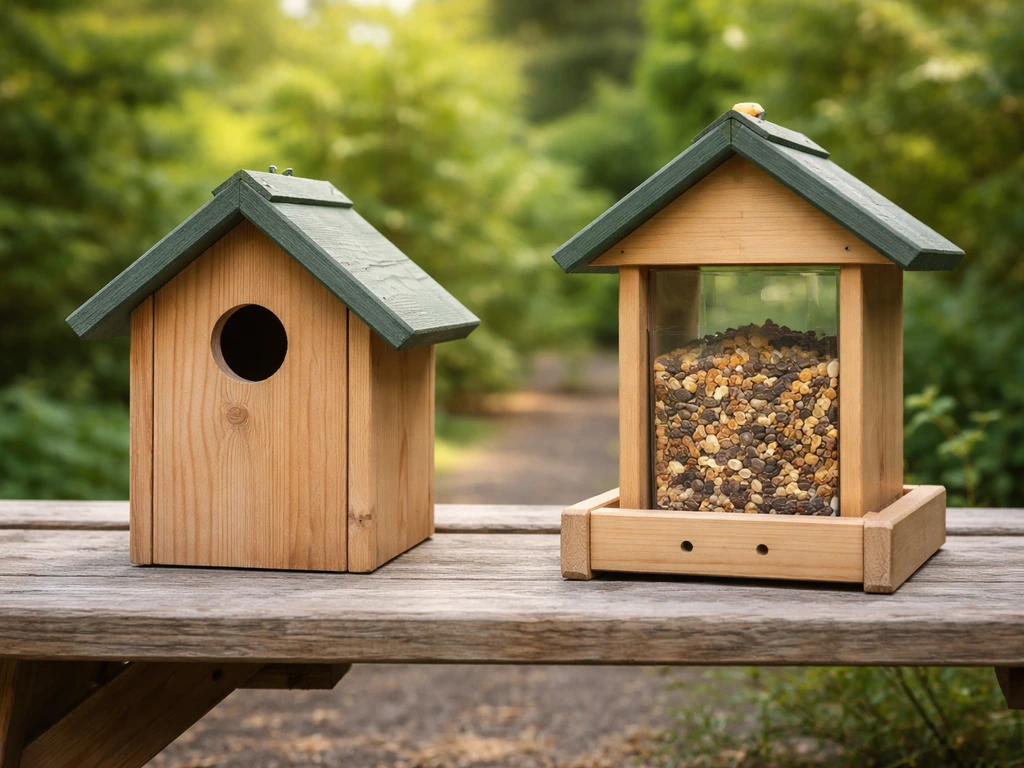
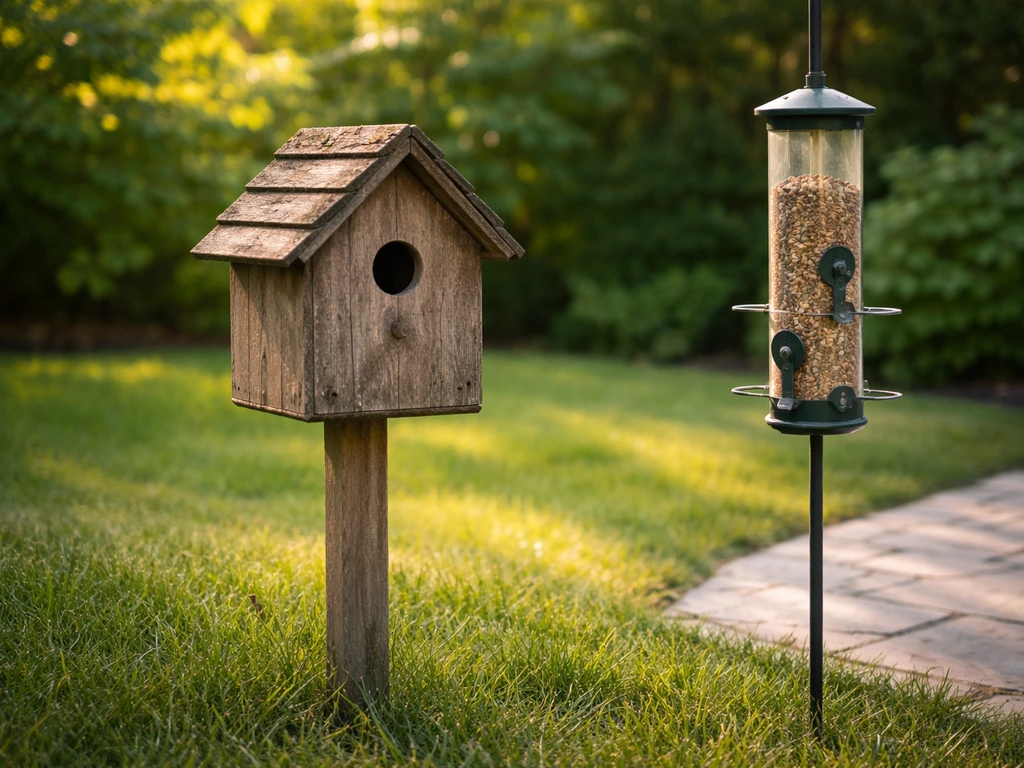
A traditional birdhouse, also called a nest box, is designed to give cavity-nesting birds like bluebirds, chickadees, and wrens a safe place to raise young. The entry hole is sized to admit specific species while keeping predators out. There's no perch (perches actually help predators, not birds), no drainage for wet seed, and no easy access for cleaning out old material between uses. Cornell Lab of Ornithology's NestWatch program is explicit about this: nest boxes are for nesting habitat, not feeding stations.
Feeders, on the other hand, are built around a completely different purpose. Tube feeders, tray feeders, hopper feeders, and suet cages all have design features that make seed accessible, visible, and easy to replace. They're meant to be cleaned regularly, filled with specific seed types, and positioned where birds can access them safely. As the Audubon Marketplace illustrates, retailers treat nest boxes and feeding products as two separate categories because they genuinely do different things.
Mixing these up creates real problems. If you fill a nest box with seed during nesting season, you're likely to attract European Starlings and House Sparrows, two invasive species that aggressively compete with native cavity nesters. Cornell's NestWatch materials specifically flag these birds as management concerns in the context of nest boxes, precisely because increased bird traffic around a nest box makes it harder for native species to use it successfully.
Can you put bird seed in a birdhouse? the quick answer
If your structure is a true nesting birdhouse: no, don't put seed in it. Not during nesting season, not between seasons, not as a shortcut to save on buying a feeder. The enclosed space traps moisture, seed can't drain, airflow is minimal, and you'll end up with a mold problem faster than you'd expect. The U.S. Fish and Wildlife Service warns that birds can get sick from moldy or decomposing seed, and that disease can spread through droppings, both of which become much harder to manage inside a sealed wooden box than in an open or tube-style feeder.
If your structure is a feeder designed to look like a birdhouse, that's a different story. Some hopper feeders are built in a birdhouse shape with a plexiglass or acrylic seed chamber, a roof, and drainage at the bottom. These are fine for seed as long as you follow the same hygiene rules that apply to any other feeder. When in doubt, look for drainage holes at the base of the seed compartment and a roof that extends past the seed opening. If neither exists, treat it like a nesting box and skip the seed.
How to put bird seed in a birdhouse safely (setup steps)
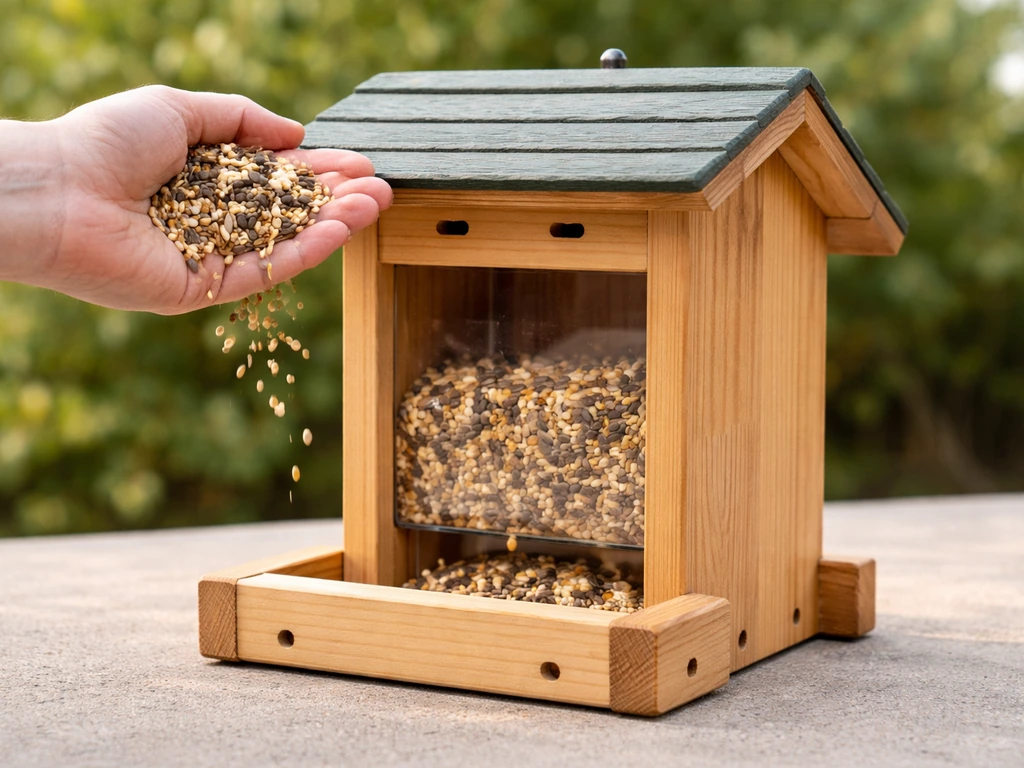
If you've confirmed your birdhouse-style container is actually a feeder with proper drainage and ventilation, here's how to set it up correctly from the start.
- Check for drainage holes at the base of the seed compartment. If there aren't any, drill two or three small holes (1/4 inch each) before adding any seed.
- Position the feeder at least 5 feet off the ground on a pole, not hung from a tree branch directly over a surface squirrels can jump from.
- Fill the seed compartment with only as much seed as birds will eat within a day or two, especially if you're in a wet climate or rainy season.
- Place the feeder away from dense brush or low cover that gives predators a hiding spot, but within about 10 feet of shrubs or trees so birds have somewhere to perch nearby.
- Make a note of the date you filled it. This makes it easy to track when it's time to clean and refill, rather than guessing.
Oregon State University Extension specifically recommends filling feeders with only a one-to-two-day seed supply if the location tends to get wet. This is one of the most consistently ignored pieces of advice in backyard bird feeding, and it's also one of the most effective ways to prevent mold before it starts. Think about how much bird seed to put out in terms of what will actually get eaten, not how full the container looks.
Preventing wet, moldy seed and keeping it bird-safe
Moisture is the enemy of seed in any feeder, but it's especially problematic in enclosed or semi-enclosed structures. Virginia DWR points out that tray feeders without a cover expose seed to moisture and carry a greater risk of mold and fungal growth. A birdhouse-shaped feeder with a proper overhanging roof helps, but it's not enough on its own if you're filling it too full or leaving seed in place during heavy rain.
Virginia DCR state parks recommends bringing feeders inside during inclement weather to prevent seed from getting wet and moldy. If that's not practical, at minimum reduce the fill level before a storm and check the seed after the weather passes. Wet seed that's clumped or compacted should be removed immediately and thrown out, not dried and reused. Oregon State University Extension is direct on this point: if seed has gotten wet and compacted, discard it.
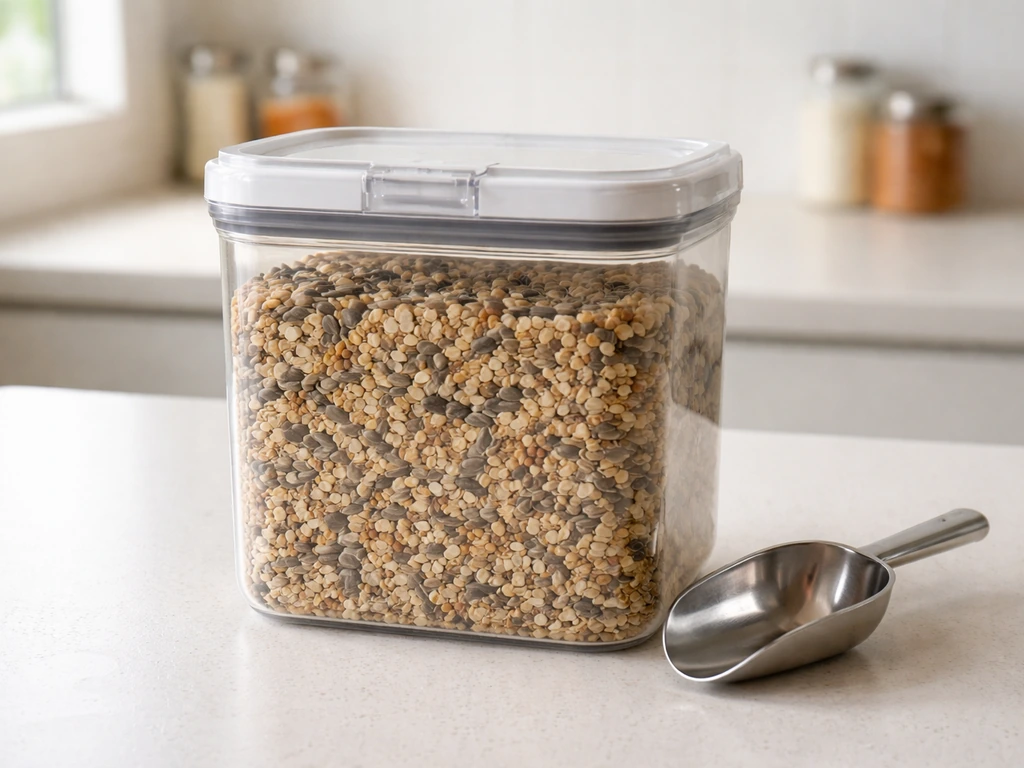
Storage matters just as much as what happens at the feeder. Penn State Extension recommends keeping seed in a cool, dry place and never using seed that has gone moldy. A sealed metal or hard plastic container kept in a garage or shed works well. Avoid leaving a seed bag open or storing it in a damp area. Even seed that looks fine can harbor fungal spores if it's been stored in humid conditions, and those spores can trigger aspergillosis, a serious respiratory disease in birds that Georgia DNR directly links to wet and moldy seed and hulls beneath feeders.
Virginia DWR also advises only filling feeders with quantities that will be consumed within your regular cleaning schedule, a principle closely tied to how often to change bird seed in your specific setup. In humid or rainy climates, that cleaning schedule might need to happen every few days rather than weekly.
Pest and wildlife management (ants, rodents, squirrels)
Seed in an enclosed space is basically an invitation to pests. Rodents, squirrels, ants, and insects are all attracted to the same things birds are: concentrated, easy-to-access food. The difference is that pests often do their damage overnight or when you're not watching, and by the time you notice, the seed is already contaminated.
Squirrels
Squirrels are the most common and most persistent problem. Audubon is candid that you can't guarantee a squirrel-proof setup, but you can dramatically reduce access with a pole-mounted baffle. Wild Birds Unlimited recommends mounting the baffle so the top sits about 5 feet high and placing the whole station at least 10 feet away from any surface a squirrel can use as a launch point. The Wood Thrush Shop puts the baffle height slightly lower at 4 to 4.
5 feet but agrees on the 8-foot clearance from launchable objects. Either way, the key is positioning, not just buying a baffle and calling it done. Audubon reinforces this: proper mounting distance from trees, fences, and structures is what makes the system work.
Ants and insects
Ants are drawn to seed oils and sugar content. If your birdhouse-style feeder is hung from a hook, add an ant moat above it filled with water. For pole-mounted setups, a smooth metal pole gives ants less to grip. Insects like grain moths can infest stored seed if it's kept in open bags. Always store seed in a sealed hard container and inspect it before filling the feeder.
Rodents and mice
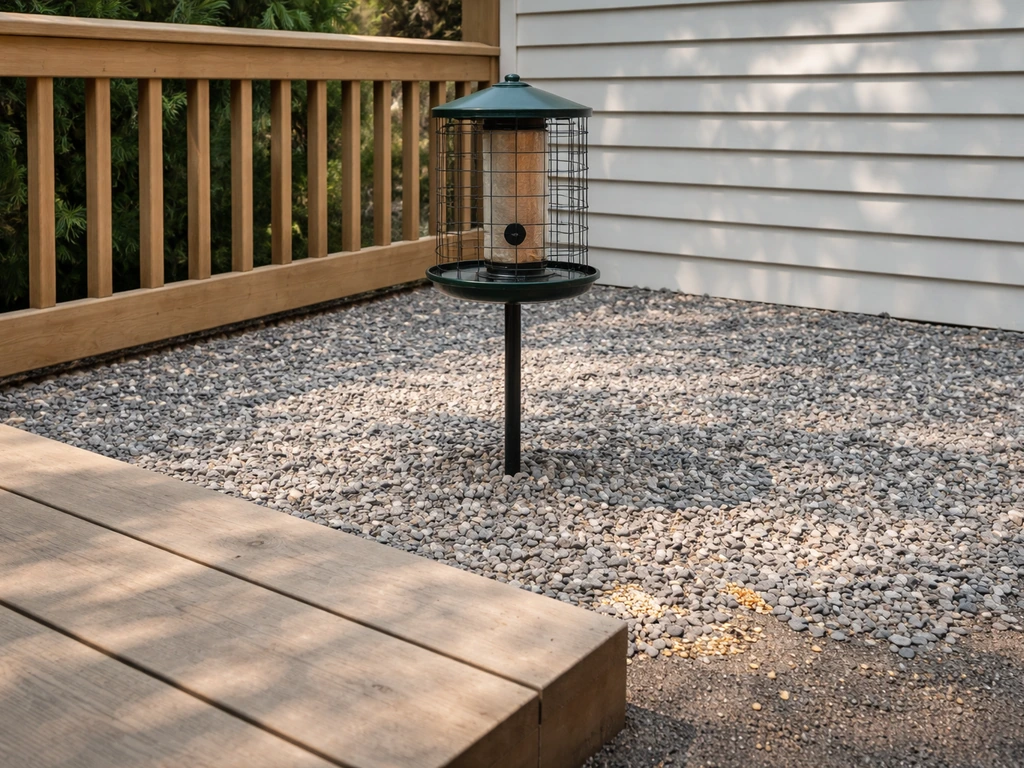
Virginia DWR warns that distributing loose seed on stumps, decks, or patios is not recommended because it attracts other animals, including rodents. The same logic applies to enclosed birdhouses: if seed spills inside a nesting box and sits there, mice will find it. The fix is simple but requires discipline: use a proper feeder, not a nesting box, and clean up spilled seed from the ground beneath the feeder at least twice a week. Georgia DNR recommends exactly that frequency for raking up seed, hulls, and fecal matter beneath feeders.
Cleanup and what to do if seed gets spoiled
Spoiled seed smells sour or musty, clumps together, or shows visible mold. If you find any of those signs, don't try to salvage the seed. Remove everything, bag it, and throw it away. Penn State Extension and Oregon State University Extension both recommend discarding moldy or wet-compacted seed outright.
Once you've removed the seed, clean the feeder before refilling. Virginia DWR and Mississippi State University Extension both give the same disinfection protocol: wash with warm soapy water first, then soak the feeder in a solution of 9 parts water to 1 part bleach for 10 minutes, then rinse thoroughly and let it dry completely before adding fresh seed. Clemson HGIC confirms that this 10% bleach solution is effective against pathogens including salmonella. Don't skip the drying step. Adding seed to a damp feeder undoes the whole point of cleaning it.
The ground under the feeder needs attention too. The U.S. Fish and Wildlife Service advises cleaning not just the feeder itself but also the area below it to prevent a buildup of moldy and spoiled food. K-State Extension recommends cleaning up spilled seed at least once or twice a season as a baseline, but in wetter climates or during heavy feeding periods, Georgia DNR's recommendation of twice weekly is more appropriate. Rake up hulls, droppings, and old seed, and either dispose of them or compost them away from the feeding area.
If you're dealing with a birdhouse that had seed in it and now smells or shows mold inside the nesting cavity, the cleanup process is the same: remove all material, scrub with soapy water, soak with diluted bleach solution, rinse completely, and leave the door or panel open to dry fully in direct sunlight if possible. Don't replace nesting material until the box is completely dry.
Choosing the right seed type and feeder-friendly alternatives
The seed type you use matters both for which birds you attract and for how well it holds up in the feeder. Here's a quick comparison of the most common options:
| Seed Type | Best Feeder Style | Birds Attracted | Moisture Sensitivity |
|---|---|---|---|
| Black oil sunflower | Hopper, tube, tray | Chickadees, titmice, cardinals, finches | Moderate — hulls trap moisture |
| Sunflower chips (hulled) | Tube, hopper | Most songbirds | Higher — no hull protection, spoils faster |
| Safflower | Hopper, tray | Cardinals, chickadees, doves | Moderate |
| Nyjer (thistle) | Nyjer tube feeder with small ports | Goldfinches, siskins, redpolls | High — clogs when wet |
| Shelled peanuts | Wire mesh feeder | Woodpeckers, jays, nuthatches | High — oils go rancid quickly |
| Suet | Suet cage or mesh bag | Woodpeckers, nuthatches, wrens | Low in cold weather, very high in heat |
Wild Birds Unlimited notes that black oil sunflower, sunflower chips, shelled peanuts, and safflower reliably attract chickadees, woodpeckers, titmice, and jays. For smaller finches, Nyjer feeders with small openings limit access to larger, less desirable birds, which also makes them a better fit for targeted feeding. If you're trying to avoid House Sparrows or starlings, safflower is a useful deterrent as many people find those species are less interested in it.
Suet deserves a separate note because it's one of the most common things people try to put in birdhouse-style structures when they probably shouldn't. Suet belongs in a suet cage or mesh bag designed to hold it, not in an enclosed nesting box. As Audubon's winter feeding guide describes, suet should go in purpose-built feeder cages that protect it from the elements and allow drainage. Suet in a sealed wooden box will go rancid fast, especially in warmer temperatures, and the smell and mess will discourage the birds you're trying to attract.
If you're committed to using a birdhouse-shaped structure for feeding, stick to shelled sunflower or safflower in small quantities, check it every day or two, and make sure the structure has real drainage and ventilation. Everything else, Nyjer, suet, peanuts, should go in feeders built specifically for those foods.
If you're also thinking about timing, it's worth knowing that questions about whether you should put bird seed out in the winter often come with different answers than for warmer months, because seed moisture, mold risk, and bird species all shift with the seasons. Winter feeding generally presents fewer mold problems in cold climates, but can still cause issues during freeze-thaw cycles.
On the topic of safety more broadly, the question of whether it is safe to put out bird seed involves more than just mold. Disease transmission at crowded feeders, predator dynamics, and seed quality all factor in, and understanding those risks helps you make better decisions about where and how to feed.
Knowing when to step back from feeding entirely
Not every season calls for active feeding. During nesting season especially, a birdhouse that's actively in use for nesting should have no seed anywhere near it. Foot traffic from other birds attracted by seed can stress nesting pairs and alert predators to the nest's location. If you're trying to support cavity nesters, the best thing you can do during active nesting is leave the box alone and move your feeders to a different part of the yard.
Questions about when you should stop putting out bird seed are closely tied to this. If your birdhouse sees regular nesting activity in spring, consider pausing nearby feeding from about March through July depending on your region, then resuming once fledglings have left.
Quick-reference checklist for safe, clean feeding
- Confirm your structure is a feeder (drainage holes, ventilation, easy-open for cleaning) before adding any seed.
- Never put seed in a nesting birdhouse, especially during spring and summer nesting season.
- Fill with only what birds will eat in one to two days, particularly in wet or humid weather.
- Store unused seed in a sealed, hard-sided container in a cool, dry location.
- Discard any seed that is wet, clumped, or visibly moldy. Do not dry and reuse it.
- Clean feeders with warm soapy water, then soak in 9-parts-water to 1-part-bleach solution for 10 minutes, rinse thoroughly, and dry completely before refilling.
- Rake up spilled seed, hulls, and droppings beneath the feeder at least twice a week.
- Mount feeders on a smooth metal pole with a baffle positioned around 4 to 5 feet high and at least 8 to 10 feet from any squirrel launch point.
- During inclement weather, bring feeders in or reduce fill levels to prevent seed from getting wet.
- Move feeders away from active nesting boxes during breeding season to reduce stress and predator attraction.
FAQ
What if my “birdhouse” has a lid, but no drainage holes? Can I still put seed inside?
If there is no drainage at the bottom and no clear airflow path, treat it like a nesting box, not a feeder. Seed will trap moisture and is more likely to mold after rain or humid weather, even if the top looks covered. Add drainage and ventilation only if you can verify the seed compartment is truly feeder-style.
Can I put seed in a birdhouse during winter but not in spring and summer?
Winter can reduce mold risk in cold climates, but it does not remove the core problem of a sealed space. If the container has no drainage and you cannot clean frequently, avoid putting seed in it. If you feed in winter, use a purpose-built feeder and keep the seed portion small so it can be cleaned out on schedule.
Will putting seed near an active nesting birdhouse still harm the nesting birds?
It can, even if the seed is not inside the box. High traffic around the nest can increase stress on the nesting pair and bring predators closer, and it can also increase competition from invasive cavity nesters like starlings and house sparrows. The safest approach during nesting is moving feeders away from the nest box.
How often should I check and dump seed from a birdhouse-shaped feeder?
If it is a feeder-style container with drainage, check it every day or two in typical conditions, and more often during wet spells. If seed becomes clumped, compacted, or visibly damp, remove and discard it immediately rather than trying to dry and reuse.
What’s the easiest way to tell whether my birdhouse-shaped container is a true feeder or a nesting box?
Look for feeder-specific features: a seed chamber designed to be refilled, real drainage at the bottom, and a roof that extends past the opening to shed rain. If it has a cavity meant for a nesting entry hole, no drainage, and no straightforward cleaning access between uses, assume it is a nest box and do not put seed inside.
If seed spills into the cavity or under the box, should I just leave it until cleanup day?
No, spilled seed can attract rodents and insects, and it can spoil and mold in place. Remove any spilled seed promptly, and rake or clean the area beneath the feeder at least as often as your climate requires (more frequently in wet conditions).
Is suet ever okay in a birdhouse-style container that looks like a nesting box?
Generally no. Suet should go only in purpose-built suet feeders or mesh cages that keep it protected and drain properly. In an enclosed wooden box, suet can turn rancid quickly and create an odor and mess that discourages the birds you want.
What seed types are least likely to cause problems in a feeder-shaped birdhouse?
In practice, shelled sunflower or safflower are often easiest to manage because they are more compatible with feeder cleanup routines and tend to be less messy than some other food choices. Keep quantities small, prevent moisture buildup, and avoid any seed that has gotten wet and compacted.
My birdhouse-style feeder is getting mold inside, what should I change first?
Change the moisture variables first: reduce the fill level so seed does not sit exposed during rain, bring the feeder inside during inclement weather if possible, and ensure the unit truly has drainage and airflow. Then tighten cleaning, and discard any seed that already looks moldy or smells musty.
Can I disinfect a birdhouse nesting box the same way as a feeder after a moldy seed incident?
Yes for cleaning steps, but be strict about drying time. After disinfection, rinse thoroughly and leave it open to dry completely, ideally with direct sunlight when feasible. Do not put nesting material back until everything is fully dry to avoid trapping moisture again.
Next Article
How to Make Bird Seed Last Longer: Storage and Fixes
Learn how to make bird seed last longer with proper storage, humidity control, pest prevention, and fixing wet or moldy