For most backyard feeders in the U.S., late spring (around May) is the natural point to scale back or stop putting out seed, then restart in late fall when natural food gets scarce. In the UK, the RSPB is more specific: pause seed and peanut feeders from May 1 through October 31 to cut disease risk and discourage large bird gatherings. But the honest answer is that there is no single universal stop date. The right time depends on your season, your local weather, which species you are feeding, and whether your setup is creating more problems (mold, pests, disease) than it is solving.
When Should I Stop Putting Out Bird Seed? Timing Guide
Maya Collins
23 May 2026
Seasonal timing: when to start and when to stop
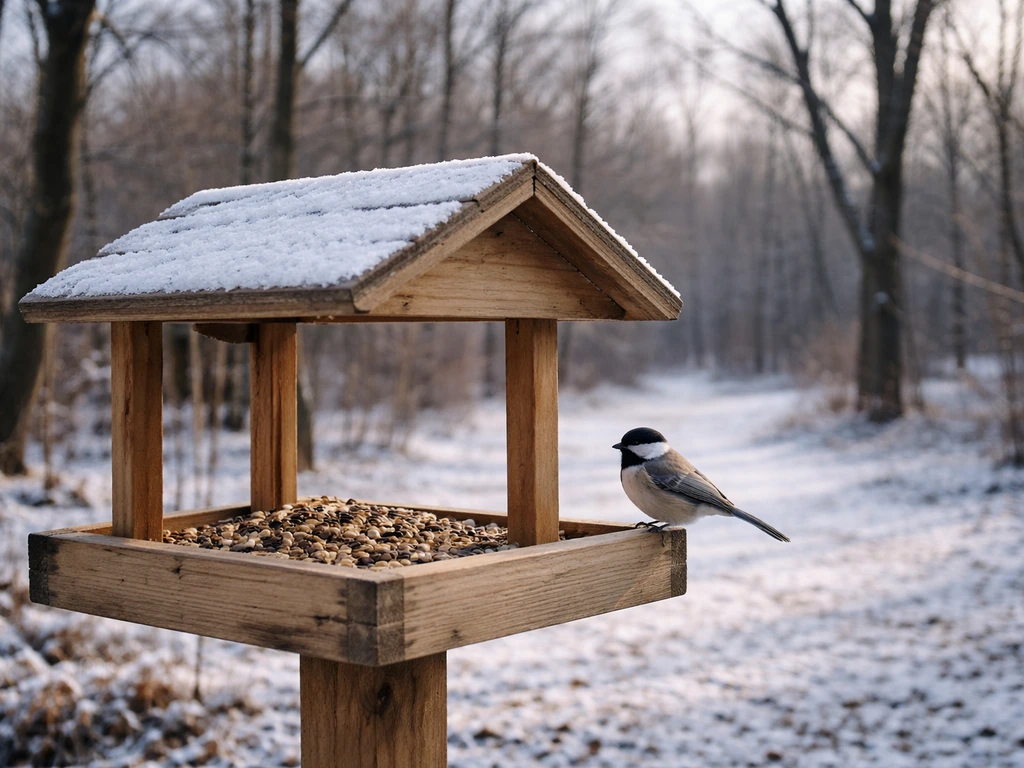
Feeding is most valuable when birds genuinely need supplemental food. That is typically late fall through early spring, when insects are gone, berries are stripped, and temperatures are low. In most of the northern U.S. and Canada, that window runs roughly November through March. In the UK and similar maritime climates, it stretches a bit longer but the RSPB's May 1 cutoff is a practical rule of thumb backed by disease control data, not just seasonal preference.
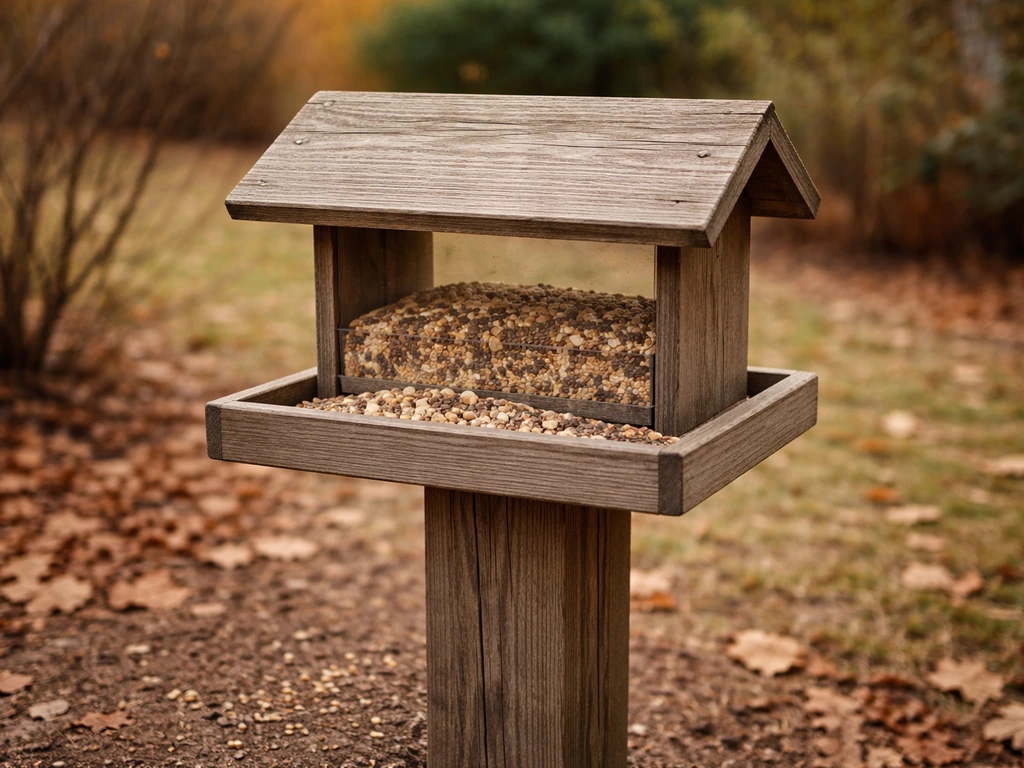
Starting up in fall is easy to time: watch for the first hard frosts and the return of winter visitors like juncos, white-throated sparrows, and siskins. That is your signal to fill the feeders. Stopping in spring is trickier because birds are still visiting, but by mid to late May, most of them have abundant natural food available. If you are using a birdhouse, you can typically provide bird seed only briefly in the early season, and then stop to reduce mold, pests, and disease risk bird seed in a birdhouse. If you only feed during summer, Audubon's position is simple: stop whenever you want in the fall. There is no biological harm in stopping, and birds will not become dependent on your feeder in the way people sometimes fear.
- Late fall (October to November in the northern U.S.): good time to start or resume feeding as natural food becomes scarce
- Late spring (April to May): natural food is back; this is the right window to reduce and then stop
- UK feeders: RSPB recommends pausing seed and peanuts May 1 to October 31
- Summer-only feeders: stopping any time in fall is fine; birds adjust quickly
- Year-round feeding is fine if your setup stays clean, but summer requires extra vigilance
Weather-based triggers that should make you pull seed now
Season is a guide, but weather is what actually forces your hand. The biggest risk factors are sustained heat and rain, either together or back to back. Wet seed goes bad fast: the Minnesota DNR notes that mold and bacteria form quickly on wet seed sitting in a feeder or on the ground. A good rule of thumb is to pause or stop putting out bird seed during periods of sustained heat or wet weather to prevent mold and disease is it safe to put out bird seed. Once temperatures climb consistently above 70°F (21°C) and your area is getting regular rain, seed spoils in a matter of days, sometimes overnight in a tube feeder with poor airflow.
The practical triggers that should prompt you to stop or at least suspend feeding for a stretch:
- Daytime highs consistently above 70 to 75°F combined with humidity or rain
- You find clumped, discolored, or sour-smelling seed within 48 hours of filling
- Seed is sprouting in the feeder tray or on the ground below
- You see sick birds at or near the feeder (lethargic, puffed up, discharge around the eyes)
- Multiple days of heavy rain with no chance for seed to dry out between fills
- An outbreak of salmonella or trichomonosis has been reported in your area
If you spot even one or two sick birds, Project FeederWatch is direct: take the feeder down immediately, clean it with a 10% bleach solution (roughly 2 ounces bleach per gallon of water), and stop feeding until the sick birds are gone from your yard. This is not overcaution. Pathogens can persist on feeder surfaces and in soil for hours to days, per California Department of Fish and Wildlife data, so a single sick bird can seed an outbreak at your station.
Choosing the right seed near the end of the season
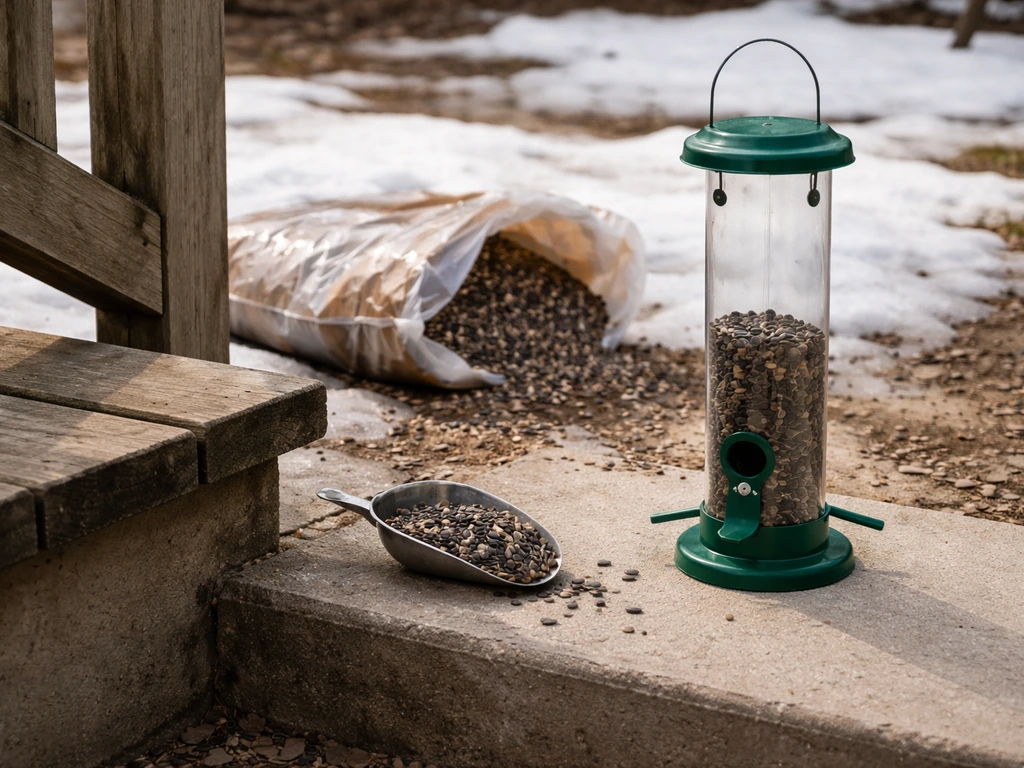
As you approach your planned stop date, the worst thing you can do is buy a fresh 20-pound bag. Instead, work down your existing supply and shift to smaller quantities. Black-oil sunflower is the workhorse seed for most North American backyard setups (it is a staple in Minnesota's winter feeding recommendations, for instance) and it has a reasonable shelf life when dry, but it still goes rancid in heat. If you are winding down feeding in late spring or summer, switch to smaller amounts of single-seed types that the birds in your yard actually consume quickly, rather than mixed blends where the unpopular seeds pile up and rot. The Minnesota DNR notes that winter bird feeding in Minnesota often uses black-oil sunflower seed and cardinal mixes as a large portion of seed used in the state.
Avoid putting out suet cakes once temperatures reliably exceed 70°F. Suet melts, coats feathers, and goes rancid quickly. Some suet blocks are labeled as no-melt formulas and hold up a bit better, but in a real heat wave, even those degrade. Pull suet feeders before you pull seed feeders if your spring is warming fast.
The single most important pre-stop seed habit: never top off a feeder that still has old seed in it. Old seed at the bottom plus fresh seed on top creates a moisture trap. Dump, clean, then refill with only what the birds can finish in a day or two. For platform feeders specifically, Penn State Extension recommends putting out only as much seed as birds can eat in a single day, which reduces buildup and contamination regardless of season.
Pest and rodent problems to handle before you stop
Squirrels and rodents do not magically disappear when you stop feeding, but they do get harder to manage if you let spillage and old seed accumulate right up until the day you pull the feeder. Spilled seed on the ground, cracked shells under the feeder, and uneaten millet in platform trays are all attractants that outlast your feeding season if you do not address them.
Squirrel deterrence during your final weeks of feeding still matters. Audubon's guidance on squirrel control emphasizes feeder positioning over gadgets: a pole-mounted feeder needs to be far enough from any tree trunk, fence, or overhang that squirrels cannot make the jump. This is worth enforcing right up until you remove the feeder, because squirrels that associate your yard with easy food will investigate the area even after the feeder is gone.
Rodent problems tend to escalate in warmer months. Kansas State Research and Extension specifically identifies accumulated spilled seed and poor feeder hygiene as contributors to rodent activity around feeders. Before you stop feeding entirely, spend a few days doing a thorough cleanup of the ground area, and then avoid putting seed out at all if you have noticed mice or rats. Do not just gradually taper. A slow taper that leaves small amounts of seed on the ground is worse than stopping cleanly and raking up.
How to clean up before and after stopping
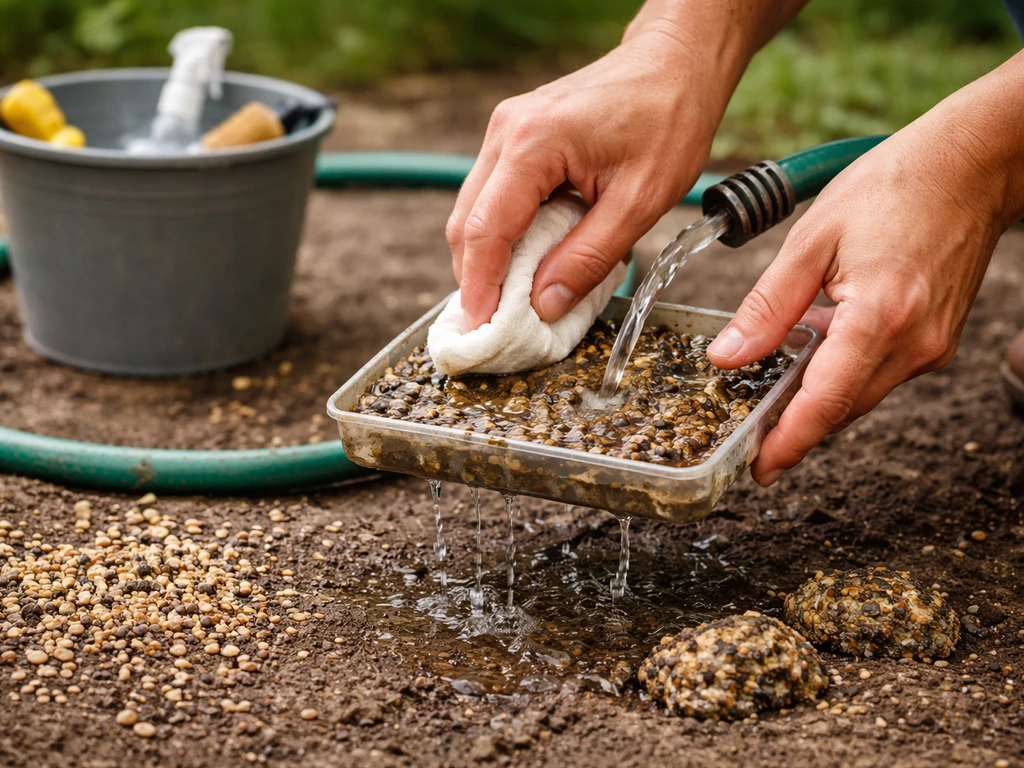
This is the part most people skip, and it is where the real hygiene and pest problems start. Ground cleanup matters as much as feeder cleaning. Bird droppings and moldy seed hulls under a feeder transmit disease to ground feeders like sparrows and doves and attract rodents. South Carolina DNR recommends cleaning the area under feeders at least once a month during the active feeding season. When you stop feeding for the season, that one-time cleanup needs to be thorough.
- Stop filling the feeder a few days before your planned removal date so the birds work down what is left
- Remove all remaining seed from the feeder (do not leave it sitting empty with old seed dust inside)
- Scrub all feeder surfaces with a 10% bleach solution (2 oz bleach per 1 gallon water), rinse thoroughly, and dry completely before storage
- Rake or shovel up all seed hulls, spilled seed, and droppings from the ground beneath the feeder
- For heavy contamination or persistent bacteria, the Minnesota DNR recommends sprinkling agricultural lime about a quarter inch deep on the cleared ground (note: this can damage grass but kills bacteria in the soil)
- Wash platform trays, catch trays, and any poles or hooks that had contact with seed or droppings
- Store feeders in a clean, dry place like a garage or shed, not outside where they will collect moisture and mold
If you spot a sick bird right before stopping, follow Project FeederWatch's protocol: take everything down the same day, disinfect with bleach solution, and store the feeder away immediately. Do not wait until your planned stop date. The RSPB also advises storing feeders completely away from the garden (in a garage or shed) after a disease event, not just cleaning them and leaving them outside.
Feeder and tray setup by species as you wind down
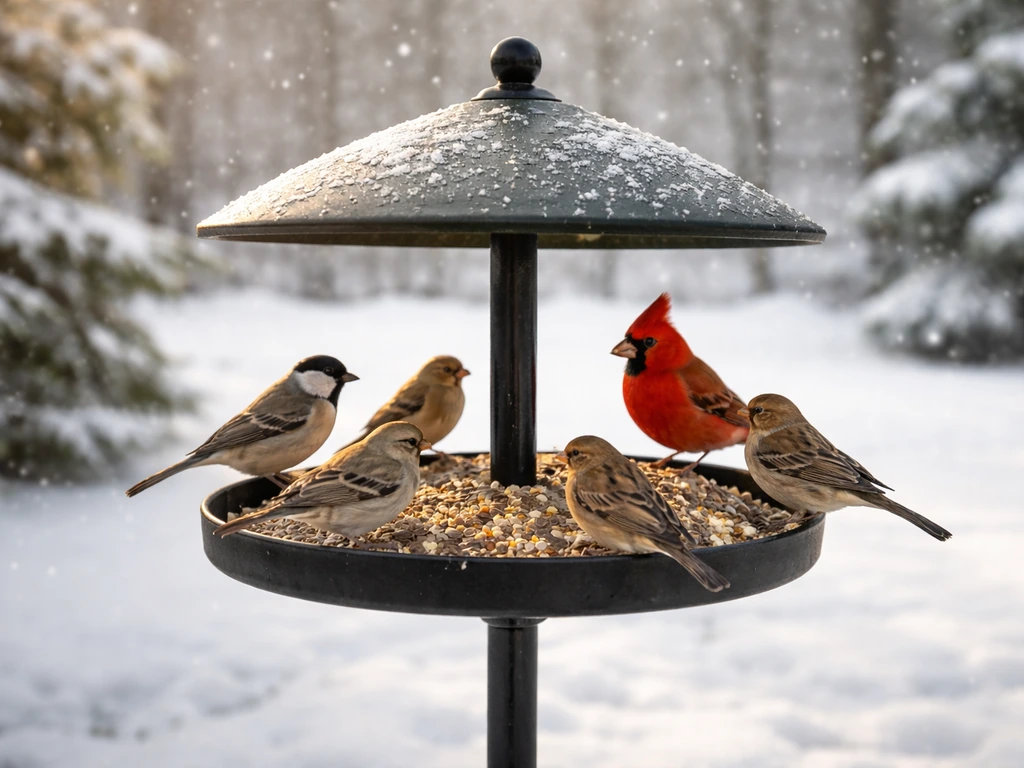
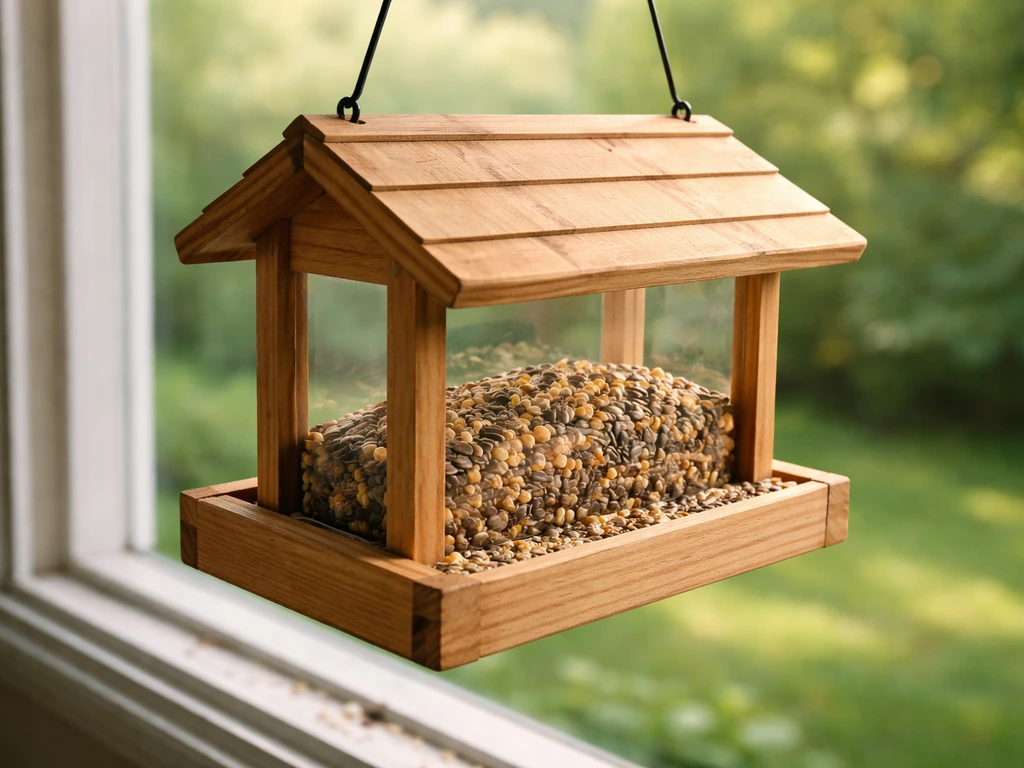
Not all birds respond to feeder removal the same way, and knowing which species use your setup helps you sequence the shutdown sensibly. Tube and hopper feeders serve treetop and shrub birds like chickadees, finches, and nuthatches. Suet feeders are most used by woodpeckers, nuthatches, and chickadees. Ground or platform feeders draw sparrows, towhees, doves, and juncos. If your goal is to keep feeding some species a little longer while stopping others, adjust accordingly.
| Feeder type | Primary species | When to stop relative to season | End-of-season note |
|---|---|---|---|
| Tube/hopper (sunflower, safflower) | Chickadees, finches, nuthatches, cardinals | Late April to May in the north; earlier in the south | Clean thoroughly; these feeders trap moisture at the bottom |
| Suet cage | Woodpeckers, nuthatches, chickadees | Before consistent 70°F+ days; earlier than seed feeders | Pull before seed feeders; suet melts and spoils fast in heat |
| Platform/tray feeder | Sparrows, juncos, doves, towhees | Stop last; fill minimally so birds finish daily | Most vulnerable to weather and droppings; clean tray every few days |
| Nyjer/thistle tube | Finches (goldfinch, siskin) | May to June when dandelion and thistle seed is available outside | Nyjer goes rancid fast; do not leave old nyjer in a tube |
| Ground feeding area | Sparrows, doves, pigeons | Stop first or simultaneously with platform | Clean up the ground area completely; highest rodent risk |
If you have a mixed setup, pull the suet first, then the tube and hopper feeders, and use the platform feeder last to wind down any remaining seed stock (putting out only day-sized portions). This staged approach avoids a hard stop that leaves large amounts of seed in multiple feeders simultaneously.
Storing leftover seed so it does not go to waste
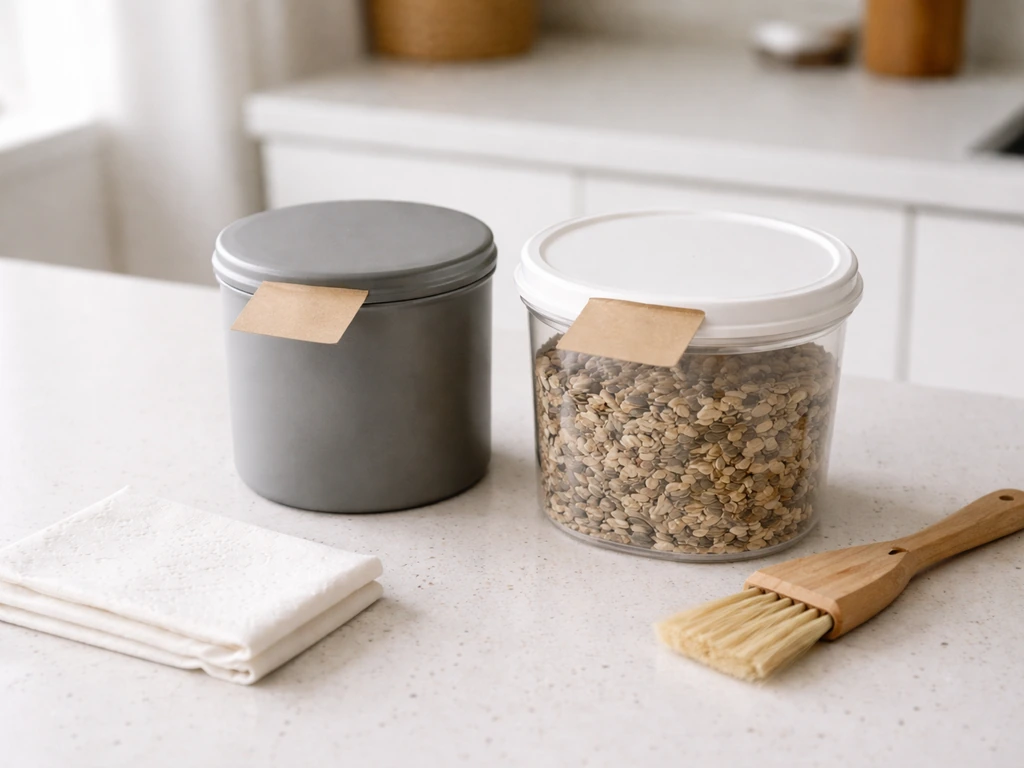
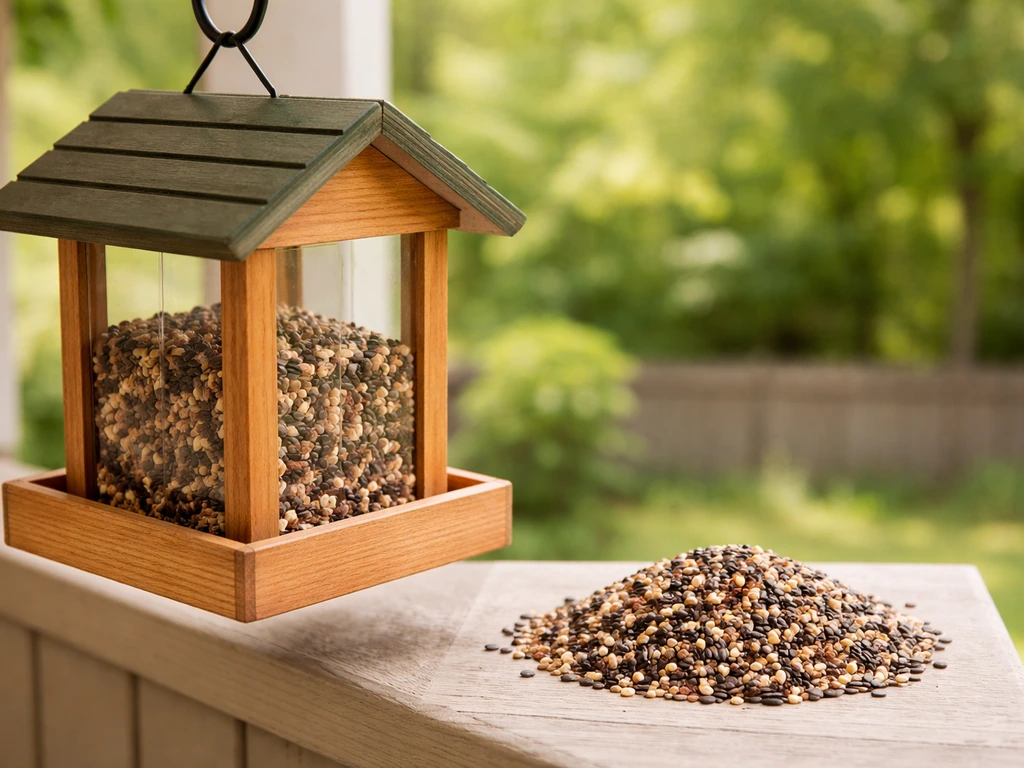
If you have seed left over when you stop for the season, storage conditions decide whether it will be usable next fall. The main threats to stored seed are moisture, heat, and pests. Seed that gets even slightly damp in storage will mold, and moldy seed should be discarded entirely. Seed stored somewhere too warm will go rancid over a summer, meaning sunflower stored in a hot garage from June to October may be stale and oily by the time you want to use it.
- Store seed in airtight metal or heavy-duty plastic containers, not the original paper bag, which rodents can chew through easily
- Keep containers in a cool, dry location: an air-conditioned basement or climate-controlled space is ideal, not a hot shed or garage
- Check stored seed in midsummer: if it smells musty, sour, or oily, discard it rather than feeding it next season
- Do not store seed that was already exposed to rain, had insects in it, or came from a feeder that had moldy seed
- Sprouted seed from a feeder is not reusable; discard it and clean the container before putting in fresh seed
- Label your containers with the date purchased so you can judge freshness next fall
One detail worth flagging: if you find seed sprouting in your feeder before you stop feeding, that is not a storage issue, it is a feeder management issue. Sprouting means the seed is getting wet and staying wet. Switch to smaller daily amounts, check that the feeder has drainage holes, and if the sprouting keeps happening despite those fixes, that feeder design may not suit your climate. Sprouted seed on the ground is also a lure for rodents, so remove it promptly.
A practical transition plan rather than an abrupt stop
Stopping cold does not hurt the birds, but it often leaves you with messy feeders, leftover seed you do not know what to do with, and a ground area you forgot to clean up. A gradual two-week transition is cleaner for everyone.
- Week 1: reduce fill amounts by half and switch to only what your birds consume fastest (usually black-oil sunflower)
- Week 1: pull suet cages and nyjer tubes first, clean and store them
- Week 2: fill only platform or tray feeders with day-sized portions to work down remaining seed
- Week 2: rake and clean the ground area under feeders while you still have a reason to be out there
- Final day: remove all remaining seed from feeders, scrub with bleach solution, rinse, dry completely, then store
- Day after final day: do a ground sweep for hulls, spilled seed, and droppings, and apply lime if needed
One last practical note: how much seed you put out and how often you change it during the active season directly affects how messy the transition is. To keep the feeding season running smoothly, it also helps to follow practical guidance on how often to change bird seed during warmer or wet stretches how often you change it. You can use the same approach to determine how much bird seed to put out by matching the daily amount to what birds can consume before it spoils. Keeping quantities tight and refreshing seed every one to two weeks (more often in wet weather) means you are never left with a feeder packed with stale seed when you decide to stop. The cleanest end to a feeding season is one that was already being managed well throughout.
FAQ
What should I do if I’m not sure whether birds still need feeding in my area?
Do a quick check for natural food first. If you see active foraging on fallen berries, seed heads, or insects, you can pause for a week and reassess. If visits drop but you still have persistent winter species (for example juncos) and you are getting cold snaps, resume only with short day-sized refills to avoid leftover seed.
Is it okay to taper off gradually instead of stopping on a specific date?
Tapering can be cleaner if you remove the seed buildup along the way, but it often fails when people keep topping off or leave old seed on the ground. A safer “taper” is to reduce the amount to the birds’ likely day consumption, stop topping off completely, and do daily ground checks so uneaten seed is removed rather than allowed to accumulate.
Should I stop feeding if I still see a lot of birds at my feeders in spring?
High traffic in spring usually means birds are still using your setup, not that you must keep it full. If natural food is available locally, switch to smaller, more frequent refills (or day-sized portions) and plan a staged removal, for example pull suet first, then hopper and tube, and leave the platform feeder for last.
What if seed is getting wet inside my feeder during rain?
Rain exposure is a main trigger for mold, so you should pause feeding during the wet stretch and clean afterward. Also check drainage and ventilation, and position feeders under eaves only if they still allow airflow, not if they trap moisture. If wet seed keeps recurring even after adjustments, that feeder design may not suit your weather.
Can I keep feeding but change the seed type to reduce risk?
Yes, but do it to match what birds will consume quickly. During late spring and summer, smaller single-seed amounts (for example black-oil sunflower in modest portions for many yards) help prevent unpopular seeds from sitting and going rancid. Avoid mixed blends near the stop date, because the “ignored” portion tends to spoil first.
What should I do about birds that appear sick, but I don’t see any obvious symptoms beyond looking “off”?
Treat uncertainty as a safety stop. Remove the feeders the same day, disinfect, and pause feeding until you stop seeing sick birds in your yard. Even mild lethargy can precede worse signs, and pathogens can persist on surfaces, so a short pause is a low-cost precaution.
Do I need to disinfect feeders every time I stop for the season?
You should at least deep-clean before storage, but disinfection is especially important after any disease event or if you had moldy seed. If the season ended with normal, dry use, a thorough wash plus complete drying before putting feeders away is typically sufficient, and then store them in a dry, pest-resistant area.
How do I handle it if I find sprouting seed while I’m still feeding?
Sprouting means seed has gotten and stayed wet in that setup. Reduce to smaller day-sized portions, ensure there are drainage holes (or switch to a feeder that has better drainage), and remove sprouted seed immediately. If sprouting continues, stop using that feeder temporarily and consider relocating it to improve shelter and airflow.
If squirrels are still active, should I stop feeding later or earlier?
Earlier, if you’re seeing spillage and cached food under and around feeders. Squirrel pressure often increases when food is abundant and accessible, so the goal is to keep final weeks tightly managed: don’t leave seed on the ground, improve feeder height and distance from launch points, and remove feeders on schedule once you’ve completed cleanup.
I have mice or rats around the feeders, should I taper or stop immediately?
Stop promptly if you’ve noticed mice or rats. A gradual taper usually leaves attractants in place, like small seed piles on the ground and under platform trays. Do a focused cleanup for several days first, then avoid putting out seed entirely until the activity clearly subsides.
How long should I wait after a disease event before putting feeders back out again?
Don’t follow the calendar, follow what you see locally. After disinfecting and removing feeders, wait until sick birds are no longer present in your yard, then restart with smaller day-sized portions. Also consider storing feeders away from garden areas for the rest of the season if the outbreak seemed widespread.
What’s the best “ground cleanup” routine right before I stop for the season?
Do a thorough cleanup under and around every feeder type, remove husks and moldy hulls, rake up spilled seed, and bag it for disposal rather than leaving it to dry and attract rodents. If you can, repeat the cleanup once within a few days after the final day of feeding to catch remaining food sources.
I’m running out of seed when the stop date arrives. Is it better to use it all up or discard it?
If it is still dry, you can use it up with small day-sized refills so it doesn’t sit and spoil. Discard only if you see dampness, mold, or off odors. If you suspect moisture exposure at any point, err on the safe side and discard to avoid introducing mold into your feeders.