Change bird seed every two weeks as a baseline. That is the standard recommended by Cornell Lab, Audubon, and Project FeederWatch. In practice, you will often need to swap it out sooner: after rain, during humid summers, or anytime you spot mold, clumping, or insects. Two weeks is the ceiling, not a target to aim for.
How Often to Change Bird Seed: A Practical Schedule
Maya Collins
3 May 2026
The two-week rule and when to ignore it
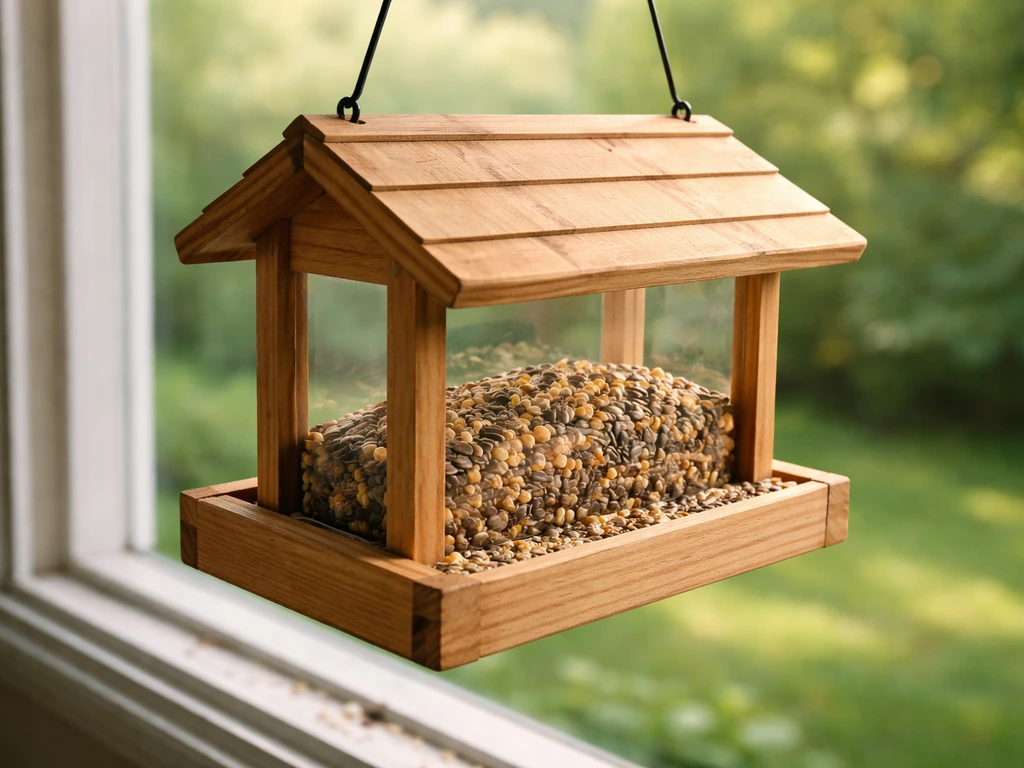
Every two weeks works well if your feeder is sheltered, your climate is dry, and birds are going through seed at a steady pace. But that schedule assumes a lot. If you live somewhere with high humidity, summer heat, or frequent rain, seed can go bad in just a few days. The same applies if your feeder sits in direct sun or has poor drainage. Treat two weeks as the maximum interval, and check the seed visually every few days regardless.
One habit that helps: clean and refill every time the feeder runs completely empty. That gets you a fresh start each cycle without having to track dates. If birds are eating quickly, you may be cleaning weekly or more often, and that is fine. More frequent cleaning is always better than less.
How seed age, moisture, and storage affect your schedule
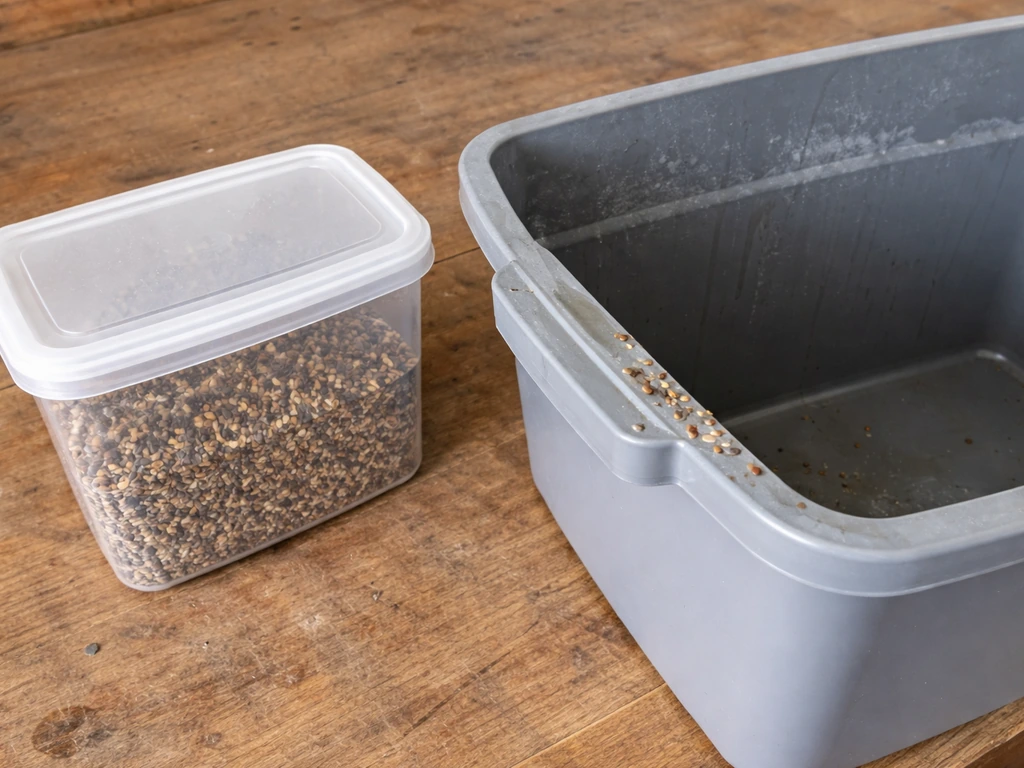
Seed degrades from two main threats: moisture and time. Once seed absorbs water, it starts to clump, and mold can take hold within 24 to 48 hours in warm conditions. Seed stored in a hot garage or left in a bag with a loose seal loses oil content and attractiveness to birds faster than seed kept in a cool, dry, sealed container.
If you buy seed in bulk and store it in a plastic bin outdoors, check it regularly. Seed sitting in a bin that has gotten damp can already be on its way to spoiling before it even hits the feeder. Dry, sealed storage at a stable temperature significantly extends how long seed stays good, which means your feeder refills start from a better baseline. Storing seed in a metal or hard plastic bin with a tight lid also keeps rodents and insects out.
| Condition | How it affects seed | Adjusted change interval |
|---|---|---|
| Hot, dry summer | Oils dry out, seed becomes stale | Every 1-2 weeks |
| Hot and humid | Mold risk within days | Every 2-4 days |
| Cool, dry conditions | Seed stays fresh longest | Up to 2 weeks |
| Rainy or wet weather | Clumping and mold accelerate | Check daily, change as needed |
| Freezing temperatures | Seed freezes and can clump when thawed | Every 1-2 weeks; check after thaws |
| Heavy bird traffic | Droppings contaminate seed faster | Weekly or after feeder empties |
Signs you need to change the seed right now
Do not wait for your scheduled change day if you see any of these. These problems get worse fast and can make birds sick.
- Mold or fuzzy growth on seeds or feeder surfaces: dump everything immediately. Moldy seed can cause aspergillosis, a serious fungal respiratory disease in birds.
- Musty or sour smell: a sign of mold or fermentation even if you cannot see visible growth yet.
- Clumped or wet seed: moisture has gotten in. Remove it all and let the feeder dry before refilling.
- Sprouting seeds: means the seed is actively germinating from moisture exposure. It is not dangerous on its own but signals the seed has been wet long enough to be suspect.
- Insects in the seed: weevils, moths, or other bugs mean the seed is infested. Discard all of it and clean the feeder and your storage container.
- Rodent activity or droppings near or in the feeder: remove the seed and do a thorough clean. Rodent droppings are a hygiene hazard for birds and people alike.
- Sick birds visiting: if you spot lethargic, puffed-up, or uncoordinated birds at your feeder, take it down and clean it right away before putting it back up.
Feeder type and bird species change the timeline
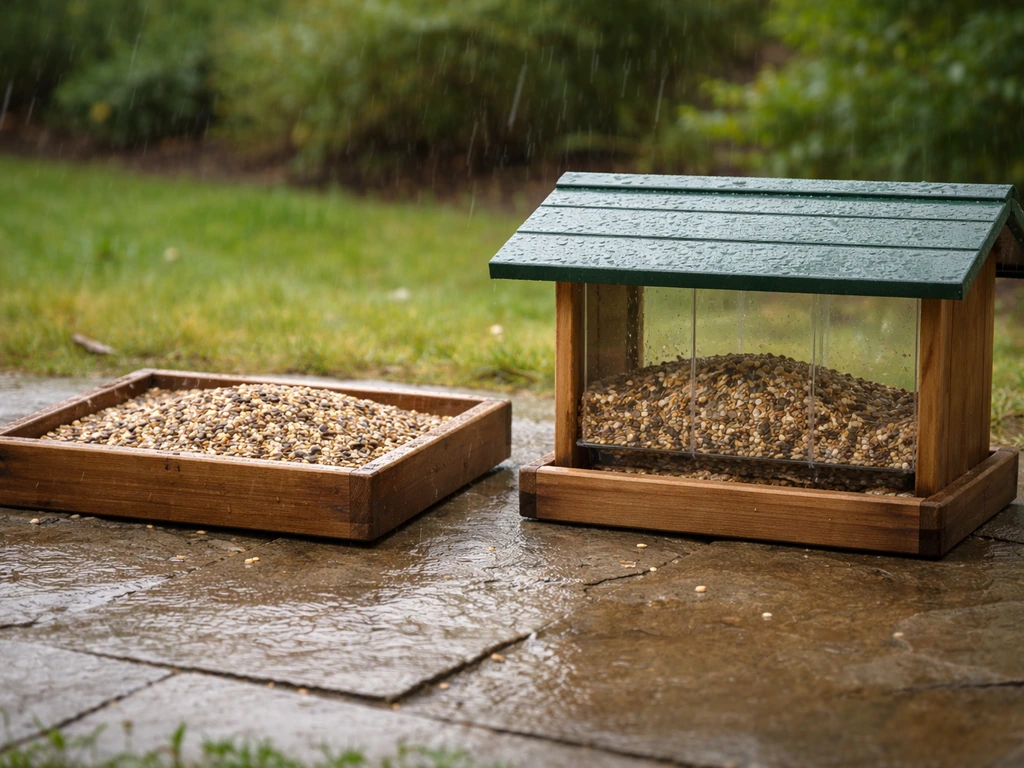
Tray and platform feeders
Open tray feeders are the highest-maintenance option. They are fully exposed to rain, droppings land directly on the seed, and there is no barrier between the seed and whatever the weather throws at it. In wet conditions, seed on a tray can be soggy and moldy within a day. Check trays every single day if you have them, and consider only filling them with a small amount of seed you expect birds to clear by end of day. Look for trays with drainage holes to at least let water escape.
Hopper and tube feeders
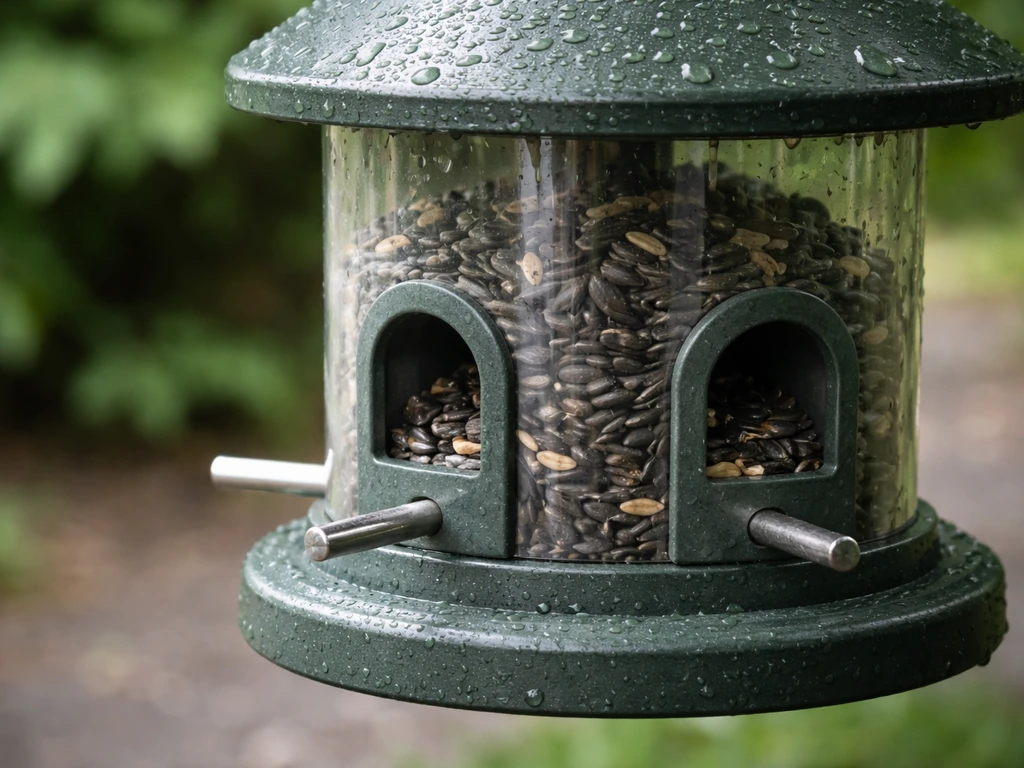
Covered hopper feeders offer more protection from rain and direct sun, which gives the seed a longer usable life. Tube feeders are similar. Even so, seed can still compact at the bottom and trap moisture from birds reaching in with wet beaks. Check the bottom ports and interior of tube feeders when you refill, and do a full clean every two weeks regardless of how the seed looks on top.
Seed type and wildlife species
Some seeds go stale or rancid faster than others. Nyjer (thistle) seed dries out and loses its oils quickly, which is why goldfinches sometimes stop visiting a tube feeder that has not been refreshed in a while. Sunflower seeds hold up reasonably well but are a favorite of squirrels, which may contaminate or scatter seed faster than birds can eat it. Suet goes rancid much faster in heat, so if you are mixing suet cakes with your seed routine, treat summer suet as a short-turnaround item: every few days in hot weather.
Squirrels and other mammals also introduce contamination concerns beyond just eating the seed. They carry pathogens, crack shells and leave wet debris, and can chew feeder parts in ways that let moisture in. If squirrels are heavy visitors, check seed condition more often and clean up shell debris from the ground below the feeder regularly.
How to safely swap out seed and clean the feeder
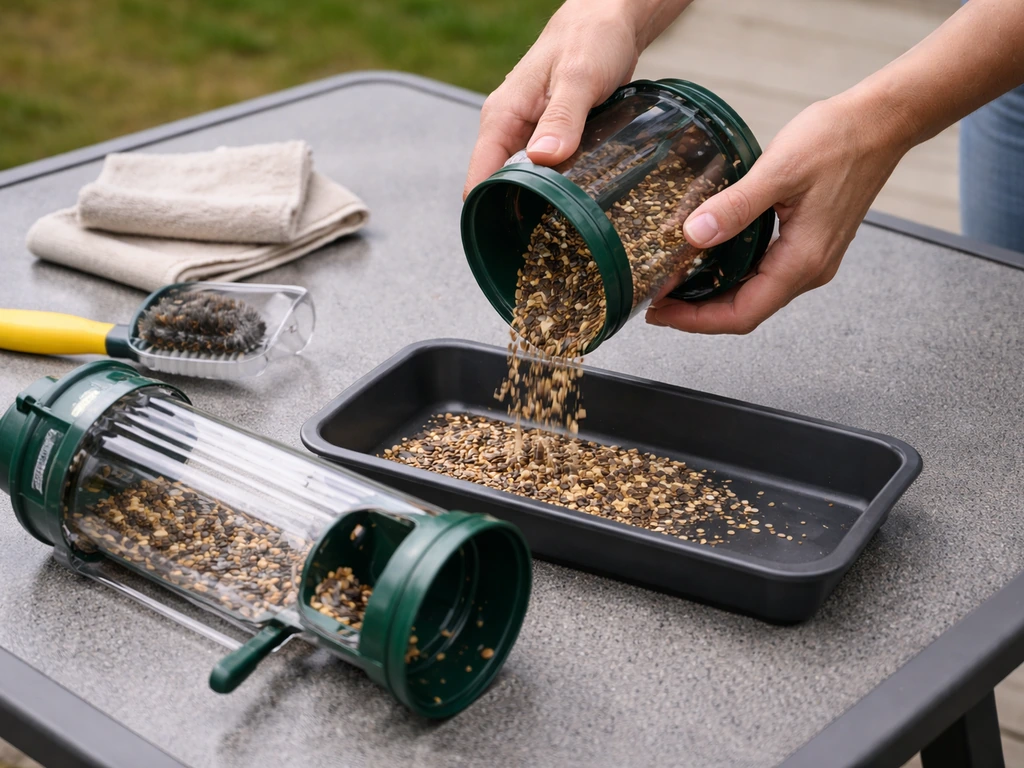
This is the part a lot of people skip, and it matters. Refilling on top of old seed or a dirty feeder is how pathogens build up. The full process takes about 15 to 20 minutes and should happen at minimum every two weeks.
- Empty all remaining seed from the feeder. Do not just top it off. Old seed at the bottom is usually the dirtiest.
- Disassemble the feeder as much as you can. Remove trays, ports, and any removable perches.
- Scrub all surfaces with a stiff brush and hot soapy water to remove debris, droppings, and residue.
- Rinse thoroughly so no soap remains.
- Soak the feeder in a diluted bleach solution: 1 part bleach to 9 parts water, for at least 10 minutes. This ratio and soak time is recommended by both Cornell Lab and the CDC for sanitizing bird feeders.
- Rinse again very well after the bleach soak. Any bleach residue left on the feeder can harm birds.
- Let the feeder air dry completely before refilling. Putting seed into a damp feeder defeats the purpose.
- Dispose of old seed, shells, and droppings that have accumulated on the ground below the feeder. Rake or shovel up anything moldy or wet and bag it for trash.
Wear gloves during cleaning, and wash your hands thoroughly afterward. Bird feeder surfaces can carry Salmonella and other pathogens that are harmful to people, not just birds. If you have seen sick birds recently, do the full bleach soak and consider taking the feeder down for a few days to encourage birds to disperse.
Seasonal and weather adjustments
Summer heat and humidity
Summer is when seed goes bad fastest. High temperatures accelerate mold growth, and humidity adds moisture even without direct rain. In hot, humid climates, check seed every one to two days and plan to change it fully every three to five days. Put out smaller quantities more frequently rather than loading feeders to capacity. If you are wondering whether it is safe to put out bird seed, smaller, more frequent fills help prevent spoilage and keep the seed fresher for birds Put out smaller quantities more frequently. Avoid placing feeders in direct afternoon sun during summer.
Rainy periods
After any significant rain, check the feeder the same day. Wet seed is a fast mold setup. If your feeder does not have good rain protection, a stretch of rainy weather may mean daily checks and changes. Dump wet seed rather than waiting to see if it dries out inside the feeder: by the time it looks dry again, mold has likely already started.
Winter and freezing temperatures
Cold weather slows mold, but it introduces other issues. Seed can freeze and clump together, blocking ports on tube feeders. After a freeze-thaw cycle, what looked like dry seed can become a damp, compacted mass. Check feeders after temperature swings and break up or replace any clumped seed. Winter is also a time of heavy bird traffic in many regions, which means feeders empty faster and droppings accumulate more quickly. Do not ease up on your two-week cleaning schedule just because it is cold.
Regional notes
If you are in the Pacific Northwest or another region with persistent damp conditions, treat every week as your maximum interval and keep tray feeders covered or pull them during wet stretches. In dry desert climates, mold is less of a concern, but heat-related rancidity of fats (especially in sunflower seed and suet) is real. In cold northern climates, keep an eye on seed clumping after freeze-thaw cycles, and consider bringing feeders in overnight during severe cold snaps if they are small enough.
Putting it all together
The practical answer is: change seed every two weeks at minimum, check it every few days, and replace it immediately any time you see mold, smell something off, find it wet, or spot insects or rodents. When you set up a birdhouse, make sure you keep the fresh seed area clean so you are not building up mold or pests. Clean the feeder every time you do a full seed swap using hot soapy water followed by blank" rel="noopener noreferrer">a 9-to-1 water-to-bleach soak for 10 minutes. blank" rel="noopener noreferrer">Let it dry completely before refilling. Adjust your schedule by season: tighten it in summer and wet weather, stay consistent through winter.
Getting the seed change frequency right connects to a few other decisions too: how much seed you put out at one time, whether you feed year-round or seasonally, and whether your setup is attracting animals you did not plan for. If you also manage how much bird seed to put out at once, you can reduce waste, keep seed fresher, and avoid spoilage between refills. Keeping seed fresh is one of the most effective things you can do for the health of the birds visiting your yard and for keeping your outdoor space clean and pest-free.
FAQ
Can I just add fresh seed on top of the old seed if it is not my two-week day yet?
It is a bad idea to top off. If there is any old seed, especially if it looks damp or clumped, pathogens can build up in the existing material, so do a full dump, clean, and refill when changing frequency early.
What are the signs that I should change bird seed immediately, even if it has only been a week?
Use the feeder condition, not your calendar. If you see visible mold, a sour or rancid smell, wetness inside the feeder, or insects, replace immediately, even if it has only been a few days.
How often should I change bird seed in a rainy or very humid climate?
Yes. After significant rain or in high humidity, the practical maximum interval drops. Many people need to check daily and plan full changes every 3 to 5 days in hot, humid weather, especially for exposed tray feeders.
If I buy seed in bulk, does storage change how often I need to refresh it?
A sealed, dry storage method matters, so bulk storage quality affects feeder spoilage speed. If your bin or bag has gotten damp, assume the seed may already be compromised before it even reaches the feeder.
Do I really need to check daily if I use an open tray bird feeder?
Tray feeders require more attention because droppings and rain land directly on seed, and mold can start quickly in wet conditions. If you use trays, check every single day, and consider refilling with only what birds will clear by end of day.
Why might seed in a tube feeder go bad even if the top looks fine?
Yes, especially with tube feeders. Seed can compact at the bottom and trap moisture from wet beaks, so inspect bottom ports and interior when refilling, and still do a full clean on your two-week cycle.
What should I do after a freeze-thaw day to prevent mold or blocked ports?
If feeders freeze and thaw, clumping can hide under a seemingly “dry” look. After a freeze-thaw cycle, check for a damp compacted mass, break it up if possible, or replace it if it smells off or looks moldy.
Do different types of bird seed require different change frequencies?
Not all seeds behave the same. Nyjer thins out faster because it loses its oils when dry conditions persist, while sunflower and suet can lose quality faster from heat or attract more squirrel activity, so refresh those types more frequently during the relevant season.
Should I take feeders down at night in winter, or just keep cleaning more often?
Bring feeders in overnight during severe cold only if you can do it safely and it will not harm feeder access for local birds. More importantly, keep up with cleaning because winter still brings faster emptying and faster droppings accumulation.
Is it necessary to worry about pathogens from bird feeders, and what is the right cleanup routine?
Wear gloves, then wash thoroughly, because bird feeder surfaces can carry Salmonella and other pathogens. If birds look sick recently or you see illness, do a full bleach soak and consider taking the feeder down briefly so birds disperse.
How do squirrels change how often I should refresh and clean bird seed?
Yes. If squirrels or other mammals are heavy visitors, they can crack shells, drop wet debris, and contaminate feed. Check seed condition more frequently and clear shell debris from the ground below the feeder to reduce moisture and pest buildup.
Does feeder placement (sun, shade, drainage) affect how often to change seed?
If you store seed in a sheltered but sunlit spot or a feeder with poor drainage, spoilage can happen faster than expected. Place feeders to avoid direct afternoon sun and ensure any design has drainage or a way for water to escape.
My seed smells bad but does not look moldy, should I still throw it out?
Rancid or “off” odor is a strong trigger, even if the seed does not look moldy. In heat, fats can go rancid, so discard smelly seed rather than waiting for it to dry out.
What if birds empty the feeder faster than two weeks, should I wait until the next scheduled cleaning?
If the feeder runs empty quickly, clean and refill every emptying cycle, which can be weekly or more. The key is a fresh start each time rather than stretching the interval just because the two-week mark is not reached.
Next Articles
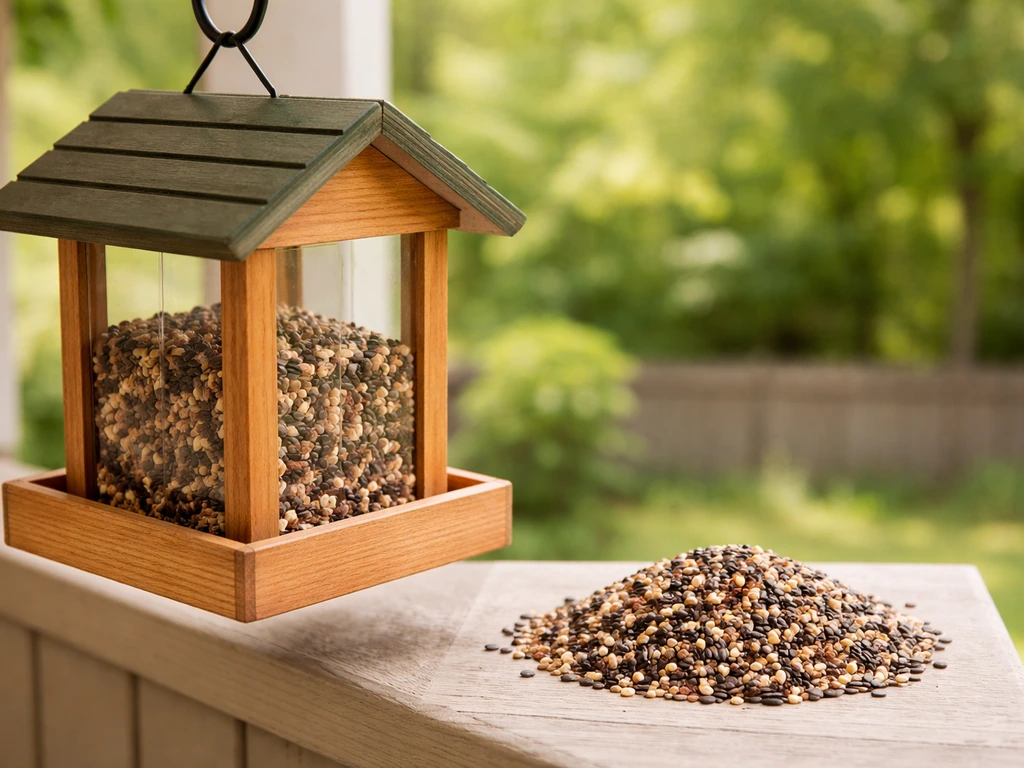
How Much Bird Seed to Put Out: Exact Amount Guide
Exact guide to how much bird seed to put out by feeder type, visitors, refill schedule, and wildlife, with prevention ti
Do You Put Bird Seed in a Birdhouse? Safe Setup Guide
Find out if bird seed belongs in a nesting birdhouse, plus safe steps for feeding, storage, hygiene, and cleanup
How to Make Bird Seed Last Longer: Storage and Fixes
Learn how to make bird seed last longer with proper storage, humidity control, pest prevention, and fixing wet or moldy