The most effective way to keep bird seed from falling on the ground is a combination of three things: choosing the right feeder for the seed you use, putting a seed catcher or tray underneath it, and switching to hull-free seed when mess is a real problem. No single fix works perfectly on its own, but stack two or three of these together and you'll cut spillage dramatically. Here's how to do each one, plus what to do about the seed that still falls.
How to Keep Bird Seed From Falling on the Ground

Maya Collins
10 Apr 2026
Why bird seed ends up on the ground in the first place
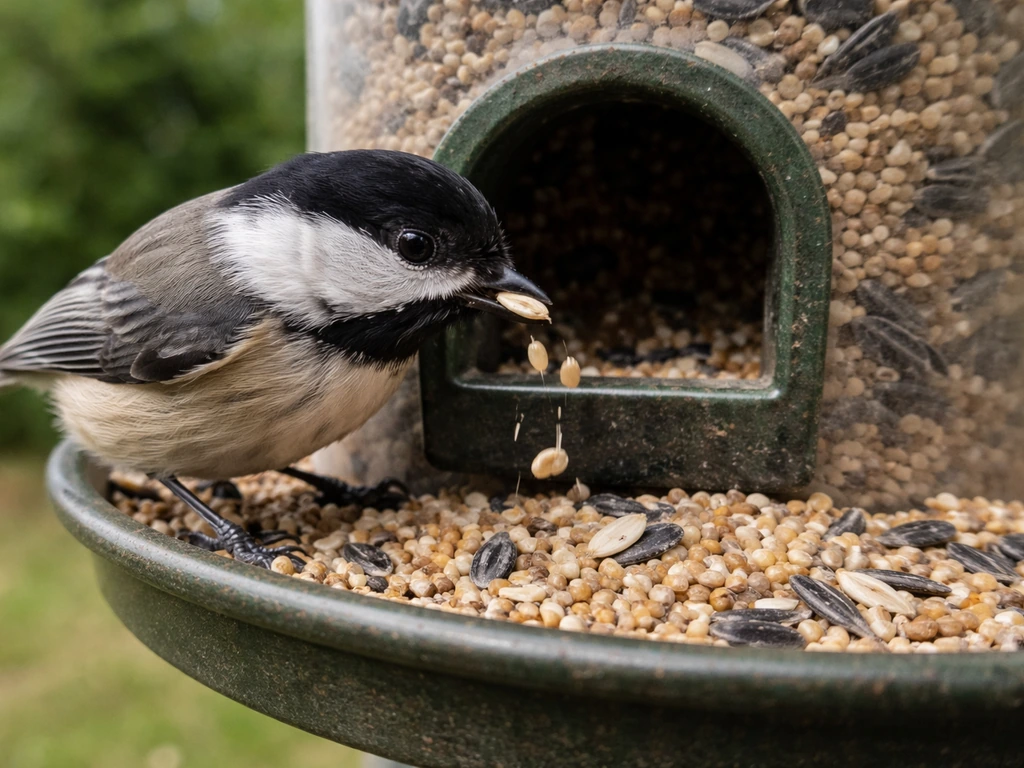
Birds are messy eaters by design. Most backyard songbirds pick through seed to find their preferred type, tossing everything else out of the feeder in the process. Millet is one of the biggest offenders: perching songbirds will often flip it to the ground while digging for sunflower or safflower. Wind makes it worse, blowing loose seed off open trays and platform feeders. Feeder design matters too: a tube feeder with large ports and no tray underneath is basically a seed-scattering machine for small, active birds like chickadees and finches.
Hulls are a separate but related problem. Even when birds eat cleanly, empty sunflower shells pile up under the feeder and create a wet, moldy layer that looks bad and attracts pests. And yes, filling the feeder itself causes spills. Perky-Pet actually states outright that it's normal for some seed to fall when you fill a tube feeder, which tells you this is a design issue worth planning around, not just a clumsy refill moment.
Location plays a role too. Feeders hung near windows, walls, or dense shrubs tend to get more chaotic traffic, more collisions, and more scattering. Placement decisions that you make for other reasons (predator avoidance, window-strike prevention) also directly affect how much seed hits the ground.
Pick a feeder that wastes less seed
Tube feeders with small, well-fitted ports waste less seed than open platform feeders because birds can only access one or two seeds at a time. Nature's Way makes a Wide Funnel Flip-Top tube feeder where the hanger connects to the outside of the tube instead of going through the seed chamber, which removes an obstacle that normally causes seed to spill during filling. That kind of thoughtful design detail actually matters when you're filling a feeder dozens of times a season.
Platform feeders are the most spill-prone design because seed sits in an open tray with nothing to stop it from blowing or getting knocked off. They're also harder to keep clean. Texas Parks and Wildlife notes that platform feeders are easier for deer and squirrels to access and need frequent cleaning to avoid contamination. Texas Parks and Wildlife notes that platform feeders require cleaning more often than hopper-type feeders precisely because everything is exposed. If you like platform-style feeding, consider a hopper feeder instead. It has a closed reservoir that dispenses seed through ports, which limits how much birds can scatter at once.
One clever low-tech trick for tube feeders: Mother Earth News describes filling the bottom of a tube feeder with coarse gravel up to the level of the lowest feeding port. This prevents seed from accumulating below the ports where it can go wet and moldy, and it forces birds to eat from the ports rather than digging into a reservoir of loose seed. It's a free fix that takes five minutes.
Seed catchers, trays, and smart placement
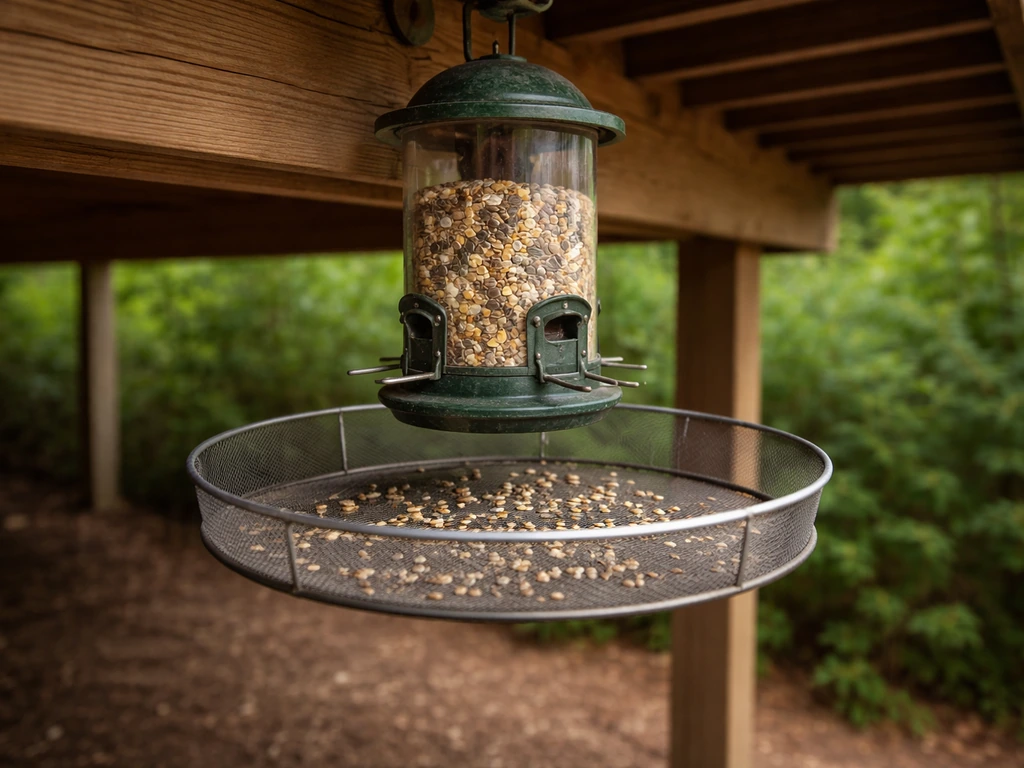
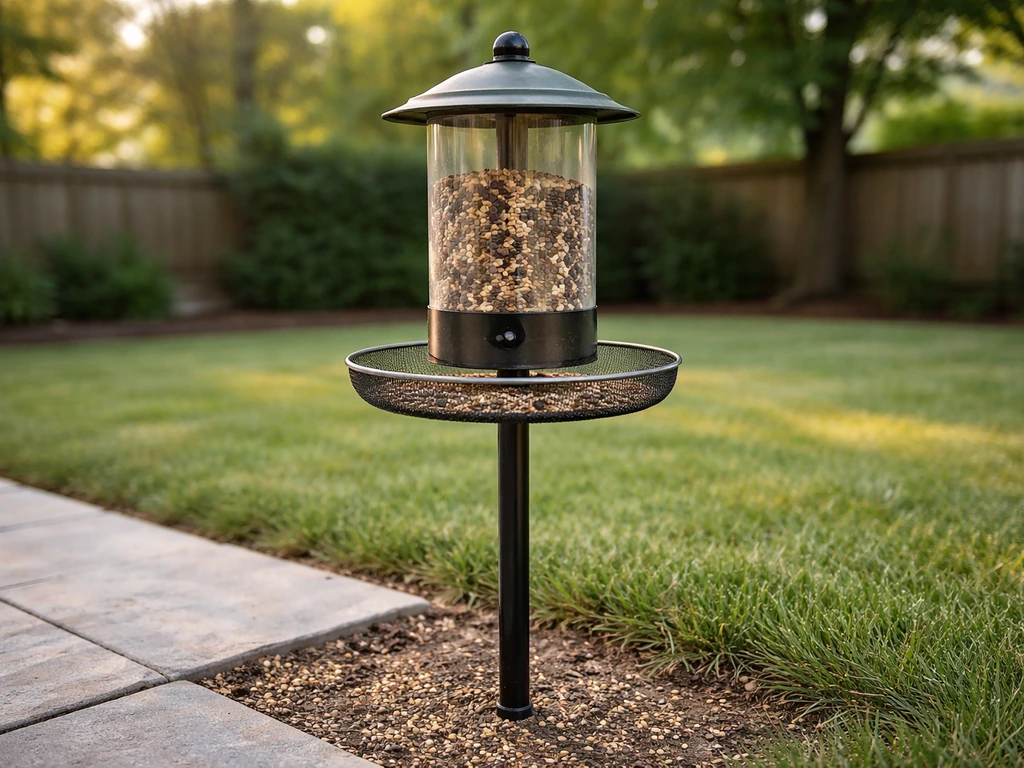
The single most effective hardware upgrade for an existing feeder is a seed catcher tray or hoop mounted underneath it. These catch the seed birds toss out and give smaller birds (including cardinals) a second perching surface where they can eat what would otherwise hit the ground. How to catch falling bird seed is really the job these products were built for. Duncraft sells a Tube and Seed Tray configuration that pairs a tube feeder with a tray directly beneath it for exactly this purpose.
For a more flexible option, the Songbird Essentials Seed Catch Hoop uses a meshed fiberglass spill plate that keeps seed from molding and piling up under the feeder. The mesh matters: it lets water drain through instead of pooling, which is important because wet seed goes bad fast. This type of hoop mounts on the feeder pole and sits below the feeder at whatever height you set it. If you want a deep comparison of options, check out the best bird seed catcher tray picks to find the right fit for your feeder type.
Placement affects how much seed falls and where it lands. Keep feeders at least 8 feet from the nearest branch, deck rail, or fence to limit squirrel access and reduce the frantic jumping and scattering that comes with it. Duncraft recommends placing feeders more than 10 feet from a window to prevent window strikes, which also means birds aren't bouncing off glass and knocking the feeder sideways.
The RSPB advises placing feeders a couple of metres away from thick cover like dense shrubs so small birds have room to escape aerial predators. This reduces panicked takeoffs that knock seed out of the feeder. If you want to lay down a dedicated surface below the feeder to make cleanup faster and prevent seed from working into grass or soil, what to put under bird feeder to catch seeds covers your best options.
Switch to hull-free or no-mess seed
Hull-free or no-mess seed blends are one of the most underused solutions to ground mess. What is no mess bird seed comes down to this: it's seed where the hulls have already been removed, so birds eat the whole thing and nothing is left to pile up on the ground. Duncraft's Super No-Waste Blend, for example, contains sunflower hearts, peanut bits, cracked corn, and Nyjer seed, all hulled. Wild Birds Unlimited notes that using no-shell seed directly reduces rodent problems and weed growth under the feeder because there's no shell debris to attract pests or germinate.
One important caveat: not every "no-mess" label actually delivers on the promise. Wild Birds Unlimited also warns that some no-mess mixes still include millet, and perching songbirds routinely toss millet to the ground when selecting other ingredients. Always check the ingredient list. If a bag contains millet and mess reduction is your goal, it's not the right blend. Look for mixes where every ingredient is something your target birds will eat entirely.
Refilling the feeder without making a mess
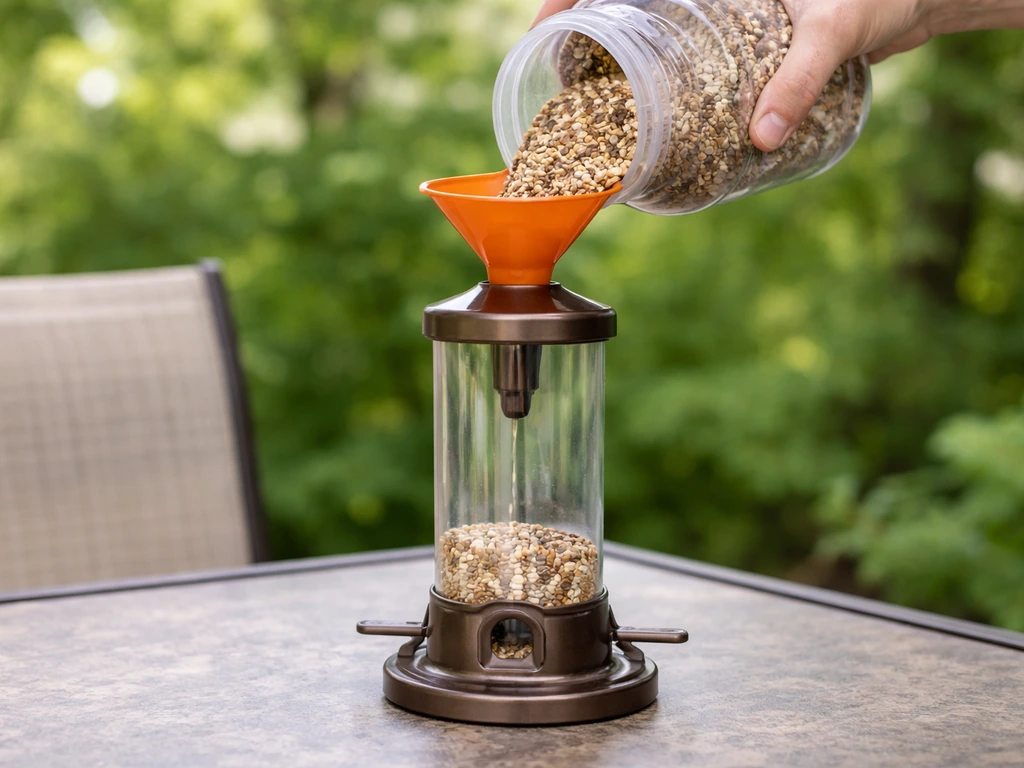
How you refill the feeder matters as much as what you put in it. Most spills during refilling happen because people fill too fast, overfill the reservoir, or use a scoop that's too wide for the feeder opening. Here are the habits that cut refill mess most reliably:
- Use a dedicated seed scoop or a funnel-style container that fits the feeder opening. Wide-mouth funnels are sold specifically for tube feeders and make a real difference.
- Fill to about 80 percent capacity, not to the brim. Overfilled feeders spill seed the moment a bird lands.
- Refill on a dry day when possible. Seed poured into a damp feeder clumps and blocks ports, which causes birds to dig and scatter more.
- Lay a tray or old towel on the ground under the feeder during refilling to catch any drop. Fold it up and shake it back into the seed container when you're done.
- Never pour new seed on top of old, wet, or moldy seed. Empty the feeder fully, clean if needed, then refill. The BC Government's wildlife health guidance is direct on this: do not give moldy or damp seed to birds.
For storage, keep seed in a sealed container to prevent moisture, insects, and rodents from getting in. A metal can for bird seed is a solid choice because it's rodent-proof and doesn't absorb moisture the way plastic bins can over time. Keep it off the ground if possible, especially in humid climates.
Outdoor vs indoor spill control
Outside: grass, patios, and balconies
Outdoors, the main risk from fallen seed is mold buildup, sprouting, and pests. Garden Wildlife Health guidelines recommend sweeping or raking the area under feeders frequently, at least weekly, to prevent waste seed and droppings from accumulating. On a lawn, fallen seed works into the grass quickly, so a hard surface (pavers, flagstones, or a rubber mat) under the feeder makes cleanup much faster. On a balcony, a tray liner under the feeder pole prevents seed from scattering across the floor and blowing off the edge.
If you're wondering whether it's ever fine to just let it lie, the answer is sometimes yes, in a controlled way. Can I throw bird seed on the ground covers when that works and when it doesn't, but the short answer is that ground feeding on a clean, hard surface in a low-pest area is manageable, while ground feeding on soil or mulch near structures tends to attract rodents fast.
Inside: entryways, garages, and storage areas
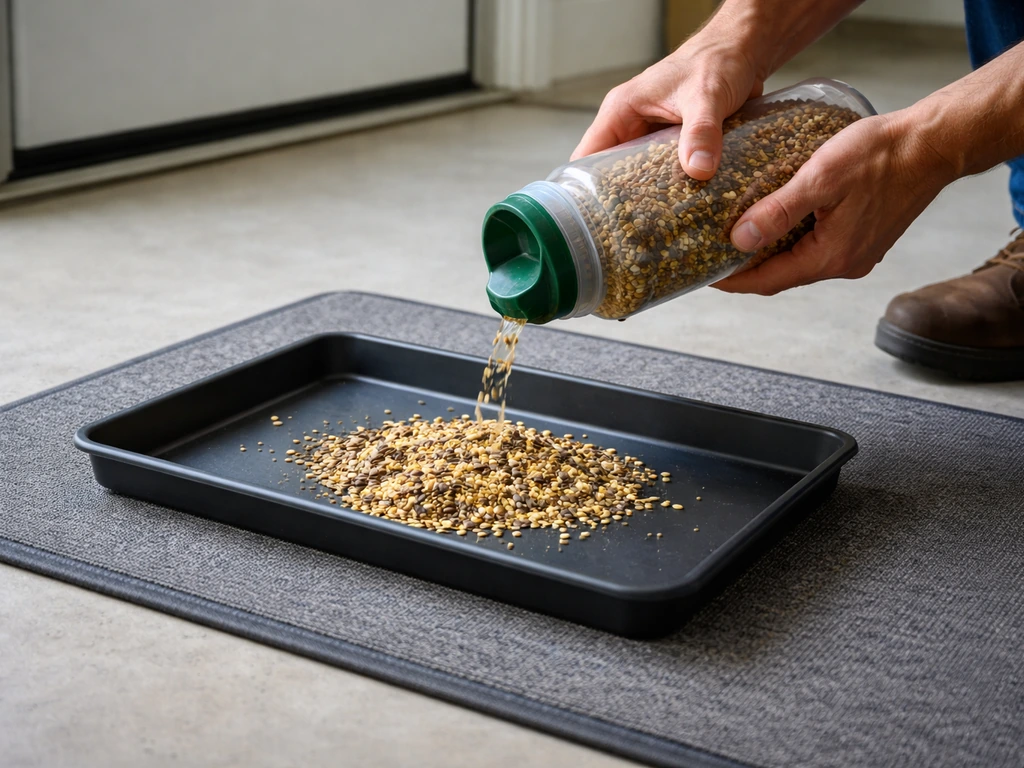
If you're scooping seed near an entryway, mudroom, or garage and seed is hitting the floor, the fix is simple: always scoop over a mat or tray, use a pour-spout container instead of an open bag, and seal the storage container immediately after use. Loose seed on a floor near a door is an invitation for mice, especially in fall and winter when rodents are actively seeking food sources. A rubber-backed mat under the storage container catches stray seed and can be shaken out outside in seconds.
Feeder and ground cleanup routines that actually prevent problems
The cleanup schedule matters as much as the cleanup method. Project FeederWatch recommends cleaning seed feeders about once every two weeks under normal conditions, and more often during warm or damp weather when mold grows faster. Project FeederWatch is a Cornell Lab and Birds Canada citizen-science program, and its participation guidance includes regular feeder cleaning as part of keeping feeders safe for birds Project FeederWatch recommends cleaning seed feeders about once every two weeks. For the feeder itself, Audubon's guidance (drawing on National Wildlife Health Center recommendations) is to clean with a solution of 9 parts water to 1 part bleach, rinse thoroughly, and let the feeder dry completely before refilling.
For the ground underneath, the NWF recommends using a broom and shovel or a wet-dry vacuum to remove spilled seed and droppings. A wet-dry vac is genuinely useful here: it picks up fine seed dust, hulls, and damp clumps that a broom just smears around. Minnesota DNR guidance specifically urges people to rake and sweep fallen seeds and hulls to prevent moldy conditions from developing at ground level. Iowa DNR adds that cleaning up spilled seed and droppings below the feeder is just as important as cleaning the feeder itself.
| Task | Frequency | Method |
|---|---|---|
| Sweep/rake under outdoor feeder | Weekly (daily in wet/warm weather) | Broom and dustpan, or wet-dry vac |
| Clean feeder interior | Every 2 weeks (more in summer/rain) | 9:1 water-bleach solution, rinse, air dry |
| Check for and remove wet or moldy seed | Every refill | Empty feeder fully before adding new seed |
| Disinfect tray/seed catcher | Every 2 weeks | Soap and water, rinse well, dry before reattaching |
| Clean indoor storage area floor | Weekly or after any spill | Broom and dustpan, sealed waste bag |
Stop fallen seed from turning into a pest problem
Fallen seed is the number one way a bird feeder starts attracting rodents, insects, and other unwanted visitors. WildCare's rodent prevention guidance is blunt: fallen seed from bird feeders will attract rodents, and if the problem is already established, temporarily removing the feeder and thoroughly cleaning up all fallen seed is the most effective reset. After that reset, sweeping up fallen seed every evening reduces overnight food availability enough to discourage rodents from making your yard a regular stop.
Nature's Way echoes this: if you're worried about nocturnal pests, daily cleanup under the feeder is the recommendation. This doesn't have to be a full production. A 60-second sweep with a handheld broom each evening is enough to remove the seed that fell that day before it attracts attention overnight.
Pest attraction is also a placement issue. Feeders positioned near dense shrubs, woodpiles, or the base of a fence give rodents cover to approach safely. Keeping the area under the feeder clear of debris, moving the feeder away from structures and cover, and using a hard surface underneath (instead of mulch or soil where seed can hide) all reduce pest pressure without requiring you to stop feeding birds entirely.
Mold is the other risk from accumulated fallen seed. Wet seed on the ground can develop mold within a day or two in warm weather, and that mold can sicken birds that forage at ground level. The BC Government's wildlife health guidance frames damp and moldy seed as a direct health risk to birds. Keeping the ground clean and using a mesh seed catcher that drains water instead of holding it are both practical ways to prevent this from becoming a recurring issue.
FAQ
What should I do if birds keep knocking seed out even with a tray or catcher underneath?
Check that the catcher is level and sits close enough to the feeder ports. If there is a gap, tossed seed can bounce past the tray. Also consider port size and perching behavior, smaller well-fitted ports usually scatter less than large open ports.
Will a mesh seed catcher or seed hoop actually prevent mold if some seed still falls?
It helps, but only if it drains properly and you still clean. Empty and rinse the catcher when it gets visibly damp, and if it uses a mesh design, make sure debris is not blocking the drainage so water does not pool under the feeder.
How far from the feeder should I clean, or do I just sweep directly under it?
Sweep a wider ring than you think. Birds fling seed forward and sideways during feeding and scuffles, especially with platform feeders or windy conditions, so aim for the area where you see consistent buildup, then adjust based on what you find after a few days.
Does using hull-free seed eliminate the need to clean under the feeder?
It reduces shells and related mess, but it does not stop all waste. Birds still drop bits and hull-free debris can still get damp and attract pests, so keep the same basic cleanup cadence, just expect less bulky buildup.
What is the best way to handle seed that gets wet on the tray or on the ground?
Remove it as soon as it looks damp or clumped, then let the tray dry before refilling. Wet seed can develop mold quickly, and leaving it in place turns the catcher into a moisture source that keeps problems recurring.
Can I use mulch or soil under the feeder instead of a mat to make cleanup easier?
Usually not if your goal is to stop mess. Soil and mulch absorb spills, making seed harder to remove and increasing the chance that dropped seed will sprout or become moldy. A hard surface or rubber mat makes vacuuming and raking much more effective.
How do I prevent seed from blowing away without switching feeder types?
Use wind protection and reduce open-exposure feeding. Position the feeder so prevailing gusts are less likely to hit it directly, and if you have a choice between an open platform and a reservoir feeder, the enclosed reservoir design will limit how much loose seed is available to blow.
Is it safe to refill a tube feeder after it has been sitting out with seed or hulls below it?
Before refilling, remove accumulated waste from the ground or catcher so you are not adding fresh seed over moldy or damp debris. Fresh seed mixed with old damp hulls is a common reason mess and pests come back quickly.
What feeder refill habit most often causes the extra mess people see?
Filling too fast or overfilling the reservoir. Slow down, stop at the recommended fill level, and avoid using a wide-open scoop that spills onto the feeder body or into the surrounding area.
If I stop feeding for a bit to reset rodent issues, how long should I do it?
A practical approach is to pause feeding until all fallen seed is removed and the area under the feeder is thoroughly cleaned. If you see recurring activity after the cleanup, keep the feeder off temporarily and switch to daily quick sweeps when you restart.
How can I keep seed from going under the feeder pole on balconies or decks?
Use a tray liner secured under the pole so spilled seed collects in one place instead of scattering across the floor. If the liner can be lifted out, shake and empty it regularly to prevent hidden buildup that still attracts pests.
Do I need to clean the feeder and the ground on the same schedule?
Not always, but the ground needs frequent attention. Cleaning the feeder every couple of weeks helps, while fallen seed may require at least weekly sweeping, and in warm or damp weather you may need more frequent removal to prevent moldy buildup.