Yes, bird seed can attract rats. But the seed itself is only part of the problem. What actually draws rats is a reliable, easy food source combined with spills on the ground, poor feeder placement, and nearby shelter. If you set up your feeding station correctly, you can keep feeding birds without turning your yard into a rat buffet. This guide walks you through exactly how to do that.
Will Bird Seed Attract Rats? How to Prevent It

Maya Collins
5 Apr 2026
The short answer: yes, but it depends on how you feed
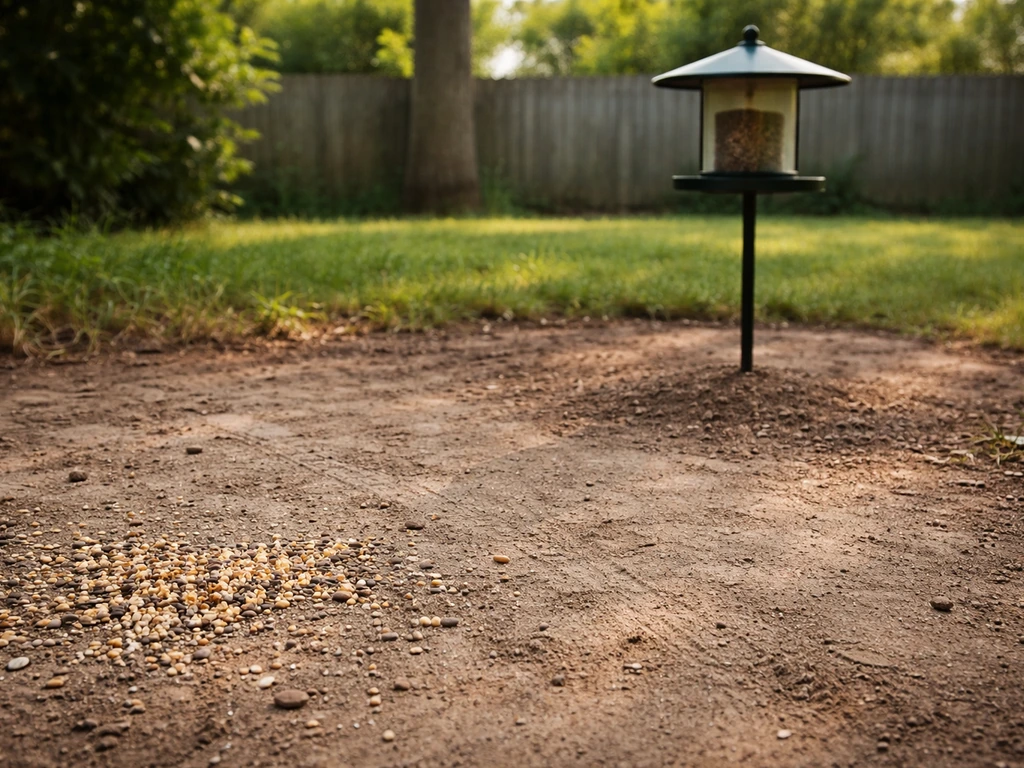
Bird seed attracts rats when it's easy to reach. The two rat species you're most likely dealing with in a backyard are the Norway rat (Rattus norvegicus) and the roof rat (Rattus rattus), according to the EPA. Norway rats are ground foragers that will hoover up spilled seed beneath feeders. Roof rats are excellent climbers and will reach feeders mounted on poles if there's no barrier stopping them. Both are opportunistic and will eat almost any calorie-dense food source they can access consistently.
The key phrase there is "consistently." Rats establish feeding routines. If your feeder drops seed to the ground every day and nobody cleans it up, rats will show up, mark the area, and keep returning. Remove that reliable food source, and they move on. King County Public Health specifically advises against leaving bird seed accessible in feeders and recommends feeder designs that prevent rats from reaching the seed at all. That tells you the fix isn't to stop feeding birds entirely. It's to change how you feed them.
Which seed types are more or less likely to attract rats
Rats aren't picky, but some seed types create more waste and spillage than others, which is what matters most. Mixed seed blends are the main culprit. Birds sort through them, throwing out the pieces they don't want, which means a pile of rejected seed builds up under your feeder every day. The Internet Center for Wildlife Damage Management (ICWDM) explicitly does not recommend mixed seed in feeders for exactly this reason: it increases the amount of food that falls to the ground.
Millet, milo, wheat, and other grain fillers are the parts birds tend to reject. Those fillers land on the ground and sit there, fermenting and smelling, which is precisely what rats are looking for. High-oil seeds like black oil sunflower and safflower produce hulls, which also pile up and can go moldy if left long enough. That mold and spoilage adds an odor signal that draws rodents in.
| Seed Type | Rat Attraction Risk | Why |
|---|---|---|
| Mixed seed blends (with millet, milo, wheat) | High | Birds sort and discard fillers, creating ground spills daily |
| Black oil sunflower (whole) | Moderate | Hulls accumulate and can mold; widely eaten but creates debris |
| Hulled/shelled sunflower (no shell) | Lower | Less hull waste; birds eat nearly all of it |
| Safflower seed | Lower | Less popular with many pest species; less waste if birds take it well |
| Nyjer/thistle (in a thistle feeder) | Lower | Fine seed in a tube feeder; minimal spillage if feeder fits properly |
| Canola/rapeseed | Lower | Among the least preferred in comparative seed studies |
| Suet cakes | Moderate to High (if fallen) | Fallen pieces are calorie-dense and attract rats quickly |
No seed is completely rat-proof because rats are opportunistic enough to eat almost anything with caloric value. But switching from a cheap mixed blend to hulled sunflower or nyjer in a properly fitted feeder will dramatically cut the amount of food that ends up on the ground. Less waste on the ground means less reason for rats to visit.
Feeder setup changes that actually keep rats out
Get the feeder off the ground and on a proper pole
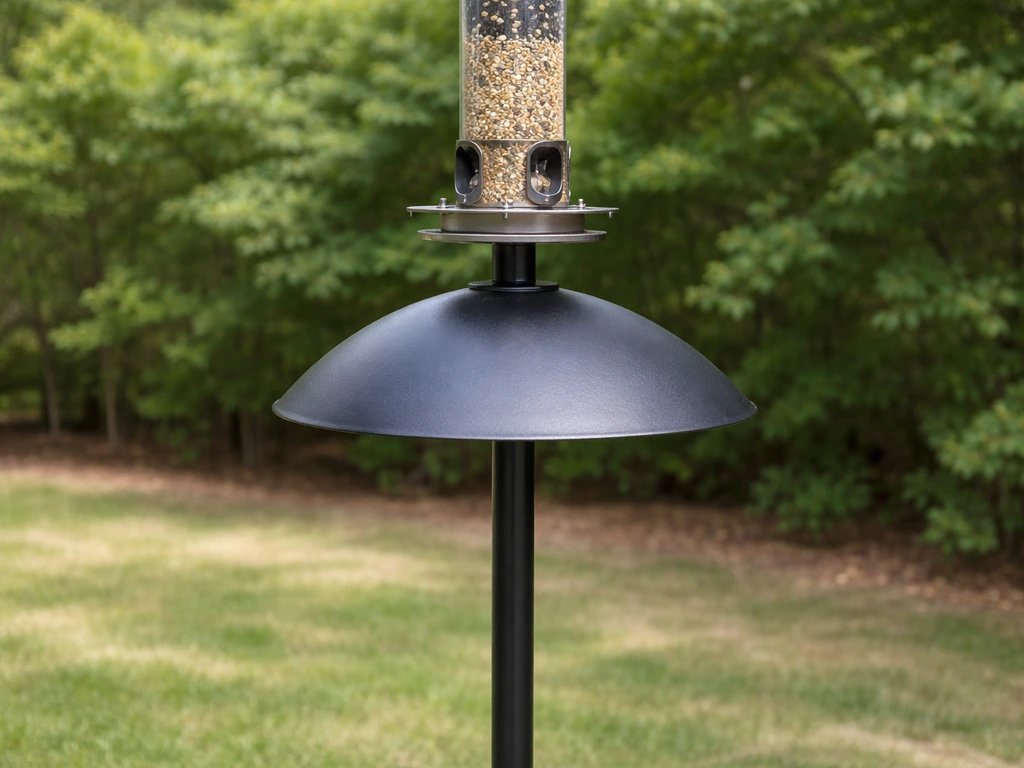
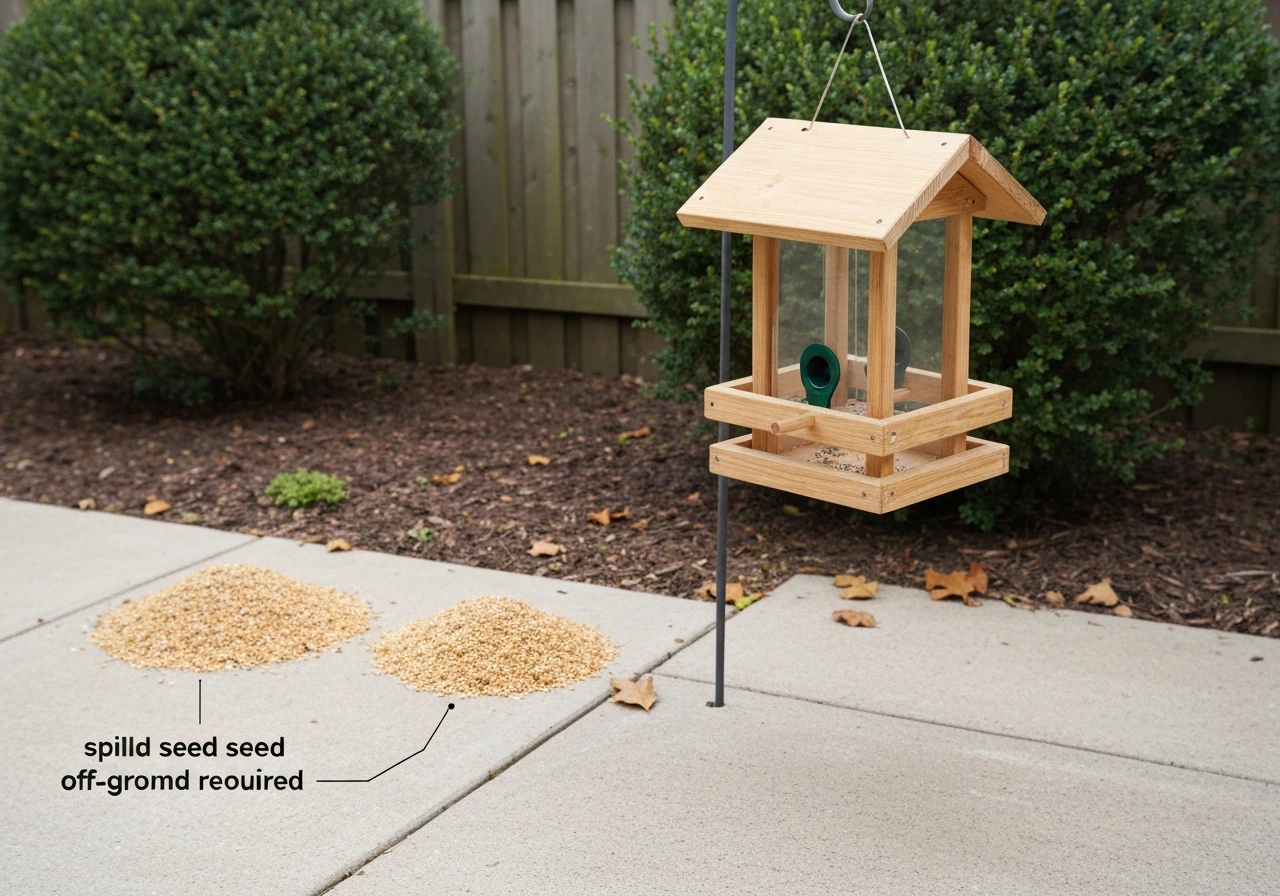
A hanging feeder in a tree or on a fence post gives rats easy climbing access. The better setup is a smooth metal pole with a baffle mounted underneath the feeder. King County's guidance puts it plainly: if a squirrel can reach your feeder, so can a rat. Mount the pole so the baffle sits at least 4 to 5 feet off the ground and is positioned at least 10 feet away from any fence, tree branch, or structure a rat could jump from. Audubon recommends the same basic pole-and-baffle approach for keeping climbing animals off feeders, and it works for rats by the same logic.
Use a seed-catching tray under the feeder
A tray attached directly below the feeder catches most of what birds drop. This keeps spilled seed off the ground and out of rat reach, provided the tray itself is high enough and on the same pole setup with a baffle below it. Clean the tray daily. Seed that sits in a tray overnight can still draw attention, so if you're in an active rat area, it's worth emptying it every evening.
Consider a weight-activated feeder
ICWDM describes weight-activated feeder mechanisms as an effective tool for preventing larger animals from accessing seed. These feeders close off seed ports when a heavier animal lands on them. Rats are heavy enough to trigger most of these mechanisms, so even if a rat somehow reaches the feeder, it can't get the seed out. This is one of the more reliable passive deterrents you can buy.
Only put out what birds will eat in a day
Penn State Extension recommends putting out only as much seed as your birds can consume in a single day. This is especially important if you're using a platform feeder or feeding on a deck or balcony. Rats are nocturnal, so overnight leftovers are essentially a meal left out for them. Match your fill amount to actual daily bird traffic, then adjust as needed.
Storage, handling, and cleanup: the unglamorous part that matters most
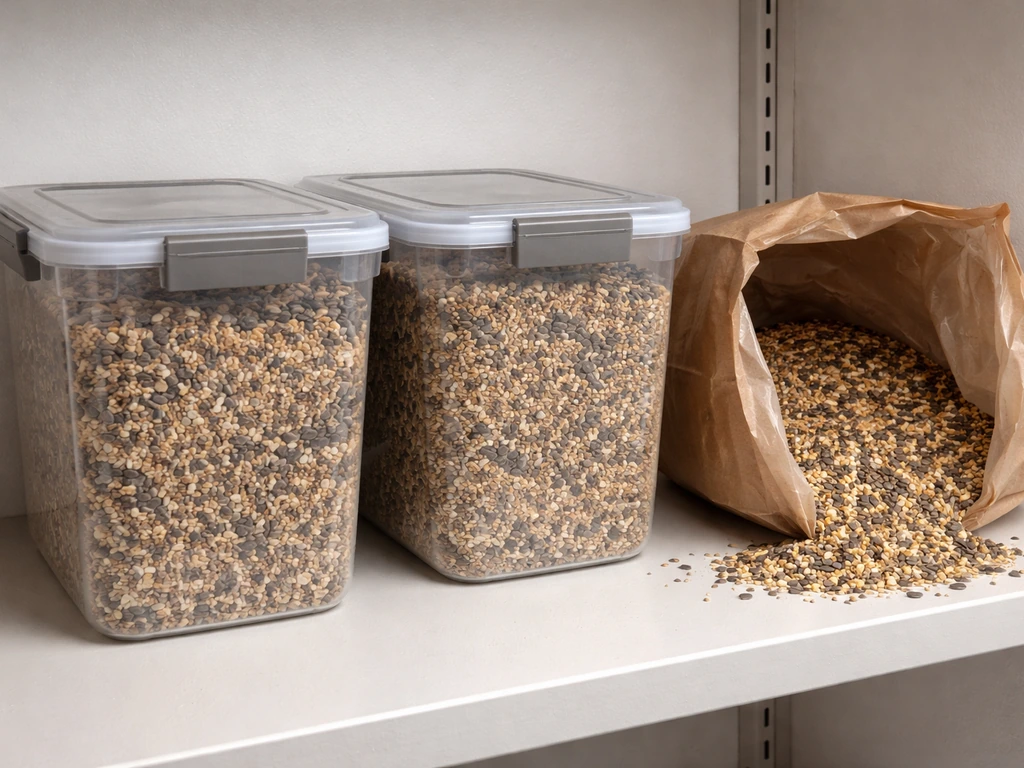
Store seed in sealed, hard-sided containers
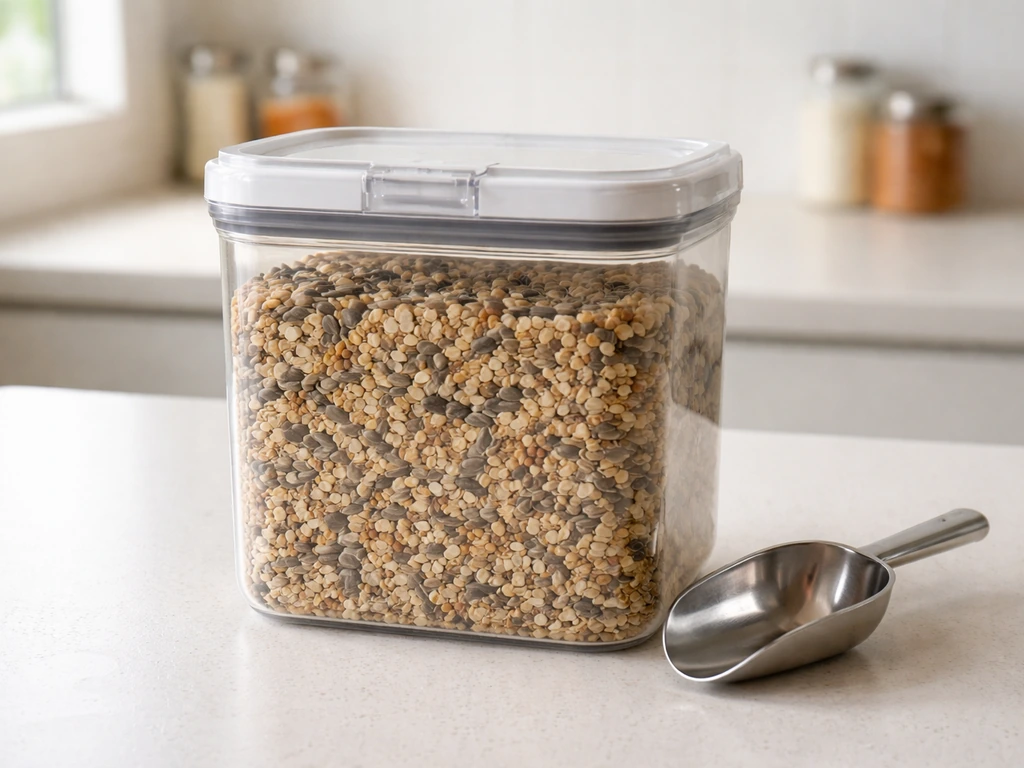
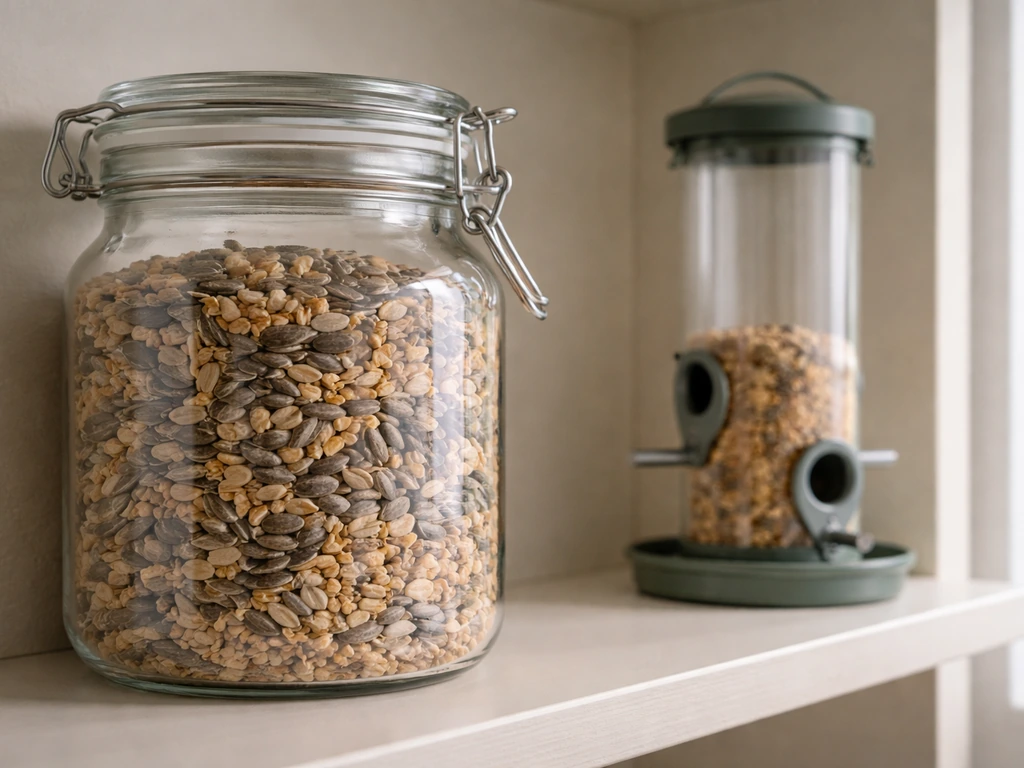
Rats can chew through paper bags and thin plastic in minutes. Store your bird seed in a metal or heavy-duty plastic container with a tight-fitting lid, kept in a cool dry location like a garage or shed. Penn State Extension advises storing bird seed in a cool, dry place and discarding any seed that becomes moldy. Moldy seed is both useless to birds and a strong odor signal to rodents, so don't let a bag sit half-open in a humid corner.
Clean up spilled seed and hulls consistently
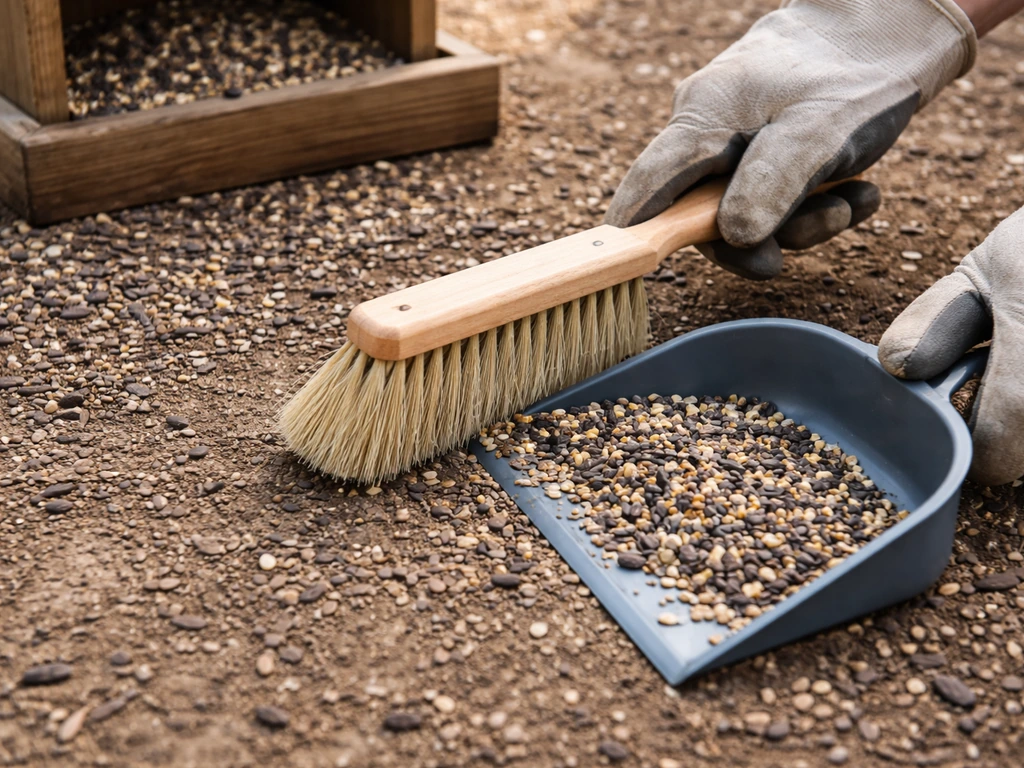
Ground cleanup is the single most important maintenance step. WVU Extension directly links spillover seed removal to reducing pest attraction, noting that accumulated seed goes moldy, adds odor, and invites unwanted visitors. Rake or sweep under your feeder every day, or at minimum every other day. In wet weather, fallen seed can sprout or decompose within 24 to 48 hours, so the cleanup frequency matters even more during rainy periods.
Dispose of bad seed the right way
Wet, sprouted, or moldy seed should go into a sealed bag in the trash, not in a compost pile near your yard. Composting spoiled seed still creates an odor source and gives rats something to dig through. If you're wondering whether a bag of old seed has turned, check for clumping, off smells, or visible mold before putting it in a feeder. When in doubt, throw it out.
Manage water sources near the feeder
Rats need water as much as they need food. A birdbath or standing water near your feeder becomes an additional draw. Keep birdbaths clean and consider positioning them away from the main feeder area. Empty and refill them daily so water doesn't stagnate, which also removes another resource that makes your yard a comfortable habitat.
How to figure out if you actually have a rat problem
Before you change everything, confirm what you're dealing with. Rats leave clear physical evidence around feeding areas, and identifying it correctly tells you which species you're up against and how serious the situation is.
Look for droppings near the feeder
Norway rat droppings are roughly half an inch to three-quarters of an inch long with blunt, rounded ends, according to the Northeast IPM Center. Roof rat droppings are similar in length but have sharper, more pointed ends, per NC State Extension. Both will show up along travel routes, near shelter, and directly around active feeding spots. If you're finding droppings under your feeder or along a nearby fence line, you have a confirmed rat presence, not just a suspicion.
Check for tracks, burrows, and runways
Norway rats are ground burrowers and often create visible runs through grass or mulch leading to a food source. ICWDM notes that droppings and feeding activity from Norway rats tend to concentrate along these runways. Look for greasy smear marks along walls or fences, worn paths through vegetation, and any burrow openings near the base of your feeder pole or fence posts.
Check your seed supply for tampering
If your stored seed bags are chewed or punctured, or if seed is disappearing faster than your bird traffic explains, those are secondary signs of rat activity around your storage area.
What to do when you confirm rats are present
- Stop filling the feeder immediately for 3 to 5 days to remove the food reward and break the habit loop.
- Clean up all spilled seed, hulls, and debris from the ground using gloves. The CDC recommends ventilating affected areas and using a disinfectant before sweeping or vacuuming, since stirring up dried droppings without precautions carries health risks.
- Identify and block any obvious shelter nearby: wood piles, dense shrubs, clutter, or gaps under sheds within 100 feet of the feeder.
- Assess your current feeder setup against the pole, baffle, and tray standards above before resuming feeding.
- When you restart, begin with hulled seed only in a tray-equipped, baffled pole feeder and sweep daily.
It is also worth thinking about what other pests might be sharing your feeder. Rats often arrive in company. bird seed attracting mice is a related and very common problem, and the prevention steps overlap almost entirely with what works for rats. If you're seeing both, the same setup changes address both at once.
When to call a pest professional
If you've made all the feeder and cleanup changes above and you're still finding fresh droppings after two weeks, or if you see rats in daylight (which usually means a large population), it's time to bring in professional help. The EPA notes that contact with rat feces, urine, or saliva carries genuine health risks, and a large, established colony isn't something a few snap traps will resolve. A licensed pest control professional can assess burrow locations, colony size, and the most appropriate exclusion or baiting strategy for your specific situation without compromising the birds using your yard.
A practical long-term plan for rat-free bird feeding
Keeping rats away from your bird feeding station long-term comes down to removing what they need: food, water, and shelter. U.S. EPA recommends discouraging rats and mice from settling by removing food and water sources and eliminating items that provide shelter, effectively controlling attractants and habitat removing food and water sources and items that can provide shelter. Do all three consistently and the yard becomes much less attractive to them. Here's how to build that into a routine you can actually stick to.
- Use hulled or shell-free seed to minimize ground debris. If you want to attract a wider range of birds, offer different seed types in separate feeders rather than a mixed blend in one.
- Mount every feeder on a smooth metal pole with a cone or cylinder baffle at least 4 to 5 feet off the ground, with no jump-off points within 10 feet.
- Sweep or rake the ground beneath feeders every day. In wet or humid conditions, do it twice.
- Fill feeders only to the amount birds will finish before dark. Adjust fill amounts seasonally as bird traffic changes.
- Store seed in a sealed metal container indoors or in a locked outbuilding. Never store it in the original paper or thin plastic bag.
- Inspect stored seed monthly for mold, clumping, or off smells. Discard compromised seed in a sealed trash bag.
- Eliminate nearby shelter: clear wood piles, trim overgrown shrubs, and seal gaps under sheds and decks.
- Do a monthly inspection walk around the feeder area looking for new burrows, runways, or droppings before a small issue becomes a big one.
Rats aren't the only uninvited guests bird seed can bring in. Depending on your region and setup, you might also find yourself dealing with insects. For example, ants being attracted to bird seed is a common summer complaint, and roaches showing up around bird seed is a problem in warmer climates, especially where hulls and spilled seed collect in humid spots. The same daily cleanup habit that deters rats goes a long way toward preventing these issues too.
If you want to attract specific birds to your feeder without accidentally inviting pests, it helps to understand how birds find bird seed in the first place. Birds rely primarily on sight, so a well-placed, visible feeder with good sight lines can draw the birds you want without the seed needing to be scattered or left on the ground as a signal.
Some other pest arrivals around feeders are more surprising than rats. Bears are attracted to bird seed in many parts of North America, particularly in spring when natural food is scarce, and a feeding station that attracts bears requires a completely different response than one attracting rats. And on the smaller end of the scale, flies around bird seed are often a sign of rotting or wet seed that needs to be removed immediately.
Even less obvious visitors like moths drawn to stored bird seed can be a sign that your seed storage setup needs attention, since pantry moths can infest a bag of seed quickly once it's been stored improperly. And if you've ever wondered why bees are attracted to bird seed, the answer is usually water content in nectar-rich blends or sugar-based additives in certain mixes, which is another reason to stick with plain, single-type seed.
The bottom line is this: bird seed does attract rats if you make it easy for them. Change the feeder setup, choose cleaner seed types, clean up daily, and store your supply properly, and you can feed birds without feeding rats. The changes aren't complicated or expensive, and most of them take less than five minutes a day once you have the right hardware in place.
FAQ
How long after I start feeding birds will rats show up, if the setup is inviting?
If food is accessible and spilled, rats can begin visiting within a few nights. The pattern tends to stabilize quickly, especially if there is consistent seed waste under the feeder. If you see new droppings, travel marks, or seed disappearance that is not explained by bird traffic within about 2 weeks, treat it as an active issue and tighten feeder access and cleanup immediately.
Are snap traps or poison bait effective if I’m also still feeding birds?
Traps can help, but they work best as part of a food-access and cleanup plan rather than a replacement. Baiting and poisons pose risks to birds, other wildlife, and pets, and they can be misapplied if you do not control access. If rats are already established, prioritize reducing feeder access (baffle and tray, no ground spill) and consider a licensed pest pro for the baiting portion.
What is the safest way to clean up dropped seed if rats are active?
Wear disposable gloves and avoid dry sweeping, because that can aerosolize particles from droppings. Use a disinfectant appropriate for pest cleanup, then bag the waste immediately. Dispose of it sealed in trash, and wash hands and clothing afterward. If you find heavy droppings along runs, consider professional assistance rather than deep cleaning alone.
Will putting down gravel, mulch, or landscaping fabric under feeders stop rats from coming?
It can reduce visibility and ease of cleanup, but it usually does not stop rats if seed remains accessible. Rats mainly respond to food reliability, cover, and travel routes. A rat-proof approach is to prevent seed from reaching the ground (tray plus baffle) and keep the area clean, rather than relying on landscaping changes.
Do I need to stop feeding birds completely to get rats to leave?
No, you usually do not need to stop if you remove the food and access pattern. Rats key in on consistent spilled seed, feeder placement that allows climbing, and nearby shelter. Adjust the feeder type and mounting, switch to lower-waste seeds, and clean daily, and many yards become unattractive without eliminating bird feeding.
What seed should I avoid if my goal is to reduce rat activity fast?
Avoid mixed blends that birds sort through and throw away, since the reject pile becomes daily rat food. Also be cautious with fillers that become waste on the ground, and with seed types that produce more hulls that can mold. Switching to hulled sunflower or another low-waste option in a properly baffled, rat-resistant feeder is usually a faster fix.
If my feeder catches most of the spill in a tray, do I still need to clean the area beneath it?
Yes. Even with a tray, some seed can escape around the base or in windy conditions. Rats can use tiny gaps to access spilled seed, and moldy or sprouted grains still attract them. Sweep or rake under and around the pole at least every other day, daily in wet weather.
Should I put bird food or suet closer to my house to make it easier to monitor?
Monitoring helps, but moving feeders closer to entrances can increase rat activity inside travel patterns. Rats often travel along walls and structures, so if a feeder is near a foundation, deck edge, or fence junction, it can become a convenient route. If you feed closer to the house, use a pole-and-baffle setup and keep the area thoroughly cleared of seed.
Is it normal to see some droppings near a feeder, or does that always mean an active rat problem?
Fresh droppings near feeding spots usually indicates active use. However, an occasional old pile could be leftover from earlier activity. Check for additional signs that the activity is continuing, such as new droppings over time, recent seed movement, grease marks along routes, or ongoing seed loss.
Can rats get into bird feeders during the day?
Yes, but daytime sightings generally suggest a larger or bolder population, reduced fear of humans, or conditions that remove risk. Rats are typically nocturnal, so daylight activity is a warning sign. If you see rats in daylight or multiple signs persist after two weeks of improvements, it is time to escalate to professional help.
What can I do about rats getting into bird seed storage containers?
Use containers that are truly hard to chew and seal tightly, metal or heavy-duty plastic with a solid lid. Keep storage in a cool, dry area away from exterior walls, and do not store seed in open bags. If you notice punctures, chewed corners, or unexplained disappearance, replace containers immediately and remove any seed dust or crumbs that accumulate around the storage area.