If you're finding small, compact, felt-like lumps under a tree or near a roosting spot, you're probably looking at regurgitated owl or raptor pellets. If the mess is under your actual seed feeder and looks like broken shells, husks, soggy seed, or scattered debris, that's normal seed waste. The two look nothing alike once you know what to check for, and what you do about each one is completely different.
Bird Pellets vs Seed: How to Identify and Clean Up
Maya Collins
1 May 2026
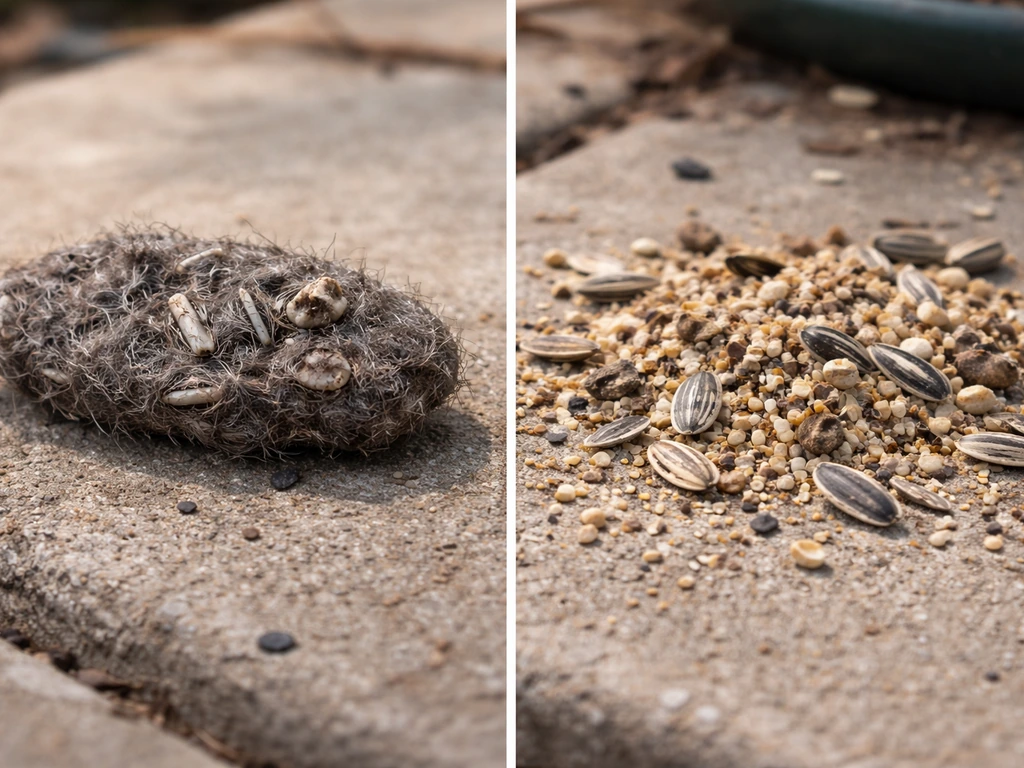
What You're Actually Seeing: Pellets vs. Seed Waste
Backyard birders often use the word 'pellets' loosely, but there are really two completely separate things that get lumped together. True bird pellets are regurgitated masses of indigestible material that owls and other raptors cough up after a meal. Seed waste is everything left behind at a feeder: empty sunflower shells, millet husks, broken peanuts, wet or moldy seed clumped on a tray, and droppings on a platform or stand.
Many birders also ask what is better seed or pellets for their bird, but the answer depends on what you are trying to feed versus what you are cleaning up under a feeder Seed waste is everything left behind at a feeder. Getting these two things straight before you start cleaning matters because the risks, the cleanup method, and the fixes are all different.
How Pellets Actually Form (and Why Owls Leave Them Behind)
Owls swallow prey whole or in large chunks. The digestible parts get broken down in the glandular stomach (called the proventriculus), but fur, bones, teeth, and feathers can't pass through. Those indigestible bits get compacted into a tight, dry, felt-like mass in the gizzard. Several hours after eating, the owl regurgitates that package. That's a pellet. Raptors like hawks and falcons do the same thing, though owl pellets tend to be the most complete and intact because owls have weaker stomach acid than hawks.
Owls cast roughly one pellet per day, almost always from the same roosting spot. That's why you'll sometimes find a pile of identical-looking lumps under one particular branch or ledge rather than scattered everywhere. Barn owls are the classic example because their roost sites are predictable and accessible, but great horned owls, barred owls, and screech owls all do the same thing. If you have a raptor visiting your yard regularly, pellets will keep showing up in the exact same place.
What Seed Feeder Waste Looks Like Instead
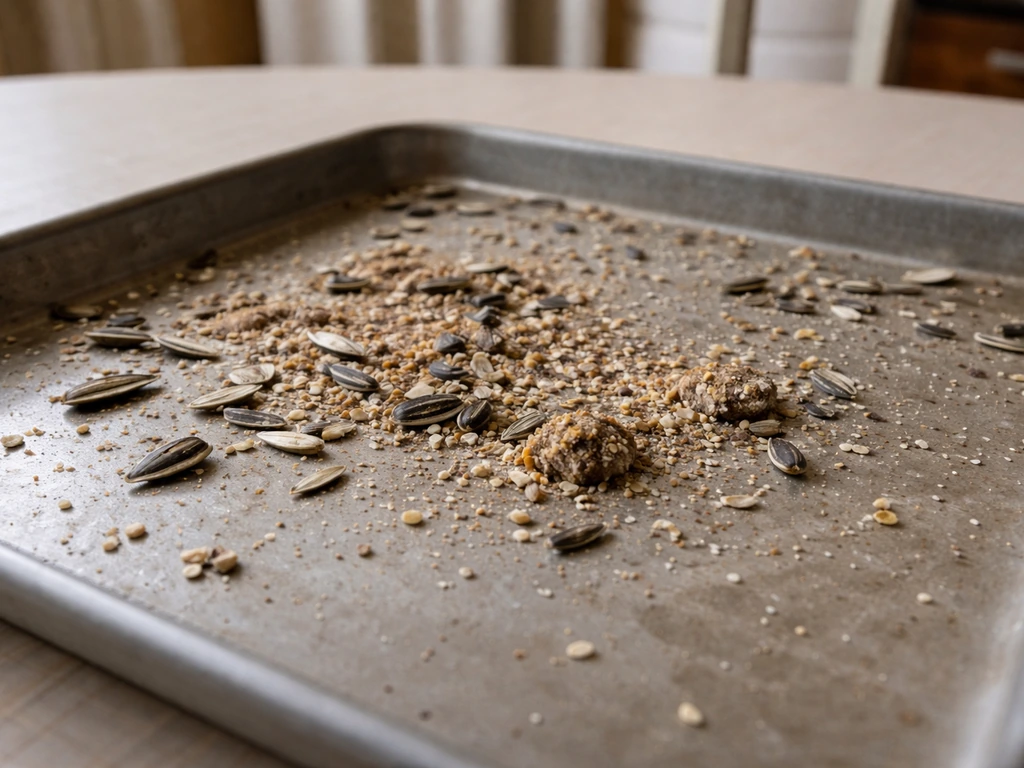
Seed waste from a typical backyard feeder is much more varied and usually messier. You'll see empty sunflower shells (flat and papery), millet husks (tiny and dusty), broken safflower pieces, and whole seeds that birds rejected or knocked off. When moisture gets involved, seed clumps together into gray or black masses that look almost spongy. On a platform tray or feeder stand, you'll often also see bird droppings mixed into the seed debris, which creates a sticky, foul-smelling layer at the bottom. None of this resembles a pellet.
Quick At-Home Clues to Tell Them Apart
You don't need lab equipment to figure out which one you're dealing with. Run through these checks and you'll know within a minute.
| Feature | Owl/Raptor Pellet | Seed Waste or Droppings |
|---|---|---|
| Size | 1 to 3 inches long, compact and oval | Variable: shells are flat, droppings are small, clumps vary |
| Texture | Firm, dry, felt-like; holds its shape | Loose, crumbly, or slimy if wet; breaks apart easily |
| Contents | Visible fur, tiny bones, teeth, or feathers inside | Seed husks, broken grain, possibly mold or droppings |
| Smell | Mild or faintly musty when fresh | Sour, rotten, or ammonia-like if wet or moldy |
| Location | Under a tree branch, ledge, or roosting post | Directly under or around the feeder or tray |
| Pattern | Clustered in one spot, accumulates over days | Spreads out in a cone shape below the feeder |
| Timing | Appears overnight, often in the morning | Builds up throughout the day as birds feed |
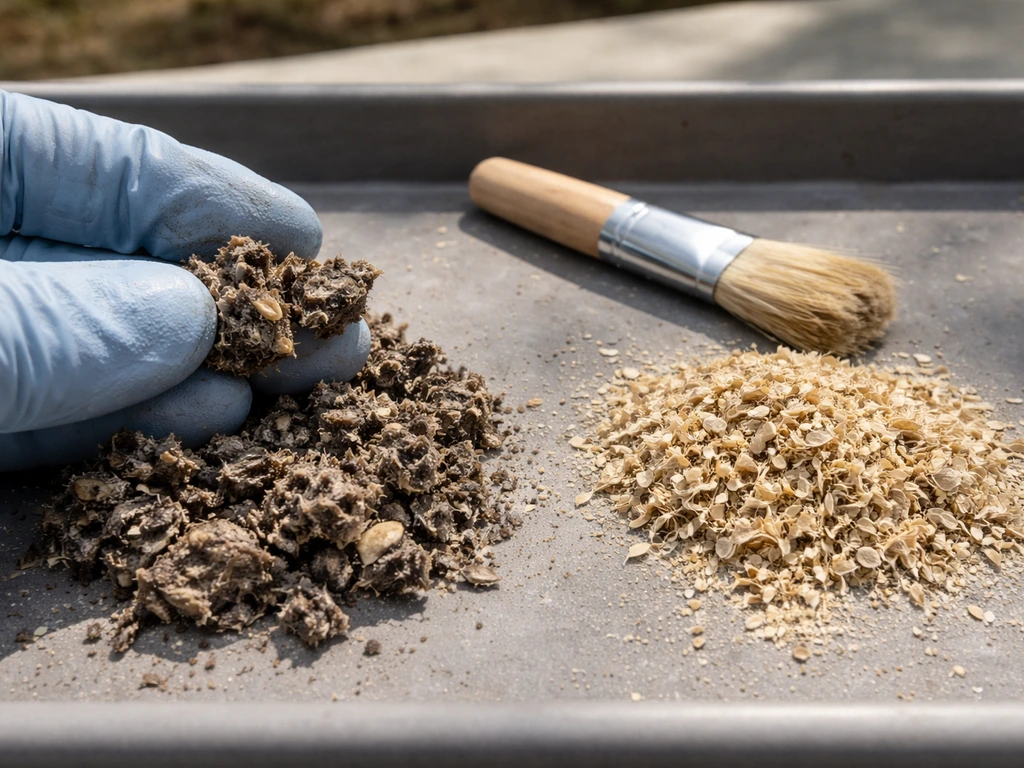
If you pick one up with gloves and it holds together like a small compressed packet with visible fur or bone fragments inside, it's a pellet. If it falls apart into husks and seed dust, or if it's wet and smells sour, you're dealing with seed waste.
What to Do Today: Safe Cleanup for Both Scenarios
Whether you're cleaning up pellets or seed waste, the same basic principle applies: never dry-sweep or blow the debris. Aerosolizing dried bird waste creates airborne particles that can carry fungal spores (like Histoplasma) or other pathogens. Wet the material first, then remove it. Here's how to handle each situation.
Cleaning Up Owl or Raptor Pellets
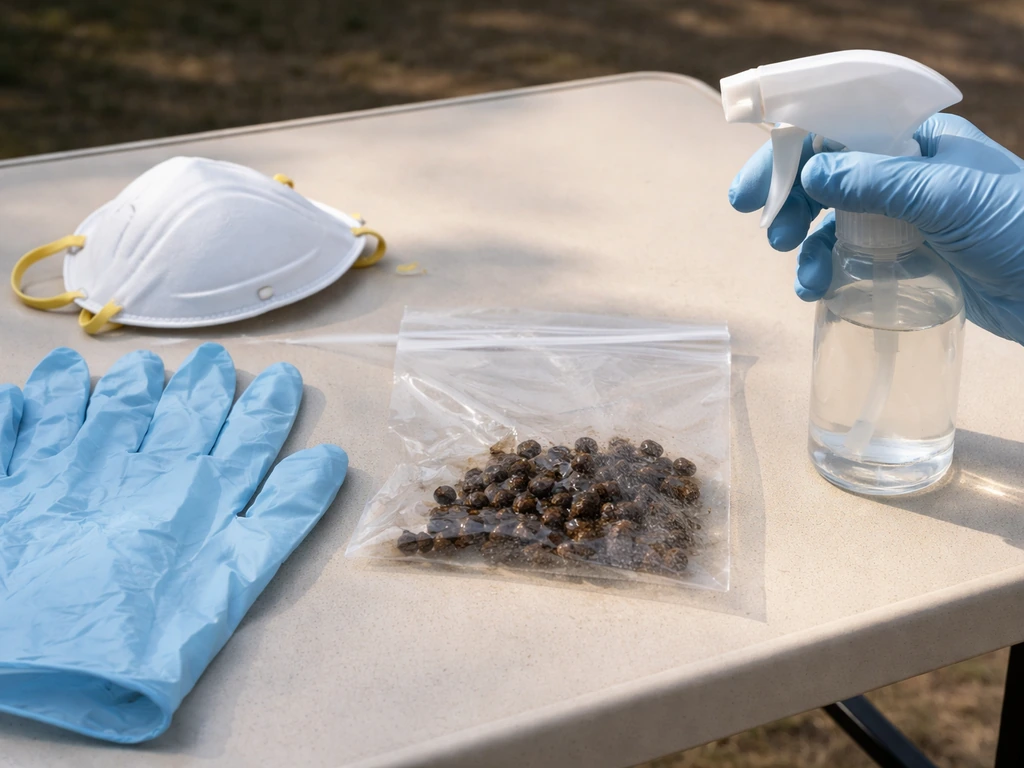
- Put on disposable gloves and, if there's a lot of accumulated material or visible dust, wear an N95 respirator. Don't skip this if the pellets are old, dry, and crumbling.
- Lightly mist the pellets and the area around them with a diluted bleach solution (1 part bleach to 9 parts water) or a soapy water spray. Let it sit for a minute to dampen everything before you touch it.
- Use a disposable scoop or folded cardboard to collect the pellets and place them directly into a sealed plastic bag. Don't shake them or break them up dry.
- Discard the bag in an outdoor trash bin.
- Spray the surface underneath with your disinfectant solution, let it sit for the contact time listed on the label (usually 5 to 10 minutes), then wipe clean.
- Wash your hands thoroughly with soap and water even if you wore gloves.
Cleaning Up Seed Waste and Moldy Seed
- Put on gloves. If the seed is visibly moldy, add an N95 since disturbing mold releases spores.
- Wet the debris with soapy water or a diluted disinfectant spray before scooping to prevent dust from lifting.
- Scoop or scrape the wet debris into a bag and seal it. Don't compost moldy seed.
- Wash the feeder tray, platform, or stand with hot soapy water to remove all visible debris first. This step matters because disinfectants don't work well through layers of grime.
- Disinfect the feeder surface with an EPA-registered disinfectant effective against avian influenza (EPA List M), following the contact time on the label. A 10% bleach solution works on hard, non-porous surfaces when no commercial product is available.
- Rinse the feeder thoroughly and let it air dry completely before refilling. Putting fresh seed into a damp feeder is what starts the mold cycle over again.
- Wash your hands with soap and water when done.
Why This Is Happening: Common Causes
The cause determines the fix, so it's worth spending a moment figuring out why you're seeing this in the first place. For pellets, the answer is almost always that a raptor has decided to roost near your yard, often because your feeders attract small birds and rodents that make easy prey. That's actually a sign of a healthy yard ecosystem, not a problem with your feeder setup.
For seed waste and spoilage, the causes are almost always feeder management issues. The most common ones:
- Moisture getting into the feeder: no roof, open trays left out in rain, or a feeder placed where morning dew collects on the seed
- Overfilling the feeder so seed sits too long before birds eat it, especially in warm or humid weather where seed can begin to mold within hours
- Using the wrong seed mix: cheap mixes with lots of filler (oat, red millet, milo) that most birds ignore, leaving it to sit and rot
- Feeder materials absorbing moisture: untreated wood platforms or trays soak up water and accelerate mold growth in the seed sitting on top
- Pests: squirrels, chipmunks, and rats that scatter seed onto the ground where it gets wet and moldy, or mice that burrow into stored seed bags
- Infrequent cleaning: biofilm and old seed residue in the feeder itself become a mold substrate that contaminates fresh seed quickly
Preventing Recurrence: Storage, Feeder Setup, and Pest Exclusion
Store Seed Correctly
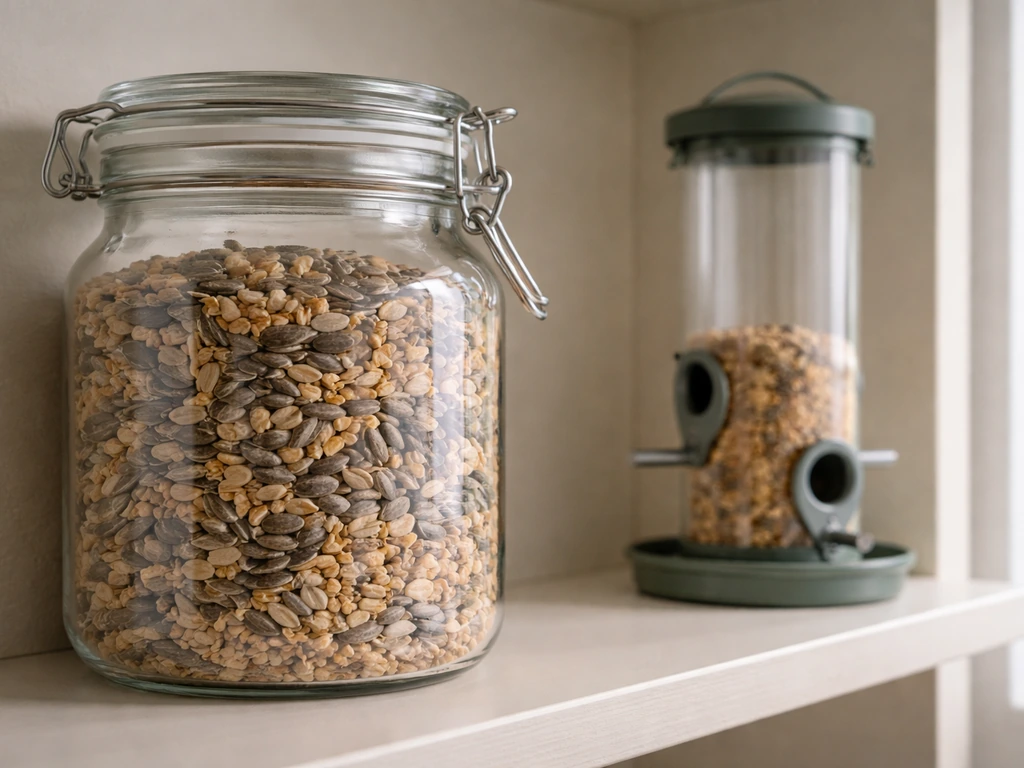
Seed stored in paper bags or left in the original plastic bag in a garage or shed is vulnerable to both moisture and pests. Transfer seed to a hard-sided, airtight metal or thick plastic container with a lid that seals properly. Store it off the ground and away from exterior walls where condensation collects. Don't stockpile more seed than you'll use in four to six weeks during warm months; in cooler, dry climates you can extend that to two to three months. Check the seed before each refill: if it smells sour or oily, or if you see any clumping or discoloration, throw it out.
Keep the Feeder Dry
The single biggest upgrade you can make is adding a weather baffle or dome over the feeder to keep rain and dew off the seed. Platform and tray feeders need drainage holes so water doesn't pool. If you're using a tray feeder, choose one with a mesh or screen bottom rather than solid wood. Fill feeders with only as much seed as birds will eat in one to two days so nothing sits long enough to spoil, especially during humid summers. In rainy spells, consider pulling the feeder in for a day or two rather than letting the seed turn.
Clean on a Schedule
Clean tube feeders every two weeks in dry weather and every week during warm, humid stretches. Platform trays need cleaning every few days because they're exposed. A quick scrub with a 10% bleach solution, a thorough rinse, and complete air drying before refilling is the minimum. Don't add fresh seed on top of old seed residue.
Exclude Pests
Squirrels and rodents scatter and contaminate seed at a remarkable rate. Mount feeders on smooth metal poles with a cone-shaped squirrel baffle at least 4 to 5 feet off the ground and at least 8 to 10 feet from any jumping-off point like a fence or tree. Use seed trays with catch basins to reduce ground scatter. Check under and around feeders regularly for signs of rodent activity (gnawed seed containers, droppings, burrow holes). If rats are already present, temporarily stop ground feeding and tighten up your seed storage.
Species- and Situation-Specific Guidance
Owls and Raptors
If you're finding true pellets, the most likely culprits in a typical backyard are screech owls, barn owls, or great horned owls roosting in a nearby tree or structure, or Cooper's hawks and sharp-shinned hawks that perch on a post or branch near the feeder to hunt visiting songbirds. You won't stop a raptor from using your yard by removing its pellets, and you shouldn't try to discourage them since they're protected. Just clean up the pellets regularly using the wet method above, especially if children play in the area.
Songbirds and Finches
House finches, sparrows, goldfinches, and similar feeder regulars don't produce pellets. In that same way, the difference between chicken scratch and bird seed is usually about what birds can’t fully digest and how quickly waste spoils once moisture sets in. What they leave behind is mostly shell debris and droppings on and around the feeder. Sparrows in particular scratch through mixed seed and kick a lot of it to the ground, which is where rodent problems often start.
Switching to a single-species feeder with Nyjer (thistle) for finches or straight black-oil sunflower for most songbirds dramatically reduces waste because birds eat almost everything rather than picking through to find favorites. This connects to a broader point about seed composition: the makeup of your mix determines how much gets wasted. Seed is not a single chemical substance; it is generally a mixture of seeds, hulls, and sometimes additives seed is a mixture.
Seed mixes can be heterogeneous because different seeds and hulls settle and hold moisture differently. This is where the suet vs bird seed difference can help you decide what to use and how quickly it spoils.
Squirrels and Rats
Squirrels and rats don't produce pellets but they create seed debris piles that can look like a mess of broken shells and clumped seed under the feeder. Rats in particular tend to cache (bury or pile) seed, so you might find accumulations that look deliberate. If you're seeing gnaw marks on your feeder or seed container, or small burrow entrances near the feeder base, rodents are involved. Stop spilled seed from accumulating on the ground by cleaning beneath the feeder every day or two.
Regional Notes: Wet Climates and Humid Summers
In the Pacific Northwest, the Gulf Coast, the Southeast, and anywhere with prolonged rainy seasons or muggy summers, seed spoilage happens much faster than in drier regions. Seed in an open tray feeder can begin to mold within a few hours on a warm, humid day. In these climates, reduce fill amounts to what birds can consume in a single day, prioritize covered tube feeders over open trays, and increase your cleaning frequency to every three to five days.
Using no-mess or hulled seed (like sunflower hearts or shelled peanuts) also helps because there's no hull to trap moisture and start the mold cycle. In dry, arid regions like the Southwest, mold is less of a worry but heat can cause seed oils to go rancid quickly, so the same advice about not overfilling and storing seed in a cool location applies.
The Short Version: What to Do Right Now
Check the location and texture of what you're finding. Compact, fur-containing lumps under a roosting spot are raptor pellets: wet them down, bag them, disinfect the surface, and wash your hands. Wash your hands after touching birds, droppings, or cage items, and avoid handling droppings with bare hands. Loose shells, clumped wet seed, or smelly debris under your feeder is a seed management problem: clean the feeder with soap and then disinfect, toss the spoiled seed, fix whatever is letting moisture in, and switch to a cleaner seed type if waste is persistent. Either way, skip the dry sweeping, wear gloves, and let surfaces dry completely before you refill anything.
FAQ
What’s the fastest way to tell pellets from seed waste if I don’t want to touch it right away?
Look for pattern and contents. Pellets are typically uniform, compact, and dry-felt with recognizable fur or bone flecks, and they recur at the same roost location. Seed waste is usually scattered, mixed with empty hulls and wet or clumped seed, and it tends to build up directly under feeders or in tray corners where moisture pools.
Do owl or hawk pellets ever look “wet” or smelly?
They can, especially if they sit on a damp surface or get rained on, but they still usually hold together as a compressed mass. If it spreads into husk dust, breaks into individual shells, or smells like sour spoiled seed, it’s more consistent with seed waste than true pellets.
If pellets show up under my feeder, does that mean my feeder is causing the bird to roost there?
Not usually. It’s more often a sign a predator is using your yard as a hunting corridor, and your feeders are drawing in small birds and rodents. Focus on cleaning and on habitat changes you can control, like tightening rodent access and using squirrel baffles, rather than trying to “remove pellets” as a long-term solution.
Can I vacuum pellets or use a leaf blower to speed up cleanup?
Avoid both. Any dry-sweeping, vacuuming with a standard nozzle, or blowing can aerosolize dried debris and stir up particulates. The safer approach is to wet the area first, scoop the material into a bag, then disinfect and let surfaces fully dry.
How should I disinfect after cleaning pellets or seed waste?
Pellets and seed waste require different emphasis, but the key is thorough surface disinfection after removing the bulk. After wet cleanup and bagging, disinfect the contact area, rinse if the product requires it, and wait until everything is completely dry before refilling or allowing children and pets back near the area.
What should I do if I suspect moldy seed waste but the seed already spread under the feeder?
Remove the spoiled, clumped material and clean the tray or surrounding surface, not just the feeder. Mold can be trapped in hulls and crevices, and re-contamination can happen if you refill on top of residue. Use the fill-ahead rule of only a day or two of consumption so you can spot and remove problems quickly.
Are pellets harmful to touch, and can I handle them without gloves if it’s cold and dry?
Gloves are still recommended. Even when dry, pellets can contain pathogens, and seed waste can include bacteria and molds. Wear gloves, wash hands thoroughly after cleanup, and keep kids and pets away until the area is disinfected and dry.
How often should I clean if I have a tray feeder versus tube feeders?
Tray feeders generally need the most frequent attention because they stay exposed and collect moisture. As a practical rule, clean tray areas every few days, while tube feeders can be on a longer schedule in dry weather but may need more frequent cleaning during warm humid stretches.
Will switching seed types reduce waste enough to prevent seed waste from “turning into” a pellet-like lump?
Yes, indirectly. Hulled or lower-waste options (for example, sunflower hearts or shelled peanuts) reduce moisture-trapping hulls, and smaller fill amounts reduce the time seed sits damp. That helps prevent the gray or black clumps that can be confusing to identify from a distance.
What’s the role of squirrels and rodents in the pellet versus seed confusion?
They create debris piles that mimic “messy lumps,” but they also leave clear signs like gnaw marks, scattered cached seed, and droppings near the base. If you see gnawing or burrow entrances, assume rodent activity and switch your priority to rodent-proofing and daily debris control rather than expecting raptor pellets.
Next Articles
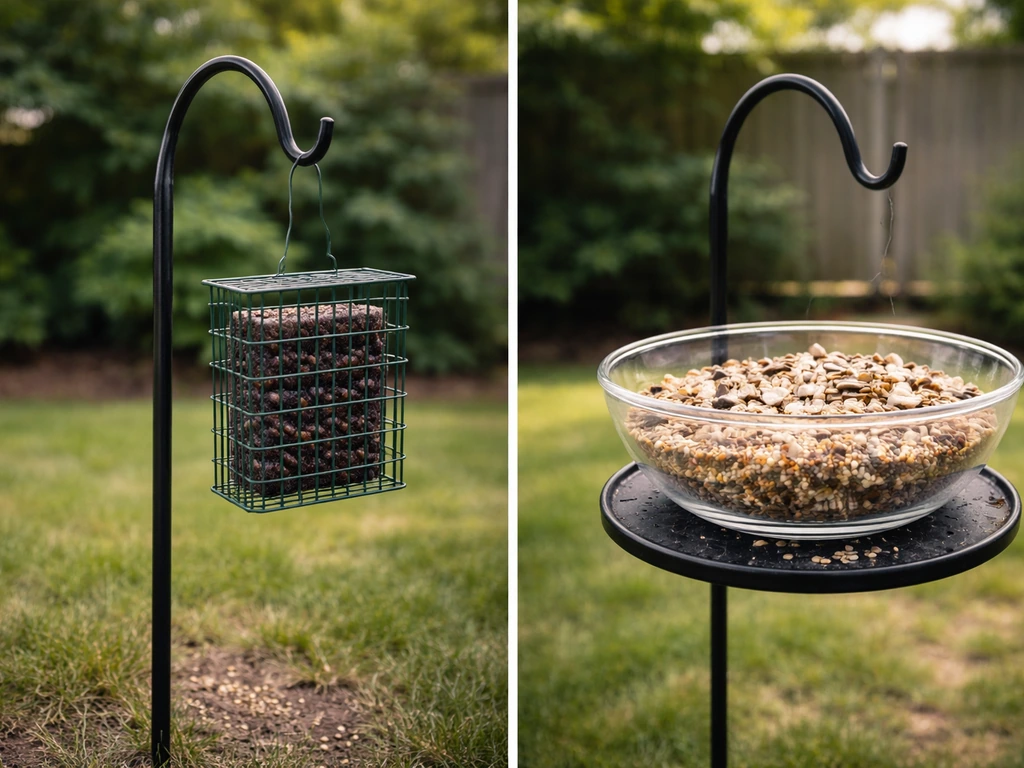
Suet vs Bird Seed: Which to Use and When for Backyard Birds
Suet vs bird seed comparison: which foods attract which backyard birds, when to use each, plus storage, pests, and clean
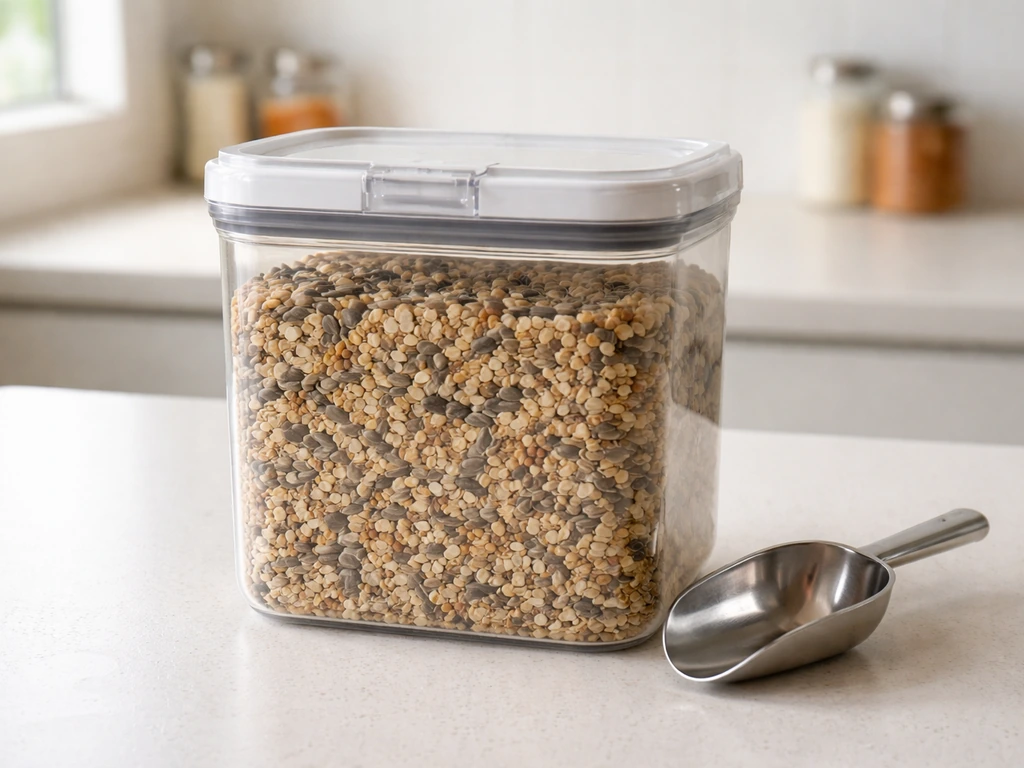
How to Make Bird Seed Last Longer: Storage and Fixes
Learn how to make bird seed last longer with proper storage, humidity control, pest prevention, and fixing wet or moldy
How to Keep Bird Seed Fresh and Stop It From Molding
Stop birdseed mold with smart storage: dry handling, right container, moisture control, bag cleanup, and feeder sanitizi