If you want to attract woodpeckers, nuthatches, chickadees, and titmice, especially in fall and winter, put up a suet feeder. If you want to feed a broader mix of backyard birds year-round, including sparrows, finches, juncos, and cardinals, go with bird seed. Choosing the right food matters, and bird pellets are often compared directly with seed for how well they attract different backyard species bird pellets vs seed.
Suet vs Bird Seed: Which to Use and When for Backyard Birds

Maya Collins
24 Apr 2026
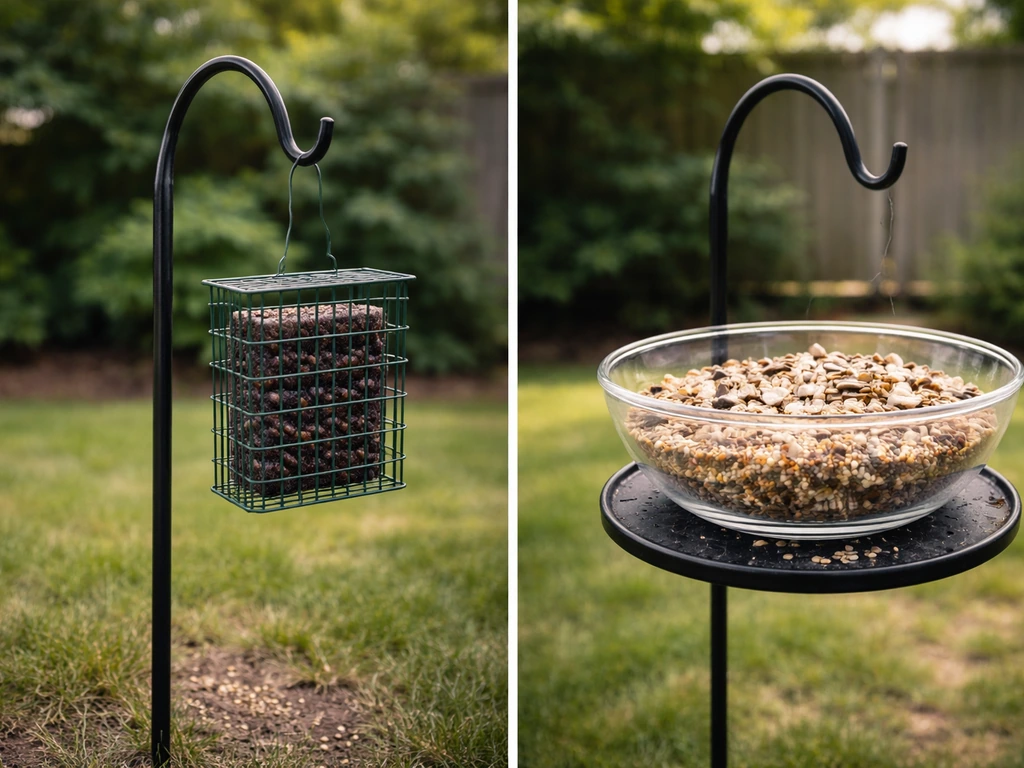
For most backyards, the best setup is both: a wire cage suet feeder hung near your seed feeder, with black-oil sunflower seed in a tube or platform feeder as your foundation. That combination covers the widest range of species with the least effort. For many bird owners, the simplest approach is to use both seed and pellets so you can cover more species year-round.
When to choose suet vs bird seed at a glance
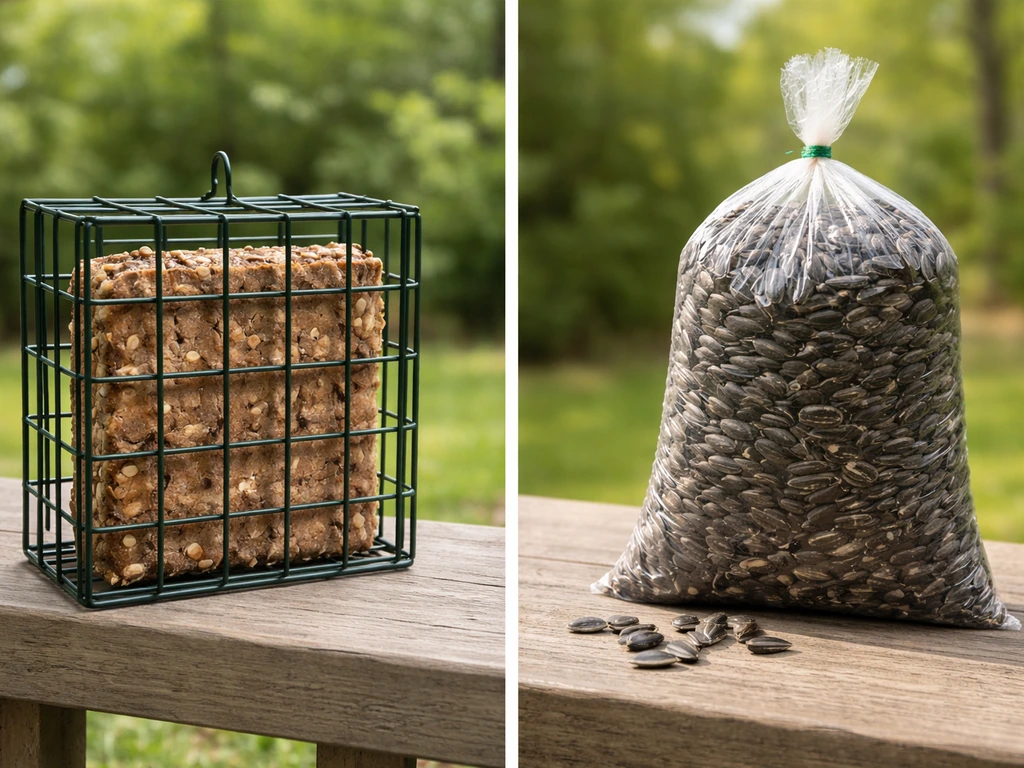
| Situation | Best choice | Why |
|---|---|---|
| Cold weather (fall through early spring) | Suet | High-fat energy helps birds survive cold nights when natural food is scarce |
| Attracting woodpeckers, nuthatches, or chickadees | Suet | These insect-eating species are strongly drawn to suet feeders |
| Feeding a broad flock of mixed species | Bird seed | Seed covers more species with one feeder, especially sparrows, finches, and juncos |
| Hot summer weather | Bird seed (avoid plain suet) | Suet turns rancid quickly above 70°F; seed handles heat better |
| Ground-feeding birds like towhees and juncos | Bird seed on platform or ground tray | These species rarely land on hanging feeders but readily eat fallen or spread seed |
| Tight budget, one feeder | Black-oil sunflower seed | Single best seed for attracting the widest variety of birds |
How suet works
What suet actually is
Suet is rendered beef fat, usually pressed into a cake or block and sold in a standard size (roughly 4.5 x 4.5 inches) that fits a wire cage feeder. Plain rendered suet is the most widely available type. You can also find suet cakes with added ingredients: peanuts, berries, mealworms, insects, or corn. Each additive can shift which birds you attract, but plain suet works well for most woodpecker and nuthatch species. Some products are labeled "no-melt" or "heat-tolerant" suet, which uses a harder fat formulation and can stay stable in warmer weather better than plain suet.
Which birds suet attracts
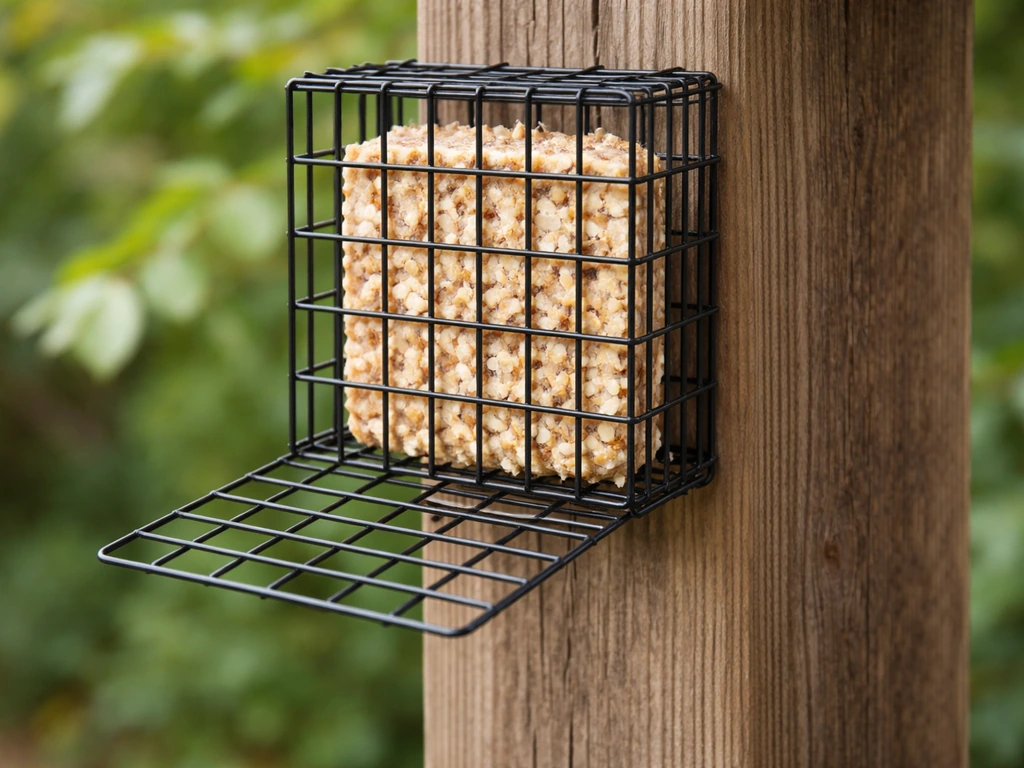
Suet primarily draws insect-eating birds that cling to vertical surfaces. Downy Woodpeckers are the most reliable visitors, but you can also expect Hairy Woodpeckers, Red-bellied Woodpeckers, White-breasted Nuthatches, Carolina Chickadees, Black-capped Chickadees, Tufted Titmice, and occasionally Brown Creepers and Carolina Wrens. These are birds that would naturally be hunting bark insects in winter, and suet is an easy substitute for that food source.
Suet feeder setup
- Use a standard wire cage feeder. It holds one suet cake, costs about $5-10, and is the simplest option. A cage with a tail prop (an extended wire grid below the cage) helps attract larger woodpeckers that like to brace their tails while feeding.
- Hang the feeder from a branch or shepherd's hook 5 to 6 feet off the ground, preferably near a tree trunk. Woodpeckers and nuthatches are more comfortable near cover.
- Position the feeder in partial shade when possible. Direct sun speeds up rancidity, especially in spring and fall when temperatures swing.
- If squirrels are a problem, mount the feeder on a smooth metal pole with a cone-shaped baffle at least 4 feet up. A caged suet feeder (with an outer cage that only small birds can reach) also works well.
- Replace the suet cake as soon as you notice it smells off, looks dark or greasy, or has been in the feeder for more than 2 weeks in mild weather.
How bird seed works
Which seeds actually matter
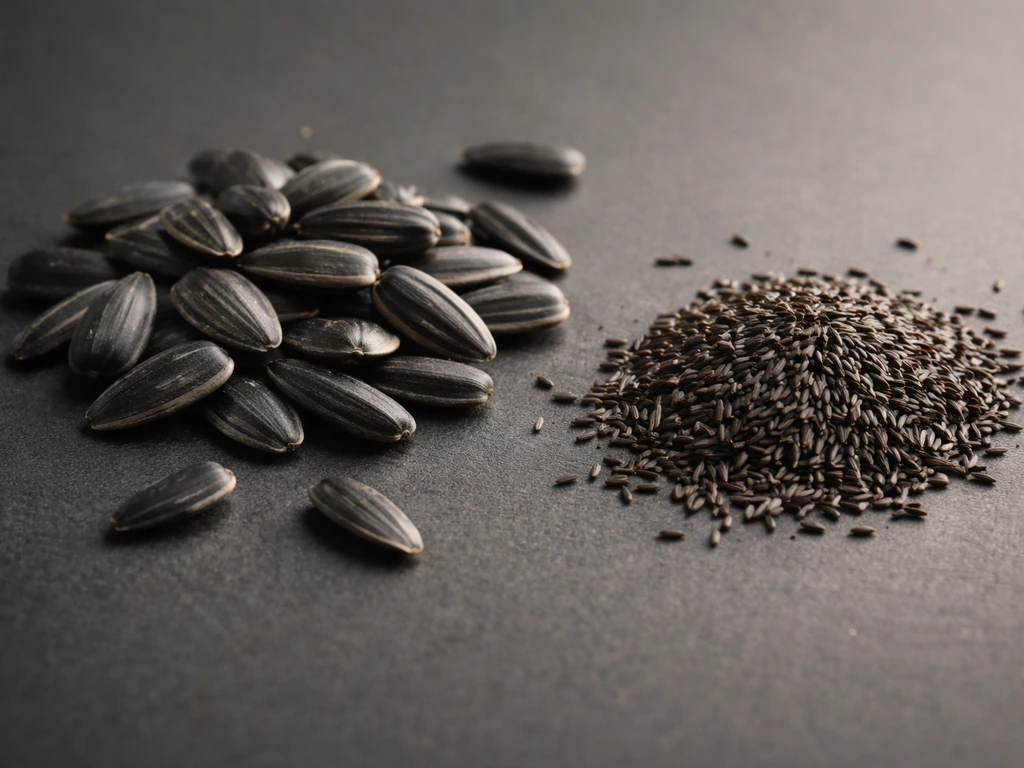
Black-oil sunflower seed is the single best choice if you're only buying one type. All About Birds notes that sunflower seed attracts the widest variety of birds, and other seed types can be added to round out the backyard mix. The thin shell is easy for small birds to crack, the high fat and protein content appeals to dozens of species, and it works in tube feeders, platform feeders, and hopper feeders alike. After that, here are the seeds worth knowing about:
- Nyjer (thistle): Specifically for finches. American Goldfinches, House Finches, and Pine Siskins love it. Use a fine-port tube feeder or a mesh sock feeder. It's more expensive than sunflower, so use it only if finches are a priority.
- Safflower: Cardinals favor it strongly, and squirrels tend to ignore it. Good choice if squirrel pressure is high.
- Peanuts (shelled or in-shell): High energy, attracts jays, woodpeckers, and titmice. Works well on platform feeders.
- Cracked corn: Cheap filler that attracts sparrows, doves, and juncos at ground level. Avoid mixes heavy in cracked corn if you want to reduce waste.
- Mixed seed: Quality varies a lot. Mixes with millet, sunflower, and safflower are useful. Mixes with large amounts of milo, wheat, or oat filler tend to go to waste as birds toss uneaten seeds to the ground.
Which birds seed attracts
Seed feeders pull in a much broader range of species than suet. Chicken scratch is often sold as a generic scratch mix, but for attracting birds you will usually get better results with the right seed choices. Bird seed can be considered heterogeneous because mixes often contain different seed types, filler ingredients, and varying sizes is bird seed homogeneous or heterogeneous.
That means it is usually a mixture of different seed types rather than a single uniform solution Bird seed can be considered heterogeneous. With black-oil sunflower, you can expect chickadees, nuthatches, cardinals, finches, sparrows, mourning doves, and titmice. Add nyjer and you'll specifically draw goldfinches. Ground-feeding birds like Dark-eyed Juncos, Eastern Towhees, and White-throated Sparrows rarely land on feeders but will pick up seed that falls beneath them.
Placing a platform tray directly on the ground or a few inches above it specifically for these birds can increase your species count noticeably.
Feeder and ground setup for seed
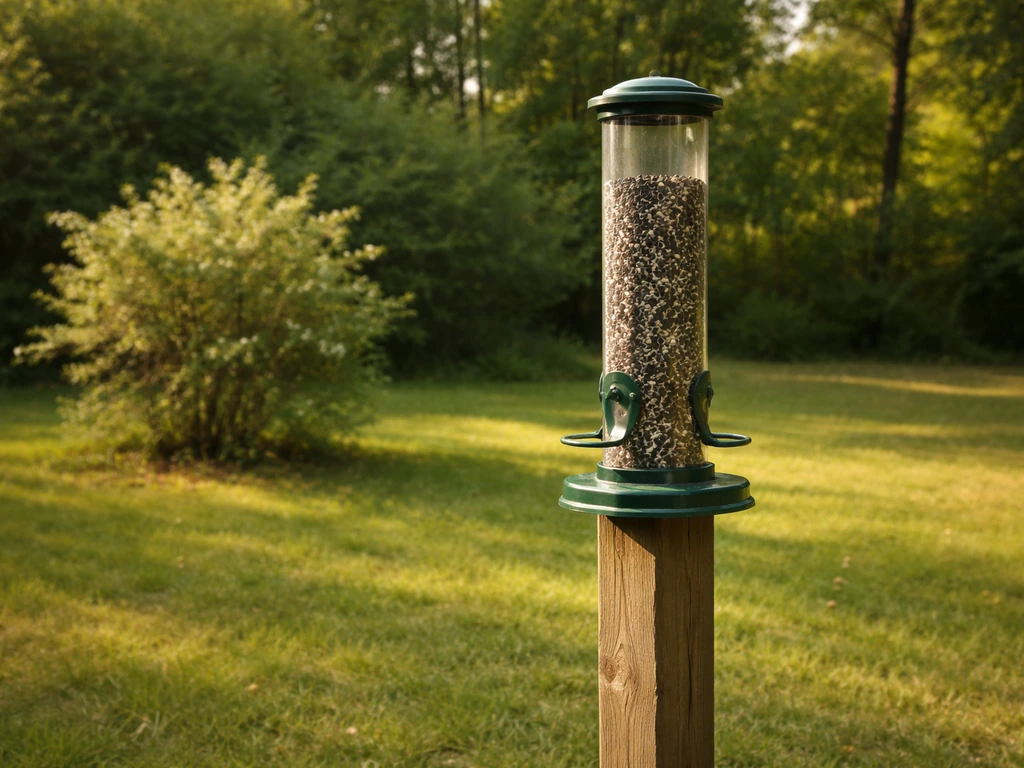
- Start with a tube feeder or hopper feeder filled with black-oil sunflower seed. Hang or mount it 5 to 6 feet off the ground, about 10 feet from the nearest shrub or tree for some protection from window strikes.
- Add a platform feeder (a flat raised tray) at ground level or low height for sparrows, juncos, and doves. Spread a thin layer of mixed seed or cracked corn. Only put out what birds can eat in a day to reduce waste and spoilage.
- Use a separate finch tube feeder with nyjer if you want to target goldfinches. Keep this feeder stocked consistently because finches will stop visiting if it runs empty repeatedly.
- Match port size to seed size. Small ports work for nyjer and sunflower in tube feeders. Larger openings or open trays work better for peanuts or mixed seed.
- Avoid putting too many seeds with filler ingredients. Birds will toss the uneaten pieces, creating a pile of wet, moldy debris under the feeder.
Which is better by season and weather
Suet is at its most effective from October through March. Cold temperatures mean birds need extra calories to maintain body heat overnight, and suet delivers dense fat energy fast. This is also when woodpeckers, nuthatches, and chickadees are most reliably present at feeders. Once daytime temperatures consistently climb above 70°F in spring, plain suet starts melting and going rancid quickly. Either switch to a no-melt suet formulation or take the suet feeder down until fall.
Bird seed works year-round, but you'll see different species by season. Winter brings sparrows and juncos that may not be around in summer. Summer brings orioles (try offering grape jelly or oranges nearby), House Finches, and often a lull in overall feeder activity because natural food is abundant. During spring and fall migration, keep feeders reliably stocked since transient species may stop in for a day or two. In very hot, humid weather, check seed feeders every 2 to 3 days for clumping or mold. Wet seed spoils fast.
| Season | Suet | Bird Seed |
|---|---|---|
| Winter (below 40°F) | Excellent: high demand, stays fresh longer | Good: keep feeders full, mix in peanuts for extra energy |
| Spring (40-70°F) | Good with no-melt formula; plain suet starts to soften | Excellent: migration birds appear, broad species mix |
| Summer (above 70°F) | Risky with plain suet (rancidity); no-melt only | Good: check often for mold in humidity, reduce portion size |
| Fall (cooling temps) | Very good: start putting suet out as temps drop below 60°F | Excellent: sparrows, juncos arrive, stock up before winter |
Keeping suet and seed fresh
Storing suet
Unopened suet cakes stored in a cool, dry place will keep for several months. Once you open a cake and place it outside, expect it to last about 1 to 2 weeks in cool weather (below 50°F) and only a few days once temperatures climb above 60-70°F. If you're making homemade suet, freeze it in portions before placing it in the feeder. This firms it up and extends its outdoor life. Rancid suet smells sour or "off," turns darker in color, and may appear greasy or wet. Discard it immediately. Rancid fat can harm birds and will deter them from returning to that feeder.
Storing bird seed
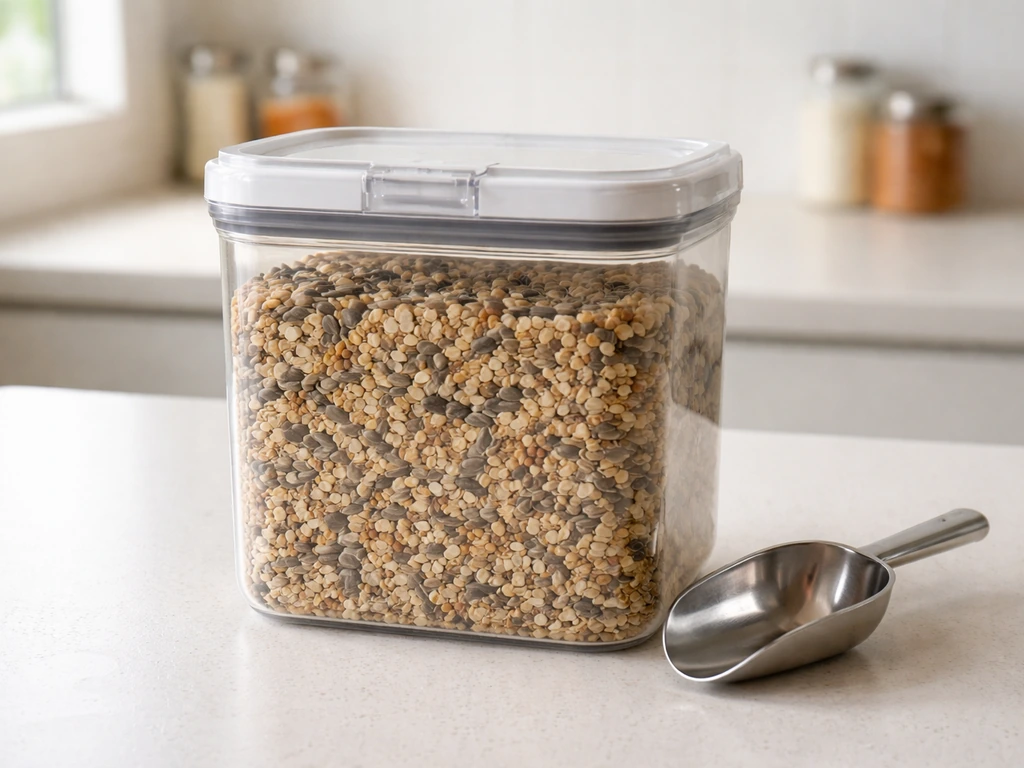
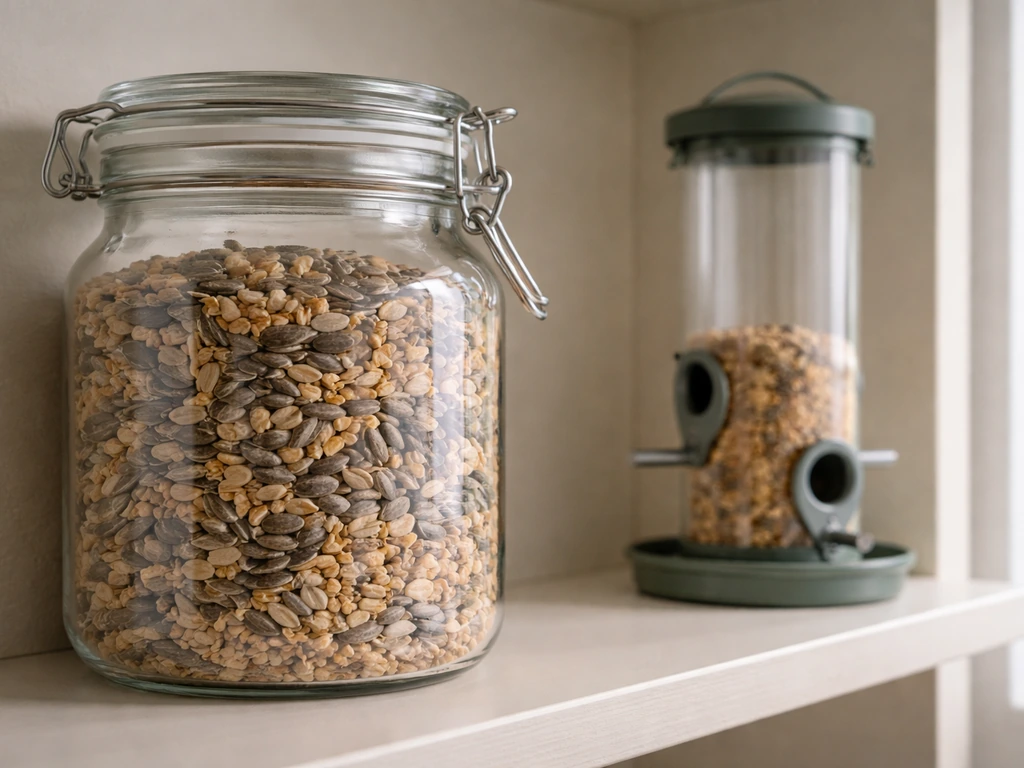
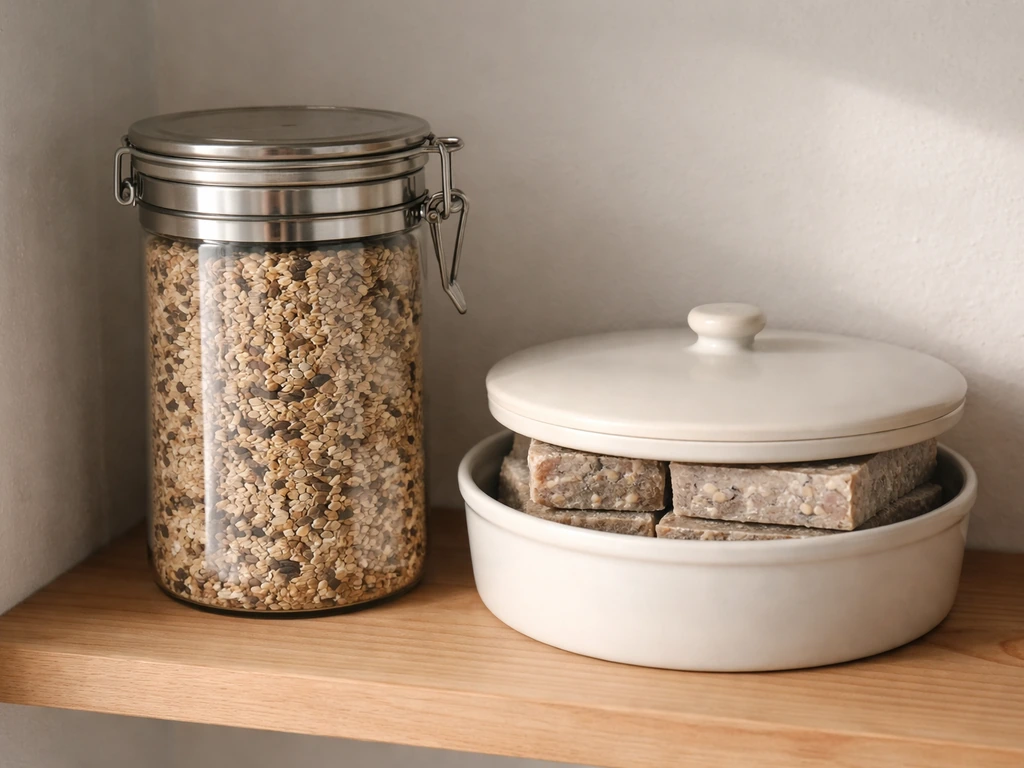
Store seed in a sealed, rigid container, not the paper bag it came in. A metal trash can with a locking lid or a hard plastic airtight bin works well. Keep it somewhere cool and dry, away from direct sunlight. A garage, shed, or basement is ideal. In humid climates, check seed monthly for clumping, which signals moisture intrusion. Discard any seed that smells musty or shows visible mold. There's no safe way to pick out moldy seeds from a batch, and moldy seed can cause aspergillosis (a serious fungal illness) in birds. The Penn State Extension guidance on this is direct: if it's moldy, throw it out.
Feeder cleaning schedule
Clean seed and suet feeders every two weeks as a baseline. In summer, humid weather, or if you notice sick birds visiting, clean every week. To clean: empty the feeder completely, scrub with hot soapy water, then soak for a few minutes in a diluted bleach solution (1 part bleach to 9 parts water), rinse thoroughly, and let it dry completely before refilling. Wet feeders trap mold fast. Suet cages especially tend to accumulate greasy residue that breeds bacteria if left uncleaned.
Pests, mess, and keeping things clean
Squirrels and rodents
Squirrels will try to access both suet cages and seed feeders. No setup is fully squirrel-proof, but you can get very close with the right combination. Mount feeders on a smooth metal pole at least 5 feet high and add a cone-shaped baffle below the feeder, at least 4 feet off the ground. Keep feeders at least 10 feet from any branch or structure a squirrel can jump from. For suet feeders, a caged outer guard that only allows small birds through is one of the most effective options. Seed spilled on the ground attracts mice and rats, especially at night. Rake up spilled seed under feeders regularly, or use a seed catcher tray to limit what hits the ground.
Ants and insects
Ants are drawn to suet drips and sweet seed mixes. An ant moat (a small water-filled cup between the hanger and the feeder) stops ants on hanging feeders. Keep the moat filled, especially in warm weather. If you're seeing insects in your stored seed, the bin wasn't fully sealed. Discard any infested seed, clean the container with soapy water, dry it completely, and start with fresh seed in a sealed bin.
Mess and hygiene under feeders
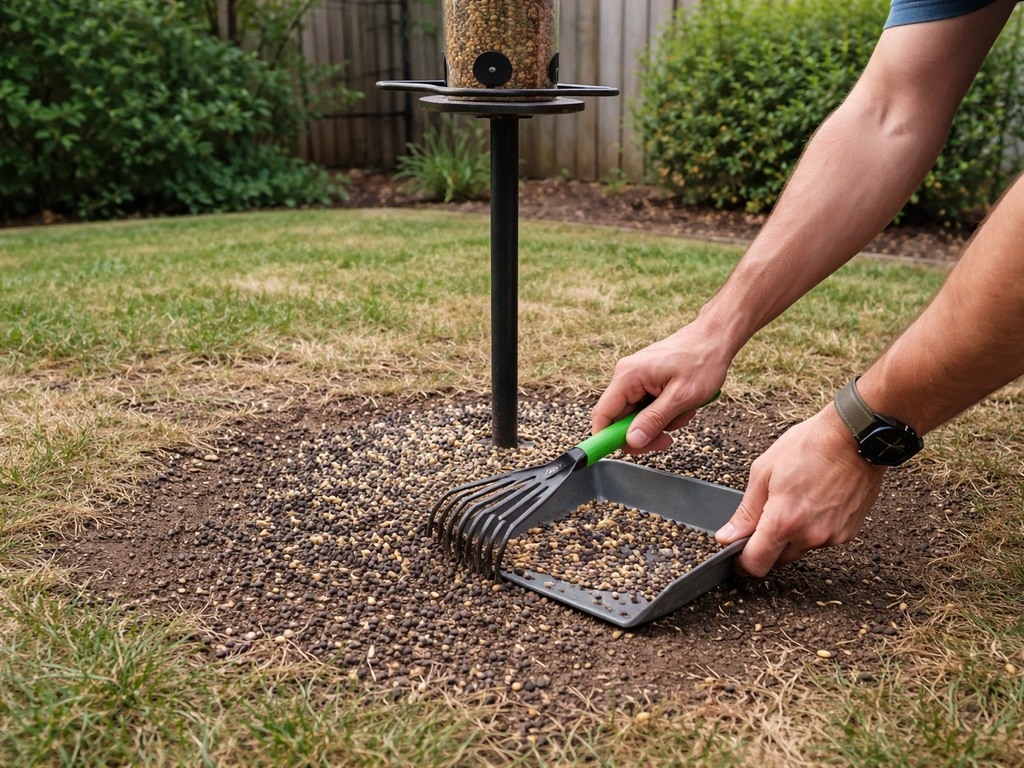
Seed hulls, droppings, and uneaten food pile up under feeders quickly. This debris is a major disease vector. Rake or sweep the area under feeders once a week. If feeders are over a deck or patio, consider a tray catcher to collect debris, and wash it down with water at least weekly. Suet drips can stain wood and attract insects, so position suet feeders away from decking or use a drip guard beneath the cage. Never let wet seed or rancid suet accumulate at the base of a feeder pole. That combination of moisture and organic matter is a direct path to mold and rodent activity.
Troubleshooting what you're seeing
Wet or clumped seed
Wet seed clumps together and molds within 24 to 48 hours in warm weather. If you open a feeder and the seed has a wet, matted texture, discard it, clean the feeder, dry it completely, and refill with fresh dry seed. To prevent this: use feeders with drainage holes or domed covers, avoid overfilling (only what birds eat in a day or two), and check after any rain. Tube feeders without drainage are the worst offenders for wet seed buildup at the bottom.
Sprouted seed under the feeder
If you're seeing green sprouts coming up under your feeder, seed is landing on the ground and germinating. This usually means you're overfilling the feeder or using a mix with lots of filler seeds birds are tossing out. Switch to hulled sunflower or a no-waste blend (where seeds are already de-husked and sterile). Rake the area regularly and consider a seed catcher tray. Sprouted seed itself isn't toxic to birds, but the wet mat it creates harbors mold and attracts rodents.
Birds ignoring the suet feeder
If woodpeckers and nuthatches aren't visiting, give it time. New suet feeders sometimes take 2 to 4 weeks for birds to discover, especially if you're new to suet feeding in your yard. Make sure the feeder is near a tree or shrub, not in an open exposed spot. Check that the suet hasn't gone rancid (birds avoid rancid suet). If you're in summer, switch to a no-melt formula since soft or oily suet in heat is unappealing. Also consider that in spring and summer, these birds have abundant natural food and may visit less frequently.
Birds ignoring the seed feeder
First, check that the seed is fresh. Old or stale seed loses its scent and nutritional appeal. Pour some into your hand and smell it: it should smell faintly nutty, not musty. If birds were visiting and suddenly stopped, check for nearby predators (a hawk perching in a nearby tree will clear out feeder activity for days), or check whether the feeder has become dirty. Clean the feeder, refill with fresh black-oil sunflower, and give it a few days. If you're using a cheap mixed seed with a lot of filler, switching to straight black-oil sunflower often brings birds back quickly.
Rancid suet still in the feeder
If suet has turned dark, smells sour, or has a greasy slick appearance, remove it immediately. Don't try to salvage it or let birds eat it. Rinse the wire cage with hot water and scrub off any fat residue before putting in a fresh cake. In warmer months, check suet every 3 to 5 days. Buying smaller quantities of suet in summer and refrigerating the unused portion until you need it helps avoid wasting product.
Putting it all together: a simple starting plan
If you're starting from scratch today, here's a practical approach. Put up one tube or hopper feeder filled with black-oil sunflower seed as your core feeder. Hang a wire cage suet feeder nearby, within 6 to 10 feet, from October through March (or year-round using no-melt suet). Add a platform tray at low height for ground-feeding birds if you want to boost species count.
Watch what birds show up in the first two weeks and adjust: if finches are active, add a nyjer feeder. If cardinals are dominant, add safflower. If squirrels are a constant problem, switch to a pole-mounted setup with a baffle. Clean feeders every two weeks, store seed in a sealed container, and replace suet the moment it looks or smells off.
That's really all there is to it.
One last thing: if you ever see sick or lethargic birds at your feeder, take all feeders down immediately, clean them with the diluted bleach solution described above, and wait a week before putting them back up. Feeders can spread disease fast when birds are stressed or seed quality is poor. Keeping feeders clean is the single most important thing you can do for the birds you're trying to help.
FAQ
Can I feed suet and bird seed in rainy or very humid weather without harming birds?
Yes, but choose the setup carefully. Put seed in enclosed tube or hopper feeders to keep it dry and reduce germination, and use suet in a drip guard or cage feeder positioned away from decks. If you cannot keep seed dry, rely more on suet during rain-heavy stretches and shorten how long seed stays out (refill daily during heavy wet weather).
What suet type should I start with, plain or with added ingredients?
For most backyards, start with plain suet plus black-oil sunflower. If you see mostly woodpeckers, nuthatches, and chickadees, you can keep plain suet and add nothing. Add nut or insect suet only if you are targeting a specific missing species (for example, mealworm suet can increase insect-foraging interest). If you have heat, switch to a no-melt or heat-tolerant formulation rather than adding extras.
When should I refill suet and seed, morning or evening?
Morning and evening tend to work best because birds are active before the heat peaks and before nighttime. The key is not timing so much as consistency, keep feeders stocked and cleaned on schedule (seed every 2 weeks baseline, weekly in humidity). Avoid refilling after dawn if it causes you to spill seed onto the ground.
Is it okay to place the suet feeder directly above the seed feeder?
Avoid putting both foods in the same physical spot. Suet drips and greasy residue can contaminate seed and speed spoilage, especially under a platform or tray. Keep the suet cage and seed feeder close for convenience (within about 6 to 10 feet), but separate vertically and use a drip guard if either sits over hard surfaces.
My birds stopped coming after I switched seed brands. What should I try first?
If you use mixed seed, it can be fine, but it often costs you bird visits because filler gets ignored and tossed. When bird activity drops, do a controlled change: switch to straight black-oil sunflower for 2 to 4 weeks while keeping the feeder location and cleaning routine the same. If you still see low traffic, the issue is more likely placement, predator activity, or feeder hygiene than the blend.
Will ground-feeding birds still use a feeder if I keep everything off the ground?
Yes, but only in a targeted way. Ground-feeding birds typically need seed that is available on the ground, so a platform tray a few inches above ground is a compromise. Use it only if you want those species, because it can also increase mice and droppings under the feeder, so plan to rake or vacuum the area more often.
Is there a way to store bird seed longer to prevent mold or clumping?
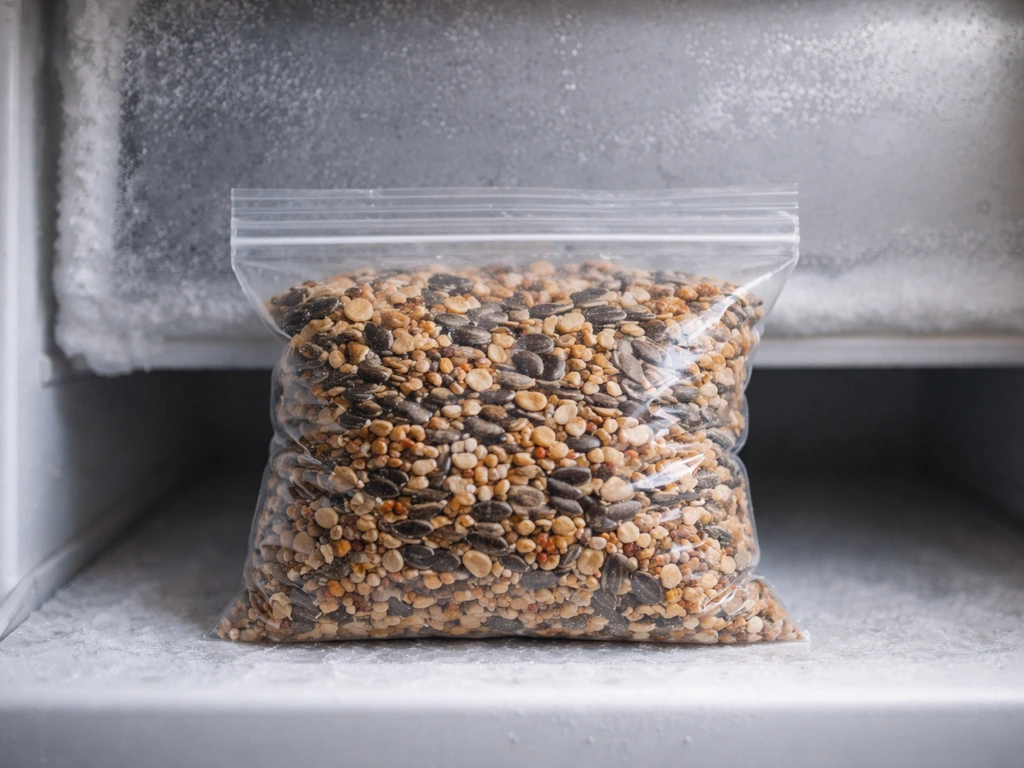
You can, and it helps, but never rely on it for mold prevention if the bin seal failed or the seed got wet. Use strict moisture control, store in a rigid sealed container, and discard seed that smells musty or shows visible mold. Freezing unopened seed can extend freshness, but it does not fix spoiled seed or clumping from humidity.
If my suet looks okay but smells off, should I keep feeding it?
Take it down immediately and inspect the cage. Even if the cake still looks intact, rancid fat can make birds avoid that feeder, and it can become a grease film that is hard to clean. Replace with a fresh cake, rinse the cage well, and let the feeder dry completely before reinstalling.
Which attracts more birds, suet or seed, if I can only hang one feeder?
Yes, but it depends on the birds you want. If your goal is woodpeckers, nuthatches, chickadees, and titmice, suet is the faster draw. If you want finches, cardinals, sparrows, and juncos, seed gives broader year-round coverage. The most efficient strategy is one core seed feeder plus one suet feeder in season, rather than changing everything at once.
My new feeder is up but no birds are coming. How long should I wait, and what should I check?
Start with location and feeder visibility. Place seed feeders near cover (tree or shrub) so birds feel safe, but avoid open areas where predators can watch. For suet, ensure the cake is stable and not melting in heat, and give new setups 2 to 4 weeks for discovery. If you still get no visits, clean residue, check for rancid suet, and confirm squirrels are not monopolizing the feeder.