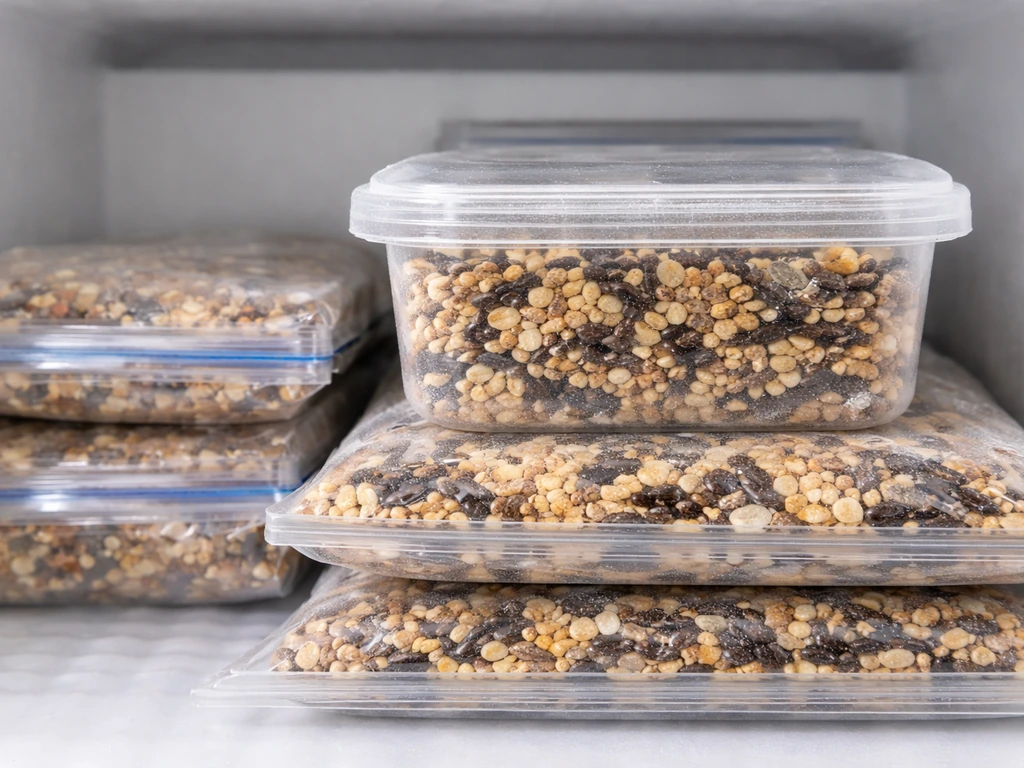
Freeze bird seed for at least 72 hours (3 days) at 0°F (-18°C) or below to reliably kill weevils, Indianmeal moth larvae, beetles, and their eggs. A standard home freezer set to 0°F does the job. Smaller bags (under 5 lbs) are safe after 72 hours; bulk quantities (10 lbs or more) need a full 4 to 5 days to ensure the cold reaches the center of the seed mass. After freezing, thaw slowly to prevent condensation, inspect for lingering signs of infestation, and move the seed into an airtight container, not back into the original bag.
How Long to Freeze Bird Seed to Kill Bugs: Time Guide

Maya Collins
17 May 2026
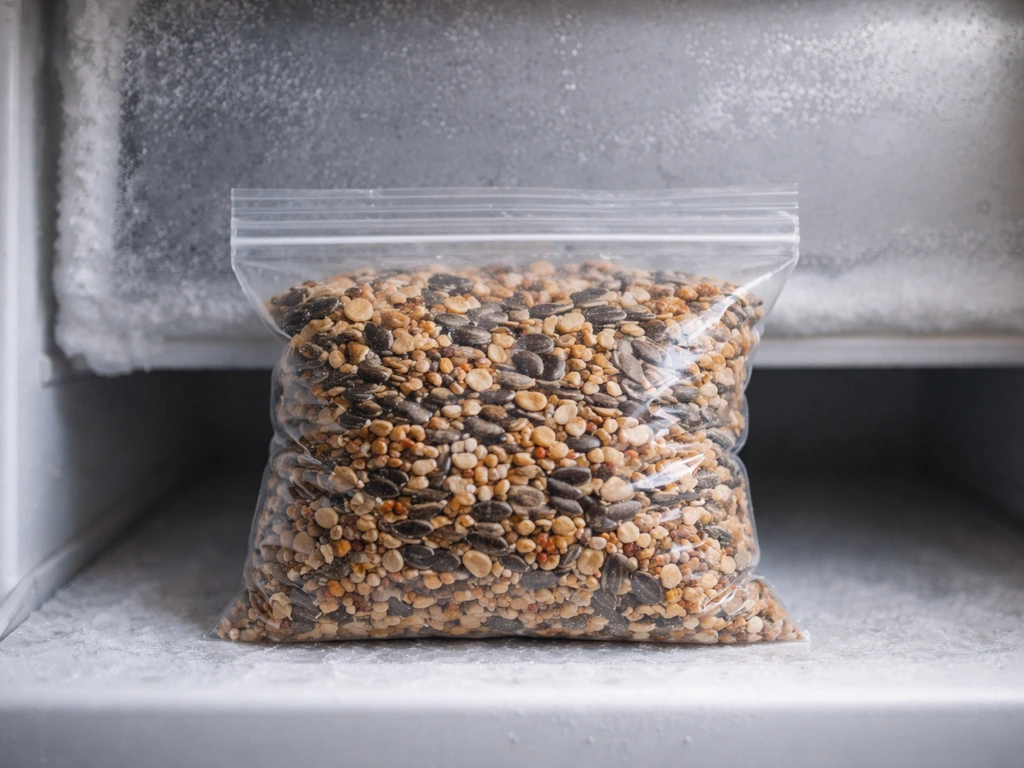
Common bird seed pests and how to spot them
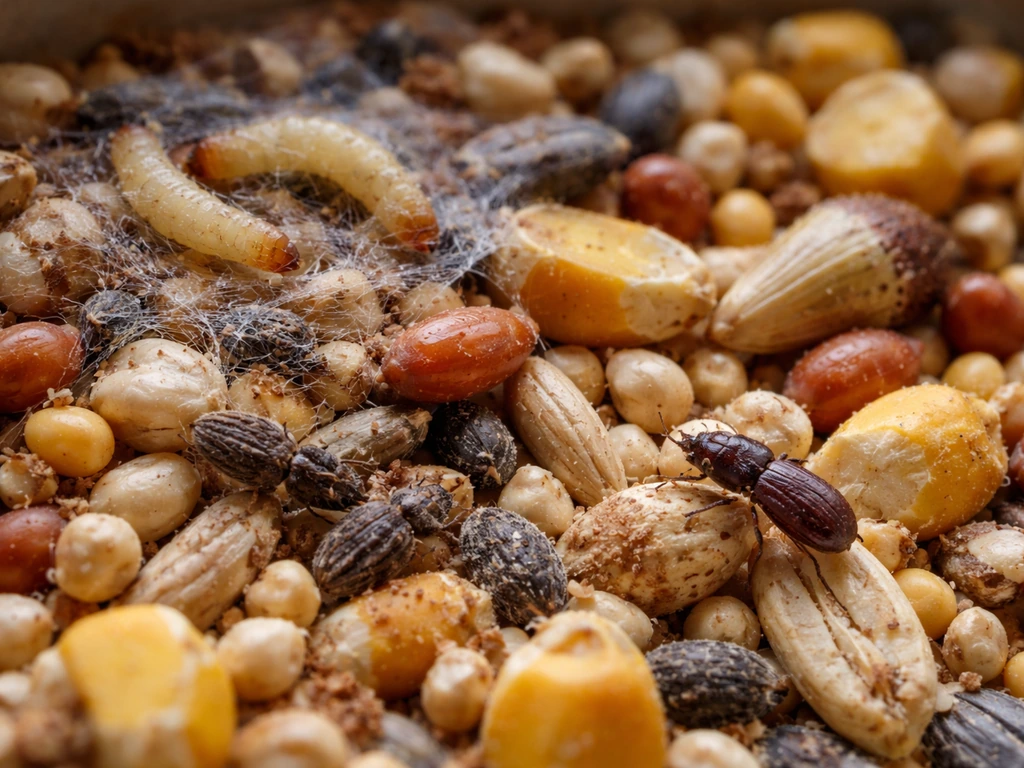
Bird seed is a magnet for a handful of stored-product pests. The three you're most likely to encounter are the Indianmeal moth, rice and granary weevils, and stored-grain beetles. They don't come from your yard, they almost always come in with the bag itself, either already present as eggs or picked up in a warehouse or garden center.
Indianmeal moth larvae are the ones that make that silky, cobweb-like webbing you'll sometimes see clumped through seed. The larvae are the actual feeders; the small, copper-winged adults you see flying around your kitchen are just looking to mate and lay more eggs. University of Minnesota Extension also notes that Indianmeal moth larvae are the stage that feeds in stored products, and adults and larvae with webbing can be present in infested items The larvae are the actual feeders; the small, copper-winged adults you see flying around your kitchen are just looking to mate and lay more eggs.. If you're seeing tiny moths fluttering near your pantry or garage, there are almost certainly larvae working through your seed or another dry food nearby.
Weevils look like tiny, dark beetles with a distinctive snout. Their larvae are worm-like and develop inside individual grains, which makes early infestations hard to spot until numbers build. A telltale first sign is webbing in the container or a lot of small worm-like insects crawling near the surface. You may also notice fine gritty droppings (frass) or insect fragments in the bottom of the bag.
Stored-grain beetles (including the sawtoothed grain beetle and confused flour beetle) are flat, reddish-brown insects about 1/8 inch long. They move fast and can squeeze through very small gaps in packaging. If you see small, fast-moving brown bugs, not the sluggish worm-like weevil larvae, beetles are the likely culprit.
- Silky webbing clumped through seed: Indianmeal moth larvae
- Worm-like larvae or crawling insects near the surface: weevils
- Fine gritty frass or insect fragments at the bag bottom: weevils or beetles
- Small moths flying near the storage area: Indianmeal moth adults
- Small fast-moving brown bugs: stored-grain beetles
- Clumped or stuck-together seed (without moisture): possible larval webbing
What freezing actually does to insects in bird seed
Sustained cold at 0°F kills insects at all life stages: eggs, larvae, pupae, and adults. This is the key advantage of freezing over just tossing infested seed into the garage or a cooler spot, those temperatures aren't low enough or consistent enough to finish the job. At true freezer temperature (0°F / -18°C), cell membranes rupture and insects cannot survive the exposure when it lasts long enough.
What freezing does not do is remove the physical evidence. After thawing, you'll still see webbing, frass, and insect shells. That's normal and doesn't mean the treatment failed, it means you need to inspect carefully to confirm there's no movement and no new activity. Freezing also doesn't make heavily contaminated seed safe for birds to eat. If a bag had a serious infestation with large amounts of frass and damaged seed, it's better to discard it. The seed itself loses nutritional integrity when larvae have been feeding through it for weeks.
One thing freezing won't fix: mold. If your seed was damp before you froze it, freezing stops mold growth temporarily but doesn't kill mold spores or reverse damage. Moldy seed is a health risk for birds and should be discarded, not frozen and served. Freezing is a pest-kill strategy for otherwise-dry seed.
Exactly how long to freeze bird seed
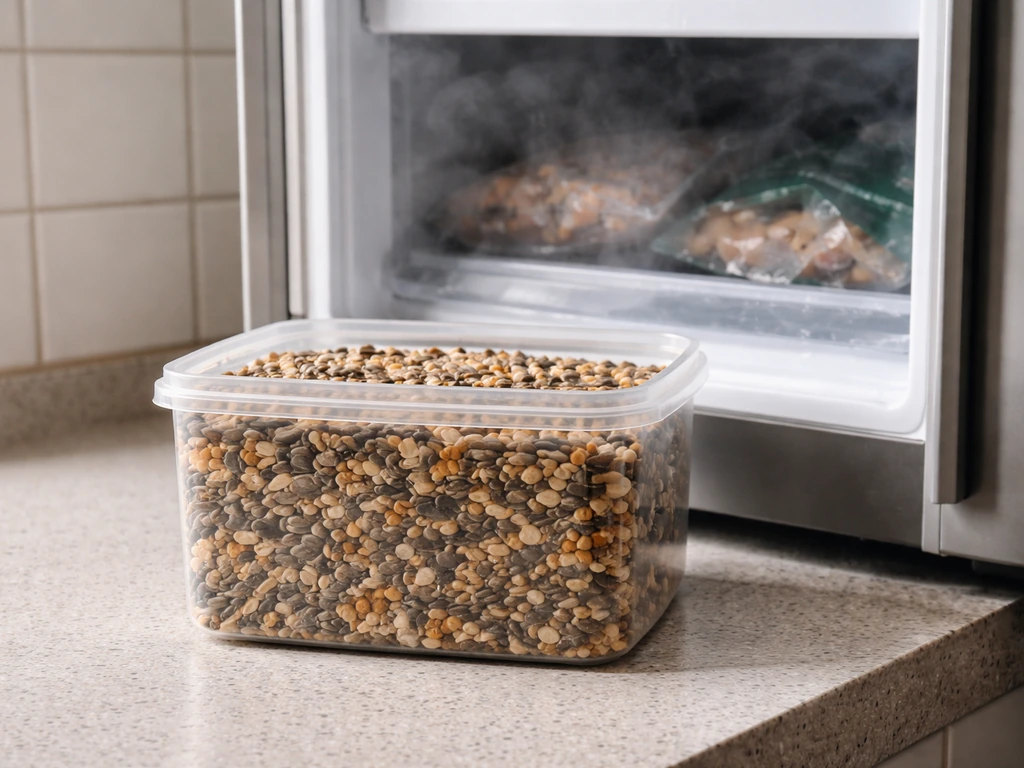
The time required depends on two things: the temperature of your freezer and the volume (mass) of seed you're freezing. More seed = more thermal mass = longer time for the center to reach killing temperature.
| Seed Quantity | Freezer Temp | Minimum Freeze Time | Notes |
|---|---|---|---|
| Under 5 lbs (small bag or portion) | 0°F (-18°C) | 72 hours (3 days) | Standard home freezer works fine |
| 5–10 lbs (medium bag) | 0°F (-18°C) | 4 days | Lay flat to reduce thickness |
| 10+ lbs (bulk quantity) | 0°F (-18°C) | 5 days | Split into multiple bags for best results |
| Any quantity | Above 10°F (-12°C) | Not reliable | Freezer not cold enough; check thermostat |
| Any quantity | 10°F (-12°C) | At least 5–7 days | Borderline; aim for colder if possible |
If you're unsure whether your freezer actually hits 0°F, use a simple freezer thermometer, they cost a few dollars and are worth having. Many older chest freezers run colder than dial freezers, which is actually better for this purpose. If your freezer only reaches around 10°F, give everything at least 5 to 7 days and seriously consider splitting bulk quantities into smaller portions.
The 72-hour minimum is the figure most commonly referenced for killing stored-product pests at 0°F, and it holds up well for small to medium quantities of dry seed. Don't cut it to 48 hours, that may not fully penetrate the center of a dense bag. Erring on the side of an extra day costs nothing.
How to freeze bird seed safely: step by step
The biggest practical risk with freezing bird seed isn't the cold, it's the moisture that can form when you take seed in and out of cold environments carelessly. Follow these steps to freeze effectively without creating a mold problem.
- Check the seed first: If the seed is already wet, clumped from moisture, or visibly moldy, do not freeze it. Bag it tightly in a sealed plastic bag and discard it in an outdoor bin right away. Freezing won't salvage wet or moldy seed.
- Portion into manageable amounts: If you're dealing with a large bag, divide it into smaller portions of 3 to 5 lbs each. This helps the cold penetrate faster and makes thawing easier. Use heavy-duty zip-lock freezer bags and press out as much air as possible before sealing.
- Label every bag: Write the date and seed type on each bag with a permanent marker. This matters more than it sounds — you want to know exactly how long each portion has been frozen.
- Place bags flat in the freezer: Laying bags flat instead of stacking them upright means the seed spreads into a thinner layer, which freezes more evenly and faster. Don't pack them against the freezer walls where frost may transfer moisture.
- Keep the freezer closed: Avoid opening the freezer repeatedly during the treatment period. Every time warm air enters, you extend the time needed to fully kill pests in the seed mass.
- Do not mix infested seed with food: Keep the sealed bags away from food you'll eat. While the pests themselves aren't dangerous to humans, cross-contamination is messy and unnecessary. Use one designated area of the freezer or a separate chest freezer if you have one.
- Run the full time: Don't pull the seed early. Set a reminder on your phone for the appropriate duration based on the quantity chart above.
How to thaw, inspect, and decide whether to keep or discard
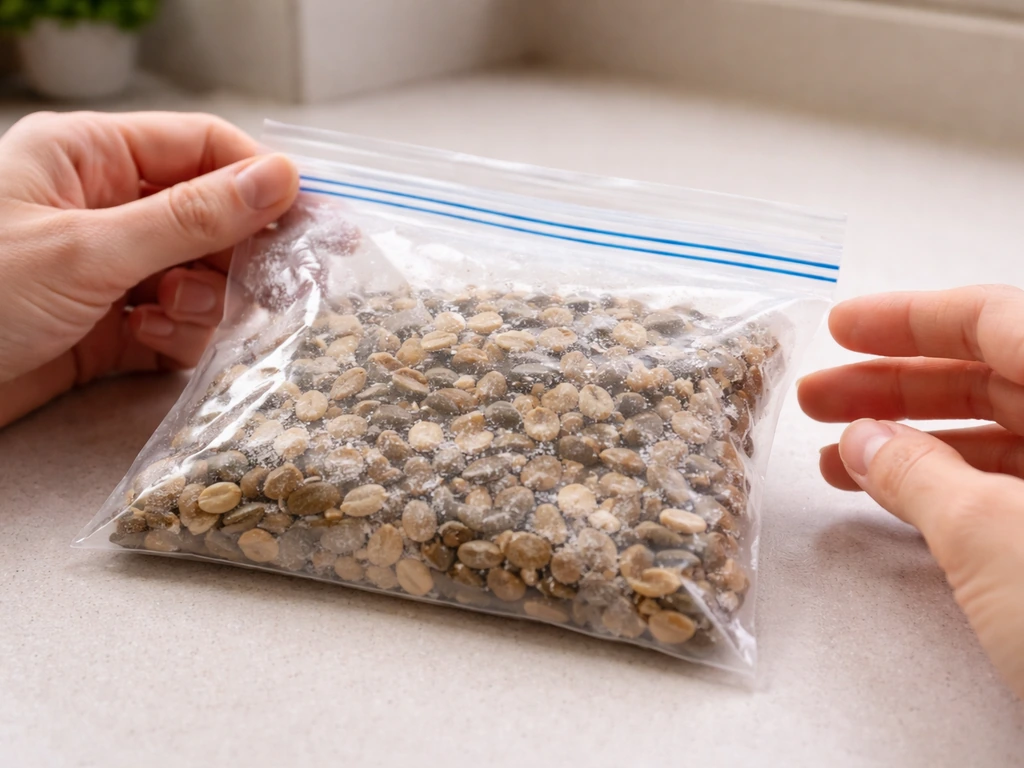
This step is where most people go wrong. If you pull frozen seed from the freezer and immediately open the bag, you'll get condensation from warm indoor air hitting cold seed, and that moisture can trigger mold within a day or two. Thaw slowly and keep the bag sealed until the seed reaches room temperature.
- Move the sealed bags to a cool, dry indoor location (not outside if it's humid or raining). A garage or mudroom works well in moderate climates.
- Leave the bags sealed for at least 2 to 3 hours for small quantities, or up to 6 hours for larger bags, until the outside of the bag is no longer cold to the touch.
- Open the bag and spread a small amount of seed on a white paper plate or tray. This makes it easier to see insects, webbing, and frass against a light background.
- Look for movement: any live insects crawling means the freezing was insufficient. If everything is still, check for fresh webbing (not the old dried strands from before freezing), new frass, or sticky clumps. These would indicate surviving eggs hatched after thawing — rare if you hit the right temperature and time, but possible.
- Smell the seed: fresh, uncontaminated seed smells nutty and slightly oily. A musty, sour, or ammonia-like smell means mold or severe spoilage. If it smells off, discard it.
- Make the keep-or-discard call: If the seed is dry, smells fine, shows no movement, and the level of visible debris (frass, webbing) is minor, it is safe to use. If frass is heavy throughout the seed, large portions of seed kernels are hollowed out or broken, or there's any doubt about moisture, discard it.
When you discard infested seed, seal it in a plastic bag before putting it in an outdoor bin. Don't just dump it in the yard, you'll just move the infestation outside, where it can potentially reenter through another bag or spread to composting areas.
Aftercare: storing seed and keeping bugs and mold from coming back
Switch to airtight containers immediately
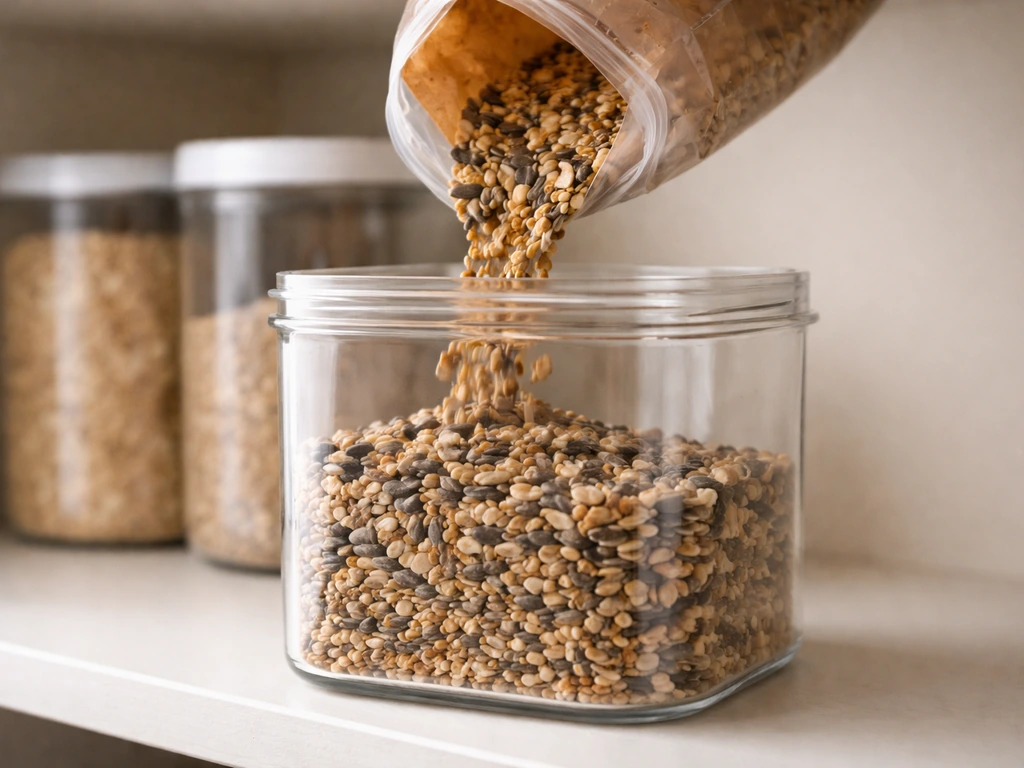
The original paper or plastic bag that seed comes in is not a pest-proof container. If you want the clearest overview of how to keep bird seed fresh long term, follow the storage and moisture tips in our guide. After freezing and thawing, move seed into a hard-sided, airtight container, metal or thick food-grade plastic with a secure lid. A metal trash can with a locking lid is a classic choice for large quantities. For smaller amounts, a food-grade plastic bin with a rubber gasket seal works well. Avoid thin plastic tubs or cardboard; beetles and weevil larvae can chew through both.
Control humidity in the storage area
Moisture is the secondary enemy. Seed stored in damp garages, humid basements, or outdoors under tarps will develop mold even if it's pest-free going in. Aim for a cool, dry spot with good air circulation. If you're in a humid climate (the Southeast, Pacific Northwest, or similar), consider a small desiccant packet inside the storage container to absorb excess moisture. Replace it every few months.
Clean your feeders and trays
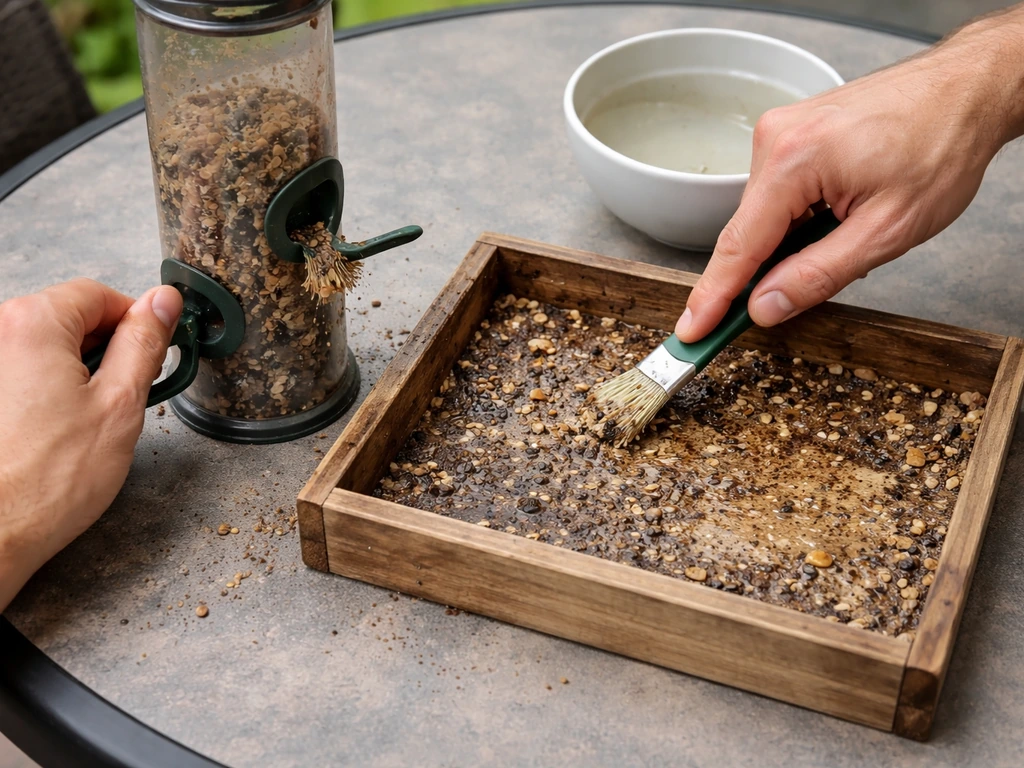
If your seed had insects, your feeders may too, especially tube feeders with seed residue built up inside the ports, and platform trays where wet and dry seed has mixed. Empty the feeder completely, scrub it with a 9:1 water-to-bleach solution, rinse thoroughly, and let it air dry completely before refilling. Do the same for any seed trays, scoops, or funnels you use regularly. Insects can survive in seed residue stuck to feeder walls and reinfest new seed if you skip this step.
Check the surrounding area
Indianmeal moths in particular don't stay confined to bird seed. If you had a significant infestation, check nearby dry goods: pet food, grain, pasta, flour, rice, and dried fruit. Moths and beetles can travel between containers and lay eggs in multiple food sources. Bag and discard anything that shows webbing or live insects, and wipe down pantry shelves with a mild all-purpose cleaner. You may also consider pheromone moth traps in the storage area to catch any adults that escaped, these won't eliminate an infestation on their own but are useful monitoring tools.
Troubleshooting special cases
Seed that's already wet or sprouting
Do not freeze wet or sprouted seed. Wet seed is already on its way to mold, and freezing just pauses that process without fixing it. When you thaw it, mold picks up right where it left off, and the freeze-thaw cycle can make seed textures even more hospitable to mold by breaking down the outer hull. Discard wet or sprouted seed. Preventing this comes down to storage habits: keeping seed dry, using airtight containers, and not overfilling feeders so seed sits exposed to rain for days.
Mixed seed blends with different textures
Mixed blends (sunflower, millet, safflower, peanut pieces, dried fruit) can present uneven freezing because denser components like peanut pieces or dried corn hold heat longer than fine millet. For mixed blends in large bags, go with the 5-day freeze time regardless of total weight. Spread the bag flat so you're not dealing with a thick, dense mass. After thawing, inspect each component type separately, peanut pieces in particular can harbor both insects and mold, so give those extra scrutiny.
Repeat infestations
If you're treating seed regularly and bugs keep coming back, the problem isn't the freezing, it's a re-infestation point you haven't identified. Check whether new bags of seed are already infested when you buy them (open and inspect before storing). Ask your supplier how old the stock is; seed that's been sitting in a warm warehouse all summer is much more likely to carry pests. Buy smaller quantities more often rather than stocking up. And if you're in a warm climate (zones 8 through 11), consider keeping all bird seed in the freezer or refrigerator full-time rather than just treating it once, warm, humid environments accelerate pest cycles dramatically and pests can reinfest a container within weeks. If you want to store bird seed in the fridge, make sure it is completely dry and kept in an airtight container to prevent mold and pests freezer or refrigerator full-time.
You found bugs in the freezer itself
If insects escaped from an unsealed bag into the freezer during treatment, wipe down the freezer interior with a damp cloth once the seed is removed and thawed. Dead insects and frass in a freezer aren't a safety issue, but they're worth cleaning up so you don't spread them to the next batch of seed. Let the freezer dry completely with the door open for 15 to 20 minutes before putting new seed in.
A note on freezing as part of a broader storage strategy
Freezing bird seed when you first buy it, before any infestation takes hold, is a smart preventive step, not just a reactive one. Doing a 72-hour freeze on each new bag before moving it into long-term storage kills any eggs already in the seed from the manufacturer or store, which dramatically reduces your chances of ever dealing with a full-blown infestation. After freezing, the seed stores just as well as it would have otherwise, as long as you keep it dry and in an airtight container. It pairs naturally with good overall storage habits and is one of the most effective things you can do to keep seed fresh and pest-free for the long haul. If you combine freezing with tight storage and dry conditions, you can also make bird seed last longer without pests and spoilage returning.
FAQ
Can I freeze bird seed for less than 72 hours if the bugs look light?
Avoid cutting the time below 72 hours at 0°F (-18°C). Light infestations can still include eggs and tiny larvae hidden inside grains, and if the center of a dense bag warms above freezing even briefly, survivors may resume activity after you thaw.
How can I tell whether my freezer is cold enough for the treatment?
Use a freezer thermometer, but also place it in the area where the seed will sit, not on the door shelf. If it struggles to hold 0°F, extend the freeze window (for example, several extra days) or reduce bag thickness by spreading the seed flat before freezing.
What’s the best way to thaw frozen seed to prevent mold?
Keep the seed sealed while it warms to room temperature, then open only after the container and seed surface stop “sweating.” If you notice condensation inside the storage container after thawing, discard rather than refreezing, because moisture can restart mold.
Should I refreeze bird seed after thawing if I still see webbing or frass?
Don’t assume you should refreeze to “finish it” unless the seed was already at room temperature only briefly and you can verify it stayed dry. In most cases, instead of another freeze cycle, do a closer check for live movement, then store it tightly and monitor for new webbing or moths.
Is it safe to feed birds seed that shows dead bugs after freezing?
Sometimes, but only if the seed is dry and you do not see evidence of active infestation after thawing. Dead insects, empty shells, and lingering webbing can be harmless, but heavily damaged seed with lots of frass and broken or spoiled kernels should be discarded.
Does freezing kill mold if the seed was already damp?
No. Freezing does not reliably kill mold spores, it only pauses growth. If the seed was wet, frozen-wet seed can develop mold again as it warms, so the correct approach is to discard damp or sprouted seed rather than freeze-thaw it.
How do I handle feeder parts that may have bugs, especially tube feeders?
Empty completely, scrub the interior and ports, rinse thoroughly, and let everything air dry fully before refilling. Even if you freeze the seed, leftover residue inside feeder ports can reintroduce eggs or larvae with the next batch.
Do I need to freeze seed blends differently than single-ingredient seed?
Yes. For mixed blends, components heat differently, so for large mixed bags it helps to follow the longer bulk guidance and spread the bag flat to reduce thermal mass. Also inspect denser parts like peanut pieces separately, since they can stay contaminated longer.
How can I prevent the freezer from becoming a source of contamination for the next batch?
After removing the seed, wipe up frass and dead insects, then let the freezer dry with the door open briefly before loading new seed. This reduces the chance that debris or moisture from an earlier batch spreads to fresh seed during thawing and handling.
If I still see insects after freezing, what’s the most likely cause?
Re-infestation or storage moisture, not a failed freeze. Common causes include warm, humid storage after thawing, unsealed original packaging, or bringing in a new bag that already contains pests. Inspect new bags before storing and ensure airtight containment.
Can I store bird seed in the refrigerator instead of freezing once it’s treated?
Only if it is completely dry and kept in an airtight container. A fridge is less consistently cold than a freezer, and warmer cycling can increase condensation risk, so airtight storage and moisture control are still critical.
Next Article
Can You Freeze Bird Seed? How to Freeze and Thaw Safely
Yes, you can freeze bird seed. Learn how to freeze, prevent clumping and moisture, and thaw safely by seed type.