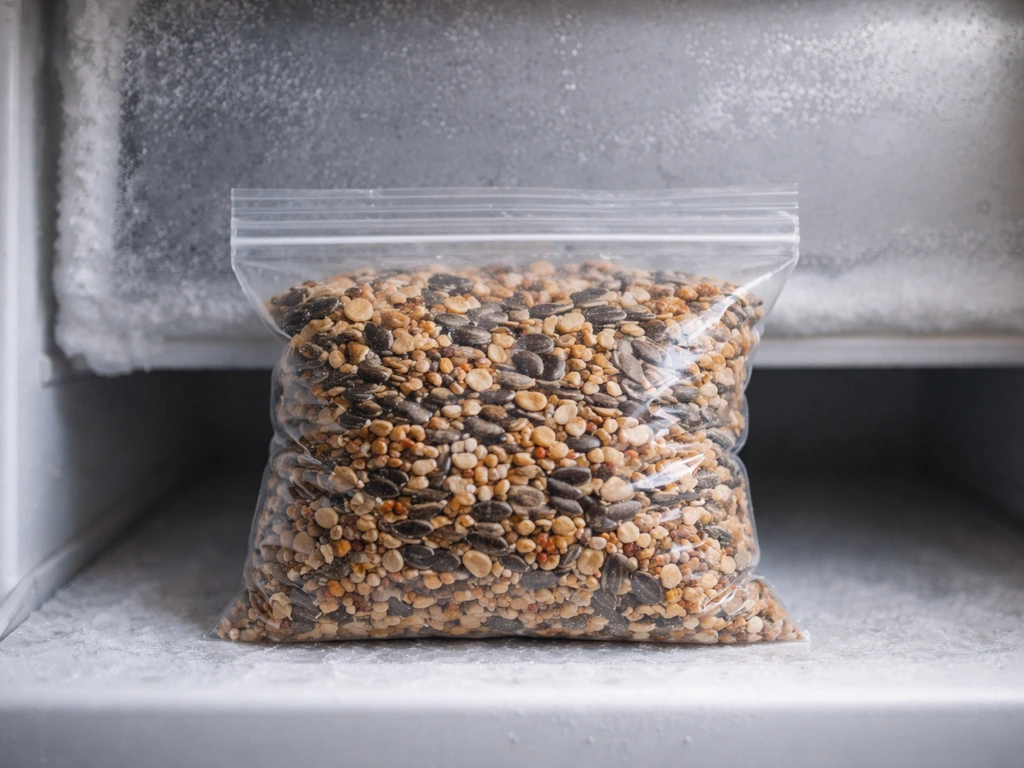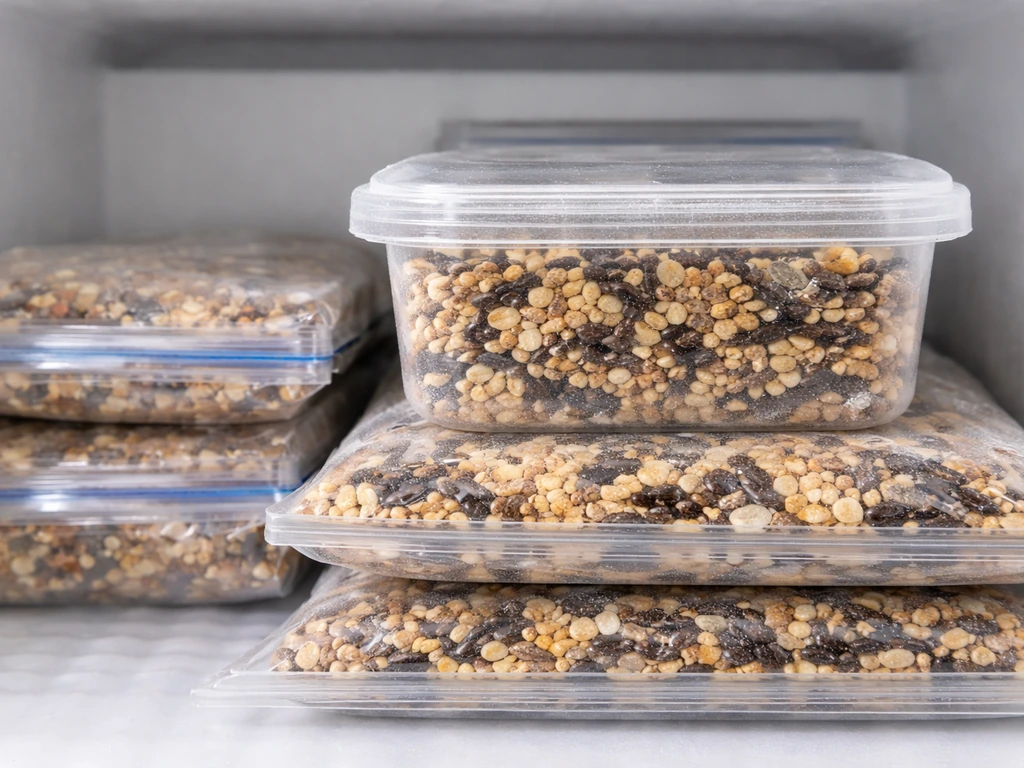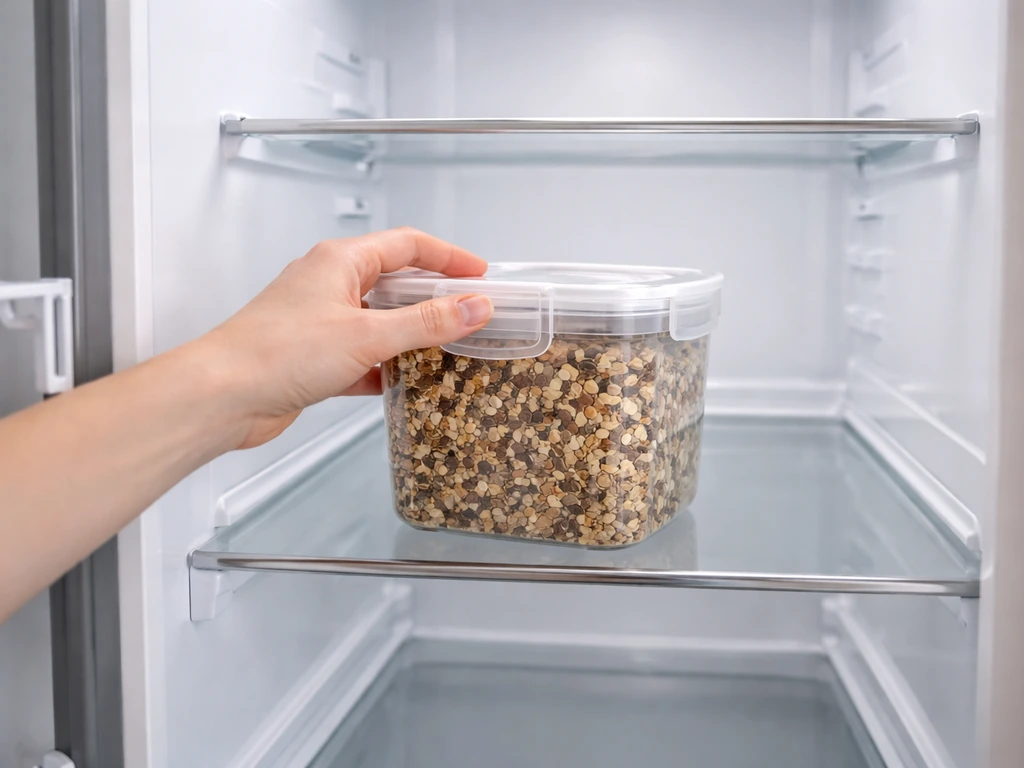
To keep bird seed fresh and mold-free, store it in a sealed, airtight hard container in a cool, dry spot, never in an opened bag sitting in a garage or shed. Moisture is the only real enemy here: keep water activity low and mold simply cannot grow. If your seed is already damp, clumpy, or smells musty, discard it, clean your feeder with a dilute bleach solution, and start fresh. Everything below is the practical how-to for both situations.
How to Keep Bird Seed Fresh and Stop It From Molding
Maya Collins
1 Jun 2026
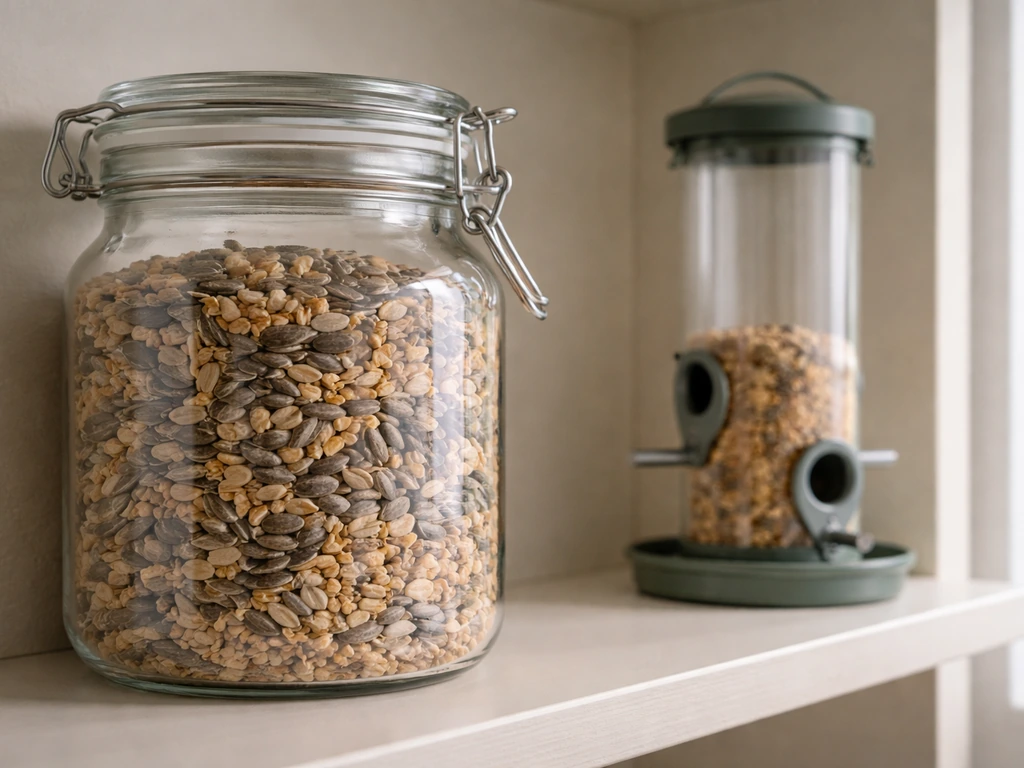
Why bird seed molds in the first place
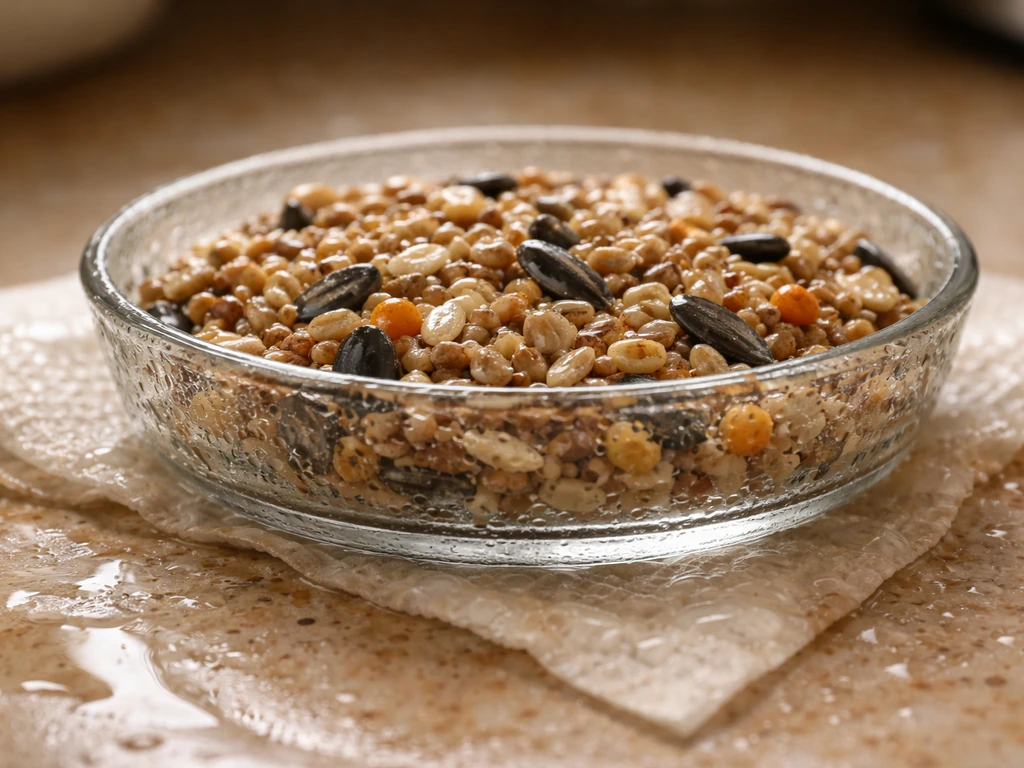
Mold needs three things: organic material (seed qualifies), warmth, and moisture. The moisture piece is almost always what you can actually control. When water activity in the seed rises above roughly 0.70, common molds like Aspergillus species can colonize it quickly. Aspergillus is the one you most want to avoid: it produces spores linked to aspergillosis, a serious respiratory disease in wild birds. Multiple wildlife agencies, including the Pennsylvania Game Commission and Cornell's wildlife health lab, flag moldy feeder seed as a genuine exposure risk for backyard birds.
The most common ways moisture gets in are predictable once you know to look for them. Opened bags left in a humid garage let warm, moist air cycle in every time the temperature drops. Condensation forms on the inside of plastic bins that sit on cold concrete. Rain or morning dew blows into feeders and soaks seed sitting in the tray. Even a small amount of standing water in a feeder bottom creates the wet microenvironment mold needs within 24 to 48 hours in warm weather.
- Leaving seed in its original opened bag (moisture enters easily, limited airflow)
- Storing bins directly on concrete floors (cold concrete causes condensation on the inside of containers)
- High ambient humidity, especially in southern states from May through September
- Feeder designs with poor drainage that pool water after rain
- Overfilling feeders so seed sits uneaten for days in wet weather
- Storing seed outdoors without a moisture barrier between the container and the ground
How to store bird seed to prevent mold
Pick the right container
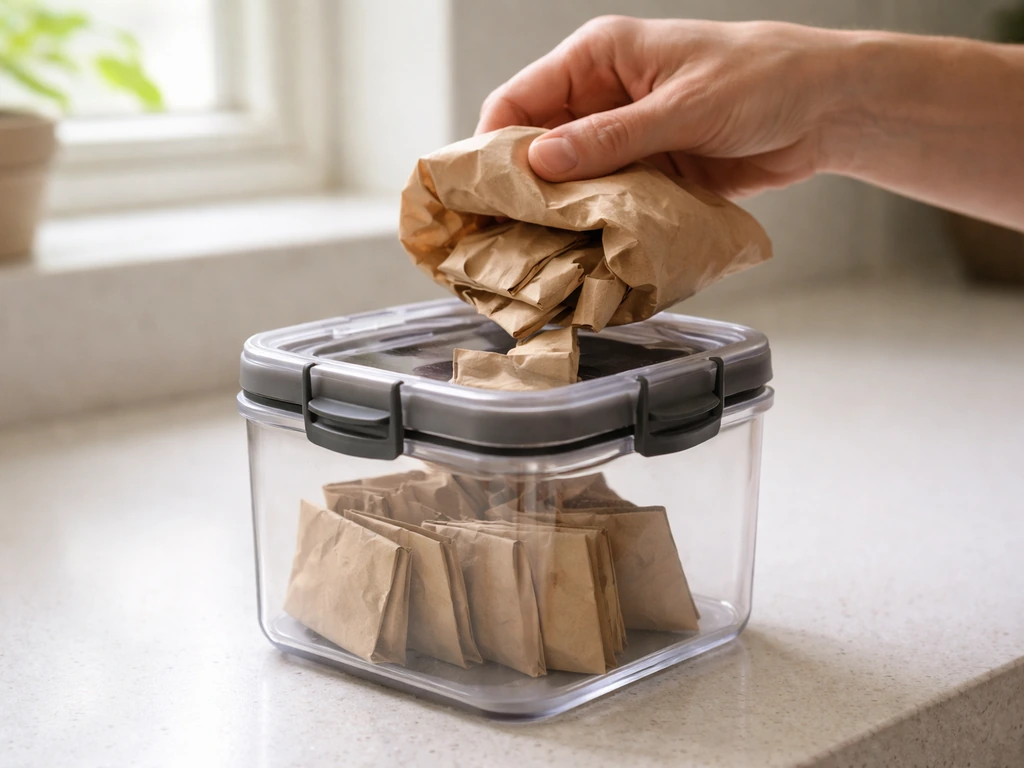
The single best upgrade you can make is moving seed out of its paper or plastic bag and into a hard-sided container with a gasket-sealed, locking lid. Metal trash cans with snap lids work well for large quantities and also deter rodents. For smaller volumes, a food-grade plastic bin (10 to 20 quarts) with a locking lid is practical and easy to store indoors. How to store bird seed also explains why transferring to the right container helps manage moisture exposure. Avoid containers with loose-fitting lids: humidity sneaks in through any gap. If you are buying new, look for bins labeled airtight rather than just lidded.
Where you put the container matters
Indoors in a climate-controlled space is the gold standard: a pantry, utility room, or basement with stable temperatures. If you store seed in a garage or shed, raise the container off the concrete floor on a wooden pallet, shelf, or rubber mat to break the cold-contact condensation cycle. If you are wondering can you store bird seed in the fridge, keep it dry and sealed just like you would for indoor storage garage or shed. Avoid spots near water heaters, exterior walls in humid climates, or anywhere the temperature swings more than 20 degrees Fahrenheit between day and night. Cool and consistent beats cold and variable.
| Storage location | Pros | Cons | Verdict |
|---|---|---|---|
| Indoor pantry or utility room | Stable temp, low humidity, pest-controlled | Limited space for large quantities | Best option |
| Climate-controlled basement | Cool, stable, spacious | May have higher humidity depending on region | Good, add a moisture absorber if damp |
| Attached garage (off floor) | Convenient, holds large bins | Temperature swings; humidity risk in summer | Acceptable with sealed metal bin |
| Detached shed | Out of the house | High temp and humidity swings, rodent access | Use only for very short-term storage |
| Outdoors in the open | No benefit | Rain, pests, extreme temps | Avoid entirely |
Managing partially used bags
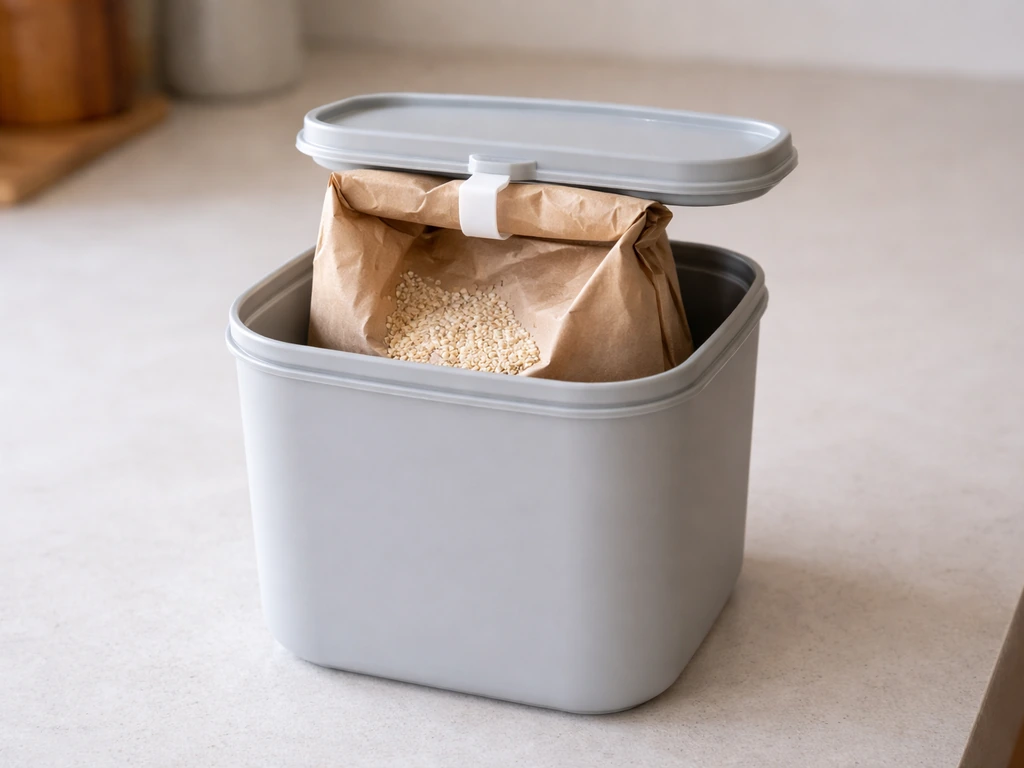
An opened bag is a liability. Leaving seed in an opened bag can let moisture get in, and with limited airflow it can create the right conditions for mold to develop opened bag is a liability. Roll the top down tightly and clip it, then place the entire bag inside your sealed hard container. If you do not have a large enough bin, transfer the remaining seed into a zip-lock freezer bag, press out the air, and seal it before storing. Never just fold the bag and set it on a shelf: that is the single most common way backyard birders end up with clumpy, off-smelling seed.
Do-today setup for freshness
You can get your storage situation sorted in about fifteen minutes today. Here is the sequence that makes the most difference, in order.
- Empty your current seed storage into a clean, dry container or a large bowl and inspect it (more on what to look for below).
- Wipe out your storage container with a dry cloth. If it smells musty, wash it with hot soapy water, rinse thoroughly, and let it dry completely before reloading.
- Transfer good seed into your sealed, hard-sided container. Do not put it back in the original bag as the primary container.
- Raise the container off any concrete floor using a shelf, wooden pallet, or thick rubber mat.
- If you are in a humid climate (Gulf Coast, Southeast, Pacific Northwest in winter), toss a small silica gel desiccant packet inside the container on top of the seed. These absorb ambient moisture and extend seed quality noticeably.
- Buy only what you can realistically use in four to six weeks. Smaller, fresher batches beat a large stash that sits for months.
One habit that pays off: do not top off the feeder. Fill it to about half or two-thirds capacity and let birds clear it before adding more. This prevents old seed from being buried under fresh seed and going stale unnoticed at the bottom.
What to do if seed is damp, sprouted, or clumpy
Before you act, you need to decide: save it or toss it. If you find moldy seed, follow a sterilization step-by-step process before you refill feeders sterilize bird seed. Use the table below to make that call quickly.
| What you see or smell | What it means | What to do |
|---|---|---|
| Seed clumps together but smells neutral | Early moisture exposure, no mold yet | Spread thin on a tray, dry in sun or with a fan for 1 to 2 hours, then re-store |
| Musty or sour smell | Mold is present, possibly not yet visible | Discard the batch entirely |
| Visible white, gray, or green fuzz | Active mold colony | Discard; do not try to pick out affected seed |
| Seed has small sprouts | Germination from moisture, mold risk is elevated | Discard if sprouting is widespread; a few sprouted seeds in otherwise dry batch can be removed by hand |
| Dark or discolored hulls, sticky feel | Bacterial or fungal breakdown | Discard |
| Seed looks and smells normal but was stored in humid conditions | May still be fine | Inspect closely, sniff test, spread and check for clumping before use |
The rule I follow: when in doubt, throw it out. A bag of seed costs a few dollars. A sick bird does not have that option. Aspergillus spores are invisible, and once mold has colonized part of a batch the spores are distributed throughout even if you can only see growth in one spot.
If you are dealing with seed that sprouted in the feeder or storage container, that is a sign moisture is getting in somewhere specific. Sprouting and mold are closely related problems and the fix is the same: dry storage and tighter containers. If you see sprouting, discard the affected seed and focus on lowering moisture in storage and the feeder to prevent it from happening again how to keep bird seed from sprouting. Freezing is another option that prevents sprouting and kills many pest insects without damaging seed quality, which connects to the broader question of whether freezing helps as a preservation step. For pest control, you can freeze bird seed for long enough to kill bugs, but the exact time depends on whether the seed is dry and how cold your freezer runs Freezing is another option. If you are wondering can you freeze bird seed, freezing is often used as a preservation step to prevent sprouting and pests.
Cleanup and hygiene when mold shows up
Cleaning the feeder
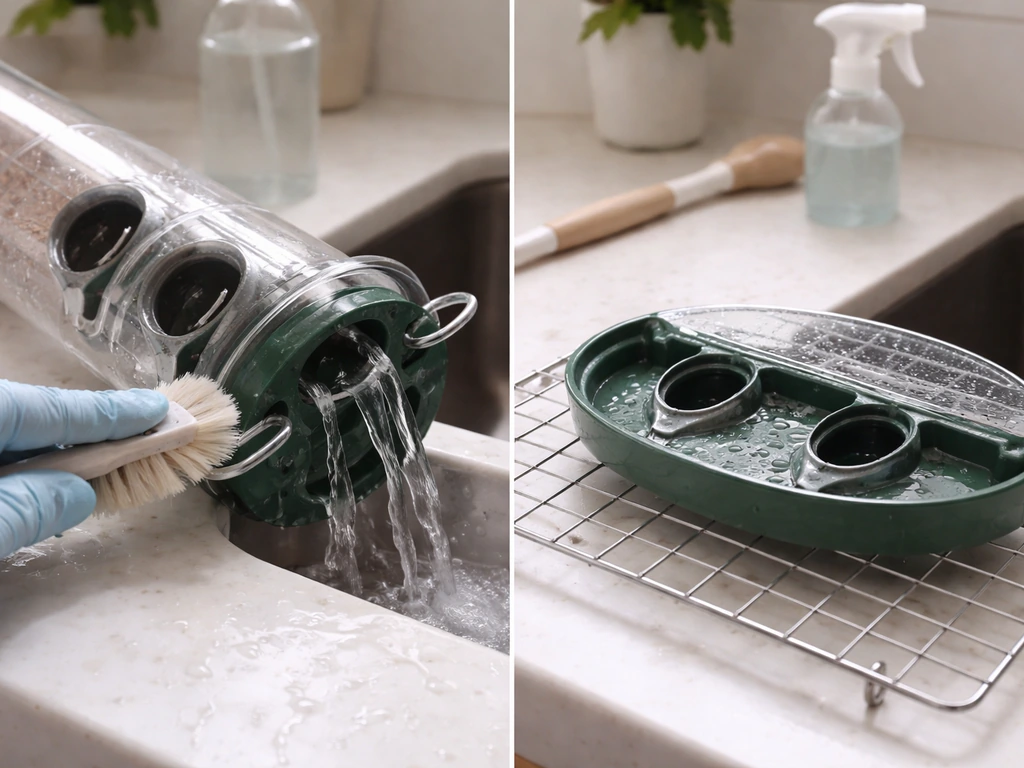
Do this before you put any fresh seed back in. Empty the feeder completely, including the ports and seed tray. Dump all old seed in the trash, not the compost pile. Rinse the feeder with hot water first to dislodge debris, then soak or scrub it with a 1:9 bleach-to-water solution (1 part bleach to 9 parts water). That ratio is the standard recommended by Clemson University's extension program and is effective against both bacteria and fungal spores without damaging most feeder materials. Let it soak for a few minutes, scrub all surfaces including ports and perches, then rinse thoroughly with clean water. Let the feeder air-dry completely, ideally in the sun for at least an hour, before refilling.
Seed trays and platform feeders
Trays accumulate wet seed and bird droppings, which is a fast track to mold and bacterial growth. Scrub trays with the same 1:9 bleach solution, rinse well, and dry completely before reuse. If a wooden tray has deep cracks or permanent staining from mold, replace it. Mold can colonize porous wood in ways that cannot be fully cleaned with surface scrubbing.
Ground and surrounding areas
Seed hulls and spilled seed under a feeder can become a mold reservoir, especially in damp climates. Rake up debris weekly and dispose of it in a sealed bag. If you see visible mold on ground-level seed or soil, remove the top inch or two of material and dispose of it before laying down fresh gravel or pavers. The Minnesota DNR notes that wet weather mold on ground seed is a real risk to birds that forage on the ground, so do not let hulls and scraps accumulate between rainfalls.
Storage container cleanup
If mold appeared in your storage container, wash it thoroughly with hot soapy water, follow up with a diluted bleach rinse (the same 1:9 solution), and rinse completely. Let it dry in open air before putting any seed back in. Even a faint musty smell after washing is a sign to let it dry longer or replace the container.
Ongoing inspection and maintenance routine
Fresh seed stays fresh when you build a short inspection habit rather than refilling blindly. Here is a simple routine that takes under five minutes and catches problems early.
- Every refill: open the storage container and sniff before scooping. A good batch smells neutral or faintly nutty. Any sour, earthy, or musty note is a warning sign.
- Weekly: check for clumping at the bottom of the container where moisture settles first. Stir the seed and feel for wet or sticky clusters.
- Every two weeks: visually inspect the container lid seal and check whether the container is sitting on a dry surface.
- Monthly: do a full empty-and-inspect of the storage container. Wipe the interior with a dry cloth and reload with fresh seed.
- After any rain event that may have affected outdoor feeders: check feeder ports and tray for wet seed before adding more.
How long does bird seed actually last?
Properly stored seed (sealed container, cool dry environment) stays fresh and viable for about six to twelve months. Black oil sunflower seed and safflower hold up well at the longer end of that range. Nyjer (thistle) seed tends to go stale faster, within about three months of opening, so buy it in smaller bags. Mixed seed blends with added corn or dried fruit have a shorter fresh window because of higher natural moisture content. If you are buying in bulk, calculate roughly how much you use in four to six weeks and try to buy close to that quantity at a time rather than stocking a year's supply.
Your quick-start checklist
- Seed is stored in a hard-sided, sealed container (not the original bag)
- Container is off concrete, in a cool, dry location
- No opened bags are sitting loose in storage
- Feeders are cleaned with 1: 9 bleach solution at least once a month (more often in wet weather)
- Ground debris under feeders is raked up at least weekly
- You are buying seed in quantities you will use within four to six weeks
- Any seed that smells musty, shows fuzz, or clumps when dry is discarded immediately
Getting this right is mostly about one habit: treat bird seed like any other perishable food in your house. Keep it dry, use it relatively quickly, and clean the containers and feeders on a regular cycle. Once those pieces are in place, mold problems become rare rather than recurring, and your backyard birds get consistently fresh, safe food year-round.
FAQ
How can I tell if my bird seed is still fresh even if there is no visible mold?
Do a quick smell and texture check. Musty, sour, or “off” odors, clumping, or a change from free-flowing to sticky usually means moisture got in even if you cannot see spots. If any of those signs are present, discard the batch rather than trying to “dry it out” at home.
Can I salvage a small amount of moldy seed by removing the affected pieces?
In most cases, no. Mold can spread spores through the whole bag or container even when growth is only visible in one area. If you see mold or detect a musty smell, toss the entire lot and thoroughly clean the feeder and any storage bin before refilling.
What is the safest way to dry seed that got damp but is not clumpy yet?
If it has any musty smell or signs of dampness, the safest choice is to discard it. If it is only slightly damp from condensation and you can confirm it is dry-appearing and odor-free immediately, spread it thinly in a dry, well-ventilated area for drying only after you have fully removed it from the wet source, then re-seal in an airtight container. If in doubt, throw it out.
Does freezing bird seed help keep it fresh, or does it introduce moisture problems?
Freezing can help control sprouting and many pest insects, but it must be kept in a sealed bag or container. If you freeze seed in a way that lets moisture contact it, then thaw and refreeze repeatedly, condensation can form. Use a moisture-proof seal and thaw only what you will use promptly.
Should I store seed in the garage if the humidity is high?
High humidity makes garage storage risky because condensation can form when temperatures drop. If you must use a garage, place the container on a raised surface (not directly on concrete), and use a gasket-sealed, locking lid. Ideally store indoors if your climate swings often or you see condensation on other items.
Can I keep seed in the fridge, and do I need to worry about condensation?
You can store it in the fridge only if it is sealed airtight to prevent fridge moisture from contacting the seed. The main risk is condensation when you open the container frequently. Open for short periods, dispense what you need, and reseal immediately.
How often should I inspect seed and containers for moisture or pests?
Check at least once every 1 to 2 weeks, and more often after humid weather. Look for clumping, a change in smell, tiny insect activity, or residue at the container seams. Catching issues early makes cleaning and replacement much less disruptive.
What is the best way to prevent pests if I’m storing seed in a hard container?
Use a hard container with a tight, gasket-sealed, locking lid. Keep it off the floor, store away from exterior doors, and do not leave spilled hulls or old seed under feeders. If you see insects inside, clean the container with hot soapy water and a diluted bleach rinse, dry completely, then start with a fresh batch.
How do I handle seed that sprouted in the feeder or container?
If you see sprouting, treat it as a moisture intrusion signal. Discard the affected seed, fully empty and clean the feeder and any tray, then reduce how much seed you add. Switch to a drier storage location with a more airtight container and do not top off until the birds have cleared what is currently there.
Is topping off the feeder ever a good idea?
Usually no. Even if the seed is dry at the start, topping off buries older seed at the bottom where moisture and droppings can accumulate. A safer approach is to fill to roughly half to two-thirds, then refill only after birds have cleared it.
Can I compost bird droppings and leftover seed hulls?
Avoid composting moldy or potentially damp seed and wet debris. Wet hulls and droppings can become a mold and bacteria reservoir. Bag and dispose of spilled seed and hulls in sealed trash bags, especially after any mold incident.
What container size works best if I do not want to store a lot at once?
For smaller quantities, a food-grade plastic bin in the 10 to 20 quart range with a locking lid is practical. Use smaller volumes so you rotate seed more frequently, and to reduce the time a batch sits exposed to temperature changes.
How long does it take for a feeder to become a mold risk after water gets in?
If seed becomes wet and warm conditions are present, mold can develop quickly, often within 24 to 48 hours. That is why you should not leave standing water in feeder trays, and you should empty and dry the feeder if rain or morning dew soaked the tray.