A bird seed can is only as good as what's inside it. If you're opening the lid and noticing a musty smell, clumped seed, visible mold, or tiny bugs crawling around, the seed is no longer safe to put in a feeder. Toss the bad seed, scrub the container with a dilute bleach solution (1 part bleach to 9 parts water), let it dry completely, and refill with fresh stock. That's the short version. Below is the full walkthrough: what a bird seed can is, how to store seed correctly, how to spot problems early, and exactly what to do to fix and prevent them.
Bird Seed Can Troubleshooting: Fix Mold, Pests, and Clumps
Maya Collins
11 May 2026
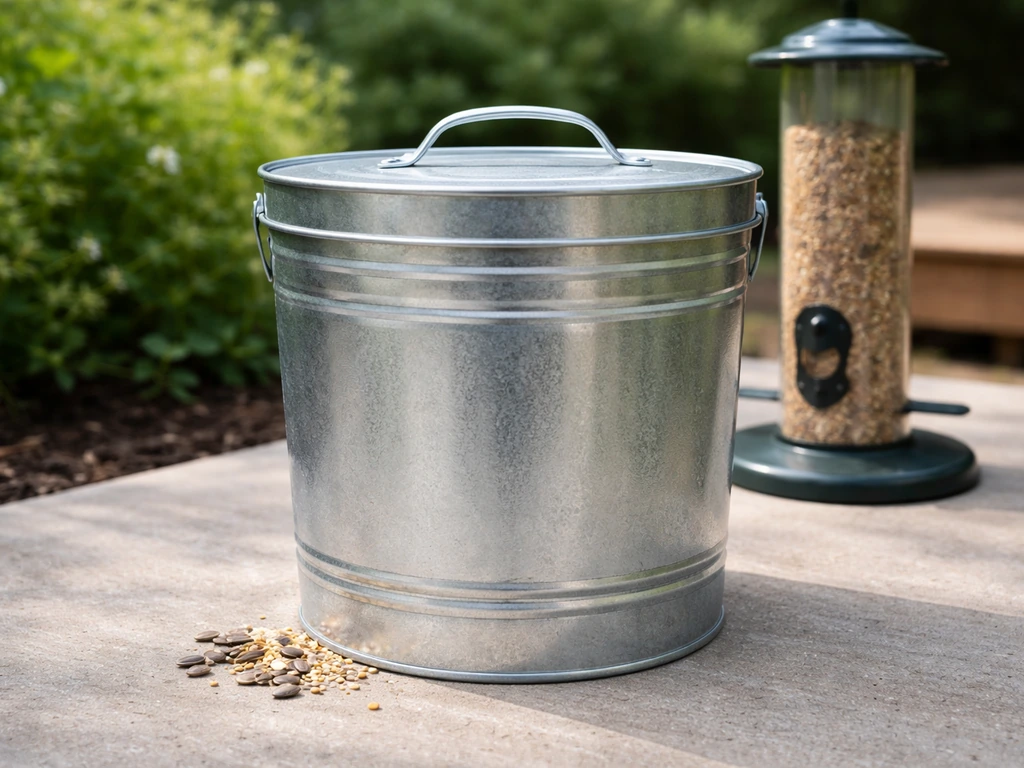
What 'bird seed can' actually means in practice
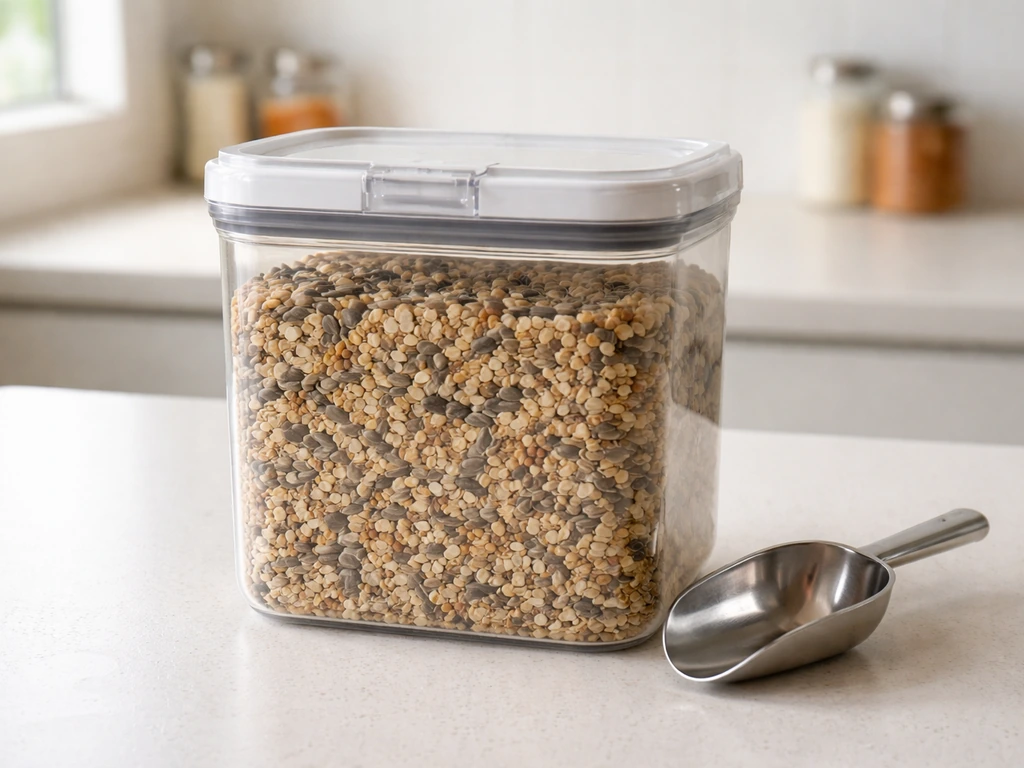
When most people search 'bird seed can,' they mean one of two things: either the original sealed bag or tin the seed came in, or a dedicated storage container they're using to hold seed between fill-ups. Both count. In practice, a bird seed can is any sealed canister, bin, or bucket you're using to store bulk seed between feeder refills. Popular options include metal garbage cans with locking lids, plastic Vittles Vault-style containers with airtight seals, and repurposed food-grade buckets. The container type matters a lot for pest exclusion and moisture control, which are the two biggest reasons seed goes bad.
If you're troubleshooting right now because the seed in your can looks or smells off, jump straight to the signs of bad seed and the fixes sections below. If you're setting up a new storage system, start with the storage and placement sections.
How to store bird seed in a can the right way
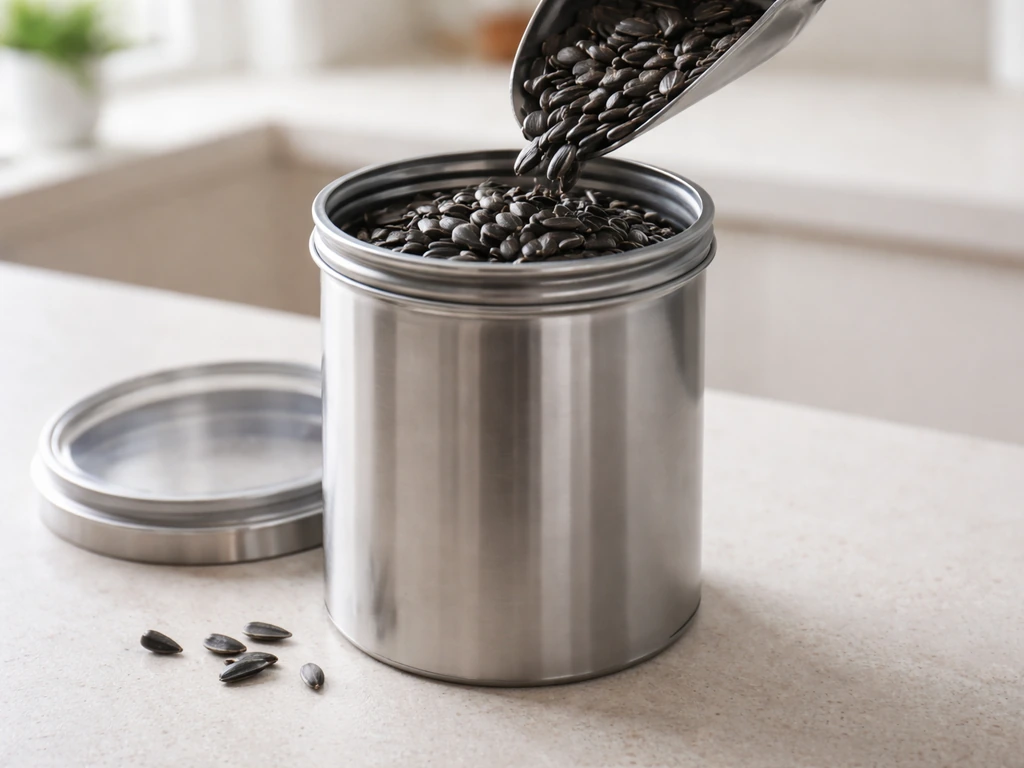
Seed longevity comes down to four factors: moisture, temperature, light, and air exposure. Get those right and black oil sunflower seed, for example, can stay viable and palatable for 6 to 12 months. Mess them up and you'll have rancid or moldy seed within weeks, especially in summer.
Choose the right container
- Metal cans with rubber-gasketed lids are the gold standard: they resist rodent chewing, block light, and seal tightly against humidity.
- Hard plastic bins with airtight snap lids (like Vittles Vault containers) work well and are lighter than metal.
- Avoid cardboard, cloth, or thin plastic bags as long-term storage: rodents chew through them easily and they breathe humidity in.
- Food-grade 5-gallon buckets with gamma-seal lids are a solid budget option and easy to find at hardware stores.
- Whatever you choose, the lid must seal completely. If you can smell the seed from outside the closed can, so can a mouse.
Keep it cool, dry, and dark
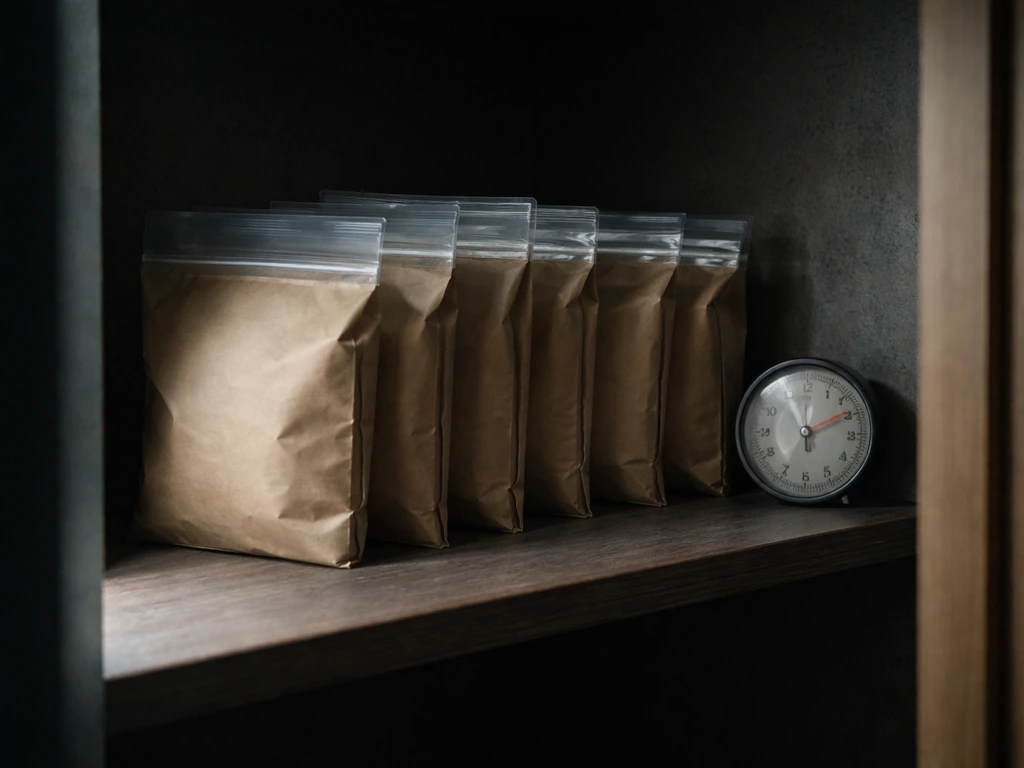
High temperature and high relative humidity are the two fastest ways to ruin seed. USDA seed storage operations target around 30% relative humidity for a reason: seed absorbs moisture from the air around it, and once moisture content rises, mold and rancidity follow quickly. For home storage, aim for a cool garage, basement, or shed where temperatures stay below 70°F if possible. Avoid storing the can directly on concrete floors, which can wick moisture up through the bottom. Set it on a wooden pallet, shelf, or rubber mat instead.
If you live in a humid climate (the Southeast, Pacific Northwest, or anywhere with muggy summers), consider dropping a food-safe silica gel desiccant packet into the can alongside the seed. It absorbs ambient moisture and meaningfully extends seed quality between refills.
Rotate your stock
Never dump a fresh bag of seed on top of old seed. Empty the can completely, inspect it, and refill from the bottom up, putting older seed on top so it gets used first. Black oil sunflower seed lasts about 6 to 12 months when stored correctly; opened seed at room temperature can degrade noticeably in as little as 2 to 6 months. Buy in quantities you'll realistically use within that window. A 20-pound bag sitting in a hot garage through July and August is not a bargain.
Signs the seed in your can has gone bad
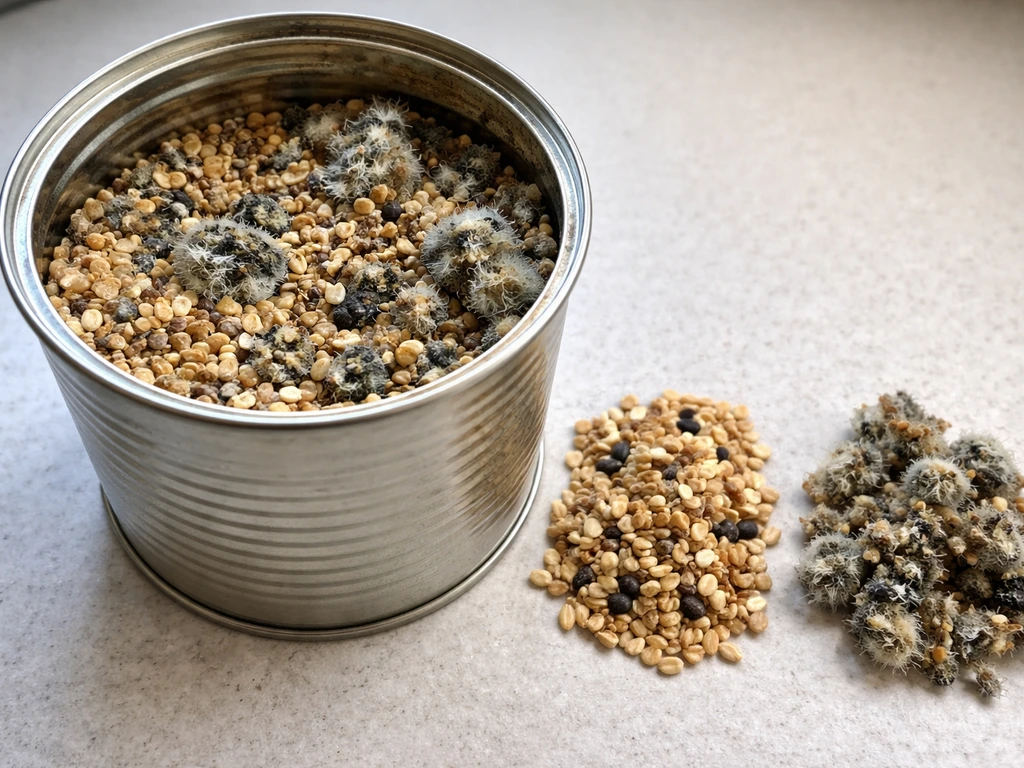
Before every refill, do a quick inspection. It takes 30 seconds and can prevent sick birds and a badly contaminated feeder. Here's what you're looking for:
| Problem | What it looks like / smells like | Likely cause | Safe to feed? |
|---|---|---|---|
| Mold | Gray, green, black, or white fuzzy patches; musty or earthy odor | Moisture got into the can | No — discard |
| Clumping | Seed sticks together in solid masses | Humidity or condensation exposure | No if moldy; inspect closely |
| Rancidity | Bitter, sour, or paint-like smell; no visible growth | Oxidation of seed oils (especially sunflower) | No — discard |
| Sprouting | White or green shoots emerging from seeds | Moisture and warmth triggered germination | Small sprouts: usually OK for birds; heavy sprouting with mold: discard |
| Insect infestation | Tiny beetles, weevils, larvae, webbing, or fine powder (frass) in seed | Pantry beetles or weevils laid eggs in seed | No — discard and clean can thoroughly |
A quick myth-bust on sprouted seed: a few seeds with tiny white shoots are generally not harmful to birds and can actually be a bonus for ground-feeding species like sparrows and doves. But if sprouting is widespread, the seed has been sitting in moisture long enough that mold is likely present too, even if you can't see it yet. When in doubt, smell it. Healthy seed smells nutty or neutral. Anything musty, sour, or sharp means it goes in the trash.
What to do today if the seed is already bad
Moldy or rancid seed
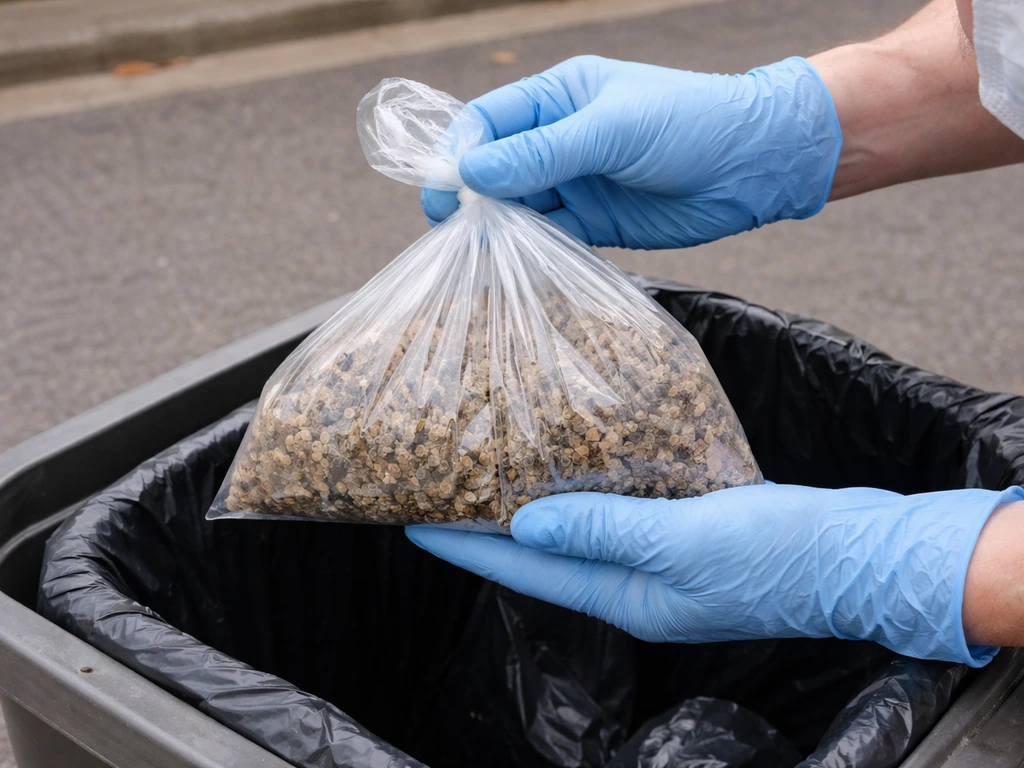
- Put on gloves and a dust mask before handling moldy seed. Some molds produce irritating spores.
- Bag the contaminated seed in a sealed garbage bag and put it in the outdoor trash. Do not compost moldy seed, as mold spores can spread.
- Empty the can completely and knock out any loose debris outside, away from your feeder area.
- Wash the interior with hot water and dish soap, scrubbing all surfaces including corners and the lid seal.
- Follow with a disinfecting soak or wipe-down using a 1: 9 bleach-to-water solution (roughly 2 ounces of bleach per quart of water, or 1 part bleach to 9 parts water).
- Let the bleach solution sit in contact with surfaces for at least 10 minutes.
- Rinse thoroughly with clean water and let the can air-dry completely in sunlight before adding any new seed. Residual moisture is how the problem starts over.
Wet or clumped seed (no visible mold yet)
If the seed is just wet or mildly clumped but smells fine and shows no mold, you may be able to salvage it. Spread it in a thin layer on a clean baking sheet and let it dry in a warm, well-ventilated area or outdoors in direct sun for several hours. Check it again once dry: if it smells clean and the individual seeds look intact, it's likely still usable. If any moldiness appears as it dries, discard it. Do not put wet seed directly into a feeder.
Insect-infested seed
Pantry beetles (including drugstore beetles) and grain weevils can establish themselves in bird seed, especially seed left in a warm space for months. If you see live insects, larvae, webbing, or powdery frass in the seed, discard everything. Freezing can kill beetle eggs and larvae at any life stage (temperatures around -2°C for 16 days or -25°C for 7 days will do it), but for most home situations it's easier and safer to just discard the infested batch and deep-clean the can. After cleaning and drying the container, inspect the storage area for any spilled seed or debris that could re-infest the new stock.
Keeping rodents and insects out of the bird seed can
The container itself is your first line of defense, but it's not the only one. If you're making homemade bird seed balls, follow bird seed balls instructions so the mixture sets well and stays safe for birds. Mice, rats, and squirrels are relentless, and pantry insects can find their way in through surprisingly small gaps. Here's how to close those gaps.
Rodent exclusion
- Use a metal can with a locking or clamping lid. Rodents can chew through plastic bins given enough motivation and time.
- Store the can off the floor on a shelf or raised platform so mice can't chew upward into the bottom.
- Keep the storage area tidy: sweep up any seed spills immediately, because even a small pile of seed on the floor around the can is an invitation.
- Do not store the can in an area where you've already seen rodent activity without first addressing the rodent problem directly.
Insect exclusion
- An airtight lid is the primary defense against pantry beetles and weevils. Even a small gap is enough for insects to enter and lay eggs.
- Inspect new bags of seed before adding them to your can. Infestations often originate at the store or warehouse, not in your storage area.
- Adding a sealed silica gel packet inside the can keeps humidity low, which discourages insect activity.
- If you've had repeated insect problems, try freezing new seed bags for 3 to 4 days before storing them in the can. This kills any eggs already present.
Ants
Ants are attracted to seed oils and sweet hulls. If your storage area has an ant problem, stand the can's legs in small trays of water (creating a moat), or apply a food-safe diatomaceous earth barrier around the base. Keeping the exterior of the can clean and free of seed residue also removes a lot of the initial attraction.
Cleaning and sanitizing the can and the feeding area
Regular cleaning matters beyond just fixing an active contamination problem. Pathogens from bird droppings, old hulls, and decaying seed can build up over time and make birds sick. Aim to deep-clean your storage can every 1 to 2 months, and clean your feeders at least monthly (more often in warm, humid weather or if you notice sick birds). Iowa DNR also recommends cleaning bird feeders once per month using a bleach solution and letting the feeder dry completely before refilling with seed clean your feeders at least monthly.
Cleaning the storage can
- Empty the can completely and dispose of any old or suspect seed.
- Rinse the interior with a hose to dislodge loose debris.
- Scrub all interior surfaces (including the lid and gasket) with hot water and dish soap using a long-handled brush.
- Mix a disinfecting solution of 1 part bleach to 9 parts water (about 1.5 ounces of bleach per gallon of water).
- Apply the solution to all interior surfaces and let it sit for 10 minutes minimum.
- Rinse thoroughly until there is no bleach smell remaining.
- Air-dry completely in the sun or in a well-ventilated space before closing or refilling. This step is non-negotiable: any remaining moisture will restart the mold cycle.
Cleaning the feeder and the area below it
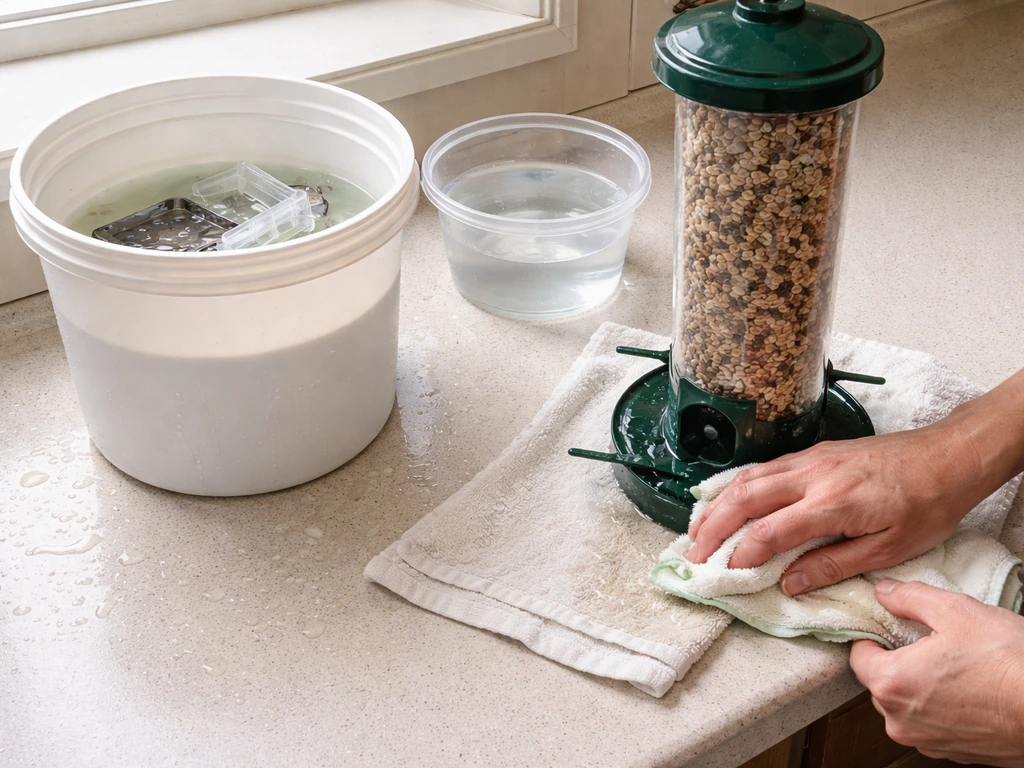
Don't clean the can and ignore the feeder. Use the same 1:9 bleach-to-water solution on feeder components, soaking removable parts for 10 minutes, then rinsing and drying completely before refilling. Below the feeder, rake up spilled seed, hulls, and bird droppings regularly. Accumulated seed on the ground draws rodents, and bird droppings mixed with wet seed can concentrate disease-causing pathogens. The Iowa DNR is explicit about this: cleaning up spilled seed beneath feeders is as important as cleaning the feeder itself.
A note on vinegar as an alternative: some sources suggest a vinegar-and-water wash. Vinegar is fine for a general rinse and deodorizing step, but it is not a disinfectant in the way that dilute bleach is. For killing pathogens that can harm birds (like Salmonella), stick with the bleach solution recommended by Cornell Lab, Minnesota DNR, Virginia DWR, and other wildlife authorities.
Setup and placement tips that prevent problems in the first place
Where to put the storage can
- Store indoors or in a shaded shed or garage where temperatures are stable and lower. Direct sun heats a metal can quickly, accelerating seed oil oxidation and rancidity.
- Keep the can off the ground and away from walls where rodents travel.
- Choose a location that's close enough to the feeder for convenience but not directly under it, where spilled seed and droppings could contaminate the storage area.
Where to put the feeder
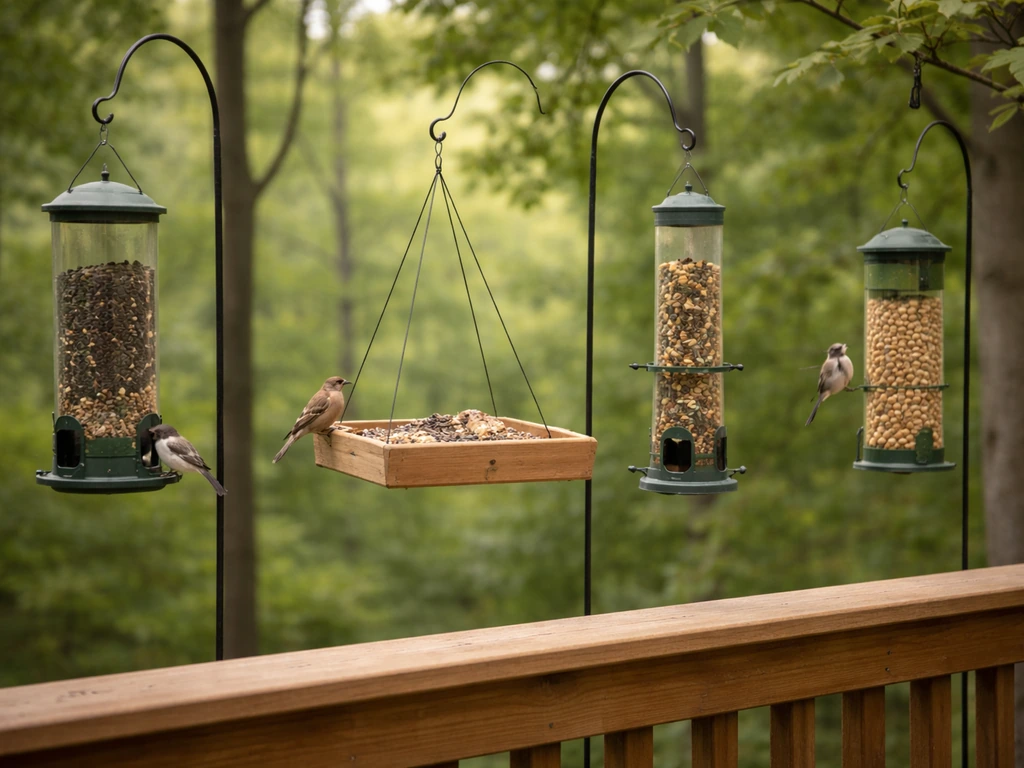
Feeder placement affects how quickly seed in the feeder gets contaminated and how much pest pressure you'll deal with. Mount feeders on a pole at least 5 feet off the ground and position them at least 10 to 12 feet from tree branches or structures that squirrels can use as a launch point. Squirrels and rodents that can access the feeder also tend to get into seed storage nearby. Keep them away from the feeder and you reduce pressure on the whole system.
Match the seed to the birds you're feeding
Different seed types have different shelf lives and attract different wildlife. Black oil sunflower seed is the most universally accepted by backyard birds and stores reasonably well. Mixes with milo, millet, and cracked corn go stale faster and attract more ground-feeding species (including pest species like house sparrows and European starlings) that stir up seed waste. The more seed waste that hits the ground, the more quickly you'll face a pest and contamination cycle.
If you're trying to reduce mess and maximize storage life, pure sunflower or a premium mix with little filler is a smarter choice. If you want a cheap alternative to bird seed that still supports backyard birds, consider adjusting the mix toward pure sunflower or other longer-lasting, lower-waste options. A bird seed alternative can also help you reduce spoilage and pest pressure if you choose the right ingredient for your setup.
For more detail on what different seed types are and how they're used, the bird seed composition topic elsewhere on this site covers that ground thoroughly. If you want to go deeper, this bird seed what is it guide breaks down the common seed types and what they’re best for bird seed composition.
Your ongoing storage and inspection checklist
Stick this routine to the inside of your storage cabinet or shed door. It takes less than five minutes each time. If you want the quick starting point for choosing and using seed, this bird seed guide walks you through the essentials.
| Frequency | Task |
|---|---|
| Every refill | Inspect seed for smell, mold, clumping, and insects before adding to feeder |
| Every refill | Empty can before adding new seed; use first-in, first-out rotation |
| Weekly (warm months) | Rake up and dispose of spilled seed below the feeder |
| Monthly | Deep-clean feeder with 1:9 bleach solution, rinse, and dry completely |
| Every 1–2 months | Deep-clean storage can with soap then bleach solution, dry completely before refilling |
| Every purchase | Inspect new seed bags for signs of insect activity before adding to can |
| Seasonally | Reassess storage location: is it staying cool and dry? Adjust if summer heat has increased |
The container, the seed, the feeder, and the ground beneath it are all part of one system. Keep each piece clean and dry and you'll rarely have a serious contamination problem. When something does go wrong, the fix is always the same: remove the bad seed, clean and sanitize every surface, let everything dry fully, and refill with fresh stock. Do that consistently and your birds get safe, high-quality food all year.
FAQ
Can I keep using seed that smells “off” but doesn’t show visible mold or bugs?
If the smell is musty, sour, or sharply rancid, treat it as unsafe and discard it. Odor often appears before you can see growth, and drying later will not reliably reverse early contamination.
How long should I dry the bird seed can after washing with bleach?
Dry it completely until no dampness remains in seams, lid gaskets, or corners. If your container has rubber seals, remove them for drying when possible, because trapped moisture can restart mold even after the bulk seed is fresh.
What’s the safest way to salvage seed if it’s only slightly clumped or a little damp?
Only salvage if it smells clean and you can see mostly intact individual seeds. Spread in a thin layer and dry fully, then inspect again after drying. If any mold spots appear during drying, discard immediately and do not return it to the storage can.
Is freezing an effective option if I suspect pantry beetles or weevils?
Freezing can kill eggs and larvae, but it does not fix already-spoiled or moldy seed. For suspected insects, the safest approach is to discard infested batches, then deep-clean and dry the container and storage area before adding new seed.
Do I need to disinfect the feeder and the storage container the same way?
Yes. Use the same bleach-to-water ratio (1 part bleach to 9 parts water) for disinfecting washable feeder parts and the storage container surfaces. Rinse thoroughly and dry completely, because bleach residue or lingering moisture can reduce safety.
Can I use vinegar instead of bleach to clean my bird seed can?
Vinegar is fine for a deodorizing rinse, but it is not reliable for disinfecting against pathogens. If birds could be exposed, use the dilute bleach solution for disinfection, then rinse and dry fully.
How do I prevent mold from coming back after I refill with fresh seed?
Control moisture and air exposure: keep seed in a truly sealed container, store off concrete, and avoid topping off the can. In humid climates, a food-safe desiccant packet can help, but you still need frequent inspections and promptly remove any damp clumps.
What should I do if ants keep finding the storage can even after cleaning it?
Start by removing seed residue from the exterior and lid area, then create a physical moat (place the can on trays of water). If ants persist, add a food-safe diatomaceous earth barrier around the base area, and keep the surrounding ground free of spilled seed.
Can sprouted seed be fed if only a few seeds have tiny shoots?
Small, scattered sprouting is usually fine, but widespread sprouting suggests the seed sat in moisture long enough for mold to develop. When in doubt, smell it and discard if the odor is musty, sour, or sharp.
How often should I deep-clean the storage container and the area around it?
Deep-clean the storage container about every 1 to 2 months, and clean the feeder at least monthly. Also inspect and clean the space around the can regularly, removing spilled seed or hulls that can re-seed pests and contamination.
Is it okay to store bird seed in a shed or garage if temperatures swing a lot?
Short-term swings are less ideal than steady cool conditions. Try to keep storage below about 70°F when possible, avoid concrete contact, and use sealed containers to reduce moisture exchange during warm, humid periods.
Do different seed types require different storage choices?
Yes. Some mixes stale faster and create more waste that ends up on the ground, which increases pest pressure. If spoilage and mess are your main issues, shift toward longer-lasting, lower-waste options like mostly pure sunflower, and keep mixtures in smaller, quicker-turnover quantities.