Black oil sunflower seed is the single best starting point for most backyard feeders. It attracts the widest range of species, including cardinals, chickadees, finches, and sparrows, fits tube and hopper feeders, and stores well when kept dry. From there, you layer in nyjer for finches, safflower for cardinals that you want to discourage squirrels from raiding, and suet cakes for woodpeckers and nuthatches. This guide walks you through every decision: what to buy, how to set it up, how to store it safely, and how to fix the problems that eventually come up at every feeder.
Bird Seed Guide: Choose Mix, Set Feeders, Prevent Waste
Maya Collins
11 May 2026
How to Pick the Right Seed for Your Backyard
Start by deciding which birds you actually want to attract, then work backward to the seed and feeder type. Three factors drive that decision: the species present in your area, the current season, and the type of feeder you already have or are willing to buy.
Match seed to species
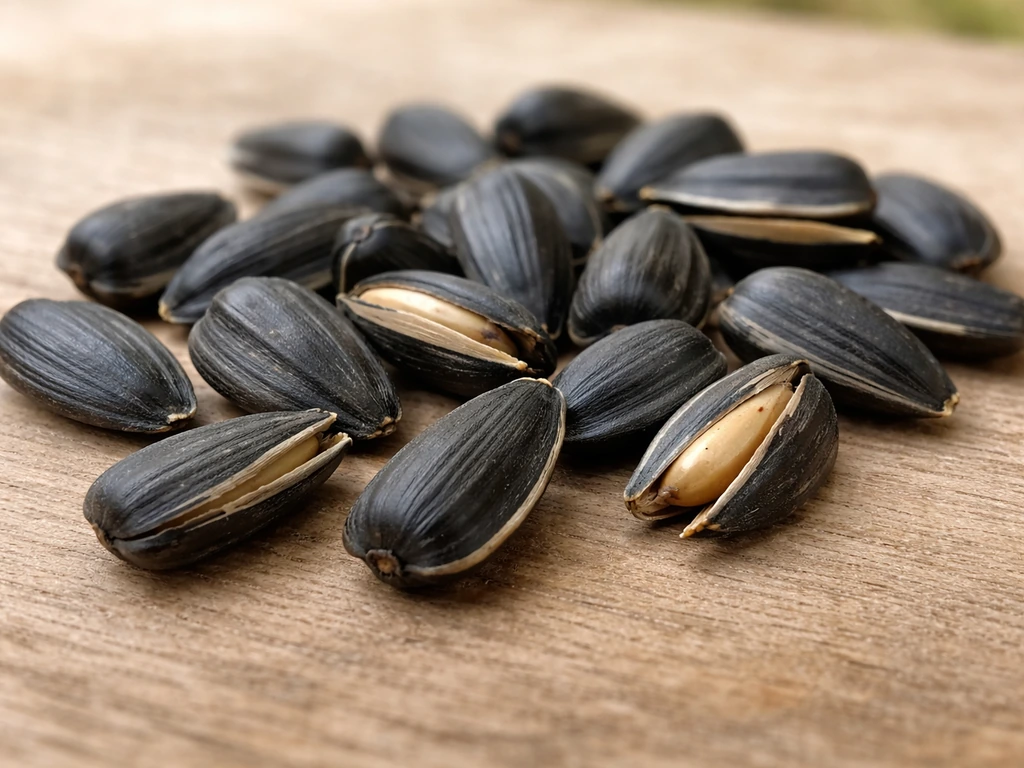
Black oil sunflower is the default. Its thin shell is easy for small-billed birds to crack, and it has a high fat and protein content that most backyard species prioritize. If you want American Goldfinches and Pine Siskins specifically, add a separate nyjer (thistle) feeder, these small seeds pass straight through a standard tube feeder port and need a dedicated nyjer sock or tube with tiny holes.
Safflower seed is a good secondary option for cardinals and House Finches, and squirrels tend to leave it alone. Avoid cheap filler seeds like milo, oats, and wheat unless you specifically want doves or House Sparrows, most songbirds toss them to the ground and they pile up, rot, and attract rodents. If you want a cheap alternative to bird seed, consider sunflower chips or hulled sunflower instead of adding more filler grains.
Match feeder type to bird behavior
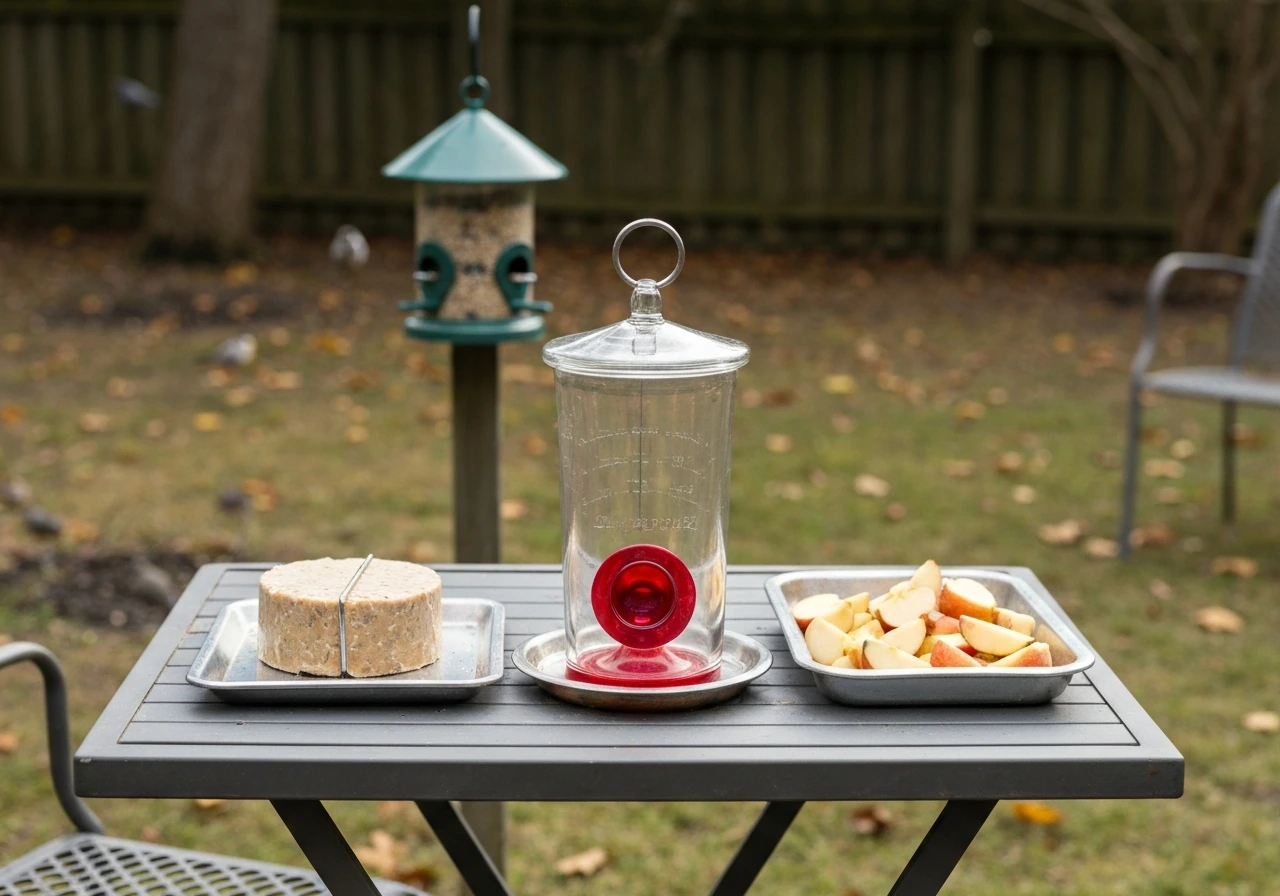
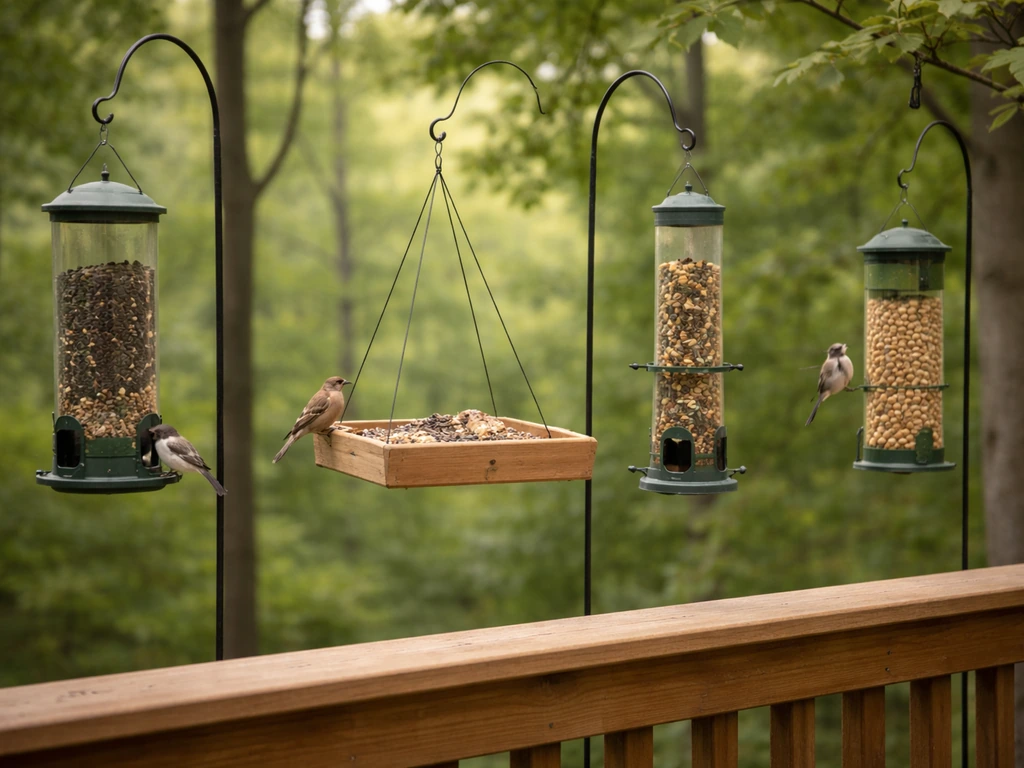
Feeder shape determines who can actually use it. Audubon's guidance separates birds into three feeding zones: ground and low platform feeders for sparrows, juncos, doves, and towhees; hopper or tube feeders at mid-height for cardinals, chickadees, and finches; and suet cages mounted on or near tree trunks for woodpeckers, nuthatches, and Brown Creepers. If you only have one feeder, a hopper or tube feeder at 5 to 6 feet off the ground filled with black oil sunflower covers the most ground. Add a simple tray or platform at ground level if you want to bring in sparrows and juncos without buying another feeder.
Adjust by season
In winter, high-fat seed and suet matter most. Birds need extra calories to maintain body temperature, so this is when black oil sunflower, peanuts, and suet see the heaviest use. Spring and fall are migration periods when feeder traffic spikes with visiting species you might not see otherwise, keep feeders well-stocked and clean during these windows. In summer, reduce the total volume you put out at once. Heat accelerates spoilage, especially in moist climates, and you want seed cycling through the feeder quickly rather than sitting. Summer is also when nyjer feeders shine as goldfinches are nesting and visiting regularly.
What Bird Seed Is Actually Made Of
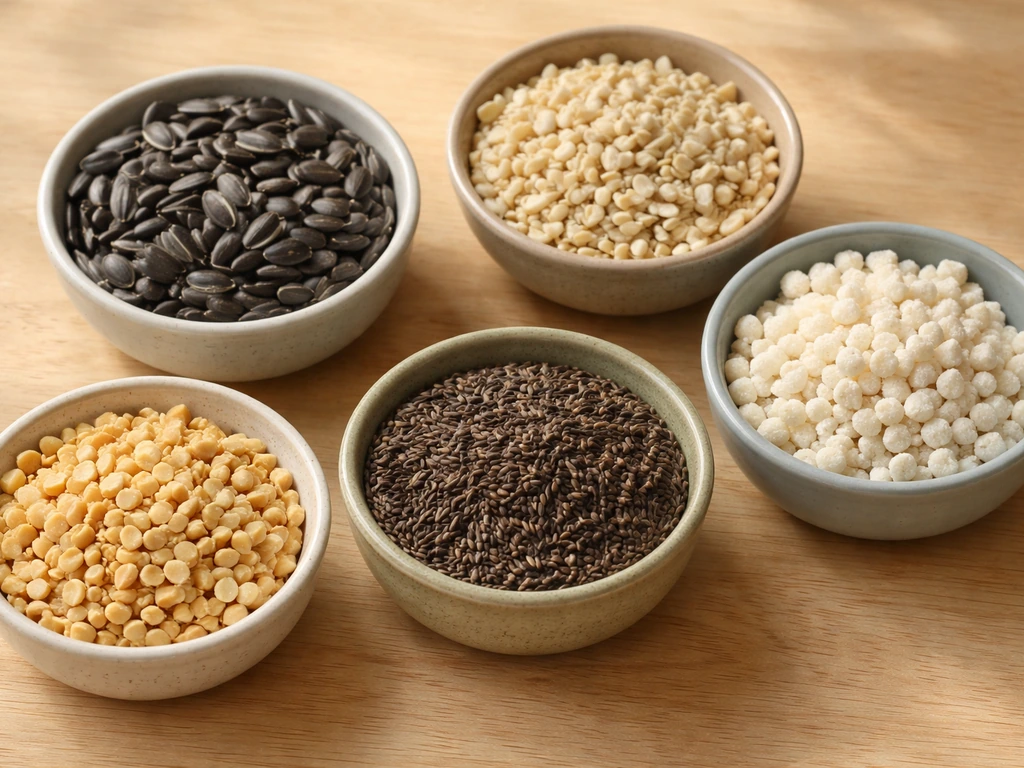
Commercially sold bird seed is almost always a blend or a single seed type. Understanding what's in a bag helps you judge whether it's worth the price or just filler. If you want to go deeper on what individual seeds are and where they come from, the topic of what bird seed is made of covers that in detail. If you're still wondering bird seed what is it, this section explains what the common ingredients in a bag actually are.
| Seed Type | Key Nutrients | Best For | Notes |
|---|---|---|---|
| Black oil sunflower | High fat, protein | Cardinals, chickadees, finches, sparrows, nuthatches | Best all-around choice; thin shell, easy to crack |
| Nyjer (thistle) | High fat, small size | American Goldfinch, Pine Siskin, redpolls | Needs dedicated nyjer feeder; spoils faster than sunflower |
| Safflower | Moderate fat | Cardinals, House Finches, doves | Squirrels and starlings largely avoid it |
| Peanuts (shelled) | High fat and protein | Blue Jays, woodpeckers, chickadees, nuthatches | Use mesh feeder; check frequently for mold in humid climates |
| Suet cakes | Very high fat | Woodpeckers, nuthatches, Brown Creepers, chickadees | Melts above 90°F; use no-melt suet in summer |
| Millet (white) | Carbohydrates | Juncos, sparrows, doves, towhees | Best in ground or platform feeder |
| Milo/sorghum | Carbohydrates | Doves, starlings (mostly) | Often used as cheap filler; most songbirds reject it |
When buying a pre-made mix, flip the bag and read the ingredient list. A quality mix lists black oil sunflower, peanuts, or safflower in the first two or three ingredients. If milo or oat groats are near the top, most of what you're paying for will end up on the ground uneaten.
Storing Seed to Prevent Mold, Pests, and Spoilage
Poor storage is the number one cause of seed-related problems at backyard feeders. Moisture triggers mold growth within days, and an open bag is an open invitation to mice, moths, and weevils. Getting storage right protects your seed investment and keeps your birds safe.
Container choice
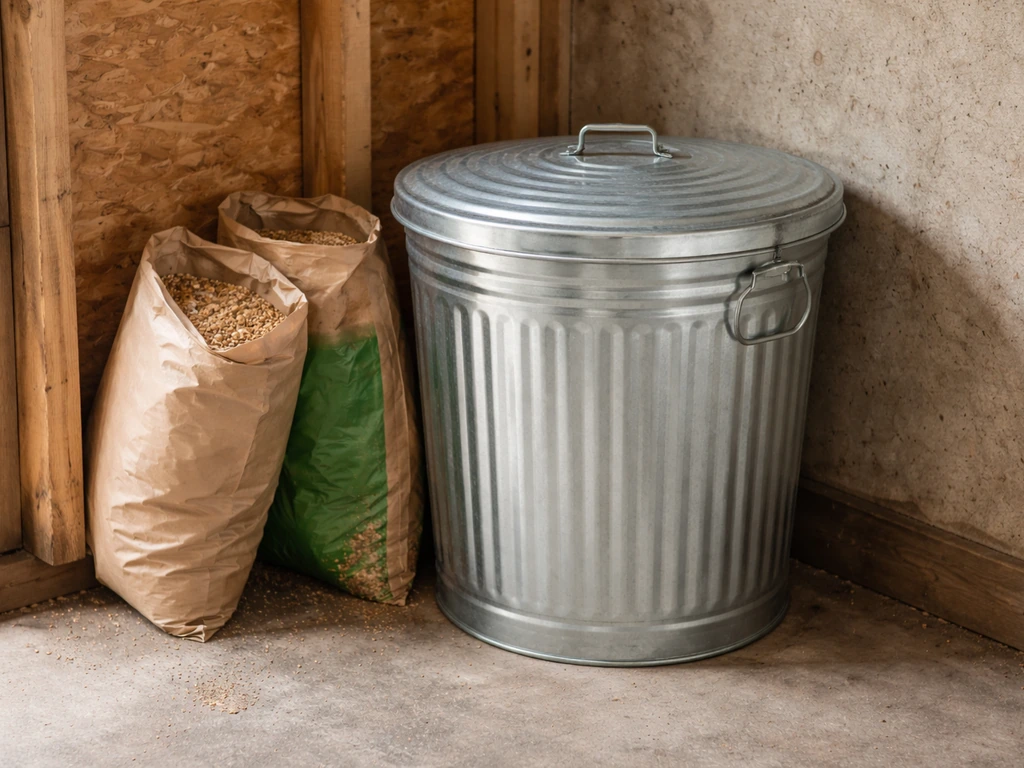
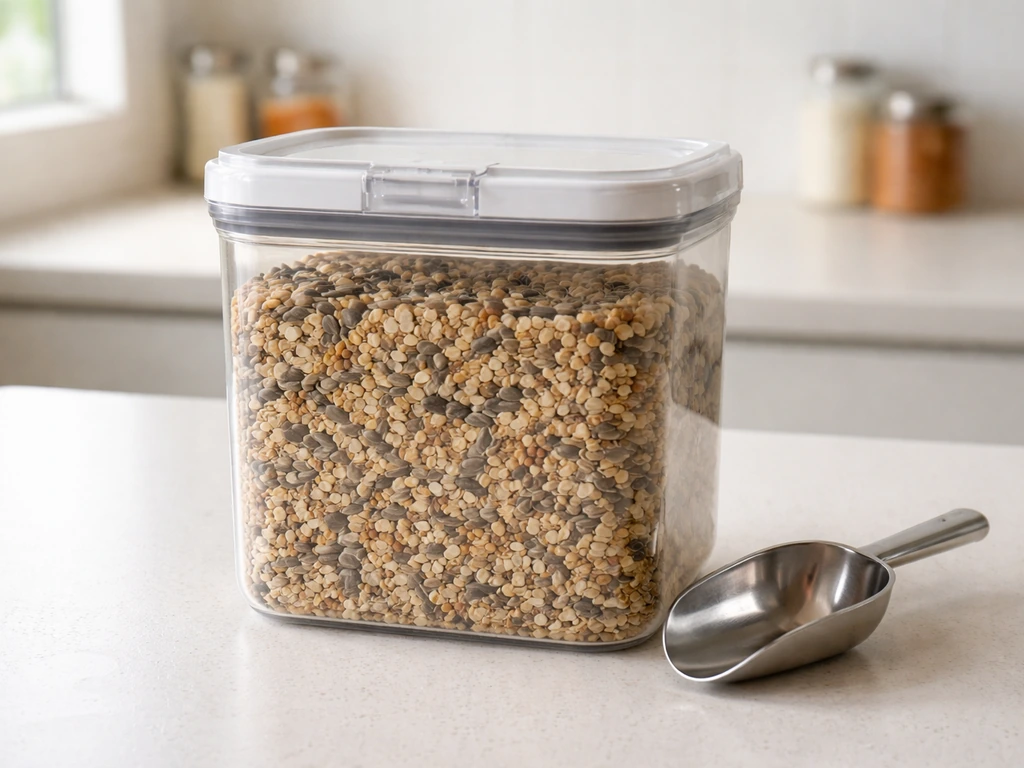
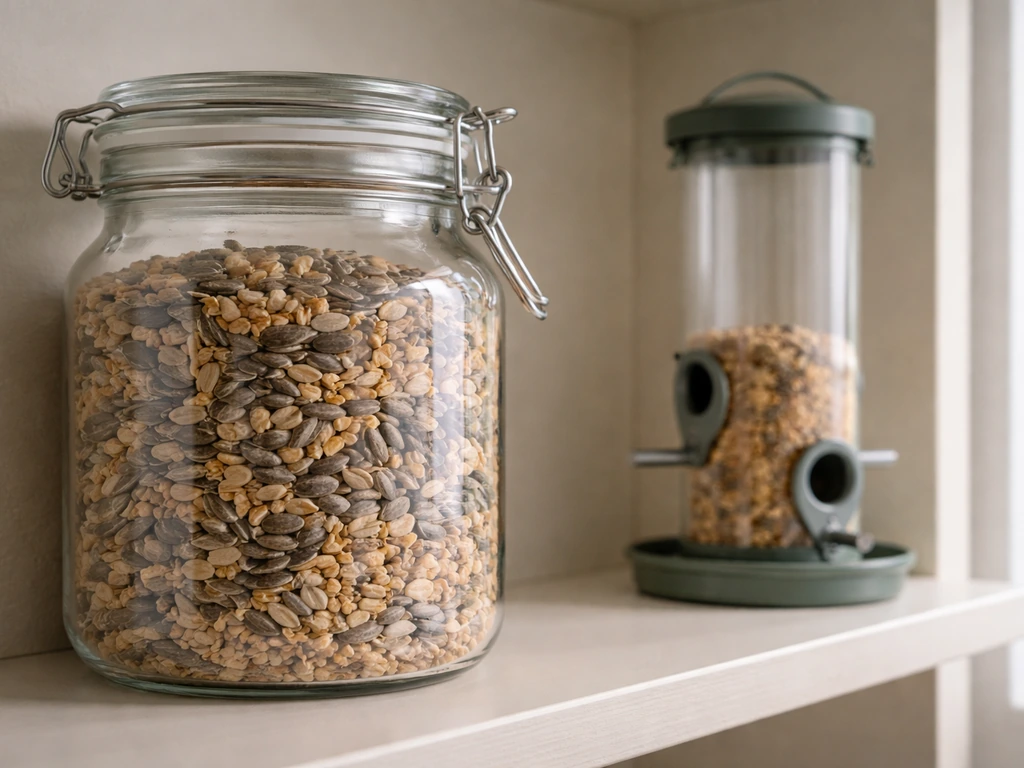
Use a metal or hard plastic container with a tight-fitting lid. A galvanized metal trash can (30-gallon size holds roughly 50 lbs of seed) is the classic choice because it keeps rodents out and doesn't absorb moisture the way cardboard does. Never store seed in its original paper or thin plastic bag long-term. These bags tear easily, trap moisture against the seed, and give insects a direct entry point. If you use a plastic bin, make sure it seals tightly enough that you can't smell the seed from outside it, if you can smell it, so can a rat.
Location and conditions
Store seed in a cool, dry, shaded location. A garage, shed, or covered porch works well as long as it doesn't flood or get extreme heat buildup. Avoid direct sunlight, which heats the seed and accelerates rancidity in the fats. Ideal storage temperature is below 70°F with humidity under 50%. In hot, humid climates (Gulf Coast, Southeast, Pacific Northwest in fall/winter), you'll need to check stored seed more frequently and buy in smaller quantities, 25 lbs at a time rather than 50 lbs.
How long seed stays good
Properly stored black oil sunflower seed stays fresh for up to 6 months. Nyjer seed has a shorter window, roughly 3 to 4 months, because its high oil content goes rancid faster. Suet cakes kept frozen last a full season; at room temperature they're fine for 3 to 4 weeks in cool weather. If seed smells musty, sour, or like ammonia, discard it. Birds will avoid rancid or moldy seed even when hungry, and spoiled seed can cause illness.
Setting Up Feeders and Trays Safely
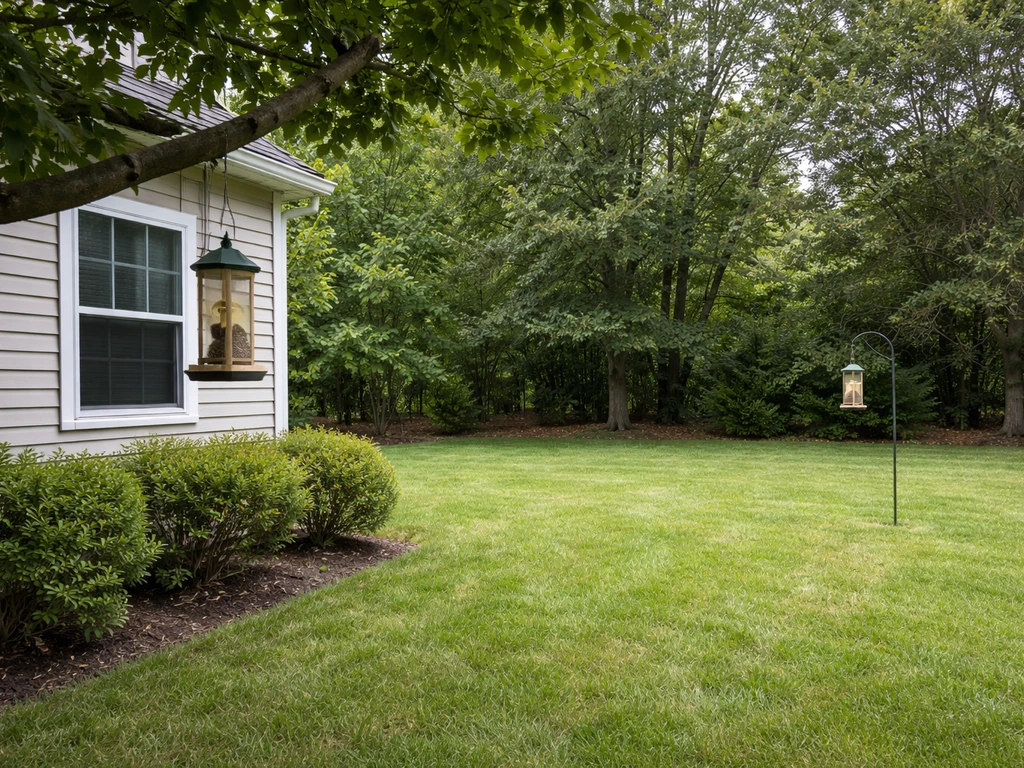
Where and how you place feeders affects bird traffic, seed waste, and how quickly problems develop. A few basic rules cover most situations.
Placement basics
Place feeders either within 3 feet of a window or more than 30 feet away. This sounds counterintuitive, but birds striking windows at low speed (within 3 feet) rarely injure themselves, while birds startled from a feeder 5 to 20 feet away build up enough speed to cause fatal collisions. Position feeders near shrubs or trees so birds have a nearby perch and escape cover, but not so close that squirrels can jump directly onto them. A clearance of 10 feet horizontally and 4 feet vertically from any launching surface is the practical squirrel-proofing minimum.
Feeder and tray hygiene
Clean feeders every 2 weeks in cool weather and every week in warm weather. The method that works: empty the feeder, scrub it with a 10% bleach solution (1 part bleach to 9 parts water), rinse thoroughly, and let it air dry completely before refilling. For a simple bird feeder cleaner, Lowe’s recommends mixing 1 part bleach with 9 parts water, which is often described as a “9-to-1” ratio “9-to-1” water-to-bleach mixing ratio. A damp feeder refilled immediately is a mold incubator. Tube feeders with narrow ports are the hardest to clean, a bottle brush or feeder-cleaning brush set makes this much faster. Suet cages can go in the dishwasher on a hot cycle.
Managing ground scatter and husk buildup
Seed scatter under feeders is unavoidable, but letting it accumulate creates a rodent magnet and a disease reservoir. Rake or sweep the area under feeders every week. Sunflower hulls contain a natural compound (allelopathic) that suppresses plant growth, so bare patches under feeders are normal. If you want to minimize mess, switch to hulled (shelled) sunflower seeds or sunflower chips, no husks fall, no germination happens, and cleanup is much easier, though the seed costs more per pound.
Fixing Common Seed Problems
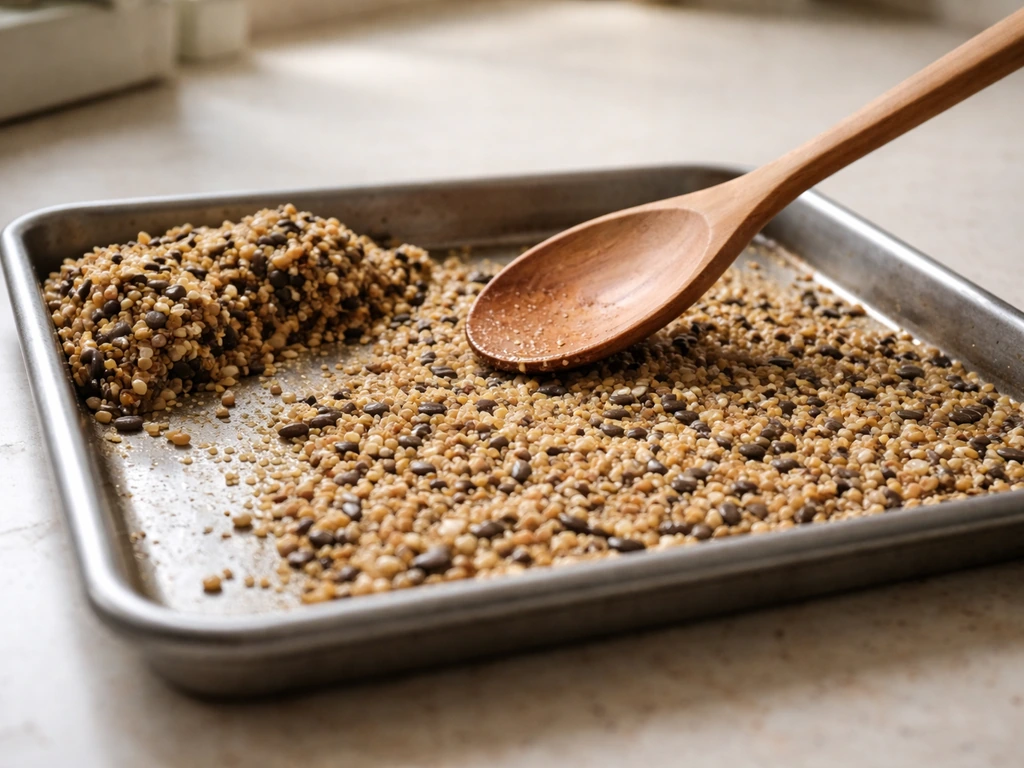
Most problems at feeders come down to moisture, heat, or leaving seed out too long. Here's how to handle the ones that come up most often.
Wet or clumping seed
If seed is damp but not yet moldy (no visible fuzz, no sour smell), spread it in a single layer on a clean tray or baking sheet in a dry, warm area and let it air-dry for 24 to 48 hours. Stir it occasionally to expose all surfaces. Once fully dry, it's safe to return to the feeder. Clumping in a tube feeder usually means moisture is entering from the top, check that the roof or lid seals tightly, and empty and dry the feeder before refilling if you find clumped seed inside.
Moldy seed
Visible mold (fuzzy growth, black or green patches, strong musty odor) means discard the batch. Do not try to pick out the moldy pieces and keep the rest, mycotoxins from mold spread through seed before visible growth appears. Bag it up, seal the bag, and put it in the trash. Do not compost moldy bird seed. After discarding, sanitize the container with the bleach solution before adding fresh seed.
Sprouting seed under feeders
Seed germinating on the ground under your feeder is a sign birds are dropping uneaten seed, or that you're overfilling. Switch to hulled sunflower chips or sterilized seed (heat-treated to kill germination) to eliminate sprouting entirely. Alternatively, lay a weed barrier fabric or rubber mat under the feeder and clean it weekly. Sprouting seed itself isn't dangerous to birds, but it creates a damp mat that invites mold and insects.
Insects in stored seed
Indian meal moths and weevils are the two most common seed storage pests. If you open a container and see webbing, small larvae, or tiny beetles, discard the seed and clean the container thoroughly with the bleach solution. To prevent reinfestation, store seed in metal containers (insects can chew through soft plastic), keep bay leaves (a natural deterrent) tucked around the storage area, and rotate stock so seed doesn't sit for more than the shelf life window.
Keeping Squirrels, Rats, and Other Pests Away
Pest management around bird feeders is mostly about physical exclusion and eliminating food access on the ground. Repellents and deterrents have a poor track record, exclusion works.
Squirrels
A squirrel baffle on a pole-mounted feeder is the most reliable solution. Audubon also recommends baffle-style methods like inverted cone or stovepipe-style guards to block squirrel access to feeders. Use a smooth metal pole at least 6 feet tall, mount a wide dome or cylinder baffle at 4 to 5 feet up, and keep the 10-foot horizontal clearance from any jumping surface. If you use a hanging feeder, a cone-shaped baffle above the feeder on the wire works the same way. Caged feeders (tube inside a wire cage with openings sized for small birds) let finches and chickadees in while blocking larger squirrels and starlings. Safflower seed, as mentioned earlier, is also a passive deterrent since most squirrels ignore it.
Rats and mice
Rodents are almost always drawn to ground scatter, not the feeder itself. The fixes are: stop putting seed directly on the ground, rake scatter daily, and store all seed in sealed metal containers. If you have a persistent rodent problem, temporarily stop filling ground-level trays and tighten up scatter management at elevated feeders. Catch traps (not poison bait stations) near the feeder area are effective and don't risk secondary poisoning of hawks or owls that hunt nearby rodents.
Insects at the feeder
Ants and wasps are drawn to sugary nectar feeders more than seed feeders, but beetles and seed moths will colonize a neglected feeder with damp seed. The fix is regular cleaning and not letting seed sit too long between refills. A weekly cycle, empty, clean, dry, refill, prevents most insect establishment.
Regional and Seasonal Adjustments
Climate affects both the species showing up at your feeder and how quickly seed spoils. A few regional notes that change the standard advice:
- Hot, humid climates (Southeast US, Gulf Coast): Nyjer seed goes rancid within 2 to 3 weeks in summer heat. Buy smaller quantities, store in a cool location, and check feeders every few days. Switch to suet labeled 'no-melt' from May through September, as standard suet cakes liquefy above 90°F and coat feathers.
- Cold northern climates (Upper Midwest, New England, Canada): Winter is peak feeding season. Add extra suet feeders in December through February when temperatures drop below 20°F. Peanut feeders see heavy Blue Jay and woodpecker traffic. Nyjer feeders attract Pine Siskins and Common Redpolls during irruption years.
- Pacific Northwest: The wet climate means mold is a year-round storage concern. Covered feeders (hopper styles with wide roofs) help keep seed dry. Check tube feeders after rain for moisture intrusion at the base.
- Arid Southwest: Spoilage from heat is a bigger risk than moisture. Keep stored seed out of garages that hit high temperatures. Cactus Wrens, Curve-billed Thrashers, and Gambel's Quail visit platform and ground feeders — millet and sunflower chips work well for these species.
- Migration corridors (Texas Gulf Coast, Great Lakes, Atlantic flyway): Spring and fall bring heavy feeder traffic from migrants passing through. This is worth stocking up for — a well-maintained platform feeder in April or October in these zones can attract 20 or more species in a week.
If you're sourcing seed differently or looking at bulk options, bird seed cans and storage containers are worth comparing when you're buying larger quantities. If you are buying in larger quantities, a bird seed can is one of the practical storage options to compare alongside other bulk seed containers. And if cost is a constraint, there are some practical cheap alternatives to standard bird seed mixes that don't sacrifice too much in terms of species variety.
For hands-on projects, seed balls are another format worth trying, the instructions for making bird seed balls are straightforward and they work especially well for ground-feeding species. Bird seed balls instructions can guide you through choosing the right binder, mixing seed, and shaping them so they hold up in your yard. Try these bird seed balls instructions to form tidy, wildlife-friendly snacks for ground-feeding birds, then place them where you normally scatter seed.
A Simple Weekly Routine That Keeps Everything Running
Most problems at feeders are prevented by a consistent routine rather than one-time fixes. Here's a practical weekly schedule that takes under 15 minutes:
- Check seed level and fill only what will be consumed in 3 to 4 days (less in summer, more in winter).
- Inspect feeder ports and seed trays for clumping, moisture, or discoloration — discard any suspect seed on the spot.
- Rake or sweep ground scatter under and around the feeder area.
- Wipe down the exterior of feeders with a damp cloth to remove droppings and debris.
- Every 2 weeks (weekly in summer): full bleach-solution clean, rinse, dry completely before refilling.
- Monthly: check stored seed supply, inspect container seal, rotate older stock to the top.
The birds at your feeder are only going to be as healthy as the setup you maintain. Moldy seed, pest infestations, and disease outbreaks at feeders are almost always preventable with consistent cleaning and smart storage. Get those basics right and the rest of backyard feeding, choosing seed, attracting species, managing seasonal changes, becomes much more straightforward.
FAQ
Can I use one universal seed mix year-round, or should I change it with seasons?
You can, but you will get better results if you at least swap in more high-fat options in winter. In warm weather, reduce overall volume so seed cycles quickly, and consider limiting suet to cooler parts of the day or season if your area runs very hot. A single “all-season” mix often includes filler that birds do not eat efficiently, increasing waste and rodents.
How do I know if my black oil sunflower is truly fresh or already rancid?
Fresh seed smells neutral or slightly nutty. If it smells sour, musty, or strongly “ammonia-like,” treat it as spoiled even if you do not see mold. Also check the bag for oil staining or clumping that suggests moisture exposure, rancidity accelerates in heat and can happen even without visible fuzz.
What is the best way to introduce a new seed type without confusing the birds?
Start by offering the new seed in a separate feeder or in a small side-by-side rotation. For example, begin with your standard black oil sunflower as the bulk, then add nyjer or safflower in its dedicated feeder. This lets you confirm birds are taking it and prevents a sudden drop in traffic that can happen if you change everything at once.
Is it okay to top off a tube feeder when seed is running low?
Avoid frequent “quick top-ups” if you notice any dampness or clumping. For best results, empty and dry the feeder during regular cleaning cycles, and do not add fresh seed directly onto old seed that sat warm or humid. If you see clumps inside a tube, the issue is usually a lid or roof seal, fix that before refilling.
How much seed should I put out so I do not waste it or attract pests?
Use the amount you see birds consume within a short window, then refill rather than leaving a full feeder sitting for days in summer. If you routinely see thick scatter beneath feeders or sprouts on the ground, you are overfilling or leaving the feeder too long between refills. In winter, you can put out more because consumption is higher and spoilage risk is lower.
Do I need to clean bird feeders differently for suet versus seed feeders?
Yes. Seed feeders require frequent emptying, scrubbing, and drying because fats and hull residues can trap moisture. Suet cages can be cleaned less labor-intensively, and the dishwasher hot cycle is effective for many setups, but you still need to fully remove used suet and keep the cage dry before reinstalling.
What should I do if birds start avoiding the feeder after a cleaning?
First, confirm it is completely dry before refilling, damp feeders can harbor odor and mold. Next, check that the ports or perches are not clogged (especially narrow tube ports), and verify the seed is fresh and not rancid. If you changed seed types at the same time, revert to your reliable black oil sunflower until birds resume steady visits.
Is it safe to keep seed in a garage or shed during cold winters?
It is generally safe if the area stays cool and dry, but avoid spaces that can flood or get extreme heat swings. Even if birds do not feed while it is freezing, storage containers should be sealed because humidity can still rise during thaw cycles. In humid climates, you may need smaller batch quantities and more frequent checks.
How do I handle sprouting seed on the ground, is it dangerous?
Sprouting itself is not usually harmful, but the damp mat it creates can lead to mold and insects, which then becomes the real risk. Reduce overfilling, consider hulled sunflower chips or heat-treated/sterilized seed to stop germination, and keep the area cleared weekly to prevent a persistent damp zone.
What should I do if I find moths or weevils in the seed bin?
Discard the affected seed, then clean the entire container and surrounding storage area, not just the visible contents. After cleaning, transfer new seed into sealed metal containers and consider rotating stock so you do not keep it past its practical freshness window. Bay leaves can help deter reinfestation in the storage area, but they do not replace sealed containers.
Will window collisions still happen if I place feeders within a few feet?
Placing a feeder within 3 feet of a window typically reduces serious injuries because birds do not build up enough speed to cause fatal impacts. The key is still to position near escape cover like shrubs or small trees, so birds have a clear place to land and reassess rather than lingering in open flight paths.
Do deterrents like sprays or ultrasonic devices work for squirrels and rodents?
They usually have inconsistent results. The most reliable approach is exclusion, squirrel baffles on properly mounted poles and strict management of ground scatter, since rodents and squirrels are drawn by accessible food at ground level. If you are seeing repeated losses, focus on sealing out access to scatter and ensuring baffles and clearances are correct before trying repellents.