Yes, put bird seed out in winter. Cold weather reduces natural food sources, and for many backyard species like chickadees, nuthatches, and finches, a well-stocked feeder genuinely helps them survive harsh stretches. That said, feeding birds in winter only works if you do it right. If you are wondering about putting seed in a birdhouse, focus on offering the right feed in a feeder instead of turning the house into a messy food station. Wet seed, dirty feeders, and poorly placed stations can spread disease faster than they can help birds, and they attract rodents. The goal is a clean, dry, consistently stocked feeding station, not just seed scattered outside.
Should You Put Bird Seed Out in the Winter? Yes or No
Maya Collins
20 May 2026
Do winter birds actually need your feeders?
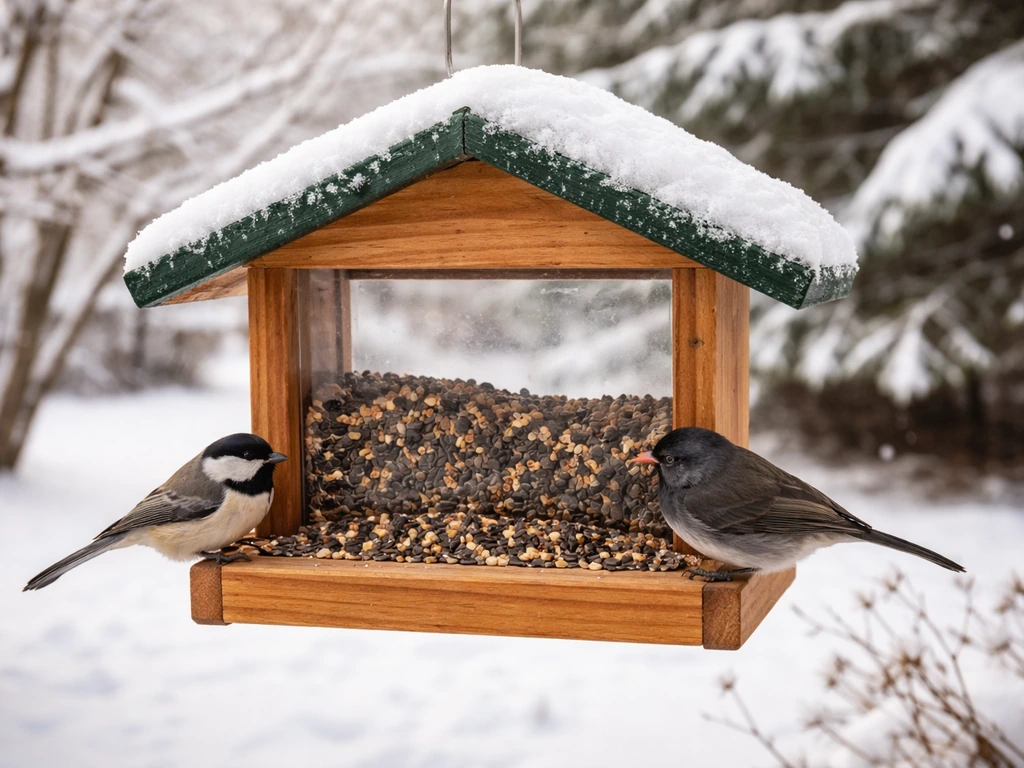
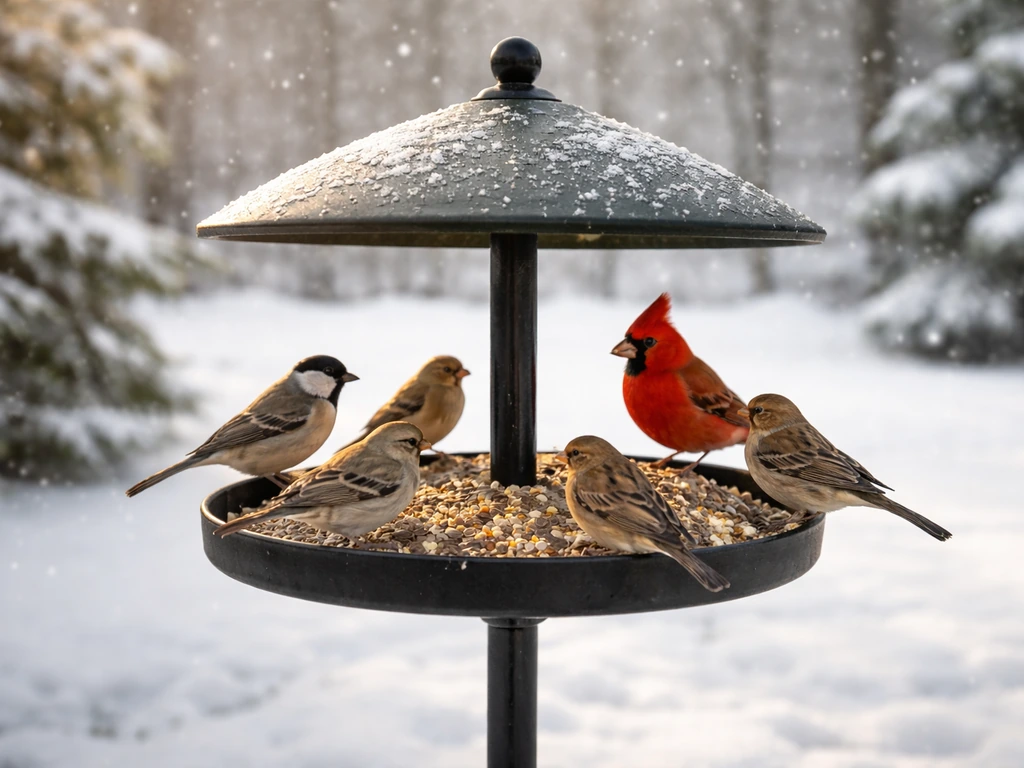
Birds rely on feeders most heavily in winter because snow and ice cut off access to natural seeds, berries, and insects. Species like black-capped chickadees, dark-eyed juncos, white-breasted nuthatches, and house finches are common winter feeder visitors across much of North America, and a reliable food source helps them maintain the energy they need in cold temperatures. Migratory species will have already left, so your winter visitors are year-round residents working hard to get through the cold months.
One myth worth busting right away: feeding birds in winter does not make them lazy or dependent in a way that harms them. Birds are smart foragers. They'll use your feeder as one source among several, and they won't skip migration or abandon natural foraging just because you put seed out. What they will do is notice when your feeder is consistently stocked and return regularly. That regularity matters most during cold snaps and snowstorms when natural food becomes briefly inaccessible.
When and how to start winter feeding
You can start putting seed out as early as late October in northern states, or when you notice the first hard frosts. In milder climates (the South, the Pacific Coast), winter feeding is still worthwhile but less urgent. The key trigger is first snowfall or a sustained freeze: that's when natural food becomes hard for birds to find and your feeder goes from a nice extra to a real benefit.
As for placement, mount feeders on a pole about five feet off the ground. This height reduces access for some predators and keeps seed off wet ground. Position feeders within about 10 feet of shrubs or trees so birds have a quick escape route from hawks, but not so close that squirrels can leap directly to the feeder. Avoid placing feeders right up against windows to reduce collision risk, or use window feeders specifically designed for safe close placement.
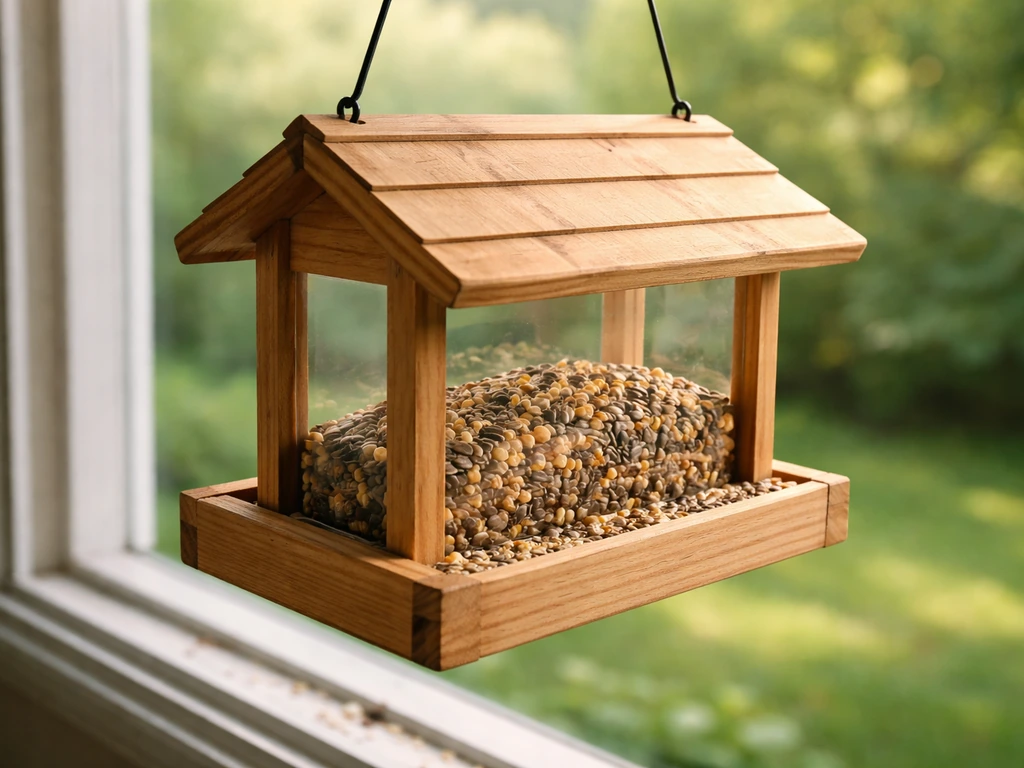
For feeder types, tube feeders work well for small birds eating black-oil sunflower seed, safflower, or mixed seed. Platform or tray feeders attract a wider variety but need more frequent cleaning because droppings and moisture accumulate fast. If you use a tray feeder, choose one with drainage holes and plan to clean it more often than a tube. Hopper feeders offer a middle ground: they hold more seed and protect it better from rain, but still need regular maintenance.
One practical step before you start: check how much seed you're putting out relative to how many birds are visiting. Overloading a feeder means seed sits longer, gets wet, and spoils. Start with smaller fills and refill more often until you get a feel for how quickly your local birds go through it. The topic of quantity and refill frequency is worth thinking through carefully when you're setting up your winter station.
Picking the right seed (and ditching the bad stuff)
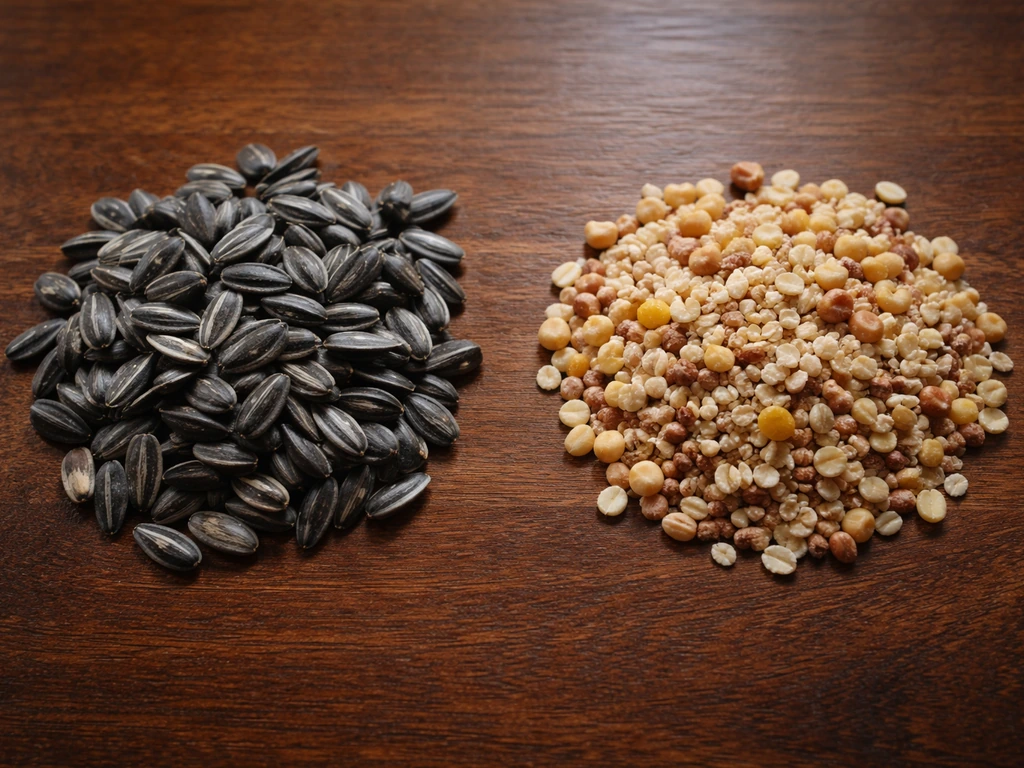
Black-oil sunflower seed is the single best all-around winter seed. It has a thin shell, high fat content, and almost every common winter feeder bird will eat it. Safflower is a good secondary option, especially if you want to deter starlings. Mixed seed works, but be aware that sunflower specialists like finches and chickadees will toss out millet and corn to get to the sunflower, which creates mess on the ground below the feeder and attracts rodents. Peanuts (shelled or whole) are excellent high-energy winter options for woodpeckers, nuthatches, and jays.
Avoid cheap filler mixes loaded with milo, wheat, or oats. Most backyard songbirds won't eat these in significant quantities. The seed sits, gets wet, and either molds or piles up as waste. You end up with a damp mess underneath the feeder, which is exactly the kind of environment that attracts rodents and grows bacteria.
Before filling your feeders each winter, inspect the seed you've been storing. If it was kept in a hot, humid garage or shed over the summer, there's a real chance it's moldy. Look for clumping, a sour or musty smell, visible mold, or discoloration. If you see any of those signs, throw it out and start fresh. Moldy seed can be fatal to birds, and no amount of cleaning will make a contaminated batch safe to feed.
Keeping seed dry and handling wet or moldy seed
Moisture is the main enemy of winter bird feeding. Wet seed clumps, molds within days, and can make birds seriously sick. Damp seeds can grow mold that is toxic to birds, so preventing moisture exposure is not optional maintenance, it's the core of safe winter feeding.
Use feeders designed to keep seed dry: tube feeders with drainage ports at the bottom, hopper feeders with weather guards or roofs, or covered platform feeders. If you live somewhere with heavy winter rain or wet snow (Pacific Northwest, parts of the Southeast), a weather baffle above the feeder makes a noticeable difference. Check seed in the feeder after any precipitation. If the top layer is wet and clumped, remove it before refilling.
If you open your feeder and the seed inside is wet, clumped, or shows any mold, empty the whole thing into the trash, not on the ground. Dumping contaminated seed on the ground just spreads the problem and creates a contaminated patch that birds will still pick at. Clean the feeder before refilling with fresh, dry seed.
Store your seed supply in a sealed, waterproof container indoors or in a dry location, not in a fabric sack in the garage. A metal or hard plastic bin with a tight lid keeps moisture and pests out. Buy in quantities you'll use within a few weeks rather than stocking a season's worth all at once, especially if your storage conditions aren't ideal.
Squirrels, rodents, and other uninvited guests
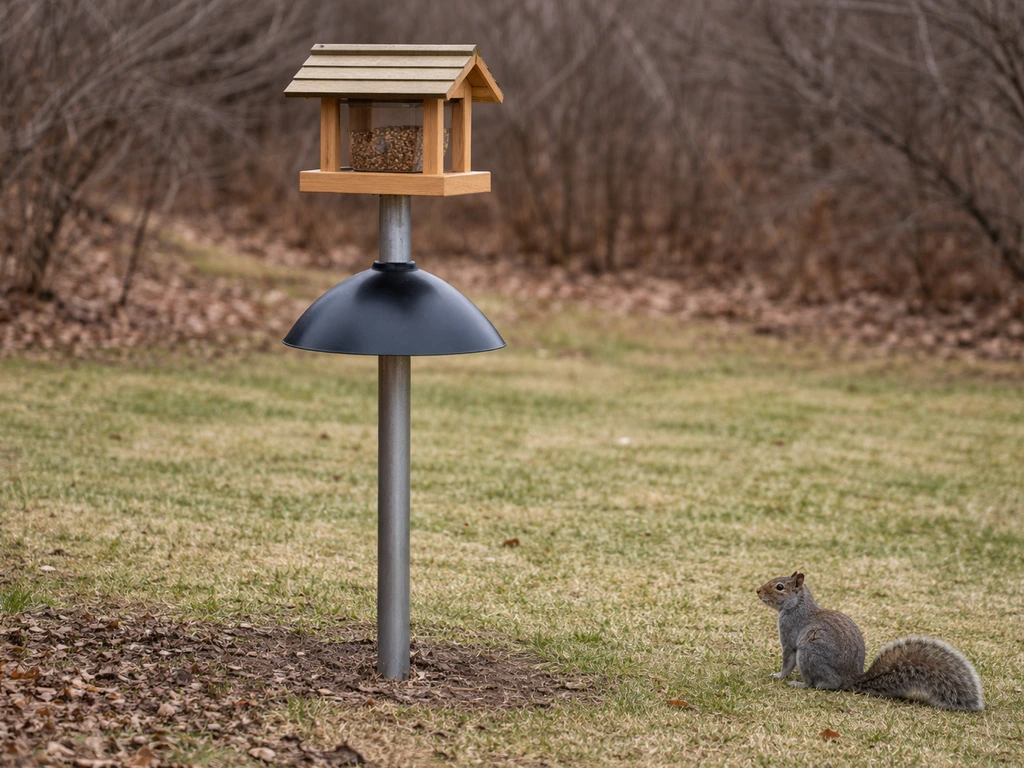
Bird seed attracts more than birds. Squirrels, mice, rats, and sometimes raccoons will all take advantage of a poorly managed feeding station. This is especially true in winter when food is scarce for them too. The goal isn't to eliminate all wildlife interaction, but to set up your station so that birds eat the seed quickly and waste doesn't pile up as an open invitation to rodents.
- Mount feeders on a smooth metal pole with a squirrel baffle below the feeder. A cone-shaped or cylindrical baffle at least 18 inches wide placed about 4 feet up the pole stops most squirrels.
- Keep feeders at least 10 feet away from fences, trees, or anything squirrels can jump from.
- Switch to safflower seed if squirrel pressure is high. Squirrels generally dislike safflower, but most songbirds eat it readily.
- Use weight-sensitive or squirrel-resistant feeder designs that close off seed ports when a heavy animal lands on them.
- Pick up spilled seed from the ground daily or every other day. Waste seed on the ground is the main rodent attractant.
- Avoid feeding after dark or bring feeders in at night if you're seeing rats or raccoons. Nocturnal visitors are almost always drawn by ground waste or accessible seed, not the feeder itself.
- Don't put out more seed than birds eat in a day. Leftover seed overnight is a standing invitation for rodents.
If you're seeing signs of mice or rats under your feeders (droppings, burrow holes, gnawed containers), take a one-week break from feeding, do a thorough ground cleanup, and reassess your feeder placement and seed quantity before resuming. Sometimes a short reset is all it takes to break the habit of nocturnal visitors.
Cleaning your feeders and keeping the area hygienic
Dirty feeders spread disease among birds. When birds congregate at a feeder, they're mixing in ways they wouldn't in the wild, which makes it easy for pathogens like house finch conjunctivitis to spread. Regular cleaning isn't optional if you're feeding in winter. At minimum, deep-clean your feeders every few weeks during active feeding season, and always between seasons.
- Empty the feeder completely and discard any remaining seed in the trash.
- Take the feeder outside (not in your kitchen or any food-prep area) and rinse off loose debris and droppings with water.
- Scrub all surfaces with warm, soapy water using a dedicated brush you don't use for anything else.
- Soak or scrub the feeder with a solution of 1 part bleach to 9 parts water for at least 10 minutes.
- Rinse thoroughly with clean water until no bleach smell remains.
- Let the feeder air dry completely before refilling with fresh, dry seed.
- Wear gloves during cleaning and wash your hands thoroughly afterward.
Keep your cleaning tools (brush, bucket) dedicated to feeder use only. Don't use them for garden or household tasks, and don't clean feeders in your kitchen sink. Bird droppings can carry pathogens that you don't want in food-prep areas. The CDC specifically recommends cleaning feeders outdoors for exactly this reason.
Under the feeder matters just as much as the feeder itself. Rake or sweep the ground beneath your feeders at least once a week during active winter feeding to remove seed hulls, wet waste, and droppings. This wet sludge is a breeding ground for bacteria and mold, and it's what keeps rodents coming back. If you're using a tray feeder or scattering seed on the ground, this ground cleanup becomes daily work.
If you're also running a birdbath in winter, keep it ice-free with a heated birdbath or a submersible heater. Frozen water is useless to birds. Clean the bath on the same schedule as your feeders, since standing water around feeders accumulates seed debris and droppings quickly.
Troubleshooting common winter feeding problems
| Problem | Likely Cause | Fix | Prevention |
|---|---|---|---|
| Seed clumping or smelling musty in the feeder | Moisture getting in, seed sitting too long | Empty feeder, discard seed in trash, clean and dry feeder before refilling | Use a covered or tube feeder; fill with smaller amounts more often |
| Visible mold on seed or feeder surfaces | Wet seed + warmth, infrequent cleaning | Discard all seed, deep-clean with bleach solution, fully dry before refilling | Clean every 1-2 weeks; inspect after rain or wet snow |
| Rodents under the feeder | Ground waste accumulating, seed quantity too high | Pause feeding for a week, clear ground waste, reduce fill amount | Sweep ground daily; only fill what birds eat in a single day |
| Squirrels emptying the feeder | Feeder accessible by jumping or climbing | Add a pole baffle, relocate feeder away from jumping-off points | Use weight-sensitive feeder or switch to safflower seed |
| Birds ignoring the feeder | Wrong seed type, feeder too exposed or dirty | Switch to black-oil sunflower seed; clean feeder; reposition near cover | Keep feeder consistently stocked and placed near shrubs or trees |
| Seed sprouting under the feeder | Whole seed falling on moist soil | Rake up sprouted seed and waste regularly | Use shelled sunflower or hulled seed mixes to reduce germination |
Next steps you can take today
If you're setting up or restarting a winter feeding station right now, here's what to do first. Check any stored seed for mold or clumping before putting it in a feeder. If it's suspect, replace it. Deep-clean your feeders with the bleach solution method above even if they look okay, because residue from last season can carry pathogens. Mount feeders on a pole with a baffle at an appropriate distance from jump-off points. Fill with black-oil sunflower seed to start, use a modest amount, and check the feeder every day or two to monitor consumption and moisture.
Think about how often you're committing to check and clean. Winter feeding is genuinely helpful to birds, but only if you can keep up with it. A feeder that goes unchecked for weeks becomes a disease vector, not a benefit. If you travel or can't check in regularly, it's better to feed in shorter focused bursts around cold snaps than to maintain a station you can't monitor. How often you change your seed and how much you put out at once are closely linked decisions worth calibrating from the start. A good rule of thumb is to change bird seed when it gets wet, clumps, or you notice birds aren’t eating it quickly.
Finally, know when to stop for the season. Once temperatures reliably warm up in spring and natural food sources reopen, you can wind down gradually. If you want to time it right, use the shift in weather and natural food sources as your guide for when to stop putting out bird seed when should i stop putting out bird seed. There's no hard rule, but the period when birds need you most is between first hard frost and the consistent return of insects and spring growth. Keeping that window in mind helps you feed with purpose rather than just habit.
FAQ
What’s the best first seed choice if I’m starting from scratch this winter?
Start with black-oil sunflower seed, and use a smaller initial fill so you can judge how fast it’s eaten. If you notice lots of waste or wet clumps after rain or snow, reduce the amount you load and refill more often rather than keeping a big hopper full.
How long can birds keep eating if the seed gets wet or starts clumping?
Don’t keep topping off wet seed. If the feeder contains wet, clumped, or moldy seed, empty it into the trash, clean the feeder, and refill with dry seed. Topping off encourages mold growth and can keep birds exposed to contaminated batches.
Should I keep feeding during a severe snowstorm for several days?
Yes, as long as you can maintain dry, clean conditions and you’re not letting seed sit and spoil. During extended storms, check at least every day or two, remove wet top layers, and refill based on consumption so you are not feeding a damp waste pile.
Do I need to stop feeding if I see sick-looking birds at the feeder?
If you notice abnormal behavior, heavy debris around the feeder, or signs consistent with disease outbreaks, pause feeding for a short period, clean thoroughly, and only resume when the station is fresh, dry, and back to normal usage. If you can, avoid moving contaminated seed elsewhere in your yard while you reset the station.
Can I use bird seed outdoors if I have pets, especially cats or dogs?
Yes, but placement matters. Keep feeders off the ground and away from jump points like fences and dense shrubs where cats can ambush. Also plan ground cleanup so leftover seed and hulls don’t create areas where pests or your pets dig.
Will feeding birds in winter attract insects or other pests into my home?
A well-managed feeder usually should not, but poor cleanup can. Keep seed and hulls from collecting under windows or doorways, and use a sealed container for stored seed indoors or in a truly dry location to reduce pests.
Is it ever better to stop feeding completely in winter?
Yes, if you cannot commit to regular checks. A station that stays unmonitored for weeks is more likely to become damp and dirty, which raises disease risk. In that case, switch to shorter feeding bursts around cold snaps when you can maintain the feeder.
What’s the safest way to clean feeders without spreading germs?
Clean feeders outdoors, and keep dedicated tools for feeder maintenance only. Let feeders dry completely after washing, and avoid rinsing into gardens or kitchen areas where droppings and contaminated residue could spread.
Where should I place feeders to reduce squirrel access and seed waste?
Avoid locations where squirrels can leap directly to the feeder, and use a baffle on the pole. Also keep feeders within about 10 feet of cover for birds, but not so close that squirrels can use the same cover as a launch site.
If birds aren’t eating my feeder, what should I change first?
First check whether seed is damp, clumped, or spoiled, then adjust quantity. If the seed is dry but consumption is low, switch from mixed seed to black-oil sunflower or safflower, and consider a tube feeder for smaller birds since platform feeders often get fouled faster.
How often should I change seed if I’m refilling frequently?
Change it when it gets wet, clumps, or you see birds aren’t consuming it quickly. Even if you refill, stale seed that’s sitting too long becomes the main problem, so base your schedule on weather and feeder usage rather than the calendar.
Should I stop winter feeding abruptly in spring?
Prefer a gradual wind-down. When temperatures stay mild and insects and natural seeds become available, reduce refills first, then stop once bird activity around the feeder drops and natural foraging is clearly back to normal.
Citations
Audubon warns that bird feeding can increase the risk of disease spread because feeders cause birds to congregate and mix in ways they don’t in the wild.
https://www.audubon.org/magazine/how-feed-birds-safely-winter
Audubon recommends disposing of uneaten feeder seed rather than dumping it on the ground, to reduce contamination and potential disease risk.
https://www.audubon.org/magazine/how-feed-birds-safely-winter
Audubon notes that some species rely most heavily on feeders in winter because food is scarce.
https://www.audubon.org/magazine/audubon-guide-winter-bird-feeding
Audubon states safe winter bird feeding includes completely scrubbing feeders with a ~10% non-chlorinated bleach solution at least a few times a year and certainly between seasons.
https://www.audubon.org/news/to-feed-or-not-feed
USFWS advises sweeping up old, moldy, and discarded seed under feeders to reduce spread of problems associated with contaminated food.
https://www.fws.gov/story/feed-or-not-feed-wild-birds
Audubon says feeders should be kept stocked with dry food (e.g., using feeders that keep seed dry) because the benefits depend on maintaining safe, uncontaminated feeding stations.
https://www.audubon.org/magazine/audubon-guide-winter-bird-feeding
Audubon’s bird-feeding basics guidance emphasizes that feeder placement and feeder design affect safety—especially minimizing messy waste (which can increase mold/disease risk).
https://media.audubon.org/audubon_guide_to_bird_feeding.pdf
Virginia DWR recommends soaking feeders in a dilute bleach solution of 9 parts water to 1 part bleach for 10 minutes, then thoroughly rinsing.
https://dwr.virginia.gov/wildlife/safe-bird-feeding/
Virginia DWR recommends raking under the feeder area to remove seed hulls and waste (which helps reduce contamination and pest attraction).
https://dwr.virginia.gov/wildlife/safe-bird-feeding/
Iowa DNR recommends regular feeder cleaning as part of annual winter preparation to avoid unintentionally spreading disease among birds.
https://www.iowadnr.gov/news-release/2025-04-22/plan-regular-cleanings-bird-feeders-waterers-and-baths
Iowa DNR specifically gives a hummingbird-feeder cleaning frequency of every 3–5 days (as an example of recommended regular cleaning cadence).
https://www.iowadnr.gov/news-release/2025-04-22/plan-regular-cleanings-bird-feeders-waterers-and-baths
Mississippi State Extension recommends cleaning bird feeders outside with warm, soapy water and soaking them in a bleach solution of 9 parts water to 1 part bleach for 10 minutes.
https://extension.msstate.edu/news/extension-outdoors/2021/follow-best-practices-backyard-bird-feeders
Mississippi State Extension frames winter feeding as a best-practices issue tied to preventing disease spread during fall/winter.
https://extension.msstate.edu/news/extension-outdoors/2021/follow-best-practices-backyard-bird-feeders
Bird-feeding guidance emphasizes that wet/clumped/moldy seed should be addressed quickly because moldy seed can make birds sick.
https://www.homesandgardens.com/gardens/signs-you-have-an-infected-bird-feeder
The article advises that if birdseed has become wet or moldy in storage, you should discard it and start fresh.
https://www.homesandgardens.com/gardens/signs-you-have-an-infected-bird-feeder
Audubon advises getting rid of old birdseed, especially if it was kept in a hot, humid place during summer (a mold risk).
https://www.audubon.org/news/winterize-your-yard-birds
Audubon Great Lakes suggests small birds can be attracted using tube feeders with black-oil sunflower seed, mixed seed, safflower seed, or peanuts.
https://www.audubon.org/great-lakes/news/winter-bird-feeding-101
K-State Extension’s “Problems at the Bird Feeder” guide describes common issues including moldy feeds in warm weather and emphasizes cleaning up spilled seed.
https://hnr.k-state.edu/extension/horticulture-resource-center/publications/publications/wildlife/Problems%20at%20the%20Bird%20Feeder.pdf
The guide recommends cleaning up spilled seed (once or twice a season) to reduce problems associated with waste seed.
https://hnr.k-state.edu/extension/horticulture-resource-center/publications/publications/wildlife/Problems%20at%20the%20Bird%20Feeder.pdf
Texas Parks & Wildlife warns that a platform feeder is easy but must be cleaned often to prevent contamination from bird droppings that might cause disease.
https://tpwd.texas.gov/publications/nonpwdpubs/introducing_birds/bird_feeders/
Texas Parks & Wildlife states that a well-maintained winter feeding station can meet backyard birds’ needs until spring (implying maintenance is critical).
https://tpwd.texas.gov/publications/nonpwdpubs/introducing_birds/bird_feeders/
Audubon notes that damp seeds may grow mold that can be fatal to birds.
https://www.audubon.org/magazine/11-tips-feeding-backyard-birds
Audubon explains that sunflower specialists readily eat sunflower seed and may toss millet/corn to the ground (which affects waste and ground mess).
https://www.audubon.org/magazine/11-tips-feeding-backyard-birds
Michigan Audubon advises that birdbaths left out during winter should be heated to prevent freezing (to keep water safe/usable for birds).
https://www.michiganaudubon.org/winter-bird-feeding-tips/
Audubon’s “Bird Feeding Basics” PDF includes guidance on feeder height/placement (e.g., pole-mounted feeders should be about five feet tall) which can reduce access by some pests/predators.
https://media.audubon.org/audubon_guide_to_bird_feeders.pdf
USFWS notes that feeding can spread diseases (with examples like conjunctivitis in house finches) and therefore recommends caution and cleanup.
https://www.fws.gov/story/feed-or-not-feed-wild-birds
USFWS emphasizes general safety practices including sweeping up old, moldy, and discarded seed under feeders.
https://www.fws.gov/story/feed-or-not-feed-wild-birds
Local Audubon-area guidance stresses that winter feeding must be managed to avoid issues from improper conditions and access (winter feeding as a “station” practice, not scattered food).
https://www.napasolanoaudubon.com/nsas/birdingnotes/Helping_Backyard_Birds_in_Winter.pdf
Audubon Great Lakes recommends tube feeders for winter small-bird feeding and highlights common high-use seed types (black-oil sunflower, mixed seed, safflower, peanuts).
https://www.audubon.org/great-lakes/news/winter-bird-feeding-101
A bird feeder fact sheet advises mixing a 10% bleach solution (1 part bleach to 9 parts water) for cleaning.
https://birdnet.org/wp-content/uploads/2026/02/Bird-Feeder-Fact-Sheet.pdf
The same fact sheet advises that if seed in your feeder becomes wet, you should empty it into the trash and clean the feeder before refilling.
https://birdnet.org/wp-content/uploads/2026/02/Bird-Feeder-Fact-Sheet.pdf
Garden Wildlife Health Best Practice Guidance recommends using a weak domestic bleach solution as a suitable disinfectant and emphasizes washing off dirt/debris first (so disinfectant can work effectively).
https://www.gardenwildlifehealth.org/wp-content/uploads/sites/12/2021/04/Feeding-Garden-Birds-Best-Practice-Guidance.pdf
Garden Wildlife Health guidance recommends regularly sweeping/cleaning areas beneath feeders to prevent waste food and/or droppings from accumulating.
https://www.gardenwildlifehealth.org/wp-content/uploads/sites/12/2021/04/Feeding-Garden-Birds-Best-Practice-Guidance.pdf
Garden Wildlife Health guidance includes that cleaning/disinfection should avoid aerosolizing contamination and that brushes/cleaning equipment shouldn’t be used for other purposes to limit cross-contamination.
https://www.gardenwildlifehealth.org/wp-content/uploads/sites/12/2021/04/Feeding-Garden-Birds-Best-Practice-Guidance.pdf
CDC states cleaning bird feeders helps keep both people and birds healthy and advises not cleaning feeders in the kitchen or food-prep/storage areas.
https://www.cdc.gov/healthy-pets/about/wildlife.html
CDC instructs to clean feeders outdoors (not in food-prep areas).
https://www.cdc.gov/healthy-pets/about/wildlife.html
Los Angeles County provides public-health guidance that bird feeders can spread germs among wild birds, and it recommends cleaning your bird feeder once weekly.
https://publichealth.lacounty.gov/vet/docs/InfluenzaWildBirds.pdf
The same LA County guidance notes that bleach can irritate eyes/nose/mouth and instructs people to use gloves and to disinfect when cleaning up feces-related contamination.
https://publichealth.lacounty.gov/vet/docs/InfluenzaWildBirds.pdf
A USFWS PDF guidance document states that with sub-freezing winter weather, you can continue feeding seeds (framed as “time to stop?” guidance for feeders).
https://www.fws.gov/sites/default/files/documents/2024-04/1108.pdf
Audubon Society of Rhode Island says there’s flexibility—“it’s really up to you” when to start/stop feeding birds, including seasonal feeding approaches.
https://asri.org/services/ask-audubon-wildilfe-faq.html
Audubon emphasizes that between-seasons cleaning and winter cleanup/raking of the mess is important because droppings + wet mess can become a sludgy mixture.
https://www.audubon.org/news/to-feed-or-not-feed
Audubon says safe feeding includes scrubbing feeders with a 10% non-chlorinated bleach solution (and certainly between seasons).
https://www.audubon.org/news/to-feed-or-not-feed
OSU Extension warns that diseases can grow in wet and moldy seed (linking moisture/mold directly to disease risk).
https://extension.okstate.edu/fact-sheets/landscaping-and-gardening-for-birds
Audubon Great Lakes notes winter birds may rely on feeders because snow/ice can reduce access to natural food sources.
https://www.audubon.org/great-lakes/news/winter-bird-feeding-101
USFWS discusses benefits and risks of winter feeding and ties disease and feeder concentration to real-world impacts on birds.
https://www.fws.gov/story/feed-or-not-feed-wild-birds
Audubon notes that the dangers around feeders can come and go, but encourages ongoing safe practices rather than casual feeding.
https://www.audubon.org/news/to-feed-or-not-feed
Texas Parks & Wildlife recommends avoiding excessive contamination by keeping feeding stations maintained and cleaned to prevent disease spread concerns.
https://tpwd.texas.gov/publications/nonpwdpubs/introducing_birds/bird_feeders/
Texas Parks & Wildlife notes that bird feeders require regular cleaning maintenance to keep food safe and to prevent undesirable species (i.e., rodents) from being attracted to the feeder.
https://tpwd.texas.gov/wildlife/birding/bird-city-texas/resources/habitat-resources
Next Article
How Often to Change Bird Seed: A Practical Schedule
Learn how often to change bird seed with timing rules by moisture, feeder type, seasons, and signs like mold or pests.