To load seed into a Bird Buddy, pull open the rear hatch door at the back of the feeder, use the included seed scoop to pour dry seed into the container through the hatch opening, and push the hatch closed until you hear it click. That's the whole process. The Original Bird Buddy holds 4 cups (1 liter) and the Bird Buddy 2 holds 6 cups (1.5 liters), so you'll know exactly when you're full. The trickier parts are picking the right seed, avoiding fills that cause jams, and keeping things dry enough that mold doesn't become a problem. Here's everything you need.
How to Put Seed in Bird Buddy Step-by-Step Guide
Maya Collins
10 Jun 2026

Know your Bird Buddy model before you fill it
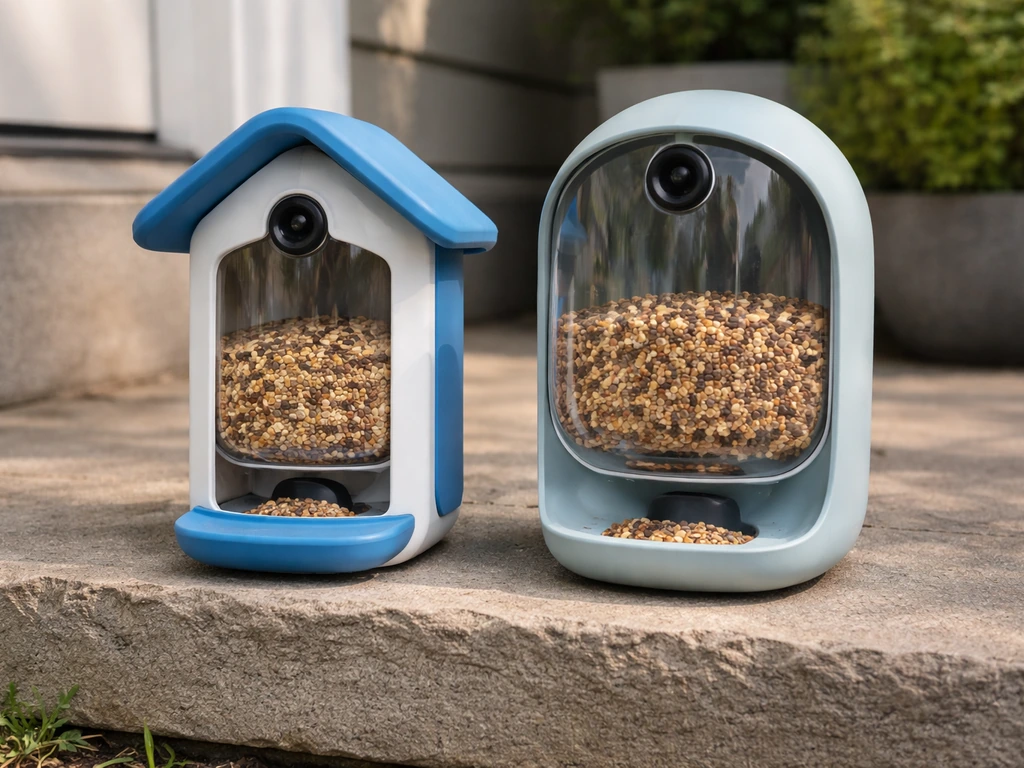
Bird Buddy currently has two main seed feeder models: the Original Bird Feeder and the Bird Buddy 2. The core loading process is the same for both, but the capacity is different. The Original holds 4 cups (1 liter) and the Bird Buddy 2 holds 6 cups (1.5 liters). Knowing which one you have matters so you don't overfill or underestimate how long a fill will last.
There are also Bird Buddy add-ons that handle food differently. The Suet Ball Holder is a separate attachment (not the seed container) that accepts suet balls up to 2.25 inches / 5.7 cm in diameter. The 3-in-1 Nutrition Set includes a jelly tray that mounts to the perch for jelly, jam, or large nuts. Neither of these uses the rear hatch. If you bought one of these add-ons and are wondering why the rear hatch instructions aren't matching up, that's why. This guide is focused on loading the main seed container.
What seed to use (and what to skip)
Bird Buddy supports any dry or solid bird food in the seed container. That includes pre-packaged loose seed mixes, homemade mixes, chopped fruit, mealworms, and similar foods. What you cannot use is liquid food like nectar. Nectar will damage the container and is not safe for this feeder design.
For attracting the widest variety of common backyard birds, a quality blend with black oil sunflower seed as the primary ingredient is your best starting point. Sunflower seed is accepted by the broadest range of species including chickadees, nuthatches, finches, cardinals, and sparrows. Safflower seed is excellent if you want to attract cardinals while discouraging starlings and squirrels. Nyjer (thistle) is the top choice for goldfinches but requires a feeder with smaller ports, so confirm your Bird Buddy model handles it without spillage before committing to a full bag.
The main thing to avoid is cheap filler seed. Mixes loaded with milo, red millet, or oat groats are mostly ignored by desirable birds, and the filler ends up sitting in the tray, holding moisture, and eventually clogging the drainage holes at the bottom. Bird Buddy specifically warns that heavy filler content can block the tray holes, though they've built in enough holes that most drainage still works. Still, better seed means fewer problems overall. If you are specifically dealing with bird seed weeds, focus on keeping the seed and tray dry and avoiding moisture that lets weed growth start fewer problems overall.
| Seed Type | Best For | Notes |
|---|---|---|
| Black oil sunflower | Chickadees, nuthatches, finches, cardinals, sparrows | Best all-around choice for most regions |
| Safflower | Cardinals, chickadees | Discourages starlings and squirrels |
| Nyjer / thistle | Goldfinches, pine siskins | Check port size before using |
| Peanut pieces (dry, no shell) | Blue jays, woodpeckers, nuthatches | Avoid salted or flavored peanuts |
| Mealworms (dried) | Bluebirds, robins, wrens | Allowed as dry solid food |
| Mixes with heavy milo / oat filler | Not recommended | Ignored by most birds, clogs drainage |
Step-by-step: loading seed into the Bird Buddy
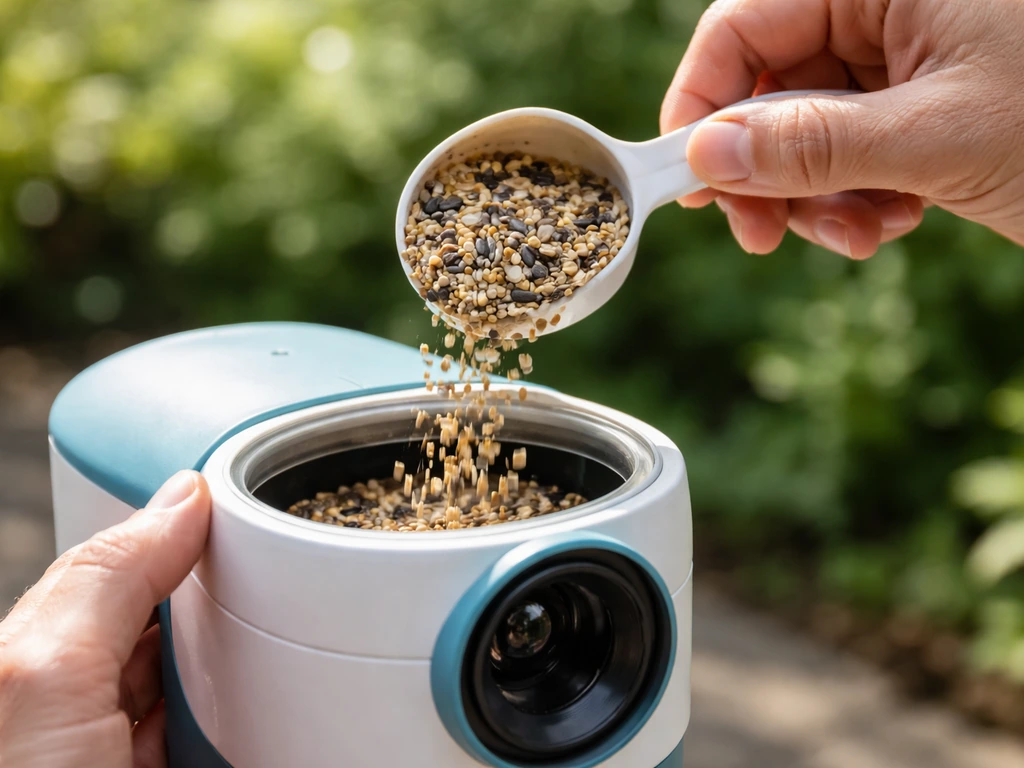
Before you start, make sure your seed scoop is clean and completely dry. A damp scoop is one of the fastest ways to introduce moisture into a fresh batch of seed, which can lead to mold forming inside the container. If you've rinsed the scoop recently, let it air dry fully before using it.
- Take the feeder down from its mount if needed. Loading it while hanging is possible but awkward, especially the first time.
- Locate the rear hatch. It's on the back of the feeder, opposite the camera. Pull the hatch toward yourself to open it. It swings out, giving you access to the seed container opening.
- Use the included seed scoop to measure out your seed. Don't pour directly from a large bag, the guiding channels around the hatch opening are there to help funnel seed in cleanly, and the scoop gives you better control.
- Pour seed through the rear hatch opening. The feeder has built-in guide rails around the opening to help direct seed in without spilling. Fill slowly and watch the level inside the container.
- Stop before you hit the very top. Leave a small gap (about half an inch) between the seed and the top of the container so the hatch closes cleanly and seed doesn't jam the hinge.
- Push the hatch closed toward the feeder body until you hear a distinct click. If it doesn't click, the hatch isn't fully seated and can pop open outdoors.
That's one full fill. For the Original model, you're looking at roughly 4 scoops depending on your scoop size. For the Bird Buddy 2, expect closer to 6 scoops. You'll calibrate your own rhythm after the first couple of fills.
How much seed to add and keeping dispensing consistent
Filling to capacity every time isn't always the right move. In wet climates or humid summer months, a lighter fill means seed turns over faster and you're less likely to end up with soggy, sprouted seed sitting at the bottom. Aim for half to three-quarters full during rainy seasons or if you don't have heavy bird traffic yet. Full fills make more sense in drier conditions or when you've got consistent daily visitors.
Seed flow depends heavily on seed size and mix consistency. Fine seeds like nyjer move freely but can also trickle out faster than expected in windy conditions. Larger mixed seeds (especially those with sunflower in the shell) can sometimes bridge across the container opening and stop flowing. If you notice birds visiting but seed isn't dropping into the tray, bridging is usually the culprit. A gentle shake or tap on the feeder body usually breaks it up. Shelled sunflower, peanut pieces, and other smaller-cut seeds dispense more reliably and are worth the slight extra cost for that reason.
First fill and camera check: making sure everything works

After your first fill, hang the feeder back in its spot and give it 10 to 15 minutes before expecting activity. Open the Bird Buddy app and confirm the camera and motion trigger are active. If the camera isn't triggering, check that the camera module is properly seated (it clicks in separately from the seed container), that the feeder has sufficient charge or solar exposure, and that the app is connected to your home Wi-Fi network.
A few things to check specifically after loading seed for the first time:
- Seed visible in tray: if no seed has dropped into the tray after 15 minutes, give the feeder a gentle tap to encourage flow
- Rear hatch fully closed: a hatch that's even slightly ajar will let rain and pests in; confirm the click
- No seed around the hatch seam: seed caught in the seal can prevent a full close and create a moisture entry point
- Camera module not covered: seed occasionally shifts during loading and can dust the lens; wipe it with a dry cloth if the app image looks foggy
- Tray drainage holes clear: press a toothpick through any clogged holes before your first rain hits
If seed is dropping into the tray but disappearing fast without visible birds, check at different times of day. Many species feed at dawn and dusk and may be emptying the tray before you check the app notifications.
Preventing pests, mold, and wet seed problems
Wet or soggy seed is the single biggest issue for feeder hygiene, and Bird Buddy specifically calls out that you must not load seed that is wet, spoiled, soggy, or moldy. Moldy seed is genuinely dangerous to birds, not just unpleasant, so this isn't a rule to skip. Before every refill, look at what's left in the container. If the seed at the bottom feels clumped, smells off, or shows any dark discoloration, empty it out before adding fresh seed on top.
To keep seed dry during storage and loading, always use a fully dry scoop, store your seed bag in a sealed container in a cool dry place, and avoid leaving the rear hatch open longer than necessary during a fill. In very humid climates, storing seed indoors rather than in a garage or shed makes a meaningful difference.
Ants are common around bird feeders, especially in warmer months. A pole-mounted ant moat (a small cup filled with water that the feeder wire passes through) is the most effective physical barrier. For squirrels and larger seed thieves, placement matters more than any product: a pole-mounted setup at least 5 feet high and 8 to 10 feet from any jump point is the baseline. Mice and rats are drawn mainly by seed that falls to the ground, so sweeping up spilled seed every few days is the most practical deterrent.
Wet seed that ends up in the tray after rain can become a sprouting problem over time. The drainage holes in the Bird Buddy tray are designed to let rainwater out, but filler seeds that swell when wet can block them. If you're noticing standing water or sprouted seeds in the tray, clear out the tray, rinse the holes with a jet of water, and consider switching to a higher-quality mix with less filler.
Managing leftover seed hulls and shells in the tray is part of keeping things clean, and that connects directly to tray hygiene after each refill. If you notice hulls or shells piling up after feeding, remove them from the tray and discard them to keep the area clean and prevent moisture buildup hulls and shells.
Cleaning, emptying, and storing seed between refills
Bird Buddy's own guidance puts it plainly: cleaning is the most effective step toward preventing the spread of avian diseases. A feeder that looks fine from the outside can still have old wet seed or fecal matter building up in corners and drainage holes. Plan on a proper clean at least once a month during active feeding season, and more often in summer heat or after rainy stretches.
To clean the feeder, remove it from its mount and empty any remaining seed. Rinse the tray and seed container thoroughly using a jet of water through the drainage holes. For disinfecting, use a 10% bleach solution (about 1 part bleach to 9 parts water), which is what Bird Buddy recommends. Apply it, let it sit for a few minutes, then rinse with clean water. Do not use harsh chemicals or abrasive cleaners, and do not pressure-wash with the camera module installed. Remove the camera module first, wipe it down separately with a dry cloth, and only reinstall it once the feeder is completely dry.
Drying is not optional. Moisture left inside the seed container before a refill is a direct path to mold in your next batch of seed. Let the feeder air dry fully before rehanging, ideally in direct sunlight for at least an hour.
For leftover seed after a partial refill, store it in a sealed, airtight container away from heat and humidity. A lidded plastic bin or a sealed glass jar works well. Don't pour old seed back into the original bag and mix it with fresh seed because any moisture it picked up in the feeder will transfer.
Don't pour old seed back into the original bag and mix it with fresh seed because any moisture it picked up in the feeder will transfer how to dry out wet bird seed. If you have seed that got wet inside the feeder, the safest move is to discard it rather than try to dry it out and reuse it. Sprouted or clumped seed that's already contaminated is not worth the risk to birds.
Between fills, keep an eye on what's accumulating in the tray. Seed shells and husks break down slowly and can mat together when wet, reducing airflow and creating conditions for mold. Clearing the tray of debris every week or two takes two minutes and keeps the whole setup running cleanly. A well-maintained Bird Buddy feeder that's loaded with the right seed and kept dry will give you consistent visits and reliable camera captures without the headaches that come with neglected setups.
FAQ
Can I just top off the Bird Buddy without emptying it first?
Yes, as long as it is dry. Use the rear hatch scoop to add only dry seed to the empty spaces, and avoid compressing seed when topping off, since tight packing can encourage bridging and slow seed flow.
Is it okay to put nectar or other liquid bird food in the seed container?
Do not. Nectar and other liquids can swell or damage internal parts and they can introduce moisture that leads to mold, so switch to a dry-only food compatible with the seed container (loose seed, nuts, mealworms, chopped dry solids).
What if my scoop is “clean” but not totally dry?
If the scoop is clean but feels even slightly cool or damp, air-dry it longer before loading. Moisture transfer can create mold in the container even if the bag was dry, especially in humid weather.
How long should I wait after loading before I expect birds and camera activity?
After refilling, wait for the camera to update and for seed flow to stabilize. If birds still do not appear after 20 to 30 minutes, check that the camera module is fully seated, the feeder has sufficient power or light exposure, and the tray is not blocked by swollen filler.
How do I know the rear hatch is closed correctly after adding seed?
A “click” is normal, but also confirm the hatch sits flush and there is no visible gap. If it seems loose, remove, re-seat, and close again until you get the solid closure you can feel.
Seed is dropping into the tray, but birds don’t seem to stay. What should I check?
If you see seed dropping but it looks like it is disappearing, check at dawn and dusk and also look for fast feeders like sparrows that clear a tray quickly. You can also temporarily reduce wind exposure because heavy wind can speed up tray emptying and make it look like nothing is feeding.
What should I do if the tray keeps getting standing water or drainage gets blocked?
Yes, switch to a higher-quality mix with lower filler content and clear any hulls or clumps from the tray. If drainage holes keep getting blocked, rinse the tray holes with water and consider using more shell-based or less fine ingredients that swell less.
Can I dry and reuse seed that turned clumpy or smelled bad after storage or a spill?
If you find moldy or strongly off-smelling seed, discard it. Do not try to salvage it by drying, because mold spores and spoiled material can persist and still pose a risk to birds.
My feeder seems to jam, seed builds up, and nothing drops. What’s the safest fix?
If a bridging problem happens, gently tap the feeder body or lightly shake it while it is mounted, then wait a few minutes to see if flow resumes. Avoid overfilling, since fuller containers can make bridges more likely to form.
Should I store bird seed indoors if I live in a humid area?
Yes, especially in humid climates, and it helps even after you open the bag. Store seed in a sealed container indoors or in an area with stable, low humidity, and keep the rear hatch closed as quickly as possible during each refill.
Do I need to clean the feeder more often after heavy rain?
Treat it as a priority. After rain or wet weather, clear debris from the tray, rinse the tray and drainage holes, and let the feeder dry completely before refilling so the next batch does not start humid or mold-prone.