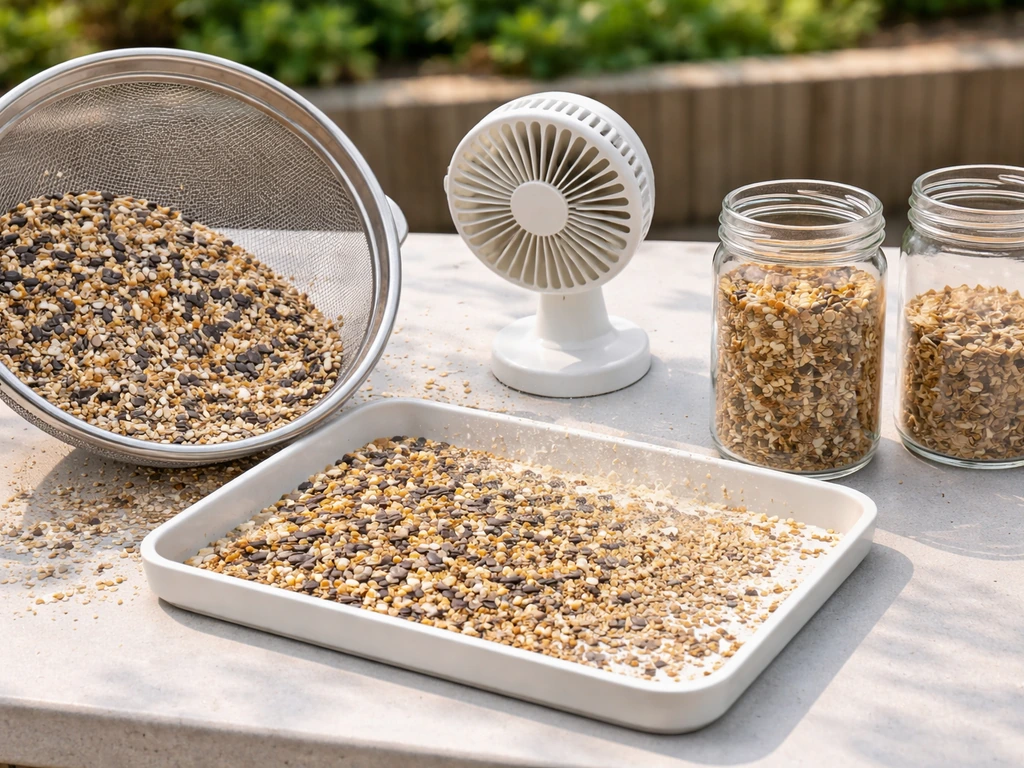
Pull the seedlings now, before they set roots or go to seed themselves. Then cut off the supply: switch to a no-waste feeder setup, choose cleaner seed mixes, and keep the area under your feeder dry and cleared. Those three steps handle about 90% of bird seed weed problems, and the rest of this guide walks you through each one in detail.
How to Get Rid of Bird Seed Weeds: Stop Sprouts Fast

Maya Collins
30 May 2026
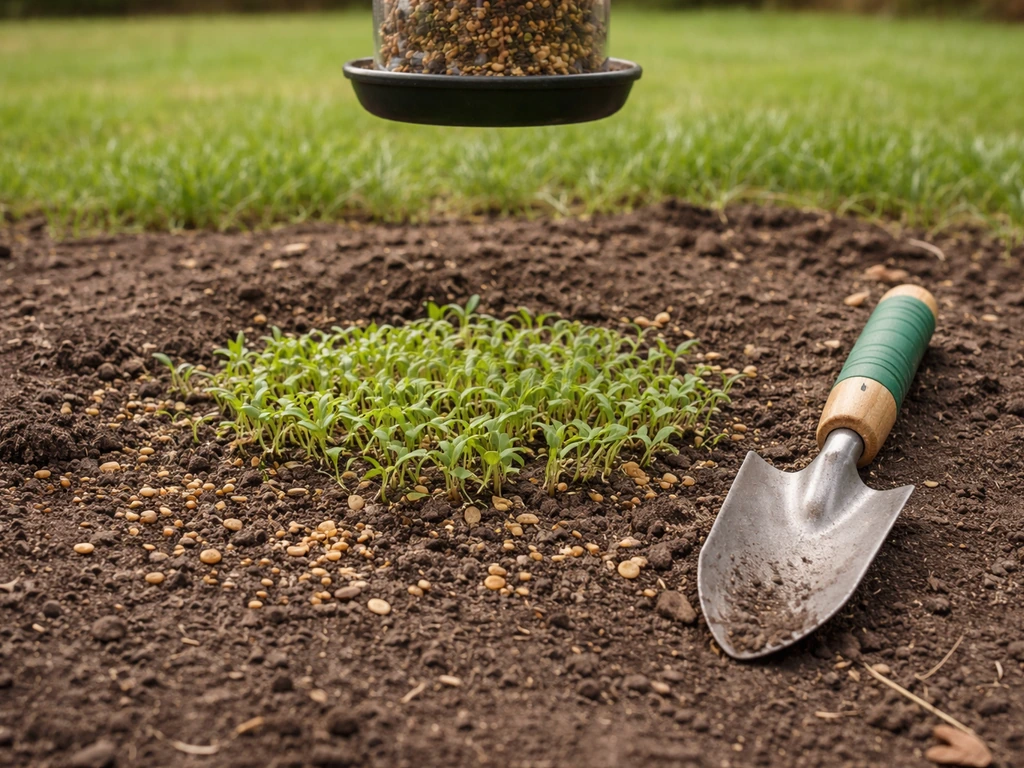
Why bird seed grows weeds in the first place
The short version is that most commercial bird seed mixes contain at least some viable weed seeds, and the moment that seed hits moist soil, it can germinate. University of Missouri researchers found pigweed, common ragweed, velvetleaf, and morning glory seeds in commercially sold birdseed and pollinator mixes. Montana State University Extension has flagged waterhemp as another common contaminant. Oregon State University's Seed Laboratory can actually test mixes for weed seed viability, which tells you how seriously the research community takes this problem.
Beyond contamination, plenty of the seed birds are supposed to eat ends up on the ground instead. Millet, milo, and sunflower all germinate readily when they land on soil that stays even slightly moist. University of Nevada Reno Extension research on weed seed banks explains that spilled seed doesn't have to sprout immediately: it can sit dormant in the soil and trigger a flush of seedlings weeks or months later when conditions finally suit germination. So even if you clean up a spill quickly, seeds that worked into the soil can haunt you through the next growing season.
Moisture is the real accelerant. Wet seed sprouts faster, mold sets in, and birds scatter it further when it clumps. If your feeder sits over bare soil, mulch, or a lawn with good moisture retention, you have the ideal conditions for a mini weed nursery right under the feeding station.
Figure out what's actually growing before you pull anything
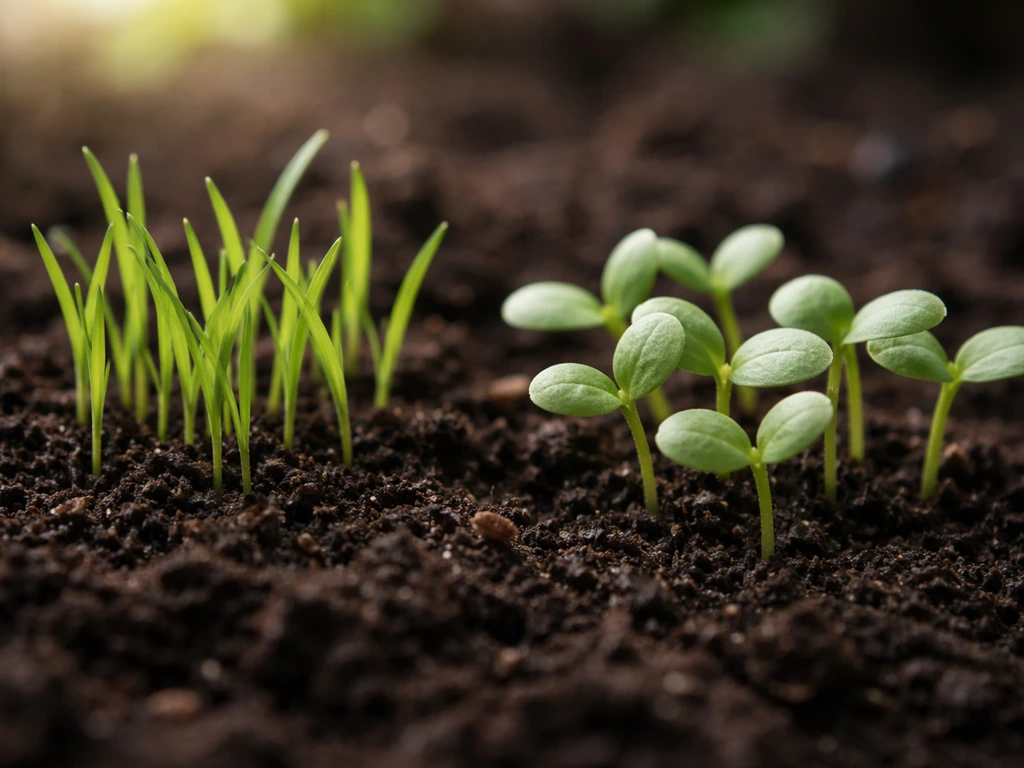
Before you start yanking plants, take two minutes to look at what you have. The type of seedling tells you a lot about how to remove it and whether it's coming from spilled seed or from existing lawn weeds that were already in your soil.
Grass vs. broadleaf: the first split
UMN Extension and Penn State Extension both recommend starting weed ID by separating grasses from broadleaf plants. Grasses are monocots: they emerge with a single narrow leaf and grow in a blade-and-sheath structure with features like ligules, auricles, and a collar zone at the base. Millet, milo, and sorghum in bird seed are all grasses, so if you see thin, upright, blade-like seedlings clustered directly under the feeder, those are almost certainly sprouted from spilled seed. Broadleaf seedlings are dicots: they come up with two seed-leaves (cotyledons), have visibly wider leaf shapes, and include weeds like pigweed, ragweed, and velvetleaf. If you find broadleaf seedlings under your feeder, they may well be contaminants from the mix itself.
Is it spilled seed or a pre-existing lawn weed?
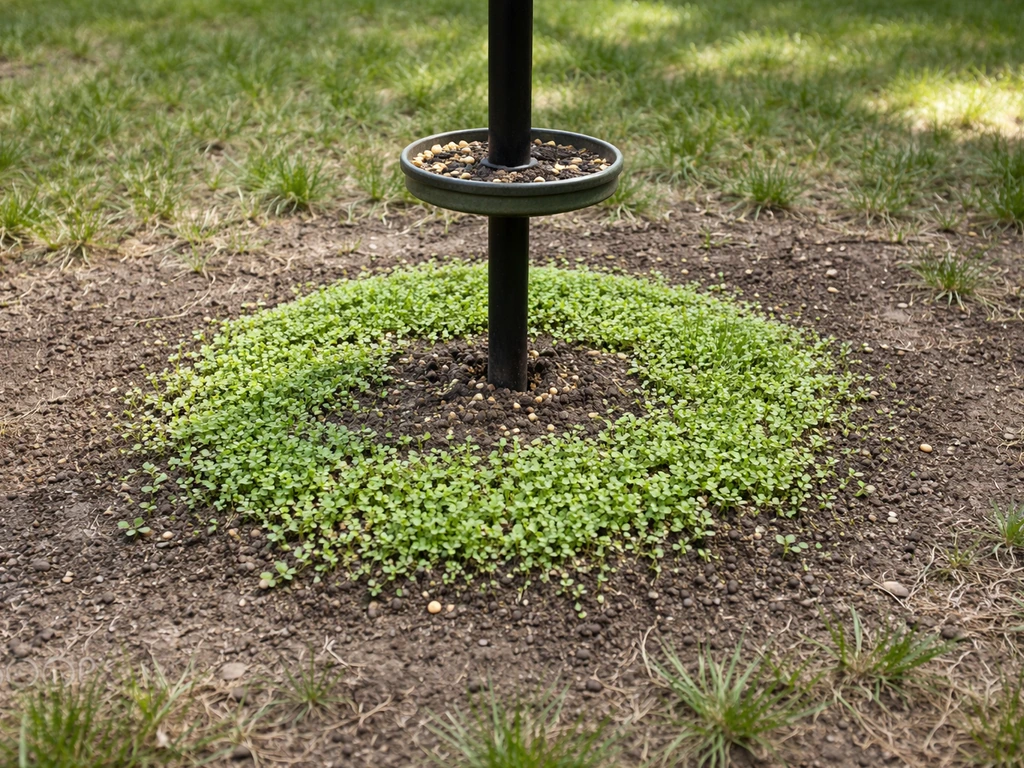
Seedlings clustered in a rough circle directly below your feeder, especially if they appear all at roughly the same time after a rain or watering, are almost always from spilled seed. Weeds that were already in your soil tend to emerge more randomly across the lawn or garden bed. If you find a patch of identical seedlings in the exact footprint where seed falls, that's your answer. Cornell CALS notes that organic material accumulating on top of landscape fabric can create exactly this kind of germination hotspot, so even covered or mulched areas under feeders aren't immune.
Remove what's there right now
Early removal is the single most effective thing you can do. The younger the seedling, the easier it pulls and the less likely it has set viable seed of its own. NC State Extension frames seed-propagated weed management as preventing germination or eliminating young seedlings before they survive, and that framing is exactly right here.
Hand-pulling step by step
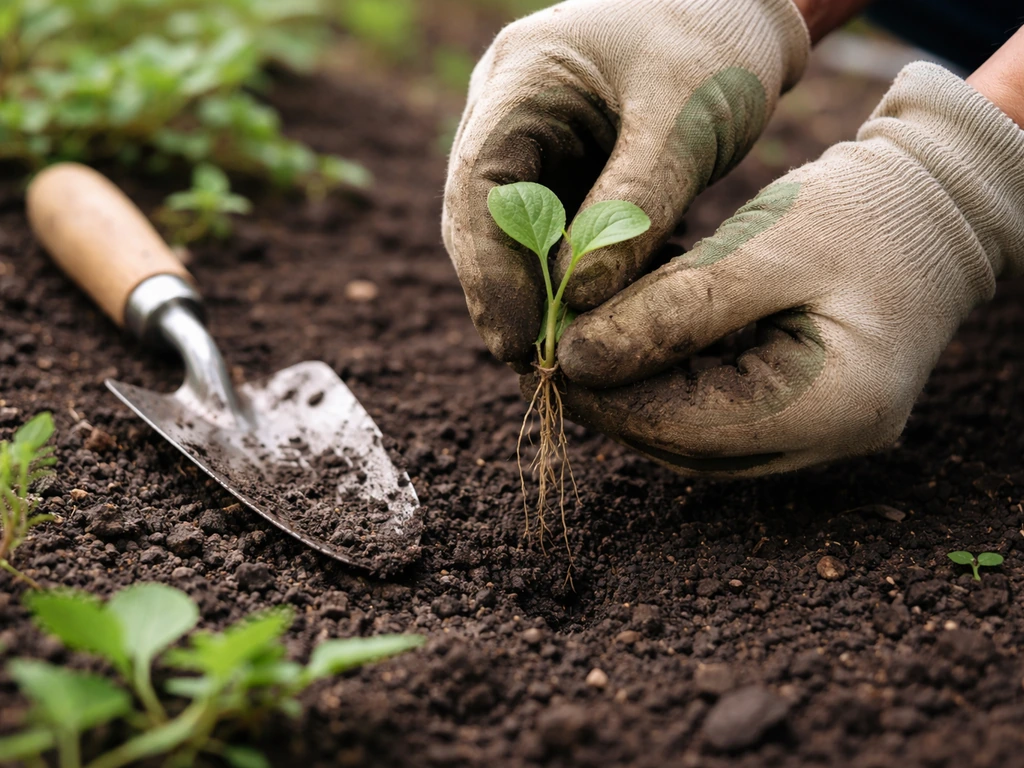
- Water the area lightly if the soil is dry and hard. Moist soil releases roots much more cleanly.
- Grasp each seedling at the base and pull slowly and straight up. For broadleaf seedlings, you want the entire root. UMN Extension notes that for some weeds, removing all root and shoot parts is essential to prevent regrowth.
- For grass seedlings from millet or milo, shallow roots usually come out whole. For broadleaf contaminants like pigweed or ragweed, go a little deeper.
- Drop pulled seedlings into a bag rather than leaving them on the soil surface. Seedlings with any root left can re-establish in humid conditions.
- Do not compost pulled weeds that may have set seeds. Bag and bin them.
- After pulling, hoe or lightly cultivate the top inch of soil to break up any remaining seeds that have started to germinate but haven't yet emerged.
Timing matters
For creeping or vining weeds (bindweed occasionally shows up in mixes or colonizes bare soil under feeders), University of Nevada Reno Extension is explicit: remove them immediately when discovered. Mowing alone won't work for low creepers. Pull them, and pull them young. In warmer, humid climates like the Southeast and Pacific Northwest, seed germinates faster and seedlings bolt to flowering stage more quickly, so check under your feeder every few days during spring and early summer.
After pulling: mulch or cover the area
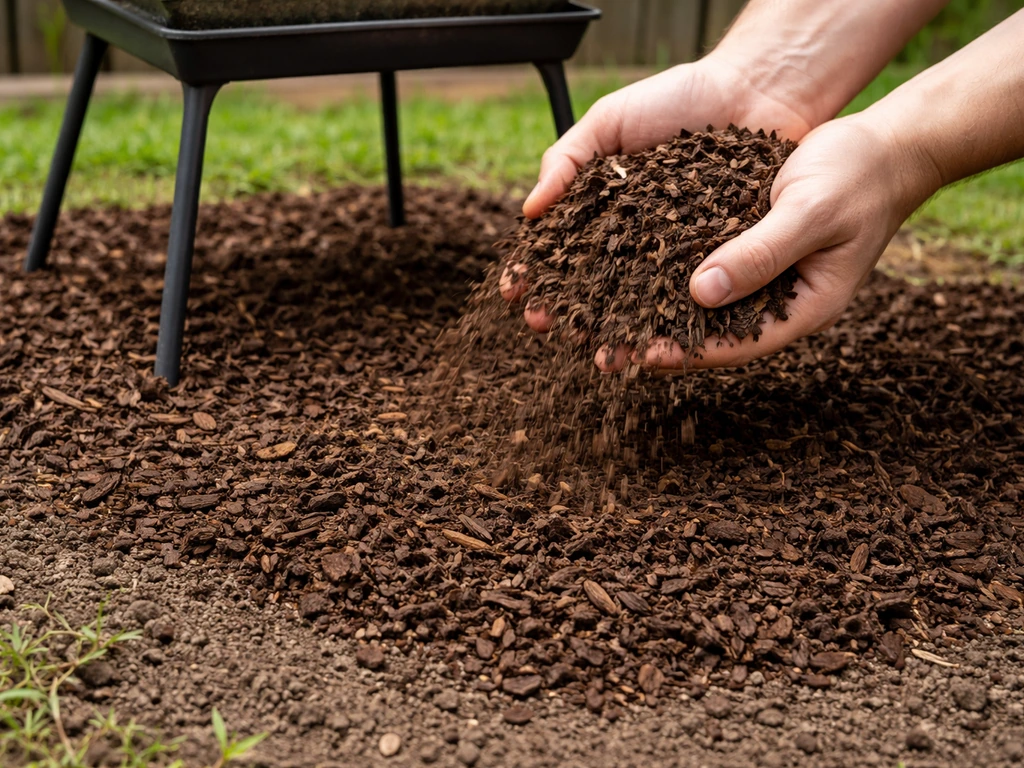
West Virginia University Extension recommends applying mulch before weed seeds germinate, and that if seedlings have already emerged, you need to cultivate or hoe them out first, then mulch. A 2 to 3 inch layer of wood chip mulch blocks sunlight and prevents most remaining seeds in the soil from germinating. Skip landscape fabric under the feeder: as Cornell CALS points out, organic material (hulls, seed fragments, droppings) accumulates on top of fabric quickly and gives seeds a germination medium anyway. Loose mulch is easier to refresh and rake clean.
Stop new seeds from sprouting: smarter feeder setup
Removing what's there solves today's problem. If you are also setting up a Bird Buddy, follow the instructions for how to put seed in Bird Buddy so your feeder setup helps prevent wasted seed from landing on the ground. Fixing your feeder setup prevents next month's problem. The goal is keeping seed off the ground and reducing waste overall.
Use a tray or seed catcher
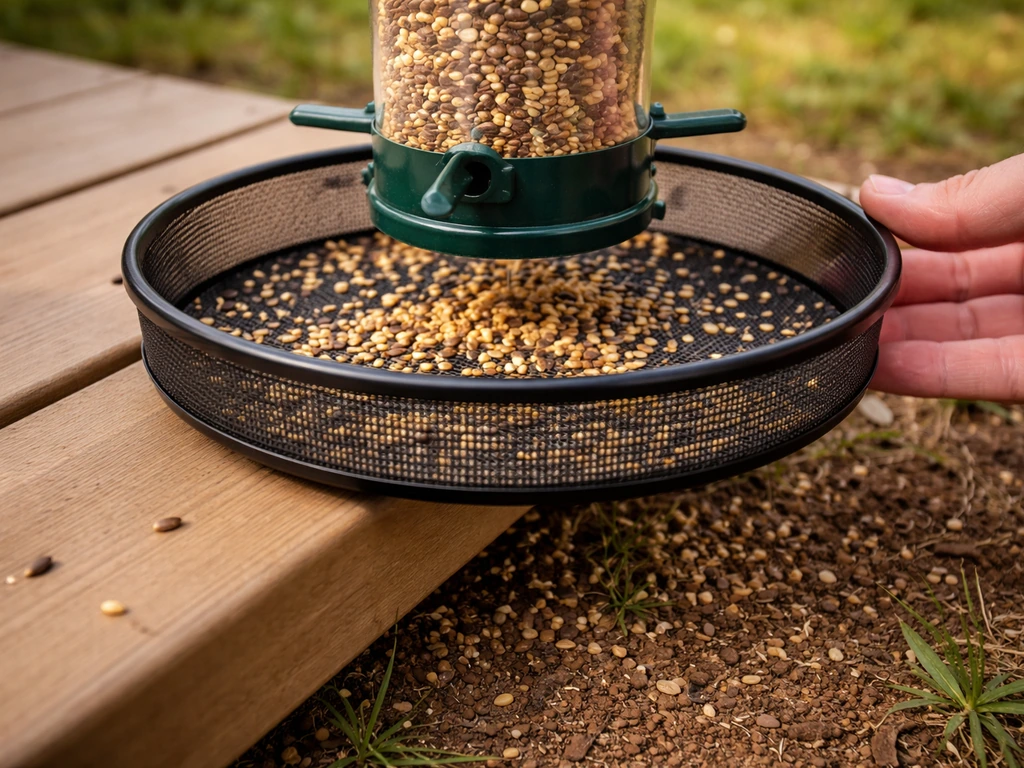
Colorado State University Extension makes the point clearly: without a seed retainer, birdseed thrown by feeding birds covers an area much larger than the feeder itself. A tray or catcher mounted below the feeder intercepts that scatter. Look for trays with drainage holes so seed doesn't pool and get wet. Empty and brush them out every two to three days during active feeding season.
Only fill what birds eat in a day
Penn State Extension specifically advises filling feeders with only as much seed as birds can consume in a single day, particularly for platform feeders, deck feeders, and any open feeder where seed is exposed. Overfilling means old seed sits, gets rained on, and ends up on the ground wet. Smaller, more frequent fills take a little more effort but dramatically reduce the volume of wasted seed hitting the soil.
Move the feeder off bare soil
Seed that lands on a patio, deck, or paved surface can be swept up before it germinates. Seed that falls onto bare soil or mulched garden beds goes straight into a germination-ready environment. If you can hang your feeder over a hard surface and sweep it regularly, you eliminate most of the weed problem at the source. Oregon State University Extension also notes that hanging feeders on baffles and away from structures keeps seed off the ground and reduces rat attraction, which is an added benefit.
Clean under the feeder regularly
Iowa DNR (2025) recommends regular cleaning specifically targeting spilled seed and droppings below feeders. A weekly sweep or rake of the area under your feeder during growing season removes seeds before they have time to germinate and also keeps the space less hospitable to rodents. King County Public Health notes that accumulated birdseed is a direct rat attractant, so this maintenance step does double duty.
Choose and sort seed to reduce weed contamination
Not all seed mixes are created equal. Cheaper mixes often contain more filler seeds (milo, red millet, wheat) that many birds ignore and that readily germinate when they hit the ground. Better seed selection up front is genuinely one of the most effective long-term prevention strategies.
Seeds that cause the most weed problems
- Milo (sorghum): ignored by most backyard songbirds east of the Rockies, lands on the ground, and sprouts readily
- Red or white proso millet: a high-germination seed that can carpet the ground under feeders quickly
- Whole sunflower in the shell: husks pile up and create a seed-rich debris layer; spilled whole seeds germinate easily
- Cheap mixed seed with wheat, oats, or unidentified grain: often contains the weed seed contaminants flagged by MU and Montana State University researchers
Lower-weed seed alternatives
- Shelled sunflower chips or hearts: no shell debris, eaten almost entirely by birds, and the shelled seed doesn't germinate
- Nyjer (thistle) seed: very fine, primarily eaten by finches, low germination rate in most yards
- Shelled peanuts: no germination risk, minimal ground waste if fed in a mesh feeder
- Sterilized or heat-treated seed mixes: processed at temperatures that kill the embryo, so seeds cannot germinate even if they land on soil
Sterilized seed is worth knowing about if weed control is your top priority and you don't want to overhaul your entire setup. The trade-off is slightly higher cost. Shelled sunflower chips are probably the most practical everyday switch for most backyard feeders because they're widely available, nearly every seed-eating songbird likes them, and the weed problem drops dramatically. If you're also managing seed waste issues like husks and shells, dealing with those leftovers is its own topic worth addressing separately. If you end up with husks and shells from using shelled sunflower chips, treat them as seed waste and keep them out of wet areas so they do not contribute to sprouting.
Sorting existing seed
If you have a mix you want to use up, you can hand-sort out the obvious filler seeds (milo is easy to spot: small, round, and reddish-brown) before filling the feeder. It takes a few minutes but reduces the volume of germination-prone seed that ends up under the feeder. This is the same logic as separating seed from husks before disposal, which keeps the ground area cleaner overall.
Keep seed dry to stop sprouting at the source
Moisture is what turns spilled seed into sprouting seed. Wet seed also molds faster, which is a separate health risk for birds. Solving the moisture problem addresses both issues at once.
Storage
Penn State Extension is direct: store seed in a cool, dry place, and if it becomes moldy, do not use it. The Wild Bird Feeding Institute recommends storing seed indoors in airtight containers, protected from humidity and temperature swings. A garage or shed works if it stays reasonably cool and dry; a hot, humid shed in July is not much better than leaving seed outside. Metal or hard plastic containers with locking lids also keep rodents out. Buy in quantities you'll use within four to six weeks so seed doesn't sit long enough to degrade or attract pests in storage.
Feeder dryness
Tube feeders with tight-fitting ports and covered hopper feeders keep seed dry in rain far better than open platform feeders. If you use a platform feeder, choose one with a mesh floor so water drains rather than pooling. After heavy rain, check the feeder and the tray underneath, and remove any wet or clumped seed before it begins to sprout or mold.
If the seed is already wet, drying it out promptly helps prevent sprouting and mold, so focus on keeping it dry until you refill your feeder dry out wet bird seed. Wet seed that's already started to sprout in the feeder should be removed and discarded entirely. Drying out wet seed before it reaches this stage is possible if caught early, but once germination has started, that seed is better disposed of than fed.
Feeder cleaning routine
Clemson Home and Garden Information Center recommends cleaning feeders with a vinegar and water solution plus scrubbing for routine maintenance, and a diluted bleach solution when mold or disease is suspected. Rinse thoroughly and let the feeder dry completely before refilling. A damp, seed-lined feeder is exactly where mold and sprouting start. Monthly cleaning is a minimum; every two weeks is better during warm, humid months.
Ongoing prevention: pests, hygiene, and keeping ahead of it
Once you've pulled the existing seedlings and tightened up your feeding setup, the maintenance routine is what keeps things from sliding back. Here's what a realistic ongoing schedule looks like.
| Task | Frequency | Why it matters |
|---|---|---|
| Sweep or rake under feeder | Weekly (daily in spring/summer) | Removes spilled seed before germination |
| Empty and brush seed catcher tray | Every 2-3 days | Prevents wet seed accumulation and sprouting in the tray |
| Refill feeder with daily-use amounts only | Daily or every other day | Reduces overfill waste and ground seed volume |
| Check for and pull new seedlings | Weekly during growing season | Catches seedlings before they set seed or root deeply |
| Clean feeder (vinegar/water scrub) | Every 2 weeks in warm months | Prevents mold and reduces disease risk for birds |
| Inspect stored seed for moisture/mold | Monthly | Stops contaminated seed from entering the feeder |
| Refresh mulch under feeder | Each spring | Replenishes sunlight-blocking layer to suppress germination |
Rodent and pest pressure
Ground seed doesn't just grow weeds: it attracts rodents, which make the seed waste problem worse by burrowing under feeders and scattering seed further. King County Public Health and Oregon State University Extension both specifically call out birdseed accumulation as a rat attractant. If you're seeing rodent activity near your feeder, tighten up the feeding routine (no overfill, daily cleanup, no seed left on the ground overnight), switch to a hanging feeder on a baffle, and store seed in a sealed metal container. Rodent-driven seed scatter means more germination sites and more weeds, so pest control and weed control are genuinely the same problem.
Regional notes
In warm, humid climates (Southeast US, Gulf Coast, Pacific Northwest), spilled seed can germinate within days of hitting moist soil, so weekly under-feeder cleanup may not be enough in spring and early summer. Daily sweeping during peak germination season (roughly March through June in most of these regions) is realistic if you're trying to stay ahead of the problem. In dry climates (Southwest, high plains), weed pressure from spilled seed is lower simply because moisture is limited, but irrigation and rain events can trigger sudden germination flushes after a dry spell, so watch for those.
A quick troubleshooting checklist
- Weeds keep coming back after pulling: soil seed bank from earlier spills; keep pulling weekly and add fresh mulch to suppress remaining seeds
- Seedlings appearing in a wide area, not just under feeder: birds are scattering seed further than the tray catches; consider a larger tray or moving the feeder over a hard surface
- Seed in feeder is clumping or smells off: moisture got in; clean feeder, discard that batch of seed, and check storage container for humidity
- Lots of milo or red millet on the ground: birds are rejecting filler seed; switch to a targeted mix or shelled seed for less waste
- Rodents near the feeder: reduce fill amounts, clean up nightly, switch to baffled hanging setup away from structures
- Weeds look nothing like grass or sunflower: likely weed seed contaminants in the mix; try a different brand or switch to single-ingredient seed
FAQ
How soon after I see bird seed weeds should I remove them?
As soon as you notice them, ideally when they are tiny. Waiting until they are a few inches tall makes pulling harder and increases the chance they have already produced viable seed, so do a quick check under the feeder after rain or watering every few days during spring and early summer.
What if the seedlings are coming up everywhere, not just directly under the feeder?
That pattern usually means some weeds were already present in the soil seed bank, not just from spilled birdseed. Focus on removing young plants during the flush, then improve your feeding setup so less seed lands on bare soil, using a catcher tray, smaller daily refills, and a mulch layer under the feeding area.
Should I use landscape fabric under my feeder to prevent sprouting?
Avoid it. Fabric can still collect seed fragments, husks, droppings, and organic buildup on top, which creates a germination hotspot. Instead, use loose wood chip mulch (around 2 to 3 inches) and keep the area cleared and dry.
Do I need herbicides to get rid of bird seed weeds?
Usually no if you tackle the main cause, spilled and contaminated seed plus moisture. The most effective approach is early removal and prevention (no-waste feeder setup, daily cleanup, correct refills). If you consider herbicides, use spot treatment only and avoid spraying near birds and feeders, since drift and residue risk is real.
Can I compost the pulled weeds and seedling material under the feeder?
Only if you are confident the material did not set seed and your compost pile reaches high heat. Seeded or mature weeds can survive typical backyard composting, so bag and trash anything that looks like it may have formed seed heads.
What’s the best way to clean up spilled seed without spreading it?
Dry-sweep or rake gently and bag the debris, then wipe the spot. Wet seed and clumps should be removed before they dry on the ground and begin sprouting, but avoid hosing the area, since spreading seed into soil deeper layers increases future flushes.
How often should I empty a seed tray or catcher underneath the feeder?
During active feeding season, empty and brush it out about every two to three days. Seed in a tray can get wet, especially after rain, and that accelerates germination. Drainage holes help, but they do not replace frequent removal.
How much seed should I put in my feeder to reduce weeds?
Fill only enough for what birds will eat in about a day, especially for platform or any feeder where seed is exposed. Overfilling leads to older seed getting rained on, sitting on the ground, and creating more germination-ready seed than you can realistically keep up with through cleanup.
My feeder ports spill seed even when I’m not overfilling. What should I check?
Inspect the feeder design and fit, for example loose hopper components, worn seals, or ports that let birds dump seed rather than pick it up. If seed falls onto soil because the catcher setup is too small or misaligned, adjust the mounting position or switch to a feeder style with tighter ports and better seed retention.
What should I do if the seed in the feeder gets wet or moldy?
Remove the wet or clumped seed promptly and discard it. Also clean the feeder thoroughly and let it dry completely before refilling, since damp, seed-lined areas can grow mold and restart sprouting even if you improve the rest of your setup.
Will changing to shelled sunflower chips eliminate the weeds completely?
It should dramatically reduce them, but not always 100 percent, because some weed seeds can still arrive from other sources or remain in the soil seed bank. Pair the change with daily cleanup and proper moisture control to stop the next germination cycle.
What if I see creeping or vining weeds under the feeder, should I mow them?
Do not rely on mowing. Pull them immediately, especially when they are young, because low creepers can re-root and spread even if cut. In warm, humid regions, check under the feeder more frequently since seedlings can bolt quickly.
How do I handle weed control if birds keep dropping seed on a patio or deck?
If the seed is landing on hard surfaces, sweep it regularly before it germinates. Consider relocating the feeder so it is above a hard, cleanable surface or a catcher area, and keep up with frequent sweep-ups during peak germination months for best results.
Next Article
How to Separate Bird Seed From Husks: Simple Methods
Step-by-step sorting methods to separate bird seed from husks using sifting and winnowing, improve feeder performance, r