Rake or sweep the shells into a bag and throw them in the trash. That is the safest, fastest thing you can do today. Do not compost wet or moldy shells, do not leave them piling up on the ground, and do not bring heavily contaminated material inside to sort. Once you have cleared the mess, you can make a few simple changes to your feeder setup and seed selection that will cut the problem down dramatically going forward.
What to Do With Bird Seed Shells: Clean, Prevent, Dispose Safely

Maya Collins
23 Jun 2026
Why bird seed shells pile up (and why it matters)
Bird seed shells are the husks, hull fragments, and pellet casings that birds crack open and discard before swallowing the kernel. This is completely normal feeding behavior. Finches, chickadees, and nuthatches are especially efficient de-huskers: they grab a seed, crack it, spit the hull, and move on. Larger birds like jays and cardinals do the same. The result is a steady rain of empty shells directly below your feeder.
The problem is not the shells themselves but what happens when they accumulate. A thick layer of hulls traps moisture, creates a mat of decaying organic material, and becomes a prime spot for mold to grow. Mold on birdseed and shells is not just an eyesore.
Aspergillus fungi, which thrive in moldy birdseed and damp decaying vegetation, produce spores that can cause aspergillosis in birds and, in large disturbed accumulations, pose a histoplasmosis risk to people who breathe in the dust. On top of that, dense shell piles under feeders attract rodents looking for an easy calorie-dense meal, and damp hull mats can harbor mites and other insects. Keeping the area clean is genuinely important for both bird health and your own.
A second, underappreciated contributor to shell buildup is filler seed. Many commercial bleed blends include millet, milo, and other seeds that the birds you want simply do not eat. They toss those seeds to the floor while digging for favorites, and the discarded seeds either sprout, rot, or just pile up as extra waste. Understanding this is key to solving the problem at the source.
Immediate cleanup: how to safely collect, sort, and dispose today
If the shell pile under your feeder is fresh and dry, this is straightforward. If it is wet, compacted, or you can see any grey-green fuzz on the material, treat it more carefully.
For dry shells on grass or a patio
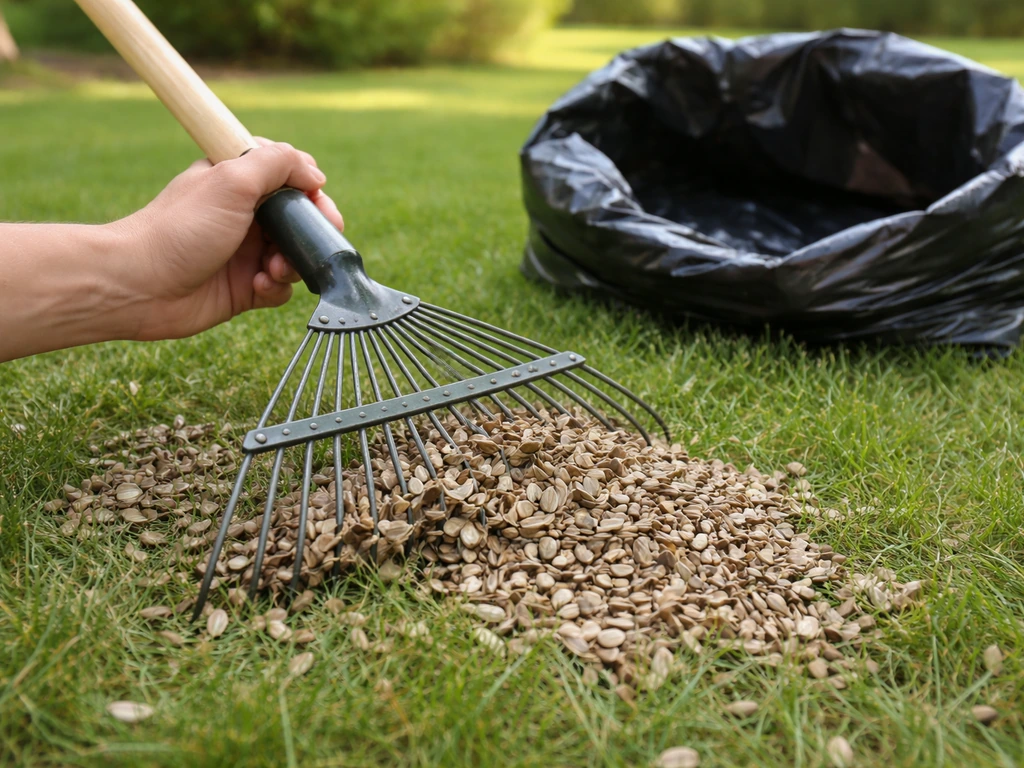
- Rake or sweep the shells into a pile. A standard leaf rake works fine on grass; a stiff-bristle broom works on concrete or pavers.
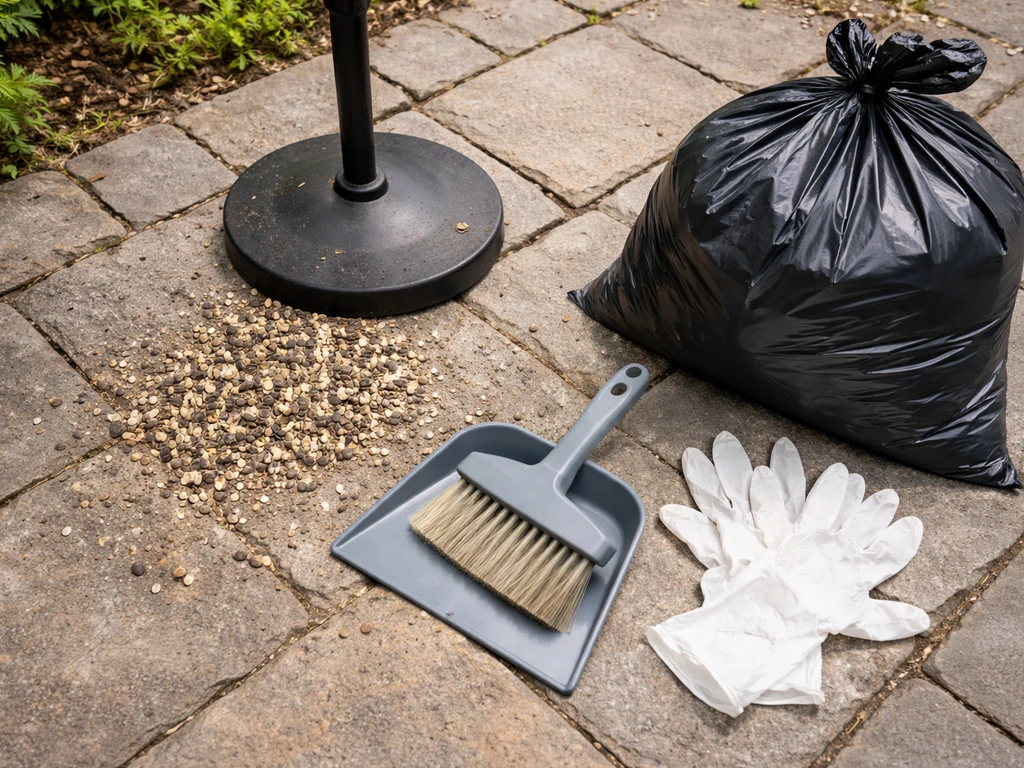
- Bag the material in a standard garbage bag and seal it. Throw it in your regular trash bin.
- If the shells have been sitting on a small patch of lawn for a long time, scatter or till the area lightly to help the remaining organic material break down. You can also apply a thin layer of lime (about 1/4 inch deep) to the bare soil to help neutralize bacteria, though be aware that lime can damage or kill grass if over-applied.
- Rinse hard surfaces with a garden hose after sweeping.
For wet, moldy, or compacted shells
- Wear a dust mask (N95 if available) before disturbing a large moldy pile. Fungal spores become airborne when you rake or shovel compacted, damp material.
- Wear disposable gloves. Do not handle moldy shells with bare hands.
- Scoop the material directly into a heavy-duty garbage bag. Minimize stirring and tossing motions that kick up dust.
- Seal the bag immediately and place it in an outdoor bin.
- Do not bring this material inside to sort it, and do not add it to a home compost pile where it will continue to harbor Aspergillus spores.
- After bagging, hose down the area and let it dry before raking any remaining residue.
Sorting shells from usable seed
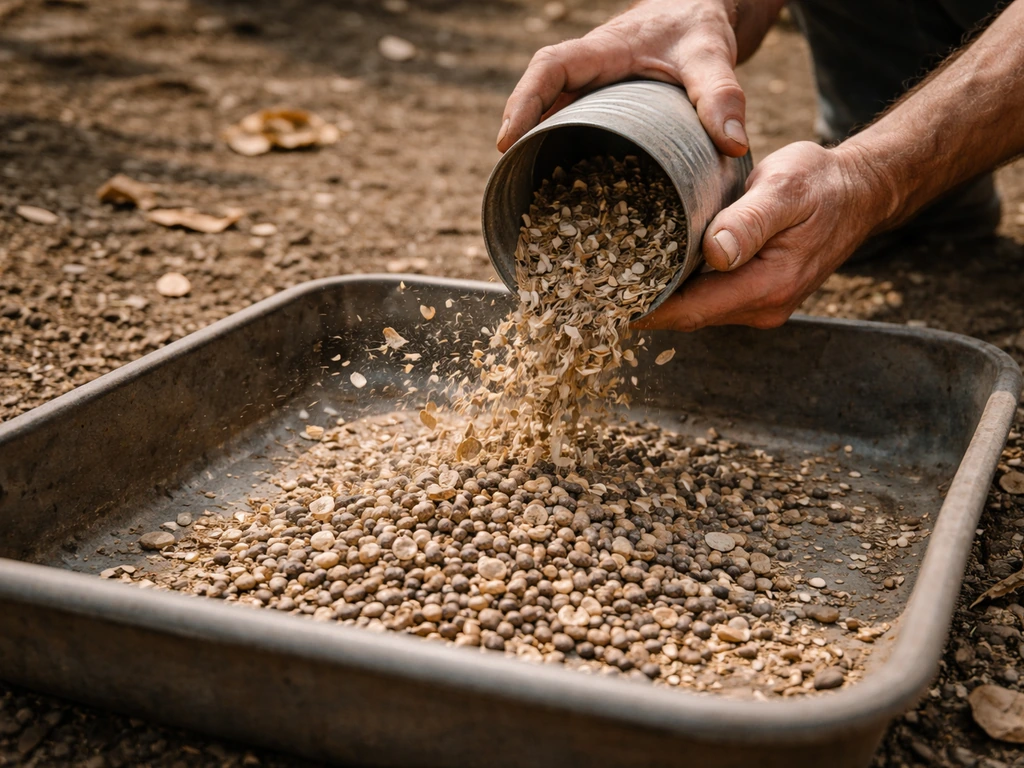
If you have a mix of shells and intact seeds that you want to salvage (for example, from a tray feeder that got rained on but is not yet moldy), you can winnow the material outdoors on a dry, breezy day. Pour the mix slowly between two containers from a height of about 18 inches. Light shells blow away; heavier intact seeds fall into the lower container. Any seed that smells sour, looks discolored, or feels slimy goes in the trash regardless. Winnowing is covered in more depth in the related guide on separating bird seed from husks.
When shells mean trouble: mold, wet seed, and pest attraction
Not every shell pile is a crisis, but there are specific situations where you need to act fast rather than just cleaning on your usual schedule.
| Warning sign | What it means | What to do now |
|---|---|---|
| Grey, green, or black fuzz on shells or seed | Active mold growth; Aspergillus spores present | Bag and discard with respiratory protection; do not compost |
| Sour or fermented smell from the shell pile | Anaerobic decay underway, possible mycotoxin buildup | Remove and discard immediately; rinse area thoroughly |
| Sprouting seedlings under the feeder | Intact seed sitting in moist soil; indicates poor drainage under feeder | Remove sprouts, bag shells, and consider switching to hulled seed |
| Rodent droppings, chew marks, or small excavated holes near feeder base | Rodents using shell pile as a food and shelter source | Remove all ground debris; stop ground-level feeding; raise feeder; seal any entry points nearby |
| Large ant trails leading into shell pile | Insects exploiting decaying organic material | Clear the pile, hose area, and consider relocating the feeder |
| Wet, sticky seed clumping in shells after rain | Humidity and shell debris trapping moisture in feeder | Empty feeder, discard clumped material, clean feeder before refilling |
The link between wet shells and respiratory disease in birds is real. Cornell's Wildlife Health Lab and California's Wildlife Health Lab both tie aspergillosis in birds directly to exposure to moldy birdseed. If you notice sick or lethargic birds near your feeder during a period when you have had shell buildup and wet conditions, take the feeder down, clean it thoroughly, and let the ground area dry out before putting it back.
For people, the main risk from large disturbed accumulations of bird waste and decaying organic matter is histoplasmosis, a fungal lung infection. The risk is low for casual backyard cleanup but rises significantly if you are shoveling out a large compacted pile that has been building for months. In those situations, the N95 mask and gloves are not optional. Related guidance on how to handle wet or contaminated seed safely is covered in the article on how to dry out wet bird seed. If your seed is already wet, drying it properly helps prevent mold and keeps birds healthier drying out wet bird seed.
Feeder setup to reduce shell waste
The right hardware can cut your shell cleanup time by half or more. For specific steps on what to do when you need to add seed to a Bird Buddy, see the guide on how to put seed in Bird Buddy. These are the setups worth investing in.
Seed catcher trays
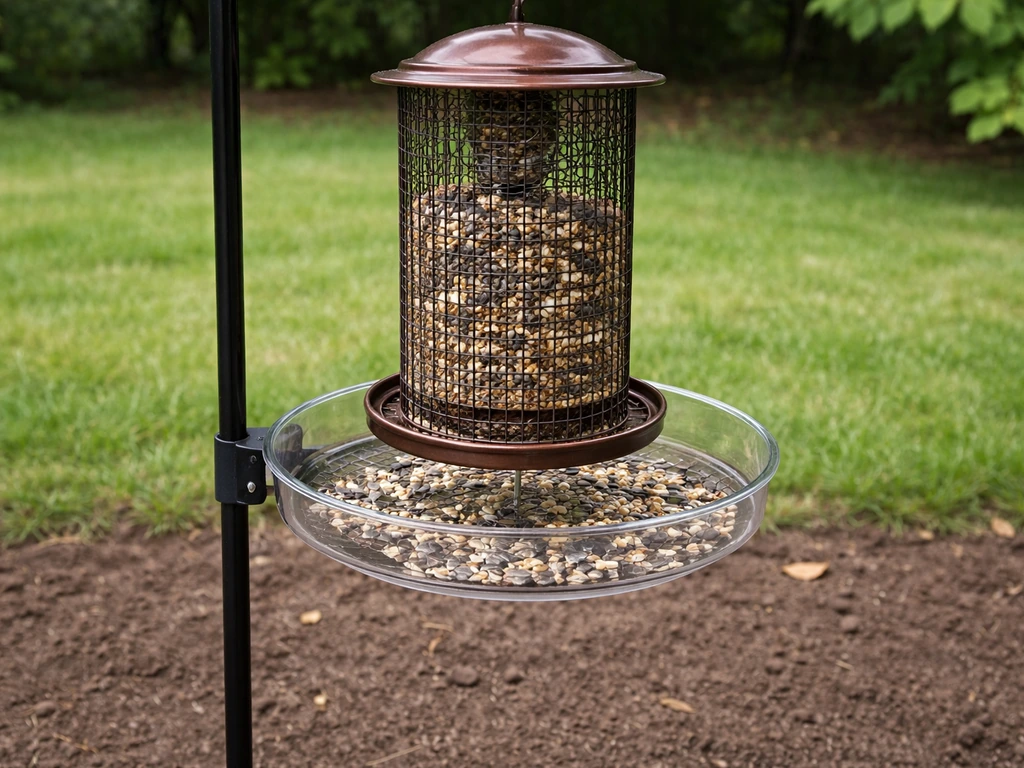
A seed catcher tray mounts directly under your feeder and catches shells and dropped seed before they hit the ground. This is probably the single most effective tool for managing shell mess. Look for trays with drainage holes so water does not pool and create a mold problem in the tray itself. You just lift the tray, dump the shells into the trash, give it a rinse, and reattach. It takes about two minutes. Products like the Audubon seed catch tray or the Brome SeedBuster-style catchers are purpose-built for this, but even a basic platform tray attached below your hanging feeder does the job.
Squirrel baffles and feeder guards
A significant portion of shell mess comes from squirrels and larger nuisance animals raiding feeders and scattering seed in every direction. A pole-mounted baffle (a smooth dome or cylinder mounted 4 to 5 feet up on the feeder pole) or a hanging baffle above a suspended feeder dramatically reduces raiding. Less raiding means less scattered seed, which means fewer shells on the ground. The Minnesota DNR also recommends surrounding feeders placed near heavy cover with 2-inch by 4-inch welded wire fencing at least 30 inches high and 6 to 8 feet in diameter to deter ground-level animals from congregating directly below.
Feeder type and placement
Tube feeders with small ports reduce waste by giving birds less room to dig and fling seed. Platform feeders let birds see everything at once and tend to cause more flinging. If you use a platform feeder, pair it with a tray underneath. Placement also matters: feeders positioned over a hard surface like a patio or concrete slab make cleanup far easier than feeders over a lawn. If the feeder is over grass and you are fighting shell buildup constantly, consider laying a small gravel pad or placing a rubber mat directly under it to simplify sweeping and improve drainage.
Seed type and selection: which mixes shell less and how to store properly
The type of seed you buy has a huge effect on how much shell waste you produce. Switching seed is often the most impactful change you can make.
| Seed type | Shell waste level | Notes |
|---|---|---|
| Black-oil sunflower (in shell) | High | Thin shells crack easily, popular with most birds, but hulls pile up fast |
| Sunflower hearts (hulled) | Very low | No shells at all; birds eat the entire kernel. Best choice for patios and decks. Costs more per pound. |
| Safflower (in shell) | Moderate | Thick shells; cardinals and chickadees like it, squirrels often avoid it |
| Nyjer/thistle | Very low | Tiny seed with minimal husk; preferred by finches. Use a specialized tube feeder. |
| Standard mixed blends | Very high | Often contain milo and filler seeds birds reject, creating double the waste: hulls from eaten seeds plus whole discarded seeds |
| No-waste/no-filler mixes | Low to moderate | Pre-blended mixes of hulled or preferred seeds; reduces filler waste significantly |
The Minnesota DNR specifically calls out sunflower hearts as the solution for deck and patio situations where hull mess is a problem. If you are feeding on or near a hard surface, hulled seed is worth the price premium because you eliminate shells entirely. If you feed over a lawn and do not mind the occasional cleanup, black-oil sunflower is still one of the best all-around choices for attracting a wide variety of birds.
Avoid budget blends loaded with millet, milo, and oat that the birds you want will just toss aside. That discarded filler seed does not just create shells: it sits on the ground, absorbs moisture, and becomes a sprouting or rotting problem. More on managing that is covered in the guide on how to get rid of bird seed weeds.
Storing seed properly to prevent shell problems before they start
Seed that is already degraded when you put it in the feeder will create far more mold and pest problems than fresh seed. Store seed in a hard-sided, airtight container: a metal trash can with a locking lid or a heavy-duty plastic container with a tight seal. Keep it off the ground and in a cool, dry location. Seed stored in open bags in a warm garage is an invitation for moisture, insects, and rodents.
Rotate your stock so you are not using seed that has been sitting for many months. Most birdseed stays fresh for about six months in good storage conditions; after that, oil content degrades, and mold risk rises. If your stored seed smells musty or shows any clumping, discard it rather than filling your feeder.
Cleaning routines for feeders, ground, and surfaces
A consistent cleaning routine prevents the conditions that make shell buildup dangerous. After you clear old seed and hulls from the ground under and around the feeders, the Minnesota DNR also advises sprinkling lime on the ground to help reduce unwanted bacteria near bird-feeding stations, while noting it may harm grass. Here is the schedule that works.
Ground and surface cleanup
- Rake or sweep beneath feeders at least once a week during peak feeding season.
- During wet or rainy stretches, sweep every two to three days. Wet shells mold fast.
- After sweeping, check for any remaining seed on the ground. Discard it rather than leaving it to rot.
- Hose down hard surfaces after sweeping to clear shell dust and debris.
- If you use a seed catcher tray, empty and rinse it weekly.
Feeder cleaning
- Take the feeder apart completely. Remove all seed and shell residue.
- Wash all parts with hot water and dish soap. Scrub inside surfaces with a bottle brush.
- Soak all parts for 10 minutes in a solution of 1 part bleach to 9 parts water. This is the ratio recommended by Cornell Lab's All About Birds, Project FeederWatch, and Audubon, among others.
- Rinse thoroughly with clean water. Any bleach residue left behind can harm birds.
- Allow the feeder to air dry completely before refilling. Putting seed into a damp feeder is a fast way to create a mold problem.
- Do this full cleaning at least once a month. During summer heat or rainy weather, every two weeks is better.
The area under your feeder counts as part of the cleaning zone. Shell debris, bird droppings, and moldy seed casings in that zone can transmit disease and attract rodents. Do not just clean the feeder and ignore the ground.
Species- and wildlife-specific fixes
Finches and small songbirds
Finches (goldfinches, house finches, purple finches) are prolific shell producers. They crack seeds rapidly and let husks fall wherever they happen to land. A tube feeder with a seed catcher tray below handles this well. Nyjer seed is nearly shell-free and keeps finches happy without the hull mess. If you are feeding black-oil sunflower to finches, switching to hulled chips will cut cleanup significantly without losing birds.
Cardinals, jays, and larger birds
Cardinals and blue jays tend to prefer platform feeders or tray feeders where they can stand while eating. They also dig through seed to find favorites, scattering more than smaller birds. A tray with high edges (2 inches or more) catches more of that scattered material before it hits the ground. Cardinals are drawn to safflower seed, which has a thicker shell and produces less fine husk debris than sunflower.
Rodents: rats and squirrels
Shell piles are a rodent magnet. The shells themselves have some caloric residue, and more importantly the whole area signals a reliable food source. Early signs of a rodent problem include small excavated holes near the base of the feeder pole, gnaw marks on wooden feeder parts or structures nearby, and droppings in the shell debris. If you see these signs, remove all ground-level food immediately, stop ground feeding entirely, raise your feeder height, and install a pole baffle. A King County Public Health advisory on this topic makes clear that consistent under-feeder cleanup is one of the most effective deterrents for rats.
Insects and mites
Damp shell mats create habitat for ants, mites, and other small insects. Ants are primarily after the seed residue in the shells; mites are after the organic matter and the small animals it attracts. The fix is the same: remove the shells frequently and keep the ground dry. Placing feeders on open, sunny ground rather than under dense shrubs speeds drying time significantly. If you are in a humid climate (the Gulf Coast, the Pacific Northwest, the Southeast), you will need to sweep more frequently than someone in a dry region.
Long-term prevention: a simple monitoring and maintenance plan
Once you get the current mess under control, staying ahead of it is much easier than catching up. Here is the ongoing routine that keeps shell problems from coming back.
Weekly tasks
- Rake or sweep under feeders and dispose of shells in the trash.
- Empty, rinse, and check seed catcher trays for standing water or mold.
- Check feeder ports for clumped or wet seed and remove it before it molds.
- Scan the ground for signs of rodent activity (holes, droppings, gnawing).
Monthly tasks
- Full feeder disassembly, soap wash, and 10-minute bleach soak (1 part bleach to 9 parts water), followed by thorough rinsing and complete air drying.
- Check stored seed for smell, clumping, or insect activity. Discard any seed that has been open for more than six months or shows signs of degradation.
- Inspect feeder hardware (hangers, poles, baffles) for damage that could cause seed spills.
- Assess whether your seed choice is still working: if shell piles are still overwhelming, consider switching to hulled options.
Seasonal adjustments
In spring and summer, heat and humidity accelerate mold growth. Shorten your cleaning interval and consider reducing feeder fill levels so you are not leaving seed sitting for more than a few days at a time. In winter, shells can compact under snow and ice into a dense frozen mat that is harder to remove, so clean before the first freeze if you are in a cold region. After winter, do a full ground cleanup before warming temperatures kick-start mold growth in any leftover organic material.
The goal is a simple system you will actually keep up with: a seed catcher tray, a no-filler or hulled seed option, a weekly sweep, and a monthly feeder soak. That combination solves most shell problems before they become health or pest problems. If you are troubleshooting a specific situation like sprouting seed or a feeder that keeps getting wet, the guides on bird seed weeds and drying out wet seed have more targeted steps for those scenarios.
FAQ
Can I compost bird seed shells?
No. If shells are damp, compacted, or visibly growing mold, composting can spread fungal material and attracts pests. Use the safest option, bag and trash the shells, then fix the cause (improve drainage, reduce feeder fill time, and add a seed catcher tray).
How can I tell if bird seed shells are safe to throw away as normal trash?
If shells are dry and clean, you can bag them and dispose with regular trash. If you see fuzz, slime, or sour odors, treat them as contaminated and do not handle bare-handed. Bag tightly to reduce dust, then throw away.
Should I hose down the area under my feeder after cleaning shells?
Rinse can help with a seed catcher tray or a feeder base once you are done, but soaking large shell piles or washing onto soil can keep the area wet and worsen mold growth. Instead, bag first, then rinse hard surfaces and let everything fully dry before refilling.
Can I store cleaned bird seed shells in a bag until trash day?
Yes, but only if you keep everything dry. Best practice is to scoop and bag the shells using gloves, then keep the bag sealed until trash day. Avoid storing shell waste in open containers or on the ground, since residual moisture can create mold.
What should I do if I brought a lot of shell and seed waste inside to sort it?
Do not. Sorting mixed material inside increases the chance you disturb moldy dust, which is where respiratory risk comes from. If the material is questionable (wet, grey-green fuzz, or musty smell), keep it outside, bag it without aggressive shaking, and dispose.
Is sweeping the safest way to remove shells if there is mold or mildew?
Use dry cleanup first. For small piles, sweep or scoop into a bag, then lightly wipe hard surfaces with a damp paper towel rather than spreading dust. If you must deal with a large compacted mat, wear an N95 mask and gloves and avoid stirring debris.
Can I salvage intact seeds from a shell pile that got wet but is not clearly moldy?
If intact seeds are mixed in, salvage only the parts that look fresh and do not smell sour or appear discolored or slimy. Winnowing outdoors can separate shells from heavier seeds, but any suspicious seed goes straight to trash.
What should I change first if shells keep returning every day?
If shells are piling up fast, the cause is usually either a high flinging style (platform feeders, tray feeders with open bottoms) or too much filler seed. Switching to hulled seed or seed types that birds crack less, plus adding a tray with edges or a seed catcher tray, usually reduces the problem more than just increasing cleaning frequency.
If I switch to hulled seed, will I still have shell mess?
Not always. If you are using hulled seed, you will often reduce shells dramatically, but you can still get hull dust and scattered residue from de-huskers, spilled seed, or partially husked products. If you still have lots of debris, check feeder ports (tube sizes), baffle effectiveness, and whether filler seed is being tossed.
What placement changes help most for controlling wet shell mats?
Yes, in a few ways: placing the feeder over a gravel pad or rubber mat, using a feeder stand area that drains quickly, and attaching a drainage-friendly tray reduce the wet conditions mold needs. The goal is to keep the under-feeder zone from staying damp after rain.
What are the first signs of a rodent problem under the feeder?
Look for a pattern: rodents often show up when there is consistent ground-level food and cover provides a hideout. If you see holes near the pole, gnaw marks, or droppings, stop ground feeding, remove shell debris promptly, raise the feeder, and add a pole baffle before the problem grows.
Next Article
How to Put Seed in Bird Buddy Step-by-Step Guide
Step-by-step guide to load Bird Buddy with the right seed, prevent jams, clumping, pests, and ensure safe dispensing.
