The two most practical ways to separate bird seed from husks at home are sifting through a mesh screen and winnowing with airflow. Sifting works best when seed and husk differ in size; winnowing works when they differ in weight. For most common mixes, combining both steps gives you the cleanest results with the least edible seed lost.
How to Separate Bird Seed From Husks: Simple Methods

Maya Collins
27 May 2026
Why bother separating husks from seed
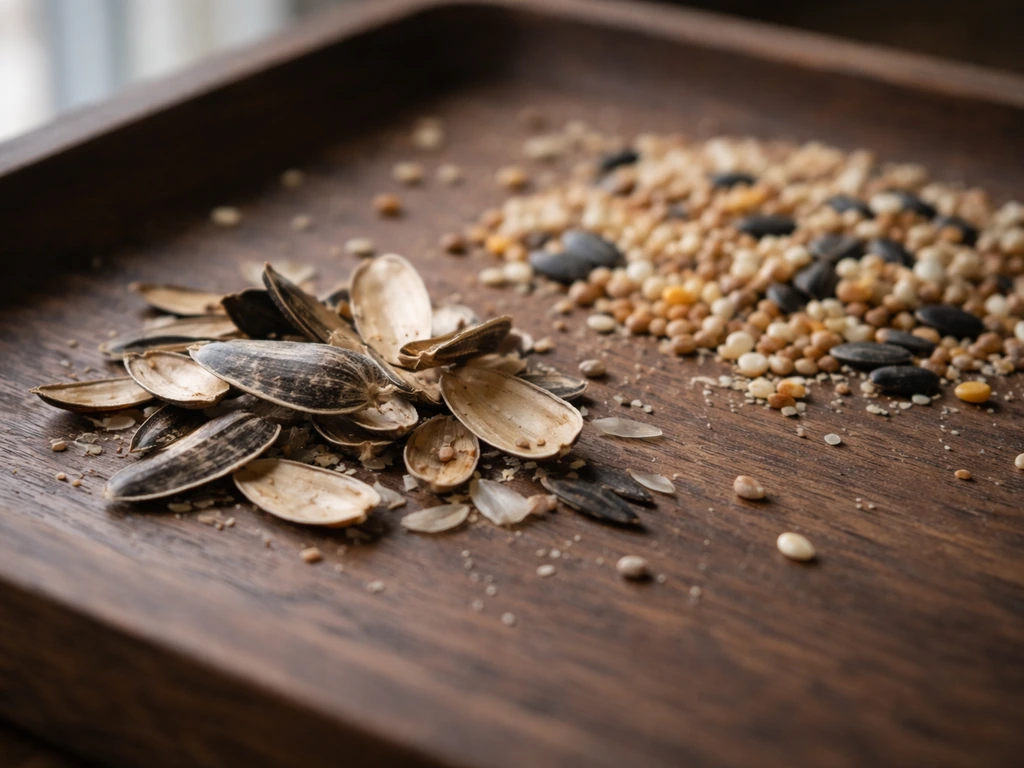
Empty hulls and husk fragments left in a feeder trap moisture, and wet seed material is where mold and bacteria take hold quickly, especially in humid or rainy weather. Once mold spreads, the whole batch is a problem, not just the husks. Beyond mold, hulls pack down and clog feeder ports, meaning birds stop getting seed even when plenty is still in the hopper. On the ground below feeders, an accumulating layer of wet hulls creates the exact conditions the Minnesota DNR flags: bacteria buildup that can harm birds and kill grass patches.
There is also a practical waste angle. A 20-pound bag of in-shell sunflower seed is roughly 25 to 30 percent hull by weight. If you are buying bulk seed and filling multiple feeders, removing husks upfront means you are storing and handling significantly less dead weight, and your feeders stay active longer per fill. If you have dealt with sprouting weeds under feeders, note that husks from hulled seed are sterile and will not sprout, so separating them also helps with that downstream problem.
Quick at-home sorting methods
Manual picking (small batches only)
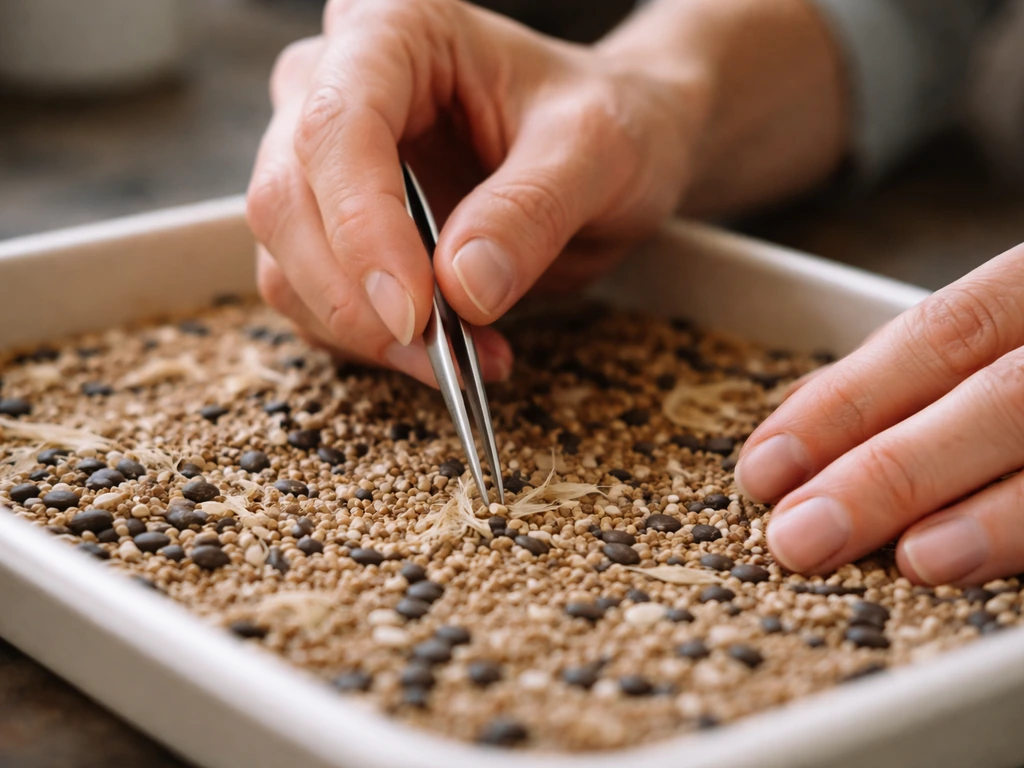
For very small volumes or for separating a specific seed type you want to pull out cleanly, hand-picking is the most precise option. Spread the seed mix across a shallow tray or baking sheet in a thin layer and pick out the husks by hand or use a small spoon to push them aside. This is slow, so keep manual sorting to batches under a cup or two. It is genuinely useful when you have a mix with a few large sunflower hulls among smaller intact seeds and neither sifting nor airflow can cleanly separate them without losing good seed.
Screen sifting
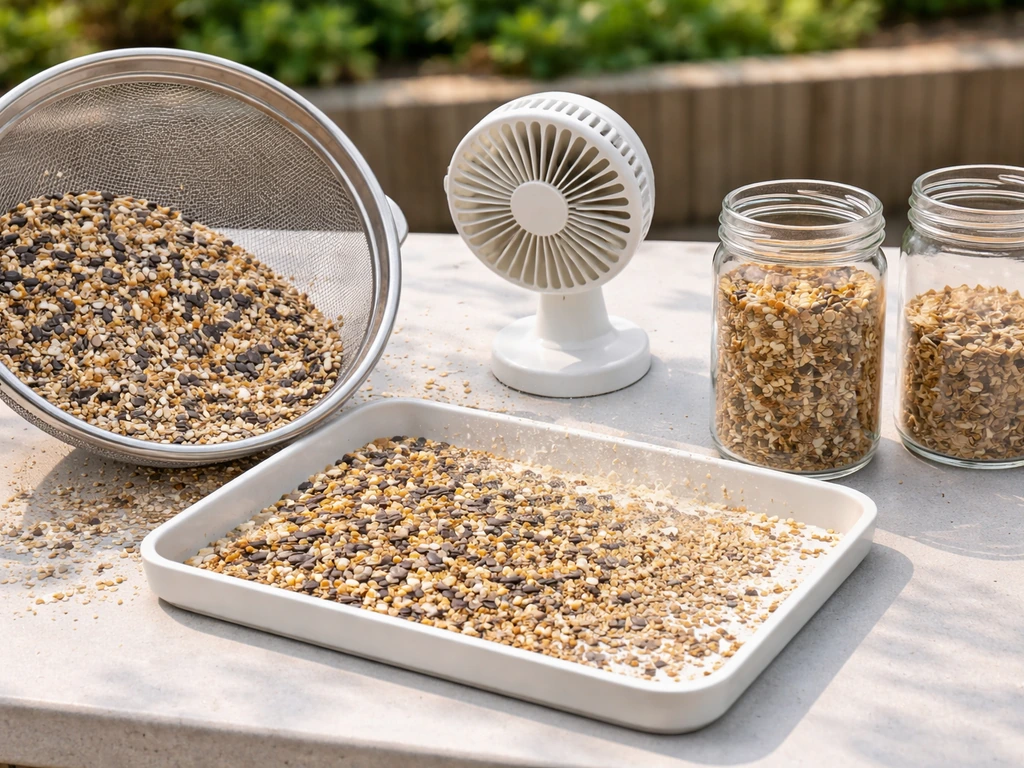
Screen sifting is the workhorse method for most backyard birders. You pour the seed-plus-husk mix through a mesh screen, and either the seed falls through while husks stay on top, or the husks fall through while seed stays on top, depending on size. The key is matching your screen mesh to your specific seed size. Pour the mix in, shake the screen gently side to side, and let gravity do the work. What does not fall through in about 30 seconds is not going to, so move on. Repeat with a second screen size if needed.
Winnowing with airflow
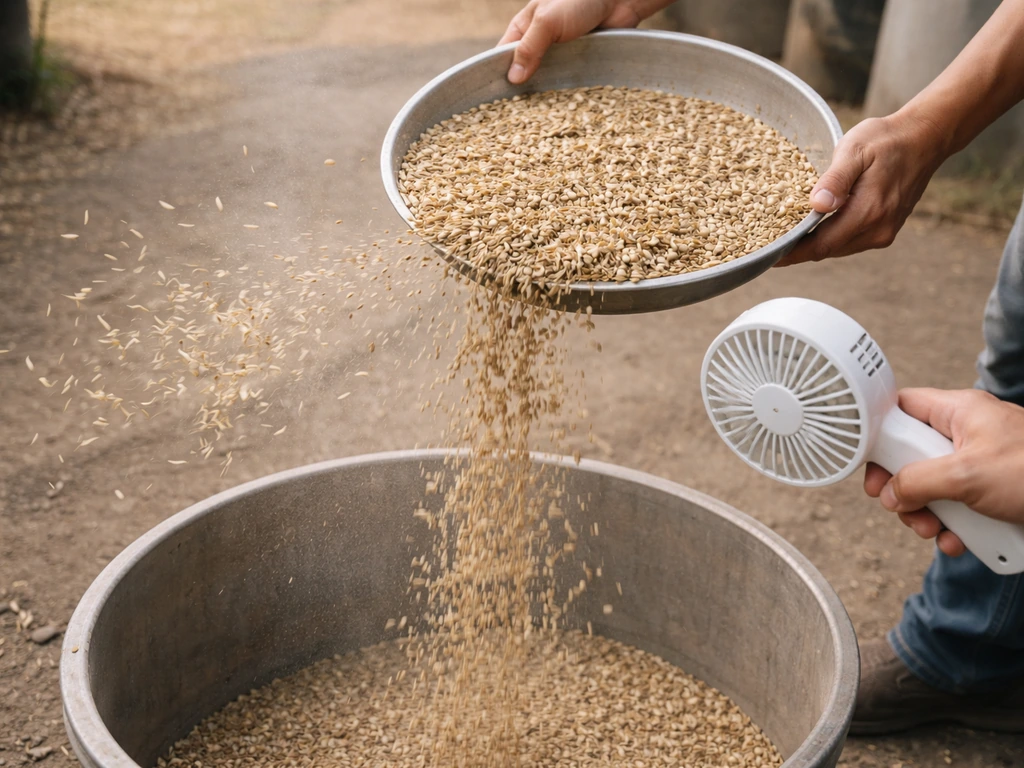
Winnowing uses air to blow lighter husks away while heavier seeds fall straight down. The classic approach described in seed-processing guides is to pour the mix slowly between two bowls outdoors on a breezy day, or indoors using a hair dryer on its lowest setting. Hold one bowl about 18 to 24 inches above the other and pour in a slow, thin stream. The husks get carried sideways or float off; the seed drops into the lower bowl.
A ceiling fan or box fan on low pointed across your work area achieves the same effect without the arm fatigue. Winnowing removes light husk fragments that screens miss because the fragments are thin enough to pass through the same mesh opening as the seed itself.
Choosing the right screen size and batch technique
Screen mesh is measured by opening size. A good starting point for most bird seed work is a 1/4-inch (6 mm) screen for larger husks like sunflower shells, and a finer 1/16-inch to 1/8-inch screen for millet or smaller seed fragments and chaff. Hardware cloth from a hardware store works fine and is much cheaper than specialty screens. If you want a dedicated setup, garden sifter sets with interchangeable screens come in sizes that cover most seed work.
The best batch size is about 2 to 4 cups per pass. Any more than that and the seed piles up on the screen, the husks cannot move, and separation gets uneven. Work over a large tray or a clean plastic bin so you catch everything. The standard recommendation from seed-cleaning guides is to alternate screening and winnowing: one pass through the screen, then a quick winnow of what came through, then screen again if needed. IRRI’s grain-cleaning guidance also recommends alternating sieving through screens with winnowing to blow lighter materials away, then repeating as needed alternate screening and winnowing. Two cycles handles most common mixes cleanly.
- Set up a clean tray or plastic bin to catch sorted seed.
- Pour 2 to 4 cups of seed mix onto your coarsest screen (1/4-inch mesh for sunflower-heavy mixes).
- Shake the screen side to side for 20 to 30 seconds. Large husks stay on top; seed and smaller material fall through.
- Discard or compost the large husks that remain on the screen.
- Take what fell through and winnow it: pour slowly between two bowls with a fan or hair dryer on low running across the stream. Light chaff and husk fragments blow aside; heavier seed falls into the lower bowl.
- If the result still has husk fragments, repeat the screen step with a finer mesh (1/8-inch or smaller).
- Collect clean seed in a dry container and inspect a small handful before storing.
Troubleshooting when separation is not working
| Problem | Likely Cause | Fix |
|---|---|---|
| Husks stick to seed / clumping | Seed is damp or humid | Spread the batch on a tray and let it air dry for an hour before sorting. If the seed is wet through, dry it out fully before attempting separation. |
| Static makes husks cling to screen or bowl | Low humidity indoors, especially in winter | Lightly mist your hands and the screen surface with water, or do the sort in a slightly more humid room. A slightly damp (not wet) cloth wiped over the screen resets static quickly. |
| Edible seed falling through with husks on the coarse screen | Screen mesh is too large for the seed size | Drop down one screen size. Test on a small handful first before committing a large batch. |
| Husks not lifting during winnowing | Airflow is too weak, or husks are heavier/thicker than expected | Increase fan speed one notch, or pour the seed from a greater height (up to 30 inches). Some thick sunflower shell pieces need direct airflow rather than indirect. |
| Mixed-size seeds separating unevenly | Single screen cannot handle two very different seed sizes at once | Pre-sort by seed type first if possible, or accept two separate screen passes with different mesh sizes for the different seed groups. |
| Husks and seeds nearly identical in size | Hull fragments are small and dense (e.g., millet husks) | Rely on winnowing rather than screening; millet husks are very light and respond well to low airflow even when size separation fails. |
Safety, storage, and cleanup after sorting
Dust and allergen precautions
Dry seed sorting generates a real amount of fine dust and particulate, especially from hulls. Do this work outdoors or in a well-ventilated space. If you are sorting large quantities (more than 5 to 10 pounds at a time), a simple dust mask is worth putting on. Anyone with known grain dust sensitivity or respiratory issues should take that precaution even for small batches. Winnowing indoors with a fan will send fine particles airborne, so point the fan toward an open window or do it outside whenever possible.
Storing sorted seed correctly
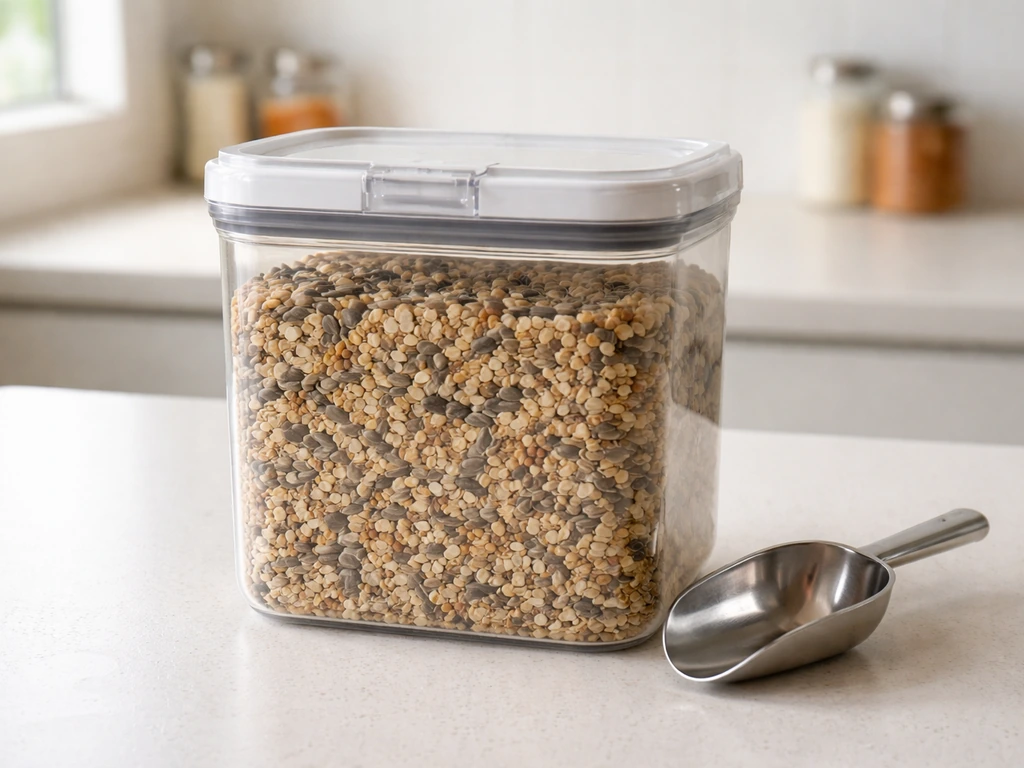
Once you have clean seed, storage conditions matter more than most people realize. The goal is cool, dry, dark, and sealed. To dry out wet bird seed safely, spread it out in a thin layer and let it air-dry until fully dry before sorting or storing. Heavy-duty plastic containers with locking lids or food-grade buckets work well for bulk amounts.
Glass jars with tight lids are excellent for smaller quantities. Keep stored seed in a garage, basement, or cool pantry, away from direct sunlight and away from areas with temperature swings. Humidity is the main enemy: even a small amount of moisture accelerates mold growth and invites pests. Do not store cleaned seed in fabric bags, paper bags, or open bins.
If you live somewhere with hot, humid summers, consider storing no more than a two-week supply at a time rather than a large seasonal stock.
Cleaning up the work area
Sweep or vacuum the work surface promptly after sorting. Husk fragments and seed dust left on floors or shelves attract mice and insects quickly. If you sorted outdoors, collect the husk pile and compost it rather than leaving it under or near your feeder area. A concentrated patch of wet hulls under a feeder is a bacteria and mold risk, which connects directly to the cleanup strategies that apply to what you do with bird seed shells more broadly.
When separating husks is worth it and when it is not
Feeder types where husks are a real problem
Tube feeders with small ports clog most easily from husk debris. If you are using a Bird Buddy, the same principle helps because husk debris can interfere with how the feeder dispenses seed tube feeder. Hopper feeders with wood or plastic floors accumulate wet hull layers that accelerate feeder rot. For both, hulled or pre-separated seed is noticeably better in terms of feeder longevity and bird activity. If you are filling a tube feeder daily or dealing with constant clogging, running your seed through a quick sift before filling is worth the five minutes.
Species and seed types where husks are not a concern
Several common feeder birds actively crack and discard shells themselves: cardinals, chickadees, and nuthatches do this without trouble, and separating husks from seed intended for them is not necessary unless you want to reduce ground debris. Open platform feeders and ground feeders handle hull accumulation better than tube feeders, so the urgency of pre-separation is lower for those setups. Safflower seed, nyjer (thistle), and shelled peanuts are typically sold hull-free already, so there is nothing to separate.
For whole in-shell peanuts or larger nuts fed to jays or squirrels, husks are part of the appeal and should stay on. The real case for separation is strongest with sunflower seed (both black oil and striped) used in enclosed feeders, and with mixes that include cracked corn, which generates fine chaff that compacts easily in tight feeder spaces.
A quick species-by-species summary
| Bird / Seed Type | Hull Situation | Separate Husks? |
|---|---|---|
| Sunflower (black oil) for chickadees, nuthatches, finches in tube feeders | Thick shell, high hull volume | Yes, or buy hulled chips |
| Sunflower (black oil) for cardinals on platform feeders | Birds crack themselves; shells drop off feeder | Optional |
| Millet for sparrows, doves, juncos | Thin husk, minimal clogging | Rarely needed |
| Nyjer (thistle) for goldfinches | Sold hull-free, fine mesh feeder | No |
| Safflower for cardinals, doves | Sold hull-free or birds crack easily | No |
| Cracked corn in hopper feeders | Fine chaff compacts and holds moisture | Yes, sift before filling |
| In-shell peanuts for jays, woodpeckers | Shell is the point | No |
Where to start today
If you have a bag of black oil sunflower seed and a tube feeder that keeps clogging, start with the screen-and-winnow two-step on a small 2-cup test batch. For weed-control results, keep leftover husks out of the yard and avoid letting seed and hulls scatter, since that is what helps birdseed weeds take hold how to get rid of bird seed weeds.
Use a 1/4-inch hardware cloth screen over a large plastic bin, shake for 30 seconds, then do one quick winnow pass with a hair dryer on low. In a hand winnower setup, a tray is dropped into an air duct with a roughly 1/4-inch mesh screen across the gap in front of the blower to help keep debris out [Hand Operated Winnower](https://www. saveseeds. org/tools/toolwinnowerhand.
html). Check how clean the result looks before committing to the whole bag. Once you see how much husk comes out, you will have a clear sense of whether it is worth doing the full batch or just switching to pre-hulled chips for that feeder. Store whatever you clean in a sealed container in a cool, dry spot and plan to use it within two to four weeks if humidity is a factor in your area.
FAQ
Can I separate husks from bird seed if the bag got wet or humid?
Yes. If your husks are swollen from rain or humidity, separation gets worse because husks and seed clump together. Spread the mix in a thin layer and let it fully air-dry until it no longer feels cool or damp, then sift or winnow. If the seed smells musty or looks fuzzy, discard the batch rather than trying to salvage it.
How do I know which screen size to use for my specific seed mix?
Match the screen to what is actually on top after a test pour. If you see mostly whole seeds staying on the screen, your mesh is too small (or the layer is too thick), switch to a larger opening. If almost everything falls through, your mesh is too large, switch to a finer screen. Use 2 to 4 cups per pass so nothing jams and you can judge the result quickly.
What should I adjust if winnowing removes husks but also blows away good seed?
Winnowing works best with consistent airflow and a slow, thin stream. If husks keep falling with the seed, reduce the stream thickness, pour from a slightly higher bowl, and keep the airflow steady on a low setting. If you lose good seeds, lower the airflow or pour more slowly so seeds do not get lifted.
What’s the best approach when the mix has both big sunflower shells and lots of fine chaff?
If the mix contains both large hull pieces and lots of tiny chaff, do two stages. First, sift with a coarser mesh to remove big husks. Then do a second, finer sift or a short re-winnow on the fraction that remains. This prevents “over-sifting” where the fine seed fraction gets damaged or fractionated unintentionally.
How much cleaning is actually necessary for tube feeder clog prevention?
For tube feeders, aim to remove both large husks and the thin fragments that pass through normal screens. A quick after-sift winnow catches light bits that screens miss, which is often what causes repeat clogs. If clogs persist, reduce the batch size and do a second screen-and-winnow cycle.
Is it worth separating husks for every bag, or should I test first?
Run a small test before committing. Take a 2-cup sample from your bag, do screen-and-winnow, and weigh or at least compare by volume how much usable seed you keep versus husks removed. If the waste rate feels too high, consider switching that feeder to pre-hulled seed types or a different mix designed for enclosed feeders.
What are the most important storage mistakes that lead to mold or pests after separation?
Clean seed storage starts with moisture control and the container. Use sealed, food-grade containers (locking plastic or tight lids). Avoid fabric or paper because they can hold humidity, and avoid glass that is not sealed well. If you live in hot, humid conditions, store only a short supply and restock more often.
What should I do if I spot mold in the seed during sorting?
If you see visible mold during or after separation, do not try to “pick out” only the husks. Mold can be on the seed and inside the batch, and the colony spreads quickly in sealed or humid conditions. Dispose of the entire batch and thoroughly clean the feeder and any work surfaces.
Do I need protective gear, and how do I reduce dust while separating seed?
Wear a dust mask when you are sifting or winnowing indoors, even for small batches, if you are sensitive to particulates. Choose a well-ventilated area and avoid aiming fans directly at your face. Afterward, sweep or vacuum the area so dust and husk fragments do not accumulate and attract pests.
Can I compost the husks, and are there cases where I should not?
Yes, but do it thoughtfully. Compost only dry hulls and keep the pile away from where birds forage, because scattering fresh debris can encourage weeds and re-seeding. If hulls were contaminated by mold, bag and dispose of them instead of composting.
How can I reduce losing edible seed during separation?
Sometimes the “seed loss” you notice is actually smaller or damaged kernels that do not survive the process. To minimize loss, use gentle shaking, keep the seed layer thin, and do gravity-based sifting rather than aggressive tapping. Also avoid storing cleaned seed for long periods in humidity, since that can make kernels brittle and more likely to break during later handling.
Next Article
How to Make Bird Seed Last Longer: Storage and Fixes
Learn how to make bird seed last longer with proper storage, humidity control, pest prevention, and fixing wet or moldy