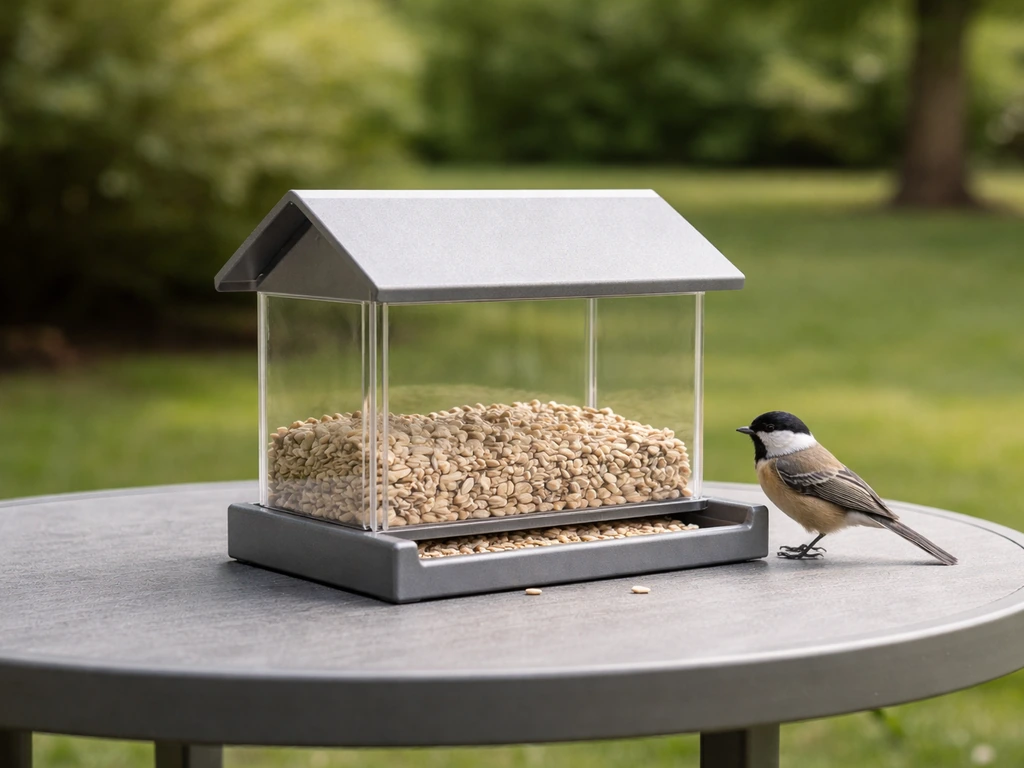
The best price on no mess bird seed comes from buying hulled or shell-free blends in the largest bag your budget allows, then comparing unit cost per pound across retailers like Chewy, Walmart, Tractor Supply, and Home Depot. A 20 lb bag of Lyric Delite on Chewy, for example, consistently beats the per-pound cost of a 5 lb bag at a local pet store. But getting a genuinely mess-free feeding experience isn't just about the product label.
No Mess Bird Seed Best Price: Buy Smart and Setup Clean

Maya Collins
20 Jun 2026
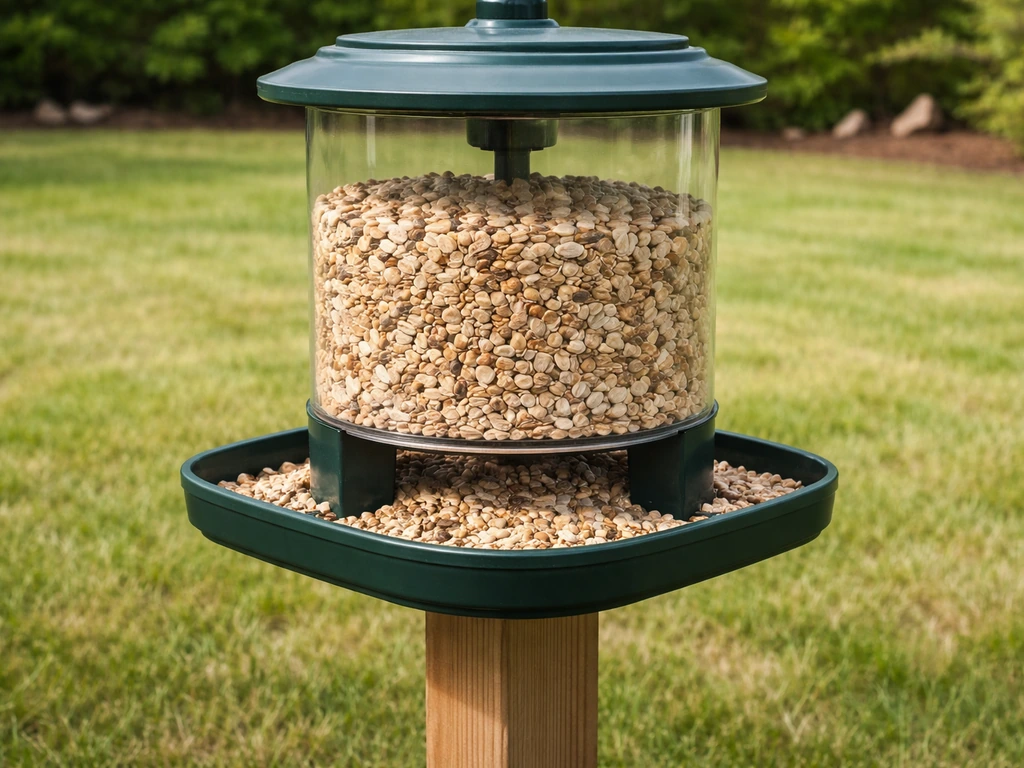
It takes the right feeder setup, dry storage, and a quick cleanup routine. To keep seed where you want it, you also need to think about where to hang the seed bell or feeder so it has good shelter and stays protected from rain and wind. Do all three and you'll spend far less time scrubbing trays and raking hulls.
What 'no mess' actually means at your feeder
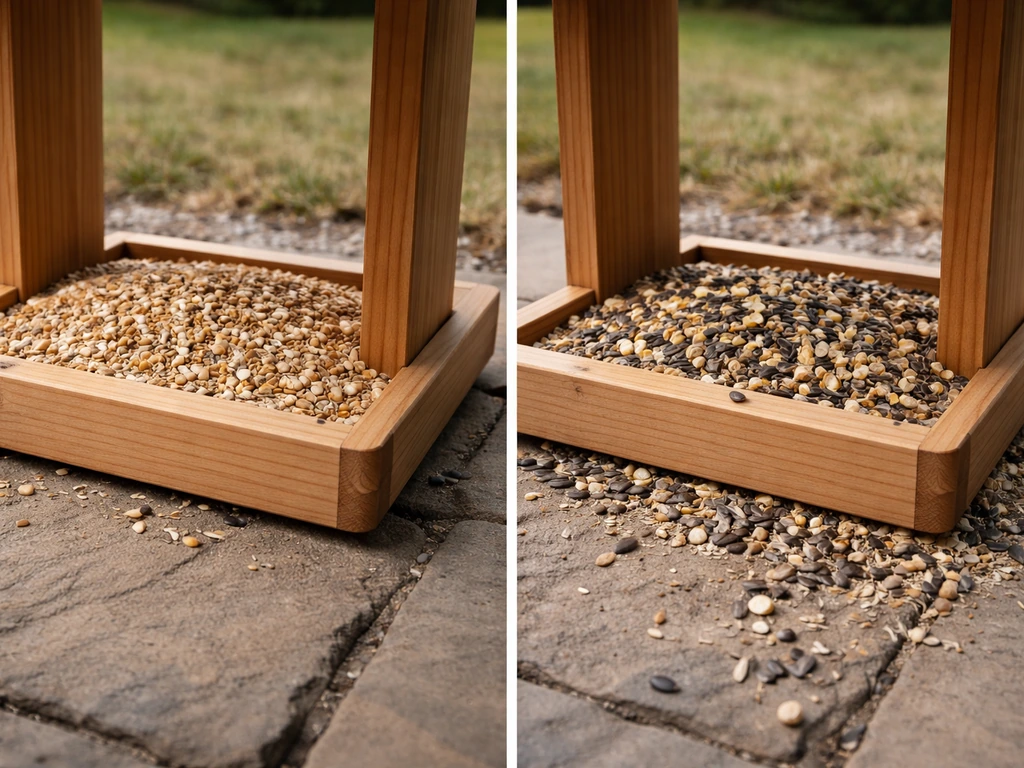
Most bird seed mess comes from two things: shells and hulls that birds drop after cracking, and wet or spoiled seed that builds up in feeders and on the ground. 'No mess' products tackle the first problem by removing the shell before the seed goes into the bag. Brands like Kaytee, Lyric, and Chirp market their blends as shell-free or hull-free, meaning birds eat the whole kernel and there's nothing left to fall. Lyric's label actually states the ingredients 'lack a protective shell,' which is the direct reason less debris accumulates under the feeder.
Here's the important caveat though: shell-free doesn't mean zero mess. Community reports are consistent on this. Some birds still leave behind thin seed skins or dust. Doves may swallow safflower whole, cardinals can leave a thin outer layer, and certain finches shuck a fine husk even from pre-shelled seeds. So 'no mess' is more accurately 'significantly less mess than standard seed,' not a guarantee of a spotless patio. The feeder setup you pair with these products matters just as much as the seed itself.
There's also a second type of 'no mess' that trips people up: cheap standard seed blends in feeders with catch trays. This is more of a spill-containment setup than a clean-feeding product. It can work, but if the seed contains fillers like milo or red millet that most birds won't eat, you end up with a tray full of rejected seed that rots. The cleanest, cheapest long-term approach combines a shell-free blend with a feeder that has good drainage and a removable catch tray.
How to find the best price: a quick shopping checklist
The sticker price on a bag is almost meaningless without the unit cost per pound. A $15 bag that's only 5 lbs costs $3.00/lb. A $35 bag that's 20 lbs costs $1.75/lb. Always divide price by weight before you buy. Here's what to check at each retailer before you commit. On Walmart, the Kaytee Waste Free Bird Seed Blend is listed in a 10 lb bag and described as “No hulls - no mess,” which can help you compare package size when calculating per-pound cost Kaytee Waste Free Bird Seed Blend 10 lb bag described as “No hulls - no mess”.
- Calculate cost per pound (or per kg): take the shelf price and divide it by the bag weight. This is your only real comparison number.
- Check whether the product is a true seed mix or a pellet/suet nugget blend. Kaytee's Seed & Suet No Mess Blend contains suet nuggets alongside hulled sunflower. These are denser and more calorie-rich, so a smaller bag goes further, but the per-pound cost looks high at first glance.
- Look at the ingredient list for fillers. Milo, red millet, and wheat are cheap volume-fillers that most songbirds reject. If they're in the top three ingredients, the bag is mostly waste regardless of what the label says.
- Compare bag sizes at the same retailer before shopping around. Chewy lists Lyric Delite in 20 lb bags with a per-pound price shown on the page. Tractor Supply stocks 5 lb bags of the same blend. The 20 lb almost always wins on unit cost.
- Check auto-ship discounts. Chewy's auto-ship typically saves 5–35% on first orders. If you feed birds year-round, locking in a recurring shipment of a 20 lb bag often beats any sale price at a brick-and-mortar store.
- Factor in shipping weight. Heavy bags ordered online can carry shipping fees that wipe out the unit-cost savings. Free-shipping thresholds (Chewy's is often $49) make large single orders the smart move.
- Walmart is worth checking for in-store pickup on Kaytee Waste Free (10 lb bag, 'no hulls, no mess' branding) and Chirp No Mess Safflower (5 lb). These are practical benchmarks for what your local unit price looks like.
| Product | Common Bag Sizes | Retailer Options | Type |
|---|---|---|---|
| Lyric Delite No Waste Mix | 5 lb, 10 lb, 15 lb, 20 lb | Chewy, Home Depot, Tractor Supply | Shell-free seed mix |
| Kaytee Waste Free Blend | 10 lb | Walmart, Chewy | Hull-free seed mix |
| Kaytee Ultra No Mess Nut & Fruit | Varies | Pet stores, Chewy | Shell-free seeds + fruit/nuts |
| Kaytee Seed & Suet No Mess Blend | Varies | PetSmart, Chewy | Hulled seed + suet nuggets |
| Chirp No Mess Safflower | 5 lb | Walmart Business | Single-ingredient shell-free |
| Lyric Fine Tunes No Waste Mix | 15 lb | Chewy | Fine shell-free seed mix |
As a general rule, the 15–20 lb bags from Chewy on a subscription order will beat almost any other option on cost per pound for quality shell-free blends. If you need a small quantity to try first, a 5 lb bag from Tractor Supply or Home Depot is a reasonable starting point, but expect to pay roughly 30–50% more per pound than the large-bag price.
Keeping seed dry and fresh: storage and handling
Even the best shell-free seed turns into a mess if it gets wet. Keeping seed dry is the key to whether no mess bird seed grow into moldy, messy clumps, even when you start with a shell-free blend does no mess bird seed grow. Moisture above roughly 12% triggers mold growth in stored grain, and birdseed is no different. A bag left in a garage that gets humid, or seed poured into a feeder just before a rainstorm, can go moldy within 48 hours. Here's how to prevent it from the moment the bag arrives.
Storage setup that actually works
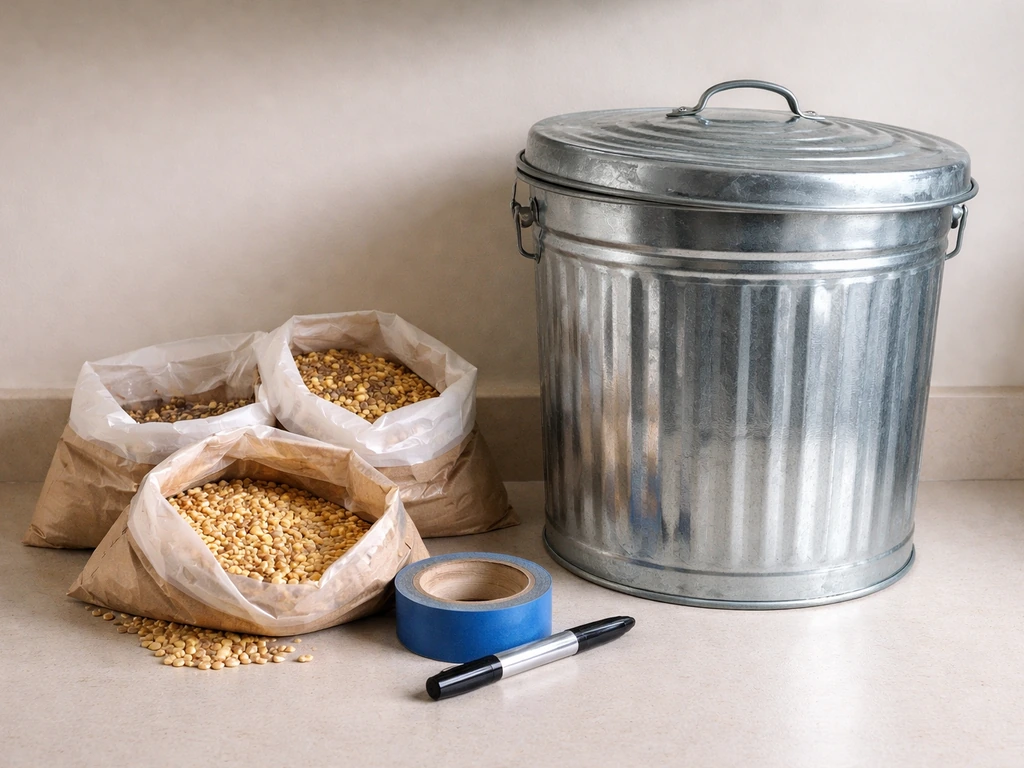
- Transfer seed from the bag into a hard-sided, lidded container (a galvanized metal trash can or a food-grade plastic bin with a tight lid). These resist both moisture and rodents.
- Line the inside of the container with a heavy-duty plastic trash bag before pouring in the seed. Replace this liner each time you start a fresh bag. This is a direct Wild Birds Unlimited recommendation and it works because it keeps the container walls dry and prevents old seed dust from contaminating the new batch.
- Store in a cool, shaded location. A shed or garage is fine as long as it doesn't flood. Avoid leaving seed in direct sun, which accelerates rancidity in the oils in hulled seed.
- Never mix old and new seed. Empty the container completely, check for clumps or mold, and clean it out before refilling.
- Fill feeders with only 1 to 2 days' worth of seed at a time, especially in wet or humid weather. This is one of the most practical things you can do to prevent wet seed buildup at the bottom of the feeder.
Handling wet and sprouted seed
If you pull the feeder lid and find seed that's clumped, feels damp, or smells musty, remove it immediately. Don't try to dry it out and reuse it. Wet seed can harbor salmonella and mold that makes birds sick. Dispose of it in a sealed bag in the trash, not in the compost. If you see green shoots (sprouted seed), that's also a sign the seed got wet enough to germinate. Clean the feeder before refilling. In wet weather, shake the feeder daily to break up any seed bridging at the bottom and knock out pooled water.
Feeder and tray choices that cut down on spills
The feeder type you use determines how much seed ends up on the ground, regardless of whether the blend is shell-free. A poorly matched feeder can turn even a premium no-mess product into a scattered mess. Here's what works.
Matching trays to feeder types
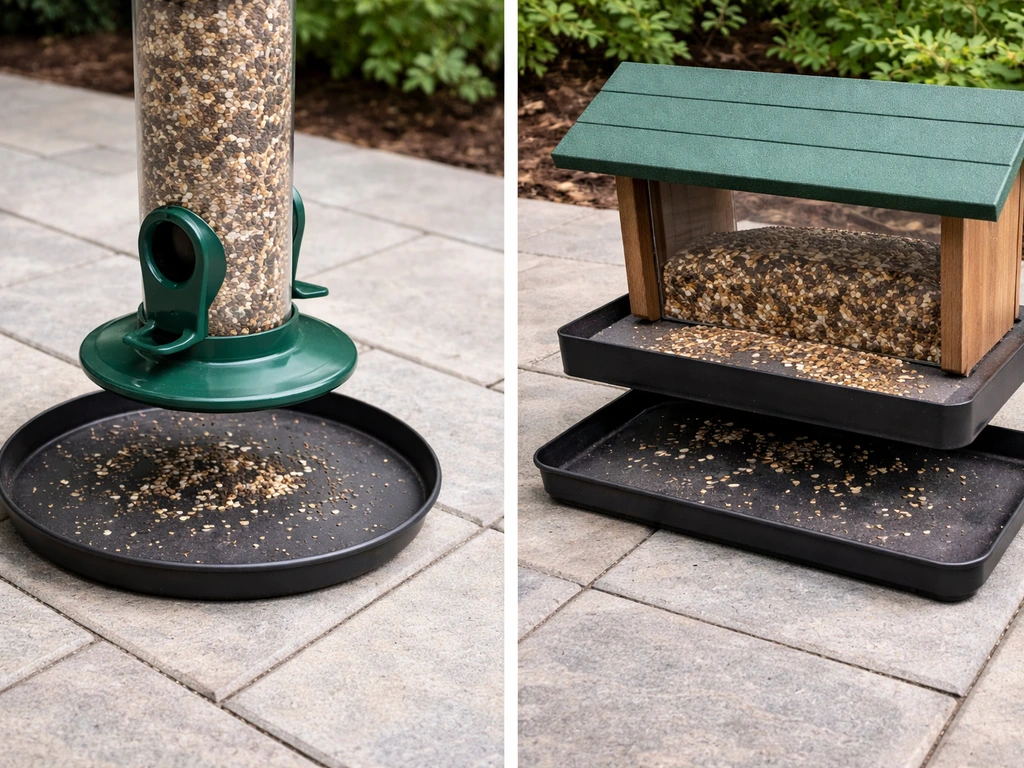
Wild Birds Unlimited's guidance on this is direct and practical: round trays attach under tube feeders, and rectangular trays suit hopper feeders. These catch-trays serve two purposes. First, they collect any seed or debris that falls from the feeding ports before it hits the ground, which is where pests find it. Second, they can shelter the lower ports from rain if positioned correctly.
- Tube feeders with seed deflectors or armed feeding stations: these are designed to minimize seed sitting at the bottom where it gets damp. Pair with a round catch tray underneath.
- Hopper feeders: use a rectangular tray. Check that the tray has drainage holes so rain doesn't pool and turn any caught seed into a moldy sludge.
- Seed cylinder feeders: these waste very little on their own because birds peck directly from the cylinder with minimal scattering. A simple ground tray or skirt below catches any crumbles.
- Platform or tray feeders: these expose seed to rain directly, so they're the worst choice for mess control unless you use a roof/baffle and clean them daily in wet weather.
- Seed catcher skirts (also called seed skirts or seed hoop trays): these clip around the pole or hang below the feeder and catch a wide radius of dropped material. They're one of the most cost-effective mess-reduction accessories.
Liner strategy for trays
Lining catch trays with a thin layer of fine gravel or coarse sand helps drainage and makes cleanup faster. When the tray fills with debris, you lift the liner or tip the tray and the whole mess goes in one move. Some people use a replaceable paper liner. Either approach beats scrubbing dried seed paste off a plastic tray every week.
Fast cleanup when mess happens anyway
Even with the best setup, you'll occasionally need to do a full feeder clean. Seed hulls, dried suet residue, and bird droppings accumulate and create conditions for mold and disease. Here's the routine that covers both quick maintenance and deep sanitation.
Weekly tray and port maintenance
- Remove the catch tray and dump any accumulated seed, hulls, and droppings into a trash bag.
- Wipe the tray with a dry brush or stiff bristle brush to dislodge dried material.
- Check feeder ports for clumped seed. Clear any blockages so fresh seed flows freely.
- Inspect the bottom of the feeder for damp or clumped seed. If found, empty completely before refilling.
Deep clean and disinfection
The standard disinfection solution recommended by Cornell Lab (All About Birds), Audubon, UNH Extension, and Minnesota DNR is 1 part bleach to 9 parts water (a roughly 10% bleach solution). Some extension sources specify measurements like 2 oz bleach per gallon of water, which is a slightly more dilute version also considered safe and effective. The process is the same regardless of the exact dilution:
- Empty the feeder completely and discard all old seed.
- Wash with hot soapy water and a stiff brush to remove physical debris and droppings.
- Rinse thoroughly.
- Immerse feeder parts in a 1: 9 bleach-to-water solution for at least 15 minutes.
- Rinse again with clean water until no bleach smell remains.
- Allow to air dry completely before refilling. This step is non-negotiable. Putting seed into a damp feeder undoes the entire cleaning effort.
- Wash your hands thoroughly after handling any feeder, tray, or seed. USU Extension and Cornell both emphasize this for reducing disease transmission risk.
Dealing with spilled seed on the ground
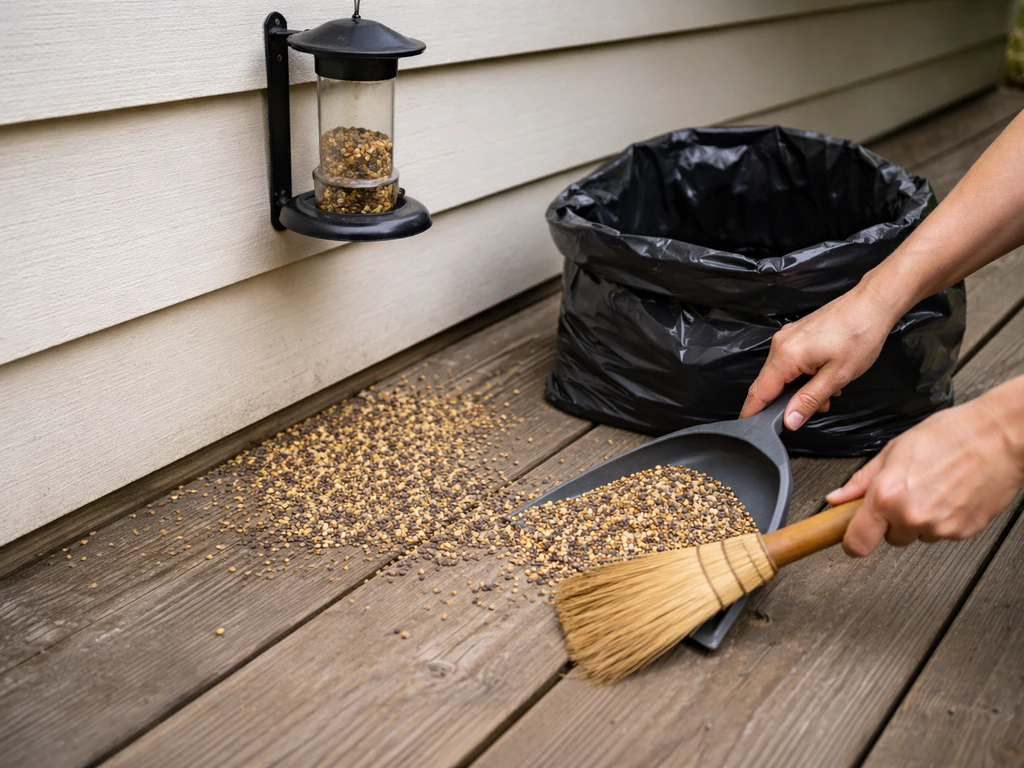
Seed that lands on the ground below feeders is the main driver of rodent and pest problems. Rake or sweep it up regularly and bag it for trash disposal. Don't leave it to decompose. If you've had a mold event (wet, clumped, or visibly discolored seed on the ground), rake the area thoroughly and if possible, turn the soil or lay fresh gravel on top to cover the contaminated patch. Avoid composting moldy seed or using it as mulch, since mold spores can persist.
Which birds create the most mess and what to do about it
Not all backyard visitors are equally tidy. Knowing which species are visiting helps you choose the right blend and feeder configuration to minimize mess from each group.
| Species/Group | Mess Behavior | Best Setup Response |
|---|---|---|
| Cardinals | Crack shells and drop fragments; may leave thin outer layers even on hulled seed | Shell-free blend + catch tray; tube or hopper feeder with tray |
| House finches / goldfinches | Shuck thin seed husks; create fine seed dust and chaff | Shell-free fine mix (e.g., Lyric Fine Tunes); catch tray essential |
| Mourning doves | Ground feeders; scatter seed while foraging; swallow safflower whole | Low platform with lip or ground tray; safflower works well |
| Woodpeckers | Focused eaters; less scatter but may dislodge large chunks from suet/nut blends | Suet cage or tube feeder with port guards; catch tray below |
| Squirrels | Pull seed out in handfuls; knock feeders; dig in ground-level seed | Baffle on pole; weight-activated feeder; remove catch trays if squirrels dominate |
| Starlings / grackles | Aggressive flock feeders; rapidly empty feeders and scatter large quantities | Upside-down suet feeder; weight-activated tube feeder; safflower (less attractive to them) |
If you're mostly seeing small songbirds like finches and chickadees, a shell-free fine mix in a tube feeder with a round catch tray is close to the cleanest possible setup. If you have heavy dove traffic, a low tray feeder with safflower (which doves swallow whole) is very effective. The less hull-cracking that happens, the less debris you deal with.
The real mess culprits: mold, pests, and poor seed quality
Most of the mess problems people blame on 'no mess seed not working' actually trace back to three preventable causes. If you want to double-check what those “no mess” bird seed reviews are really saying, focus on how much debris drops under the feeder and how well the seed stays dry no-mess product. Here's the cause, the fix, and how to stop it from coming back.
Mold and wet seed
Mold grows in seed when moisture gets in, usually from rain hitting an open feeder, condensation in a poorly sealed storage container, or seed sitting too long in the feeder. The fix is to clean out all affected seed, disinfect the feeder, and refill with only 1 to 2 days' worth of seed. The prevention is a combination of dry storage, feeders with rain guards or covered ports, and not overfilling. In humid climates (the Southeast US, Pacific Northwest, or anywhere with a wet summer), plan to clean feeders every 1 to 2 weeks rather than monthly.
Pests: rodents and insects
Spilled seed on the ground is the number-one reason rats and mice show up under feeders. Shell-free blends help here because birds eat more of what's offered and drop less, so there's less on the ground to begin with. But even with a great blend, any feeder overflow or tray spillage needs to be cleaned up within a day or two. Ants are drawn to suet-based blends and sugary fruit mixes in warm weather. If ant activity is heavy, switch to a plain hull-free seed blend during summer and use a pole baffle or ant moat.
Poor seed quality and filler-heavy blends
Cheap seed mixes that include milo, wheat, flaxseed, or red millet create mess in a specific way: birds sort through the mix, flick out the fillers, and eat only the sunflower or millet they actually want. Everything else ends up on the ground or in the catch tray, attracting pests and rotting. Wild Birds Unlimited flags this directly: buyers who grab the cheapest possible bag often end up with filler-packed blends that create more mess and rodent attraction than a more expensive but filler-free blend. Paying a bit more per pound for a true hull-free, filler-free blend typically means less waste, less ground debris, and a lower real-world cost than a cheap mix where birds reject half the bag.
It's also worth noting that if you're curious whether no mess seed can sprout or grow in your yard, that's a separate but related question worth looking into. Shell-free seed that gets wet can still have enough viability to sprout in some cases, depending on processing. Similarly, if you want more detail on specific product reviews or vacuum cleanup tools for hull debris, those are practical follow-on topics once you've settled on a blend and setup. A good vacuum cleanup tool can make it much easier to remove spilled hulls and keep your yard tidy vacuum cleanup tools.
FAQ
Is the no mess bird seed best price only about buying the biggest bag on sale?
Big-bag pricing matters, but also compare the “delivered” cost (shipping plus subscription discount). Some retailers add higher shipping on repeat orders, which can erase the per-pound savings of a 15 to 20 lb bag if you are not actually using it fast enough.
How do I know if I’m getting a truly shell-free or hull-free blend versus a spill-containment mix?
Check the ingredient and marketing language for “shell-free” or “hull-free,” not just “tray” or “catch system.” If the blend still includes standard hull-prone seed with no shell-free claim, the feeder may catch spills but you will still see more debris under ports and in the tray.
Do no mess blends work for every bird species?
Not equally. Seed-shuck behavior varies by species, for example some finches may still leave thin skins, and doves can be an exception when using safflower. If your main birds are consistent, tune the blend and feeder style to their feeding habits rather than expecting one mix to be uniformly spotless.
What’s the safest way to handle wet clumps if I catch them quickly?
Remove and discard the wet seed instead of trying to “dry it out.” Even if it looks usable after drying, damp grain can keep mold and contamination present. Clean the feeder first, then refill with only a small, near-term quantity.
How much seed should I put in the feeder to prevent mold and bridging?
Use the smallest amount that gets eaten within 1 to 2 days, especially in humid or rainy weather. Overfilling increases the time seed sits wet after rain and also promotes bridging at the bottom where air circulation is worse.
How often should I disinfect the feeder for a true no mess setup?
For normal conditions, your cleaning cadence can be periodic, but after any mold event, clumping, musty smell, or visible sprouting, disinfect immediately. In wet climates, the practical target is more frequent maintenance, not waiting for the “monthly” schedule.
Can I use compost if I sweep up spilled seed?
Avoid composting moldy or visibly contaminated seed or hull debris after a wet event. Bag it for trash disposal instead, since mold spores can persist and spread during composting.
Does lining catch trays with gravel or sand always help?
It helps drainage and speeds dump-and-clean, but keep it dry and replace the liner when it becomes clogged with compacted debris. If you see seed paste buildup, swap the liner method rather than scraping slowly, which defeats the quick-clean goal.
Will a catch tray reduce pests even if seed is not perfectly hull-free?
It reduces exposure to what falls under the ports, so it can lower pest pressure. However, if you consistently get spillage or tray overflow, pests still find the food source, so daily or near-daily cleanup during heavy feeding periods matters.
What’s the best feeder choice if I want less mess but also want good shelter from rain?
Use a feeder type that matches your birds and supports rain protection, then position any catch tray so the lower ports are shielded. For tube feeders, a round tray is typically a better fit, while hopper feeders tend to work better with rectangular tray shapes.
When ants show up, what should I change first?
Switch to a plain hull-free blend during warm months to reduce sugary and suet-type attractants. Also use a pole baffle or ant moat, because keeping seed dry and contained helps, but barriers are often the real long-term solution.
Why do some “cheap no mess” options still create a lot of ground debris?
They often include filler seeds that birds reject, so the feeder collects a mix of unwanted grains and hull-related waste. The result is more sorting, more flicking, and more rotten debris, which can cost more over time even if the sticker price looks best.
Can no mess bird seed sprout, and what does that mean for cleanup?
Yes, shell-free seed that gets wet can remain viable and may sprout. If you see green shoots, treat it as evidence of moisture intrusion, remove the seed, disinfect the feeder, and shorten the refill quantity so wet periods do not repeat.
Next Article
No Mess Bird Seed Reviews: Does It Reduce Waste?
Real no mess bird seed reviews on spill, waste, sprouting, mold, and pests plus tips for setup, storage, and cleanup.