No-mess bird seed does reduce ground mess in most backyards, but how well it works depends heavily on which blend you buy, how you set up your feeder, and what birds visit your yard. The core idea is simple: remove the hulls and shells before bagging, so birds eat everything and drop almost nothing. Brands like blank" rel="noopener noreferrer">Kaytee Ultra No Mess, Pennington Ultra Waste Free, and Duncraft Super No-Waste Blend all work on this principle. In the right setup, you'll see noticeably less debris on the ground. In the wrong setup, you can still end up with a sticky, dusty, moldy mess that's harder to manage than regular seed.
No Mess Bird Seed Reviews: Does It Reduce Waste?
Maya Collins
20 Jun 2026
What 'no-mess' bird seed actually is
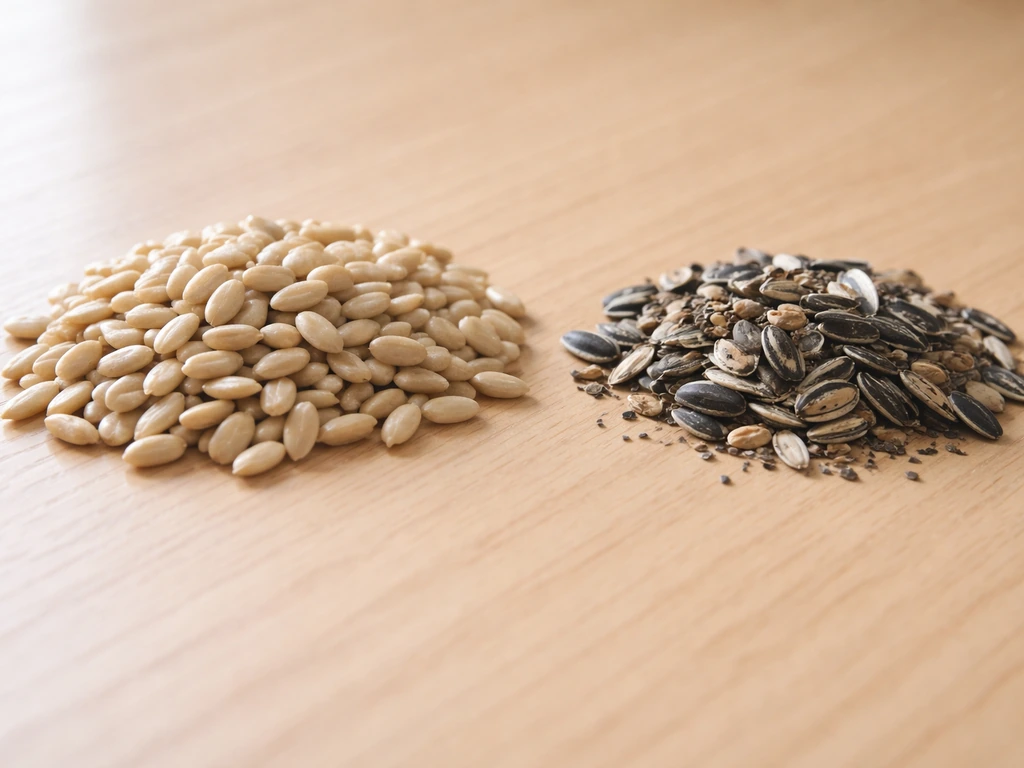
No-mess bird seed is regular seed with the hard outer shells and hulls removed before it goes in the bag. A standard bag of black-oil sunflower seed, for example, is about 40% shell by weight. Birds crack it, eat the kernel, and drop the hull on the ground. No-mess formulas skip that step by including only the seed meat, sunflower hearts, peanut bits, shelled safflower, and similar stripped ingredients. Kaytee frames it as "0% waste, 100% edible," which is accurate in theory: there is no hull to discard. Pennington's version calls it "no hulls, no mess, all edible." Duncraft positions its blend specifically for decks, patios, and balconies where any ground debris is a problem.
The category spans multiple blends, not just one product. Kaytee alone offers a basic no-mess blend, a Nut and Fruit version, and a Seed and Suet No Mess format. Some blends focus on sunflower hearts and peanuts. Others add dried fruit, millet, or safflower. The ingredient list matters more than the brand name, and one thing to watch for is filler. Wild Birds Unlimited has specifically flagged that some products marketed as waste-free include cracked corn, canary seed, or wheat, which local birds often reject and which adds back the very waste you were trying to avoid. Always check the ingredient panel.
What real users actually report: does it reduce mess?
The honest answer from real backyard feeders is: mixed results, but leaning positive when used correctly. Several users report that switching to a hulled blend virtually eliminated shell piles and that any dropped material got eaten off the ground rather than rotting. One common account is that less decaying debris means fewer ground insects and less mold buildup under the feeder. That matches the underlying logic of the product.
But there are consistent complaints too, and they're worth knowing before you buy. A Petco reviewer using Kaytee No Mess reported seeing significant mess and waste from small seeds none of the birds would eat. A Reddit thread described no-mess seeds creating "a lot of mess," partly due to fine dusty residue from hulled sunflower hearts that birds scatter but don't fully eat. Another user found that birds largely ignored a new 10-pound bag, with seed levels barely dropping over days. The common thread in the negative reports is a mismatch between the blend's specific ingredients and the birds that actually visit that yard.
There's also a residue issue that surprises some buyers. Even hulled seed generates a small amount of papery skin, fine powder, and broken fragments. One Reddit user traced mold under their feeder specifically to that papery skin residue from hulled sunflower, even though they were using a no-mess blend. So "no hull" does not mean "zero residue." It means significantly less bulk waste, which is still a meaningful improvement but not the complete elimination some packaging implies.
Which birds benefit, and which won't care
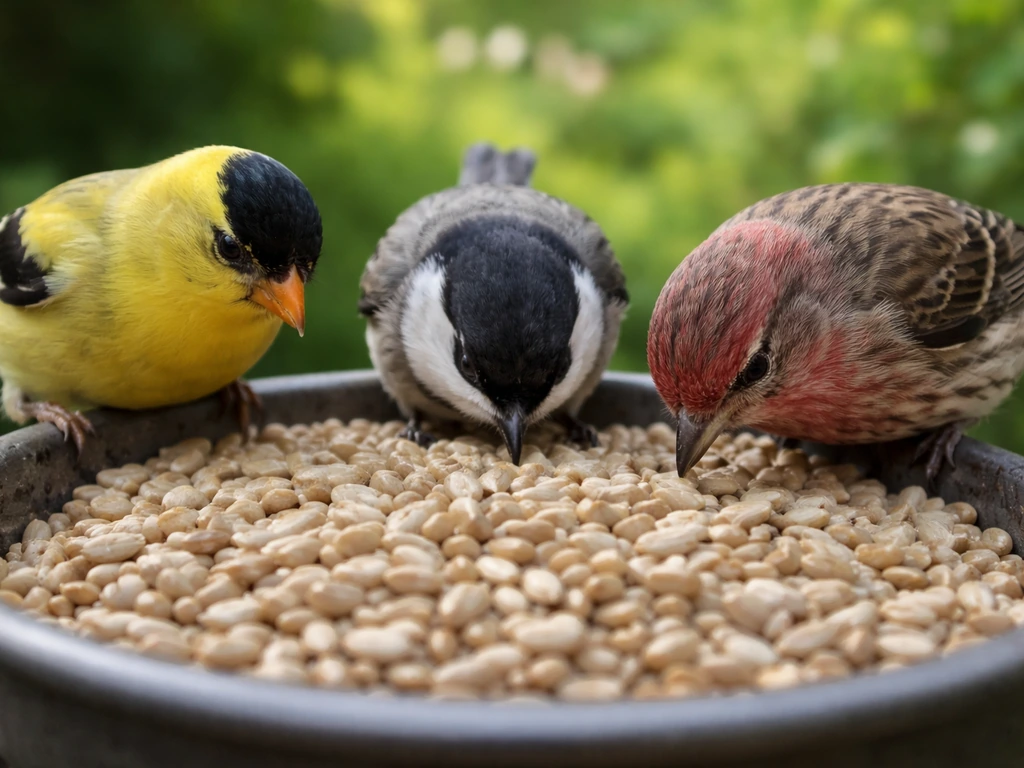
No-mess blends are well matched to birds that would eat hulled seed anyway: chickadees, nuthatches, titmice, finches, woodpeckers, and cardinals all take sunflower hearts readily. Those species tend to drive most of the activity at a typical backyard feeder, so a quality hulled blend often generates solid traffic. Sparrows and juncos also eat millet and smaller seeds, which appear in some no-mess mixes.
Where it gets tricky is with birds that specifically need to crack open seed as part of their feeding behavior, or species that are selective about texture and form. Some birds are wary of unfamiliar seed formats when they first encounter them, which explains the "nobody is eating it" reports. If your yard has been running standard black-oil sunflower in hulls for years, a switch to hulled hearts can take a week or two for regular visitors to accept.
Ground-feeding species like doves, towhees, and dark-eyed juncos often rely on what spills below the feeder. With no-mess seed, there is less ground spillage by design, which can reduce the draw for those birds unless you add a low tray feeder at ground level. Also keep in mind that blends with peanut bits or fruit pieces may attract crows, grackles, or starlings in larger numbers depending on your region. If managing feeder competition is already a concern, check what's in the blend before buying.
How to actually prevent mess: setup, placement, and portioning
The seed formula is only part of the equation. How you set up the feeder matters just as much for keeping things clean. If you are wondering where to hang bird seed bell in a way that stays cleaner, the same feeder setup and placement tips in this section apply.
Feeder type and placement
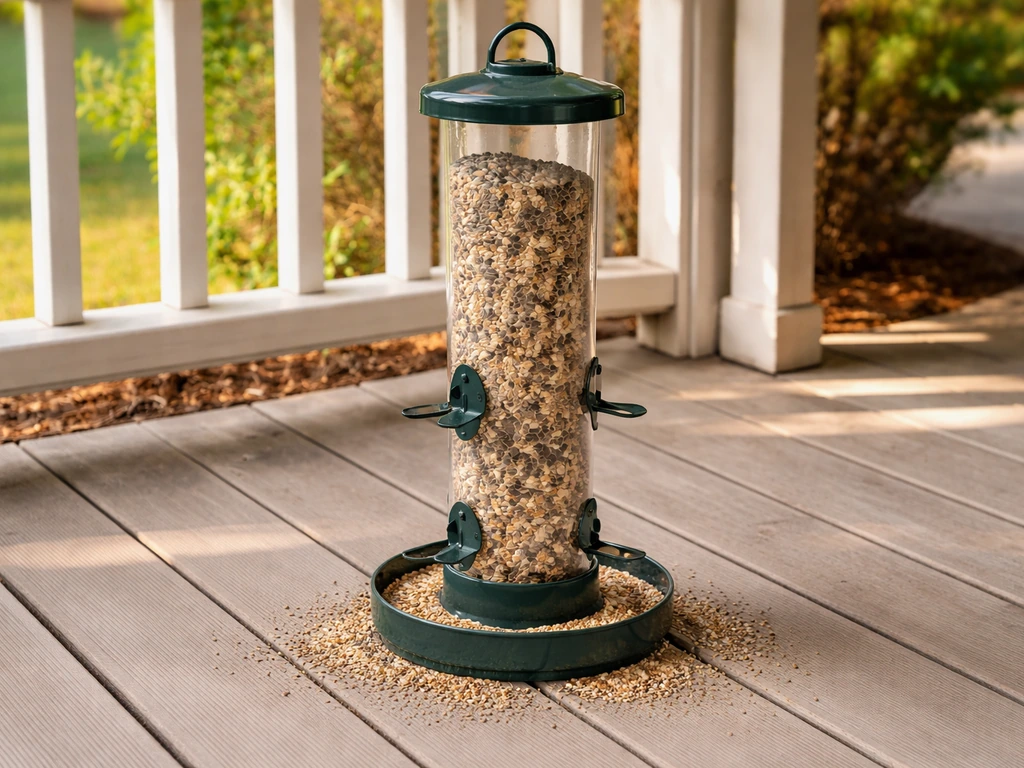
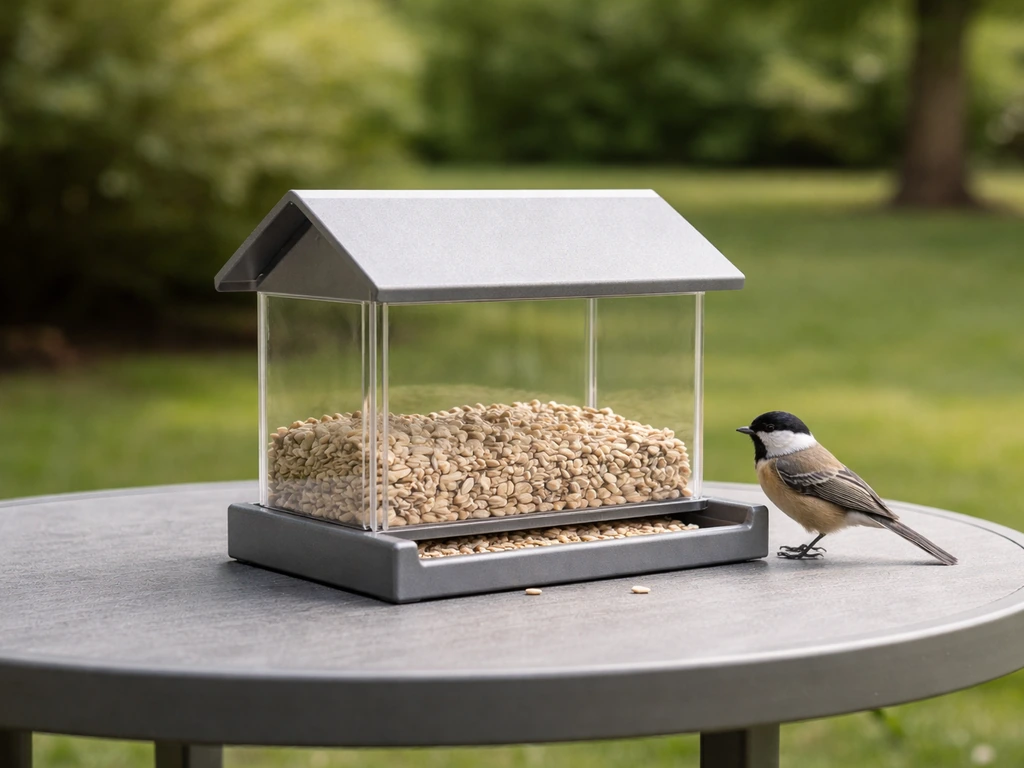
Tube feeders and enclosed hopper-style feeders work well with hulled seed because they limit how much seed birds can scatter while foraging. Tray feeders alone tend to increase scatter since birds can root through the seed freely. A practical middle-ground setup is a tube or hopper feeder with a seed catcher tray mounted directly underneath, which intercepts dropped material before it hits the ground. Brome's BirdsUP Seed Catcher (Seedbuster) is one commonly used option. Seed Cube's enclosed feeder with a built-in tray takes this further by keeping most seed inside the unit.
Placement over a hard surface (a deck, patio stone, or concrete pad) rather than grass or mulch makes cleanup dramatically easier. If the feeder is over a lawn, dropped seed settles into the turf and is much harder to remove. A hard surface under the feeder also dries faster after rain, which reduces mold risk in the residue that inevitably accumulates.
Portioning to reduce waste
Only fill the feeder to the amount birds will consume in one to two days. Hulled seed has no protective outer shell, which means it goes stale and absorbs moisture faster than unshelled seed. A feeder packed full and left for a week is a mold problem waiting to happen. In humid climates or rainy seasons, aim for one-day fills rather than two. You can always top it off more often. This is the single most effective habit change for preventing the wet, compacted seed clumps that lead to mold and birds avoiding the feeder.
If birds seem to be ignoring it
If traffic drops noticeably after switching blends, try mixing the new no-mess seed with a small amount of the previous seed for the first week. This eases the transition. Also confirm the blend you chose matches what your local birds want. A nut-and-fruit premium blend may attract different species than a straight hulled-sunflower product. Wild Birds Unlimited's guidance is to match the seed to regional preferences, which is worth checking for your area.
Rain, moisture, and sprouting: what actually happens
This is where no-mess seed creates a risk that regular hulled seed (still in shell) handles slightly better. The shell on standard seed acts as a minor moisture barrier. Hulled seed has no such protection. When it gets wet, it absorbs water quickly, clumps together, and can begin to ferment or mold within 24 to 48 hours in warm weather. In cool, dry conditions it may stay acceptable a bit longer, but the window is still short.
Seeds like millet and sunflower can germinate when they get wet for long enough, but with no-mess seed this is actually less of a germination concern than with standard seed, because hulled seed has lower germination viability. The more relevant risk is mold. Wet hulled seed in a warm feeder is ideal for mold and bacterial growth. The Institute for Environmental Research and Education specifically states that wet seed should not be dried and reused because mold and bacteria can persist even after the seed appears dry.
Practical steps to manage moisture with no-mess seed:
- Use a feeder with a roof or weather baffle to keep rain off the seed port.
- After any significant rainfall, check the feeder and discard any seed that is clumped, darkened, or smells sour.
- Never re-dry wet no-mess seed and return it to the feeder.
- In consistently rainy weather (Pacific Northwest, Gulf Coast summers), consider filling only what birds will consume that morning.
- Clean and dry the feeder interior once a week in humid months, or every two weeks in dry seasons.
- Position the feeder where it gets morning sun to help dry any condensation naturally.
If you are in a climate with long rainy seasons or high summer humidity, no-mess seed requires more active management than regular seed. It is not a set-it-and-forget-it product in those conditions.
Pests, contamination, and cleanup
Rodents and insects
No-mess seed can actually reduce rodent attraction compared to regular seed, because there are fewer hull piles accumulating on the ground. One Reddit user specifically switched to no-mess after noticing mice under their feeder and reported the problem improved significantly. Hulls and debris are what mice typically nest in and feed from. With less ground accumulation, there is less reason for rodents to establish themselves under the feeder.
That said, the actual seed is still attractive to rodents if it falls to the ground or is stored poorly. Peanut bits in particular are high-value food for squirrels and mice. If rodent pressure is a serious issue in your yard, a seed catcher tray below the feeder combined with cleaning up any fallen seed at the end of each day is more effective than relying on the no-mess formula alone. Store your seed stock in a sealed metal or heavy plastic container, never in the original paper or thin plastic bag.
Insects (grain moths, weevils) can infest hulled seed faster than shelled seed because there is no hull protecting the kernel. Inspect stored seed regularly. If you see webbing, small moths, or tiny larvae, discard the affected batch. Do not try to sift out the insects and use the rest.
Cleaning up under and around the feeder
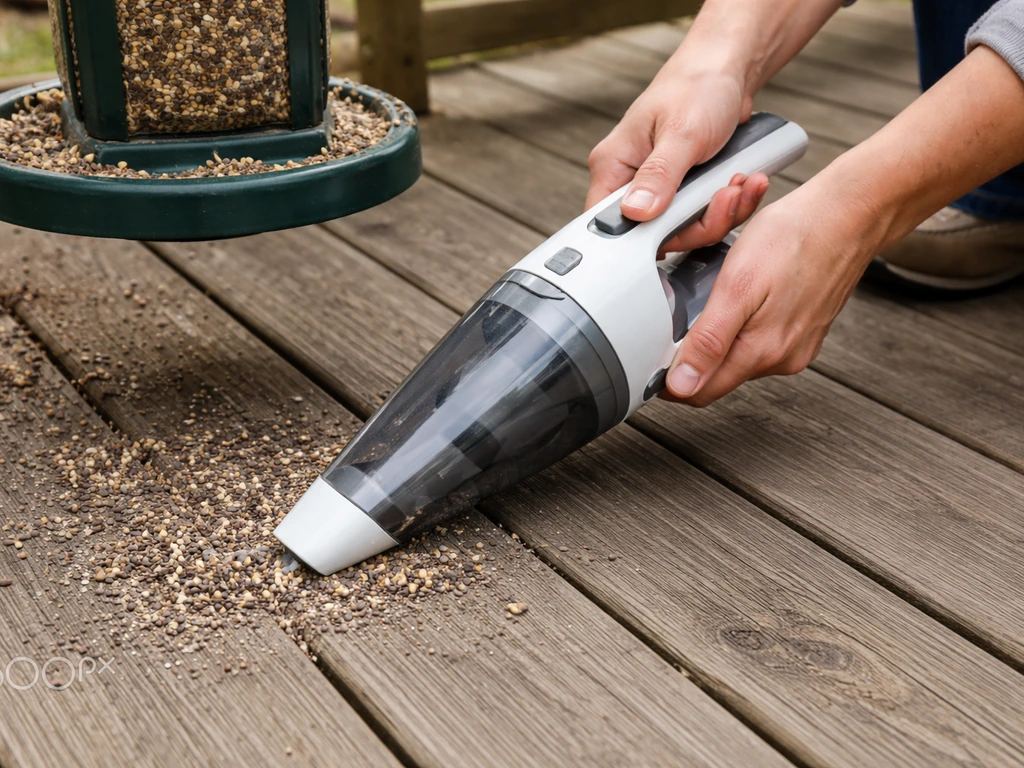
- Sweep or vacuum the area under the feeder every three to five days. For decks and patios, a handheld vacuum works well for the fine residue hulled seed leaves behind.
- If there is mold visible on the ground or in the seed catcher tray, discard the affected material in a sealed bag, then scrub the tray with a 10% bleach solution (1 part bleach to 9 parts water) and rinse thoroughly before reinstalling.
- Clean the feeder itself by emptying it completely, scrubbing with the same bleach solution, rinsing well, and letting it air dry fully before refilling.
- Do not compost moldy or wet bird seed. Bag it and put it in the trash.
- If the ground beneath the feeder is soil or lawn, consider laying a hardware cloth mat or flat paving stones to make cleanup easier and prevent seed from germinating or rotting into the soil.
No-mess vs regular bird seed: is it actually worth the money?
No-mess seed costs more per pound than standard seed, sometimes significantly more. The reason is the processing: shelling and hulling seed takes additional steps and increases labor and equipment costs. Here is how the two formats compare across the factors that matter most for backyard feeders:
| Factor | No-Mess / Hulled Seed | Regular Seed (with hulls) |
|---|---|---|
| Ground debris | Minimal to none from hulls | Significant shell/hull accumulation |
| Actual edible content per pound | Higher (no hull weight) | Lower (hulls are 30-45% of weight) |
| Cost per pound | Higher (often 2x or more) | Lower |
| Cost per edible ounce | Comparable or slightly higher | Lower stated, but hull weight is waste |
| Moisture / mold risk | Higher (no shell barrier) | Lower (shell provides some protection) |
| Rodent attraction from ground debris | Lower | Higher (hull piles attract mice) |
| Sprouting risk under feeder | Very low (hulled = lower viability) | Moderate to high (whole seed can germinate) |
| Bird acceptance (first use) | May take adjustment period | Familiar to most feeder birds |
| Best for | Decks, patios, balconies, pest-sensitive setups | Open-ground feeders, rural yards with space |
The cost-per-edible-ounce gap between no-mess and regular seed is smaller than the sticker price suggests, because you are not paying for hull weight. A 10-pound bag of standard black-oil sunflower might be 40% shells, meaning you are getting roughly 6 pounds of actual food. A 10-pound bag of sunflower hearts is nearly all food. That helps close the price gap, though premium no-mess blends with peanuts and dried fruit can still run meaningfully more expensive.
Whether it is worth it comes down to your setup. If you feed on a deck, balcony, or anywhere cleanup is inconvenient, no-mess is genuinely worth the premium. If mice or ground pest attraction is already a problem, no-mess plus a seed catcher tray is one of the most practical solutions available. If you have a large open yard, no pest pressure, and regular seed is drawing great bird traffic, the case for switching is weaker.
You can also find no-mess seed at better prices than the premium brands at some retailers, which is worth comparing before buying. If you are shopping for the no mess bird seed best price, compare unit cost per edible ounce and check retailer specials before you buy.
One more thing to keep in mind: if sprouting under the feeder has been a concern with your current seed, hulled no-mess blends largely eliminate that problem since the seed kernel has very low germination viability without its seed coat. That is a meaningful practical benefit beyond just aesthetics.
Bottom line: no-mess bird seed works as advertised for reducing hull mess and ground debris, but it only performs well when you buy a quality blend without fillers, portion it in amounts birds will finish in one to two days, protect it from rain, and clean the feeder and area regularly. It is not a hands-off solution, but for the right setup it is one of the most effective changes you can make to a messy bird feeding situation.
FAQ
How do I know if a no-mess blend has fillers that will create mess anyway?
Check the ingredient panel for rejected or hard-to-crack grains (common examples include cracked corn, canary seed, or wheat). If your local birds do not eat those items quickly, they tend to remain uneaten and add back the kind of ground waste you are trying to avoid.
Will no-mess bird seed attract fewer insects under the feeder?
It often helps because there is less decaying hull material, but the bigger factor is moisture. If hulled seed residue gets wet and clumps, it can still support mold and insect problems, so focus on keeping refill amounts small and the area dry.
Is it safe to reuse seed that got wet or molded under the feeder?
No. If you see mold odor or visible growth, discard the batch. Even if it seems dry later, mold and bacteria can persist in residue and break fragments, and reusing it increases the chance of repeating the problem.
Why are some birds ignoring no-mess seed after I switch?
Selective species may take 1 to 2 weeks to adjust to a new texture or food shape. If you notice drops in visits, mix the no-mess blend with your prior seed for about a week, then gradually increase the new seed.
Can no-mess seed make the feeder messier because of dusty residue?
It can, especially with sunflower hearts. Some birds scatter fine powder and smaller fragments more than whole hulled kernels, so consider a tube or hopper feeder plus a catcher tray, and place the feeder over a hard surface to simplify cleanup.
What feeder setup works best for people who feed on a patio or deck?
Use a tube or enclosed hopper with a seed catcher tray directly underneath. This intercepts dropped material before it reaches the decking, and hard-surface placement also dries faster after rain, reducing residue buildup.
How much should I fill the feeder with no-mess seed to prevent mold?
Aim for a 1 to 2 day supply, and in humid or rainy weather lean closer to one day. Overfilling increases the time residue stays damp, which is when hulled seed is most likely to clump, ferment, or grow mold.
Will no-mess seed reduce rodents, or does it still feed squirrels and mice?
It can reduce rodent nesting because there are fewer hull piles, but rodents will still target any dropped or poorly stored seed. If rodent pressure is high, use a seed catcher tray, clean fallen seed daily, and store bulk seed in sealed containers.
Do I need to worry about seed germinating under the feeder?
With hulled no-mess blends, sprouting is usually less of a concern because germination viability is lower without the full seed coat. The more relevant risk is mold from moisture rather than sprouts.
How do I compare cost fairly between regular seed and no-mess seed?
Compare unit cost per edible ounce, not per pound. Regular seed includes shell weight (often around 40% by weight for some sunflower blends), so you may be paying for inedible volume unless you switch to hearts or other fully shelled ingredients.