Hang your bird seed bell 5 to 6 feet off the ground, within 3 feet of a window or at least 30 feet away from one, and about 5 to 10 feet from a shrub or brush pile that gives birds quick cover. That combination handles the three things that actually determine success: bird safety, predator pressure, and collision risk. Everything else, hooks, baffles, cleaning schedules, flows from getting that triangle right first.
Where to Hang Bird Seed Bell: Best Placement Tips

Maya Collins
6 Jun 2026
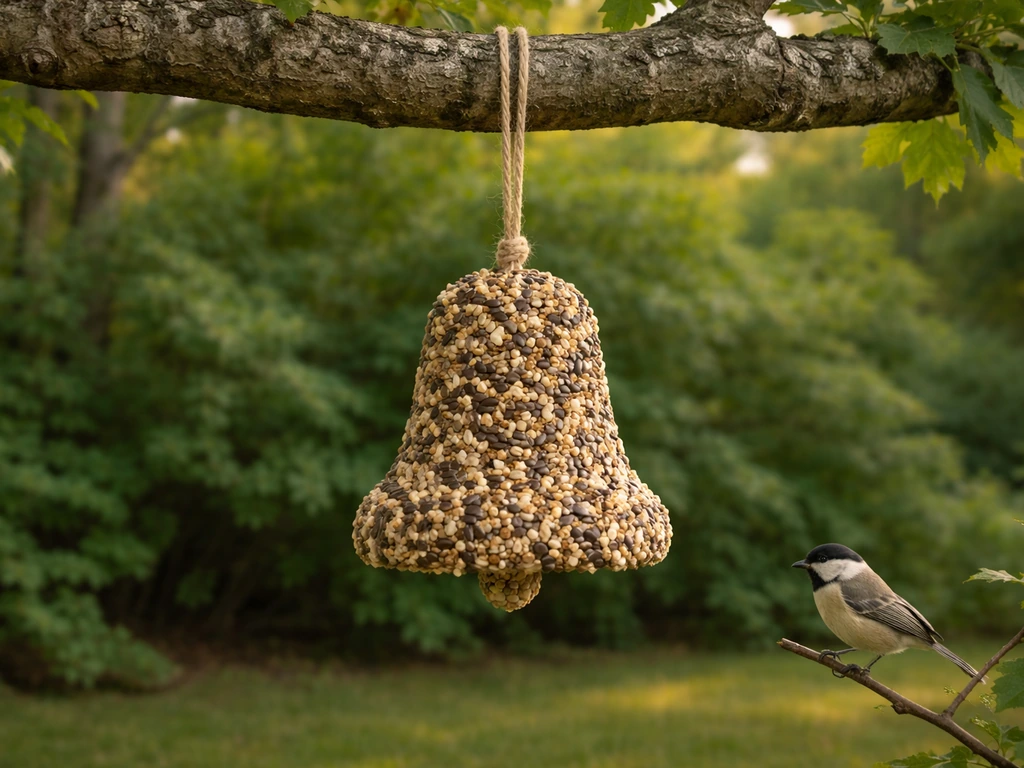
Best locations: how to choose the safest hanging spot
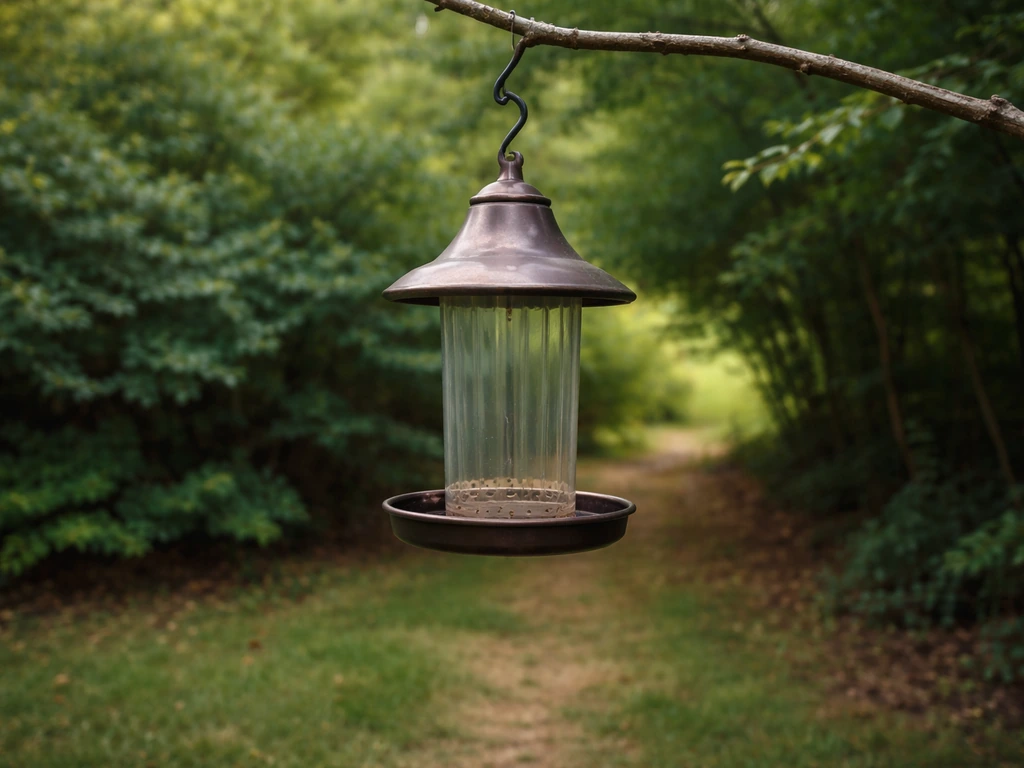
The single most important factor is proximity to escape cover. Birds are exposed and vulnerable every second they're on a feeder, so they need to be able to bolt to safety in under a second if a hawk or cat appears. A dense shrub, a brush pile, or the lower branches of a small tree within 5 to 10 feet gives them that refuge. Beyond 10 feet and the escape route becomes too risky; closer than 5 feet and you're giving cats and squirrels an ambush point. That 5-to-10-foot zone is the sweet spot backed by guidance from the Oklahoma Department of Wildlife Conservation and the Cornell Lab.
After cover, think about visibility, yours and the birds'. You want to be able to see the feeder from a window you actually look out of, both for enjoyment and so you notice when something is wrong (a sick bird, a depleted bell, or a squirrel taking over). Birds also approach more confidently when they have clear sightlines to watch for predators, so avoid spots that are completely enclosed by dense foliage on all sides.
Avoid hanging a bell feeder directly over a patio, deck, or high-traffic walkway. Seed debris and droppings accumulate underneath, and the constant human movement directly below will keep most birds away. A spot slightly off to the side of a seating area, or at the edge of a garden bed where cleanup is easy, tends to work much better in practice.
Height, distance, and shelter: spacing for different feeder types
Five to six feet above the ground is the standard recommended hanging height for seed feeders. That keeps the feeder out of easy reach for cats and most ground predators, puts it at a comfortable foraging height for small perching birds, and makes it straightforward for you to fill and check. If you're using a shephard's hook or pole, this height is easy to hit. If you're hanging from a tree branch, measure before you tie off.
Window distance is the piece people get wrong most often. The counterintuitive rule from the U.S. Fish and Wildlife Service and Cornell Lab's All About Birds: hang the feeder either within 3 feet of a window or at least 30 feet away. If a bird takes off from a feeder less than 3 feet from the glass and hits the window, it hasn't built up enough speed to cause a fatal injury. At 30 feet or more, birds are far enough away that the window doesn't visually confuse them. The danger zone is anywhere from 3 to 30 feet, where birds have room to accelerate but still collide with the glass. Bell-style feeders hung from a bracket mounted directly on a window frame or just outside a picture window fall safely in that under-3-foot category.
For spacing between multiple feeders, give each station a few feet of clearance to reduce competition and crowding. Aggressive species like House Sparrows or Starlings tend to monopolize a single bell if birds can't easily approach from multiple angles.
Avoiding pests and problem wildlife: squirrels, rats, bears, and aggressive birds
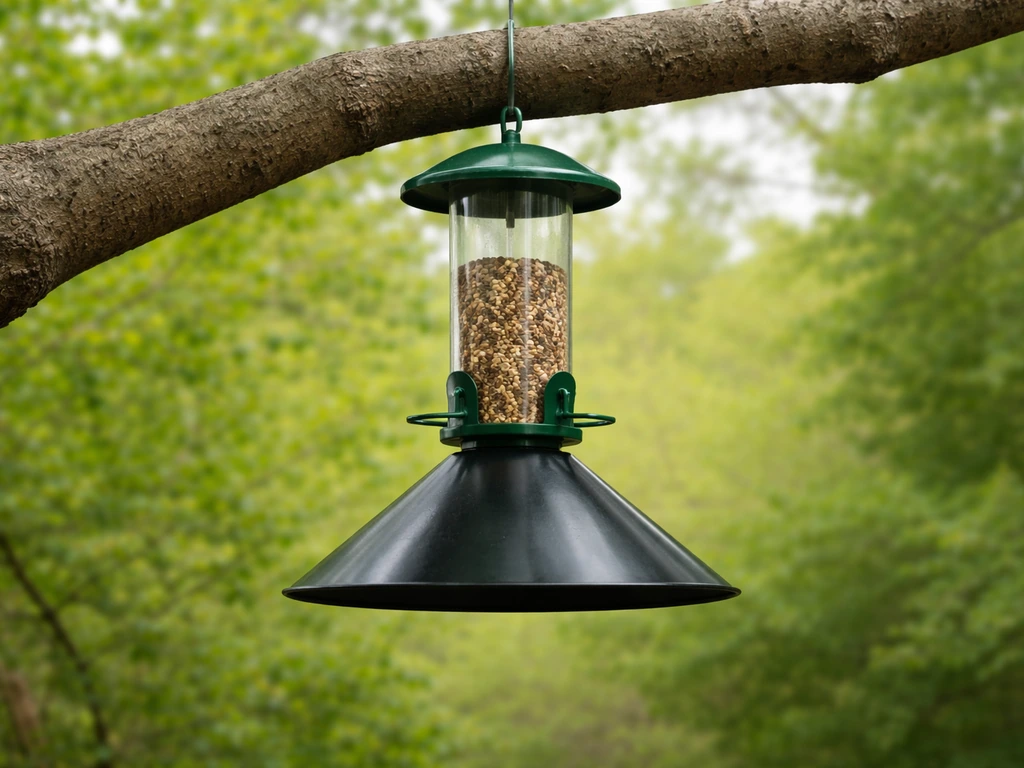
Squirrels are the most common reason a bird seed bell gets emptied in 24 hours. The fix is a combination of placement and a baffle. Place the feeder at least 8 to 10 feet horizontally from any structure a squirrel can use as a launch point: tree trunks, fence posts, deck railings, walls. Squirrels can leap roughly 5 feet horizontally and drop from above, so that 8-to-10-foot clearance cuts off most jumping angles. A torpedo or dome baffle mounted on the pole or cord above the feeder blocks the drop-down approach. Both elements together are far more effective than either one alone.
Rats are attracted more by what's on the ground than what's in the feeder. Fallen seed, husks, and moist debris under a bell feeder are exactly what rodents look for. Sweeping or raking under the feeder every few days removes that attractant. Using a no-mess seed blend (hulled seeds, sunflower chips, or shelled peanuts) reduces ground debris significantly since there are no shells to drop. You can find more on no-mess options if cleanup is a recurring issue for you.
Bears are a seasonal and regional concern, most relevant in spring and early summer when bears emerge hungry, and in fall when they're building fat reserves. If a bear visits your yard and finds the feeder, take it down completely for at least two weeks until the animal moves on. A bear that finds food once will return repeatedly, and no baffle or placement trick stops a determined bear. In bear-active regions (much of the rural Northeast, Southeast, mountain West, and Pacific Northwest), consider bringing feeders in at night from late March through November.
Aggressive birds like European Starlings and House Sparrows can take over a bell feeder and drive away the species you actually want. Placement near dense, smaller shrubs favors chickadees, nuthatches, and finches that navigate tight spaces easily. If one dominant species is monopolizing the feeder, temporarily moving it a few feet in a different direction, or adding a second feeder in a distinct location, often breaks the pattern.
Weather and habitat factors: wind, rain, snow, and shade
Wind is the enemy of a bell feeder. A constantly swinging feeder makes birds nervous and causes seed to scatter faster, creating ground waste. Hang the bell on the sheltered (lee) side of a building, fence, or dense evergreen where prevailing winds are partially blocked. If your yard is open, a sturdy shephard's hook with a weighted base will reduce swinging compared to a thin cord from a branch.
Rain and snow accelerate mold growth in any seed feeder, and bell-style feeders are particularly vulnerable because they're open to the elements. Hanging under a roof overhang, a covered porch edge, or the outstretched branches of a large conifer gives real protection. If you can't get overhead shelter, plan to check the feeder within 24 hours of heavy rain and remove any wet or clumping seed immediately. Wet seed that sits more than a day or two starts to mold, and moldy seed can make birds seriously ill.
Shade matters more in summer than winter. Direct afternoon sun heats seed, accelerates fat rancidity in suet-based bells, and dries out fresh seed faster. A spot with morning sun and afternoon shade is ideal year-round. In winter, some direct sun exposure actually helps birds stay warm while feeding and keeps seed from freezing solid, so a bit more sun exposure in cold months is fine.
Feeder setup checklist: mounts, hooks, cord safety, and cleaning workflow
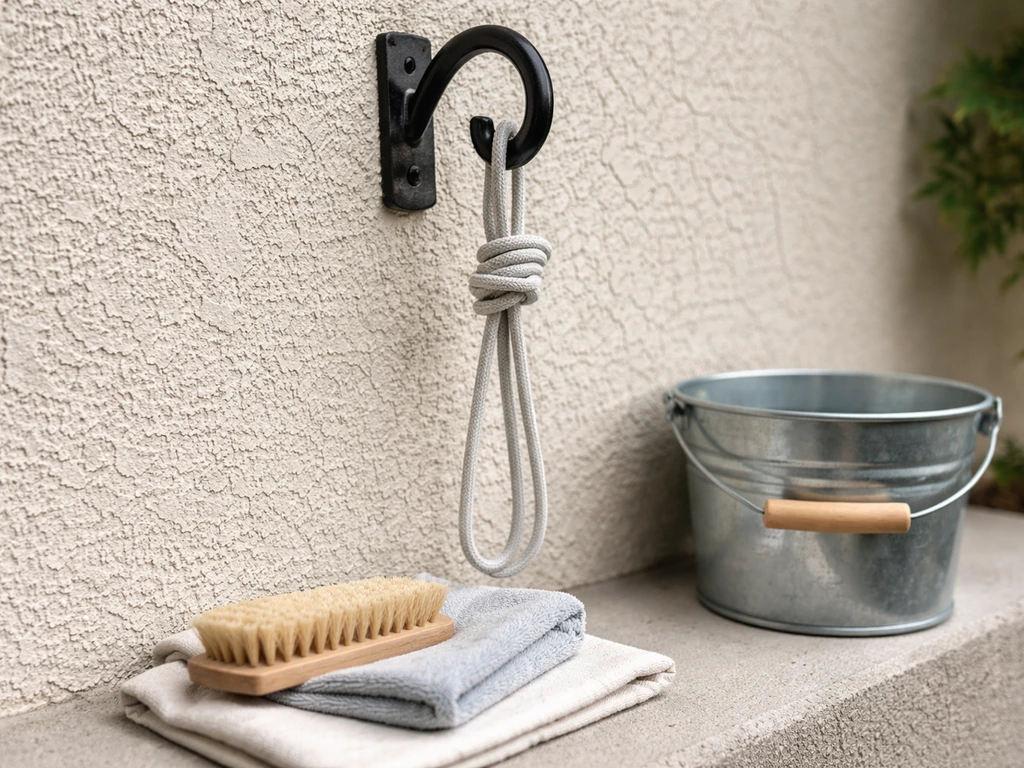
Before you hang the bell, work through this setup list. Getting these details right upfront prevents the most common failure points.
- Choose your mount: a heavy-gauge shephard's hook (at least 0.5-inch diameter), a wall-mounted bracket rated for outdoor use, or a strong branch at least 1 inch in diameter with no deadwood. Thin hooks bend; weak branches break in ice or wind.
- Use a rust-proof S-hook or swivel clip to attach the bell. Avoid thin wire twist-ties or plastic clips that degrade in UV and snap in cold weather.
- If using a cord, choose UV-resistant nylon or braided polyester rope. Jute and cotton rot within one season. Check the cord monthly for fraying.
- Install a dome or torpedo baffle above the hanging point if squirrels are present. The baffle should sit at least 4 feet off the ground and be positioned so squirrels can't jump past it from the side.
- Confirm the feeder hangs freely and doesn't contact the hook mount or nearby branches during a light push. Contact points trap moisture and accelerate mold.
- Clean the feeder before first use: soak in a 9-parts-water-to-1-part-bleach solution for 10 minutes, rinse thoroughly, and let it dry completely before adding seed.
- Set a recurring cleaning reminder for every two weeks, or every week in hot and humid conditions or during any reported disease outbreak in your area.
- Sweep or rake the ground beneath the feeder every 3 to 5 days to remove droppings, shells, and fallen seed.
For the ongoing cleaning workflow: every two weeks, take the bell down, scrub it with a bottle brush and warm soapy water, soak in the 9:1 bleach solution for at least 10 minutes, rinse completely, and air dry before refilling. Never refill a damp feeder. Moisture left inside creates exactly the conditions mold needs to establish within 48 hours, especially in warm weather.
What to do if birds won't use the feeder: troubleshooting and adjustments
If birds aren't visiting within the first week or two, the cause is almost always one of a handful of fixable issues. Work through these in order before assuming the location is hopeless.
| Likely cause | Fix | Prevention |
|---|---|---|
| Feeder too exposed, no nearby cover | Move it within 5 to 10 feet of a shrub or brush pile | Always site feeders with escape cover in mind before hanging |
| Feeder too close to human foot traffic | Relocate at least 10 feet from a high-traffic area | Pick a quieter corner of the yard for initial placement |
| Seed is old, stale, or wet | Empty completely, clean the feeder, refill with fresh seed | Check seed weekly and clean every two weeks minimum |
| Squirrels or dominant birds monopolizing the feeder | Add a baffle; relocate 8 to 10 feet from squirrel launch points | Pair placement with a properly fitted baffle from day one |
| Wrong seed type for local species | Switch to black-oil sunflower seed or a regional blend | Research your local common species before buying seed |
| New feeder scent or material is unfamiliar to birds | Wait 1 to 2 more weeks; birds are naturally cautious with new objects | Placing a small amount of seed on the ground nearby speeds discovery |
| Too much wind causing feeder to swing constantly | Move to a sheltered spot or use a weighted hook | Choose a lee-side location from the start |
One useful trick if birds are ignoring a new bell: scatter a small handful of the same seed on the ground directly below it. Many species, including juncos, towhees, and sparrows, feed primarily on the ground and will discover the feeder while eating fallen seed. Once one species starts visiting, others follow quickly. If squirrels are so overwhelming that no birds can get to the feeder at all, take it down for a week or two until the squirrels lose interest and move on, then rehang with a proper baffle in place.
Seed handling for freshness and hygiene: preventing mold, sprouting, and wet seed
The seed you put in the feeder matters as much as where you hang it. If you want to keep seed debris from building up under the feeder, a good vacuum for bird seed can make cleanup much easier best vacuum for bird seed. Stale, wet, or moldy seed doesn't just go uneaten; it can make birds sick and attract rodents. Never put seed in a feeder that has been stored in a damp container, smells musty, or has clumped together. If seed has sprouted in the bag, it is too old and moist to use safely.
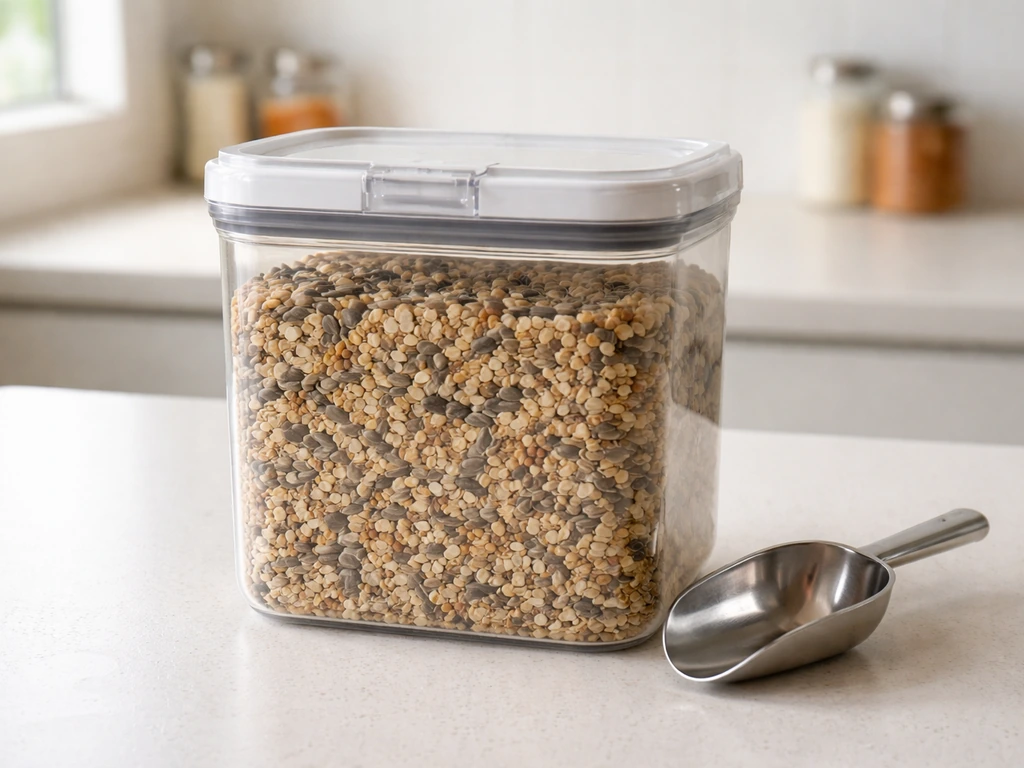
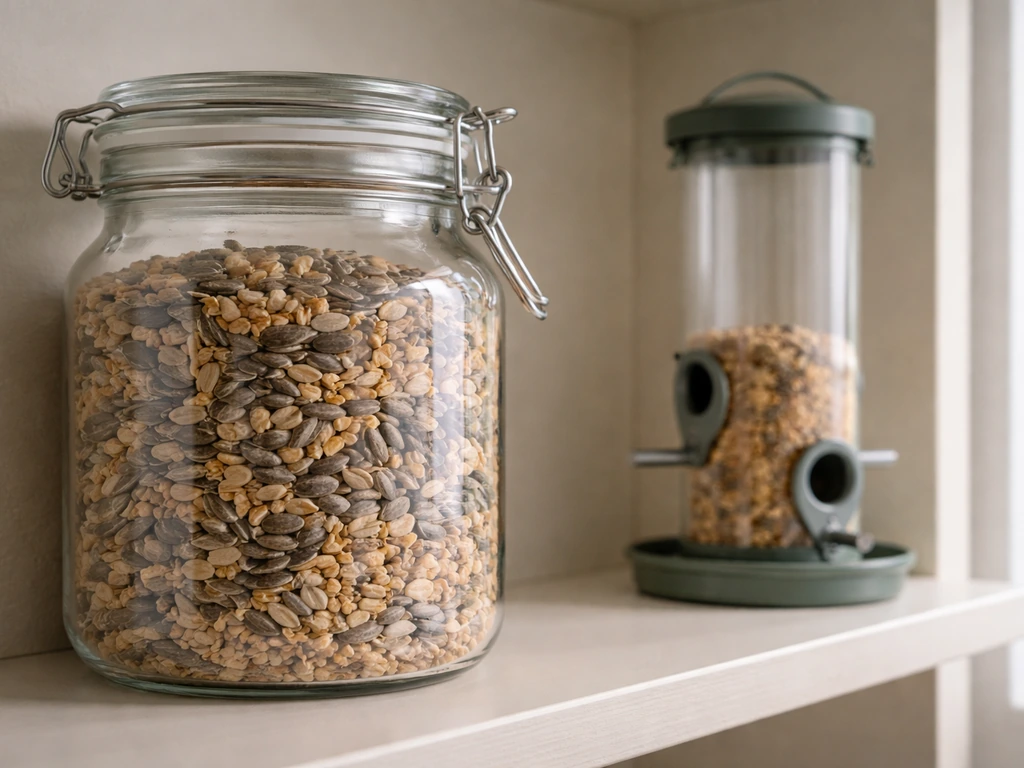
Store seed in a metal or hard plastic airtight container in a cool, dry location, ideally a garage or shed rather than outside. Moisture is the main enemy of seed freshness. Buy in quantities you'll use within four to six weeks rather than bulk amounts that sit for months. Seed that's been wet and dried out repeatedly in an outdoor bin has already begun to degrade even if it looks normal.
If you notice seed clumping at the bottom of a bell feeder after rain, clear it out the same day. Wet seed at the base blocks fresh seed from falling and creates a mold hotspot. Bell feeders with a drainage hole at the base handle light rain better than sealed-bottom designs. After heavy rain, a quick visual check and probe with a stick or skewer takes 30 seconds and can prevent a week's worth of mold development.
Sprouting is a related but separate problem. Some seed types (millet, milo, sunflower) will germinate if they fall to the ground and stay moist, creating a weedy mess under the feeder. If you want to avoid seedling growth entirely, look into hulled or sterilized seed blends. The topic of whether no-mess seed grows at all is worth checking into if sprouting under your feeder is a persistent problem. If you keep getting sprouting under the feeder, it may be worth switching to does no mess seed and confirming that it truly will not grow in your conditions. Regardless of seed type, raking the ground underneath every few days prevents germination from taking hold and removes the damp seed layer that attracts rats and mice.
Finally, a word on volume: fill the bell with only as much seed as birds will consume in two to three days, especially in humid or rainy weather. A full bell that sits untouched for a week in summer is a mold problem waiting to happen. Smaller, more frequent refills paired with your biweekly cleaning schedule keeps the feeder fresh, birds healthy, and pests less interested in lingering.
FAQ
How far should I keep a bird seed bell from my backyard grill or kitchen door so birds still feel safe?
Treat doors and high-traffic areas like windows, place the feeder either within 3 feet of the door area or at least 30 feet away, and avoid positioning directly over the path people walk most. If you want close viewing without traffic, hang it off to the side of the seating area where you can still watch from inside but birds have a clear escape route to nearby cover.
What’s the best way to position a bell feeder on a corner of a house or fence?
Choose the corner only if you can keep a short escape route to shrub or branches within 5 to 10 feet. Corners can create a “trap” effect if the feeder is between two reflective walls, so make sure birds have at least one unobstructed approach lane from the open side and no tight enclosed pocket of foliage on all sides.
Can I hang the bell from a balcony or railing, and will that change the squirrel and cat risk?
Yes, but increase the horizontal offset from any launch point. If it’s near a railing or wall where squirrels can climb, aim for the same 8 to 10 feet clearance from those surfaces, and use a weighted baffle. Also, avoid suspending it over stairs or where wind funnels, since swinging increases scattered seed and attracts rodents.
Is 5 to 6 feet tall always correct, or should I adjust it for different birds?
Use 5 to 6 feet as the baseline, but consider lowering slightly if your preferred birds are smaller and you have ample escape cover close by. If cats or heavy ground predators are common, keep it at the higher end of the range and do not place it too close to low shrubs that predators can use as a jumping ramp.
What if there’s no shrub or brush pile within 10 feet, what’s my fallback placement?
If you cannot reach the 5 to 10 foot cover zone, prioritize safety by moving the bell farther from windows and from human traffic, then compensate by adding a baffle and creating nearby cover such as planting dense shrubs or keeping lower branches accessible. Without nearby refuge, birds are more likely to stop visiting after a predator scare even if collision distance is handled.
How do I tell if the window collision rule is being met if my window is angled or screened?
The rule is distance-based, measure from the feeder to the glass plane, not to the frame edge or screen mesh. Screens still count as collision risk if birds accelerate toward what looks like a clear landing, so keep the feeder either under 3 feet from the glass or 30 feet or more away, and avoid placing it in the 3 to 30 foot danger zone even if blinds are usually closed.
Should I put a bell feeder closer to the ground to help finches and chickadees?
Generally no, since lower placement increases ambush risk from cats, and it also raises the chance that seed debris is accessible to rodents. Instead, keep the bell at 5 to 6 feet and improve access by ensuring there is escape cover within 5 to 10 feet and that there is room for birds to approach from multiple angles without being blocked by dense surrounding foliage.
How much seed should I put in the bell if I live in a humid area?
Start with enough for 2 to 3 days, not longer. Humidity increases clumping and mold risk, especially if rain can reach the feeder or if wind drives moisture into crevices. If you notice any wet or matted seed around the base after a storm, clear it the same day and refill with a smaller quantity.
Do I need a baffle if I already placed the feeder far from squirrel entry points?
You still benefit from a baffle as a second layer of defense. Placement alone reduces many squirrel jumping angles, but squirrels can also drop from above or exploit unexpected launch points like nearby branches. A torpedo or dome baffle mounted above the feeder blocks the drop-down approach and usually improves results even when distance is already decent.
How often should I clean the bell, can I stretch it beyond every two weeks?
For safety, stick to every two weeks, and clean sooner if you see wet seed, mold odor, or heavy droppings buildup. Never refill a damp feeder, moisture inside can lead to mold within 48 hours, so if rain splashes the bell or it gets condensation, take it down, dry fully, then refill.
What should I do if birds start visiting but then stop after a week?
Check for changes that affect safety and freshness, look under and around the feeder for increased waste, confirm the seed isn’t wet or clumped, and verify wind is not making the bell swing. Also consider competition, if sparrows or starlings monopolize the feeder, temporarily shift it a few feet or add a second station in a different direction to restore access for your target species.
If I scatter seed below the feeder to attract birds, won’t it increase rats?
It can, so keep the scattered amount small and treat it as a short-term discovery step. Place it directly under the bell, remove any uneaten wet seed promptly, and increase raking or sweeping to interrupt the food source that rodents rely on. Once regular visits start, rely mainly on the bell and keep cleanup frequent.