If you've found moldy bird seed, toss it, don't try to salvage it, don't compost it, and don't dump it loose in the yard. Seal it in a bag, throw it in the trash, then clean your feeder and the area around it before you add fresh seed. Once you confirm the seed is dry and not moldy, you can open the bird seed bag and portion it out safely for your feeder how to open bird seed bag. That's the short version. Here's exactly how to do each step safely.
What to Do With Moldy Bird Seed: Safe Disposal Steps
Maya Collins
6 May 2026
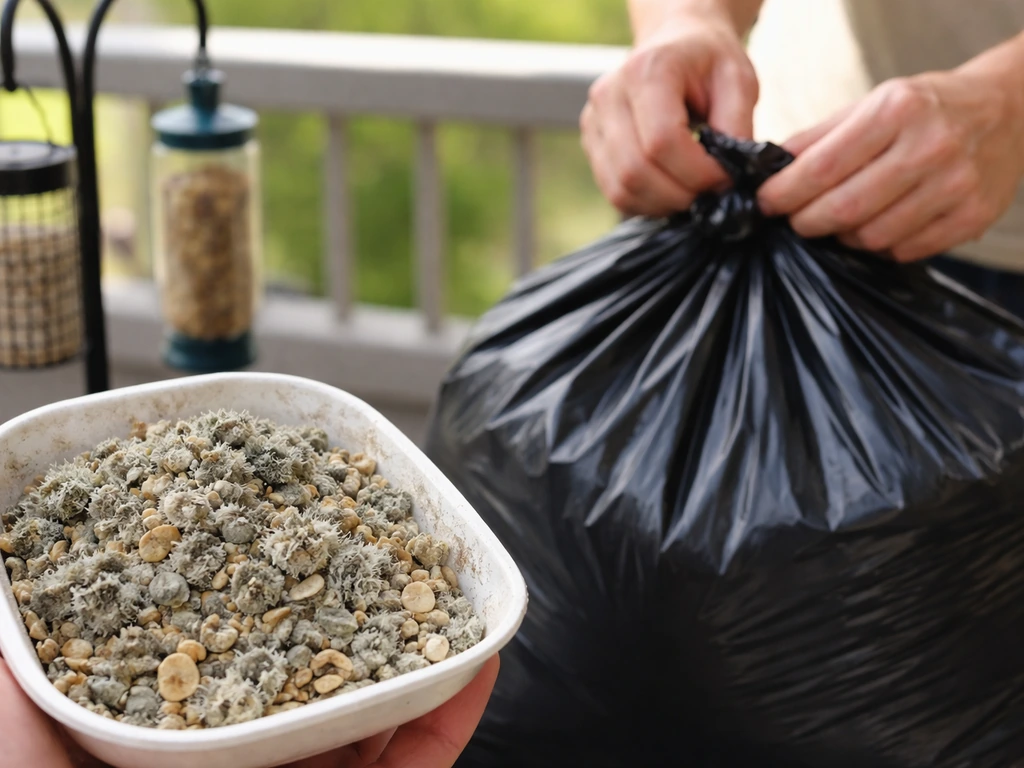
How to tell if bird seed is moldy or just old
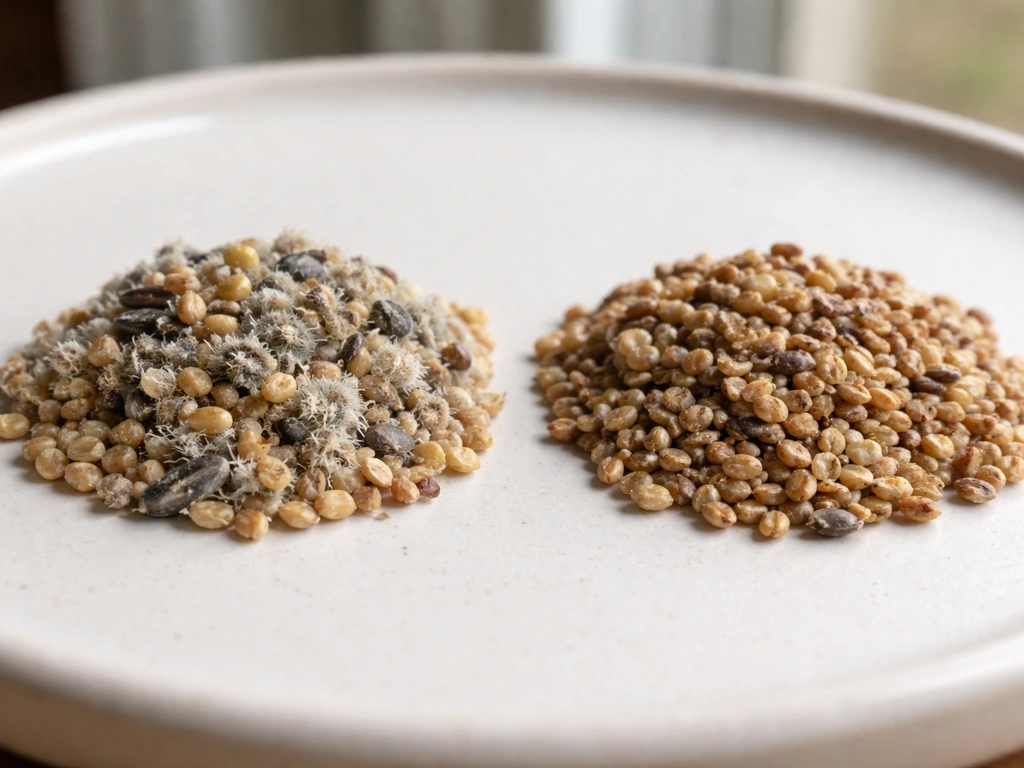
Old seed and moldy seed look different, and the distinction matters because old-but-dry seed can sometimes still be used while moldy seed should always be discarded. Check for these signs before you decide.
- Visible fuzz or powdery coating: white, gray, green, or black growth on the seed surface is mold. There's no safe threshold — if you see it, the batch is done.
- Clumping: seed that sticks together in solid lumps has gotten wet enough to allow mold to grow, even if you can't see visible fuzz yet.
- Sour, musty, or rancid smell: healthy seed smells faintly nutty or neutral. A sharp or fermented odor means microbial activity is already underway.
- Discoloration or dark spots on individual seeds: spots that weren't there before suggest fungal growth beneath the surface.
- Wet or slimy texture inside the bag or feeder: moisture is the root cause of mold, and any seed that's been sitting wet long enough is compromised.
- Old but dry seed: seed that is simply past its prime but has stayed completely dry may just look dull or feel less oily. Smell it and check for clumping. If it passes both tests, birds may still eat it, but it won't be as nutritious.
When in doubt, throw it out. A full bag of seed costs a few dollars. Fungal spores in your feeder or on your hands are a much bigger problem to manage.
Safety first: how to handle moldy seed without spreading spores
Disturbing moldy seed releases spores into the air, and that's the main thing you want to avoid. The CDC and EPA both recommend specific protective equipment when cleaning up mold, and the same logic applies here. CDC mold cleanup guidelines recommend protecting your mouth and nose with at least a NIOSH-approved N95 respirator, wearing protective gloves, and using goggles with complete eye protection protective equipment. Before you touch anything, gear up.
- Gloves: use nitrile, vinyl, or rubber gloves — not bare hands, and not latex if you have a sensitivity. Gloves protect your skin from both mold and any cleaning solutions you'll use afterward.
- Mask: an N-95 respirator gives the best protection against inhaled spores. A basic dust mask is better than nothing if that's what you have, but N-95 is the CDC and EPA recommendation for mold cleanup.
- Eye protection: goggles or safety glasses prevent spores from reaching your eyes, especially if you're working in a tight space like a shed or garage.
- Old clothes: mold spores cling to fabric, so wear clothes you can wash immediately or don't mind getting dusty.
Work outside or in a well-ventilated space whenever possible. Avoid shaking, stirring, or dry-brushing the moldy seed, any of those actions kick spores into the air. The goal is to move the seed with as little disturbance as possible and contain it immediately. If you're sensitive to mold or have respiratory issues, this is one cleanup job worth doing with full PPE or delegating to someone else.
How to dispose of old bird seed (best-practice options)
If your seed is old but dry and shows no signs of mold, you have a few more options than you do with visibly moldy seed. Here's how to think through them.
Put it out for birds immediately
Dry seed that smells fine and shows no clumping or discoloration can still go in the feeder. Birds aren't picky about freshness as long as the seed is safe. Offer it in small quantities rather than filling the feeder all the way, this way it moves quickly and doesn't sit long enough to get the chance to go bad.
Composting: check your situation first
Plain bird seed (sunflower seeds, millet, safflower) is technically organic material, but composting it at home gets complicated. If you are wondering, can you compost bird seed, the answer depends on whether it is plain and non-moldy composting it at home gets complicated. Many backyard composting guides, including Maryland's, specifically list grains and grain-based materials as unsuitable for home compost piles because they attract pests. Municipal compost programs vary widely, some accept it, many don't. If you want to compost old (non-moldy) seed, check your local program's accepted materials list before adding it to a collection bin. For moldy seed specifically, skip composting entirely, you'd be introducing active fungal growth into a pile you eventually use in your garden.
Scatter it on the ground (with limits)
Sprinkling dry, mold-free old seed directly on the ground in an open area can work as a last-resort option, but do it away from the house foundation and away from areas where pets roam. Ground-scattered seed attracts squirrels, mice, and rats, so this isn't a great long-term habit. Use this only for a modest amount of seed you want to move quickly.
Trash it
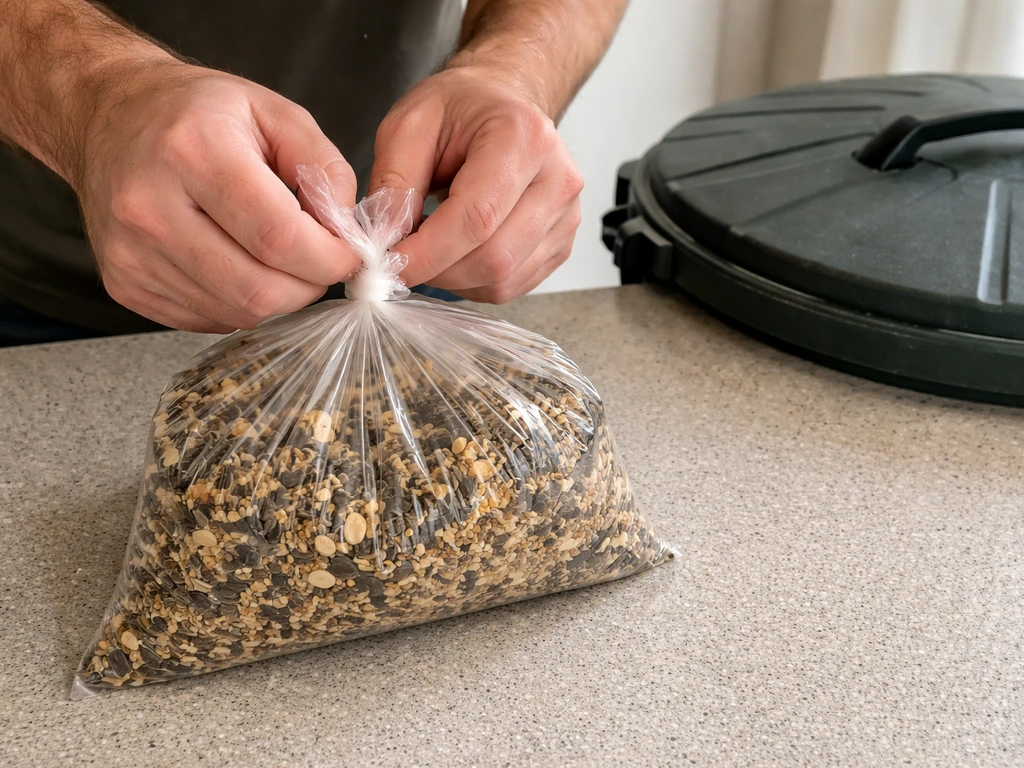
The simplest option: bag it and bin it. Put the old seed into a sealed plastic bag or tie off the original bag tightly, then put it in your outdoor garbage can. Bird seed bags may or may not be recyclable depending on whether the bag is contaminated and what your local recycling rules allow. This is especially appropriate if you're not sure whether the seed is worth using or if it's a mix that contains ingredients you can't identify.
How to dispose of moldy bird seed: contain, seal, and discard
Moldy seed goes straight in the trash, and the process is about containment above everything else. Follow these steps in order.
- Put on your PPE before opening the bag or container. Gloves, mask, and eye protection — all of it, before you touch anything.
- Bring a heavy-duty garbage bag or two nested trash bags outside with you. Do the disposal outdoors or in a garage, not in your kitchen.
- Gently slide or scoop the moldy seed directly into the trash bag. Avoid shaking, pouring rapidly, or using a dry brush or broom, all of which send spores airborne. A small scoop or trowel works well.
- If the seed is in a paper or fabric bag, fold the original bag closed and place the entire thing into the trash bag without emptying it out.
- Seal the trash bag tightly — double-knot it. If you used two nested bags, seal both.
- Place the sealed bag directly into your outdoor trash bin. Don't leave it on a porch or in a garage where it can be torn open by animals.
- Wash your gloves with soap and water while still wearing them, then remove them inside-out and discard them in the trash too.
- Wash your hands thoroughly with soap and warm water for at least 20 seconds after removing gloves.
- Wash your clothes on a hot cycle as soon as possible.
Do not compost moldy seed, scatter it in the yard, or put it in a yard waste bin unless your municipality explicitly accepts contaminated organic material (most don't). Spreading moldy seed spreads the fungal growth to your soil and lawn, and introduces it to areas where birds and pets will be walking and feeding.
Clean-up checklist for feeders, trays, and the surrounding area
Once the seed is out and bagged, the feeder itself needs a proper clean before you add fresh seed. A quick rinse isn't enough, you need to scrub, disinfect, rinse again, and dry completely. Virginia DWR also advises soaking feeders in a dilute 9:1 bleach solution (9 parts water to 1 part bleach) for 10 minutes, then rinsing thoroughly and removing or cleaning feeders for at least two weeks scrub, disinfect, rinse again, and dry completely.. Here's the process that multiple university extension services and wildlife agencies recommend.
Feeder cleaning steps
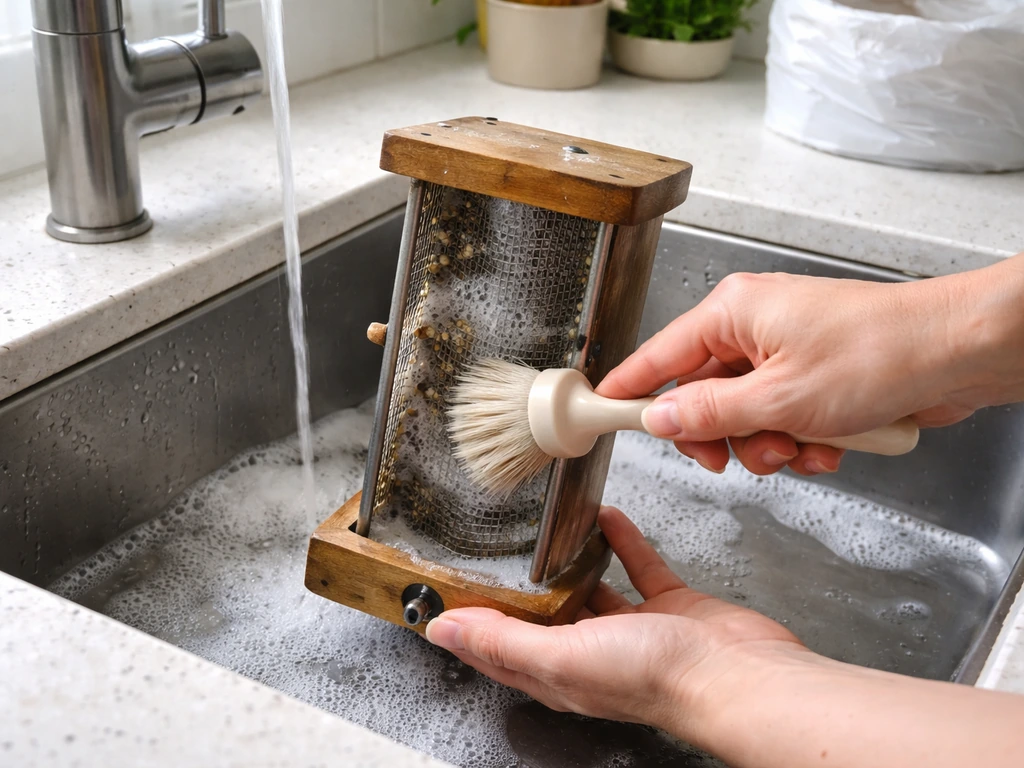
- Empty the feeder completely and knock out any remaining seed, hulls, or debris into your trash bag.
- Scrub all interior and exterior surfaces with warm, soapy water using a bottle brush or stiff-bristled brush. Get into corners, perches, and ports where seed residue hides.
- Rinse off the soap thoroughly.
- Mix a disinfectant solution of 1 part bleach to 9 parts water (for example, 2 ounces of bleach per gallon of water). This is the ratio recommended by Cornell Lab's All About Birds, Virginia DWR, Mississippi State University Extension, and several other sources.
- Soak the feeder in the bleach solution for 10 minutes. If the feeder is too large to soak, scrub all surfaces with the solution using a brush.
- Rinse thoroughly with clean water until no bleach smell remains.
- Let the feeder air-dry completely before adding any fresh seed. This step is non-negotiable — a damp feeder will grow mold again within days.
- If your feeder is dishwasher-safe (many plastic and metal feeders are), you can run it on a hot cycle as an alternative to hand-washing, then follow with the bleach soak step.
Trays and platform feeders
Trays collect the most moisture and debris, so they need the same scrub-soak-dry treatment as enclosed feeders. Pay attention to drainage holes, they clog easily with wet hull debris, and a clogged tray is a mold factory. If the tray has a wooden base, scrub it well and let it dry in direct sunlight if possible before reassembling.
The ground beneath the feeder
Moldy seed often falls from the feeder and accumulates in the soil or mulch below. If you are dealing with bird seed that includes hulls, follow the specific steps for how to remove hulls from bird seed to keep the seed clean and usable. Rake up that debris and bag it along with the moldy seed in your trash bag. If you have a hard surface under the feeder (pavers, a deck, concrete), scrub it with a dilute bleach solution and rinse. Leaving contaminated debris on the ground defeats the purpose of cleaning the feeder, birds will pick through it and spread the problem.
Your hands and gear
After cleanup, wash your hands with soap and warm water even if you wore gloves. Rinse your brushes and tools in the same bleach solution and let them air-dry. If you used a scoop or trowel for the moldy seed, discard it or wash it thoroughly before using it for anything else.
Prevent mold next time: storage, moisture control, and pest exclusion
Mold in bird seed almost always comes down to two things: moisture getting into the seed and seed sitting in a feeder longer than it should. Both are easy to fix.
Store seed in airtight, dry containers
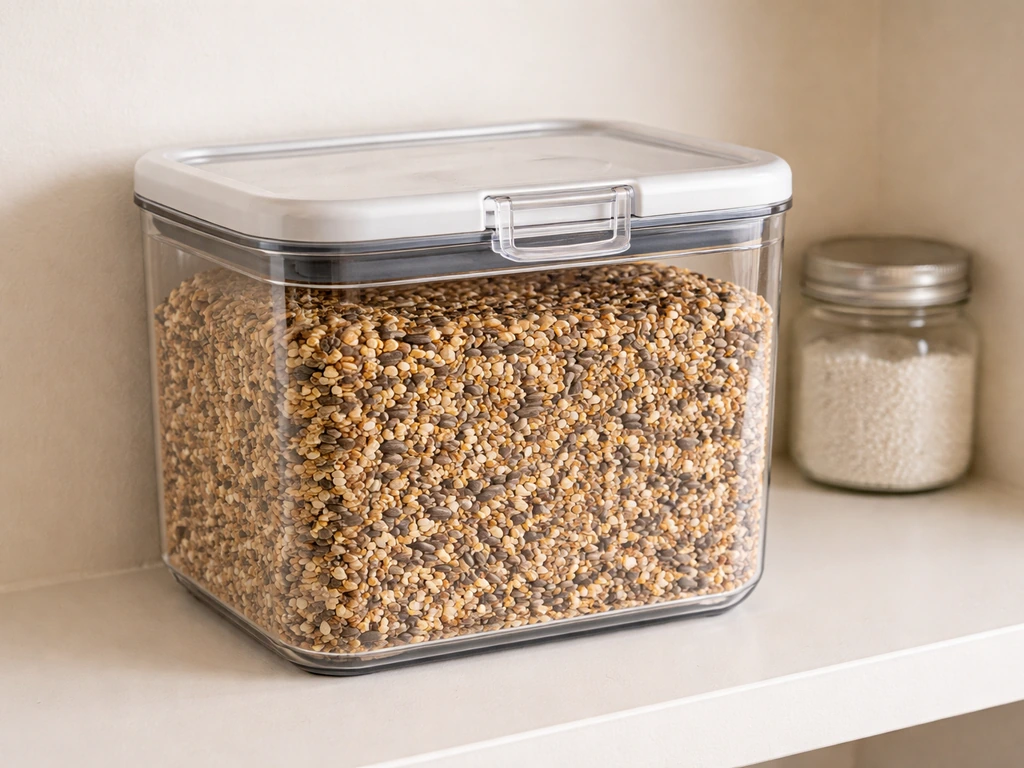
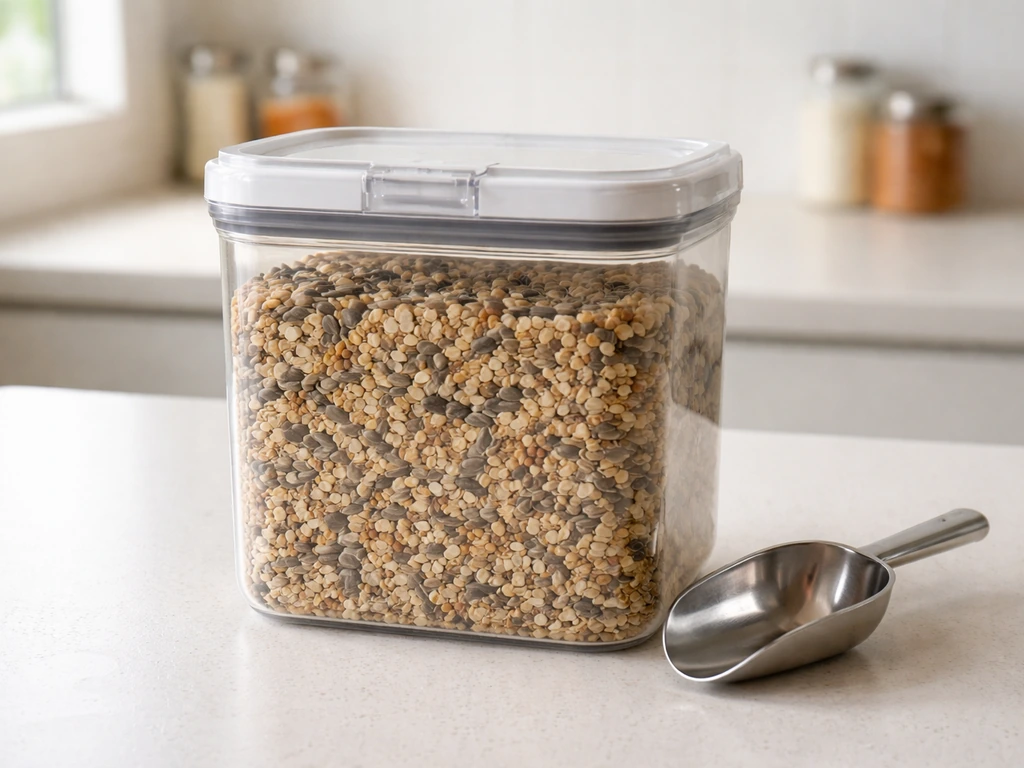
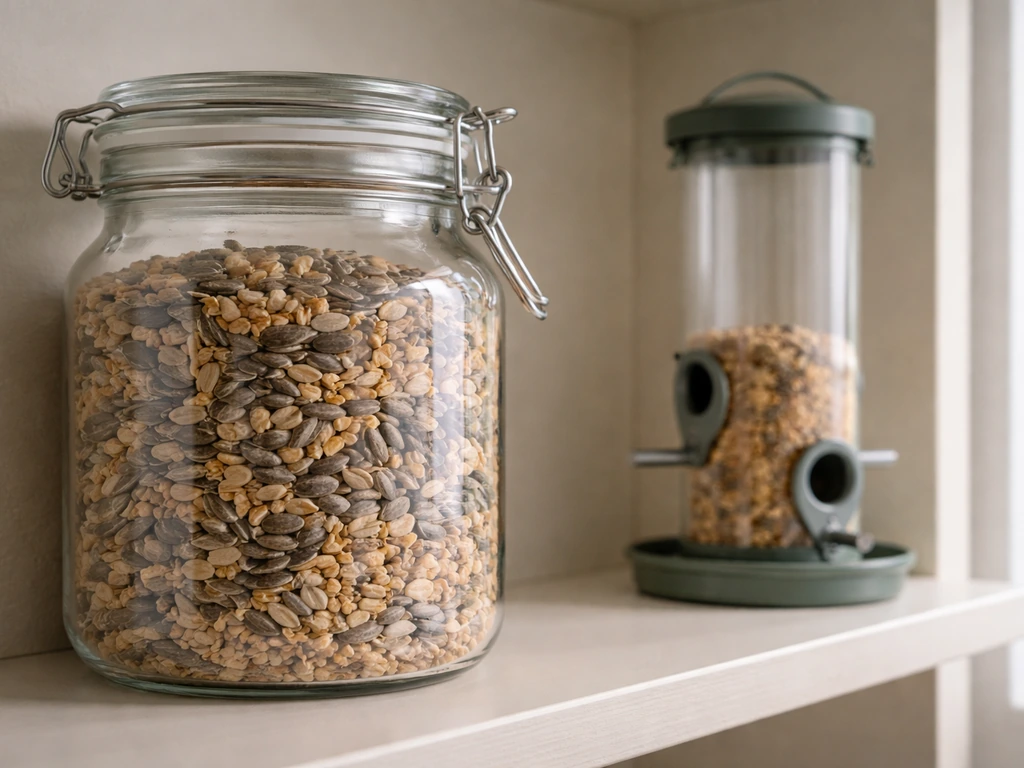
Move seed out of paper or woven bags as soon as you get it home. Store it in a hard-sided airtight container, a metal trash can with a tight lid, a sealed plastic bin, or purpose-built seed containers all work well. Keep the container off bare concrete (which sweats in humidity) and away from outdoor walls that get wet in rain. A cool, dry garage or shed works better than a hot or damp one.
Don't overfill feeders
Fill feeders with only as much seed as birds will eat in two to three days, especially in warm or humid weather. Seed sitting in a feeder for a week in summer heat and rain will go bad quickly. Smaller, more frequent refills are the single most effective habit change for preventing mold.
Choose weather-resistant feeder designs
Feeders with roofs or domes over the seed ports stay drier in rain. Tube feeders with drainage holes at the base let any moisture that does get in escape rather than pool. Avoid wide-open platform feeders in rainy climates unless you're emptying and drying them every couple of days.
Clean feeders on a regular schedule
The Iowa DNR recommends cleaning bird feeders roughly once a month under normal conditions. In hot, humid summers or if you've had recent disease concerns (like a salmonella or avian illness warning in your area), clean every one to two weeks. Regular cleaning stops mold from establishing before you can see it.
Manage pests to reduce moisture sources
Squirrels and rodents chew through seed bags, leaving seeds exposed to humidity. Rodents also burrow under feeders and disturb seed on the ground, increasing the surface area of wet seed. Using a seed tray with drainage, cleaning up spilled seed regularly, and keeping stored seed in rodent-proof containers all reduce the conditions that lead to mold.
Act fast on wet seed
If your feeder gets soaked in a heavy rain or your storage container develops a leak, deal with it the same day. Wet seed can begin to mold within 24 to 48 hours in warm conditions. Empty and dry the feeder, spread the wet seed on a tray in the sun to dry if it's otherwise clean, or toss it if you're not sure how long it's been wet. This is similar to the response you'd want to have with sprouted seed, once moisture has been present long enough, the safe move is usually to discard and start fresh.
| Situation | What to do | Composting? | Trash? |
|---|---|---|---|
| Old seed, dry, no mold, no smell | Put in feeder, scatter for ground feeders, or trash | Check local program rules first | Yes |
| Old seed, dry but stale smell | Discard — birds likely won't eat it anyway | Not recommended | Yes |
| Seed clumped but no visible mold | Discard — moisture has been present | No | Yes |
| Visibly moldy seed | Full PPE, bag and seal, trash immediately | No | Yes — sealed bag only |
| Wet seed, same day | Dry thoroughly in sun if clean, or discard | Not recommended | Yes if unsure |
FAQ
Can I save the rest of the bag if only a small section looks moldy?
If any part of the bag shows active mold, treat the entire bag as contaminated. Mold can spread through humidity and airflow inside the container, and you cannot reliably separate “safe” kernels once growth has started.
Is it ever safe to dry moldy bird seed and then use it?
No. Drying may stop visible growth, but fungal spores and contamination can remain. The safest choice is disposal for moldy seed, then start with a fresh, fully dry supply.
What if I already filled my feeder with the questionable seed and birds have been eating it?
Stop feeding that seed and empty the feeder. Clean and disinfect the feeder and the area underneath, then refill only with seed you confirm is dry and shows no mold. If birds look unwell, contact a local wildlife rehabilitator for guidance.
Should I wear a mask or respirator when cleaning up moldy seed?
Gloves and eye protection are helpful, but if you have asthma, allergies, or known mold sensitivity, use respiratory protection (for example, an N95 or better) and do the cleanup in good airflow. If symptoms start, stop and delegate the task.
Can I vacuum up moldy seed to avoid spreading spores?
Avoid dry-suction cleanup. Vacuuming can aerosolize fine particles, which defeats containment. Bag it carefully by hand using minimal disturbance, then clean the surrounding area with wet cleaning methods appropriate for mold.
What should I do with the gloves I used?
Seal disposable gloves in the trash bag with the moldy seed. For reusable gloves, clean them thoroughly and disinfect, then rinse and allow them to fully air-dry before reuse.
How should I clean a feeder if it has lots of built-up grime, not just mold?
Do a full scrub and disinfect cycle, focus on seams, drainage holes, and tray corners, then rinse and dry completely. If grime prevents effective disinfection, you may need to repeat cleaning or replace the feeder parts that cannot be thoroughly scrubbed.
Can I put moldy seed in compost if I use a hot compost pile?
Do not add visibly moldy seed to home compost, even if your pile runs hot. Moldy seed introduces live fungal material and may attract pests. Use your local municipal guidance if you are trying to compost non-moldy seed.
Is it safe to scatter a small amount of moldy seed in the yard as a one-time fix?
No. Even a small scatter can spread spores into soil, mulch, and plant beds, and it increases exposure for pets and wildlife. Trash disposal is the safest consistent option unless your city explicitly allows contaminated organic waste in yard programs.
What is the best way to store bird seed so it won’t mold again?
Use a hard-sided airtight container and keep it off damp surfaces like bare concrete and away from exterior walls that collect moisture. Also refill feeders in amounts birds eat within 2 to 3 days, especially in warm or humid weather.
How do I handle wet seed that’s not visibly moldy yet?
If seed has been wet for any significant time, empty and dry the feeder and assess the seed. In warm conditions, seed can go bad within 24 to 48 hours, so if you cannot confirm it stayed dry, the safer choice is to discard and replace.
Can I rinse moldy seed in water and then dry it?
Don’t rinse moldy seed. Moisture handling can worsen contamination and increase spread. Contain and discard the seed, then clean the feeder and surrounding debris thoroughly.