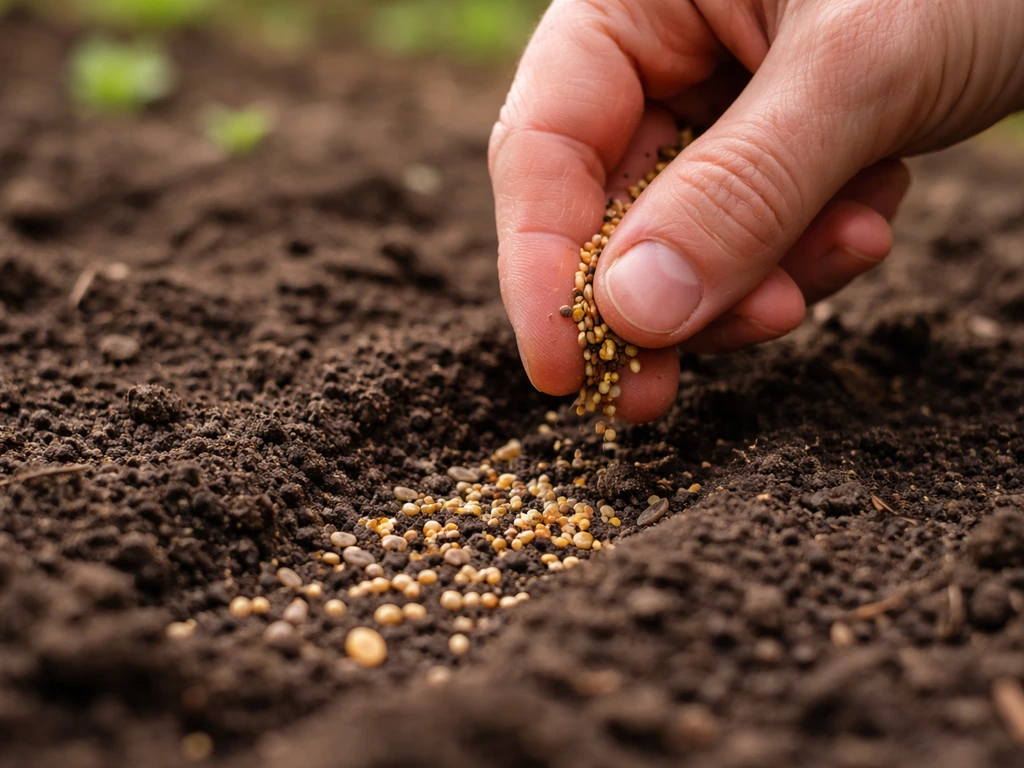
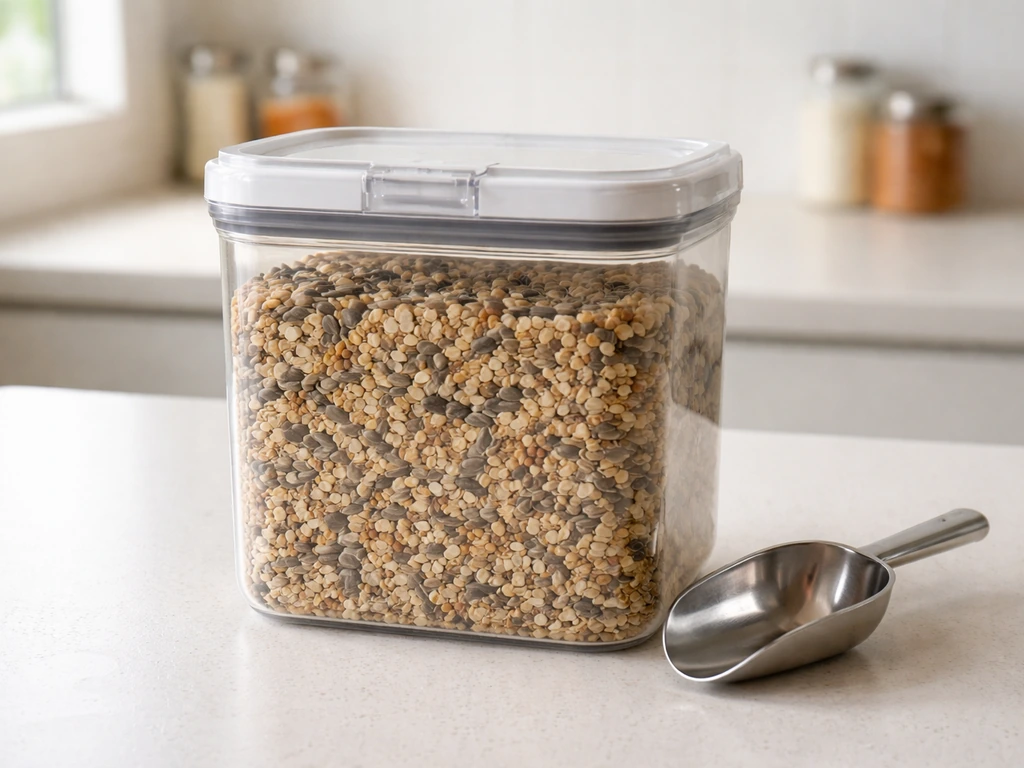
Yes, bird seed can and will sprout
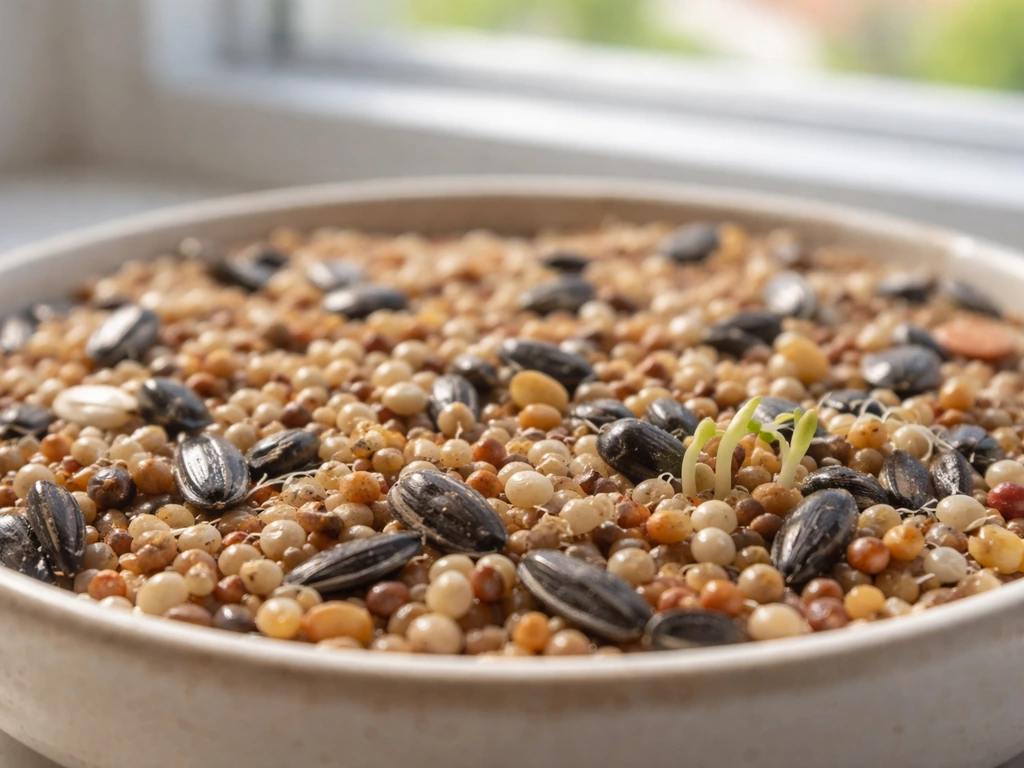
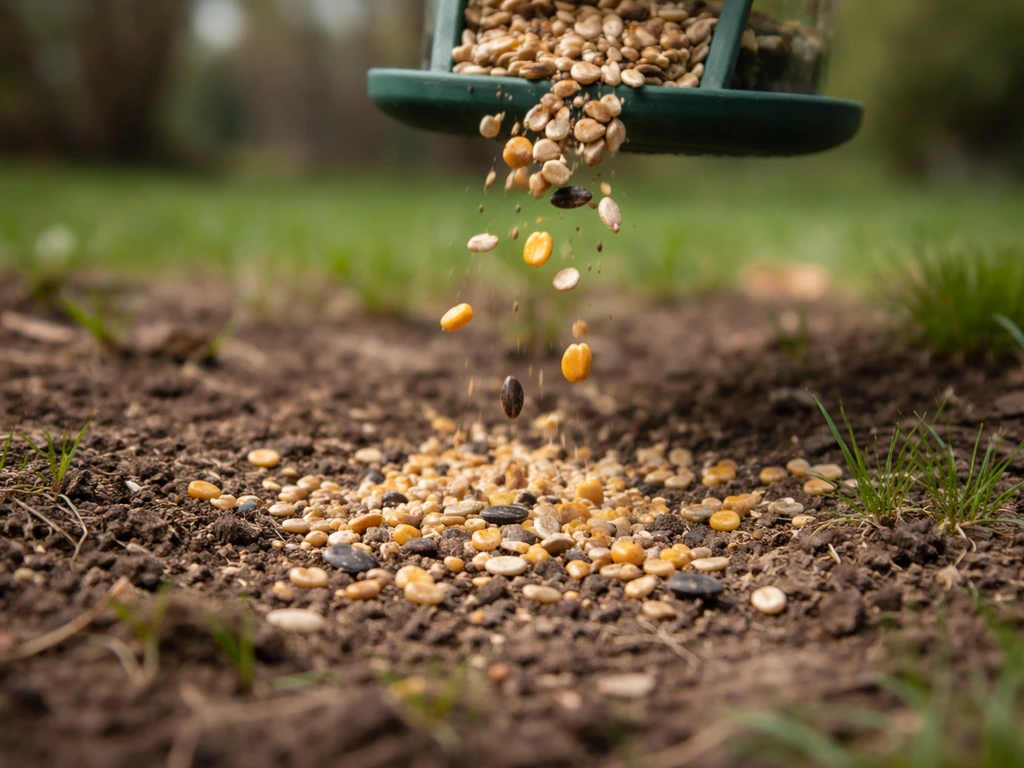
Most bird seed will sprout if you give it the right conditions: moisture, warmth, oxygen, and a little time. This is not a maybe. Millet, sunflower, safflower, and many other common feeder seeds are whole, viable seeds, and they behave exactly like any other seed you would plant in a garden. If you have ever noticed green shoots coming up under your feeder after a rain, you have already seen this in action.
If you are wondering can bird seed grow into those green sprouts on its own, the key is viability and the right moisture and temperature green shoots coming up under your feeder after a rain. The only real question is whether the specific seed you have is still viable, and whether you are setting it up for success or failure.
This guide covers both sides of that question. If you want to intentionally sprout bird seed to offer your birds a fresh, nutritious treat, I will walk you through the whole process. If you are dealing with unwanted sprouting under a feeder or in stored seed, there is a section on that too.
What actually determines whether bird seed sprouts
Seed viability and freshness
Viability is the biggest factor. A seed is only viable if the embryo inside is still alive, which depends heavily on how old the seed is and how it was stored. Bird seed that has been sitting in a hot garage for two summers, or that has been exposed to repeated moisture, is likely to have low germination rates. Fresh seed, stored cool and dry, germinates far more reliably. As a general rule, millet and sunflower seed stored properly will stay viable for one to two years. Nyjer (thistle) seed loses viability faster, sometimes within a few months of processing, which is one reason nyjer feeders often need refreshing more often than others.
Processing and treatment
Not all bird seed is left in a whole, raw state. Some commercial blends include seeds that have been heat-treated, cracked, or hulled. Hulled sunflower chips, cracked corn, and peanut pieces will not sprout because the seed coat and embryo have been damaged or removed. Pelletized bird food (the compressed nuggets you sometimes see in budget blends) will also not germinate because it is a processed product, not a whole seed. If your blend contains a lot of these components, your sprouting results will be uneven at best. Whole sunflower seeds, whole white or red millet, whole safflower, and unhulled nyjer are your best candidates.
The four conditions seeds need to germinate
- Moisture: Seeds need to absorb water to activate germination enzymes. Too little and nothing happens; too much standing water drowns them and promotes mold.
- Temperature: Most common bird seeds germinate best between 65°F and 75°F (18°C to 24°C). Cold slows germination significantly; heat above 85°F can damage seeds.
- Oxygen: Seeds undergoing germination are metabolically active and need airflow. A sealed container with no drainage will suffocate sprouts and create mold.
- Time: Depending on the seed type, visible sprout tails appear in 1 to 4 days for millet, 2 to 5 days for sunflower, and 3 to 6 days for safflower under good conditions.
How to sprout bird seed step by step
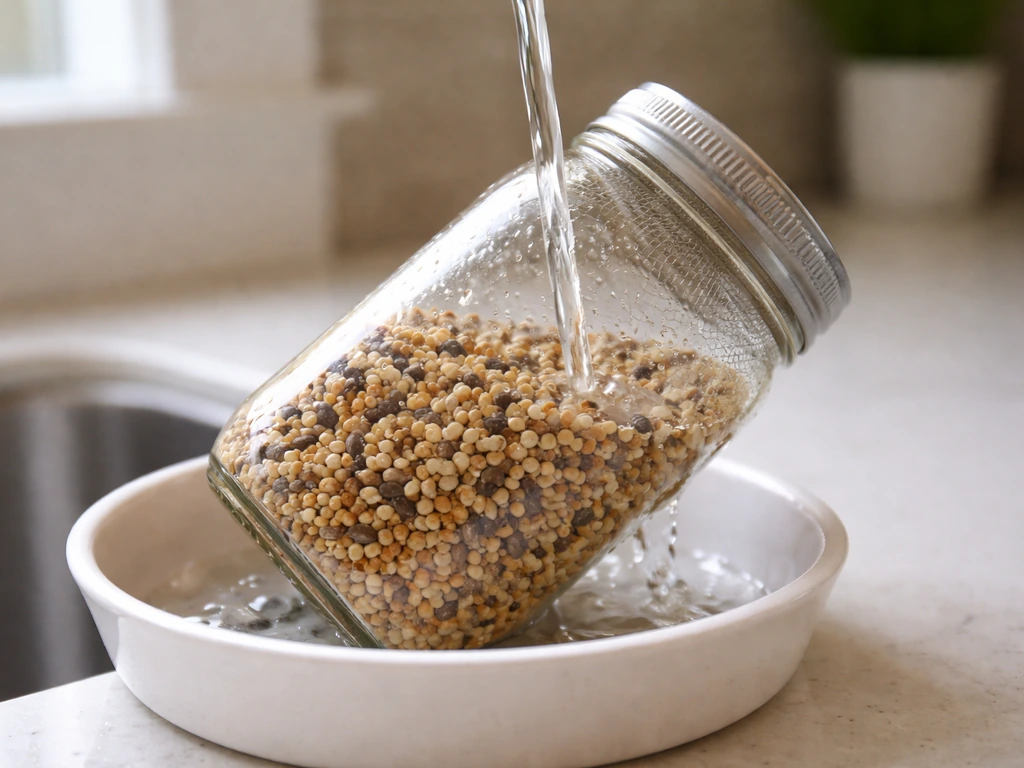
You have two practical options: a sprouting jar or a sprouting tray. The jar method is simpler and works well for small batches of millet or sunflower. The tray method gives you more surface area, better airflow, and is easier to rinse, making it the better choice if you are sprouting regularly or in larger quantities. Both methods follow the same core process.
What you need
- Whole, viable bird seed (millet, sunflower, safflower, or a blend of whole seeds)
- A wide-mouth mason jar with a mesh or cheesecloth lid, OR a sprouting tray with drainage holes
- Clean, cool water (filtered or tap, room temperature)
- A dish rack or bowl to prop the jar or tray at an angle for drainage
- A cool, well-ventilated spot out of direct sunlight (a countertop works perfectly)
The sprouting process
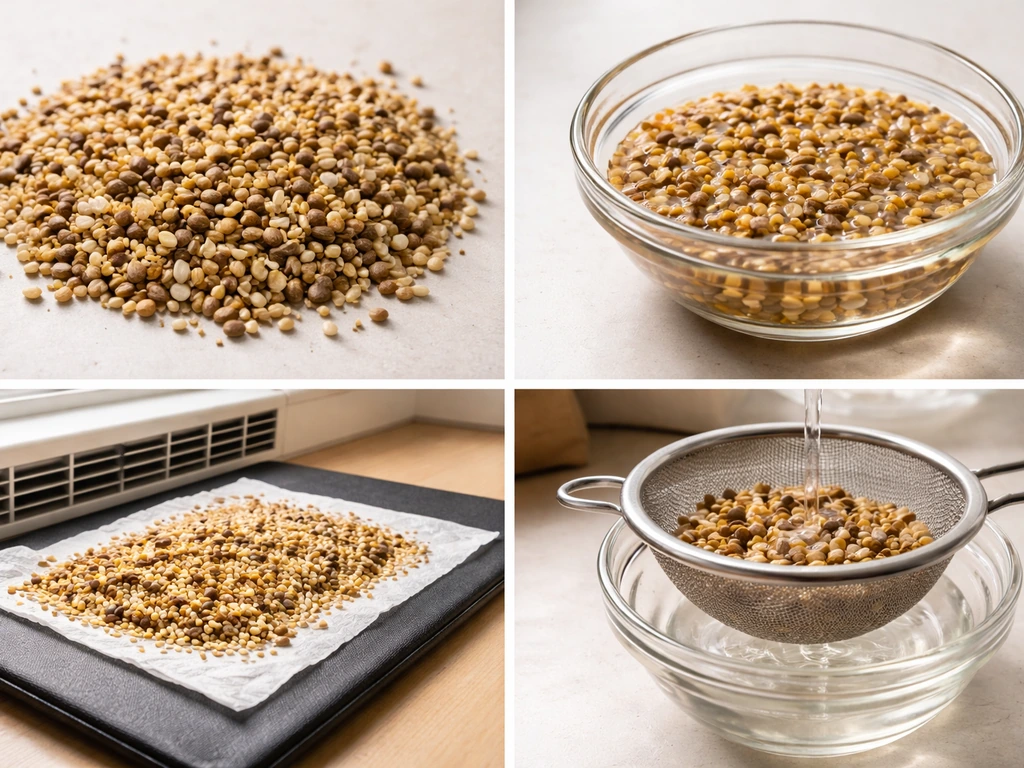
- Rinse the seed thoroughly under cool running water for about 30 seconds, swirling to remove dust, debris, and any loose hull fragments.
- Soak the seed in cool water for 8 to 12 hours (overnight works well). Use roughly 2 to 3 parts water per 1 part seed by volume. Do not soak longer than 12 hours or you risk oxygen depletion and mold.
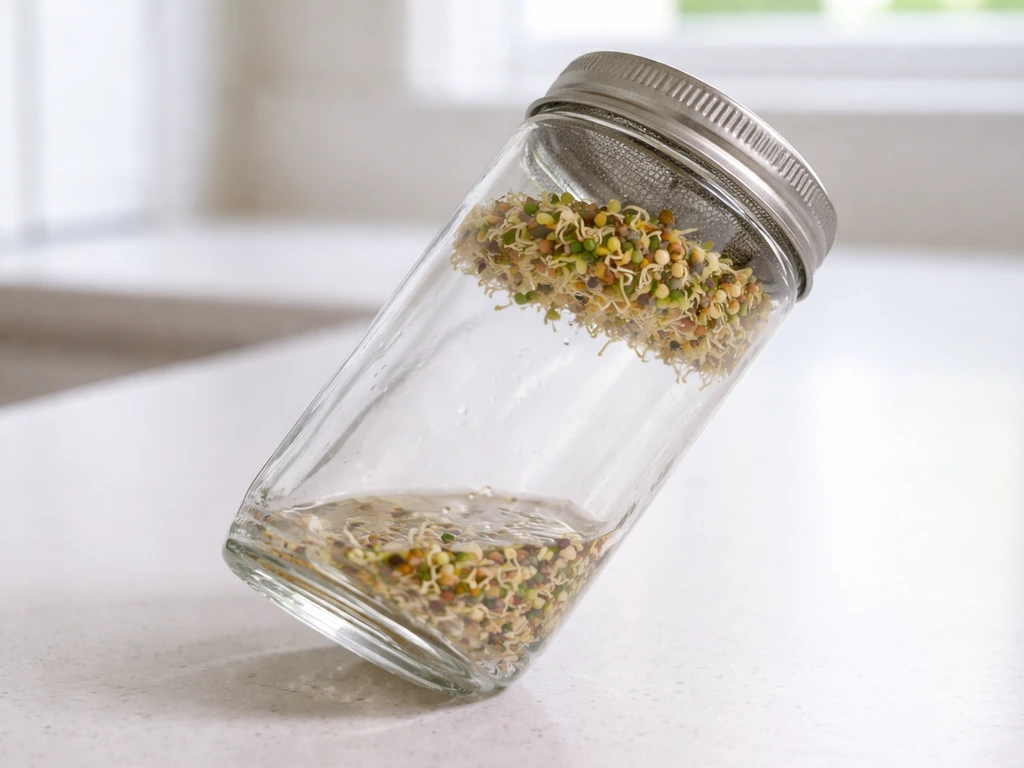
- Drain completely. Tilt your jar or tray so all water runs out. Residual standing water is the number one cause of mold failure.
- Rinse with fresh cool water, then drain again. This two-step drain-and-rinse removes enzyme inhibitors released during soaking.
- Place the jar or tray in your ventilated spot at room temperature, angled so any residual moisture drains away. Do not cover with a lid that blocks airflow.
- Rinse and drain twice daily, every 8 to 12 hours. This keeps seeds hydrated without waterlogging them and washes away any surface bacteria.
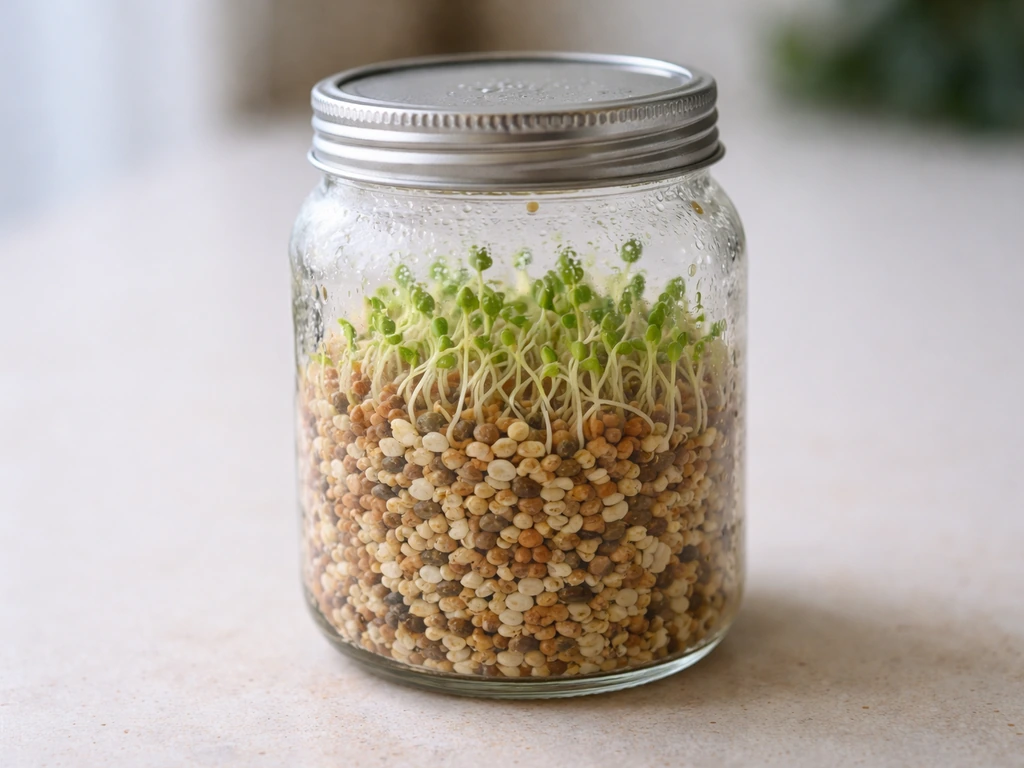
- After 1 to 4 days (depending on seed type), you will see small white or pale yellow sprout tails, typically 1/8 to 1/4 inch long. This is the ideal stage to offer to birds. Do not wait for green leafy growth; small tail sprouts are the most nutritious and safest.
Jar vs. tray: which is better?
| Feature | Sprouting Jar | Sprouting Tray |
|---|
| Setup cost | Very low (mason jar + mesh) | Low to moderate (purpose-made trays $5–$15) |
| Batch size | Small (1/4 to 1/2 cup dry seed) | Medium to large (1 to 2 cups dry seed) |
| Airflow | Moderate | Better (open surface area) |
| Ease of rinsing | Simple | Very simple |
| Mold risk | Moderate if drainage is poor | Lower with good tray design |
| Best for | Occasional use, millet or small seeds | Regular use, sunflower or mixed seeds |
If you are just starting out, use a mason jar. If you plan to sprout weekly for your birds, a dedicated sprouting tray with stacking levels is worth the small investment.
Troubleshooting: when seeds won't sprout or do it badly
The most common issues fall into three categories: nothing happening at all, very uneven germination across the same batch, or seeds sprouting too slowly. Here is how to diagnose and fix each one.
No sprouting at all
- Cause: Seed is not viable (old, heat-damaged, or previously wetted and dried). Fix: Buy fresh seed from a store with high turnover. Test viability by placing 10 seeds on a damp paper towel; if fewer than 5 germinate in 4 days, discard the batch.
- Cause: Seed was heat-treated or processed (hulled chips, cracked corn, pellets). Fix: Switch to whole seeds only. Check ingredient labels for 'hulled,' 'cracked,' or 'chips.'
- Cause: Temperature is too cold. Fix: Move your sprouting setup to a warmer spot. Below 60°F, germination slows dramatically or stops entirely.
- Cause: Inadequate soak time. Fix: Make sure seeds soak for a full 8 to 12 hours before draining.
Uneven sprouting in the same batch
- Cause: Mixed seed blends contain seeds with different germination rates. This is completely normal. Millet will often sprout days before safflower in the same tray.
- Cause: Some seeds are clumping and not getting rinsed evenly. Fix: Spread seeds in a thin, single layer and rinse more vigorously.
- Cause: Part of the batch is older or from a different lot. Fix: Source seed from a single fresh bag to get more consistent results.
Very slow germination
- Cause: Room temperature is on the cooler end (60 to 65°F). This is especially common in winter kitchens or garages. Fix: Move to a warmer spot or extend your expected timeline by a day or two.
- Cause: Nyjer seed is the culprit. Nyjer has a notoriously low and variable germination rate even when fresh because commercial nyjer is often sterilized to prevent it from becoming an invasive weed. Many nyjer seeds simply will not sprout, no matter what you do. This is normal.
- Cause: Water is too cold. Fix: Use room-temperature water for rinsing, not cold tap water straight from the line.
Keeping mold and pests out of your sprouting setup
Mold is the biggest practical risk when sprouting bird seed indoors. Warm, moist environments are exactly what mold needs, and you are deliberately creating those conditions. Missouri Extension’s sprouting-safety fact sheet notes that the warm, humid conditions used for sprouting can be ideal for harmful bacteria if they are present, so thorough rinsing and careful hygiene are important warm, humid conditions used to grow sprouts can be ideal for harmful bacteria if present. The good news is that mold is almost always preventable if you stay on top of a few non-negotiable hygiene steps.
Daily hygiene rules
- Rinse twice a day without skipping. Even one missed rinse can allow enough bacterial or mold growth to spoil a batch.
- Make sure drainage is complete after every rinse. Shake the jar or tilt the tray for a full minute if needed.
- Keep your sprouting vessel clean. Between batches, wash your jar or tray with hot soapy water and let it air dry completely before starting a new sprout cycle.
- Do not leave sprouted seed sitting at room temperature for more than 24 hours after it is ready to feed. Refrigerate unused portions in an airtight container and use within 2 to 3 days.
Disinfecting between batches
Every few batches, give your sprouting equipment a deeper clean. A solution of 1 part white vinegar to 9 parts water works well as a light disinfectant rinse, similar to the diluted vinegar approach recommended for feeder cleaning. FDA’s Sept 2023 [Produce Safety Rule guidance for sprouts](https://www. fda.
gov/media/102430/download) recommends that if you rinse or soak seeds before sprouting, any tools or equipment used (food-contact surfaces) must be cleaned and sanitized and seeds should be treated appropriately. Rinse thoroughly with plain water after the vinegar soak so there is no residue that could affect the next batch.
If you notice persistent slimy residue or an off smell on your equipment, a brief soak in diluted bleach (1 tablespoon bleach per gallon of water) followed by thorough rinsing is more effective.
Recognizing and handling mold
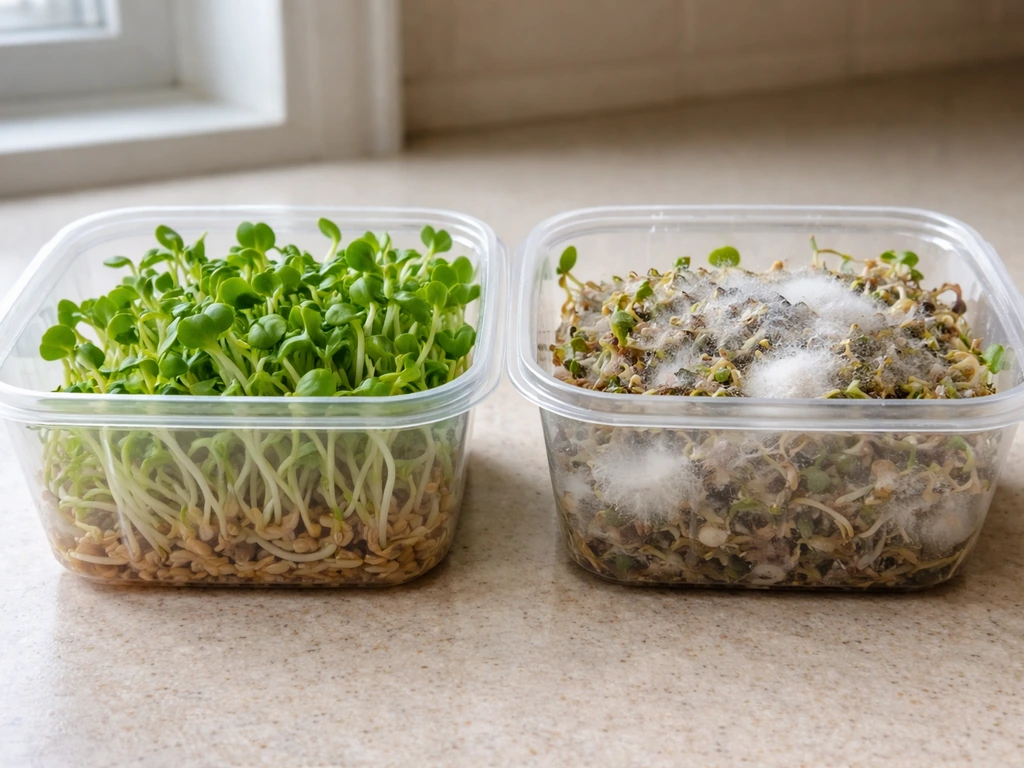
White fuzzy growth, a sour or musty smell, or a slimy coating on seeds all mean mold has taken hold. Do not try to rinse moldy sprouts and offer them to birds anyway. Discard the entire batch, wash your equipment with bleach solution, and start fresh. Moldy seed can make birds sick, and the same applies to sprouts.
Pest prevention
Wet or sprouting seed indoors can attract fruit flies, grain weevils, or even mice if left uncovered. Keep your sprouting vessel covered with a mesh screen (not a solid lid) so pests cannot land in the seeds but airflow is not blocked. Do not leave finished sprouts out on an open tray for extended periods. Store any finished sprouts in the refrigerator immediately after you are done with them.
Offering sprouted seed to birds and dealing with leftovers
How to offer sprouted seed
Sprouted seed is best offered in a shallow dish or platform feeder rather than a tube feeder. The moisture content will clog tube feeder ports quickly and create a mold problem inside the feeder. A flat tray with drainage holes, placed where birds have open approach angles, works perfectly. Offer small amounts (a quarter cup to half a cup at a time) so what you put out gets eaten within a few hours rather than sitting through the day. In warm weather, I replace the tray contents every 4 to 6 hours to prevent fermentation.
Many ground-feeding birds take to sprouted seed enthusiastically: doves, sparrows, juncos, towhees, and finches are especially likely to work a tray of fresh millet sprouts. Larger birds like cardinals often prefer the larger sprouts from sunflower seeds.
What to do with leftover sprouted seed
If you have more sprouted seed than your birds can eat the same day, refrigerate it in a loose, breathable container (a bowl loosely covered with a paper towel works well) and use it within 48 to 72 hours. Do not seal it airtight in the fridge or it will continue to sprout and eventually mold. Do not freeze sprouted seed, the cell structure breaks down and the result is mushy and unappetizing.
If the sprouts smell, look wrong, or birds ignore them
A sour, fermented, or musty smell means the batch has turned. Discard it in an outdoor bin or compost pile, away from your feeders. Do not add it under or around feeders, as moldy organic material on the ground under feeders is already a common hygiene issue that requires cleanup with a bleach-water solution to prevent disease spreading to visiting birds. If your birds consistently ignore the sprouts, try a different seed type. Not all birds take to every seed when sprouted, and some birds may simply prefer dry seed. Millet sprouts tend to have the broadest appeal among small backyard species.
Preventing unwanted sprouting under feeders
If your problem is not intentional sprouting but rather wild-type sprouting under a feeder, the fix is straightforward. You can also reduce birds targeting grass seed by changing where you place feeders and using seed that will not attract foraging on your lawn stop birds from eating grass seed.
If you are trying to prevent unwanted sprouts, it helps to understand which seeds are likely to germinate and how to keep grass seed from being eaten and sprouting is bird seed grass seed. If you are asking does bird seed grow grass, it helps to compare it with how lawn seed behaves under the same moisture and temperature conditions.
This same idea applies to will wild bird seed grow if planted, since viable seed can sprout when moisture and temperature are right. Rake or sweep fallen seed regularly, ideally every few days. If shoots are already coming up, pull them and rake the area. If the soil or grass patch is already damp and seedy, a diluted bleach-water solution (roughly 1 part bleach to 9 parts water) applied to the affected area will stop further germination.
Let it dry before allowing birds to access that ground area again. Switching to hulled seed options like sunflower chips reduces the amount of viable seed hitting the ground in the first place, though it trades that problem for seed that spoils faster in wet weather.
If you find yourself constantly battling unwanted growth and wondering whether what is sprouting is grass seed or bird seed, or why certain blends produce more ground growth than others, those are related questions worth digging into separately, since the answer depends on exactly which seeds are in your blend and what is already growing in your yard. If you are trying to tell is bird seed grass seed apart, you will get the clearest results by checking the specific seed type in your blend and comparing sprout traits grass seed or bird seed.