Most Pennington bird seed problems come down to three things: moisture got in, pests found it before you did, or the seed sat too long before it was used. All three are fixable today. The trick is figuring out which one you're dealing with first, then working through a short sequence of cleanup, storage, and feeder adjustments so the problem doesn't repeat itself next bag. If you are wondering whether deer will use bird seed, the answer depends on what kind you put out and how consistently you manage it is bird seed good for deer.
Pennington Bird Seed Problems: Fix Mold, Pests, and Waste Now
Maya Collins
18 Jun 2026
Start here: identify your specific problem
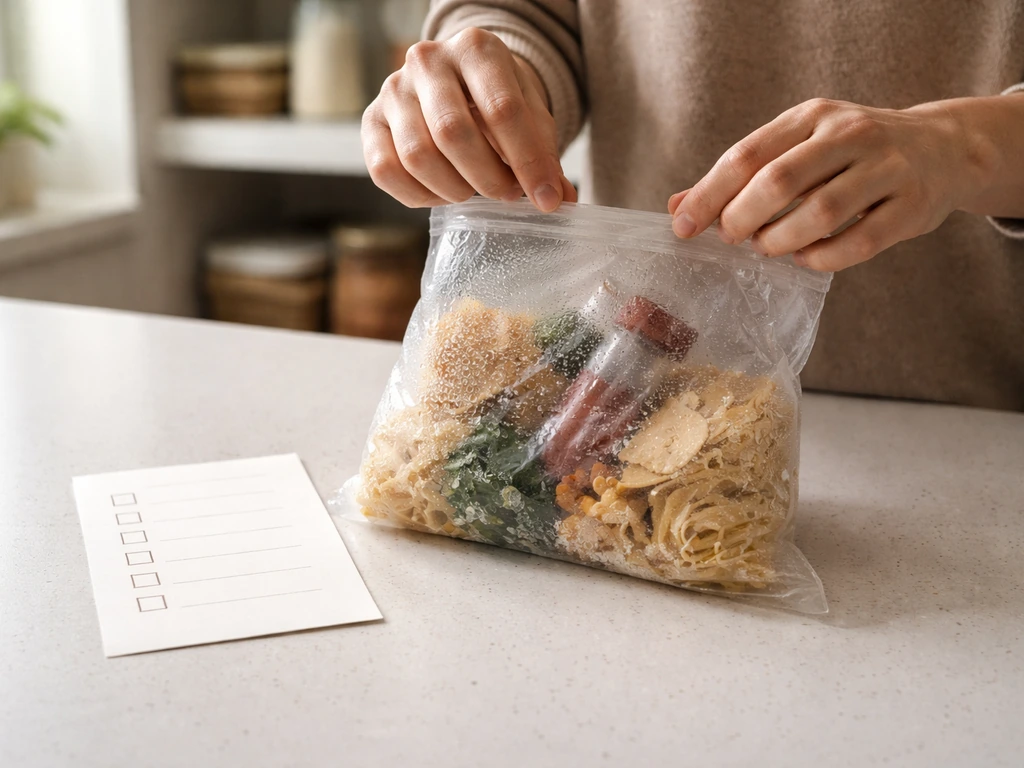
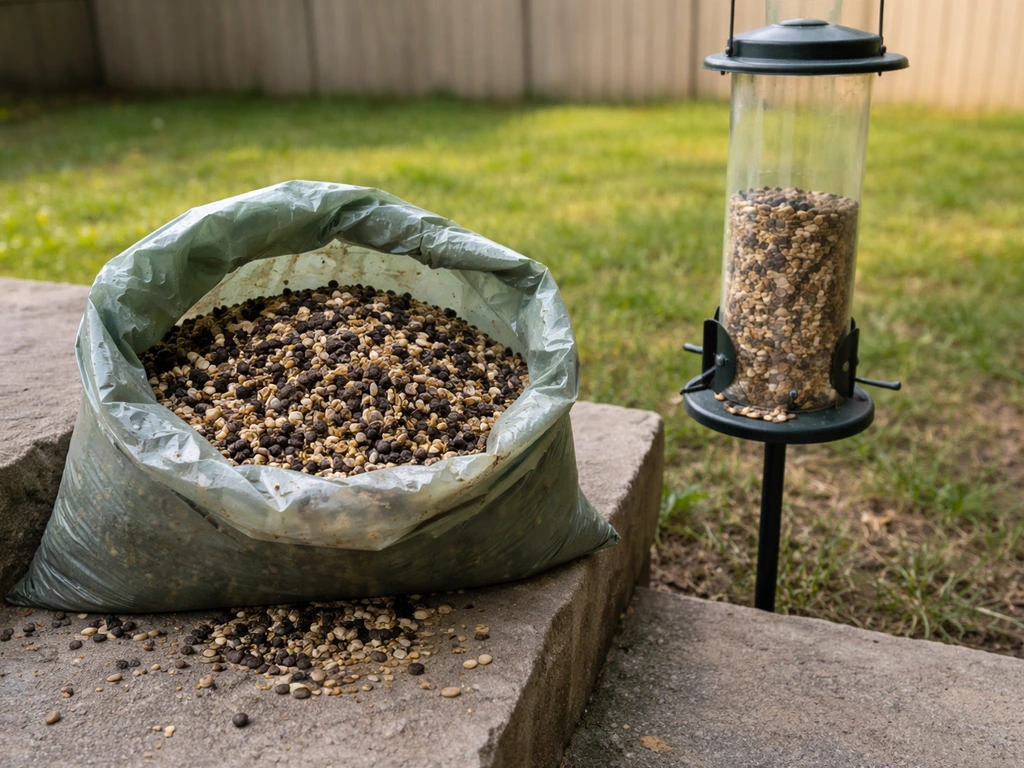
Before you do anything else, run through this checklist. Match your symptoms to the most likely cause so you can skip straight to the fix that actually applies to your situation.
| What you're seeing | Most likely cause | Section to jump to |
|---|---|---|
| Musty, sour, or rancid smell | Rancidity or early mold | Seed quality failures |
| Seed clumping together or feeling heavy/damp | Moisture exposure | Moisture issues |
| Visible mold, black spots, white fuzz | Active mold/fungus growth | Moisture issues |
| Sprouted seeds or tiny shoots | Moisture exposure + germination | Moisture issues |
| Small moths flying around the bag or storage area | Indian meal moth or sunflower moth | Pests and contamination |
| Tiny holes in kernels, fine powder (frass), cast skins | Weevil infestation | Pests and contamination |
| Live larvae or moving specks inside the bag | Stored-product insect larvae | Pests and contamination |
| Birds were eating it fine, now they're ignoring it | Spoilage, rancidity, or wrong seed for species | Seed quality failures + Feeder setup |
| Birds never touched it after you put it out | Wrong seed for local species or feeder mismatch | Feeder setup section |
| Seed falling apart, shriveled, or discolored kernels | Age or physical damage | Seed quality failures |
Seed quality failures: rancidity, damaged kernels, and why birds won't eat it
Birds have a much better nose than most people give them credit for. If a bag of Pennington seed smells musty, sour, or oily-stale when you open it, that smell is your answer: the oils in the seed have gone rancid, and birds will often refuse to eat it even when they're hungry. Black oil sunflower seed, which is the backbone of most Pennington blends, has a shelf life of roughly 6 to 12 months under good conditions. If your bag sat in a hot garage or was near a damp wall, that window closes much faster.
Rancid seed isn't just unappetizing. Deteriorated oils offer far less nutritional value to birds, and if mold has already started, you're dealing with a potential mycotoxin risk. Molds on grain and nut crops can produce toxins that are dangerous regardless of whether the seed looks visually bad, which is why the right call when you detect a sour or musty smell is to discard the batch rather than try to salvage part of it.
Physical kernel damage is the other common quality failure. Look for shriveled seeds, split hulls, or seeds that crumble when you press them. These can come from rough handling during shipping or from age. Damaged kernels expose the oil-rich interior to air and bacteria faster, accelerating the spoilage timeline. If only a portion of the bag looks damaged, you can sort by pouring the seed across a tray and removing visibly shriveled or split pieces, but if more than a quarter of the bag looks compromised, it's safer and easier to start fresh.
- Smell the seed directly before filling feeders: fresh seed smells mild and slightly nutty; bad seed smells sour, musty, or like old cooking oil
- Press a small handful together: fresh seed flows freely; rancid or damp seed sticks or feels oily and heavy
- Check the date printed on the Pennington bag and subtract storage time in a warm or humid space from the shelf life
- Look for consistent color: good sunflower seed is plump and black or striped; yellowed, pale, or translucent seeds are past their prime
- If birds stopped visiting a feeder that was working fine before, sniff the seed in the feeder as a first diagnostic step
Moisture issues: wet seed, condensation, sprouting, and mold
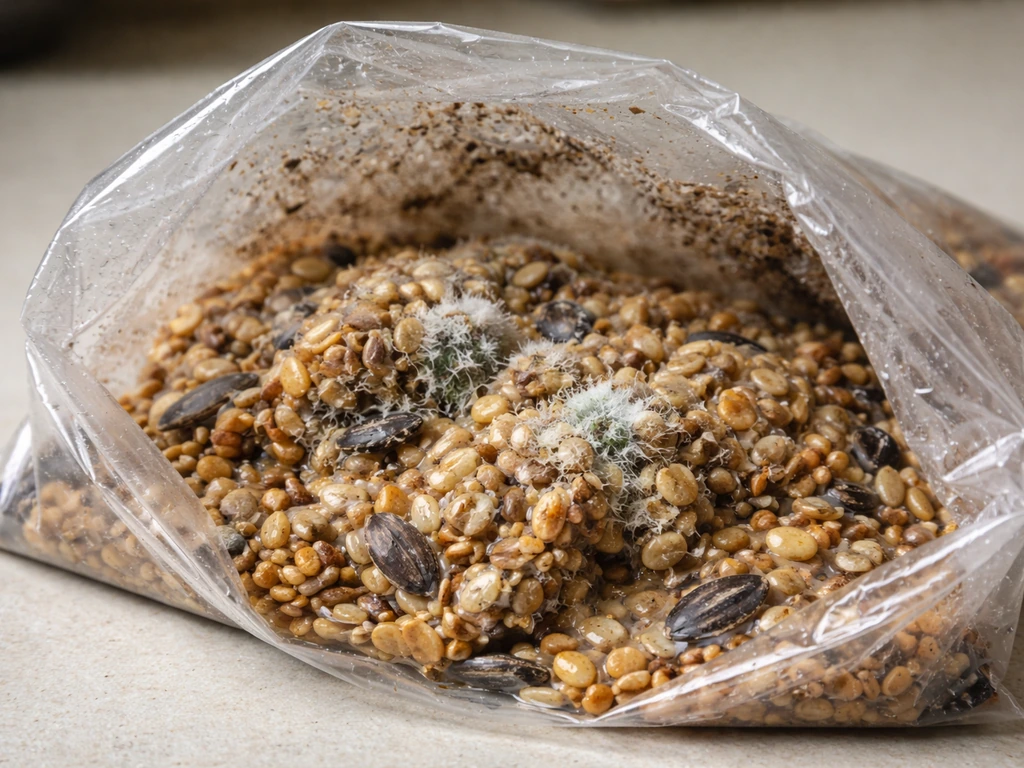
Moisture is the single most destructive thing that can happen to bagged bird seed, and it can get in more ways than most people expect. Condensation inside a partially closed bag in a cool garage, rain blowing onto a stored bag on an outdoor shelf, or even humidity pulled through a loosely sealed bag over several weeks is enough to start the process. Pennington explicitly warns that moisture in seeds, especially corn and peanuts, can lead to dangerous bacteria and fungus contamination. Once moisture reaches the kernels, you're racing against the clock.
The first sign is usually clumping. Seeds that should pour freely start sticking together in dense lumps. If you pick up the bag and it feels heavier than expected or the bottom is one solid mass, moisture has definitely reached it. At that stage, the seed may still be technically edible for birds if you act fast, but it's already on a fast track toward mold.
The second stage is visible mold: white fuzz, dark patches, or a gray film on the seed surface. At that point, discard the batch. Do not try to spread it on the ground hoping birds will eat around the moldy parts. Mold spores spread across nearby seeds even when those seeds look clean, and the mycotoxins some molds produce don't stay neatly in one spot.
Sprouting is a separate but related problem. If seeds have been moist long enough to germinate, you'll see split seed coats, swollen kernels, or tiny pale shoots. Birds can detect sprouted seed and will often ignore it. A few sprouted seeds aren't an emergency, but widespread germination means the bag sat in enough moisture for long enough that the whole batch is compromised.
If you are wondering whether sprouted seed is good for birds, the safest approach is to act quickly and avoid offering a batch that has been sitting too wet and starts to mold.
In that case, you have two reasonable options: spread the non-sprouted portion thinly on a tray in a dry, shaded spot to let it air out for a few hours before offering it, or discard the batch and start with dry seed in a properly sealed container.
Wet seed in the feeder
If the problem is the feeder itself getting wet rather than the stored bag, the fix is a bit different. Tube feeders with no weather guard or trays without drainage holes are common culprits. Wet seed in a feeder can go from fine to moldy in 24 to 48 hours in warm weather. If you open a feeder and find wet, clumped seed inside, remove all of it, discard it, and clean the feeder before refilling. Never top off over wet seed.
Pests and contamination: moths, weevils, and stopping reinfestation
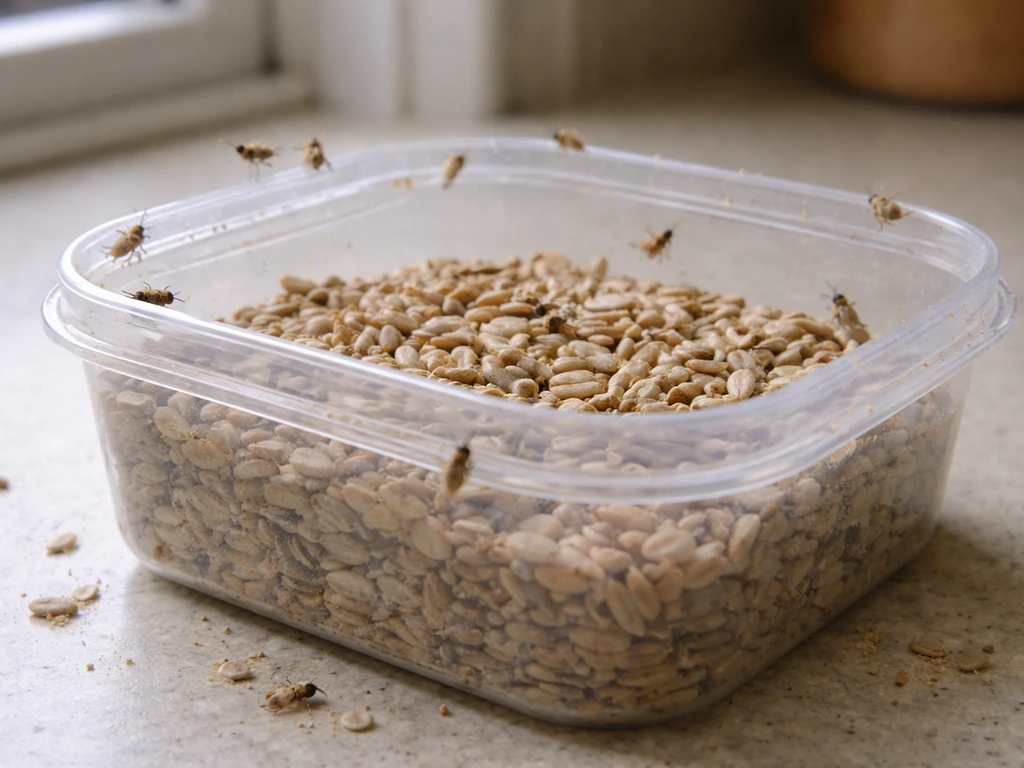
If you open a new Pennington bag and immediately see small moths flying out, don't assume the bag was handled badly in your home. Pennington acknowledges that sunflower seed can arrive already infested with tiny sunflower moths. Indian meal moths are another extremely common stored-product pest that can be present in grain before it's ever purchased. The practical takeaway is that a new bag is not necessarily a clean bag, and the moths in your storage area may have come in with that bag, not from your pantry or garage.
Weevils are the other major pest, and they leave specific evidence. Look for tiny round holes bored into individual kernels, a fine floury powder (frass) at the bottom of the bag, and cast larval skins that look like thin pale husks. If you see any of those signs, the infestation has been going on long enough that the whole bag should be discarded. Do not try to salvage weevil-infested seed by picking through it. The eggs and larvae can be hidden inside whole-looking kernels where you can't see them.
Freezing is sometimes suggested as a way to kill weevil eggs and larvae, and it does work for that purpose. If you want to salvage a mildly infested bag, seal it in a freezer bag and freeze it for at least 72 hours. This will kill live insects and eggs. But it does not remove the dead insects, frass, or larvae, so you'll still need to sift the seed through a fine mesh before using it. Most people find it easier and faster to discard and start fresh, especially since infested seed loses nutritional quality and birds often avoid it.
Stop the reinfestation cycle
Once you have moths or weevils in a storage area, they spread fast to every other grain product nearby, including pet food, pantry staples, and other birdseed bags. Pennington recommends sealing all grain products, including birdseed and pet food, in airtight containers and using moth traps to catch and monitor adults. The traps won't eliminate an infestation on their own, but they'll tell you whether adults are still present so you know when you've actually cleared the problem.
- Remove and inspect every bag of grain, cereal, or pet food in the area
- Discard any bag with live insects, holes, frass, or cast skins
- Vacuum the storage area thoroughly, including wall corners, shelf edges, and floor cracks where larvae can pupate
- Wipe down shelves with a damp cloth after vacuuming
- Move remaining clean seed into airtight, hard-sided containers (metal or thick plastic with gasket lids)
- Set pheromone moth traps near the storage area and check weekly
- Do not use pesticide sprays directly in or near birdseed or feeders
Immediate cleanup and safe feeder handling
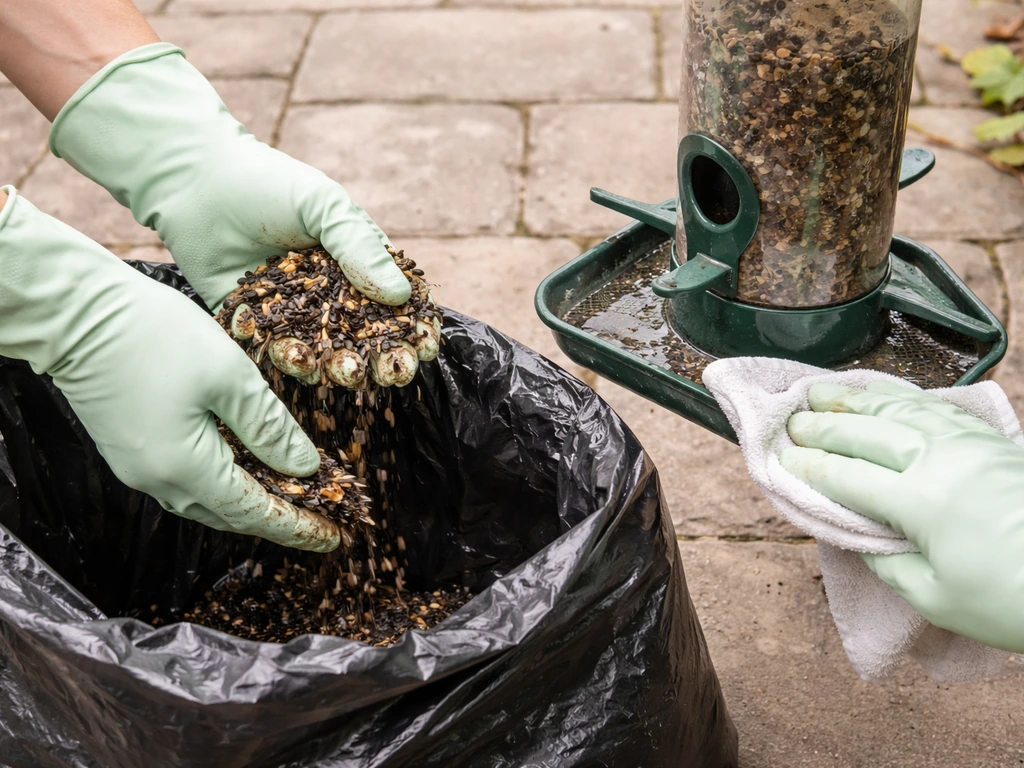
Before you put any fresh seed out, deal with the contaminated seed and any feeder that held it. The goal here is to avoid spreading mold spores or insect eggs around your yard or into your home. Work outdoors if possible and use disposable gloves when handling moldy or pest-infested seed.
- Empty the feeder completely into a trash bag. Do not dump contaminated seed onto the ground directly under the feeder, since that creates a concentrated mold or pest source right where birds feed.
- Seal the trash bag and place it in your outdoor bin immediately.
- Disassemble the feeder into all removable parts: ports, trays, perches, caps.
- Soak all parts in a cleaning solution: Pennington's recommended protocol is 1 gallon of water mixed with 4 cups of white vinegar, with a minimum soak time of 1 hour. If there are visible black spots or a strong moldy smell, go for the full hour minimum.
- Scrub all surfaces with a brush, paying attention to crevices, feeder ports, and any grooves where seed debris packs in.
- Rinse thoroughly with warm or hot water until no vinegar smell remains.
- Allow all parts to air dry completely in the sun before reassembling. Reassembling a damp feeder is one of the fastest ways to restart a mold problem.
- Wipe down the pole, hook, or hanging hardware with a damp cloth since moths and insects can hide there too.
If you were dealing with mold, avoid inhaling the dry seed or shaking it aggressively before bagging it. Mold spores become airborne easily. Work in still air or with the wind at your back, or wear a basic dust mask if the mold is heavy. Wash your hands thoroughly after handling any contaminated seed or feeder components.
Fix your storage to prevent this from happening again
Most Pennington bird seed problems that people chalk up to a bad batch are actually storage problems. The bag came in fine, and conditions turned it bad. Here's how to fix the storage side of things permanently.
The right container makes a large difference
The original Pennington bag is not a long-term storage container. It's convenient for transport, not for keeping seed stable over weeks or months. Once you open a bag, transfer the contents to an airtight container with a tight-fitting lid and a rubber gasket seal. Metal cans with clamp lids are ideal because they're chew-proof against rodents and don't allow condensation to build up the way some plastic buckets do. If you use plastic, choose thick-walled containers (not flimsy bins) with a proper gasket. Store containers off the floor on a shelf, which reduces humidity exposure and makes rodent entry harder to accomplish.
Location and temperature
Garages are convenient but often the worst storage location for seed. They experience wide temperature swings, high humidity in summer, and condensation in spring and fall. A cool, dry indoor space like a basement utility room, a mudroom, or a climate-controlled shed is much better. If you're in a humid climate (the Southeast, Pacific Northwest, or coastal areas), consider adding a small silica gel desiccant packet inside the storage container. Replace it every two months or when it's saturated.
Shelf life by seed type
Different seeds in a Pennington blend age at different rates. Knowing which ingredients go bad fastest helps you set realistic purchase quantities and rotation schedules.
| Seed type | Typical shelf life (good storage) | Fastest to degrade under poor conditions |
|---|---|---|
| Black oil sunflower seed | 6 to 12 months | Yes, oils go rancid quickly if warm or damp |
| Millet (white or red) | Up to 12 months | Moderate, absorbs moisture readily |
| Cracked corn | 3 to 6 months | Yes, high moisture/fungus risk (especially aflatoxin) |
| Peanuts (in shell or pieces) | 3 to 6 months | Yes, mold and rancidity risk is high |
| Safflower seed | 6 to 12 months | Lower, harder hull slows moisture penetration |
| Nyjer/thistle | Up to 12 months (keep dry) | Moderate, clumps when wet and birds reject it |
Buy only what you'll use within about 4 to 6 weeks. It's tempting to stock up on large Pennington bags because the per-pound price drops, but a 40-pound bag that sits for three months in a warm space will cost you more in wasted seed than the savings on the bulk price. Rotate stock by finishing one container before opening the next, and write the purchase date on the container with a marker.
Adjust your feeder setup for the birds you're actually trying to feed
Sometimes the seed is perfectly fine and the problem is that you're offering the wrong thing at the wrong feeder for the birds in your yard. Pennington blends vary in composition, and a mix heavy in filler seed like red milo or oat groats will be largely ignored by most songbirds in North America.
Even though this article focuses on Pennington, the same general idea applies when you ask whether bird seed is good for chickens: it depends on the seed condition and storage, not just the brand Pennington blends vary in composition. Birds will pick out what they want and throw the rest to the ground, which looks like 'the birds aren't eating it' but is really 'the birds are eating the 20% they want and leaving the rest. '
Species-specific expectations
| Common backyard bird | Preferred seed | Best feeder type | Will eat from Pennington blends? |
|---|---|---|---|
| Northern cardinal | Safflower, black oil sunflower, striped sunflower | Platform or hopper feeder | Yes, if sunflower content is high |
| Black-capped/Carolina chickadee | Black oil sunflower, nyjer, peanut pieces | Tube feeder or clinging-style feeder | Yes, will pick sunflower from mixes |
| American goldfinch | Nyjer (thistle), fine sunflower chips | Nyjer sock or tube feeder with small ports | Only if nyjer or chips are present |
| House finch/purple finch | Black oil sunflower, millet, nyjer | Tube feeder | Yes, reasonably versatile |
| Mourning dove | White millet, cracked corn, sunflower | Ground feeder or low platform | Yes, prefer millet-heavy mixes |
| White-throated/white-crowned sparrow | White millet, milo (limited), sunflower chips | Ground or low tray feeder | Yes, particularly millet |
| Dark-eyed junco | White millet, fine cracked grain | Ground feeding | Yes, scatter on ground or low tray |
| Blue jay | Whole peanuts, sunflower, corn | Platform feeder or peanut feeder | Yes, but prefers unshelled peanuts |
If you're seeing mostly ground waste under a tube feeder, it's usually because birds are tossing filler seed they don't want to get to the seeds they do. Switching to a single-ingredient feeder like pure black oil sunflower seed eliminates this problem almost entirely. You'll go through seed faster because there's no filler, but you'll waste far less and attract more targeted species. Whether Pennington bird seed is good overall is a separate question, but the blend composition matters a lot for reducing this kind of waste behavior.
Feeder placement tweaks
Placement affects both bird activity and seed condition. Feeders in full afternoon sun in summer can heat the seed inside to temperatures that accelerate rancidity. Shaded placement or a weather-domed feeder keeps seed cooler and drier. Keep feeders at least 10 to 12 feet from dense shrubs or structures to reduce the squirrel launching range, and use a baffle on the pole to prevent ground-level pests from climbing up.
Ongoing maintenance: your sanitation and prevention schedule
The single biggest factor in preventing recurring Pennington bird seed problems is a consistent maintenance routine. Most problems don't start with the seed. They start when a feeder that hasn't been cleaned in three months gets refilled with fresh seed, and the mold or insect residue in the feeder contaminates the new batch within days. Pennington’s FAQ also specifies a feeder-cleaning protocol using a vinegar solution, including soaking disassembled feeder parts in a 1 gallon water to 4 cups vinegar mixture for at least 1 hour before scrubbing and rinsing a vinegar solution soak protocol.
Cleaning schedule
| Task | Frequency | Notes |
|---|---|---|
| Empty and refill tube feeders | Every 1 to 2 weeks in warm weather; every 2 to 3 weeks in cold weather | Never top off over old seed |
| Full vinegar soak and scrub (all feeder types) | Monthly minimum; every 2 weeks in summer or humid climates | 1 gallon water to 4 cups vinegar, 1-hour soak, full dry before refill |
| Clean seed trays and catch trays | Weekly; after rain events | Remove wet seed immediately after rain |
| Rake or rake up ground waste under feeders | Weekly | Accumulated husks attract rodents and insects |
| Check stored seed container for moisture or pests | Every time you refill | Look for clumping, smell, or signs of insects |
| Rotate seed stock (use oldest first) | Every purchase | Mark containers with purchase date |
| Check and replace moth traps if used | Monthly | Replace traps every 3 months or when saturated |
Pest exclusion habits
Rodents are drawn to spilled seed under feeders, and once they find a food source, they investigate nearby storage areas. Keep the ground under feeders clean, use a catch tray with drainage holes on the feeder itself to reduce ground scatter, and make sure your seed storage containers are truly rodent-proof (metal cans are better than plastic buckets for this). If you have a mouse or rat problem near your feeders, temporarily stop ground feeding and switch to tube or caged feeders that keep seed off the ground entirely.
Waste management without creating new problems
Husk piles under feeders are a normal part of feeding birds, but they break down slowly and create a damp mat that harbors mold and pests. Rake or shop-vac husk accumulations weekly. If you're in a region where bears are active (parts of the Southeast, Mountain West, or Northeast), temporarily removing feeders during peak bear activity in spring and early summer is a smarter move than trying to relocate them, since even a clean feeder with good seed is enough of an attractant. Check local wildlife guidance for your specific state.
Your next steps based on what you're seeing right now
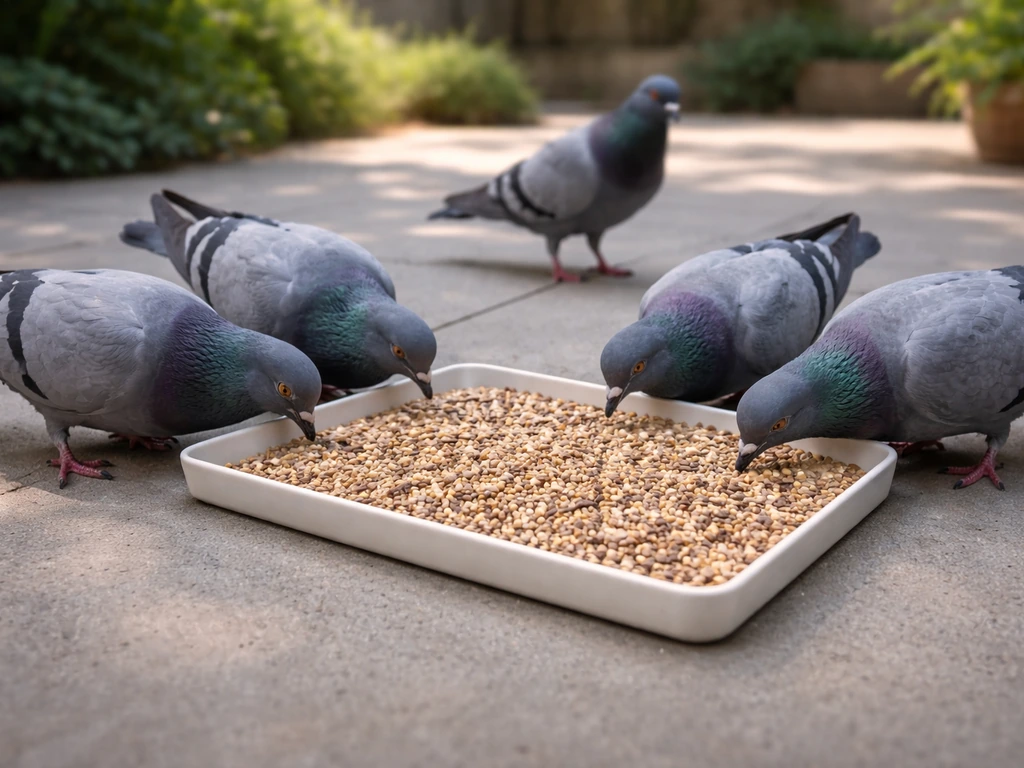
Use this as a do-it-today action list. Find your symptom, follow the steps in order, and you'll have the problem under control before the end of the day. If you are wondering whether is wild bird seed good for pigeons, the key is to make sure it is fresh and free of spoilage, moisture, mold, or pests.
- Bad smell from the bag or feeder: Discard the seed, clean the feeder with the vinegar soak protocol, allow it to dry fully, and refill with seed purchased within the last 6 weeks and stored in a sealed container.
- Clumping or wet seed: Remove all seed, assess for mold (visible fuzz or black spots means discard everything). If no visible mold, spread seed thinly on a dry tray in a shaded spot for 2 to 3 hours, then inspect again before offering. Clean and dry the feeder before refilling.
- Mold visible: Discard everything. Clean feeder with full 1-hour vinegar soak. Investigate storage conditions for moisture source and fix it before buying more seed.
- Moths or weevils in the bag: Seal and discard the infested bag outdoors. Inspect every nearby grain product. Transfer clean seed to airtight metal containers. Set moth traps. Vacuum the storage area. Do not use insecticides near birdseed.
- Birds ignoring the feeder: First, smell the seed. If it smells off, start over with fresh seed. If the seed smells fine, check whether the seed type matches the birds in your yard. Simplify the offering to a single high-quality seed (black oil sunflower is the best starting point for most North American backyard birds).
- Recurring problems bag after bag: The issue is storage, not the Pennington product. Move seed to an airtight container immediately upon purchase, store in a cool dry location, buy no more than a 4 to 6 week supply at a time, and clean feeders monthly regardless of whether they look dirty.
FAQ
I only see a small amount of white fuzz on a few seeds. Can I remove the moldy pieces and keep using the rest?
If you still have a musty or sour smell after opening, treat it as spoiled. Even if you only see a small amount of mold, mold spores and mold-produced toxins can be present beyond the visible spots, so the safest move is to discard the batch rather than trying to “save” a portion.
Can I fix rancid-smelling Pennington seed by spreading it out in the sun or letting it air dry?
Rancidity is about the oils in the seed, so “airing it out” usually does not fix the problem. Spread it thinly only as a temporary sorting step to reduce clumping, then assess smell and signs of mold or insects. If it smells oily-stale, sour, or musty, discard and replace.
What’s the fastest way to tell whether my problem is moisture, mold, or weevils/moths?
Use a quick two-step check. First look for clumps, heavier-than-normal feel, or a solid mass at the bottom (moisture). Then inspect with a bright light for white fuzz, gray film, dark patches, holes, frass (fine powder), and cast larval skins. If you see any of the pest evidence like holes or frass, discard rather than freezing for “insurance.”
If I find weevils or signs of infestation, is freezing the seed enough to make it safe for birds?
Yes, but only under certain conditions. If you have a mildly infested bag and you choose to salvage, freeze sealed for at least 72 hours, then sift through fine mesh before offering. Freezing kills insects, it does not restore nutritional quality or remove frass and larval debris.
I saw moths fly out of a bag the day I brought it home. Does that mean my pantry is already infested?
If you detect moths in a newly opened bag, it often means the infestation traveled with the product into your storage area. Clean and empty the storage area, vacuum cracks and shelf edges, then seal all remaining grain products in airtight containers. Moth traps help you monitor adults, but they will not clear eggs and larvae hiding in supplies.
How can I tell whether birds are avoiding the seed because it’s spoiled versus because it’s the wrong blend?
A change in bird behavior can help, but rely on the physical seed checks. Birds may ignore filler-heavy blends even when the seed is fresh, so “birds stopped eating it” does not automatically mean mold or pests. Confirm by checking smell, clumping, visible mold, and any insect signs before discarding.
What should I do if my Pennington seed is already clumped but I don’t see mold yet?
If the bag is clumping but has no visible mold and no insect evidence yet, act fast. Separate and use a short-term approach: spread the non-sprouted, non-moldy portion thinly in a dry, shaded area to air out for a few hours, then reassess smell and appearance. If clumps return quickly or you see mold or sprouting, discard.
My feeder got wet. Can I just scrape out the top layer and refill?
For feeders, do not just dump and refill. Remove all wet or clumped seed, discard it, then wash the feeder and let it dry completely before refilling. Topping off over wet seed is a common cause of recurring mold because the remaining moisture seeds the next batch.
If a batch seems questionable, can I test it by putting some on the ground first to see if birds eat it?
Don’t offer seed directly onto the ground as a “test.” If moisture, mold, or sprouting is suspected, ground exposure can spread spores. If you want to test, only do it with seed you have removed from the visibly contaminated portion and that passes your smell and appearance checks, and keep the offering small until you confirm birds will eat it.
How long should I keep Pennington bird seed after opening before I replace it?
Write the storage date on the new airtight container and rotate by using what you already opened first. Even with perfect containers, heat and humidity accelerate decline, so treat 4 to 6 weeks as a practical “use window” after opening, especially for blends heavy in oil-rich components like black oil sunflower.
Could husks under the feeder be causing the same mold and waste problems to repeat?
If husks and seed debris are accumulating, you may see ground-level waste and higher humidity around the feeder, which increases mold risk and rodent activity. Rake or vacuum husk buildup at least weekly, and consider a feeder design with drainage and a catch tray (with drainage) to reduce wet seed and scatter.
What’s the best way to stop rodents from pulling seed from my storage and making my feeder area worse?
If rodents keep finding the food, the storage method is usually the root cause. Metal storage containers with a tight seal are more chew-proof and help prevent humidity from entering compared with many plastic buckets. Also keep containers off the floor and wipe up spilled seed under and around feeders.
Next Article
Is Wild Bird Seed Good for Pigeons? Safe Feeding Guide
Learn if wild bird seed is safe for pigeons, what to feed or avoid, and how to prevent mold, pests, and mess.