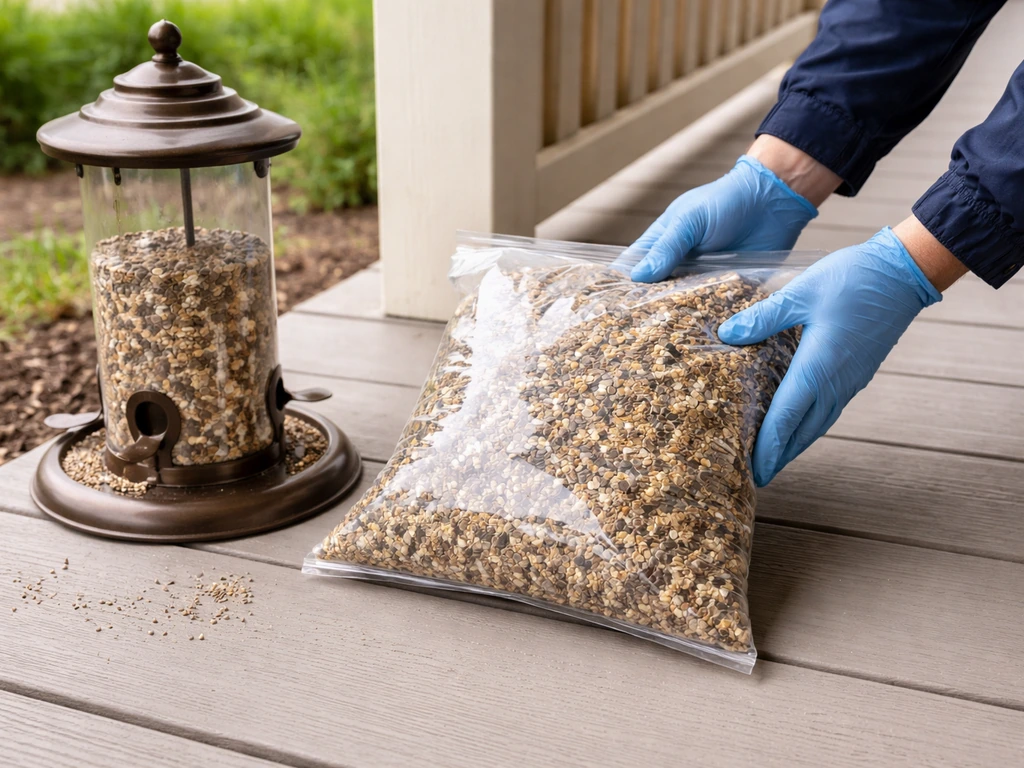
Bird seed attracts backyard birds because it delivers the concentrated fats, proteins, and carbohydrates that birds burn through fast, especially when natural food is scarce in cold snaps, wet spells, or late winter. The right seed pulls in the right birds reliably. The wrong seed, or seed that's gotten wet, moldy, or infested, wastes your money and can actually make birds sick. If you're dealing with wet or sprouted seed right now: throw it out, clean the feeder with a 10% bleach solution (1 part bleach to 9 parts water), let it dry fully, and refill with fresh dry seed. The rest of this guide covers everything else, from picking the best seed to keeping pests out.
Tell Me Why Bird Seed Works and What to Do When It Fails
Maya Collins
24 Jun 2026
Why bird seed works (and what it's actually for)
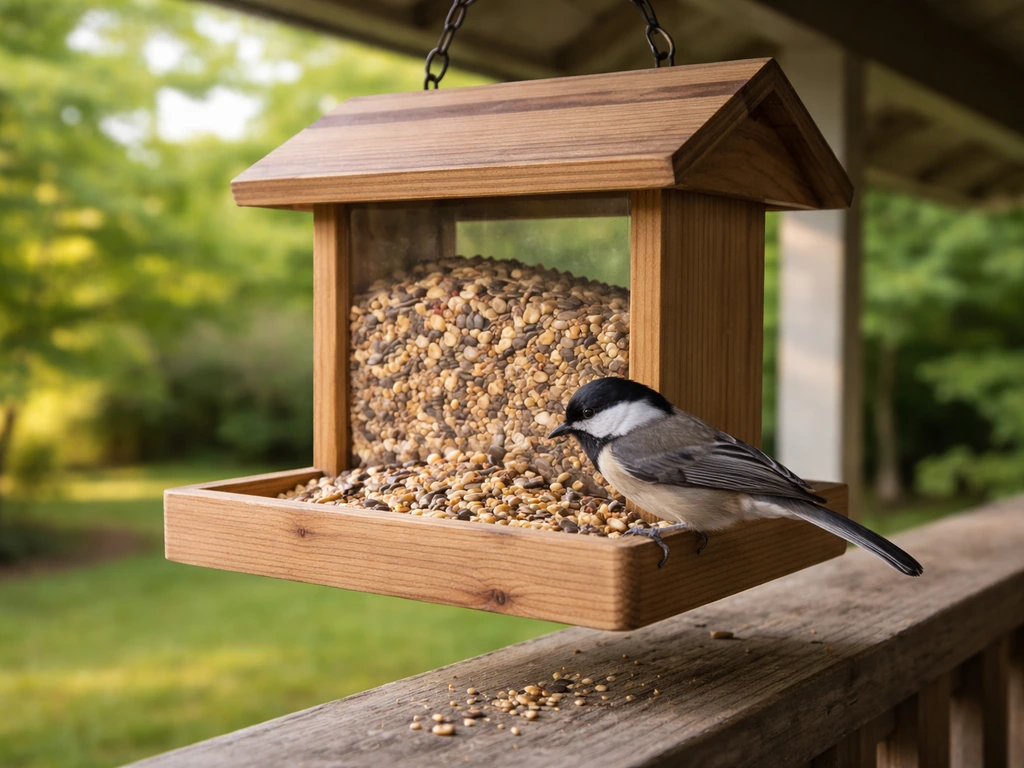
Birds have high metabolisms. A small chickadee can lose up to 10% of its body weight in a single cold night just staying warm. Backyard feeding fills gaps when insects, berries, and wild seeds are hard to find, which is most critical during winter, early spring, and bad weather stretches. If you are wondering who delivers bird seed, many local retailers offer pickup or delivery services, and some wildlife-focused shops can help you find the right products Backyard feeding fills gaps. This isn't just about being kind to birds. Consistent, clean feeding stations genuinely help populations during lean times, according to Audubon and wildlife agencies that track backyard bird health.
But bird seed only works as advertised when the seed is nutritionally intact and safe. Wet seed begins to ferment within hours. Mold and bacteria can form on damp seed in a feeder or on the ground, and birds don't have the ability to assess whether seed is contaminated. Feeding spoiled seed is worse than not feeding at all. The practical goal here is to get quality seed into a clean feeder and keep it that way. Bird seed is typically made from harvested crops and then processed, packaged, and shipped for backyard feeding where does bird seed come from.
If you're curious about what bird seed actually contains at the ingredient level, that's a deeper topic on its own. The short version: most commercial bird seed is built around oil-rich seeds (sunflower being the most effective), grains like millet and cracked corn, and specialty items like nyjer, peanuts, and suet. Each one targets different bird species and feeding behaviors.
Choosing the right seed mix for your backyard birds
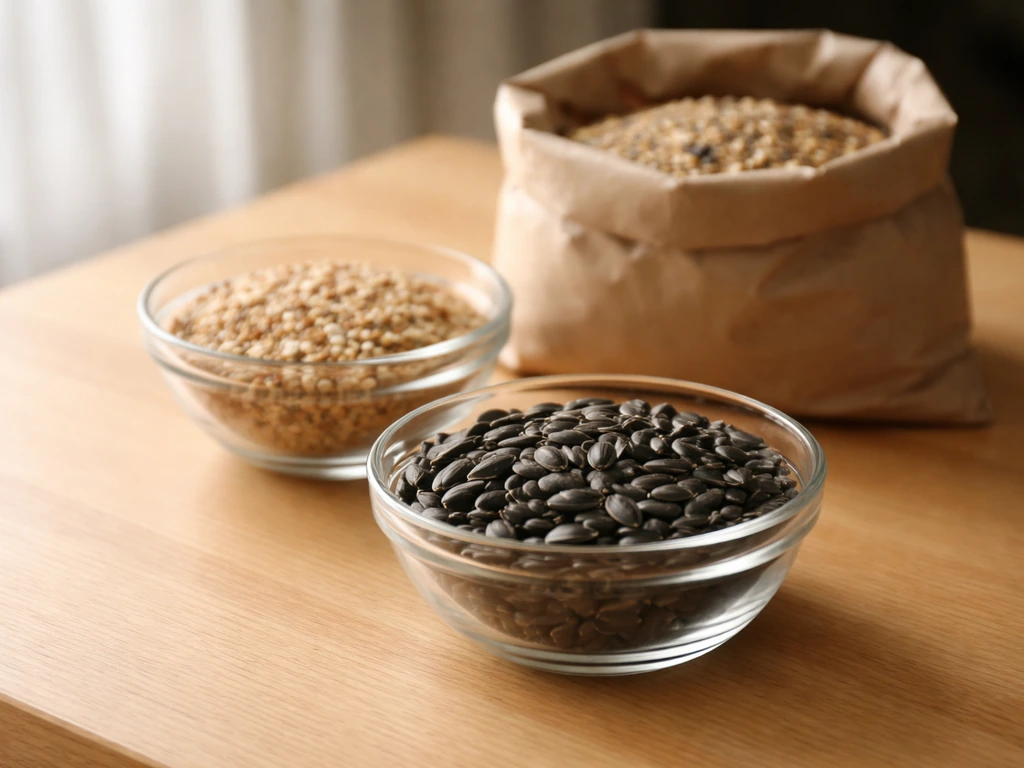
Black-oil sunflower seed is the single best starting point for almost any backyard. It's the most commonly offered seed at North American feeders for good reason: thin shells make it easy for small birds to crack, and the high fat content gives birds exactly the energy they need. Cardinals, chickadees, nuthatches, finches, jays, and doves all go for it. If you only buy one seed type, this is it.
Mixed blends can broaden your appeal, but quality matters a lot. A good mix includes sunflower seeds, white millet, and cracked corn. That combination covers ground feeders (sparrows, juncos, doves) and elevated feeder birds at the same time. One practical trick: sunflower specialists like cardinals will often toss millet and corn down to the ground, where sparrows and juncos pick it up. The birds sort themselves out. The problem with cheap mixes is filler seeds like red millet, oats, and wheat that most North American feeder birds ignore, leaving waste that rots and attracts pests.
Nyjer (also called thistle) is worth having if you want goldfinches, pine siskins, or common redpolls. It requires a special feeder with very small ports or fine mesh because the seed is tiny and spills easily from standard feeders. Don't buy it unless you have the right feeder for it. Suet cakes, made from rendered beef fat mixed with cornmeal, peanuts, fruit, or dried insects, are excellent for woodpeckers, nuthatches, and chickadees, especially in cold weather. One important caution: don't put suet out in hot weather (above roughly 90°F / 32°C) because it turns rancid quickly and dripping fat can damage the waterproofing on bird feathers.
Corn and peanuts carry a higher risk of aflatoxin contamination when stored improperly or sourced from low-quality suppliers. If you use cracked corn or peanuts, buy in smaller quantities from reputable sources and store them carefully.
| Seed Type | Best Birds Attracted | Feeder Type | Key Caution |
|---|---|---|---|
| Black-oil sunflower | Cardinals, chickadees, nuthatches, finches, jays, doves | Tube, hopper, or platform | None; most versatile option |
| White millet | Sparrows, juncos, doves, towhees | Platform or ground scatter | Avoid cheap mixes with red millet (usually ignored) |
| Cracked corn | Sparrows, doves, jays, blackbirds | Platform or ground scatter | High aflatoxin risk if wet or stored poorly |
| Nyjer (thistle) | Goldfinches, pine siskins, redpolls | Fine-mesh or small-port tube feeder only | Spills massively from wrong feeder type |
| Suet cakes | Woodpeckers, nuthatches, chickadees, wrens | Suet cage feeder, off-ground | Goes rancid above ~90°F; remove in summer |
| Peanuts (shelled) | Jays, chickadees, titmice, woodpeckers | Wire mesh peanut feeder | Aflatoxin risk; buy fresh and store dry |
How to store seed to prevent spoilage, mold, and pests
The biggest storage mistake is keeping seed in the bag it came in, especially in a garage or shed where temperatures and humidity swing. Seed needs a sealed, hard-sided container, ideally metal or heavy-duty plastic with a locking lid. Metal cans are better in areas with mice or squirrels because they can't chew through them. A 5-gallon metal trash can with a bungee cord over the lid works extremely well and costs almost nothing.
Moisture is the enemy. Even seed that looks dry can absorb humidity in a warm garage during summer. If you're in a humid climate (the Southeast, Pacific Northwest, or anywhere that gets muggy summers), keep your storage container inside if possible, or use desiccant packets inside the container. In dry climates, storage is more forgiving, but you should still keep the container sealed and off bare concrete, which wicks moisture from the ground.
- Use a sealed metal or hard plastic container with a tight-fitting lid
- Store in a cool, dry location, ideally 50°F to 70°F (10°C to 21°C)
- Keep containers off concrete floors to prevent moisture absorption
- Add desiccant packets in humid climates or during summer
- Buy in quantities you'll use within 4 to 6 weeks to avoid long-term storage issues
- Label the container with the purchase or fill date so you know how old the seed is
- Never mix new seed into old seed at the bottom of a container without cleaning first
Suet and nyjer deserve a separate note. Suet has a much shorter shelf life than dry seed in warm weather. In summer, skip suet entirely or use heat-tolerant rendered suet cakes sold specifically for warm climates. Nyjer can go stale and lose its oil within a few months, which is why finches sometimes ignore a feeder that looks full. If your finches stop coming, the seed may just be old.
Handling wet, sprouted, or moldy seed (what to do today)
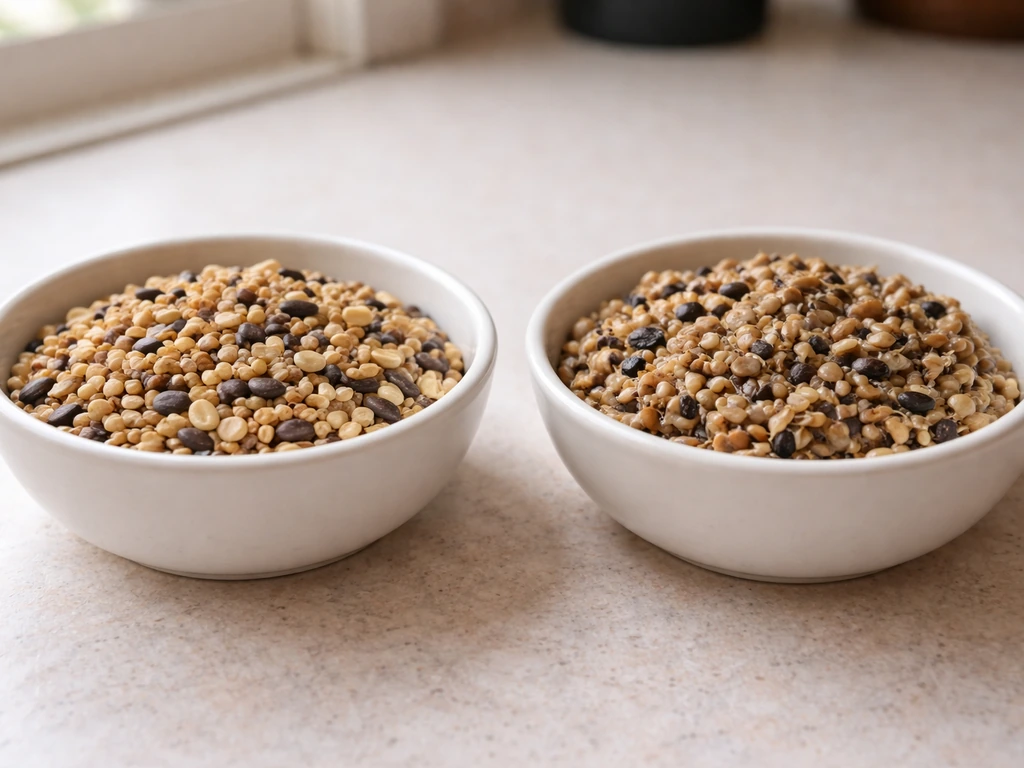
If you open your feeder and the seed is clumped, smells sour or musty, looks discolored, or has visible mold or sprouts, do not just top it off with fresh seed. Discard all of it. Wet or damp seed starts growing bacteria and mold fast, and mixing fresh seed on top doesn't fix contaminated seed underneath. The Virginia Department of Wildlife Resources is direct about this: any wet or damp seed should be discarded.
Step-by-step feeder cleanup after contamination
- Put on disposable gloves before handling the feeder or contaminated seed
- Empty all remaining seed into a trash bag and seal it
- Disassemble the feeder completely to reach all interior surfaces
- Scrub all parts with a stiff brush using hot water and a small amount of dish soap (Dawn is safe for bird feeders)
- Rinse thoroughly to remove all soap residue
- Prepare a disinfecting solution: 1 part bleach to 9 parts water (10% bleach)
- Submerge all feeder parts and soak for 10 minutes
- Rinse all parts thoroughly with clean water two or three times
- Let everything air dry completely before reassembling (this step matters: refilling a damp feeder restarts the problem immediately)
- Refill with fresh, dry seed only after the feeder is bone dry
For sprouted seed specifically: sprouting itself isn't toxic to birds the way mold is, but sprouted seed signals that moisture has gotten in and mold is likely close behind. Discard sprouted seed and treat the feeder to the same cleaning protocol above. If sprouting keeps happening, the problem is usually feeder design (no drainage holes in the tray), feeder placement (rain exposure), or portioning too much seed at once.
Clean up any contaminated seed that has fallen to the ground immediately. Rake or sweep it into a bag and dispose of it. Don't leave it to decompose or compost near the feeding area, as this attracts rodents and can spread mold spores. In severe cases, the Minnesota DNR recommends sprinkling agricultural lime about a quarter inch deep on the bare ground under feeders to help kill bacteria, though this can affect grass.
Feeder setup, tray placement, and species-friendly troubleshooting
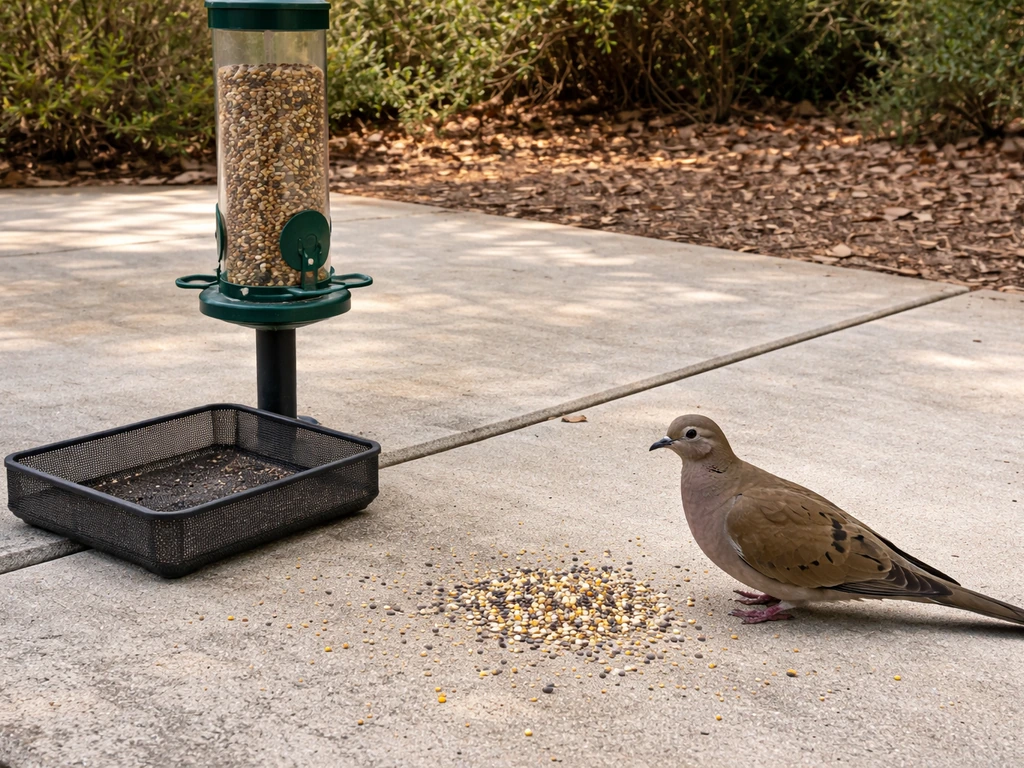
The feeder type you use matters as much as the seed inside it. Ground-feeding birds like sparrows, doves, and juncos often won't visit elevated tube feeders at all. They prefer large flat surfaces, a wide platform tray, or seed scattered directly on the ground. Birds that typically feed in shrubs and treetops, like finches and chickadees, are comfortable at tube or hopper feeders mounted at mid to upper height. Woodpeckers, nuthatches, and chickadees go for suet feeders hung or mounted off the ground, away from the trunk where squirrels can easily reach.
Placement affects both bird safety and your seed's longevity. A good rule of thumb is placing feeders about 10 feet from shrubs or trees so birds have escape cover nearby if a hawk shows up, but not so close that squirrels can leap directly onto the feeder. Feeders placed within 3 feet of a window or more than 30 feet away both significantly reduce collision risk, with the close placement being counterintuitive but effective because birds can't build up dangerous speed.
Tray feeders without a roof or cover are a major source of wet seed problems. Rain hits the seed directly, and if the tray doesn't drain well, water pools and the seed molds within a day or two in wet weather. If you use an open tray, make sure it has drainage holes in the floor, and reduce fill amounts during wet stretches so seed gets eaten before it can sit and absorb moisture. Covered hopper feeders dramatically reduce rain exposure. When in doubt, fill less seed more often rather than loading up the feeder once a week.
Quick troubleshooting for common feeder problems
| Problem | Likely Cause | Fix | Prevention |
|---|---|---|---|
| Seed clumping or wet in feeder | Rain exposure or humidity | Discard seed, clean feeder, refill dry | Use covered hopper; add drainage holes to trays; reduce fill amount |
| Birds ignoring a full nyjer feeder | Stale or oxidized seed | Discard and replace with fresh nyjer | Buy small quantities; use within 4–6 weeks |
| Seed disappearing overnight | Nocturnal pests (raccoons, rats, mice) | Add baffle; take feeder in at night if needed | Mount feeder on pole with baffle; clean up ground debris daily |
| Sunflower hulls piling up under feeder | Normal shell dropping from birds above | Rake up weekly; dispose in trash | Use hulled sunflower (no-mess blend) to reduce hull accumulation |
| Birds not using elevated tube feeder | Ground-feeding species present | Add a platform feeder or scatter some seed on the ground | Match feeder type to species you want to attract |
| Mold visible on seed or feeder surfaces | Moisture + time | Full bleach disinfection protocol; discard all seed | Clean feeder every 2 weeks; more often in wet weather |
Common pests and cleanup strategies (hygiene and prevention)
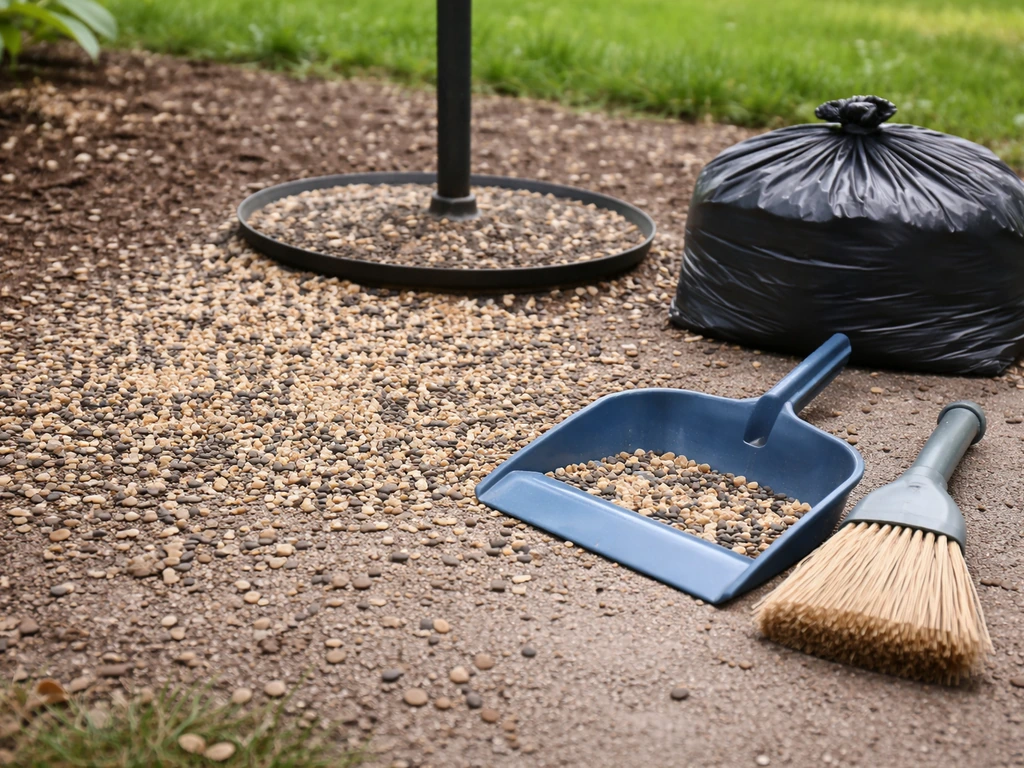
Spilled seed and shell hulls under a feeder are essentially an open invitation for rats, mice, raccoons, squirrels, and in some regions bears. The seed and hulls on the ground are often what animals are after, not the feeder itself. Raking or sweeping the ground under and around feeders regularly, at minimum weekly and ideally after every refill, is one of the most effective things you can do to reduce pest pressure. Rake the debris into a bag and put it in the trash, not a compost pile near the feeding area.
For squirrels specifically, the most reliable physical solution is a squirrel baffle on the feeder pole. The pole mounting point and baffle need to be at least 11 feet away from anything a squirrel can launch from (tree branches, fences, railings, roof overhangs). If full exclusion isn't practical, a lower-conflict strategy is to set out a small amount of peanuts or dried corn cobs at a spot some distance from your main feeders. It doesn't stop squirrels entirely, but it reduces the frantic raiding of your seed feeders.
Routine feeder cleaning is your primary disease prevention tool. Clean seed feeders every two weeks under normal conditions. During wet weather, heavy use periods, or if you see sick-looking birds at your feeder, clean immediately and more frequently. The bleach disinfection protocol described above (10% solution, 10-minute soak, thorough rinse, full dry) applies here. If you see diseased birds, take the feeder down and clean it before putting it back up. Sick birds spread disease to other feeder visitors through droppings and contact with surfaces.
- Rake up seed hulls and ground debris weekly (or more often in wet weather)
- Never let wet or moldy seed accumulate under the feeder
- Clean feeders every 2 weeks with hot soapy water followed by 10% bleach soak
- Mount feeders on baffled poles at least 11 feet from jump-off points for squirrels
- Take feeders in at night if raccoons or bears are a problem in your area
- Use quality seed with minimal filler to reduce ground waste
- Avoid cracked corn on the ground in areas with significant rodent pressure
Species-specific tips for common backyard visitors
Northern Cardinals prefer hulled or black-oil sunflower seed and like wide, stable perches. A hopper feeder or large platform works well. They're skittish at small tube feeders with tiny perches and will often wait until a platform is available rather than fight for a tube spot.
American Goldfinches and other finches are drawn almost exclusively to nyjer (thistle) seed and, to some extent, hulled sunflower chips. If you want goldfinches, a dedicated fine-mesh nyjer sock or a tube feeder with small ports is non-negotiable. The seed spills constantly from standard feeders and creates a mess below without attracting finches effectively.
Downy and Hairy Woodpeckers respond strongly to suet cakes and peanuts. Mount suet cages on a pole or hang them from a hook, positioned so larger animals can't reach them easily. In summer, swap suet for peanut pieces or mealworms to avoid rancidity issues.
Dark-eyed Juncos, White-throated Sparrows, and Song Sparrows almost exclusively feed on the ground or on low flat surfaces. They prefer white millet and cracked corn. If you see them pecking around under your elevated feeder but not visiting it, they're using the fallen seed, which is fine, but a low platform tray filled with millet and corn will serve them much better and keep the ground cleaner.
Black-capped and Carolina Chickadees, Tufted Titmice, and White-breasted Nuthatches are all comfortable at tube and hopper feeders and love black-oil sunflower, peanuts, and suet. These birds are also some of the most reliable feeder visitors year-round. If your feeders go quiet, these species are usually the first to return after you clean and refill.
Mourning Doves are pure ground feeders. They'll occasionally use a large platform tray but won't go near tube feeders. Cracked corn and millet scattered on a clean area of ground or on a low platform will keep them coming. One practical note: doves arrive in groups, so if you get one, expect several more within a few days.
Brief regional notes
In the Southeast and Gulf Coast, high humidity year-round means wet seed is a constant issue rather than a seasonal one. Check feeders every few days in summer and consider skipping seed feeders entirely from June through August in favor of native plantings or just suet and peanuts in shaded locations. In the Northern Plains and Upper Midwest, winter feeding is highest-impact because natural food is buried under snow. Fill feeders more frequently during blizzards and cold snaps, when birds are burning fuel fastest. In the Pacific Northwest, rain is the main enemy of seed quality from October through May. Covered hopper feeders and small fill amounts are essential. In the Mountain West, bear activity can be intense in spring and fall. Many wildlife agencies in those regions recommend removing feeders entirely during bear active seasons rather than trying to make them bear-proof.
FAQ
Can I just top off a feeder with fresh seed when I notice the old seed is bad?
If a bird seed mix still looks dry, you can only tell it is safe by the storage and appearance signs that signal contamination. Discard seed that smells sour or musty, is clumped, shows any mold or sprouts, or has visible discoloration. If the seed is only dusty from normal handling, transfer it to a sealed container and use a clean feeder, but do not “top off” a possibly contaminated feeder with fresh seed.
Why is it worse to mix fresh seed with contaminated seed?
Avoid mixing moldy seed with fresh seed, even if birds seem to be eating. Bacteria and mold can spread through the feeder surfaces and through droppings, and birds cannot detect contamination. The safer approach is to remove all seed, discard it, clean the feeder thoroughly, let it fully dry, then refill only with fresh dry seed.
Are cracked corn and peanuts always safe for backyard birds?
Yes, some seed offerings can accidentally be unsafe. Cracked corn and peanuts carry a higher aflatoxin risk if stored improperly or sourced from lower-quality suppliers. If you use them, buy smaller quantities, store them sealed and dry, and replace any batch that sits too long or shows signs of moisture exposure. If you have had sick birds at the feeder, switch temporarily to black-oil sunflower while you troubleshoot.
How often should I clean feeders if it keeps raining or birds are coming nonstop?
Even if you clean the feeder, wet conditions can force mold growth faster than your cleaning schedule. During heavy rain, heavy use, or when you see sick-looking birds, clean right away and increase frequency. If a tray is not draining well, switch to a covered hopper or use smaller fill amounts so seed is consumed before it absorbs moisture.
When should I stop feeding entirely instead of trying to fix the feeder?
You should stop feeding at least temporarily when you have clear contamination signals, such as visible mold or persistent wet seed that cannot be controlled with drainage and fill amounts. Then clean and fully dry the feeder, correct placement or feeder type, and refill with fresh dry seed. If you suspect disease spread after sick birds, remove the feeder until you have cleaned it and the feeder area is dry.
What is the best way to deal with spilled seed and hulls under feeders?
Spilled seed management matters because fallen seed and hulls often attract pests more than the feeder does. Sweep or rake under feeders at minimum weekly and ideally after every refill. Dispose in trash rather than composting near the feeding area to reduce rodents and mold spores lingering in the yard.
Why does my feeder still get moldy even though I cleaned it recently?
Most bird feeders should not be left open with a deep tray full of seed when rain is expected. Use a covered hopper when possible, reduce the amount you put in, and keep feeders at positions that limit direct rainfall on the seed. If you use an open tray, make sure it has drainage holes and refill more often rather than once a week.
I see some birds on the ground, but they ignore my elevated feeder. What should I change?
To target ground-feeding species, consider a low platform tray or seed scattered directly on clean ground rather than relying on elevated tube feeders. If you see ground birds pecking around but not using the feeder, they are likely feeding on the fallen seed. Provide the right height and surface area (low and flat) using millet or cracked corn.
Why did my goldfinches disappear even though the feeder is full?
Tube or hopper feeders can work for many birds, but finches often require nyjer specifically, and goldfinches usually do best with a fine-mesh nyjer feeder design. If goldfinches stop visiting, the nyjer may have gone stale (oil loss) or the feeder may be too open and leaking. Switch to fresh nyjer and use a fine-mesh nyjer sock or small-port feeder.
Is suet safe to use year-round, or should I change it by season?
Suet is the most time-sensitive option. In warm weather it can turn rancid quickly and drip fat that can harm feathers, so in summer either skip suet or use heat-tolerant suet labeled for warm climates, and provide it in shaded areas. During cold snaps, swap back to standard suet cakes and keep them from being reachable by larger pests.
After I clean and refill, some birds do not return. What is the likely cause?
If finches and woodpeckers are not showing up after cleaning and refilling, the most common causes are wrong seed type and wrong physical access. Cardinals often prefer stable, wider perches and black-oil sunflower, while woodpeckers and nuthatches respond strongly to suet cages. Re-check seed match first, then ensure the feeder is positioned where birds can safely access it from typical perching areas.
I live in a humid climate. Should I feed differently than the rest of the country?
In humid regions, wet seed issues can be year-round. Check feeders every few days in summer, choose covered hopper styles when possible, and consider skipping seed feeders during the hottest months in favor of native plantings or shaded seed options. You can still feed with options that are less vulnerable to continuous soaking, like suet and peanuts in appropriate feeders.
How should I place bird feeders to reduce hazards and keep seed dry?
Yes, feeder placement can change outcomes for both safety and seed quality. Keep feeders about 10 feet from cover so birds have escape cover but avoid proximity that allows squirrels to leap. Also avoid placing feeders too close to windows, and if your region is bear-active in spring or fall, follow wildlife agency guidance and consider removing feeders during bear-active periods.
Next Article
Who Delivers Bird Seed Near You Best Options and Safety Tips
Find who delivers bird seed near you, choose the best option by urgency and type, plus safe storage and pest prevention