There is no single seed crows flatly refuse, but there are seeds they strongly prefer and feeder setups that make your yard an easy target. The fastest way to reduce crow pressure is to stop offering sunflower seeds and whole corn in open trays, switch to smaller tube feeders loaded with nyjer or safflower, and clean up spilled seed from the ground daily. Do all three together and most backyards see noticeably less crow activity within a week.
What Bird Seed Crows Not Like Least and What to Do

Maya Collins
13 Jun 2026
Reality check: crows are opportunists, not picky eaters
Crows are among the most intelligent and adaptable birds in North America, and they are blank" rel="noopener noreferrer">genuinely omnivorous. Cafeteria-style experiments with wild carrion crows have shown they preferentially consume sunflower seeds and wheat when offered alongside other options, but if those are gone they will work through other foods in your yard, including suet, fruit scraps, pet food left outside, and even insects attracted to wet or rotting seed.
The Audubon guide to bird feeding similarly notes that black-oil sunflower seed appeals to many feeder birds, which is why it can be important to factor seed choice into crow-pressure reduction preferentially consume sunflower seeds.
That means pulling one seed type without addressing the broader food environment often just slows them down temporarily.
The more useful frame is not 'what seed do crows hate' but rather 'what combination of seed choices, feeder designs, and yard habits makes my yard the least rewarding stop on their daily route.' Crows are large, need a stable surface to land and feed, dislike physically difficult feeders, and are risk-averse enough to move on when the calorie payoff drops. Work with those tendencies and you get real results.
Seeds to stop offering or cut back on
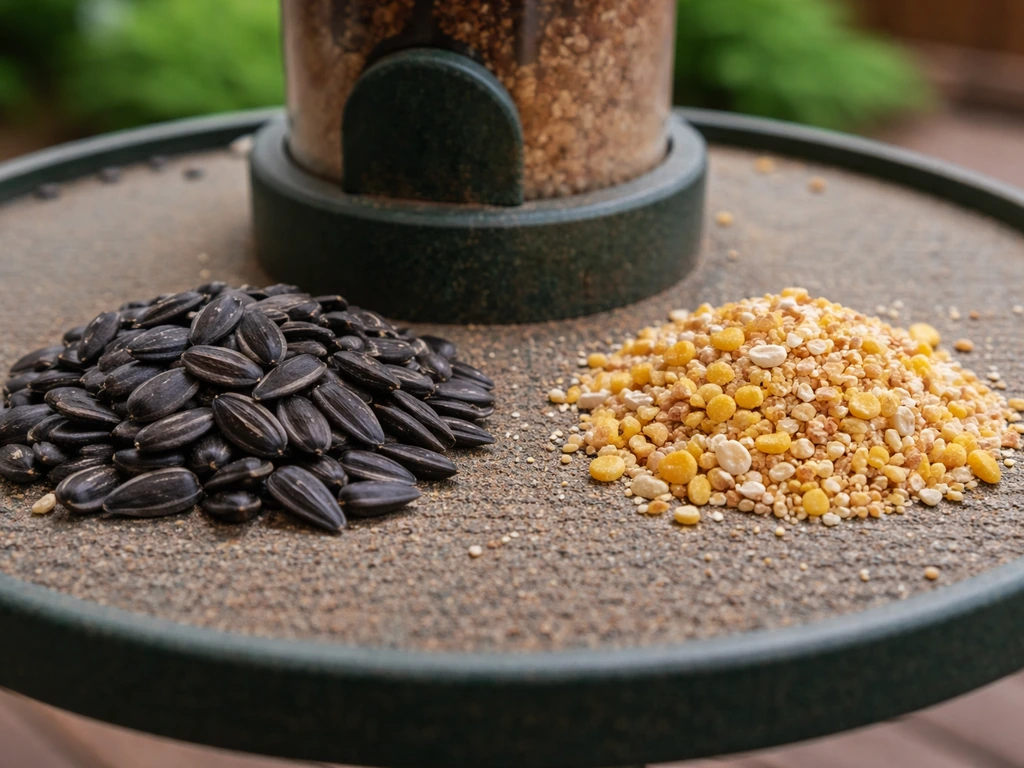
These are the seeds research and field experience consistently show crows go after first. Removing or drastically reducing them is your quickest lever.
| Seed Type | Why Crows Love It | Best Action |
|---|---|---|
| Black-oil sunflower | High fat, easy to handle, found in nearly every commercial mix | Remove from open/tray feeders; limit to small tube feeders only |
| Whole kernel corn | High calorie, easy for large bills to grip and carry away | Stop offering entirely if crow pressure is severe |
| Cracked corn | Scattered easily on the ground, fast to consume in bulk | Eliminate from your mix; it draws crows and other large birds |
| Safflower | Crows will eat it but strongly prefer sunflower; many other birds like it | Safe to keep; a useful swap for sunflower in many situations |
| Millet (white or red) | Low crow interest relative to sunflower, but ground scatter attracts them | Keep off the ground; use in covered ground trays with drainage |
| Generic wild bird mix | Often contains corn, millet, and sunflower together, maximizing crow appeal | Replace with a targeted single-seed or two-seed approach |
When you read the ingredient list on a commercial mix (which you always should before buying), look for corn and sunflower near the top. High-corn mixes marketed as budget-friendly are particularly crow-attractive, and the seeds smaller birds can't use often end up spilled on the ground anyway, creating a ground buffet that crows are perfectly happy to exploit.
What to feed instead to keep smaller birds happy
Switching seed types is only worthwhile if your target birds, finches, chickadees, nuthatches, and native sparrows, still have something appealing to visit. If you are also trying to attract sparrows, choose small, appropriate seed types and avoid feeder or seed choices that mainly cater to crows. These seeds keep them coming while making the yard less crow-friendly. The same idea of using the right seed can also help with starlings, so it is worth checking what bird seed starlings do not like what bird seed starlings not like.
- Nyjer (thistle): tiny seeds that require a specialized tube feeder with small ports. Crows cannot access these feeders efficiently and have little interest in nyjer. Goldfinches, pine siskins, and redpolls love it.
- Safflower: thick-shelled, slightly bitter seed that crows eat but generally pass up when easier options are available. Cardinals and chickadees take to it readily. Pure safflower is one of the most practical crow-pressure reducers you can try.
- Striped sunflower (not black-oil): the harder shell slows large birds down. Cardinals and larger woodpeckers handle it fine; crows will eat it but prefer the easier black-oil variety, so it reduces rather than eliminates crow interest.
- Shelled peanuts in small tube feeders: if you love feeding peanuts, use tube feeders with small mesh ports. Whole peanuts in open trays are crow magnets. Remove them entirely if crows are a problem.
- Suet cakes in upside-down cling feeders: woodpeckers feed upside-down easily; crows struggle to grip and feed in that position. Avoid suet cages that allow flat-surface perching.
If you are also dealing with grackles or starlings alongside crows, safflower and nyjer are doubly useful because those species tend to avoid them too. The seed-switching strategy overlaps meaningfully across those problem birds.
Feeder design and placement matter as much as seed type
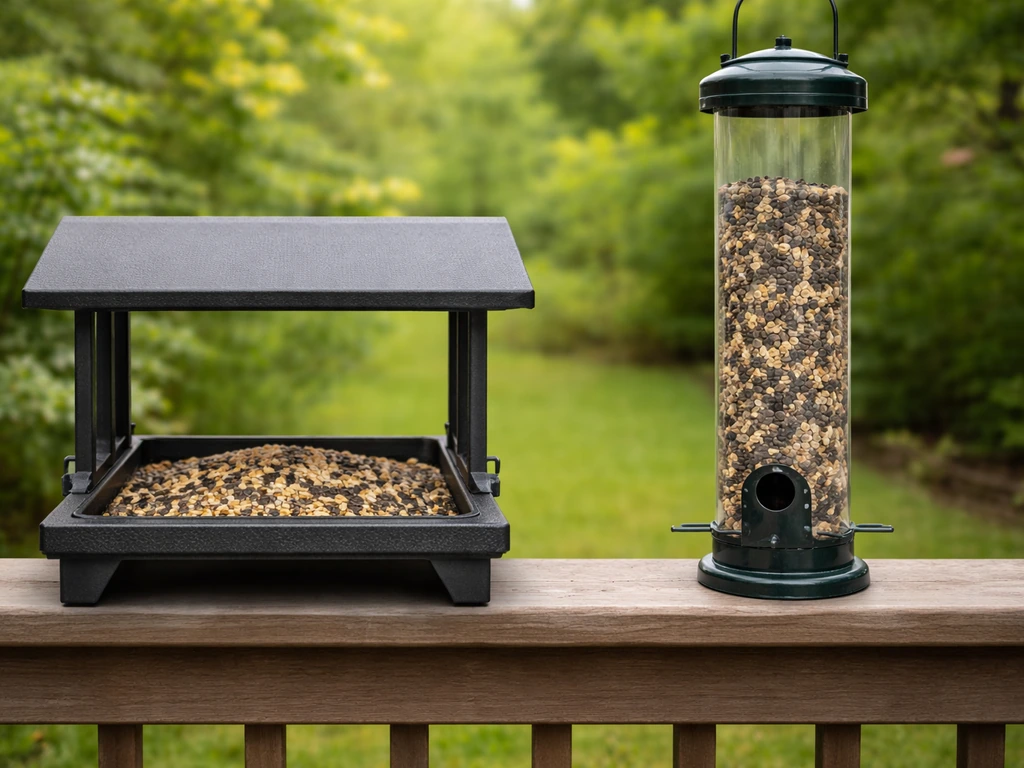
A crow-unfriendly seed in a crow-friendly feeder is still a crow problem. Feeder design is the other half of the equation.
Choose the right feeder style
- Tube feeders with short or no perches: crows need a stable, broad surface to land and leverage their bills. Tube feeders, especially those with perches shorter than 2 inches, are physically awkward for them.
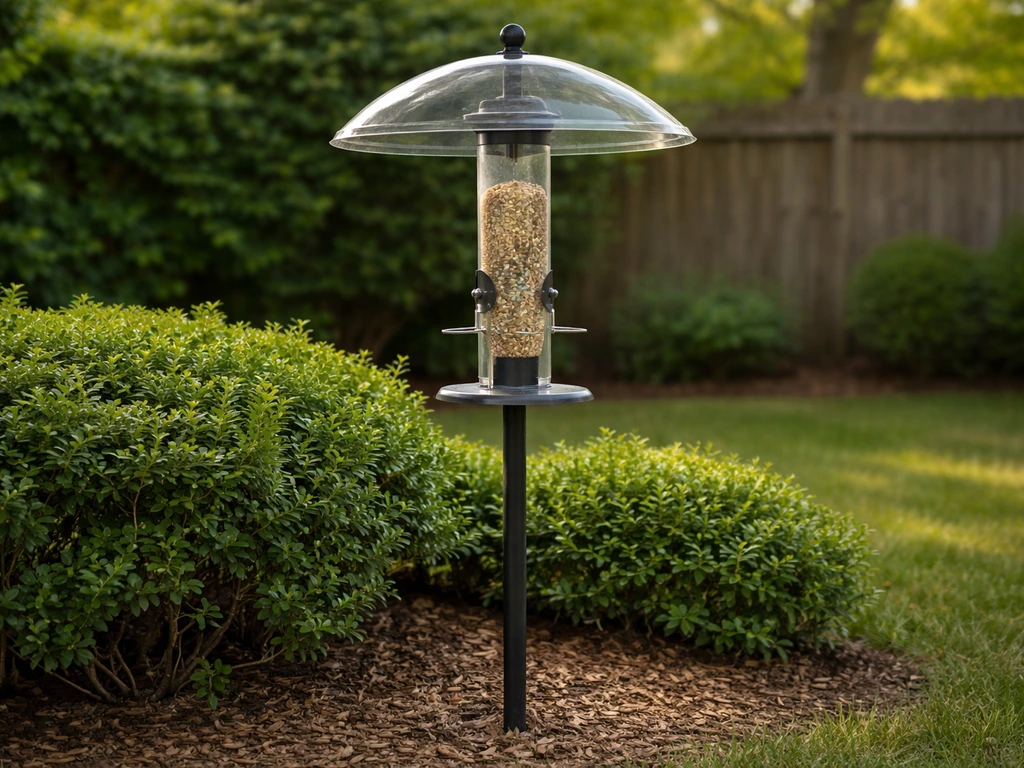
- Caged tube feeders: a wire cage with openings of 1.5 inches or less lets small birds through and blocks crows and most other large birds entirely. These are the single most effective feeder upgrade for crow pressure.
- Upside-down suet feeders: as noted above, these favor clinging birds over large perching birds.
- Avoid tray and platform feeders: open trays are practically designed for crows. If you want to offer ground-feeding birds a tray, use a covered model with drainage holes and keep the seed layer shallow (under 1 inch) so it's consumed quickly and doesn't sit wet.
Placement and spacing
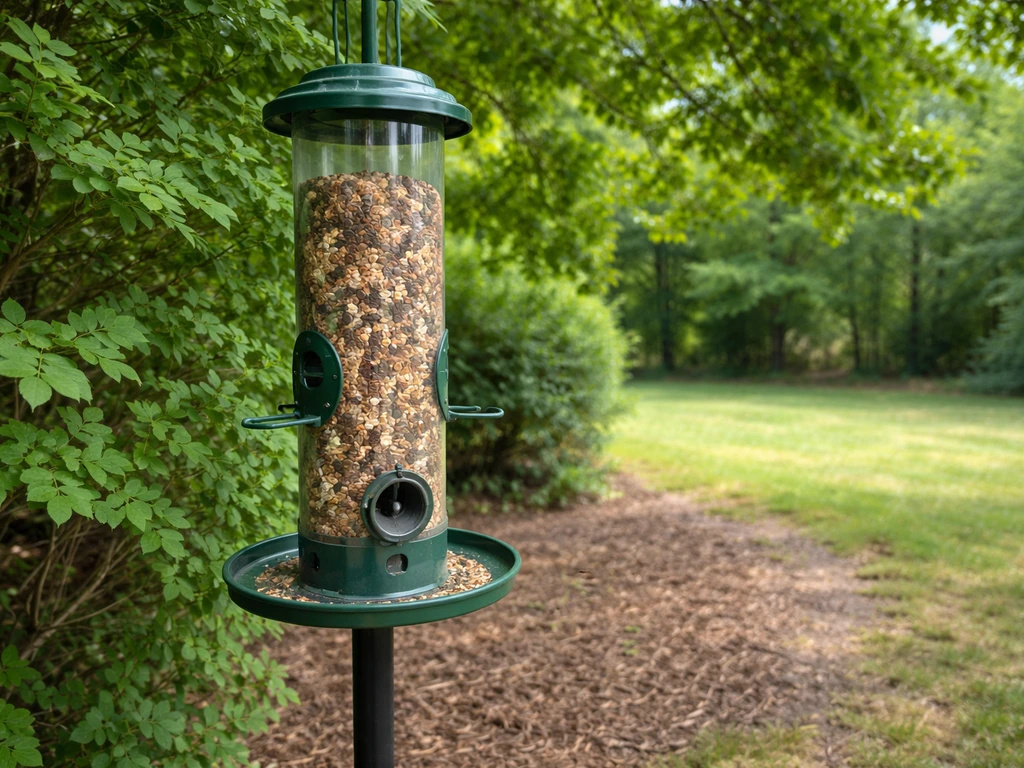
- Place feeders close to dense shrubs or trees (within 3 to 10 feet): small birds can dart in and escape; crows prefer open approaches with a clear landing zone.
- Mount feeders at least 5 feet off the ground on a smooth pole with a baffle. This doesn't stop a crow from flying in, but it eliminates easy perching approach angles.
- Remove or reposition any wide horizontal perches, railings, or fence tops near feeders. Crows scout and stage from these before moving in.
- Reduce ground scatter: even the best tube feeder creates some spillage below. Use a tray catcher with drainage under tube feeders to collect spilled seed and clean it out every 1 to 2 days.
Seed storage, wet seed, mold, and cleanup
Wet, sprouted, and moldy seed is one of the biggest underappreciated crow attractors. It also attracts insects, rodents, and other pests, which in turn attract more crows. Getting storage and cleanup right removes a hidden food signal from your yard.
Store seed to stay dry and pest-free
- Use a hard-sided metal or thick plastic container with a tight-fitting lid. Thin plastic bags and cardboard boxes let moisture in and give rodents easy access.
- Store seed indoors or in a cool, dry garage or shed. Outdoor storage in summer heat and humidity accelerates mold and insect infestation.
- Buy seed in quantities you will use within 4 to 6 weeks. Sunflower seeds and mixes with high fat content (suet, peanuts) go rancid faster than nyjer or safflower. If seed smells musty or oily-sour, discard it.
- Inspect every new bag before filling feeders. Look for clumping, webbing (moth larvae), or dark spots (mold). Do not put compromised seed in your feeder.
Deal with wet and sprouted seed quickly
After rain or heavy dew, check feeders and ground trays within 24 hours. Wet seed clumps together, blocks feeder ports, and starts to germinate or mold within 48 to 72 hours in warm weather. Sprouted seed on the ground under feeders is a visual and olfactory beacon for crows and other scavengers. Rake or scoop it up and dispose of it in a sealed bag, not open compost. Rinse the area with water and let it dry before more seed falls.
Clean feeders on a real schedule
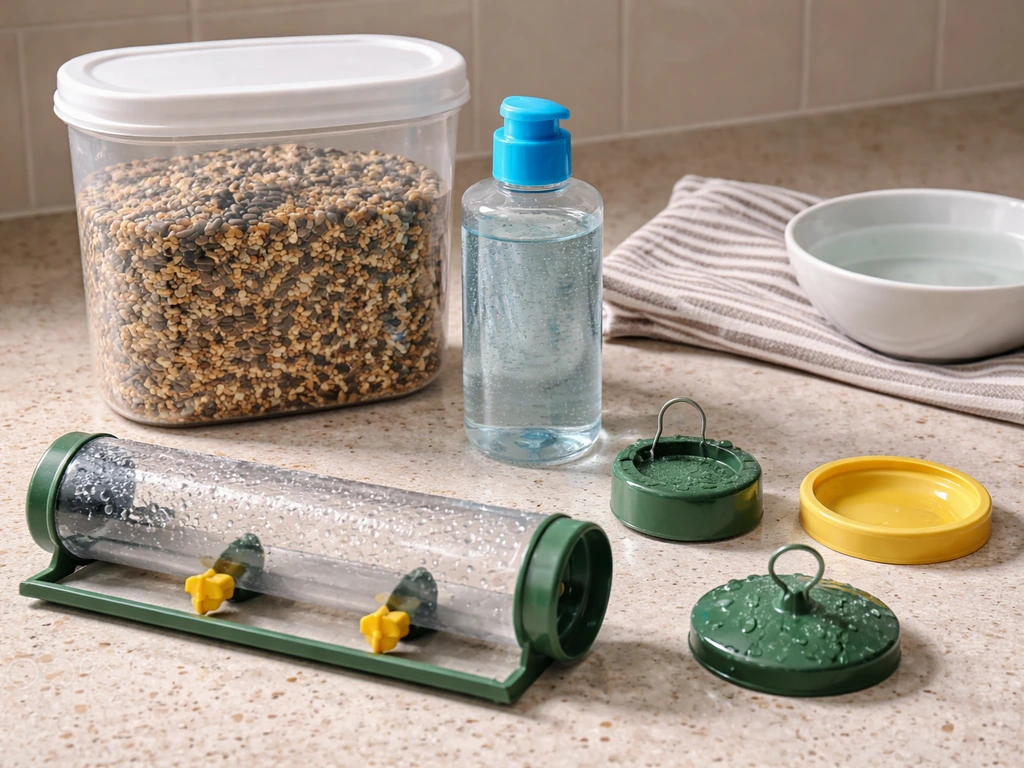
- Empty and rinse tube feeders every 2 weeks in dry weather, every week in humid summer conditions.
- Scrub with a 10% bleach solution (1 part bleach to 9 parts water) using a bottle brush. Rinse thoroughly and air dry completely before refilling.
- Clean tray catchers and ground areas under feeders every 1 to 2 days to prevent seed accumulation.
- Inspect for and remove any moldy seed patches on the ground, which can harbor Aspergillus fungi that are dangerous to birds.
Safe, non-harm deterrence and a few things to avoid
Beyond seed choice and feeder design, a few physical deterrents can reinforce the message that your yard is not worth a crow's time. All of these are legal, non-toxic, and safe around children and pets when used as directed.
- Reflective tape or holographic bird tape hung near feeding areas: crows are wary of unpredictable light movement. Hang 2 to 3 foot strips from shepherd's hooks or eaves near feeders. Reposition every 2 weeks because crows habituate quickly to static deterrents.
- Owl decoys with moving heads: a rotating or motorized owl decoy is more effective than a static one. Move it every few days. A stationary decoy that hasn't moved in a week will be largely ignored.
- Remove or secure other attractants: open pet food bowls, uncovered garbage, fallen fruit, and compost with food scraps are as attractive to crows as any seed. If those stay in the yard, seed changes alone will have limited impact.
- Motion-activated sprinklers: these work well for crows and are entirely safe. Set them to cover the feeder zone and ground area. Most crows avoid the zone within a few days.
- Never use: sticky bird repellents (Tanglefoot-style products) on feeder perches or branches. These trap and injure small birds and can mat feathers. Also avoid poison grain, which is illegal in most jurisdictions and dangerous to non-target wildlife, pets, and raptors that eat crows.
One important note on repellent seed coatings: research shows that chemical repellent coatings on seed can produce strong initial avoidance in crows, but crows can habituate over repeated exposures under natural conditions. That makes treated seed a short-term tool at best, not a standalone solution. It is also worth checking local regulations before using any treated seed product, as some formulations are restricted.
On hygiene: crow droppings can carry Salmonella and Campylobacter. If you are cleaning up under a heavily used crow area, wear disposable gloves, use the bleach solution mentioned above, and wash hands thoroughly. The same applies when handling moldy or wet seed.
Your action plan: do this now, then monitor
Here is a practical sequence you can start today. While crows do not eat every type of seed, the bigger issue is offering the wrong mix and setup that keeps them coming back what bird seed do pigeons not eat. Most people see a real reduction in crow activity within 5 to 10 days of doing all of these steps together, not just one or two.
- Day 1: Remove all open tray feeders and platform feeders temporarily. Empty current seed mixes that contain sunflower, corn, or cracked corn. Bag and discard any wet, clumped, or sprouted seed.
- Day 1: Clean all feeders with the 10% bleach solution. Rinse and dry completely.
- Day 1-2: Buy a caged tube feeder (1.5-inch cage openings) and a bag of pure safflower or nyjer. Refill only with these targeted seeds.
- Day 2: Set up a tray catcher below the tube feeder to capture spill. Plan to empty it every 1 to 2 days.
- Day 2-3: Walk your yard and remove other attractants: secure garbage lids, bring in pet food bowls, pick up fallen fruit, and cover or relocate compost.
- Day 3: Add one rotating owl decoy or hang reflective tape near the feeding zone. Commit to moving or repositioning it every 3 to 5 days.
- Ongoing: Keep a simple log (even just a phone note) of crow sightings at the feeder each day for 2 weeks. Note what day you made each change. This tells you what actually worked in your specific yard.
If crows are still showing up after two weeks
- Check for ground seed accumulation you may be missing, especially after rain. This is the most common reason crow pressure persists after feeder changes.
- Look for other food sources nearby: a neighbor's open feeder, a pet food bowl, or a trash collection area. Crows have large territories and may be visiting your yard as one stop among several.
- Consider pulling feeders entirely for 1 to 2 weeks to break the habit loop. Smaller birds will return quickly once you restart with caged feeders and targeted seed; crows take longer to revisit a formerly reliable spot that went cold.
- If you are in a region where American crows roost communally in large numbers (common in the Pacific Northwest, Midwest, and parts of the Northeast in fall and winter), individual yard changes have less impact on the overall roost pattern. Focus on feeder-level deterrence rather than trying to eliminate crows from the area entirely.
The combination of the right seed, physically restrictive feeders, and a clean ground zone does most of the work. Crows are smart enough to recognize when a food source stops paying off, and they are smart enough to move on when it does.
FAQ
Do crows ever eat nyjer (thistle) or safflower, and will switching to those stop them completely?
Crows usually show lower interest in nyjer and safflower compared with sunflower and high-corn mixes, but they can still take them when alternatives are scarce. The goal is to make the yard a low-payoff stop, so expect reduction rather than guaranteed zero, especially if other food sources (pet food, fruit scraps, open trash) remain.
What bird seed is most likely to attract crows even if it is sold as “mixed seed” for songbirds?
Seed mixes with corn or sunflower high on the ingredient list tend to draw crows first. Also, mixes that include larger “wasteful” components for small birds (seed sizes finches cannot use well) often end up on the ground, creating a ground buffet that crows exploit.
Will using a tube feeder with safflower and nyjer still attract crows if the perches are open and easy to land on?
Yes, a crow-friendly landing surface can offset the seed switch. Use feeder designs that limit broad perches or make it harder for large birds to stabilize, and keep the feeding zone away from low, safe landing spots like fence tops or nearby branches.
How fast should I see fewer crows after changing seed, and what is normal during the first few days?
Many yards see noticeable improvement within about a week when seed, feeder type, and cleanup are all addressed. In the first 1 to 3 days, crows may continue checking the area out of habit, particularly if spilled seed remains in cracks, under shrubs, or on uneven ground.
Is “repellent seed” (treated seed with chemicals) effective long term for crows?
Repellent seed can create short-term avoidance, but crows can habituate after repeated exposures in natural conditions. Treat it as an occasional reinforcement tool, not the main plan, and confirm local rules since some formulations can be restricted.
What should I do if my problem is mostly crows on the ground, not at the feeder?
Focus on the ground zone: remove spilled seed daily, rake under feeders, and avoid broadcast-style seed that accumulates. If seed keeps dropping from the feeder or clumps after dew, fix the feeder setup first, because a persistent ground buffet will keep bringing crows back.
Should I stop feeding all birds if crows are visiting?
Not necessarily, but you need a feeder strategy that still works for smaller birds. Keep seed types that small birds can use (for example, nyjer or safflower) while removing sunflower and whole corn, and use restrictive feeder designs so large birds get less access.
Can wet or moldy seed be safer to use after drying out, or should it be removed immediately?
Remove it immediately. Sprouted, moldy, or clumped seed becomes more attractive because it signals food and also draws insects and other scavengers, which then attract more crows. Discard in a sealed bag rather than leaving it out or adding it to open compost.
How should I store seed to prevent it from getting damp and attracting crows again?
Store seed in a sealed container in a dry area, and avoid keeping it where rain splash or humidity can seep in. When refilling feeders, wipe away any old husks and debris, because they can hold moisture and contribute to clumping.
Do crows learn to avoid only the feeder, or can they learn around it?
They can learn around simple changes, especially if the yard still offers a reliable calorie source somewhere else. The most reliable approach is reducing high-attraction seed and removing alternative foods (fruit scraps, pet food, insects around wet seed) so there is no easy workaround.
What are common mistakes people make when trying to reduce crows with seed changes?
The biggest mistakes are swapping just one seed type while leaving sunflower or whole corn in other feeders, letting spilled seed build up under the feeder, and continuing to use open trays or setups that give crows a stable landing surface. Another common error is ignoring nearby attractants like accessible pet food or unsecured trash.
Next Articles
What Bird Seed Pigeons Don’t Eat and What to Use Instead
Discover which bird seeds pigeons avoid, why they skip them, and how to feed other birds while blocking pigeons safely.
What Bird Seed Do Sparrows Eat Best and How to Offer It
Discover what sparrows eat, best seed types to offer, what to avoid, and how to store and present seed safely.
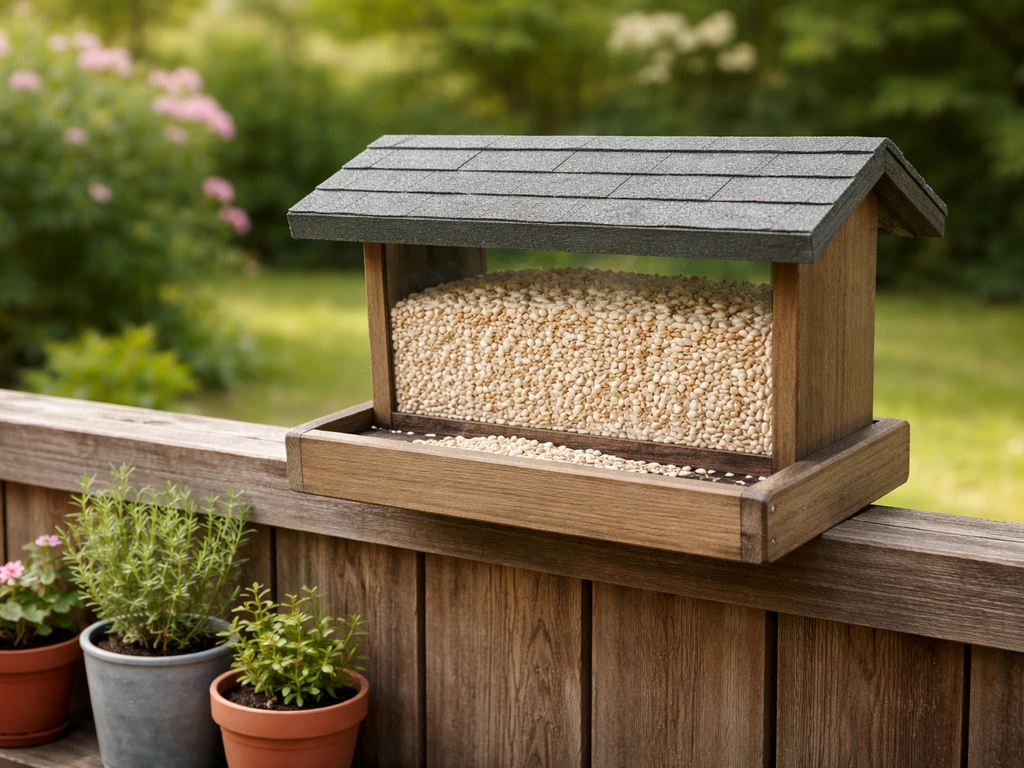
What Bird Seed Starlings Don’t Like and What to Use Instead
Discover which bird seed starlings avoid and the best alternatives, plus feeder and hygiene tips to reduce them safely.